



Digital Rights Management Market Size 2024-2028
The digital rights management market size is forecast to increase by USD 15.53 billion, at a CAGR of 41.3% between 2023 and 2028.
- The Digital Rights Management (DRM) market is experiencing significant growth, driven by the increasing consumption of digital content across various industries. As more businesses shift towards digital platforms, the need to protect intellectual property and ensure content security has become paramount. However, this market landscape is not without challenges. A key trend shaping the DRM market is the rise of digital content, which necessitates robust protection mechanisms. As businesses invest in creating and distributing digital content, they require DRM solutions to safeguard their assets from unauthorized access and piracy. Concurrently, the growing importance of Service Level Agreements (SLAs) presents a challenge for DRM companies.
- Ensuring seamless content delivery and maintaining high levels of customer satisfaction are critical for retaining subscribers and building brand loyalty. Balancing content security with user experience is a delicate act that requires innovative solutions and strategic partnerships. Companies seeking to capitalize on the opportunities presented by the DRM market must navigate these challenges effectively, focusing on delivering secure, reliable, and user-friendly solutions.
What will be the Size of the Digital Rights Management Market during the forecast period?
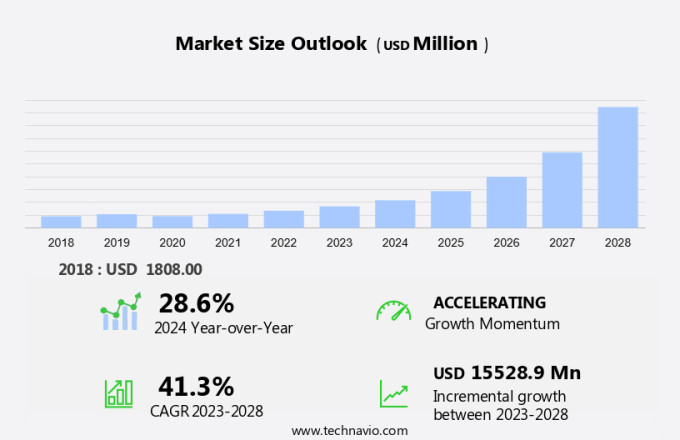
Explore in-depth regional segment analysis with market size data - historical 2018-2022 and forecasts 2024-2028 - in the full report.
Request Free Sample
The digital rights management (DRM) market continues to evolve, with dynamic market activities shaping its applications across various sectors. Seamlessly integrated solutions enable content access control, secure communication channels, and rights enforcement in digital publishing. Cryptographic algorithms underpin these functions, ensuring multi-platform support and digital signatures for compliance regulations. Cloud-based DRM facilitates content protection, usage reporting, and hardware compatibility, while key management and software piracy prevention bolster security. Vulnerability assessments, usage reporting, and malware protection further strengthen DRM's role in intellectual property protection.
Threat analysis, digital signage, user authentication, industry standards, music streaming, license management, mobile applications, data protection, content security, metadata management, content usage tracking, and DRM interoperability are essential components of this ever-evolving market. The ongoing development of interactive content, software licensing, and security audits underscores the continuous need for advanced DRM solutions.
How is this Digital Rights Management Industry segmented?
The digital rights management industry research report provides comprehensive data (region-wise segment analysis), with forecasts and estimates in "USD million" for the period 2024-2028, as well as historical data from 2018-2022 for the following segments.
- Deployment
- On-premises
- Cloud
- Component
- Software
- Services
- Encryption Technology
- Cryptography
- Watermarking
- Fingerprinting
- Access Control
- Copy Control
- Secure Key Management
- End-User
- Media & Entertainment
- IT & Telecommunications
- BFSI (Banking, Financial Services, and Insurance)
- Healthcare
- Education & Training
- Retail & E-commerce
- Government & Defense
- Research & Publications
- Legal
- Others
- Geography
- North America
- US
- Canada
- Europe
- France
- Germany
- Italy
- UK
- Middle East and Africa
- Egypt
- KSA
- Oman
- UAE
- APAC
- China
- India
- Japan
- South America
- Argentina
- Brazil
- Rest of World (ROW)
- North America
By Deployment Insights
The on-premises segment is estimated to witness significant growth during the forecast period.
The digital rights management (DRM) market is witnessing significant growth due to the increasing adoption of on-premises and cloud-based solutions. On-premises DRM requires a software license and substantial investment in hardware and software, making it more expensive than cloud-based DRM. However, its customization capabilities and enhanced data security make it an attractive option for businesses, particularly in the banking, financial services, and insurance (BFSI) sector in the Asia Pacific region. DRM solutions employ various technologies such as content access control, secure communication channels, rights enforcement, digital publishing, cryptographic algorithms, multi-platform support, digital signatures, compliance regulations, and usage reporting to protect intellectual property and prevent software piracy.
Additionally, features like hardware compatibility, key management, malware protection, interactive content, security audits, and metadata management further enhance the market's appeal. Cloud-based DRM, on the other hand, offers flexibility and cost savings, as it does not require in-house hardware or software. However, concerns regarding data security and third-party interference may hinder its adoption in certain industries. DRM solutions also integrate with other technologies like software licensing, content distribution, digital watermarking, and streaming media to provide comprehensive content protection. Moreover, they support various industries, including music streaming, mobile applications, digital signage, and user authentication, among others.
To ensure the highest level of security, DRM solutions undergo rigorous testing, including vulnerability assessments, threat analysis, and compliance with industry standards. Furthermore, they offer features like license management, content usage tracking, and DRM interoperability to provide a seamless user experience. In conclusion, the DRM market is evolving, with businesses adopting both on-premises and cloud-based solutions to protect their intellectual property and mitigate the risks of software piracy and data breaches. The market's growth is driven by the increasing demand for content security, data protection, and regulatory compliance across various industries.

The On-premises segment was valued at USD 1.07 billion in 2018 and showed a gradual increase during the forecast period.
Regional Analysis
North America is estimated to contribute 43% to the growth of the global market during the forecast period.Technavio's analysts have elaborately explained the regional trends and drivers that shape the market during the forecast period.

The Digital Rights Management (DRM) market in North America is experiencing significant growth due to the increasing need for content access control, secure communication channels, and rights enforcement in the digital publishing industry. Cryptographic algorithms and digital signatures ensure compliance with regulations and protect intellectual property. Multi-platform support and key management enable seamless usage across various devices, while software piracy prevention and malware protection safeguard against cyber threats. Cloud-based DRM solutions offer flexibility and scalability, making them increasingly popular. Usage reporting and hardware compatibility provide valuable insights for content distribution and licensing management. Interactive content, security audits, and industry standards further enhance content security and user authentication.
The rise of music streaming, mobile applications, and digital signage has increased the demand for DRM solutions. Threat analysis and vulnerability assessment are crucial components of DRM, ensuring content protection and data privacy. Content encryption, streaming media, and metadata management are essential features that enable DRM interoperability and content usage tracking. DRM adoption is driven by the availability of robust IT and business infrastructure, the need for compliance with regulations, and the increasing number of cyber-attacks targeting confidential data. The services and industrial sectors, in particular, benefit from DRM solutions to ensure high-quality digital content and protect against potential threats.
Market Dynamics
Our researchers analyzed the data with 2023 as the base year, along with the key drivers, trends, and challenges. A holistic analysis of drivers will help companies refine their marketing strategies to gain a competitive advantage.
What are the key market drivers leading to the rise in the adoption of Digital Rights Management Industry?
- The increasing implementation of Digital Rights Management (DRM) solutions serves as the primary catalyst for market growth.
- In today's IT landscape, the threat of data breaches and cyber-attacks continues to escalate, putting valuable information and business activities at risk. With the increasing use of web applications and mobile devices, organizations face new challenges in safeguarding their data and content from unauthorized access. Advanced persistent threats (APTs) and insider fraud are among the sophisticated attacks that have become increasingly common. These breaches can result in costly resolutions, non-compliance with industry standards and regulations, and damage to business reputation. To mitigate these risks, organizations are turning to Digital Rights Management (DRM) solutions. DRM technologies and services offer license management, content security, metadata management, content usage tracking, DRM interoperability, and content encryption to protect digital assets.
- Streaming media is also a significant area of focus for DRM, ensuring secure delivery and playback. By implementing DRM solutions, businesses can secure their data and content, maintain regulatory compliance, and protect their reputation.
What are the market trends shaping the Digital Rights Management Industry?
- The rise of digital content is an emerging market trend that is mandatory for professionals to acknowledge. Digital content encompasses various formats, including text, audio, and video, which are increasingly shaping consumer behavior and business strategies.
- Digital Rights Management (DRM) solutions have gained significant importance in today's digital economy, where the consumption of digital content is on the rise. With the increasing use of mobile devices and the shift toward digital transformation, the availability of digital content in enterprises has increased substantially. This trend has led to a growing need for robust DRM solutions to secure and control access to digital content. DRM solutions employ various technologies such as secure communication channels, cryptographic algorithms, digital signatures, and multi-platform support to ensure content protection. These solutions enable publishers to enforce their rights on digital content, making it available to authorized users only.
- Moreover, cloud-based DRM solutions offer flexibility and scalability, allowing users to access content from anywhere, at any time. Compliance with various regulations, including data privacy and security laws, is another critical factor driving the adoption of DRM solutions. These solutions help enterprises maintain compliance by securing their digital content and ensuring that only authorized users have access to it. Android developers and digital content publishers are increasingly implementing DRM solutions to make their content widely available to users while maintaining security and control. For instance, Google offers DRM without license fees on compatible Android devices, ensuring that at least one DRM is available across Android devices to make digital content accessible.
- Overall, DRM solutions play a vital role in enabling secure and controlled access to digital content in the modern digital economy.
What challenges does the Digital Rights Management Industry face during its growth?
- One significant challenge impacting industry growth is the heightened concerns regarding Service Level Agreements (SLAs). Ensuring compliance with SLAs is a critical responsibility for businesses, and any lapses can result in penalties and damage to reputation. Adhering to SLAs requires a robust and efficient service delivery model, which can be a complex and resource-intensive undertaking. Therefore, addressing SLAs effectively is essential for businesses aiming to grow and thrive in today's competitive market.
- Digital Rights Management (DRM) is a critical solution for content protection in the business world. DRM systems ensure the secure distribution and usage of digital content, mitigating vulnerabilities and preventing software piracy. companies offer various features such as usage reporting, hardware compatibility, key management, and digital watermarking to enhance content protection. DRM solutions enable companies to provide output-based Service Level Agreements (SLAs), which outline the agreed-upon benefits and support for the client. These SLAs are essential for organizations implementing DRM, as they establish a contractual obligation for optimal service quality. Vulnerability assessment and software licensing are also integral components of DRM, further strengthening content protection.
- Key management plays a significant role in DRM, ensuring secure access to encrypted content while preventing unauthorized usage. Digital watermarking, a crucial feature, enables tracking of unauthorized distribution and usage of digital content. Usage reporting offers insights into how the content is being consumed, providing valuable data for content owners. DRM solutions also prioritize hardware compatibility, ensuring seamless integration with various devices and platforms. Preventing software piracy is a primary concern for businesses, and DRM solutions address this issue by implementing robust security measures. In conclusion, DRM is a vital investment for businesses seeking to protect their digital content and intellectual property.
- By focusing on content protection, usage reporting, hardware compatibility, key management, and software piracy prevention, DRM solutions offer organizations a comprehensive approach to managing their digital assets.
Exclusive Customer Landscape
The digital rights management market forecasting report includes the adoption lifecycle of the market, covering from the innovator's stage to the laggard's stage. It focuses on adoption rates in different regions based on penetration. Furthermore, the digital rights management market report also includes key purchase criteria and drivers of price sensitivity to help companies evaluate and develop their market growth analysis strategies.

Customer Landscape
Key Companies & Market Insights
Companies are implementing various strategies, such as strategic alliances, digital rights management market forecast, partnerships, mergers and acquisitions, geographical expansion, and product/service launches, to enhance their presence in the industry.
The industry research and growth report includes detailed analyses of the competitive landscape of the market and information about key companies, including:
- Adobe Systems Inc.
- Apple Inc.
- ArtistScope
- Bynder LLC
- CipherCloud Inc.
- Dell Technologies Inc.
- Fadel
- Fasoo Inc.
- Google LLC (Widevine Technologies Inc.)
- IBM Corporation
- Irdeto
- Kudelski Group
- Locklizard Limited
- Microsoft Corporation
- NextLabs Inc. (SAP SE)
- OpenText Corporation
- Oracle Corporation
- Seclore Technology
- Sony Corporation
- Vitrium Systems Inc.
- Verimatrix, Inc.
Qualitative and quantitative analysis of companies has been conducted to help clients understand the wider business environment as well as the strengths and weaknesses of key industry players. Data is qualitatively analyzed to categorize companies as pure play, category-focused, industry-focused, and diversified; it is quantitatively analyzed to categorize companies as dominant, leading, strong, tentative, and weak.
Recent Development and News in Digital Rights Management Market
- In February 2024, Adobe Systems announced the launch of its advanced Adobe Creative Cloud for enterprise, which includes enhanced Digital Rights Management (DRM) features. This solution enables businesses to securely manage and distribute copyrighted content, ensuring compliance with licensing agreements and protecting intellectual property (Adobe Press Release, 2024).
- In June 2024, Amazon Web Services (AWS) and Microsoft entered into a strategic partnership to offer combined DRM solutions for media and entertainment companies. This collaboration allows clients to use both AWS's MediaConvert for video transcoding and Microsoft's PlayReady DRM for content protection (AWS Press Release, 2024).
- In October 2024, Kaltura, a leading video platform provider, raised USD50 million in a Series F funding round. The investment will be used to expand its DRM offerings and strengthen its position in the market (Crunchbase News, 2024).
- In March 2025, the European Union passed the Digital Services Act, which includes provisions for stronger enforcement of DRM and copyright protection. The legislation aims to create a more level playing field for content creators and providers in the digital market (European Commission, 2025).
Research Analyst Overview
- The DRM market landscape is shaped by various revenue streams, including content licensing agreements and digital content protection solutions. DRM adoption rates continue to rise as businesses seek to secure their intellectual property and ensure content accessibility. However, DRM implementation poses challenges, such as data security and privacy regulations. DRM providers offer solutions that integrate user experience (UX) and user interface (UI) designs to enhance customer experience. Legal frameworks and international standards guide DRM implementation, balancing copyright protection and ethical considerations. Business models that monetize content delivery and global content access require robust DRM solutions. DRM integration is crucial for brand protection and trade secret protection.
- Data governance and data security are essential components of DRM solutions. Future trends in DRM include advanced encryption techniques and AI-driven content protection. Social impact and ethical considerations are increasingly important in the DRM market, with a focus on user privacy and transparency. DRM solutions must comply with privacy regulations and international standards to maintain trust and credibility. Copyright protection remains a primary driver for DRM adoption, but data security and customer experience are becoming increasingly important factors. The DRM market is dynamic, with ongoing innovation and evolution to address the changing needs of businesses and consumers.
- DRM solutions must be adaptable to new technologies and business models while ensuring compliance with legal frameworks and ethical considerations.
Dive into Technavio's robust research methodology, blending expert interviews, extensive data synthesis, and validated models for unparalleled Digital Rights Management Market insights. See full methodology.
|
Market Scope |
|
|
Report Coverage |
Details |
|
Page number |
152 |
|
Base year |
2023 |
|
Historic period |
2018-2022 |
|
Forecast period |
2024-2028 |
|
Growth momentum & CAGR |
Accelerate at a CAGR of 41.3% |
|
Market growth 2024-2028 |
USD 15528.9 million |
|
Market structure |
Fragmented |
|
YoY growth 2023-2024(%) |
28.6 |
|
Key countries |
US, UK, Japan, France, and South Korea |
|
Competitive landscape |
Leading Companies, Market Positioning of Companies, Competitive Strategies, and Industry Risks |
What are the Key Data Covered in this Digital Rights Management Market Research and Growth Report?
- CAGR of the Digital Rights Management industry during the forecast period
- Detailed information on factors that will drive the growth and forecasting between 2024 and 2028
- Precise estimation of the size of the market and its contribution of the industry in focus to the parent market
- Accurate predictions about upcoming growth and trends and changes in consumer behaviour
- Growth of the market across North America, Europe, APAC, South America, and Middle East and Africa
- Thorough analysis of the market's competitive landscape and detailed information about companies
- Comprehensive analysis of factors that will challenge the digital rights management market growth of industry companies
We can help! Our analysts can customize this digital rights management market research report to meet your requirements.