



Dimethyl Terephthalate Market Size 2024-2028
The dimethyl terephthalate market size is forecast to increase by USD 257.56 million at a CAGR of 4.75% between 2023 and 2028.
- The market is experiencing significant growth due to several key trends. The emergence of bio-based DMT and its production is a major driver, as it offers sustainability advantages and reduces reliance on fossil fuels. Soft drinks, bottled water, and other beverages are commonly packaged in PET containers, while insulated wire and electrical devices use PBT as a system component. The electrical market, including appliances and consumer electronics, also relies on DMT as a raw material for insulators and other components.
- Advancements in enzymatic catalysis are also improving the efficiency and selectivity of DMT production. However, challenges remain, particularly with the purification and separation processes, which need further optimization to ensure high-quality products and yields. These trends and challenges are influencing the market's future and are expected to significantly impact its growth trajectory.
What will be the Dimethyl Terephthalate Market Size During the Forecast Period?

- Dimethyl terephthalate (DMT) is a crucial ingredient in the production of various packaging materials and insulation materials, making it an essential component in numerous industries. The global packaging market is witnessing significant growth, driven by the increasing demand for sustainable packaging solutions. Sustainability is a key trend in the packaging industry, with a focus on reducing carbon footprint and adhering to circular economy principles. In the realm of electrical engineering, DMT plays a pivotal role in the manufacturing of insulation materials for electrical components. The electrical industry's emphasis on safety and efficiency has led to the development of advanced insulation technologies, which utilize DMT in cable and wire insulation.
- In addition, the packaging industry's evolution is not limited to electrical engineering applications. Food and beverage packaging, and packaging design are also undergoing innovation, with an emphasis on automation and cost reduction. Packaging machinery and packaging materials continue to be at the forefront of these advancements, with regulations and standards playing a crucial role in ensuring safety and quality. The recycling of polyethylene terephthalate (PET) is another area where DMT is extensively used. PET recycling is a critical component of the circular economy, reducing the need for virgin materials and minimizing waste. The innovation in pet bottle design and pet technologies is driving the market for DMT in this sector.
How is this market segmented and which is the largest segment?
The market research report provides comprehensive data (region-wise segment analysis), with forecasts and estimates in "USD billion" for the period 2024-2028, as well as historical data from 2018-2022 for the following segments.
- Application
- Polyethylene terephthalate
- Polybutylene terephthalate
- Type
- Flake (solid) DMT
- Liquid DMT
- Geography
- APAC
- China
- Japan
- North America
- US
- Europe
- Germany
- France
- South America
- Middle East and Africa
- APAC
By Application Insights
- The polyethylene terephthalate segment is estimated to witness significant growth during the forecast period.
Dimethyl terephthalate (DMT) is a crucial monomer in the production of polyethylene terephthalate (PET), a versatile thermoplastic polymer. DMT undergoes esterification with ethylene glycol (EG) to form PET through a transesterification process. This reaction occurs under elevated temperatures and pressures in the presence of catalysts. The resulting PET resin can be produced in two main forms: amorphous (non-crystalline) and semi-crystalline. The linear chain structure of PET consists of repeating units of ethylene terephthalate (ET), derived from DMT and ethylene glycol. In the context of sustainability and waste reduction, DMT's role in PET production is significant, as it contributes to the production of recyclable PET bottles and packaging.

Get a glance at the market report of share of various segments Request Free Sample
The polyethylene terephthalate segment was valued at USD 564.08 million in 2018 and showed a gradual increase during the forecast period.
Regional Analysis
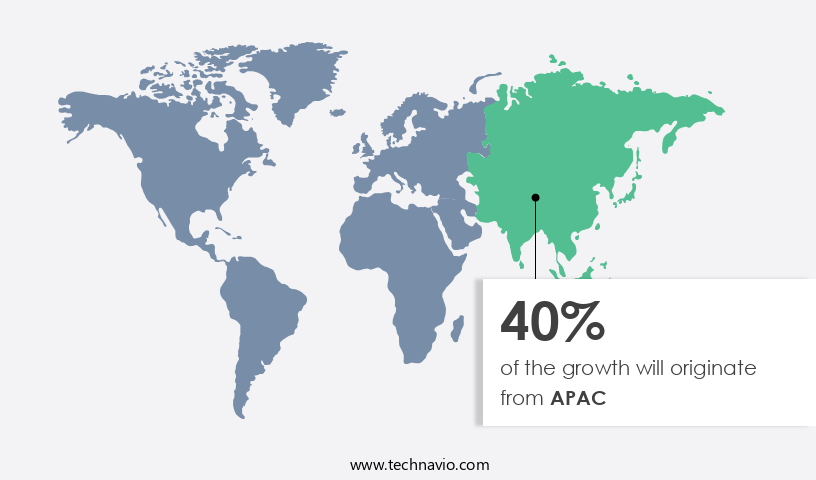
- APAC is estimated to contribute 40% to the growth of the global market during the forecast period.
Technavio's analysts have elaborately explained the regional trends and drivers that shape the market during the forecast period.
For more insights on the market share of various regions Request Free Sample
The Asia Pacific (APAC) region is witnessing significant economic growth, particularly in countries such as China, India, and Southeast Asian nations. This economic expansion drives the increased consumption of various sectors including consumer goods, packaging materials, textiles, and engineering plastics. Dimethyl Terephthalate (DMT) plays a crucial role in the production of these industries, with Polyethylene Terephthalate (PET) resin being a primary application. PET resin is extensively used in food packaging, beverage containers, textiles, and automotive components. The large and growing population in APAC leads to higher demand for these products, thereby boosting the consumption of DMT. Furthermore, urbanization and changing consumer lifestyles in APAC are driving demand for convenience products, packaged foods and beverages, and consumer goods, all of which rely on DMT-based products. Therefore, the demand for DMT is expected to continue growing in the APAC market.
Market Dynamics
Our researchers analyzed the data with 2023 as the base year, along with the key drivers, trends, and challenges. A holistic analysis of drivers will help companies refine their marketing strategies to gain a competitive advantage.
What are the key market drivers leading to the rise in adoption of Dimethyl Terephthalate Market?
Emergence of bio-based DMT and its production is the key driver of the market.
- The market is experiencing significant growth due to the increasing demand for sustainable packaging materials and consumer goods. DMT is a crucial raw material used in the production of Polyethylene Terephthalate (PET) and Polybutylene Terephthalate (PBT), which are widely used in food and beverage packaging, consumer electronics, and electrical industry applications. Bio-based DMT production is gaining popularity due to its environmental benefits over conventional petrochemical-based processes. Renewable feedstocks, such as biomass, agricultural residues, or waste materials, are used to produce bio-based DMT, reducing the dependence on finite fossil resources and lowering carbon emissions. This trend aligns with the growing consumer preference for eco-friendly products and brands.
- In addition, the packaging industry, particularly in food and beverage, is a significant consumer of PET and PBT. The demand for sustainable packaging is driven by urbanization, population growth, and regulatory developments. Sustainability certifications, such as those for recycled content and eco-friendly materials, are becoming increasingly important for brand owners seeking to enhance their product quality, customer confidence, and brand image.
What are the market trends shaping the Dimethyl Terephthalate Market?
Advancements in enzymatic catalysis is the upcoming trend in the market.
- Enzymatic catalysis significantly contributes to the production of Dimethyl Terephthalate (DMT) by catalyzing chemical reactions with high efficiency and selectivity under mild conditions. This method offers a more sustainable alternative to conventional processes, as enzymes are biodegradable, renewable, and operate under minimal energy requirements. The advancements in enzyme engineering, immobilization, and optimization enable the creation of efficient enzymatic processes for DMT synthesis, aligning with sustainability goals and regulatory requirements. Enzymes exhibit exceptional selectivity and stereoselectivity, ensuring precise control over reaction pathways and product distributions. In the consumer goods sector, DMT is extensively used as a raw material in the production of Polyethylene Terephthalate (PET) resin, which is widely applied in food packaging, including soft drinks and bottled water containers, and in the production of fibers for textiles.
- Additionally, DMT is used in the manufacturing of Polybutylene Terephthalate (PBT), a system component in insulated wires and appliances, as well as in the electronics industry for insulators and electrical connectors. The increasing urbanization, population growth, and consumer preferences for eco-friendly and sustainable packaging materials are driving the demand for DMT in various industries. Furthermore, technological advancements and recyclability are crucial factors contributing to the competitiveness of DMT in the market. The DMT industry is continually optimizing processes for energy efficiency and sustainability to meet the surging demand for packaging materials, particularly in the food and beverage, consumer electronics, and electrical markets.
What challenges does Dimethyl Terephthalate Market face during the growth?
Issues with DMT purification and separation processes is a key challenge affecting the market growth.
- Dimethyl terephthalate (DMT) is a crucial raw material in the production of polyethylene terephthalate (PET) and polybutylene terephthalate (PBT), widely used in various consumer goods and industries. In food packaging and beverage sectors, PET is a popular choice for bottled water, soft drinks, and other food and beverage containers due to its lightweight and eco-friendly properties. In the electrical industry, DMT is used as a system component in insulated wire and electrical devices, including appliances, electronics, and telecommunications equipment. The consumption of DMT is driven by urbanization, population growth, and consumer preferences for sustainable packaging. However, the production of DMT involves purification and separation processes that require significant energy input and generate emissions, waste streams, and by-products.
- In addition, these factors raise concerns about sustainability and energy efficiency in DMT production. To address these challenges, strategies to improve resource efficiency and minimize waste are essential. Technological advancements, such as process optimization and miniaturization, can help reduce energy consumption and improve the environmental impact of DMT production. Recyclability and the use of recycled content are also crucial for sustainable packaging and reducing the demand for virgin materials. Regulatory developments and sustainability certifications are driving the demand for eco-friendly packaging materials, including PET and PBT. Brand owners are increasingly focusing on performance characteristics, such as recyclability, lightweighting, and carbon emissions reduction, to enhance their brand image and customer confidence.
Exclusive Customer Landscape
The market forecasting report includes the adoption lifecycle of the market, covering from the innovator's stage to the laggard's stage. It focuses on adoption rates in different regions based on penetration. Furthermore, the market report also includes key purchase criteria and drivers of price sensitivity to help companies evaluate and develop their market growth analysis strategies.

Customer Landscape
Key Companies & Market Insights
Companies are implementing various strategies, such as strategic alliances, market forecast , partnerships, mergers and acquisitions, geographical expansion, and product/service launches, to enhance their presence in the market.
The market research and growth report includes detailed analyses of the competitive landscape of the market and information about key companies, including:
- BLD Pharmatech Ltd
- Chengdu Sustar Feed Co. Ltd.
- Connect Chemicals GmbH
- Eastman Chemical Co.
- Fiber Intermediate Products Co.
- Haihang Industry Co. Ltd.
- Indorama Ventures Public Co. Ltd.
- Kanto Chemical Co. Inc.
- Kishida Chemical Co. Ltd.
- Merck KGaA
- Muby Chemicals
- National Analytical Corp.
- OAO Mogilevkhimvolokno
- OXXYNOVA GmbH
- Sarna Chemical Pvt. Ltd.
- Sasa Polyester Sanayi A.S.
- Simson Pharma Ltd.
- SK Chemicals Co. Ltd.
- Teijin Ltd.
- Tokyo Chemical Industry Co. Ltd.
- Vizag Chemical International
Qualitative and quantitative analysis of companies has been conducted to help clients understand the wider business environment as well as the strengths and weaknesses of key market players. Data is qualitatively analyzed to categorize companies as pure play, category-focused, industry-focused, and diversified; it is quantitatively analyzed to categorize companies as dominant, leading, strong, tentative, and weak.
Research Analyst Overview
The market is a significant player in the global chemical industry, serving as a crucial raw material in various sectors such as food packaging, consumer goods, electronics, and telecommunications. This article aims to provide an in-depth analysis of the market dynamics, focusing on the consumption patterns, industry trends, and market drivers. DMT is a versatile chemical compound that plays a vital role in the production of Polyethylene Terephthalate (PET) and Polybutylene Terephthalate (PBT). These polymers are extensively used in various applications, including food and beverage packaging, consumer electronics, insulated wires, and textiles.
Moreover, in the food packaging sector, PET is widely used for bottled water, soft drinks, and other food containers due to its excellent barrier properties and lightweight nature. The consumer goods industry also relies heavily on PET and PBT for manufacturing various products such as appliances, electrical devices, and flexible packaging. For instance, PBT is used in the production of insulators for electrical devices, while PET is used in the manufacturing of eco-friendly, lightweight packaging for various consumer electronics. The electrical market is another significant consumer of DMT, with PBT being used as a system component in the production of insulated wire and electrical connectors.
Furthermore, PBT's excellent electrical insulation properties and high thermal stability make it an ideal choice for various electrical applications. The demand for DMT is also driven by the increasing urbanization and population growth, leading to a increase in the consumption of various consumer goods and food and beverage products. Moreover, consumer preferences for sustainable packaging and eco-friendly products have led to an increase in the demand for recyclable materials, further boosting the DMT market. Technological advancements and process optimization have played a crucial role in enhancing the efficiency of DMT production and reducing its environmental impact. For instance, the use of catalysts in the production process has led to a significant reduction in energy consumption and carbon emissions.
Additionally, the recycling of PET and PBT has gained significant traction, with many brands adopting recycled content in their packaging to reduce their carbon footprint and improve their brand image. The DMT industry is also witnessing regulatory developments aimed at promoting sustainability and reducing waste. For instance, various certifications such as the USDA BioPreferred program and the European Union's Ecolabel have been established to promote the use of sustainable packaging materials. These regulations are expected to drive the demand for DMT and its derived polymers in various industries. The competitiveness of the DMT industry is also influenced by various factors such as product variations, performance characteristics, and brand image.
|
Market Scope |
|
|
Report Coverage |
Details |
|
Page number |
150 |
|
Base year |
2023 |
|
Historic period |
2018-2022 |
|
Forecast period |
2024-2028 |
|
Growth momentum & CAGR |
Accelerate at a CAGR of 4.75% |
|
Market growth 2024-2028 |
USD 257.56 million |
|
Market structure |
Fragmented |
|
YoY growth 2023-2024(%) |
4.35 |
|
Key countries |
US, China, Japan, Germany, and France |
|
Competitive landscape |
Leading Companies, Market Positioning of Companies, Competitive Strategies, and Industry Risks |
What are the Key Data Covered in this Market Research and Growth Report?
- CAGR of the market during the forecast period
- Detailed information on factors that will drive the market growth and forecasting between 2024 and 2028
- Precise estimation of the size of the market and its contribution of the market in focus to the parent market
- Accurate predictions about upcoming market growth and trends and changes in consumer behaviour
- Growth of the market across APAC, North America, Europe, South America, and Middle East and Africa
- Thorough analysis of the market's competitive landscape and detailed information about companies
- Comprehensive analysis of factors that will challenge the growth of market companies
We can help! Our analysts can customize this market research report to meet your requirements. Get in touch
 RIA -
RIA - 
