
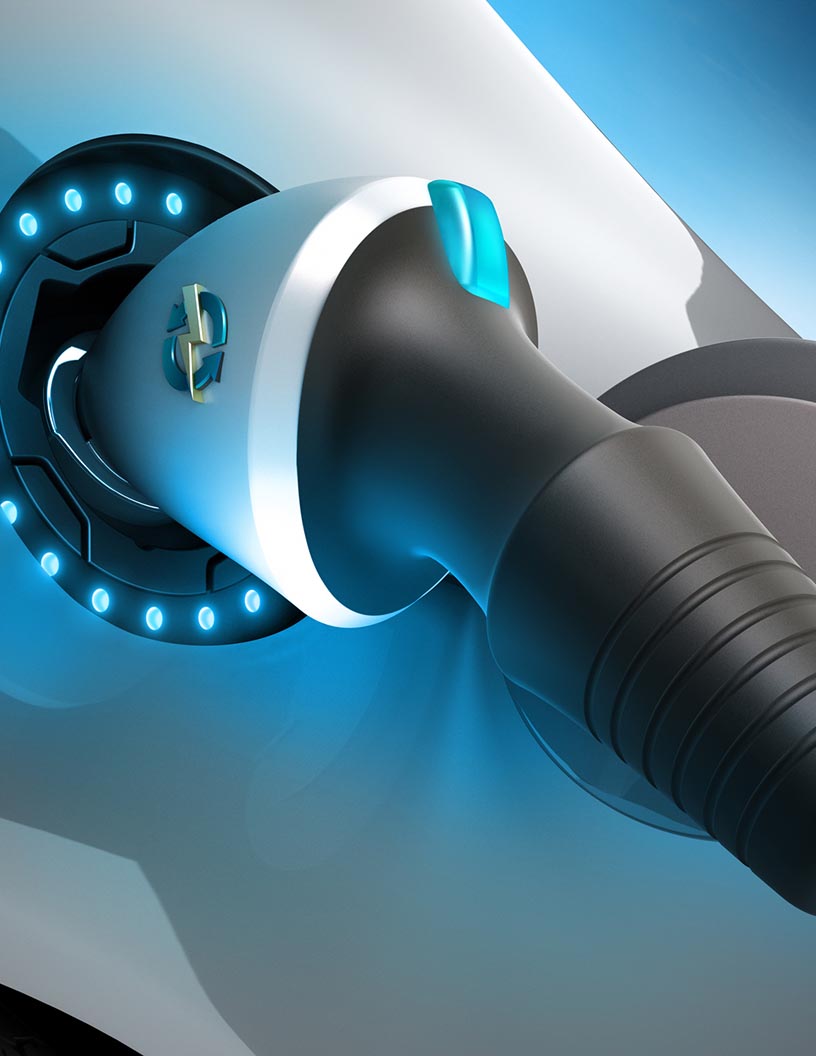


Europe Electric Vehicle (EV) Charging Connector Market Size 2024-2028
The Europe electric vehicle (EV) charging connector market size is forecast to increase by USD 58.6 million million at a CAGR of 19.09% between 2023 and 2028.
- The European Electric Vehicle (EV) Charging Connector Market is witnessing significant growth due to the increasing adoption of electric vehicles (EVs) and the emergence of connected EVs. Despite the strong dominance of Internal Combustion Engine (ICE)-powered vehicles, the shift towards sustainable transportation solutions is driving the demand for EV charging connectors. Market trends indicate that the European market will continue to witness growth as governments and automakers invest in EV infrastructure and technology. Charging power sources include residential and public charging stations, with charging poles and bases providing power transfer. Battery technology advancements and stricter emission norms are further fueling market growth. Connected EVs, which enable real-time communication between the vehicle and the charging infrastructure, are expected to gain popularity due to their convenience and efficiency. However, challenges such as the high upfront cost of EVs and the limited charging infrastructure in some regions may hinder market growth. Overall, the European EV Charging Connector Market is poised for growth, driven by the need for sustainable transportation solutions and advancements in EV technology.
What will be the size of the Europe Electric Vehicle (EV) Charging Connector Market during the forecast period?
_charging_connector_market_in_europe_size_abstract_2024_v1.jpg)
- The European electric vehicle (EV) charging connector market is experiencing significant growth as the adoption of environment-friendly vehicles continues to gain momentum. The market encompasses a range of charging solutions, including charging points, poles, bases, and stations, which facilitate power transfer from electricity sources to EVs. EV sector growth is driven by stringent emission norms, increasing carbon emissions concerns, and the availability of various incentives such as government subsidies, tax credits, and grants. EV charging connectors come in various types, including Type 1 and Combined Charging System (CCS), with differing pin configurations. Residential charging is a growing segment, with charging power sources including wall-mounted charging stations and portable chargers. DC fast charging is another key trend, addressing the overheating issue associated with prolonged charging times. The market's size is expected to expand further as the EV sector continues to evolve, offering opportunities for businesses and investors.
How is this market segmented and which is the largest segment?
The market research report provides comprehensive data (region-wise segment analysis), with forecasts and estimates in "USD million" for the period 2024-2028, as well as historical data from 2018-2022 for the following segments.
- Charging
- Slow charging
- Fast charging
- Rapid charging
- Geography
- Europe
- Germany
- UK
- France
- Norway
- Europe
By Charging Insights
- The slow charging segment is estimated to witness significant growth during the forecast period.
The market is witnessing significant growth due to the increasing adoption of environment-friendly vehicles and the expansion of charging networks. Fast-charging vehicles, such as those capable of 45 kW external charging, are gaining popularity, requiring advanced charging connectors. The European EV sector is witnessing innovations in charging technology, including 3-level charging levels and DC fast charging. Government subsidies, tax breaks, grants, and incentives are driving the market, with automakers introducing various electric car models. Charging time varies, with slow chargers providing an average power output of 3 kW and taking 6-12 hours to fully charge an EV. Level 3 charging stations, offering faster charging times, are becoming more prevalent.
_charging_connector_market_in_europe_size_abstract_2024_v2.jpg)
Get a glance at the market share of various segments Request Free Sample
The slow charging segment was valued at USD 24.70 million in 2018 and showed a gradual increase during the forecast period.
Market Dynamics
Our researchers analyzed the data with 2023 as the base year, along with the key drivers, trends, and challenges. A holistic analysis of drivers will help companies refine their marketing strategies to gain a competitive advantage.
What are the key market drivers leading to the rise in adoption of Europe Electric Vehicle (EV) Charging Connector Market?
Increasing adoptions of EV is the key driver of the market.
- The market is experiencing substantial growth due to the increasing adoption of environment-friendly vehicles and the expansion of charging infrastructure. In 2021, electric car sales in Europe more than doubled, with Germany and Norway leading the way. Government policies, such as subsidies, tax breaks, and grants, have played a significant role in promoting EV sales. Technological advancements, including innovations in fast-charging vehicles and charging points, have also contributed to the market's growth. Fast-charging vehicles require charging points with higher power output, such as the 45 kW external charger and 3-level charging level. These charging points use AC and DC power sources and can charge batteries faster than Level 1 and Level 2 charging. Charging time is a critical factor for EV consumers, and fast charging is becoming increasingly important. The European EV sector is transitioning towards DC fast charging, which can charge batteries up to 80% capacity in less than 30 minutes.
- However, this technology poses overheating issues that need to be addressed. The market is also witnessing incentives from governments and automakers to promote the installation of charging stations and the provision of charging services. Residential charging is another growing segment of the market, with charging power sources ranging from 200 V to 600 V. The charging base and charging pole are essential components of residential charging systems, and various charging connector types, such as the Type 1 connector and Combined Charging System, are available. The European EV charging connector market is expected to continue growing due to the increasing demand for electric vehicles and the expansion of charging networks. The market is also expected to benefit from the adoption of emission norms and the increasing focus on reducing carbon emissions.
What are the market trends shaping the Europe Electric Vehicle (EV) Charging Connector Market?
Emergence of connected EVs is the upcoming trend In the market.
- The European Electric Vehicle (EV) Charging Connector Market is experiencing growth due to advancements in EV technology. A significant challenge In the adoption of EVs is range anxiety. To address this issue, automakers are developing connectivity modules for fast-charging vehicles. These innovations enable features such as real-time battery management, online charging station booking, and navigation assistance. Connected EVs alert users when battery levels are low and provide data on nearby charging points. Users can book charging slots and make payments online, reducing the need for extended charging times. Government subsidies, tax breaks, and grants also contribute to the expansion of the EV sector.
- The market focuses on the Level 3 sector, with 45 kW external chargers and 3-level charging levels. Power transfer occurs through AC and DC charging, with charging times varying from slow to fast (200 V to 600 V, power output). The EV charging connector market in Europe is driven by the need to reduce carbon emissions and meet emission norms, as well as the increasing popularity of hybrid technology. Incentives such as tax credits and installation services are also facilitating the growth of the charging network.
What challenges does Europe Electric Vehicle (EV) Charging Connector Market face during the growth?
Strong dominance of ICE-powered vehicles is a key challenge affecting the market growth.
- The European Electric Vehicle (EV) Charging Connector Market is experiencing significant growth due to the increasing adoption of environment-friendly vehicles. According to industry reports, the market is expected to expand at a notable pace, driven by the proliferation of fast-charging vehicles and the expansion of charging points. The EV Sector is witnessing numerous innovations, including the development of 45 kW external chargers and 3-level charging levels, which offer faster charging times and higher power output. Government subsidies, tax breaks, grants, and incentives continue to play a crucial role In the growth of the market. Automakers are introducing various electric car models, further boosting the demand for EV charging connectors.
- In the fast-charging segment, AC and DC charging are gaining popularity, with power sources ranging from 200 V to 600 V. Despite the advantages of EVs, the market faces challenges due to the dominance of Internal Combustion Engine (ICE) vehicles in Europe. The automotive sector is a significant contributor to the EU economy, with approximately 4% of the GDP generated from ICE-powered vehicle sales. The popularity of SUVs, primarily diesel-based vehicles, remains high In the region. To address the charging infrastructure gap, governments and private entities are investing in charging networks and installation services. Site assessments and assessments for charging power sources are also gaining importance to ensure optimal charging performance and prevent overheating issues. The market is expected to continue its growth trajectory, driven by the increasing focus on reducing carbon emissions and meeting emission norms through the adoption of Hybrid technology and the expansion of charging infrastructure.
Exclusive Europe Electric Vehicle (EV) Charging Connector Market Customer Landscape
The market forecasting report includes the adoption lifecycle of the market, market growth and forecasting, covering from the innovator's stage to the laggard's stage. It focuses on adoption rates in different regions based on penetration. Furthermore, the report also includes key purchase criteria and drivers of price sensitivity to help companies evaluate and develop their market growth analysis strategies.
_charging_connector_market_in_europe_customer_landscape_abstract_2023_geo_v1.jpg)
Customer Landscape
Key Companies & Market Insights
Companies are implementing various strategies, such as strategic alliances, market forecast partnerships, mergers and acquisitions, geographical expansion, and product/service launches, to enhance their presence In the market.
The market research and growth report includes detailed analyses of the competitive landscape of the market and information about key companies, including:
- ABB Ltd.
- Alfen NV
- Allego BV
- Amphenol Corp.
- BP Plc
- ChargePoint Holdings Inc.
- Efacec
- Fujikura Co. Ltd.
- HUBER SUHNER AG
- ITT Inc.
- Lumberg Holding GmbH and Co. KG
- Robert Bosch GmbH
- Schneider Electric SE
- Siemens AG
- Sumitomo Corp.
- TE Connectivity Ltd.
- Tesla Inc.
- Webasto SE
- Yazaki Corp.
Qualitative and quantitative analysis of companies has been conducted to help clients understand the wider business environment as well as the strengths and weaknesses of key market players. Data is qualitatively analyzed to categorize companies as pure play, category-focused, industry-focused, and diversified; it is quantitatively analyzed to categorize companies as dominant, leading, strong, tentative, and weak.
Research Analyst Overview
The European electric vehicle (EV) charging market is experiencing significant growth as the region shifts towards environment-friendly transportation solutions. The EV sector is witnessing a growth in demand for charging points, with fast-charging vehicles becoming increasingly popular. The charging infrastructure is a crucial component of the EV ecosystem, enabling power transfer from charging points to vehicles. The European governments are providing substantial assistance to accelerate the adoption of EVs. This assistance comes in various forms, including tax breaks, grants, and subsidies, aimed at reducing the upfront cost of electric cars and incentivizing the installation of charging points. These initiatives are contributing to the expansion of the charging network, making EVs a more viable option for consumers. Automakers are also investing In the development of innovative EV models and charging technologies. The market is witnessing the introduction of 45 kW external chargers and 3-level charging levels, which offer faster charging times compared to traditional Level 1 and Level 2 charging. These advancements are essential to address the charging time concerns of consumers, as charging time remains a significant barrier to widespread EV adoption. The charging infrastructure is evolving to support various charging power sources, including AC and DC charging. DC fast charging is gaining popularity due to its ability to charge EVs quickly, making long-distance travel more feasible.
However, the implementation of DC fast charging requires the installation of specialized charging equipment and infrastructure, which can be costly. The charging infrastructure also faces challenges related to power output and overheating issues. The market is witnessing the development of charging connectors that can handle higher power outputs, ensuring efficient and effective power transfer. Additionally, innovations in cooling technology are addressing the overheating concerns, ensuring the safe and reliable operation of charging stations. The charging market is segmented into residential and public charging sectors. Residential charging is essential for EV owners to charge their vehicles at home, while public charging stations cater to EV users on the go. The public charging sector is witnessing significant growth due to the increasing number of EVs on the road and the expansion of the charging network. The European EV charging market is dynamic, with various stakeholders, including automakers, charging infrastructure providers, and governments, playing essential roles in its growth. The market is expected to continue growing as governments and automakers invest in EVs and charging infrastructure, and consumers become more environmentally conscious and seek to reduce their carbon emissions.
Thus, the European EV charging market is witnessing significant growth due to government initiatives, automaker investments, and consumer demand for environment-friendly transportation solutions. The market is evolving to address the challenges related to charging time, power output, and overheating, ensuring the efficient and effective operation of charging infrastructure. The future of the EV charging market in Europe looks promising, with continued investments and advancements expected to drive growth and make EVs a more viable and convenient option for consumers.
|
Market Scope |
|
|
Report Coverage |
Details |
|
Page number |
146 |
|
Base year |
2023 |
|
Historic period |
2018-2022 |
|
Forecast period |
2024-2028 |
|
Growth momentum & CAGR |
Accelerate at a CAGR of 19.09% |
|
Market growth 2024-2028 |
USD 58.6 million |
|
Market structure |
Fragmented |
|
YoY growth 2023-2024(%) |
15.48 |
|
Competitive landscape |
Leading Companies, Market Positioning of Companies, Competitive Strategies, and Industry Risks |
What are the Key Data Covered in this Market Report?
- CAGR of the market during the forecast period
- Detailed information on factors that will drive the market growth and forecasting between 2024 and 2028
- Precise estimation of the size of the market and its contribution of the market in focus to the parent market
- Accurate predictions about upcoming market growth and trends and changes in consumer behaviour
- Growth of the market across Europe
- Thorough analysis of the market's competitive landscape and detailed information about companies
- Comprehensive analysis of factors that will challenge the growth of market companies
We can help! Our analysts can customize this market research report to meet your requirements Get in touch