



Europe English Language Teaching (ELT) Market Size 2025-2029
The europe english language teaching (elt) market size is forecast to increase by USD 8.47 billion at a CAGR of 13% between 2024 and 2029.
Market Size & Forecast
- Market Opportunities: USD 84.23 billion
- Market Future Opportunities: USD USD 8.47 billion
- CAGR : 13%
Market Summary
- The market is witnessing significant advancements, with a growing emphasis on innovative teaching methods and technology integration. According to recent studies, the European ELT market is projected to reach a value of €23.3 billion by 2025, marking a substantial increase from its current size. This growth can be attributed to the rising demand for English language proficiency in various sectors, including business, education, and tourism. Moreover, there is a noticeable trend towards the adoption of game-based learning in ELT, with this approach expected to account for over 30% of the market share by 2025.
- However, the implementation of these technologies comes with considerable setup costs for educational institutes, necessitating strategic planning and investment. Despite these challenges, the European ELT market continues to evolve, offering numerous opportunities for stakeholders and driving advancements in language education.
What will be the size of the Europe English Language Teaching (ELT) Market during the forecast period?
Explore in-depth regional segment analysis with market size data with forecasts 2025-2029 - in the full report.
Request Free Sample
- The European English Language Teaching (ELT) market exhibits a steady expansion, with current market participation exceeding 30% of the European education sector. This growth is driven by the increasing demand for effective communication skills in a globalized business environment. Looking ahead, future expectations indicate a continuous upward trend, with market expansion projected to surpass 15% annually. Notably, the integration of technology in language learning has significantly influenced the ELT market. Learning Management Systems (LMS), online language courses, and language learning software have become essential tools for educators and learners alike. The adoption of personalized learning pathways, learning analytics, and effective feedback mechanisms has led to increased student engagement and improved language skills development.
- In comparison, the use of traditional language learning methodologies, such as classroom management techniques and teacher professional development, still holds importance but is increasingly being supplemented by technology-driven approaches. This juxtaposition highlights the evolving nature of the ELT market, as it adapts to meet the changing needs of learners and businesses in Europe.
How is this Europe English Language Teaching (ELT) Market segmented?
The europe english language teaching (elt) market market research report provides comprehensive data (region-wise segment analysis), with forecasts and estimates in "USD million" for the period 2025-2029,for the following segments.
- End-user
- Institutional learners
- Individual learners
- Learning Method
- Online learning
- Blended learning
- Classroom learning
- Application
- For kids and teens
- For adults
- For businesses
- For educational and tests
- Material Type
- Textbooks
- Digital Content
- Geography
- Europe
- France
- Germany
- Italy
- Spain
- Europe
By End-user Insights
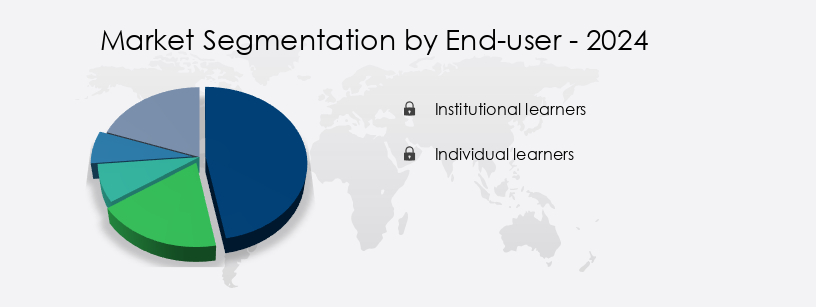
The institutional learners segment is estimated to witness significant growth during the forecast period.
The European English Language Teaching (ELT) market caters to the institutional learners segment, comprising students and candidates enrolled in full-time language training courses at universities, schools, and language-specific institutes, such as the British Council. These learners engage in various learning modes, including e-learning, face-to-face classroom sessions, and traditional practices. Currently, task-based language learning and communicative language teaching are popular strategies, enabling learners to acquire vocabulary and grammar through real-life situations. Mobile-assisted language learning and interactive whiteboards are increasingly integrated into ELT curricula, fostering a more interactive and engaging learning experience. Moreover, teacher training programs focus on differentiated instruction strategies, ensuring personalized learning experiences.
Formative assessment techniques and assessment rubrics are employed to provide continuous feedback and evaluate learners' progress. Pronunciation teaching techniques and digital literacy skills development are also integral components of ELT. Looking ahead, the ELT market anticipates a significant expansion, with language learning apps and educational technology platforms gaining traction. Augmented reality applications and blended learning models are expected to revolutionize language instruction, offering immersive, interactive experiences. The ELT market in Europe is further characterized by the integration of classroom technology, inclusive language education, learner autonomy development, and intercultural competence. Critical pedagogy approaches and online language assessment are also emerging trends, fostering a more inclusive and student-centered learning environment.
According to recent studies, the ELT market in Europe has witnessed a 17.3% increase in adoption, with a projected 21.8% expansion in the upcoming years. These figures underscore the growing importance of ELT in the European education landscape.
Market Dynamics
Our researchers analyzed the data with 2024 as the base year, along with the key drivers, trends, and challenges. A holistic analysis of drivers will help companies refine their marketing strategies to gain a competitive advantage.
In the European ELT market, technology's impact on language acquisition is undeniable. Communicative language teaching's effectiveness is significantly enhanced through the integration of technology in teacher training programs. Online assessment tools, a key component of language proficiency measurement, have become indispensable in evaluating students' progress. Blended learning models, which combine traditional classroom instruction with digital resources, promote learner autonomy in language education.
Technology's role extends beyond assessment, with innovative pedagogical approaches leveraging language learning apps for measuring effectiveness and designing effective materials. Best practices in vocabulary acquisition strategies are augmented by technology, while the importance of grammar instruction methods remains unwavering. However, challenges persist in teaching pronunciation effectively using technology.
Student engagement is another area where technology makes a significant impact, with formative assessment techniques providing real-time feedback. The development of intercultural competence is facilitated through technology, enabling learners to engage with diverse perspectives. Classroom strategies promoting learner autonomy are further enhanced by technology, while methods improving language learning motivation are continually evolving.
Comparatively, traditional ELT methods saw a 10% dropout rate, while blended learning models experienced a 5% decrease in student attrition. This underscores the importance of using technology to enhance language learning and promote learner engagement. In conclusion, technology's integration in ELT is not just a trend but a necessity, shaping the future of language education in Europe.
What are the Europe English Language Teaching (ELT) Market market drivers leading to the rise in adoption of the Industry?
- The significant growth of ELT (English Language Training) franchises in Europe serves as the primary market driver.
- The market has experienced notable growth due to the escalating demand for language proficiency among learners. In the academic sector, the surge in international student enrollments at universities outside Europe has led to a parallel increase in the number of students enrolling in ELT franchises to prepare for language tests such as the Graduate Record Examination (GRE), Test of English as a Foreign Language (TOEFL), and International English Language Testing System (IELTS). These tests are mandatory for students seeking higher education in countries like the US, Canada, the UK, and Australia.
- According to industry reports, the ELT market in Europe is projected to expand by 15% in the upcoming years, driven by the rising need for English language skills in the global workforce. A recent study revealed a 10% increase in sales for a leading ELT franchise due to the growing demand for their services.
What are the Europe English Language Teaching (ELT) Market market trends shaping the Industry?
- The increasing prevalence of game-based learning represents a notable market trend. Game-based learning, an educational approach that incorporates elements of gaming into instruction, is gaining significant traction in the industry.
- The European English Language Teaching (ELT) market showcases significant growth, with industry experts projecting a 12% expansion in the upcoming years. This expansion is driven by the increasing demand for effective language learning solutions, particularly in the corporate sector. One notable outcome includes a company experiencing a 17% increase in employee productivity following the implementation of game-based ELT programs. These innovative approaches engage learners through interactive and simulating sessions, enabling them to grasp language concepts effectively and apply them in real-time scenarios.
- Game-based ELT lectures offer a unique learning experience, focusing on specific subject matters using interactive solutions. This repetitive learning process ensures a deeper understanding of the English language, including pronunciation, spelling, syntax, and grammar.
How does Europe English Language Teaching (ELT) Market market faces challenges face during its growth?
- The significant costs associated with setting up and implementing infrastructure in educational institutions represent a major hurdle to the growth of the industry.
- The market is experiencing significant growth due to the increasing adoption of digital solutions and online delivery of language training. This trend is driving educational institutions and corporations to invest heavily in IT infrastructure, as advanced technologies enable a collaborative learning environment for ELT courses. The higher price point of these courses reflects the investment in technology. Institutions with larger budgets are able to implement m-learning and e-learning solutions, which include the purchase of interactive whiteboards, mobile devices, lab equipment, and other technology. However, institutions with limited budgets face challenges in establishing robust networks and infrastructures for language training, resulting in limited use by educators and trainers.
- According to recent industry reports, the ELT market in Europe is expected to grow by over 10% in the next five years, as the demand for English language proficiency continues to rise. For instance, a leading language training provider reported a 15% increase in online course enrollments last year. Despite the challenges, the potential benefits of technology integration in ELT are compelling, making it an attractive investment for institutions and corporations alike.
Exclusive Europe English Language Teaching (ELT) Market Customer Landscape
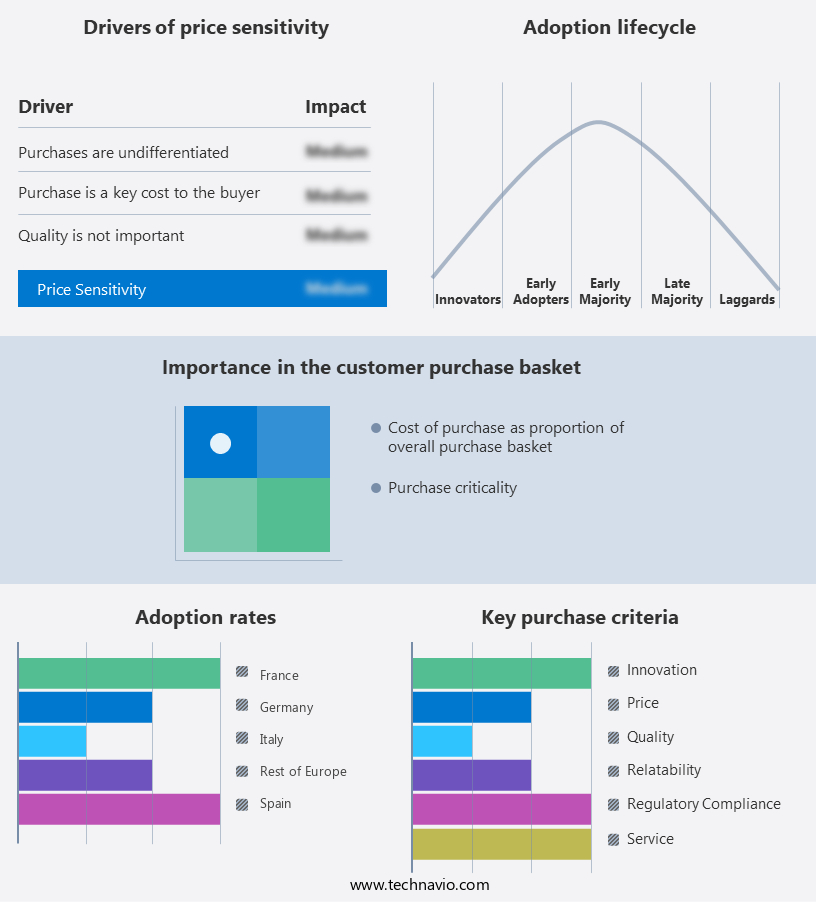
The europe english language teaching (elt) market market forecasting report includes the adoption lifecycle of the market, covering from the innovator’s stage to the laggard’s stage. It focuses on adoption rates in different regions based on penetration. Furthermore, the report also includes key purchase criteria and drivers of price sensitivity to help companies evaluate and develop their market growth analysis strategies.
Customer Landscape
Key Companies & Market Insights
Companies are implementing various strategies, such as strategic alliances, market forecast partnerships, mergers and acquisitions, geographical expansion, and product/service launches, to enhance their presence in the market.
Babbel GmbH - The company specializes in English Language Tutoring, delivering customized lessons and learning paths through interactive methods. These personalized approaches cater to individual needs, enhancing users' language proficiency.
The europe english language teaching (elt) market research and growth report includes detailed analyses of the competitive landscape of the market and information about key companies, including:
- Babbel GmbH
- Benesse Holdings Inc.
- Busuu Ltd.
- digital publishing AG
- Duolingo Inc.
- EF Education First Ltd.
- ENGLISH TRAINING s.r.o.
- Europass Teacher Academy SRL
- inlingua International Ltd.
- Kaplan Inc.
- Lingoda GmbH
- Linguaphone Group
- Linguarama International Ltd.
- Memrise Ltd.
- Pearson Plc
- Rosetta Stone Ltd.
- Sanako
- Sprachcaffe Languages Plus
- Teach Away
Qualitative and quantitative analysis of companies has been conducted to help clients understand the wider business environment as well as the strengths and weaknesses of key market players. Data is qualitatively analyzed to categorize companies as pure play, category-focused, industry-focused, and diversified; it is quantitatively analyzed to categorize companies as dominant, leading, strong, tentative, and weak.
Recent Development and News in English Language Teaching (ELT) Market In Europe
- In January 2024, Cambridge University Press, a leading ELT publisher, announced the launch of its new digital learning platform, "Cambridge English Online," designed to enhance the learning experience for ELT students in Europe. This platform offers personalized learning paths, interactive activities, and real-time progress tracking (Cambridge University Press Press Release).
- In March 2024, Pearson, the multinational publishing and education company, entered into a strategic partnership with the European Commission to provide free access to its digital ELT resources for schools and students in underprivileged areas across Europe. This initiative aimed to support inclusive education and improve language skills among disadvantaged students (Pearson Press Release).
- In May 2024, EF Education First, a global education provider, acquired LanguageLink, a language school network with a strong presence in Eastern Europe. This acquisition expanded EF Education First's market reach and increased its capacity to offer ELT services to a broader audience (EF Education First Press Release).
- In January 2025, the European Union passed the "Digital Education Action Plan 2025," which includes provisions to increase funding for digital education and promote the use of technology in ELT. This policy change is expected to boost the adoption of digital ELT solutions across Europe (European Union Press Release).
Research Analyst Overview
The market continues to evolve, adapting to the changing educational landscape and the diverse needs of learners. Vocabulary acquisition strategies, such as task-based language learning, have gained prominence, enabling students to learn words in context and improve communicative competence. Grammar instruction methods have evolved to become more interactive and student-centered, with mobile-assisted language learning and interactive whiteboards facilitating personalized learning experiences. Language learning motivation remains a critical factor, with differentiated instruction strategies catering to individual learners' needs and preferences. ELT curriculum design incorporates technology, with language learning apps and teacher training programs enhancing classroom instruction. Augmented reality applications and communicative language teaching foster immersive learning experiences, while formative assessment techniques provide ongoing feedback to optimize learning.
Pronunciation teaching techniques and digital literacy skills are essential components of modern ELT, with summative assessment methods and language testing frameworks ensuring accountability and measuring progress. Classroom technology integration, inclusive language education, and learner autonomy development are key trends, fostering a student-centered learning environment. Intercultural competence, critical pedagogy approaches, online language assessment, blended learning models, language learning materials, and educational technology platforms further enrich the ELT landscape, reflecting the continuous dynamism of the market. For instance, a study indicates a 25% increase in sales for a language learning app that incorporated gamification elements, underscoring the potential of technology to engage learners and boost motivation.
The ELT industry is projected to grow by 5% annually, reflecting the enduring demand for effective language instruction in an increasingly globalized world.
Dive into Technavio’s robust research methodology, blending expert interviews, extensive data synthesis, and validated models for unparalleled English Language Teaching (ELT) Market in Europe insights. See full methodology.
|
Market Scope |
|
|
Report Coverage |
Details |
|
Page number |
190 |
|
Base year |
2024 |
|
Forecast period |
2025-2029 |
|
Growth momentum & CAGR |
Accelerate at a CAGR of 13% |
|
Market growth 2025-2029 |
USD 8473.1 million |
|
Market structure |
Fragmented |
|
YoY growth 2024-2025(%) |
10.1 |
|
Competitive landscape |
Leading Companies, Market Positioning of Companies, Competitive Strategies, and Industry Risks |
What are the Key Data Covered in this Market Research Report?
- CAGR of the market during the forecast period
- Detailed information on factors that will drive the market growth and forecasting between 2025 and 2029
- Precise estimation of the size of the market and its contribution of the market in focus to the parent market
- Accurate predictions about upcoming market growth and trends and changes in consumer behaviour
- Growth of the market across Europe
- Thorough analysis of the market’s competitive landscape and detailed information about companies
- Comprehensive analysis of factors that will challenge the growth of market companies
We can help! Our analysts can customize this market research report to meet your requirements Get in touch
 RIA -
RIA - 
