


Energy-based Non-invasive Medical Aesthetic Treatment System Market Size 2026-2030
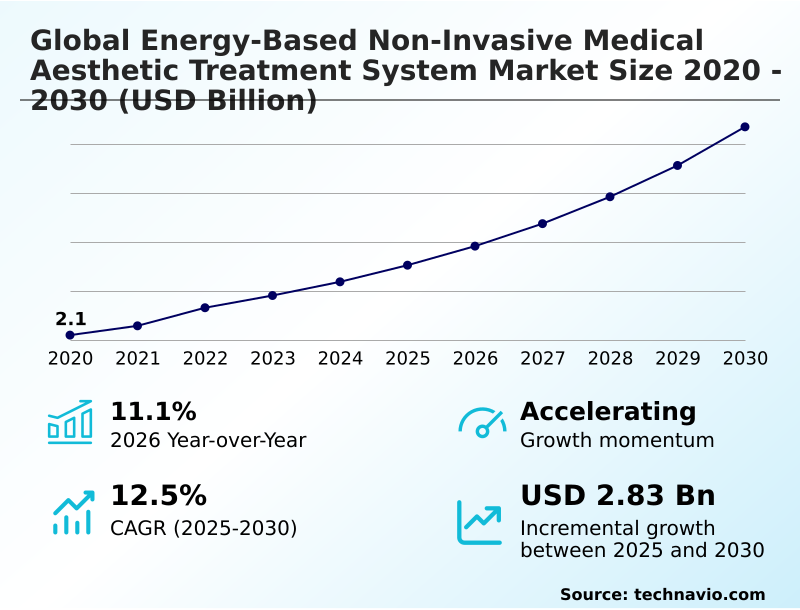
The energy-based non-invasive medical aesthetic treatment system market size is valued to increase by USD 2.83 billion, at a CAGR of 12.5% from 2025 to 2030. Increasing consumer preference for non invasive and minimally invasive procedures will drive the energy-based non-invasive medical aesthetic treatment system market.
Major Market Trends & Insights
- North America dominated the market and accounted for a 47.9% growth during the forecast period.
- By Application - Skin rejuvenation segment was valued at USD 1.43 billion in 2024
- By End-user - Medspa segment accounted for the largest market revenue share in 2024
Market Size & Forecast
- Market Opportunities: USD 4.26 billion
- Market Future Opportunities: USD 2.83 billion
- CAGR from 2025 to 2030 : 12.5%
Market Summary
- The energy-based non-invasive medical aesthetic treatment system market is defined by rapid innovation and evolving consumer expectations. Growth is fueled by a strong preference for procedures with minimal downtime, such as those using radiofrequency skin tightening, which stimulates collagen neogenesis for a more youthful appearance.
- Technological advancements are central, with manufacturers developing multi-application platforms that combine modalities like Nd-YAG lasers and intense pulsed light (IPL) to offer versatile treatment options. A key trend is the move toward holistic body shaping and contouring, expanding beyond traditional facial rejuvenation.
- For instance, a clinic chain may implement a capital investment strategy focused on acquiring devices with broad clinical applications, such as a cold fiber laser platform, to maximize return on investment. This approach enables them to address a wider range of patient needs, from skin resurfacing to tattoo removal, using a single system.
- However, the high cost of these advanced systems and the complexities of navigating varied international regulatory frameworks remain significant challenges for market participants. The industry continues to adapt by focusing on evidence-based outcomes and enhanced patient safety through features like integrated cooling mechanisms and real-time tissue response monitoring.
What will be the Size of the Energy-based Non-invasive Medical Aesthetic Treatment System Market during the forecast period?
Get Key Insights on Market Forecast (PDF) Get Free Sample
How is the Energy-based Non-invasive Medical Aesthetic Treatment System Market Segmented?
The energy-based non-invasive medical aesthetic treatment system industry research report provides comprehensive data (region-wise segment analysis), with forecasts and estimates in "USD million" for the period 2026-2030, as well as historical data from 2020-2024 for the following segments.
- Application
- Skin rejuvenation
- Vaginal rejuvenation
- Hair removal
- Leg vein treatment
- Others
- End-user
- Medspa
- Hospitals and surgery center
- HCP owned clinic
- Traditional spa
- Product
- Laser and IPL devices
- RF skin tightening systems
- HIFU units
- Electromagnetic devices
- Geography
- North America
- US
- Canada
- Mexico
- Europe
- Germany
- France
- UK
- Asia
- Rest of World (ROW)
- North America
By Application Insights
The skin rejuvenation segment is estimated to witness significant growth during the forecast period.
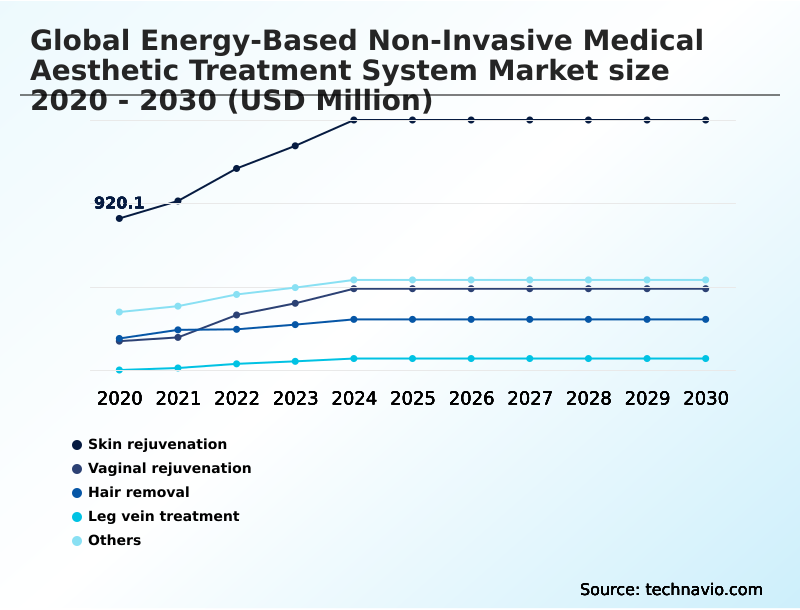
The skin rejuvenation segment is the most dynamic application in the energy-based non-invasive medical aesthetic treatment system market. This category is driven by strong consumer demand for anti-aging solutions that address photodamage, skin laxity, and textural irregularities using non-invasive techniques.
Innovation in modalities such as fractional laser skin resurfacing and radiofrequency skin tightening is central, with a significant trend toward hyper-personalized treatment plans.
Multi-application platforms are gaining prominence, enabling practitioners to deliver combination therapies that target multiple skin layers for synergistic results. The use of a cryogen-cooled monopolar radiofrequency device, for example, improves patient outcomes.
Practices adopting these versatile systems report up to a 15% increase in patient retention due to superior, customized outcomes and enhanced tissue response monitoring.
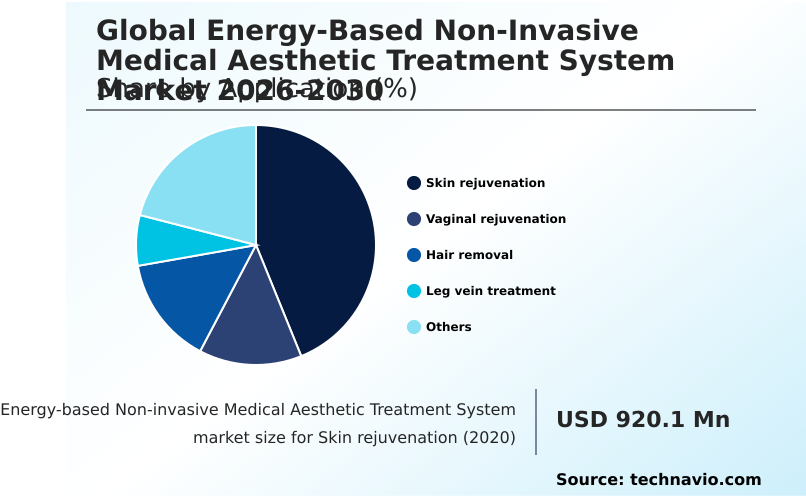
The Skin rejuvenation segment was valued at USD 1.43 billion in 2024 and showed a gradual increase during the forecast period.
Regional Analysis
North America is estimated to contribute 47.9% to the growth of the global market during the forecast period.Technavio’s analysts have elaborately explained the regional trends and drivers that shape the market during the forecast period.
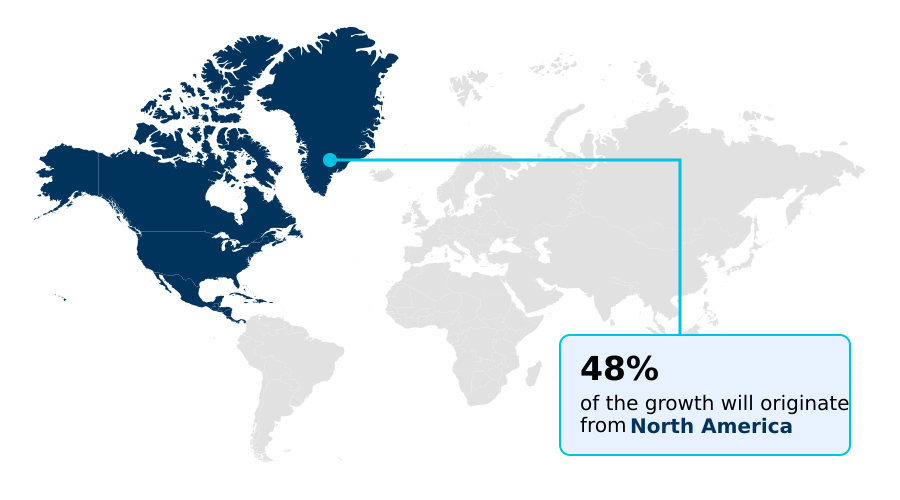
See How Energy-based Non-invasive Medical Aesthetic Treatment System Market Demand is Rising in North America Get Free Sample
The geographic landscape of the energy-based non-invasive medical aesthetic treatment system market is characterized by distinct regional dynamics.
North America, led by the US, represents the most mature market, accounting for nearly 48% of the global incremental growth opportunity, driven by high consumer awareness and early adoption of technologies like high-intensity focused ultrasound (HIFU).
In contrast, the Asia Pacific region is the fastest-growing, fueled by rising disposable incomes and a strong cultural emphasis on aesthetics.
Navigating this diverse global market requires strategic adaptation; for example, companies forming partnerships with local distributors in emerging economies can reduce market entry timelines by up to 30%.
European markets are defined by stringent regulatory standards and a preference for treatments offering natural-looking results, such as those achieved with advanced IPL devices for photorejuvenation and dermal tightening.
Market Dynamics
Our researchers analyzed the data with 2025 as the base year, along with the key drivers, trends, and challenges. A holistic analysis of drivers will help companies refine their marketing strategies to gain a competitive advantage.
- The global energy-based non-invasive medical aesthetic treatment system market is advancing through sophisticated technological integration and evolving clinical practices. The efficacy of cryogen-cooled monopolar radiofrequency for skin tightening is now a key benchmark, while the best practices for combining dermal fillers with energy devices are becoming standardized to enhance patient outcomes.
- A critical consideration for practitioners is the comparative analysis of fractional CO2 laser versus radiofrequency microneedling, with decisions often depending on the specific indications for acne scar revision. Similarly, understanding the long-term effects of HIFU on facial SMAS layers is crucial for managing patient expectations.
- The market for non-invasive fat reduction is witnessing a notable trend where the effectiveness of cryolipolysis is being compared with laser lipolysis for body contouring. In terms of market entry, navigating FDA 510(k) clearance for new aesthetic devices remains a primary hurdle for manufacturers.
- Operationally, clinics adopting platforms that offer multiple energy modalities report a patient treatment capacity that is nearly double that of clinics relying on single-application devices, significantly impacting scheduling and revenue potential. This demonstrates a clear move towards optimizing both clinical results and business efficiency.
- The nuances of treating different skin phototypes with IPL technology and the specific advantages of picosecond versus nanosecond lasers for tattoo removal further highlight the market's increasing specialization and the need for evidence-based protocols.
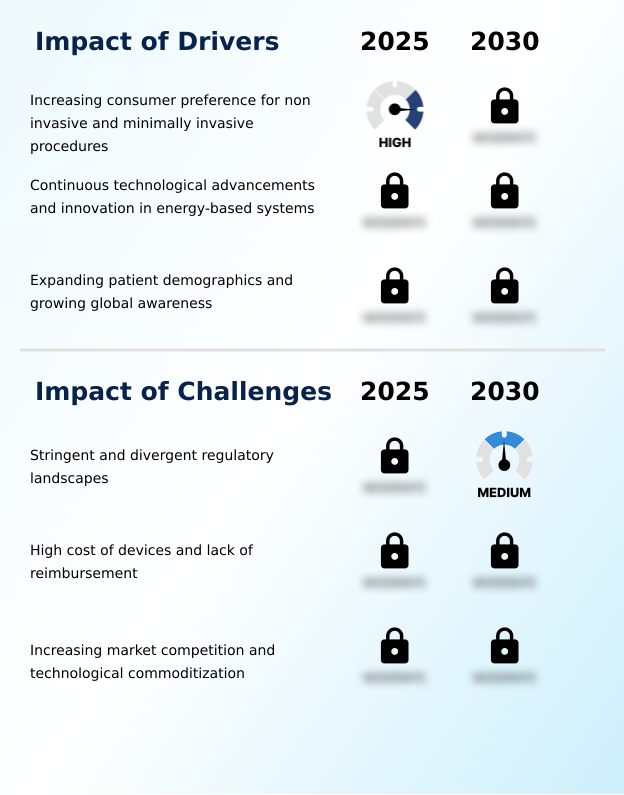
What are the key market drivers leading to the rise in the adoption of Energy-based Non-invasive Medical Aesthetic Treatment System Industry?
- Increasing consumer preference for non-invasive and minimally invasive procedures is a key driver for market growth.
- The growth of the energy-based non-invasive medical aesthetic treatment system market is propelled by several powerful drivers. A profound consumer shift toward non-invasive procedures with minimal downtime underpins market demand, as patients increasingly favor treatments like selective photothermolysis for photorejuvenation.
- This is supported by relentless technological advancement, including the development of versatile multi-application platforms and safer energy delivery systems. For instance, devices incorporating advanced integrated cooling mechanisms have been shown to improve patient comfort scores by over 40%.
- Concurrently, an expanding patient demographic, including a younger cohort seeking preventative 'prejuvenation,' has broadened the addressable market by an estimated 20%, creating new, long-term revenue streams for procedures ranging from hair removal to tattoo removal.
What are the market trends shaping the Energy-based Non-invasive Medical Aesthetic Treatment System Industry?
- The market is witnessing a significant shift toward the ascendancy of combination therapies. This is coupled with the rise of hyper-personalized treatment plans to meet specific patient needs.
- Key trends are reshaping the energy-based non-invasive medical aesthetic treatment system market, moving it toward greater personalization and broader applications. The adoption of sophisticated combination therapies, where modalities like radiofrequency skin tightening and fractional laser skin resurfacing are used synergistically, has been shown to reduce total treatment sessions by up to 25% for certain indications.
- This is complemented by the proliferation of non-facial applications, with a strong focus on holistic body shaping and contouring. Furthermore, the integration of AI-powered diagnostics is enhancing precision; these systems have demonstrated an 18% improvement in identifying optimal treatment parameters, leading to more consistent outcomes in procedures stimulating collagen neogenesis and dermal tightening.
- This evolution toward hyper-personalized treatment plans is becoming a key differentiator for advanced clinics.
What challenges does the Energy-based Non-invasive Medical Aesthetic Treatment System Industry face during its growth?
- Stringent and divergent regulatory landscapes present a key challenge affecting the industry's growth trajectory.
- Despite strong growth drivers, the energy-based non-invasive medical aesthetic treatment system market faces significant challenges. Navigating stringent and divergent regulatory landscapes across key regions is a primary hurdle; obtaining clearances like the FDA 510(k) for new aesthetic devices can add up to 24 months to a global product launch timeline.
- The high capital cost of advanced equipment, such as a cold fiber laser platform or systems for high-intensity focused ultrasound (HIFU), presents another barrier. This financial burden, coupled with a lack of reimbursement, extends the average ROI period for clinics by 15% compared to less advanced systems.
- Finally, intense market competition and the commoditization of foundational technologies like intense pulsed light (IPL) put continuous downward pressure on pricing, challenging profitability.
Exclusive Technavio Analysis on Customer Landscape
The energy-based non-invasive medical aesthetic treatment system market forecasting report includes the adoption lifecycle of the market, covering from the innovator’s stage to the laggard’s stage. It focuses on adoption rates in different regions based on penetration. Furthermore, the energy-based non-invasive medical aesthetic treatment system market report also includes key purchase criteria and drivers of price sensitivity to help companies evaluate and develop their market growth analysis strategies.
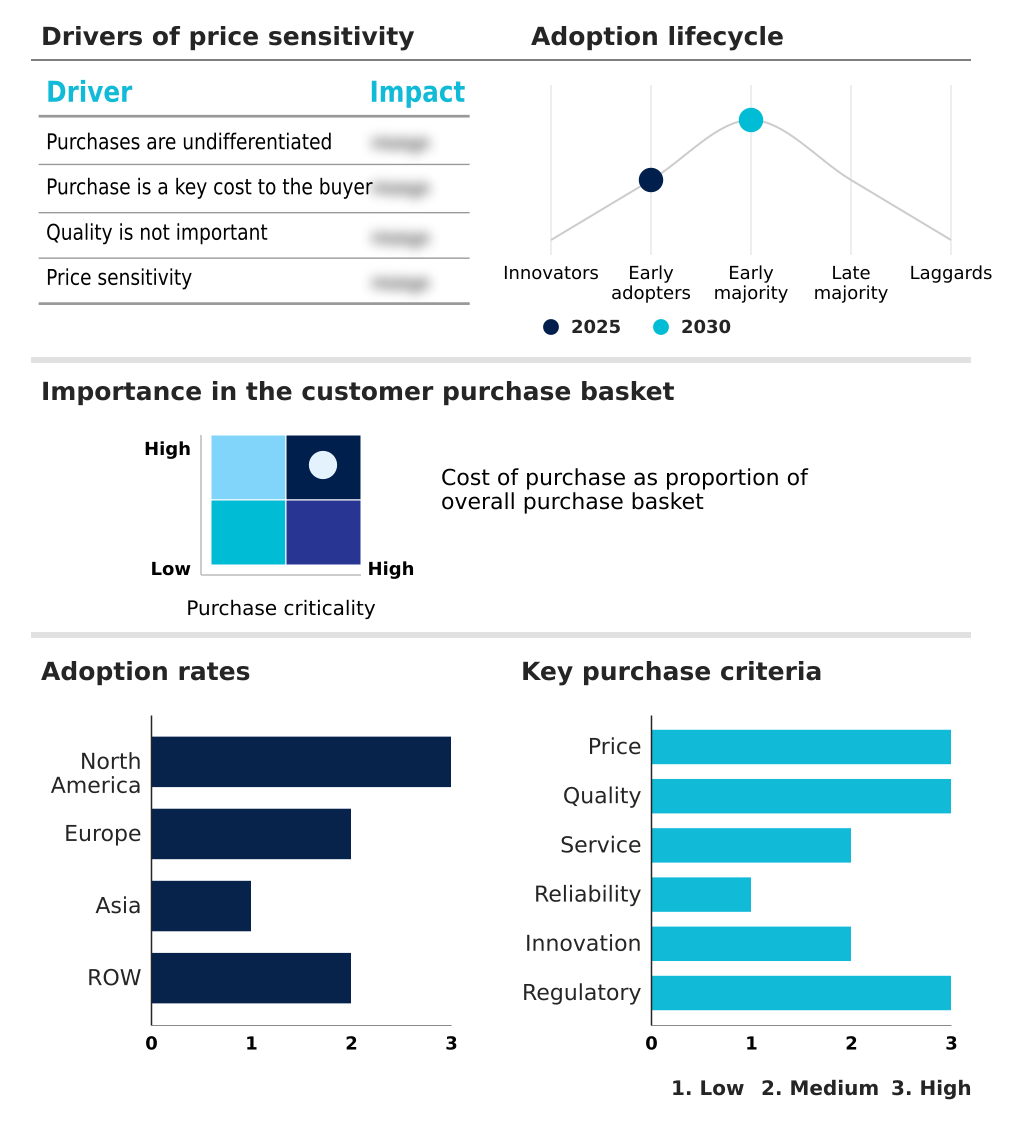
Customer Landscape of Energy-based Non-invasive Medical Aesthetic Treatment System Industry
Competitive Landscape
Companies are implementing various strategies, such as strategic alliances, energy-based non-invasive medical aesthetic treatment system market forecast, partnerships, mergers and acquisitions, geographical expansion, and product/service launches, to enhance their presence in the industry.
Aerolase Corp. - The vendor provides advanced aesthetic solutions featuring proprietary 650-microsecond pulse technology, addressing various dermatological needs with a focus on high efficacy and enhanced safety profiles.
The industry research and growth report includes detailed analyses of the competitive landscape of the market and information about key companies, including:
- Aerolase Corp.
- Allergan Aesthetics
- Alma Lasers Ltd.
- AngioDynamics Inc.
- BTL INDUSTRIES, Inc.
- Candela Corp.
- Cutera Inc.
- Cynosure LLC
- DEKA M.E.L.A. S.r.l.
- Fotona d.o.o
- Inmode Ltd.
- Jeisys Medical Inc.
- Lumenis
- Merz Pharma GmbH and Co. KGaA
- Sciton Inc.
- SharpLight Technologies Inc.
- Solta Medical
- Venus
Qualitative and quantitative analysis of companies has been conducted to help clients understand the wider business environment as well as the strengths and weaknesses of key industry players. Data is qualitatively analyzed to categorize companies as pure play, category-focused, industry-focused, and diversified; it is quantitatively analyzed to categorize companies as dominant, leading, strong, tentative, and weak.
Recent Development and News in Energy-based non-invasive medical aesthetic treatment system market
- In October, 2024, Cynosure launched a dedicated marketing campaign for its Elite iQ laser platform, emphasizing its Skintel Melanin Reader for personalized and safe hair removal treatments across all skin types.
- In February, 2025, Cutera, Inc. received FDA 510(k) clearance for its AviClear laser device for the treatment of moderate and severe inflammatory acne vulgaris, expanding the application of its breakthrough technology.
- In March, 2025, SkinSpirit, a prominent medspa chain, announced a strategic partnership with PatientIQ to deploy a data analytics platform for tracking and analyzing patient-reported outcomes from its energy-based treatments.
- In May, 2025, InMode launched its Lumecca Peak IPL device, designed to deliver higher power and precision for treating skin concerns such as pigmentation and vascular lesions in fewer sessions.
Dive into Technavio’s robust research methodology, blending expert interviews, extensive data synthesis, and validated models for unparalleled Energy-based Non-invasive Medical Aesthetic Treatment System Market insights. See full methodology.
| Market Scope | |
|---|---|
| Page number | 308 |
| Base year | 2025 |
| Historic period | 2020-2024 |
| Forecast period | 2026-2030 |
| Growth momentum & CAGR | Accelerate at a CAGR of 12.5% |
| Market growth 2026-2030 | USD 2827.0 million |
| Market structure | Fragmented |
| YoY growth 2025-2026(%) | 11.1% |
| Key countries | US, Canada, Mexico, Germany, France, UK, Italy, Spain, The Netherlands, China, Japan, India, South Korea, Indonesia, Thailand, Brazil, Saudi Arabia, UAE, Turkey, Argentina, Chile, South Africa and Israel |
| Competitive landscape | Leading Companies, Market Positioning of Companies, Competitive Strategies, and Industry Risks |
Research Analyst Overview
- The energy-based non-invasive medical aesthetic treatment system market is in a state of continuous evolution, driven by relentless technological innovation and a broadening patient base. Core advancements in radiofrequency skin tightening, selective photothermolysis, and collagen neogenesis are redefining treatment efficacy.
- The development of multi-application platforms incorporating modalities like Nd-YAG lasers and intense pulsed light (IPL) allows practitioners to perform a wide range of procedures from hair removal to skin rejuvenation and tattoo removal. The integration of AI for diagnostics and real-time tissue response monitoring represents a pivotal shift, presenting a critical boardroom-level decision regarding future product strategy and R&D budgeting.
- Companies must now evaluate investments in intelligent systems, such as a cold fiber laser platform with automated controls or a cryogen-cooled monopolar radiofrequency device with predictive algorithms, or risk obsolescence. This move toward intelligent, data-driven aesthetics is transforming the competitive landscape, with systems that ensure patient safety through features like integrated cooling mechanisms setting new industry standards.
- Firms focusing on holistic body shaping and contouring are also gaining significant traction.
What are the Key Data Covered in this Energy-based Non-invasive Medical Aesthetic Treatment System Market Research and Growth Report?
-
What is the expected growth of the Energy-based Non-invasive Medical Aesthetic Treatment System Market between 2026 and 2030?
-
USD 2.83 billion, at a CAGR of 12.5%
-
-
What segmentation does the market report cover?
-
The report is segmented by Application (Skin rejuvenation, Vaginal rejuvenation, Hair removal, Leg vein treatment, and Others), End-user (Medspa, Hospitals and surgery center, HCP owned clinic, and Traditional spa), Product (Laser and IPL devices, RF skin tightening systems, HIFU units, and Electromagnetic devices) and Geography (North America, Europe, Asia, Rest of World (ROW))
-
-
Which regions are analyzed in the report?
-
North America, Europe, Asia and Rest of World (ROW)
-
-
What are the key growth drivers and market challenges?
-
Increasing consumer preference for non invasive and minimally invasive procedures, Stringent and divergent regulatory landscapes
-
-
Who are the major players in the Energy-based Non-invasive Medical Aesthetic Treatment System Market?
-
Aerolase Corp., Allergan Aesthetics, Alma Lasers Ltd., AngioDynamics Inc., BTL INDUSTRIES, Inc., Candela Corp., Cutera Inc., Cynosure LLC, DEKA M.E.L.A. S.r.l., Fotona d.o.o, Inmode Ltd., Jeisys Medical Inc., Lumenis, Merz Pharma GmbH and Co. KGaA, Sciton Inc., SharpLight Technologies Inc., Solta Medical and Venus
-
Market Research Insights
- The energy-based non-invasive medical aesthetic treatment system market is shaped by the dynamic interplay between technological advancement and sophisticated consumer demand. Innovations in cryogen-cooled monopolar radiofrequency and fractional laser skin resurfacing offer superior clinical outcomes, compelling practitioners to invest in new technologies to maintain a competitive edge.
- Systems featuring real-time temperature monitoring can reduce adverse events by over 25%, a critical factor for clinics focused on patient safety. Furthermore, the rise of hyper-personalized treatment plans, often guided by AI-powered diagnostics, is reshaping patient care.
- Practices that leverage this technology to customize protocols for specific aesthetic goals report up to a 15% improvement in patient retention rates, highlighting the shift toward value-based and results-driven aesthetic medicine.
We can help! Our analysts can customize this energy-based non-invasive medical aesthetic treatment system market research report to meet your requirements.
 RIA -
RIA - 
