
Erectile Dysfunction (ED) Drugs Market Analysis North America, Europe, Asia, Rest of World (ROW) - US, Canada, Germany, China, UK, India, France, South Korea, Japan, Italy - Size and Forecast 2025-2029

Erectile Dysfunction (ED) Drugs Market Analysis North America, Europe, Asia, Rest of World (ROW) - US, Canada, Germany, China, UK, India, France, South Korea, Japan, Italy - Size and Forecast 2025-2029

Published: Jan 2025 200 Pages SKU: IRTNTR72378

Market Overview at a Glance

$1.50 B
Market Opportunity
6.6%
CAGR
6.3
YoY growth 2024-2025(%)

Erectile Dysfunction (ED) Drugs Market Size 2025-2029

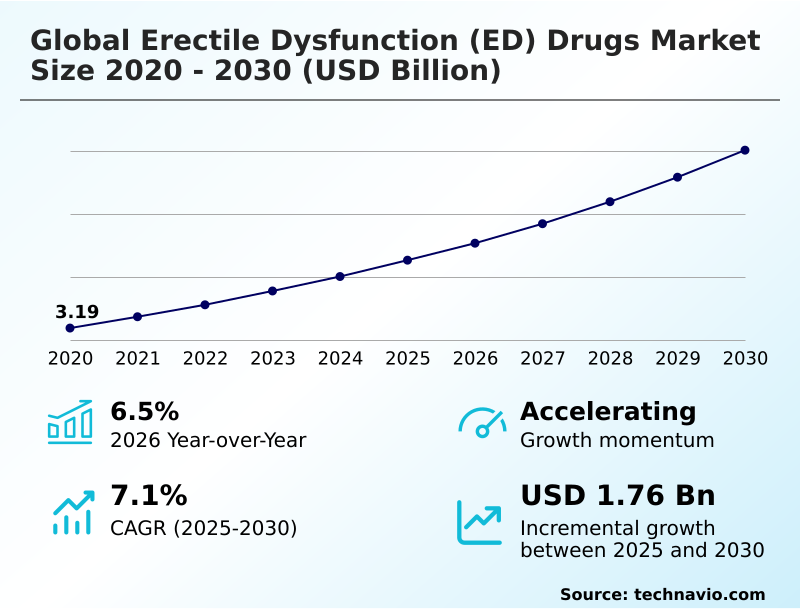
The erectile dysfunction (ed) drugs market size is forecast to increase by USD 1.5 billion, at a CAGR of 6.6% between 2024 and 2029.

  • The market is witnessing significant growth, driven by the increasing demand for effective treatments to address this common health concern. The market is further propelled by the presence of novel drug formulations in late stages of development, offering potential improvements in efficacy and patient experience. Sildenafil citrate, tadalafil, and vardenafil are established players in the market, maintaining their dominance through proven efficacy and wide availability. However, the market landscape is not without challenges. Regulatory hurdles and stringent approval processes pose significant obstacles to new entrants.
  • Additionally, the availability of generic ED drugs poses a threat to market growth, as they offer cost-effective alternatives to branded medications. To capitalize on market opportunities and navigate challenges effectively, companies must focus on innovation, regulatory compliance, and competitive pricing strategies. By addressing these factors, they can differentiate themselves in the competitive ED Drugs Market and meet the evolving needs of patients.

What will be the Size of the Erectile Dysfunction (ED) Drugs Market during the forecast period?
Erectile Dysfunction (ED) Drugs Market Size

 Request Free Sample

The market continues to evolve, shaped by various factors including regulatory approvals, underlying medical conditions, and patient needs. Oral medications, such as those containing Phosphodiesterase type 5 (PDE5) inhibitors like sildenafil citrate, remain a primary treatment option. However, the market landscape is not static. Patients with ED may experience side effects, including muscle aches, nasal congestion, back pain, and vision changes. These issues, along with the severity of ED, can impact treatment adherence and patient satisfaction. Regulatory bodies continue to monitor adverse event reporting and post-marketing surveillance to ensure safety and efficacy. Marketing strategies, such as direct-to-consumer advertising and physician outreach, play a significant role in increasing awareness and accessibility of ED treatments.

Long-term outcomes and quality of life improvements are crucial considerations for both patients and healthcare providers. ED can be linked to various underlying medical conditions, including cardiac disease, smoking cessation, alcohol consumption, and relationship issues. Lifestyle modifications, psychological factors, and patient education are essential components of comprehensive ED management. Regulatory approvals for generic formulations and dosage forms, such as oral disintegrating tablets, expand treatment options and accessibility. Clinical trials and prescription fulfillment services contribute to the ongoing research and delivery of effective ED solutions. Patient support programs and counseling are vital for addressing the emotional and psychological aspects of ED.

Drug interactions and patient satisfaction are crucial factors in the evolving ED drugs market. The continuous unfolding of market activities and patterns underscores the importance of ongoing research and adaptability in this sector.

How is this Erectile Dysfunction (ED) Drugs Industry segmented?

The erectile dysfunction (ed) drugs industry research report provides comprehensive data (region-wise segment analysis), with forecasts and estimates in "USD million" for the period 2025-2029, as well as historical data from 2019-2023 for the following segments.

  • End-user
    • Hospital pharmacy
    • Retail pharmacy
    • Online pharmacy
  • Product
    • Oral drugs
    • Topical drugs
    • Others
  • Geography
    • North America
      • US
      • Canada
    • Europe
      • Germany
      • UK
    • APAC
      • China
    • Rest of World (ROW)

By End-user Insights

The hospital pharmacy segment is estimated to witness significant growth during the forecast period.

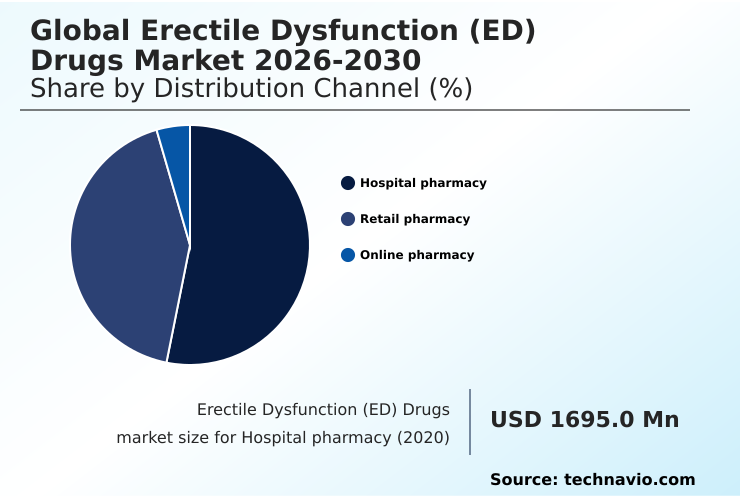
The market encompasses various entities that significantly impact its dynamics and trends. ED drugs are primarily used to manage underlying medical conditions, such as cardiac disease and diabetes, and address psychological factors. Hospital pharmacies hold the largest market share, as they offer prescription fulfillment, patient counseling, and post-marketing surveillance. These medications are also available through online pharmacies and retail pharmacies, catering to diverse patient needs. Regulatory approvals and clinical trials continue to drive innovation in the market, with oral medications, such as phosphodiesterase type 5 (PDE5) inhibitors, leading the way. However, potential drug interactions, side effects, and underlying medical conditions necessitate careful patient education and monitoring.

Common side effects include muscle aches, low blood pressure, and vision changes. Marketing strategies, including direct-to-consumer advertising, have expanded access to ED treatments, while physician outreach programs ensure treatment adherence and address relationship issues. Lifestyle modifications, such as weight management and smoking cessation, can also improve ED management. Long-term outcomes and patient satisfaction are crucial considerations, with clinical trials focusing on these aspects. Oral medications, including sildenafil citrate and oral disintegrating tablets, remain popular choices due to their convenience. However, the emergence of generic formulations and alternative dosage forms, such as nasal sprays and topical gels, adds to the market's complexity.

The market is further influenced by factors such as alcohol consumption, back pain, and psychological factors. Adverse event reporting and patient support programs are essential components of post-marketing surveillance, ensuring the safety and efficacy of ED treatments. Overall, the ED drugs market continues to evolve, addressing the diverse needs of patients and healthcare providers.

Erectile Dysfunction (ED) Drugs Market Size

Request Free Sample

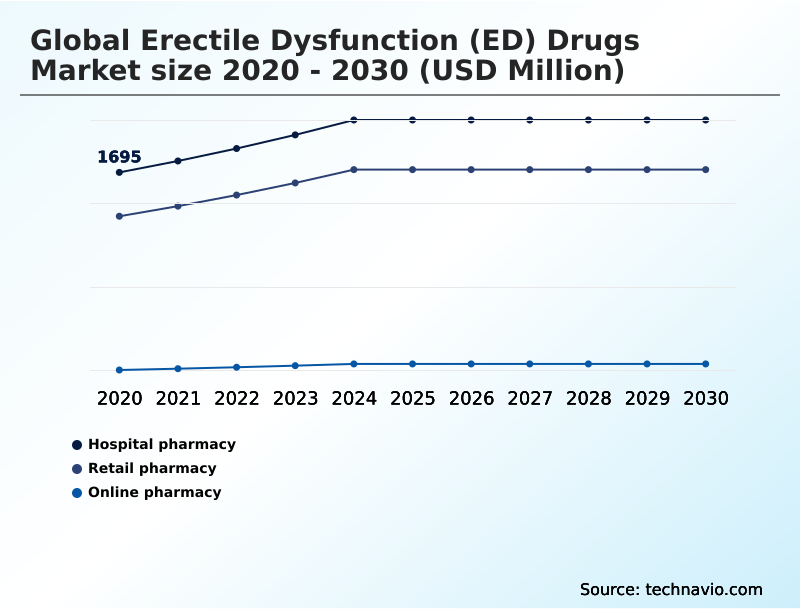
The Hospital pharmacy segment was valued at USD 1.61 billion in 2019 and showed a gradual increase during the forecast period.
Regional Analysis

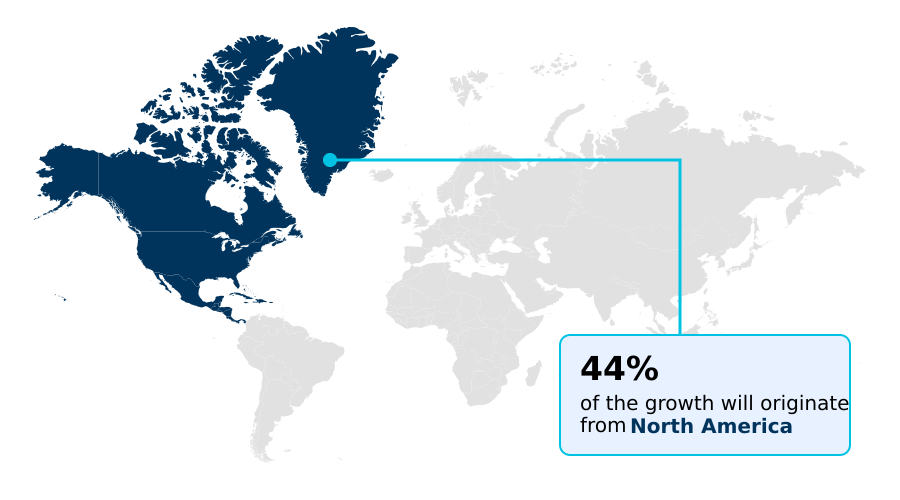
North America is estimated to contribute 41% to the growth of the global market during the forecast period.Technavio's analysts have elaborately explained the regional trends and drivers that shape the market during the forecast period.
Erectile Dysfunction (ED) Drugs Market Share by Geography

 Request Free Sample

The North American the market is primarily driven by the high prevalence of chronic diseases, particularly in the US. According to the Centers for Disease Control and Prevention (CDC), approximately 60% of adults in the US have a chronic disease, and 40% have two or more. Breast cancer, a common condition, can negatively impact sexual function in women undergoing surgery, radiotherapy, or chemotherapy. Oophorectomy, whether surgical or following treatment, results in a significant decrease in testosterone, estrogen, and progesterone levels, leading to permanent menopause. ED drugs, including phosphodiesterase type 5 (PDE5) inhibitors like sildenafil citrate, are prescribed to manage ED.

These medications can interact with various underlying medical conditions, such as cardiac disease, retinitis pigmentosa, and low blood pressure, necessitating careful patient counseling and prescription fulfillment. Post-marketing surveillance is crucial to monitor adverse events and long-term outcomes. Marketing strategies, such as direct-to-consumer advertising, online pharmacy sales, and physician outreach, have increased treatment accessibility and adherence. However, they also raise concerns regarding treatment safety and quality of life. Patient support programs and patient satisfaction are essential for addressing these concerns and promoting treatment adherence. Clinical trials and the development of generic formulations contribute to the market's growth. However, potential side effects, such as muscle aches, nasal congestion, vision changes, and psychological factors, can impact patient satisfaction and treatment adherence.

Lifestyle modifications, including weight management and smoking cessation, can help mitigate these side effects and improve overall health. Regulatory approvals, drug interactions, and underlying medical conditions, such as relationship issues, alcohol consumption, and back pain, can complicate ED management. Patient education and counseling are crucial for addressing these complications and ensuring effective treatment. Adverse event reporting and post-marketing surveillance are essential for monitoring safety and long-term outcomes. In summary, the North American ED drugs market is growing due to the increasing prevalence of chronic diseases and the availability of various treatment options. However, careful consideration of potential drug interactions, underlying medical conditions, and patient counseling is necessary to ensure effective treatment and improve patient satisfaction.

Market Dynamics

Our researchers analyzed the data with 2024 as the base year, along with the key drivers, trends, and challenges. A holistic analysis of drivers will help companies refine their marketing strategies to gain a competitive advantage.

What are the key market drivers leading to the rise in the adoption of Erectile Dysfunction (ED) Drugs Industry?

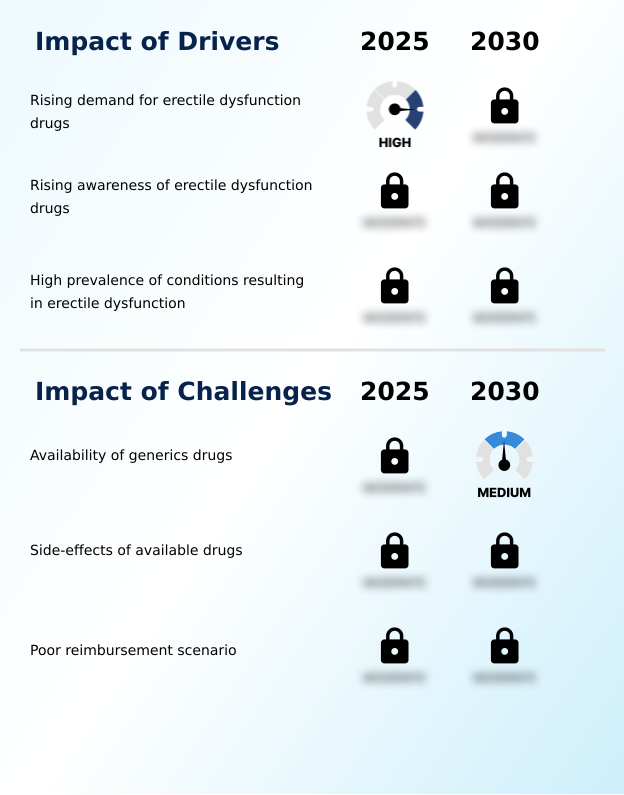
  • The escalating demand for ED drugs serves as the primary market driver. 
  • The market for ED drugs has experienced notable growth due to the increasing awareness and prioritization of sexual health. This trend is driven by both the over-the-counter availability of treatments and the rising number of prescriptions issued by healthcare professionals. Aging and underlying medical conditions, including low blood pressure and psychological factors, contribute to the development of ED. To enhance patient satisfaction and ensure treatment adherence, pharmaceutical companies offer patient support programs. However, it is crucial to consider potential drug interactions and ensure proper administration to minimize risks and optimize outcomes.
  • Oral disintegrating tablets provide a convenient and discreet solution for patients seeking ED treatment. The focus on improving quality of life and addressing the root causes of ED continues to fuel market growth.

What are the market trends shaping the Erectile Dysfunction (ED) Drugs Industry?

  • The emergence of new drug formulations in advanced stages of development is a significant market trend. This trend signifies the continuous progression of pharmaceutical innovation.
  • The market for ED drugs is currently led by oral formulations, which hold a significant market share. However, the landscape is anticipated to change during the forecast period with the introduction of novel formulations, such as topical gels, injectables, and suppositories. These new formulations offer therapeutic advantages and are expected to attract a large patient base. For instance, Eroxon, a nitroglycerin formulation by Futura Medical, is currently undergoing Phase III clinical trials for ED treatment.
  • In the Phase II study, the molecule demonstrated promising results in improving ED and exhibited a favorable safety profile. The emergence of these novel formulations will expand the treatment options for ED patients and potentially widen the market scope.

What challenges does the Erectile Dysfunction (ED) Drugs Industry face during its growth?

  • The expansion of the industry hinges on overcoming the significant challenge posed by the limited availability of generic alternatives. 
  • The ED drugs market has experienced challenges due to the entry of generic drugs and their impact on revenue growth. For example, the FDA has approved generic versions of sildenafil citrate, the active ingredient in Viagra, which has resulted in a decline in sales for the branded product. Other generic ED drugs, such as Avanafil, Tadalafil, and Vardenafil, also contribute to the market. The affordability of these generics is a significant factor, as they are available at lower costs than branded drugs. Underlying medical conditions, drug interactions, and patient counseling are essential aspects of the ED drugs market.
  • Cardiac disease is a common underlying condition that can affect ED treatment. Prescription fulfillment and regulatory approvals are crucial for ensuring patient safety and effective treatment. Post-marketing surveillance is essential for monitoring drug safety and efficacy. Retinitis pigmentosa, a rare genetic disorder, can also impact ED treatment, as some ED drugs may have potential side effects for patients with this condition. Patient counseling is necessary to ensure proper usage and potential side effects awareness. Drug interactions with other medications can also impact ED treatment, and it's essential to consider these when prescribing ED drugs. Online pharmacies have emerged as a convenient option for ED drug procurement, but regulatory approvals and patient safety concerns remain.
  • The severity of ED can vary, and proper diagnosis and treatment are necessary to ensure effective outcomes. The market dynamics of the ED drugs market require continuous monitoring and adaptation to ensure patient safety and effective treatment.

Exclusive Customer Landscape

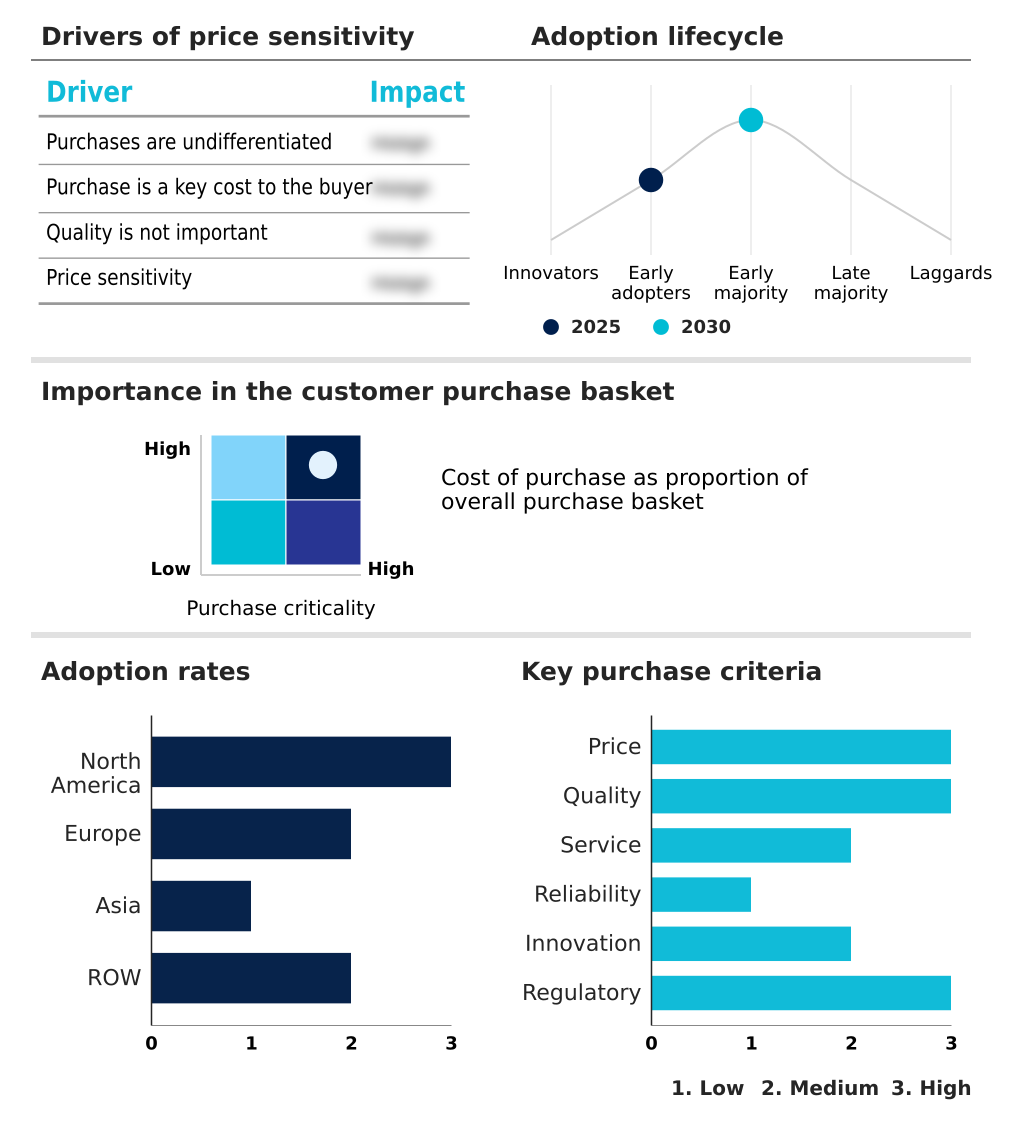
The erectile dysfunction (ed) drugs market forecasting report includes the adoption lifecycle of the market, covering from the innovator's stage to the laggard's stage. It focuses on adoption rates in different regions based on penetration. Furthermore, the erectile dysfunction (ed) drugs market report also includes key purchase criteria and drivers of price sensitivity to help companies evaluate and develop their market growth analysis strategies.
Erectile Dysfunction (ED) Drugs Market Share by Geography

 Customer Landscape

Key Companies & Market Insights

Companies are implementing various strategies, such as strategic alliances, erectile dysfunction (ed) drugs market forecast, partnerships, mergers and acquisitions, geographical expansion, and product/service launches, to enhance their presence in the industry.

Bayer AG - The company specializes in pharmaceutical solutions, providing an effective treatment for erectile dysfunction through the use of Vardenafil. This prescription medication enhances blood flow to the penis, enabling men to achieve and maintain an erection. Vardenafil's mechanism of action inhibits a specific enzyme, allowing the natural erectile response to occur. It is important to note that this medication should only be used under the guidance of a healthcare professional, as it may interact with certain medications and conditions. Additionally, potential side effects include headache, flushing, and nasal congestion. By offering this treatment option, the company aims to improve the quality of life for those experiencing erectile dysfunction.

The industry research and growth report includes detailed analyses of the competitive landscape of the market and information about key companies, including:

  • Bayer AG
  • Cadila Pharmaceuticals Ltd.
  • Cipla Inc.
  • Dong A Socio Holdings Co. Ltd.
  • Dr Reddys Laboratories Ltd.
  • Eli Lilly and Co.
  • Endo International Plc
  • Futura Medical Plc
  • Innovcare Lifesciences Pvt. Ltd.
  • Lupin Ltd.
  • Pfizer Inc.
  • SK Inc.
  • Teva Pharmaceutical Industries Ltd.
  • TTK Healthcare Ltd.
  • Viatris Inc.
  • VIVUS LLC

Qualitative and quantitative analysis of companies has been conducted to help clients understand the wider business environment as well as the strengths and weaknesses of key industry players. Data is qualitatively analyzed to categorize companies as pure play, category-focused, industry-focused, and diversified; it is quantitatively analyzed to categorize companies as dominant, leading, strong, tentative, and weak.

Recent Development and News in Erectile Dysfunction (ED) Drugs Market

  • In February 2023, Pfizer Inc. Announced the FDA approval of Viagra-CT, a combination therapy of Viagra and a low-dose aspirin, for the treatment of erectile dysfunction (ED) in men with ED and a history of cardiovascular disease. This approval marks a significant development in the ED drugs market, as it addresses the co-morbidity issue between ED and cardiovascular diseases (CVD), expanding the potential patient base for Viagra (Source: Pfizer Press Release).
  • In March 2024, Merck & Co. And South Korean biotech company, Hanmi Pharmaceutical, entered into a strategic collaboration to develop and commercialize MK-7227, an investigational oral treatment for ED. This partnership represents a major strategic move for both companies, with Merck gaining access to Hanmi's expertise in ED drug development and Hanmi benefiting from Merck's global reach and resources (Source: Merck & Co. Press Release).
  • In May 2024, the European Commission approved the use of Cialis for the treatment of lower urinary tract symptoms (LUTS) associated with benign prostatic hyperplasia (BPH) and ED. This approval expands the indications for Cialis, increasing its market potential and addressing the unmet needs of patients suffering from both conditions (Source: Eli Lilly and Company Press Release).
  • In January 2025, Moderna Therapeutics announced the initiation of a Phase 1 clinical trial for mRNA-1985, a potential ED treatment. This trial marks a significant technological advancement in the ED drugs market, as mRNA-1985 could potentially offer a novel therapeutic approach for ED, using mRNA technology to stimulate the production of specific proteins in the body (Source: Moderna Therapeutics Press Release).

Research Analyst Overview

  • In the market, predictive modeling and big data analysis play a pivotal role in identifying patient trends and optimizing treatment plans. Wearable devices and digital health technologies, including mobile applications and cognitive behavioral therapy, are revolutionizing patient engagement and improving ED management. Hormone replacement therapy, penile injection therapy, topical creams, and herbal remedies continue to be popular alternatives, while ethical considerations and data security remain critical concerns. Vacuum erection devices, transdermal patches, and penile implants represent advanced treatment options. Drug delivery systems, including machine learning and artificial intelligence, are driving personalized medicine and targeted drug delivery. Healthcare data analytics and data privacy are essential for effective treatment and maintaining patient trust.
  • Lifestyle changes, dietary supplements, and psychological counseling are also integral components of ED management. Neuropathic and hormonal ED, as well as vascular and psychogenic causes, require diverse treatment approaches. Genetic testing and remote monitoring enable early intervention and effective management of ED. Combination therapies offer improved outcomes and enhanced patient satisfaction.

Dive into Technavio's robust research methodology, blending expert interviews, extensive data synthesis, and validated models for unparalleled Erectile Dysfunction (ED) Drugs Market insights. See full methodology.

Market Scope

Report Coverage

Details

Page number

200

Base year

2024

Historic period

2019-2023

Forecast period

2025-2029

Growth momentum & CAGR

Accelerate at a CAGR of 6.6%

Market growth 2025-2029

USD 1503 million

Market structure

Fragmented

YoY growth 2024-2025(%)

6.3

Key countries

US, Canada, Germany, China, and UK

Competitive landscape

Leading Companies, Market Positioning of Companies, Competitive Strategies, and Industry Risks

Request Free Sample

What are the Key Data Covered in this Erectile Dysfunction (ED) Drugs Market Research and Growth Report?

  • CAGR of the Erectile Dysfunction (ED) Drugs industry during the forecast period
  • Detailed information on factors that will drive the growth and forecasting between 2025 and 2029
  • Precise estimation of the size of the market and its contribution of the industry in focus to the parent market
  • Accurate predictions about upcoming growth and trends and changes in consumer behaviour
  • Growth of the market across North America, Europe, Asia, and Rest of World (ROW)
  • Thorough analysis of the market's competitive landscape and detailed information about companies
  • Comprehensive analysis of factors that will challenge the erectile dysfunction (ed) drugs market growth of industry companies

We can help! Our analysts can customize this erectile dysfunction (ed) drugs market research report to meet your requirements.

Get in touch

1 Executive Summary

  • 1.1 Market overview
    • Executive Summary - Chart on Market Overview
    • Executive Summary - Data Table on Market Overview
    • Executive Summary - Chart on Global Market Characteristics
    • Executive Summary - Chart on Market by Geography
    • Executive Summary - Chart on Market Segmentation by End-user
    • Executive Summary - Chart on Market Segmentation by Product
    • Executive Summary - Chart on Incremental Growth
    • Executive Summary - Data Table on Incremental Growth
    • Executive Summary - Chart on Company Market Positioning

2 Technavio Analysis

  • 2.1 Analysis of price sensitivity, lifecycle, customer purchase basket, adoption rates, and purchase criteria
    • Analysis of price sensitivity, lifecycle, customer purchase basket, adoption rates, and purchase criteria
  • 2.2 Criticality of inputs and Factors of differentiation
    • Overview on criticality of inputs and factors of differentiation
  • 2.3 Factors of disruption
    • Overview on factors of disruption
  • 2.4 Impact of drivers and challenges
    • Impact of drivers and challenges in 2024 and 2029

3 Market Landscape

  • 3.1 Market ecosystem
    • Parent Market
    • Data Table on - Parent Market
  • 3.2 Market characteristics
    • Market characteristics analysis
  • 3.3 Value chain analysis
    • Value chain analysis

4 Market Sizing

  • 4.1 Market definition
    • Offerings of companies included in the market definition
  • 4.2 Market segment analysis
    • Market segments
  • 4.3 Market size 2024
    • 4.4 Market outlook: Forecast for 2024-2029
      • Chart on Global - Market size and forecast 2024-2029 ($ million)
      • Data Table on Global - Market size and forecast 2024-2029 ($ million)
      • Chart on Global Market: Year-over-year growth 2024-2029 (%)
      • Data Table on Global Market: Year-over-year growth 2024-2029 (%)

    5 Historic Market Size

    • 5.1 Global Erectile Dysfunction (ED) Drugs Market 2019 - 2023
      • Historic Market Size - Data Table on Global Erectile Dysfunction (ED) Drugs Market 2019 - 2023 ($ million)
    • 5.2 End-user segment analysis 2019 - 2023
      • Historic Market Size - End-user Segment 2019 - 2023 ($ million)
    • 5.3 Product segment analysis 2019 - 2023
      • Historic Market Size - Product Segment 2019 - 2023 ($ million)
    • 5.4 Geography segment analysis 2019 - 2023
      • Historic Market Size - Geography Segment 2019 - 2023 ($ million)
    • 5.5 Country segment analysis 2019 - 2023
      • Historic Market Size - Country Segment 2019 - 2023 ($ million)

    6 Qualitative Analysis

    • 6.1 Impact of AI on the Global Erectile Dysfunction (ED) Market

      7 Five Forces Analysis

      • 7.1 Five forces summary
        • Five forces analysis - Comparison between 2024 and 2029
      • 7.2 Bargaining power of buyers
        • Bargaining power of buyers - Impact of key factors 2024 and 2029
      • 7.3 Bargaining power of suppliers
        • Bargaining power of suppliers - Impact of key factors in 2024 and 2029
      • 7.4 Threat of new entrants
        • Threat of new entrants - Impact of key factors in 2024 and 2029
      • 7.5 Threat of substitutes
        • Threat of substitutes - Impact of key factors in 2024 and 2029
      • 7.6 Threat of rivalry
        • Threat of rivalry - Impact of key factors in 2024 and 2029
      • 7.7 Market condition
        • Chart on Market condition - Five forces 2024 and 2029

      8 Market Segmentation by End-user

      • 8.1 Market segments
        • Chart on End-user - Market share 2024-2029 (%)
        • Data Table on End-user - Market share 2024-2029 (%)
      • 8.2 Comparison by End-user
        • Chart on Comparison by End-user
        • Data Table on Comparison by End-user
      • 8.3 Hospital pharmacy - Market size and forecast 2024-2029
        • Chart on Hospital pharmacy - Market size and forecast 2024-2029 ($ million)
        • Data Table on Hospital pharmacy - Market size and forecast 2024-2029 ($ million)
        • Chart on Hospital pharmacy - Year-over-year growth 2024-2029 (%)
        • Data Table on Hospital pharmacy - Year-over-year growth 2024-2029 (%)
      • 8.4 Retail pharmacy - Market size and forecast 2024-2029
        • Chart on Retail pharmacy - Market size and forecast 2024-2029 ($ million)
        • Data Table on Retail pharmacy - Market size and forecast 2024-2029 ($ million)
        • Chart on Retail pharmacy - Year-over-year growth 2024-2029 (%)
        • Data Table on Retail pharmacy - Year-over-year growth 2024-2029 (%)
      • 8.5 Online pharmacy - Market size and forecast 2024-2029
        • Chart on Online pharmacy - Market size and forecast 2024-2029 ($ million)
        • Data Table on Online pharmacy - Market size and forecast 2024-2029 ($ million)
        • Chart on Online pharmacy - Year-over-year growth 2024-2029 (%)
        • Data Table on Online pharmacy - Year-over-year growth 2024-2029 (%)
      • 8.6 Market opportunity by End-user
        • Market opportunity by End-user ($ million)
        • Data Table on Market opportunity by End-user ($ million)

      9 Market Segmentation by Product

      • 9.1 Market segments
        • Chart on Product - Market share 2024-2029 (%)
        • Data Table on Product - Market share 2024-2029 (%)
      • 9.2 Comparison by Product
        • Chart on Comparison by Product
        • Data Table on Comparison by Product
      • 9.3 Oral drugs - Market size and forecast 2024-2029
        • Chart on Oral drugs - Market size and forecast 2024-2029 ($ million)
        • Data Table on Oral drugs - Market size and forecast 2024-2029 ($ million)
        • Chart on Oral drugs - Year-over-year growth 2024-2029 (%)
        • Data Table on Oral drugs - Year-over-year growth 2024-2029 (%)
      • 9.4 Topical drugs - Market size and forecast 2024-2029
        • Chart on Topical drugs - Market size and forecast 2024-2029 ($ million)
        • Data Table on Topical drugs - Market size and forecast 2024-2029 ($ million)
        • Chart on Topical drugs - Year-over-year growth 2024-2029 (%)
        • Data Table on Topical drugs - Year-over-year growth 2024-2029 (%)
      • 9.5 Others - Market size and forecast 2024-2029
        • Chart on Others - Market size and forecast 2024-2029 ($ million)
        • Data Table on Others - Market size and forecast 2024-2029 ($ million)
        • Chart on Others - Year-over-year growth 2024-2029 (%)
        • Data Table on Others - Year-over-year growth 2024-2029 (%)
      • 9.6 Market opportunity by Product
        • Market opportunity by Product ($ million)
        • Data Table on Market opportunity by Product ($ million)

      10 Customer Landscape

      • 10.1 Customer landscape overview
        • Analysis of price sensitivity, lifecycle, customer purchase basket, adoption rates, and purchase criteria

      11 Geographic Landscape

      • 11.1 Geographic segmentation
        • Chart on Market share by geography 2024-2029 (%)
        • Data Table on Market share by geography 2024-2029 (%)
      • 11.2 Geographic comparison
        • Chart on Geographic comparison
        • Data Table on Geographic comparison
      • 11.3 North America - Market size and forecast 2024-2029
        • Chart on North America - Market size and forecast 2024-2029 ($ million)
        • Data Table on North America - Market size and forecast 2024-2029 ($ million)
        • Chart on North America - Year-over-year growth 2024-2029 (%)
        • Data Table on North America - Year-over-year growth 2024-2029 (%)
      • 11.4 Europe - Market size and forecast 2024-2029
        • Chart on Europe - Market size and forecast 2024-2029 ($ million)
        • Data Table on Europe - Market size and forecast 2024-2029 ($ million)
        • Chart on Europe - Year-over-year growth 2024-2029 (%)
        • Data Table on Europe - Year-over-year growth 2024-2029 (%)
      • 11.5 Asia - Market size and forecast 2024-2029
        • Chart on Asia - Market size and forecast 2024-2029 ($ million)
        • Data Table on Asia - Market size and forecast 2024-2029 ($ million)
        • Chart on Asia - Year-over-year growth 2024-2029 (%)
        • Data Table on Asia - Year-over-year growth 2024-2029 (%)
      • 11.6 Rest of World (ROW) - Market size and forecast 2024-2029
        • Chart on Rest of World (ROW) - Market size and forecast 2024-2029 ($ million)
        • Data Table on Rest of World (ROW) - Market size and forecast 2024-2029 ($ million)
        • Chart on Rest of World (ROW) - Year-over-year growth 2024-2029 (%)
        • Data Table on Rest of World (ROW) - Year-over-year growth 2024-2029 (%)
      • 11.7 US - Market size and forecast 2024-2029
        • Chart on US - Market size and forecast 2024-2029 ($ million)
        • Data Table on US - Market size and forecast 2024-2029 ($ million)
        • Chart on US - Year-over-year growth 2024-2029 (%)
        • Data Table on US - Year-over-year growth 2024-2029 (%)
      • 11.8 Canada - Market size and forecast 2024-2029
        • Chart on Canada - Market size and forecast 2024-2029 ($ million)
        • Data Table on Canada - Market size and forecast 2024-2029 ($ million)
        • Chart on Canada - Year-over-year growth 2024-2029 (%)
        • Data Table on Canada - Year-over-year growth 2024-2029 (%)
      • 11.9 Germany - Market size and forecast 2024-2029
        • Chart on Germany - Market size and forecast 2024-2029 ($ million)
        • Data Table on Germany - Market size and forecast 2024-2029 ($ million)
        • Chart on Germany - Year-over-year growth 2024-2029 (%)
        • Data Table on Germany - Year-over-year growth 2024-2029 (%)
      • 11.10 China - Market size and forecast 2024-2029
        • Chart on China - Market size and forecast 2024-2029 ($ million)
        • Data Table on China - Market size and forecast 2024-2029 ($ million)
        • Chart on China - Year-over-year growth 2024-2029 (%)
        • Data Table on China - Year-over-year growth 2024-2029 (%)
      • 11.11 India - Market size and forecast 2024-2029
        • Chart on India - Market size and forecast 2024-2029 ($ million)
        • Data Table on India - Market size and forecast 2024-2029 ($ million)
        • Chart on India - Year-over-year growth 2024-2029 (%)
        • Data Table on India - Year-over-year growth 2024-2029 (%)
      • 11.12 UK - Market size and forecast 2024-2029
        • Chart on UK - Market size and forecast 2024-2029 ($ million)
        • Data Table on UK - Market size and forecast 2024-2029 ($ million)
        • Chart on UK - Year-over-year growth 2024-2029 (%)
        • Data Table on UK - Year-over-year growth 2024-2029 (%)
      • 11.13 France - Market size and forecast 2024-2029
        • Chart on France - Market size and forecast 2024-2029 ($ million)
        • Data Table on France - Market size and forecast 2024-2029 ($ million)
        • Chart on France - Year-over-year growth 2024-2029 (%)
        • Data Table on France - Year-over-year growth 2024-2029 (%)
      • 11.14 South Korea - Market size and forecast 2024-2029
        • Chart on South Korea - Market size and forecast 2024-2029 ($ million)
        • Data Table on South Korea - Market size and forecast 2024-2029 ($ million)
        • Chart on South Korea - Year-over-year growth 2024-2029 (%)
        • Data Table on South Korea - Year-over-year growth 2024-2029 (%)
      • 11.15 Japan - Market size and forecast 2024-2029
        • Chart on Japan - Market size and forecast 2024-2029 ($ million)
        • Data Table on Japan - Market size and forecast 2024-2029 ($ million)
        • Chart on Japan - Year-over-year growth 2024-2029 (%)
        • Data Table on Japan - Year-over-year growth 2024-2029 (%)
      • 11.16 Italy - Market size and forecast 2024-2029
        • Chart on Italy - Market size and forecast 2024-2029 ($ million)
        • Data Table on Italy - Market size and forecast 2024-2029 ($ million)
        • Chart on Italy - Year-over-year growth 2024-2029 (%)
        • Data Table on Italy - Year-over-year growth 2024-2029 (%)
      • 11.17 Market opportunity by geography
        • Market opportunity by geography ($ million)
        • Data Tables on Market opportunity by geography ($ million)

      12 Drivers, Challenges, and Opportunity/Restraints

      • 12.1 Market drivers
        • 12.2 Market challenges
          • 12.3 Impact of drivers and challenges
            • Impact of drivers and challenges in 2024 and 2029
          • 12.4 Market opportunities/restraints

            13 Competitive Landscape

            • 13.1 Overview
              • 13.2 Competitive Landscape
                • Overview on criticality of inputs and factors of differentiation
              • 13.3 Landscape disruption
                • Overview on factors of disruption
              • 13.4 Industry risks
                • Impact of key risks on business

              14 Competitive Analysis

              • 14.1 Companies profiled
                • Companies covered
              • 14.2 Company ranking index
                • Company ranking index
              • 14.3 Market positioning of companies
                • Matrix on companies position and classification
              • 14.4 Bayer AG
                • Bayer AG - Overview
                • Bayer AG - Business segments
                • Bayer AG - Key news
                • Bayer AG - Key offerings
                • Bayer AG - Segment focus
                • SWOT
              • 14.5 Cadila Pharmaceuticals Ltd.
                • Cadila Pharmaceuticals Ltd. - Overview
                • Cadila Pharmaceuticals Ltd. - Product / Service
                • Cadila Pharmaceuticals Ltd. - Key offerings
                • SWOT
              • 14.6 Cipla Inc.
                • Cipla Inc. - Overview
                • Cipla Inc. - Business segments
                • Cipla Inc. - Key news
                • Cipla Inc. - Key offerings
                • Cipla Inc. - Segment focus
                • SWOT
              • 14.7 Dr Reddys Laboratories Ltd.
                • Dr Reddys Laboratories Ltd. - Overview
                • Dr Reddys Laboratories Ltd. - Business segments
                • Dr Reddys Laboratories Ltd. - Key news
                • Dr Reddys Laboratories Ltd. - Key offerings
                • Dr Reddys Laboratories Ltd. - Segment focus
                • SWOT
              • 14.8 Eli Lilly and Co.
                • Eli Lilly and Co. - Overview
                • Eli Lilly and Co. - Product / Service
                • Eli Lilly and Co. - Key offerings
                • SWOT
              • 14.9 Endo International Plc
                • Endo International Plc - Overview
                • Endo International Plc - Business segments
                • Endo International Plc - Key news
                • Endo International Plc - Key offerings
                • Endo International Plc - Segment focus
                • SWOT
              • 14.10 Futura Medical Plc
                • Futura Medical Plc - Overview
                • Futura Medical Plc - Product / Service
                • Futura Medical Plc - Key offerings
                • SWOT
              • 14.11 Innovcare Lifesciences Pvt. Ltd.
                • Innovcare Lifesciences Pvt. Ltd. - Overview
                • Innovcare Lifesciences Pvt. Ltd. - Product / Service
                • Innovcare Lifesciences Pvt. Ltd. - Key offerings
                • SWOT
              • 14.12 Lupin Ltd.
                • Lupin Ltd. - Overview
                • Lupin Ltd. - Business segments
                • Lupin Ltd. - Key news
                • Lupin Ltd. - Key offerings
                • Lupin Ltd. - Segment focus
                • SWOT
              • 14.13 Pfizer Inc.
                • Pfizer Inc. - Overview
                • Pfizer Inc. - Product / Service
                • Pfizer Inc. - Key news
                • Pfizer Inc. - Key offerings
                • SWOT
              • 14.14 SK Inc.
                • SK Inc. - Overview
                • SK Inc. - Product / Service
                • SK Inc. - Key offerings
                • SWOT
              • 14.15 Teva Pharmaceutical Industries Ltd.
                • Teva Pharmaceutical Industries Ltd. - Overview
                • Teva Pharmaceutical Industries Ltd. - Business segments
                • Teva Pharmaceutical Industries Ltd. - Key news
                • Teva Pharmaceutical Industries Ltd. - Key offerings
                • Teva Pharmaceutical Industries Ltd. - Segment focus
                • SWOT
              • 14.16 TTK Healthcare Ltd.
                • TTK Healthcare Ltd. - Overview
                • TTK Healthcare Ltd. - Product / Service
                • TTK Healthcare Ltd. - Key offerings
                • SWOT
              • 14.17 Viatris Inc.
                • Viatris Inc. - Overview
                • Viatris Inc. - Business segments
                • Viatris Inc. - Key news
                • Viatris Inc. - Key offerings
                • Viatris Inc. - Segment focus
                • SWOT
              • 14.18 VIVUS LLC
                • VIVUS LLC - Overview
                • VIVUS LLC - Product / Service
                • VIVUS LLC - Key offerings
                • SWOT

              15 Appendix

              • 15.1 Scope of the report
                • 15.2 Inclusions and exclusions checklist
                  • Inclusions checklist
                  • Exclusions checklist
                • 15.3 Currency conversion rates for US$
                  • Currency conversion rates for US$
                • 15.4 Research methodology
                  • Research methodology
                • 15.5 Data procurement
                  • Information sources
                • 15.6 Data validation
                  • Data validation
                • 15.7 Validation techniques employed for market sizing
                  • Validation techniques employed for market sizing
                • 15.8 Data synthesis
                  • Data synthesis
                • 15.9 360 degree market analysis
                  • 360 degree market analysis
                • 15.10 List of abbreviations
                  • List of abbreviations

                Research Methodology

                Technavio presents a detailed picture of the market by way of study, synthesis, and summation of data from multiple sources. The analysts have presented the various facets of the market with a particular focus on identifying the key industry influencers. The data thus presented is comprehensive, reliable, and the result of extensive research, both primary and secondary.

                INFORMATION SOURCES

                Primary sources

                • Manufacturers and suppliers
                • Channel partners
                • Industry experts
                • Strategic decision makers

                Secondary sources

                • Industry journals and periodicals
                • Government data
                • Financial reports of key industry players
                • Historical data
                • Press releases

                DATA ANALYSIS

                Data Synthesis

                • Collation of data
                • Estimation of key figures
                • Analysis of derived insights

                Data Validation

                • Triangulation with data models
                • Reference against proprietary databases
                • Corroboration with industry experts

                REPORT WRITING

                Qualitative

                • Market drivers
                • Market challenges
                • Market trends
                • Five forces analysis

                Quantitative

                • Market size and forecast
                • Market segmentation
                • Geographical insights
                • Competitive landscape

                Interested in this report?

                Get your sample now to see our research methodology and insights!

                Download Now

                Frequently Asked Questions

                Erectile Dysfunction (Ed) Drugs market growth will increase by $ 1503 mn during 2025-2029.

                The Erectile Dysfunction (Ed) Drugs market is expected to grow at a CAGR of 6.6% during 2025-2029.

                Erectile Dysfunction (Ed) Drugs market is segmented by End-user( Hospital pharmacy, Retail pharmacy, Online pharmacy) Product( Oral drugs, Topical drugs, Others, Rest of World (ROW))

                Bayer AG, Cadila Pharmaceuticals Ltd., Cipla Inc., Dong A Socio Holdings Co. Ltd., Dr Reddys Laboratories Ltd., Eli Lilly and Co., Endo International Plc, Futura Medical Plc, Innovcare Lifesciences Pvt. Ltd., Lupin Ltd., Pfizer Inc., SK Inc., Teva Pharmaceutical Industries Ltd., TTK Healthcare Ltd., Viatris Inc., VIVUS LLC are a few of the key vendors in the Erectile Dysfunction (Ed) Drugs market.

                North America will register the highest growth rate of 41% among the other regions. Therefore, the Erectile Dysfunction (Ed) Drugs market in North America is expected to garner significant business opportunities for the vendors during the forecast period.

                US, Canada, Germany, China, UK

                • Rising demand for ED drugsWith the rising health consciousness across the globe is the driving factor this market.
                • there has been a significant increase in healthcare spending for sexual wellness. As a result of this is the driving factor this market.
                • there has been a surge in the demand for drugs for the treatment of disorders such as ED. This demand is arising not only due to the OTC availability of drugs but also because of the increase in the number of prescriptions for ED. Owing to the availability of treatment guidelines is the driving factor this market.
                • physicians are using drug therapies for the treatment of ED.The physical and hormonal changes in the body associated with aging lead to a decrease in libido is the driving factor this market.
                • a side-effect of ED. Elderly people are more likely to experience a decrease in the functioning of penile muscles and a drop in the levels of penile erection. Hence is the driving factor this market.
                • ED is more common among the geriatric population is the driving factor this market.
                • and there has been a rise in the demand for ED drugs among this population. In developed countries such as the US is the driving factor this market.
                • owing to the high life expectancy is the driving factor this market.
                • the elderly population is growing is the driving factor this market.
                • which creates demand for ED drugs. As per the CDC is the driving factor this market.
                • in the US is the driving factor this market.
                • the population aged 60 years and above is expected to double by 2050.Moreover is the driving factor this market.
                • the therapeutic benefits of drugs is the driving factor this market.
                • such as a longer half-life in the body and the ease of administration even via the sublingual route is the driving factor this market.
                • are expected to drive the adoption of ED drugs. The rising cyberpornography and the increasing number of advertisements for the treatment of ED are also expected to drive the growth of the global erectile dysfunction (ED) drugs market during the forecast period. is the driving factor this market.

                The Erectile Dysfunction (Ed) Drugs market vendors should focus on grabbing business opportunities from the Hospital pharmacy segment as it accounted for the largest market share in the base year.