



Europe Technical Textiles Market Size 2024-2028
The Europe technical textiles market size is forecast to increase by USD 8.9 billion, at a CAGR of 4.56% between 2023 and 2028.
- European Technical Textiles market is experiencing significant growth, driven by the increasing demand for these innovative materials in various industries. The European Union's robust economy and the emergence of new technology are key factors fueling this demand. In particular, technical textiles are finding extensive applications in sectors such as healthcare, automotive technology,, and construction, due to their superior properties, including durability, lightweight, and resistance to harsh environments. However, the market also faces challenges. Rising sustainability concerns and varying environment-related mandates are becoming increasingly important considerations for manufacturers and consumers alike.
- Meeting these demands will require significant investments in research and development to create eco-friendly and compliant technical textiles industry.. Furthermore, the industry must navigate the complex regulatory landscape, ensuring adherence to stringent standards and certifications. Companies that can effectively address these challenges while capitalizing on the market's growth opportunities will be well-positioned for success.
What will be the size of the Europe Technical Textiles Market during the forecast period?
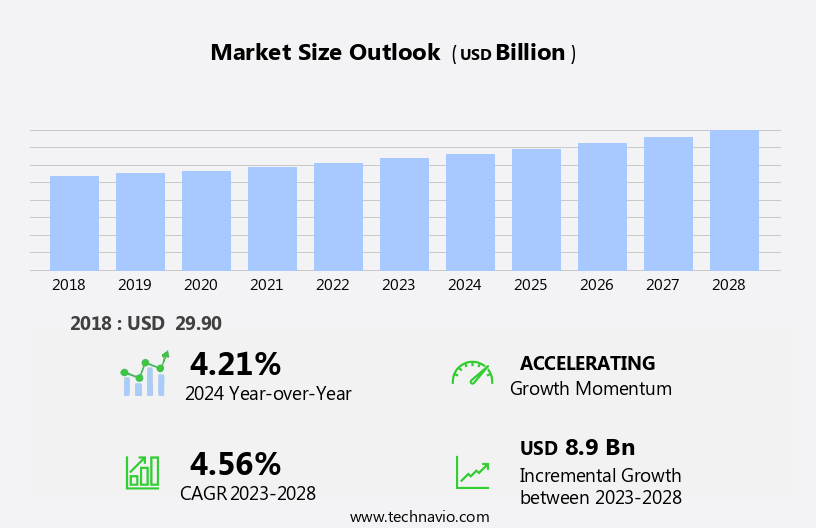
Explore in-depth regional segment analysis with market size data - historical 2018-2022 and forecasts 2024-2028 - in the full report.
Request Free Sample
- The European technical textiles market encompasses a diverse range of products, including Cordura fabrics, textile logistics, textile waste management, reinforced fabrics,e-textile and textile printing techniques. Reinforcing the industry's commitment to sustainability, organic cotton, hemp textiles, bamboo textiles, and sustainable textile practices are gaining traction. Textile recycling technologies and upcycling are essential components of the textile industry's efforts to minimize waste. Textile research institutes and innovation centers are at the forefront of developing new textiles, such as hydrophobic fabrics, carbon fiber textiles, and biocompatible fabrics. Textile finishing processes, including sublimation printing and digital printing, enhance the functionality and appearance of technical textiles.
- Textile composites and technical membranes cater to various industries, from automotive to construction. Textile associations play a crucial role in setting industry standards and promoting best practices, ensuring textile quality control. Antimicrobial fabrics and moisture-wicking fabrics address specific market needs, while textile trade shows provide platforms for showcasing the latest advancements. The textile supply chain continues to evolve, with a focus on transparency and ethical production. Incorporating textile waste management and recycling technologies into the textile industry's operations is a significant trend, as is the adoption of textile composites and biocompatible fabrics for various applications. Textile innovation and research, coupled with a commitment to sustainability, are driving the European technical textiles market forward.
How is this market segmented?
The market research report provides comprehensive data (region-wise segment analysis), with forecasts and estimates in "USD billion" for the period 2024-2028, as well as historical data from 2018-2022 for the following segments.
- Application
- Mobiltech
- Indutech
- Sporttech
- Buildtech
- Others?
- Product
- Woven
- Composites
- Nonwoven
- Geography
- Europe
- France
- Germany
- Italy
- The Netherlands
- Europe
By Application Insights
The mobiltech segment is estimated to witness significant growth during the forecast period.
Technical textiles, a segment of the textile industry, encompass various fabric types engineered for specific functions and applications. These include anti-static fabrics, tear-resistant textiles, and those with enhanced flame resistance and water repellency. Textile manufacturing incorporates advanced technology to produce high-performance textiles, such as abrasion-resistant and cut-resistant fabrics, nonwovens, and smart textiles. ISO standards ensure quality and safety in textile production and application. Textile trends lean towards sustainability, with an increased focus on recycled textiles and the circular economy. Industrial textiles, including filter fabrics and surgical textiles, are integral to various sectors. Textile testing and certification are crucial for ensuring product compliance and performance.
Polyester and nylon fabrics, along with aramid and other technical fabrics, are commonly used due to their strength and durability. Textile machinery, including spinning machines, plays a significant role in textile production. UV protective fabrics and textile coatings are essential for various applications, such as home furnishings and protective clothing. Medical textiles and textile finishing are essential components of the textile industry, catering to diverse needs. Woven and knitted fabrics, each with unique properties, are used extensively in textile applications. Overall, the textile industry continues to innovate, with a focus on enhancing textile performance, durability, and sustainability.
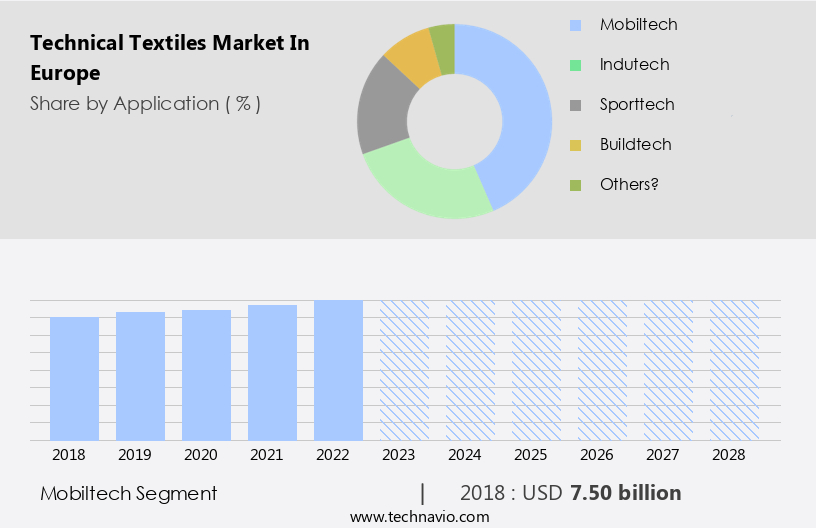
The Mobiltech segment was valued at USD 7.50 billion in 2018 and showed a gradual increase during the forecast period.
Market Dynamics
Our researchers analyzed the data with 2023 as the base year, along with the key drivers, trends, and challenges. A holistic analysis of drivers will help companies refine their marketing strategies to gain a competitive advantage.
What are the Europe Technical Textiles Market market drivers leading to the rise in adoption of the Industry?
- The European Union market for technical textiles experiences significant growth due to escalating demand for these advanced materials.
- The European textiles and clothing industry is a significant contributor to the manufacturing sector, generating a turnover of â¬174.5 billion and employing over 1.5 million people. To remain competitive, the industry is shifting its focus towards high-value-added products, such as technical textiles. These textiles include UV protective fabrics, water repellent fabrics, and textiles with textile coatings for enhanced water resistance. Technical textiles are used in various applications, including medical textiles, textile finishing, and textile recycling. Nylon fabrics are widely used due to their strength and durability, while knitted fabrics offer flexibility and comfort.
- Specialist firms in Europe leverage new technology and consumer trends to produce high-quality technical textiles. Textile certification is crucial to ensure product safety and compliance with regulations. The industry's innovation and sustainability efforts, such as textile recycling, contribute to its growth and competitiveness.
What are the Europe Technical Textiles Market market trends shaping the Industry?
- The emergence of new technology is a significant market trend that continues to shape industries and businesses. This trend is driven by innovations that enhance productivity, efficiency, and communication, making it essential for professionals to stay informed and adapt accordingly.
- The European technical textiles market is experiencing notable growth due to increasing consumer demand for advanced textile solutions. This sector encompasses a wide range of high-performance fabrics, including those with tear resistance, iso standards compliance, and both abrasion and cut resistance. Innovations in textile manufacturing have led to the production of nonwoven and woven fabrics with superior textile performance. Digital transformation in the textile industry is a significant trend, with IoT applications connecting manufacturing devices and enabling customized digital textile printing.
- Material innovations are also driving growth, with the use of sustainable resources such as citrus peels, milk, pineapple, and coffee grounds to produce new, eco-friendly textiles. Overall, the European technical textiles market is characterized by continuous advancements in technology and materials, offering numerous opportunities for businesses in this sector.
How does Europe Technical Textiles Market market faces challenges face during its growth?
- The convergence of escalating sustainability concerns and diverse environment-related mandates poses a significant challenge to the industry's growth trajectory.
- The European textile market is witnessing significant growth in the areas of home furnishings, textile design, and industrial textiles, driven by the increasing emphasis on sustainability and transparency. The textile industry has historically been a major polluter, and both consumers and businesses are seeking eco-friendly alternatives. In response, producers and retailers are focusing on developing textiles with improved sustainability credentials, such as flame resistance and flame retardant fabrics, wearable technology, recycled textiles, and textile machinery that adheres to stringent textile standards. Polyester fabrics, a popular choice due to their durability and versatility, are being replaced with more sustainable alternatives like organic cotton and other recycled fibers.
- The use of filter fabrics in various industries is also on the rise due to their ability to improve air and water quality. Overall, the European textile market is undergoing a transformation, with a focus on creating harmonious and immersive textile solutions that prioritize both functionality and sustainability.
Exclusive Europe Technical Textiles Market Customer Landscape
The market forecasting report includes the adoption lifecycle of the market, covering from the innovator's stage to the laggard's stage. It focuses on adoption rates in different regions based on penetration. Furthermore, the report also includes key purchase criteria and drivers of price sensitivity to help companies evaluate and develop their market growth analysis strategies.
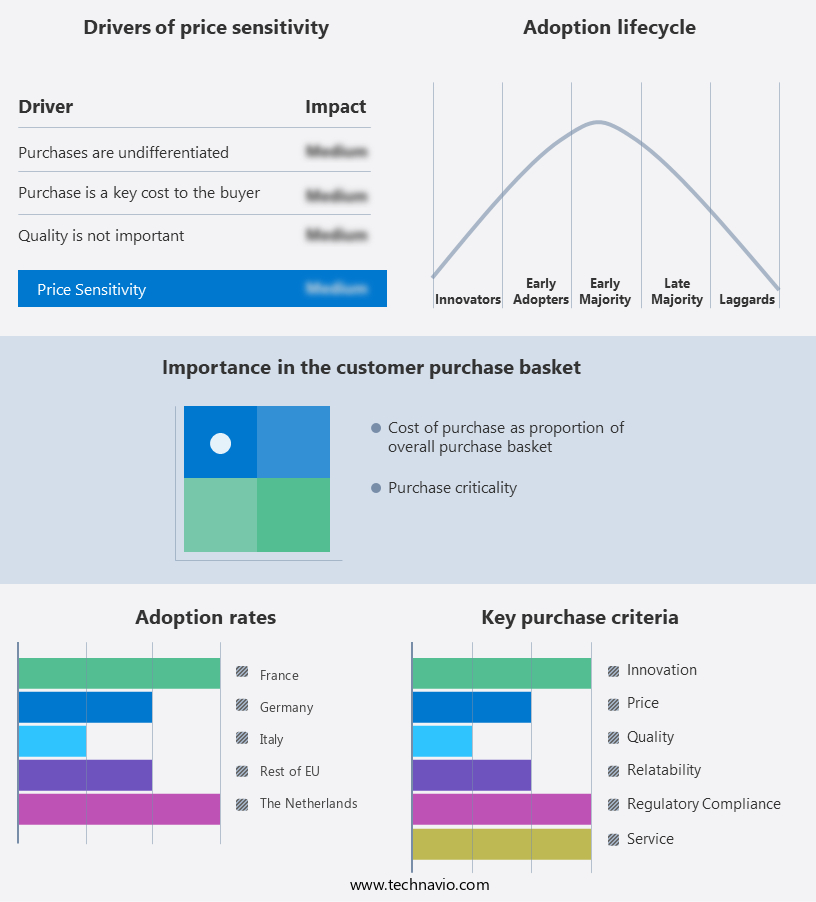
Customer Landscape
Key Companies & Market Insights
Companies are implementing various strategies, such as strategic alliances, market forecast partnerships, mergers and acquisitions, geographical expansion, and product/service launches, to enhance their presence in the market.
The market research and growth report includes detailed analyses of the competitive landscape of the market and information about key companies, including:
- Arville Textiles Ltd.
- Asahi Kasei Corp.
- Baltex
- Beaulieu Technical Textiles
- Carvico Spa
- Fothergill Group
- Freudenberg and Co. KG
- Huntsman International LLC
- JAMES DEWHURST
- JUTA a.s
- Kimberly Clark Corp.
- MEHLER ENGINEERED PRODUCTS GMBH
- Mitsui Chemicals Inc.
- Palmhive Technical Textiles Ltd.
- Sidogras S.A.
- Statex Production and Sales GmbH
- TECH FAB Europe e.V.
- Tirotex Textile Co.
- Toray Industries Inc.
- Willy Hermann SUPERFINE GmbH and Co KG
Qualitative and quantitative analysis of companies has been conducted to help clients understand the wider business environment as well as the strengths and weaknesses of key market players. Data is qualitatively analyzed to categorize companies as pure play, category-focused, industry-focused, and diversified; it is quantitatively analyzed to categorize companies as dominant, leading, strong, tentative, and weak.
Recent Development and News in Technical Textiles Market In Europe
- In March 2023, German textile manufacturer, Freudenberg Group, announced the launch of its new product line, "EcoVerde," focusing on sustainable technical textiles. This initiative marks a significant shift towards eco-friendly solutions in the European technical textiles market (Freudenberg Group Press Release, 2023).
- In June 2024, French textile giant, Toray Industries, entered into a strategic partnership with the UK's University of Manchester to develop advanced composite materials for the aerospace industry. This collaboration signifies a major step forward in research and development for the European technical textiles sector (Toray Industries Press Release, 2024).
- In October 2024, Italian textile company, Tessitura Monti, completed the acquisition of Dutch competitor, TenCate Geosynthetics. This merger strengthens Tessitura Monti's market position in Europe and expands its product portfolio (Tessitura Monti Press Release, 2024).
- In January 2025, the European Commission approved the new REACH regulation for textiles, which sets stricter limits on the use of certain chemicals in textile production. This regulatory change is expected to significantly impact the European technical textiles market, driving innovation and investment in sustainable manufacturing processes (European Commission Press Release, 2025).
Research Analyst Overview
The European textile market continues to evolve, driven by advancements in technology and shifting consumer preferences. Textile manufacturing innovations, such as those in anti-static fabrics and tear resistance, are shaping the industry's future. ISO standards play a crucial role in ensuring textile performance, with high-performance textiles, including abrasion resistant and cut resistant fabrics, gaining significant traction. Nonwoven fabrics and woven fabrics are finding applications across various sectors, from home textile furnishings and textile design to industrial textiles and protective clothing. Textile trends reflect a growing focus on sustainability, with an emphasis on recycled textiles and textile sustainability. Textile testing and certification are increasingly important, as is the development of smart textiles and wearable technology.
Flame resistance and flame retardant fabrics, as well as UV protective fabrics, continue to be in demand. Textile innovation is at the forefront of industry developments, with aramid fabrics and technical fabrics leading the way. Spinning machines and textile machinery are being optimized for greater efficiency and productivity. Water repellent fabrics and water resistance are also key areas of focus, as are textile applications in sectors such as medical textiles and filter fabrics. The textile market's continuous dynamism is evident in its ongoing unfolding, with new trends, applications, and standards emerging regularly. Textile trends reflect a growing emphasis on sustainability, innovation, and performance, with textile manufacturing evolving to meet these demands.
The circular economy is a significant influence, driving the development of textile recycling and textile recycling technologies. The future of the European textile market is bright, with endless possibilities for growth and innovation.
Dive into Technavio's robust research methodology, blending expert interviews, extensive data synthesis, and validated models for unparalleled Technical Textiles Market in Europe insights. See full methodology.
|
Market Scope |
|
|
Report Coverage |
Details |
|
Page number |
167 |
|
Base year |
2023 |
|
Historic period |
2018-2022 |
|
Forecast period |
2024-2028 |
|
Growth momentum & CAGR |
Accelerate at a CAGR of 4.56% |
|
Market growth 2024-2028 |
USD 8.9 billion |
|
Market structure |
Fragmented |
|
YoY growth 2023-2024(%) |
4.21 |
|
Competitive landscape |
Leading Companies, Market Positioning of Companies, Competitive Strategies, and Industry Risks |
What are the Key Data Covered in this Market Research Report?
- CAGR of the market during the forecast period
- Detailed information on factors that will drive the market growth and forecasting between 2024 and 2028
- Precise estimation of the size of the market and its contribution of the market in focus to the parent market
- Accurate predictions about upcoming market growth and trends and changes in consumer behaviour
- Growth of the market across Europe
- Thorough analysis of the market's competitive landscape and detailed information about companies
- Comprehensive analysis of factors that will challenge the growth of market companies
We can help! Our analysts can customize this market research report to meet your requirements Get in touch
 RIA -
RIA - 
