



Home Textile Retail Market Size 2026-2030
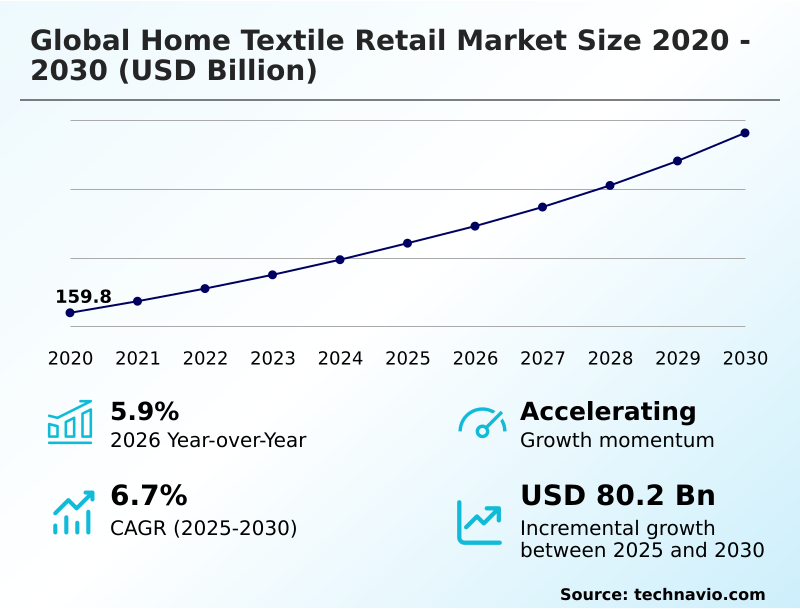
The home textile retail market size is valued to increase by USD 80.2 billion, at a CAGR of 6.7% from 2025 to 2030. Expansion of residential real estate sector and urban development will drive the home textile retail market.
Major Market Trends & Insights
- APAC dominated the market and accounted for a 36.5% growth during the forecast period.
- By Distribution Channel - Offline segment was valued at USD 170.8 billion in 2024
- By Product - BBO segment accounted for the largest market revenue share in 2024
Market Size & Forecast
- Market Opportunities: USD 130.8 billion
- Market Future Opportunities: USD 80.2 billion
- CAGR from 2025 to 2030 : 6.7%
Market Summary
- The home textile retail market is experiencing a profound transformation, driven by evolving consumer priorities and technological advancements. No longer limited to aesthetics, the industry now focuses on wellness and sustainability, integrating bio-functional textiles with hypoallergenic properties and temperature-regulating minerals. This shift responds to a growing demand for products that enhance health and well-being within the domestic sanctuary.
- A key business scenario involves retailers re-engineering their supply chains to accommodate circular economy models, incorporating post-consumer textile recycling to meet stringent environmental regulations and consumer demand for ethical transparency. Innovations in fabric science and textile engineering are enabling the creation of high-performance bedding and performance fabrics that offer durability and advanced functional benefits.
- As retailers navigate this landscape, the emphasis on material science and sustainable practices is becoming a critical differentiator, shaping product development and brand strategy. The ability to provide transparent, eco-friendly, and high-quality residential textile solutions is now central to long-term success in this competitive market.
What will be the Size of the Home Textile Retail Market during the forecast period?
Get Key Insights on Market Forecast (PDF) Get Free Sample
How is the Home Textile Retail Market Segmented?
The home textile retail industry research report provides comprehensive data (region-wise segment analysis), with forecasts and estimates in "USD billion" for the period 2026-2030, as well as historical data from 2020-2024 for the following segments.
- Distribution channel
- Offline
- Online
- Product
- BBO
- Bed linen
- Carpets and rugs
- Upholstery
- Others
- Material
- Natural fibers
- Synthetic fibers
- Blended materials
- Others
- Geography
- APAC
- China
- India
- Japan
- North America
- US
- Canada
- Mexico
- Europe
- Germany
- UK
- France
- Middle East and Africa
- Saudi Arabia
- UAE
- South Africa
- South America
- Brazil
- Argentina
- Colombia
- Rest of World (ROW)
- APAC
By Distribution Channel Insights
The offline segment is estimated to witness significant growth during the forecast period.
Offline retail remains a cornerstone of the home textile retail landscape, as consumers value the tactile experience of assessing fabric quality before purchase.
These physical channels, from department stores to specialty boutiques, offer immediate product access and expert consultation, which are critical for high-consideration items like upholstery and bedding. The strategic use of in-store lifestyle vignettes inspires shoppers and helps build brand trust.
Retailers are enhancing this channel by integrating traceability technology, which allows customers to verify the origin of natural fibers, thereby improving transparency. Innovations like zero-twist cotton and high-performance bedding are best demonstrated in person.
Although digital competition is strong, the offline segment sustains its relevance, with physical returns processing improving omnichannel retail efficiency by over 15% and bridging the gap with the digital textile marketplace.
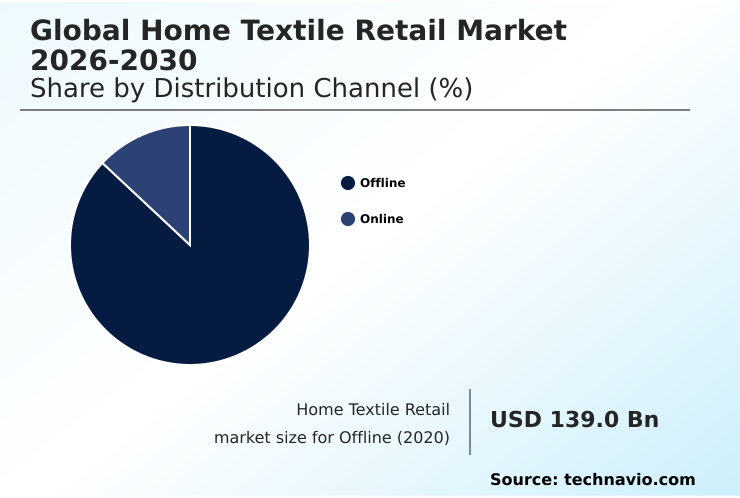
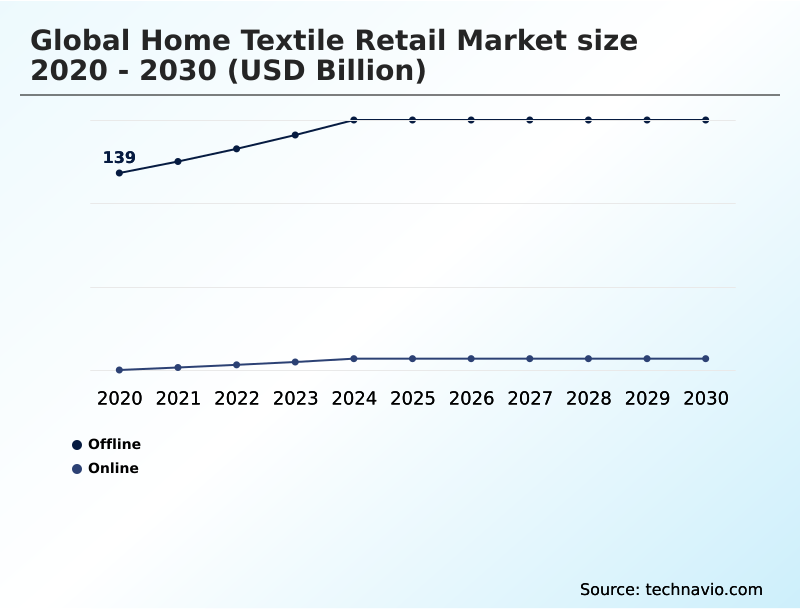
The Offline segment was valued at USD 170.8 billion in 2024 and showed a gradual increase during the forecast period.
Regional Analysis
APAC is estimated to contribute 36.5% to the growth of the global market during the forecast period.Technavio’s analysts have elaborately explained the regional trends and drivers that shape the market during the forecast period.
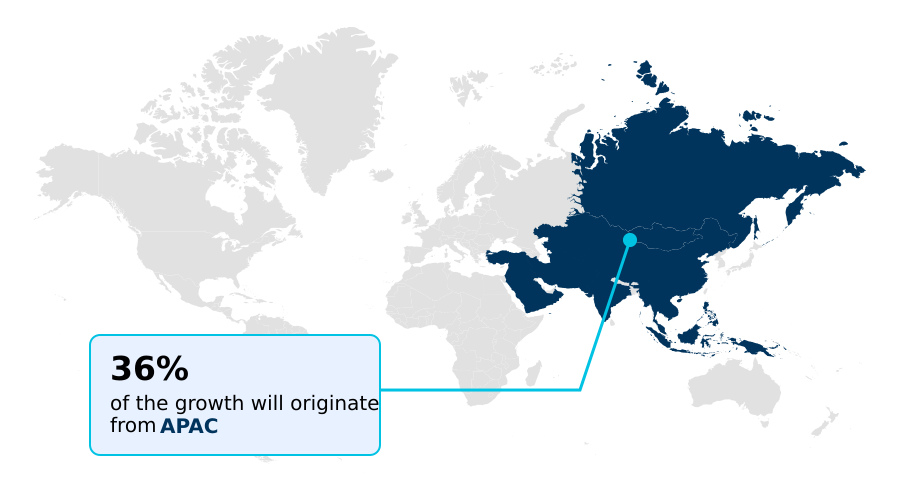
See How Home Textile Retail Market Demand is Rising in APAC Get Free Sample
The APAC region is the epicenter of growth in the home textile retail market, acting as both a manufacturing powerhouse and the fastest-growing consumer base.
Rapid urbanization in countries like China and India fuels unprecedented demand for interior design textiles and home decor trends.
The region's digital transformation is profound, with live-stream shopping and e-commerce textile sales channels reshaping retail supply chain logistics; digital transactions in this segment have grown by over 40% in the last two years.
Regional manufacturers excel at producing large volumes of both natural fibers and synthetic fibers at competitive prices.
However, retailers must now address local concerns about environmental impact, driving a shift toward ethical textile manufacturing and advanced post-consumer textile recycling processes, with some facilities now achieving 90% material recovery rates.
Market Dynamics
Our researchers analyzed the data with 2025 as the base year, along with the key drivers, trends, and challenges. A holistic analysis of drivers will help companies refine their marketing strategies to gain a competitive advantage.
- The global home textile retail market is increasingly defined by sustainable home textile retail trends and the significant impact of material science on home textiles. Consumers are actively seeking products with demonstrable benefits, such as antimicrobial properties in bedding textiles and the use of bio-functional materials for wellness textiles.
- This shift is compelling retailers to adopt circular economy principles in home furnishings, focusing on innovations in performance fabrics for upholstery and advancements in textile-to-textile recycling processes. To meet these demands, companies are navigating the challenges of raw material volatility in textiles by diversifying their strategies for managing textile material costs.
- A core component of modern strategy is the growth of omnichannel retail personalization in textiles, leveraging the role of technology in home textile visualization to create hyper-personalized home textile shopping experiences. This digital-first approach helps mitigate the effects of digital competition in home textile retail.
- Furthermore, ensuring regulatory compliance for textile retailers and maintaining supply chain transparency in textile retail are now non-negotiable. Firms that successfully integrate smart textiles in home automation and address the consumer shift toward eco-friendly home textiles are better positioned to capture market share.
- The impact of urbanization on textile demand continues to fuel the growth drivers for the luxury textile market, even while navigating price competition in textile e-commerce.
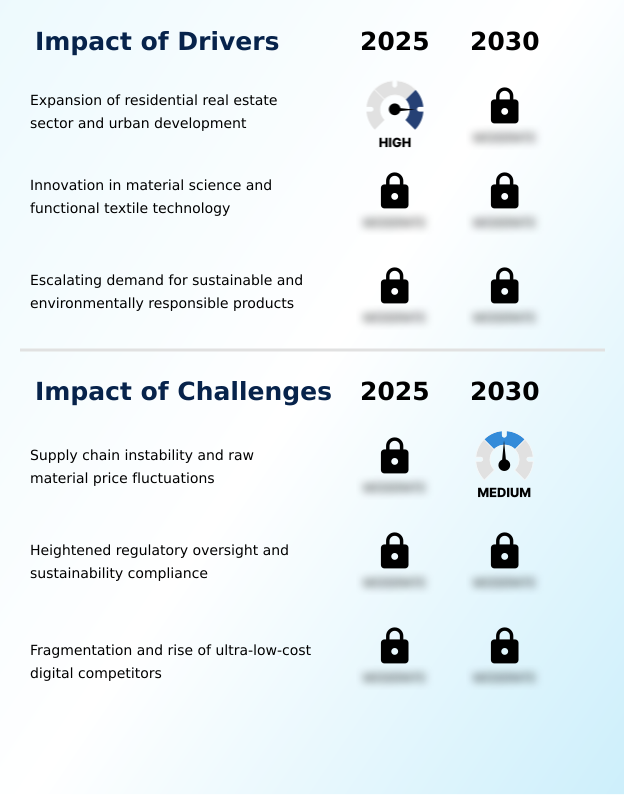
What are the key market drivers leading to the rise in the adoption of Home Textile Retail Industry?
- The expansion of the residential real estate sector, coupled with ongoing urban development, serves as a key driver for market growth.
- Expansion in residential real estate is a primary driver, directly fueling demand for residential textile solutions as new housing units are furnished.
- This growth is amplified by innovations in textile material science, which introduce functional textile innovations that cater to modern consumer preferences for health and wellness.
- For instance, the integration of smart textiles in home automation systems has seen a 25% increase in consumer interest year-over-year. Moreover, the escalating demand for eco-friendly home textiles is compelling retailers to prioritize a sustainable home textile supply chain.
- This shift is not only a response to consumer demand but also a strategic move, as companies using organic fibers and recycled polymers report a 15% improvement in brand loyalty.
- This convergence of housing growth, material science, and sustainability solidifies the positive trajectory of the home furnishing retail sector.
What are the market trends shaping the Home Textile Retail Industry?
- A key market trend involves the integration of bio-functional materials and wellness-centric design. This shift sees home textiles evolving from purely aesthetic items to products that enhance health and well-being.
- The home textile retail market is shifting toward wellness-centric textile design, where bio-functional textiles with features like temperature-regulating minerals and antimicrobial agents are in high demand. This trend transforms decorative textile products into tools for health and recovery. Consumers are increasingly favoring sustainable home furnishing options, driving the adoption of circular economy models and textile-to-textile recycling.
- Innovations in fabric science are prominent, with retailers showcasing moisture-wicking technology and micro-encapsulated copper fibers in new collections, achieving a 20% higher adoption rate among health-conscious demographics. The development of a digital product passport, providing full lifecycle transparency, improves consumer trust by over 30% and is becoming a standard for ethical textile manufacturing in the luxury home textile segment.
What challenges does the Home Textile Retail Industry face during its growth?
- Supply chain instability and significant fluctuations in raw material prices present a key challenge impacting the industry's growth trajectory.
- The home textile retail market grapples with significant challenges, including supply chain instability and intense digital competition. Volatility in raw material costs, particularly for cotton and recycled polymers, directly impacts profitability, with unexpected price hikes causing margin erosion of up to 10% for retailers without agile textile sourcing and procurement strategies.
- Furthermore, navigating complex home textile regulatory compliance, such as extended producer responsibility mandates, adds significant operational overhead. The rise of cross-border e-commerce and direct-to-consumer models intensifies price wars, challenging established players.
- This fragmented landscape requires substantial investment in advanced textile manufacturing and private label development to maintain a competitive edge and counter the fast-fashion influence on consumer textile preferences, which often prioritizes price over long-term quality.
Exclusive Technavio Analysis on Customer Landscape
The home textile retail market forecasting report includes the adoption lifecycle of the market, covering from the innovator’s stage to the laggard’s stage. It focuses on adoption rates in different regions based on penetration. Furthermore, the home textile retail market report also includes key purchase criteria and drivers of price sensitivity to help companies evaluate and develop their market growth analysis strategies.
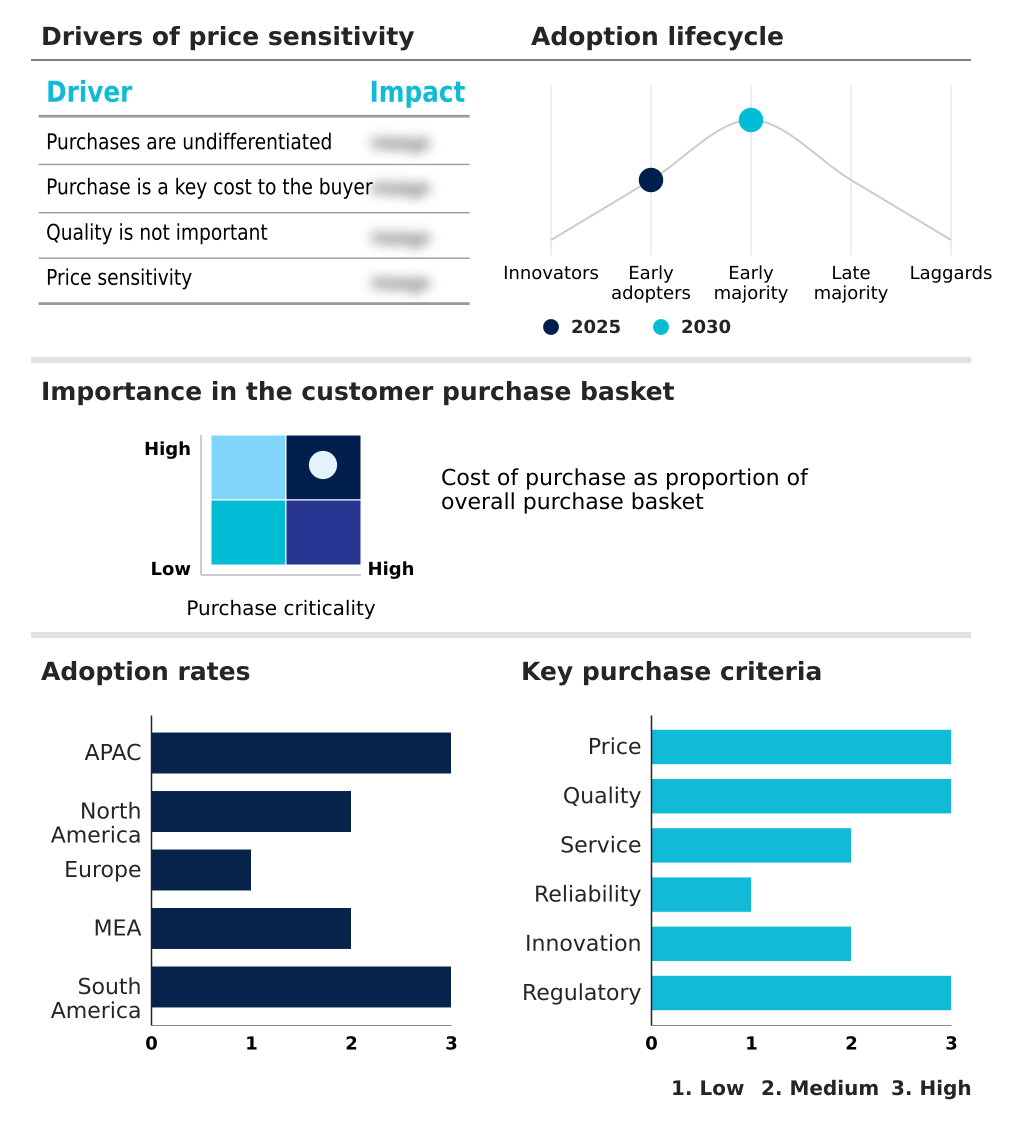
Customer Landscape of Home Textile Retail Industry
Competitive Landscape
Companies are implementing various strategies, such as strategic alliances, home textile retail market forecast, partnerships, mergers and acquisitions, geographical expansion, and product/service launches, to enhance their presence in the industry.
Amazon.com Inc. - A diverse portfolio of home textile solutions is offered, spanning bedding, bath linens, rugs, and curtains, available through multiple retail channels and third-party brands.
The industry research and growth report includes detailed analyses of the competitive landscape of the market and information about key companies, including:
- Amazon.com Inc.
- Ashley Global Retail LLC
- Beyond Inc.
- Crate and Barrel
- Hennes and Mauritz AB
- Industria de Diseno Textil SA
- Inter IKEA Holding BV
- Kohls Corp.
- Lenzing AG
- Lowes Co. Inc.
- Macys Inc.
- Ralph Lauren Corp.
- Restoration Hardware Inc.
- Steinhoff International Holdings
- Target Corp.
- The Home Depot Inc.
- The Kroger Co.
- Trident Ltd.
- Walmart Inc.
- Wayfair Inc.
Qualitative and quantitative analysis of companies has been conducted to help clients understand the wider business environment as well as the strengths and weaknesses of key industry players. Data is qualitatively analyzed to categorize companies as pure play, category-focused, industry-focused, and diversified; it is quantitatively analyzed to categorize companies as dominant, leading, strong, tentative, and weak.
Recent Development and News in Home textile retail market
- In May 2025, the residential developer Greystar Real Estate Partners announced a strategic partnership with several major home furnishing companies to provide standardized, high-quality textile packages for its new developments across North America.
- In July 2025, the luxury brand Ralph Lauren Home debuted a specialized collection of bedding and bath textiles featuring micro-encapsulated copper fibers, marketed for their skin-rejuvenating and hygienic properties.
- In October 2025, the major retail organization Target Corporation introduced a comprehensive textile-to-textile recycling initiative aimed at transforming post-consumer cotton waste into new bath and kitchen linen collections.
- In November 2025, the e-commerce leader Wayfair launched a generative artificial intelligence interior design assistant that enables customers to upload photographs of their rooms and receive personalized textile recommendations.
Dive into Technavio’s robust research methodology, blending expert interviews, extensive data synthesis, and validated models for unparalleled Home Textile Retail Market insights. See full methodology.
| Market Scope | |
|---|---|
| Page number | 301 |
| Base year | 2025 |
| Historic period | 2020-2024 |
| Forecast period | 2026-2030 |
| Growth momentum & CAGR | Accelerate at a CAGR of 6.7% |
| Market growth 2026-2030 | USD 80.2 billion |
| Market structure | Fragmented |
| YoY growth 2025-2026(%) | 5.9% |
| Key countries | China, India, Japan, South Korea, Australia, Indonesia, US, Canada, Mexico, Germany, UK, France, Italy, Spain, The Netherlands, Saudi Arabia, UAE, South Africa, Egypt, Turkey, Brazil, Argentina and Colombia |
| Competitive landscape | Leading Companies, Market Positioning of Companies, Competitive Strategies, and Industry Risks |
Research Analyst Overview
- The home textile retail market is undergoing a structural evolution, driven by the dual forces of technological integration and a fundamental shift toward sustainability. The adoption of omnichannel retail strategies is now essential, with generative artificial intelligence and augmented reality visualization tools becoming standard for personalizing the shopping experience.
- Material innovation is a critical competitive lever; the use of advanced textiles such as bio-functional textiles, phase-change materials, and micro-encapsulated copper fibers reflects a move toward wellness-centric products. Fabric science and textile engineering are enabling the creation of high-performance bedding and performance fabrics that meet heightened consumer expectations for durability and function.
- Boardroom decisions are increasingly focused on navigating extended producer responsibility mandates and the fast-fashion influence, compelling investment in circular economy models, digital product passport systems, and post-consumer textile recycling. This strategic alignment has allowed some firms to improve supply chain efficiency by over 20%.
- The market is also defined by the proliferation of direct-to-consumer models and cross-border e-commerce, which challenge traditional retailers and fuel private label development.
What are the Key Data Covered in this Home Textile Retail Market Research and Growth Report?
-
What is the expected growth of the Home Textile Retail Market between 2026 and 2030?
-
USD 80.2 billion, at a CAGR of 6.7%
-
-
What segmentation does the market report cover?
-
The report is segmented by Distribution Channel (Offline, and Online), Product (BBO, Bed linen, Carpets and rugs, Upholstery, and Others), Material (Natural fibers, Synthetic fibers, Blended materials, and Others) and Geography (APAC, North America, Europe, Middle East and Africa, South America)
-
-
Which regions are analyzed in the report?
-
APAC, North America, Europe, Middle East and Africa and South America
-
-
What are the key growth drivers and market challenges?
-
Expansion of residential real estate sector and urban development, Supply chain instability and raw material price fluctuations
-
-
Who are the major players in the Home Textile Retail Market?
-
Amazon.com Inc., Ashley Global Retail LLC, Beyond Inc., Crate and Barrel, Hennes and Mauritz AB, Industria de Diseno Textil SA, Inter IKEA Holding BV, Kohls Corp., Lenzing AG, Lowes Co. Inc., Macys Inc., Ralph Lauren Corp., Restoration Hardware Inc., Steinhoff International Holdings, Target Corp., The Home Depot Inc., The Kroger Co., Trident Ltd., Walmart Inc. and Wayfair Inc.
-
Market Research Insights
- The home textile market dynamics are increasingly shaped by the convergence of technology and sustainability. Omnichannel retail experiences are now standard, with augmented reality visualization tools reducing online return rates by up to 25% by allowing customers to preview decorative textile products.
- The push for sustainable home furnishing has led to a 30% increase in the use of certified organic fibers and recycled materials among leading retailers. This shift towards circularity in home textiles is reinforced by consumer demand for transparency, with brands that provide detailed sourcing information seeing higher engagement.
- The bedding and bath linen market is particularly influenced by wellness trends, where functional textile innovations that promote sleep hygiene are a key focus for product development and differentiation.
We can help! Our analysts can customize this home textile retail market research report to meet your requirements.
 RIA -
RIA - 
