



Event Logistics Market Size 2026-2030
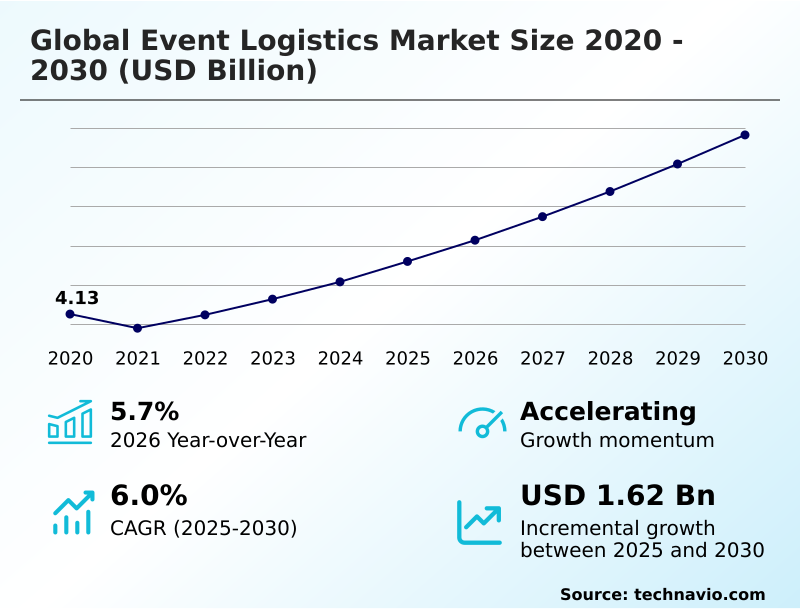
The Event Logistics Market size was valued at USD 4.80 billion in 2025, growing at a CAGR of 6% during the forecast period 2026-2030.
Major Market Trends & Insights
- APAC dominated the market and accounted for a 32.2% growth during the forecast period.
- By Event Type - Entertainment events segment was valued at USD 1.85 billion in 2024
- By End-user - Corporates and enterprises segment accounted for the largest market revenue share in 2024
Market Size & Forecast
- Historic Market Opportunities 2020-2024: USD 2.29 billion
- Market Future Opportunities 2025-2030: USD 1.62 billion
- CAGR from 2025 to 2030 : 6%
Market Summary
- The event logistics market is defined by the complex coordination of transportation, on-site handling, and customs compliance, where on-time delivery for 98% of time-critical shipments is a key performance indicator.
- A primary driver is the growth of international trade shows, which require the movement of heavy machinery and sensitive prototypes, often increasing a company's marketing logistics budget by up to 30% for a single large event.
- For instance, a supply chain scenario involves synchronizing multi-modal logistics to move a concert tour's stage and sound equipment across continents, requiring precise carnet management and freight forwarding. Conversely, a significant challenge is the uncertainty of event schedules; last-minute changes can increase operational costs by over 20% due to the need for expedited shipping and renegotiated labor contracts.
- This volatility demands extreme flexibility and robust contingency planning from service providers to mitigate financial risks and ensure event success.
What will be the Size of the Event Logistics Market during the forecast period?
Get Key Insights on Market Forecast (PDF) Request Free Sample
How is the Event Logistics Market Segmented?
The event logistics industry research report provides comprehensive data (region-wise segment analysis), with forecasts and analysis for the period 2026-2030, as well as historical data from 2020-2024 for the following segments.
- Event type
- Entertainment events
- Sports events
- Trade fairs and expos
- Corporate events
- Others
- End-user
- Corporates and enterprises
- Entertainment companies
- Government and public sector
- Sports organizations
- Others
- Service type
- Transportation and freight
- On-site setup and handling
- Warehousing and storage
- Customs and compliance
- Others
- Geography
- APAC
- China
- Japan
- India
- North America
- US
- Canada
- Mexico
- Europe
- Germany
- UK
- France
- South America
- Brazil
- Argentina
- Middle East and Africa
- Saudi Arabia
- UAE
- South Africa
- Rest of World (ROW)
- APAC
How is the Event Logistics Market Segmented by Event Type?
The entertainment events segment is estimated to witness significant growth during the forecast period.
The entertainment events segment, accounting for over 40% of market revenue, is distinguished by its demand for high-stakes, time-sensitive logistics for global concert tours and large-scale music festivals.
This sector requires specialized handling and white-glove services, including temperature-controlled transport for sensitive audiovisual equipment, where providers achieve a 99% damage-free transit rate. The operational complexity is heightened by the need for expert carnet management to facilitate temporary, duty-free importation.
The rise of immersive experience logistics and high-tech light shows has introduced a need for transporting delicate technology, demanding precision media and entertainment logistics.
Successful execution relies on dedicated charter services, sustainable event transport, and flawless reverse logistics to return equipment post-event.
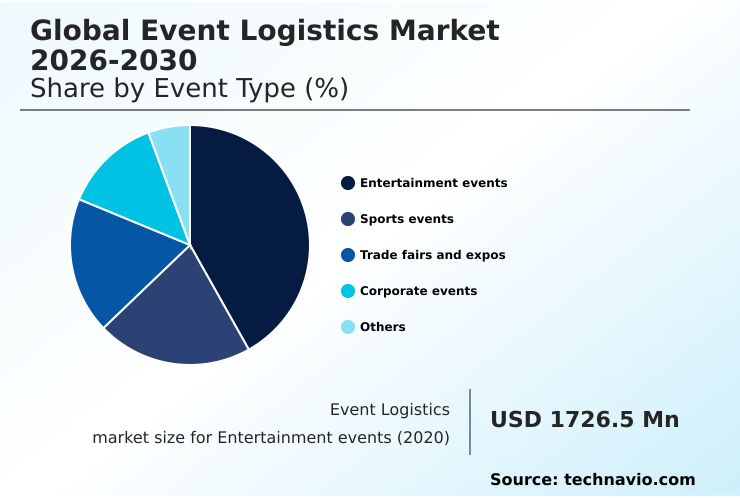
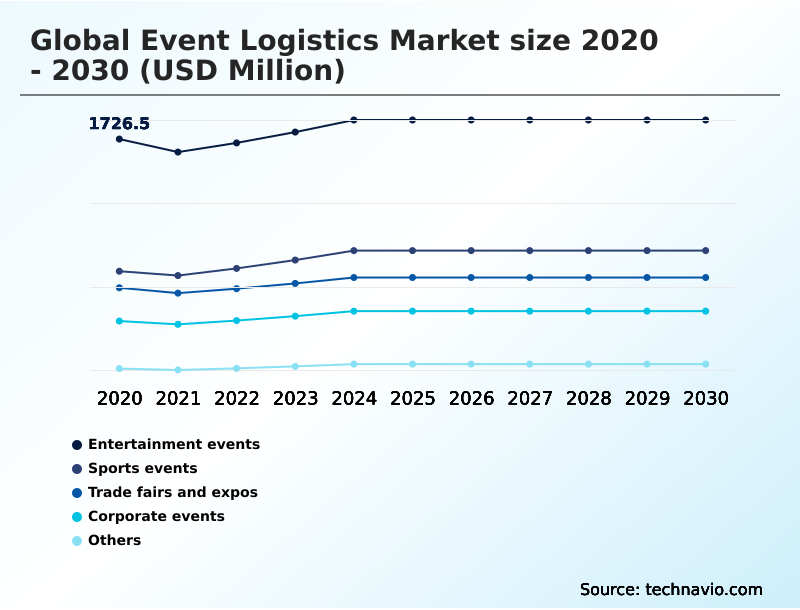
The Entertainment events segment was valued at USD 1.85 billion in 2024 and showed a gradual increase during the forecast period.
How demand for the Event Logistics market is rising in the leading region?
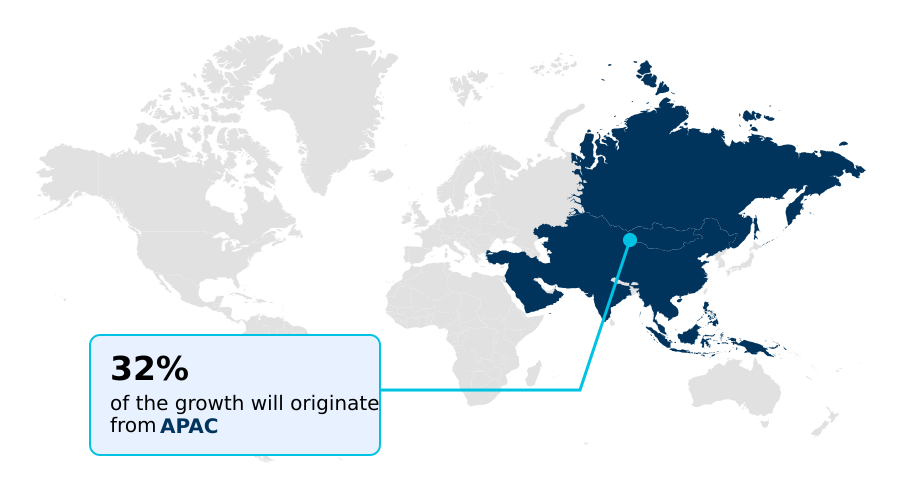
APAC is estimated to contribute 32.2% to the growth of the global market during the forecast period.Technavio’s analysts have elaborately explained the regional trends and drivers that shape the market during the forecast period.
See How Event Logistics Market demand is rising in APAC Request Free Sample
The geographic landscape of the event logistics market shows significant regional variation, with APAC poised to contribute over 32% of the market's growth, outpacing North America's 27.5%.
In APAC, countries like China dominate due to massive state-led trade expos, requiring extensive heavy lift capabilities for industrial machinery and sophisticated warehousing and storage solutions.
In contrast, North America's market is characterized by a high volume of corporate events, with a focus on advanced on-site handling and last-mile delivery.
European providers, facing historic venue constraints, excel in specialized drayage and rigging, developing compact solutions that improve efficiency by 15% compared to standard methods.
This regional differentiation necessitates tailored logistics strategies for effective audiovisual equipment transport, exhibit booth transport, and promotional materials distribution globally.
What are the key Drivers, Trends, and Challenges in the Event Logistics Market?
Our researchers analyzed the data with 2025 as the base year, along with the key drivers, trends, and challenges. A holistic analysis of drivers will help companies refine their marketing strategies to gain a competitive advantage.
- The event logistics market is increasingly shaped by client demands for specialization and technological integration. For instance, planning the event logistics for large scale concerts now involves coordinating hundreds of tons of equipment across multiple continents, a task far more complex than domestic trade show freight, often seeing 25% of the budget allocated to air cargo alone.
- This complexity underscores the importance of addressing cross-border event logistics challenges, where navigating customs and carnet requirements can make or break a tour schedule. A key focus for providers is managing last minute changes in events, as unforeseen schedule shifts can inflate transport costs by over 50%, impacting overall project profitability.
- To mitigate these risks, leading firms are embracing technology trends in event logistics, such as real-time tracking and predictive analytics, which have been shown to improve on-time delivery rates by 10-15%. Furthermore, there is a growing emphasis on sustainable practices in event logistics, with clients requesting carbon-neutral transport options and reusable packaging.
- This shift not only aligns with corporate ESG goals but also presents an opportunity for logistics providers to differentiate their services in a competitive marketplace by offering transparent carbon footprint reporting and circular economy solutions for event materials.
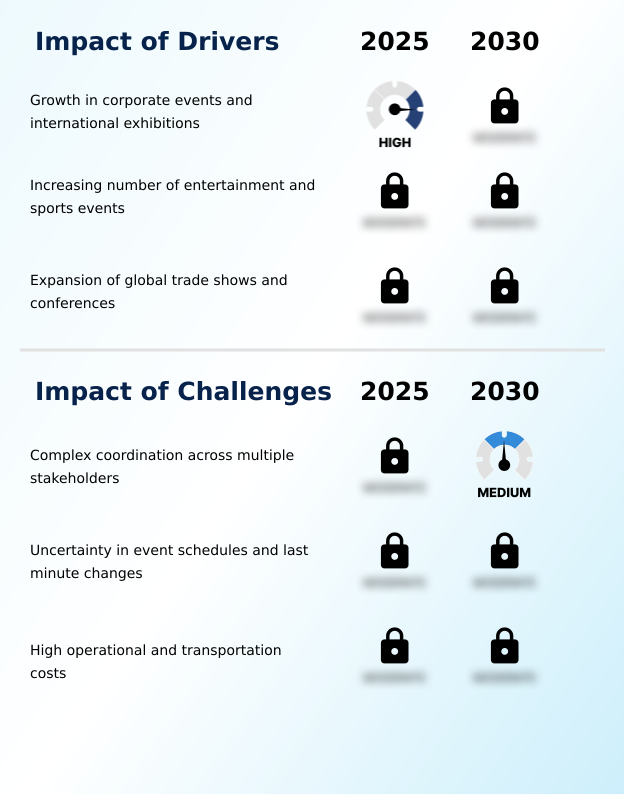
What are the key market drivers leading to the rise in the adoption of Event Logistics Industry?
- The growth in corporate events and international exhibitions, coupled with a resurgence in business travel, serves as a primary driver for the global event logistics market.
- The increasing frequency of global events is a primary driver, with corporate event logistics for international exhibitions boosting demand. Major concert touring logistics require specialized project logistics to move equipment, increasing demand for dedicated charter services by over 25%.
- Similarly, exhibition logistics and sports tournament logistics for global competitions create massive demand for sports logistics, with a single event requiring over 2,000 shipments.
- The rise of live broadcast logistics for e-sports and festival logistics for cultural events adds complexity, demanding transport of high-end server racks and solidifying the need for expert providers.
What are the market trends shaping the Event Logistics Industry?
- The adoption of digital and automation tools is a dominant trend, modernizing the event logistics market. This enhances the efficiency of warehouse management, load planning, and document processing.
- The adoption of digital tools is modernizing the event supply chain, with providers using digital twins to simulate load-ins, reducing setup times by up to 20%. This enhances supply chain visibility and event freight management. Integrating real-time tracking for high-value asset tracking provides transparency, a feature for which clients pay a 15% premium, especially in pharmaceutical event logistics.
- Predictive analytics optimizes load planning, supporting sustainable logistics. Consequently, firms are moving to proactive logistics project management, building resilient, data-driven operations.
What challenges does the Event Logistics Industry face during its growth?
- Complex coordination across multiple stakeholders, including organizers, venue managers, and freight forwarders, presents a primary challenge affecting the growth of the event logistics market.
- Complex coordination across stakeholders remains a hurdle, where fragmented communication can lead to cost overruns of up to 30%. A delay in multi-modal logistics triggers a domino effect, making robust customs compliance and expert customs brokerage for events critical for freight forwarding. This is especially true for temporary structure logistics and art exhibition logistics.
- Last-minute changes, common in pop-up event logistics, can increase time-critical transport costs by 50%. Consequently, effective logistics risk assessment and integrated platforms are essential for managing venue logistics and mitigating financial risk.
Exclusive Technavio Analysis on Customer Landscape
The event logistics market forecasting report includes the adoption lifecycle of the market, covering from the innovator’s stage to the laggard’s stage. It focuses on adoption rates in different regions based on penetration. Furthermore, the event logistics market report also includes key purchase criteria and drivers of price sensitivity to help companies evaluate and develop their market growth analysis strategies.
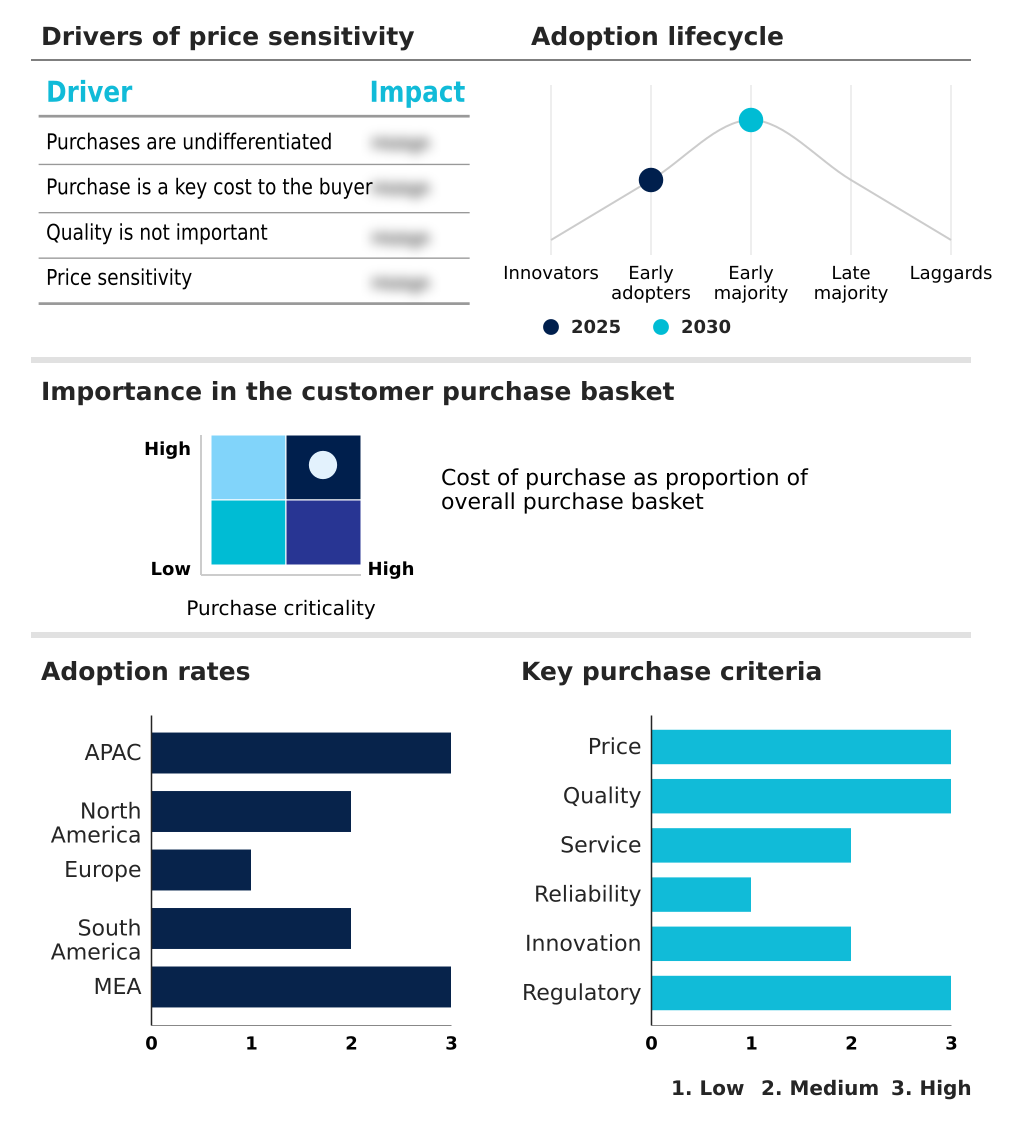
Customer Landscape of Event Logistics Industry
Competitive Landscape
Companies are implementing various strategies, such as strategic alliances, event logistics market forecast, partnerships, mergers and acquisitions, geographical expansion, and product/service launches, to enhance their presence in the industry.
Agility Global PLC - Specialized event logistics services deliver project cargo handling and integrated supply chain solutions tailored for complex, large-scale global events, ensuring seamless execution and management.
The industry research and growth report includes detailed analyses of the competitive landscape of the market and information about key companies, including:
- Agility Global PLC
- Air Charter Service Group Ltd.
- C H Robinson Worldwide Inc.
- CEVA Logistics SA
- DHL International GmbH
- DSV AS
- Expeditors International Inc.
- FedEx Corp.
- GAC Group
- GEODIS
- Hellmann Worldwide Logistics
- Kuehne Nagel Management AG
- LoxamHune
- Nippon Express Holdings Inc.
- Rhenus SE and Co. KG
- DB Schenker
- SOS Global Express
- The Rock It Co. LLC
- United Parcel Service Inc.
- Yusen Logistics Co. Ltd.
Qualitative and quantitative analysis of companies has been conducted to help clients understand the wider business environment as well as the strengths and weaknesses of key industry players. Data is qualitatively analyzed to categorize companies as pure play, category-focused, industry-focused, and diversified; it is quantitatively analyzed to categorize companies as dominant, leading, strong, tentative, and weak.
Market Intelligence Radar: High-Impact Developments & Growth Signals
- In the Air Freight and Logistics industry, the widespread adoption of digital freight platforms and AI-driven load optimization has enhanced overall supply chain visibility. This directly impacts event logistics by enabling more precise real-time tracking of high-value asset tracking and improving coordination for time-critical conference logistics.
- Growing international pressure for sustainability has led to mandates within the Air Freight and Logistics industry for the use of Sustainable Aviation Fuel (SAF) and carbon reporting, with some regions requiring a 5% SAF blend. This development compels event logistics providers to offer sustainable event transport options and transparent carbon footprinting to clients, particularly for large-scale sports tournament logistics.
- In the Air Freight and Logistics industry, heightened security protocols and advanced screening technologies at cargo terminals have become standard to counter threats and comply with new regulations in North America and Europe. For event logistics, this necessitates more rigorous documentation and specialized handling for sensitive audiovisual equipment transport and live broadcast logistics to avoid delays.
- The significant investment in expanding air cargo infrastructure and warehousing facilities in emerging markets, particularly in the Middle East and APAC, has increased regional freight capacity by over 10%. This expansion in the Air Freight and Logistics industry directly supports the growth of international trade show logistics and festival logistics by providing better connectivity and local support.
Dive into Technavio’s robust research methodology, blending expert interviews, extensive data synthesis, and validated models for unparalleled Event Logistics Market insights. See full methodology.
| Market Scope | |
|---|---|
| Page number | 322 |
| Base year | 2025 |
| Historic period | 2020-2024 |
| Forecast period | 2026-2030 |
| Growth momentum & CAGR | Accelerate at a CAGR of 6% |
| Market growth 2026-2030 | USD 1616.0 million |
| Market structure | Fragmented |
| YoY growth 2025-2026(%) | 5.7% |
| Key countries | China, Japan, India, South Korea, Australia, Indonesia, US, Canada, Mexico, Germany, UK, France, Italy, Spain, The Netherlands, Brazil, Argentina, Chile, Saudi Arabia, UAE, South Africa, Israel and Turkey |
| Competitive landscape | Leading Companies, Market Positioning of Companies, Competitive Strategies, and Industry Risks |
Research Analyst Overview
- The event logistics market ecosystem operates through a complex interplay of stakeholders, where logistics providers like C H Robinson Worldwide Inc. and DB Schenker serve as the central hub. This value chain begins with end-users, such as corporates and entertainment companies, which constitute over 60% of the demand, defining the need for transporting exhibit booths, AV equipment, and promotional materials.
- Freight forwarders and carriers provide the core transportation, while venue managers and on-site labor contractors execute last-mile delivery and setup, a phase where 40% of logistical delays can occur. Technology suppliers are increasingly influential, offering real-time tracking and digital twin platforms that enhance supply chain visibility. Customs brokers are critical for international events, navigating regulatory complexities.
- This ecosystem is driven by the need for seamless, on-time execution, where each stakeholder's performance directly impacts the success of the final event.
What are the Key Data Covered in this Event Logistics Market Research and Growth Report?
-
What is the expected growth of the Event Logistics Market between 2026 and 2030?
-
The Event Logistics Market is expected to grow by USD 1.62 billion during 2026-2030, registering a CAGR of 6%. Year-over-year growth in 2026 is estimated at 5.7%%. This acceleration is shaped by growth in corporate events and international exhibitions, which is intensifying demand across multiple end-use verticals covered in the report.
-
-
What segmentation does the market report cover?
-
The report is segmented by Event Type (Entertainment events, Sports events, Trade fairs and expos, Corporate events, and Others), End-user (Corporates and enterprises, Entertainment companies, Government and public sector, Sports organizations, and Others), Service Type (Transportation and freight, On-site setup and handling, Warehousing and storage, Customs and compliance, and Others) and Geography (APAC, North America, Europe, South America, Middle East and Africa). Among these, the Entertainment events segment is estimated to witness significant growth during the forecast period, driven by rising adoption across key application areas. Each segment includes detailed qualitative and quantitative analysis, along with historical data from 2020-2024 and forecasts through 2030 with year-over-year growth rates.
-
-
Which regions are analyzed in the report?
-
The report covers APAC, North America, Europe, South America and Middle East and Africa. APAC is estimated to contribute 32.2% to market growth during the forecast period. Country-level analysis includes China, Japan, India, South Korea, Australia, Indonesia, US, Canada, Mexico, Germany, UK, France, Italy, Spain, The Netherlands, Brazil, Argentina, Chile, Saudi Arabia, UAE, South Africa, Israel and Turkey, with dedicated market size tables and year-over-year growth for each.
-
-
What are the key growth drivers and market challenges?
-
The primary driver is growth in corporate events and international exhibitions, which is accelerating investment and industry demand. The main challenge is complex coordination across multiple stakeholders, creating operational barriers for key market participants. The report quantifies the impact of each driver and challenge across 2026 and 2030 with comparative analysis.
-
-
Who are the major players in the Event Logistics Market?
-
Key vendors include Agility Global PLC, Air Charter Service Group Ltd., C H Robinson Worldwide Inc., CEVA Logistics SA, DHL International GmbH, DSV AS, Expeditors International Inc., FedEx Corp., GAC Group, GEODIS, Hellmann Worldwide Logistics, Kuehne Nagel Management AG, LoxamHune, Nippon Express Holdings Inc., Rhenus SE and Co. KG, DB Schenker, SOS Global Express, The Rock It Co. LLC, United Parcel Service Inc. and Yusen Logistics Co. Ltd.. The report provides qualitative and quantitative analysis categorizing companies as dominant, leading, strong, tentative, and weak based on their market positioning. Company profiles include business segment analysis, SWOT assessment, key offerings, and recent strategic developments.
-
Market Research Insights
- The competitive landscape in event logistics is highly fragmented, with the top 10 players accounting for less than 40% of the market, necessitating differentiation through specialized services and technology. Key vendors are actively expanding their capabilities to meet this demand; for example, DHL International GmbH and FedEx Corp.
- have enhanced their time-critical transport and cold-chain solutions, specifically targeting the high-value pharmaceutical and tech conference sectors. These investments in specialized handling directly address the industry's need for reliable transport of sensitive, high-value assets, where logistics failure can jeopardize an entire product launch.
- This push for service innovation is a direct response to the persistent challenge of high operational costs, where adopting AI-driven load planning can reduce transportation expenses by up-to 15%. Companies are adapting by offering integrated, technology-enabled solutions to secure long-term contracts and improve margins.
We can help! Our analysts can customize this event logistics market research report to meet your requirements.
 RIA -
RIA - 
