



Event Tourism Market Size 2026-2030
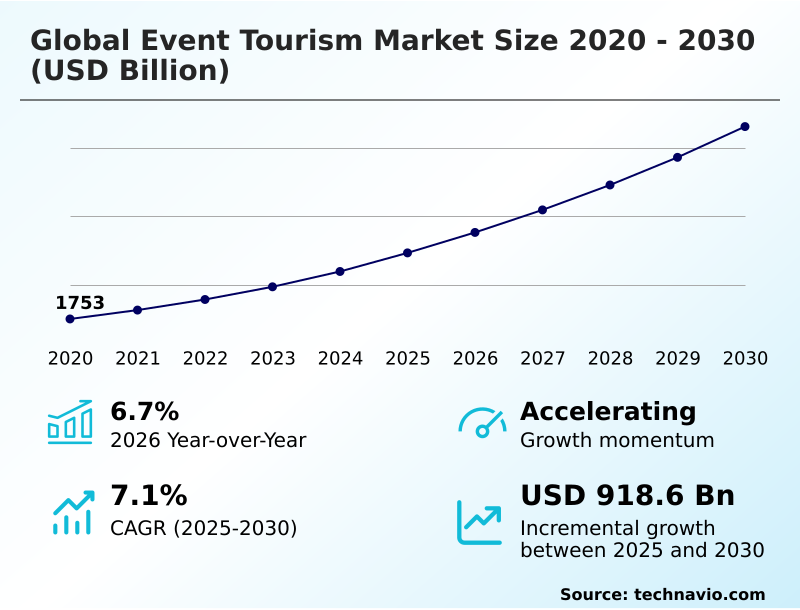
The event tourism market size is valued to increase by USD 918.6 billion, at a CAGR of 7.1% from 2025 to 2030. Increasing government investments in infrastructure and tourism promotion will drive the event tourism market.
Major Market Trends & Insights
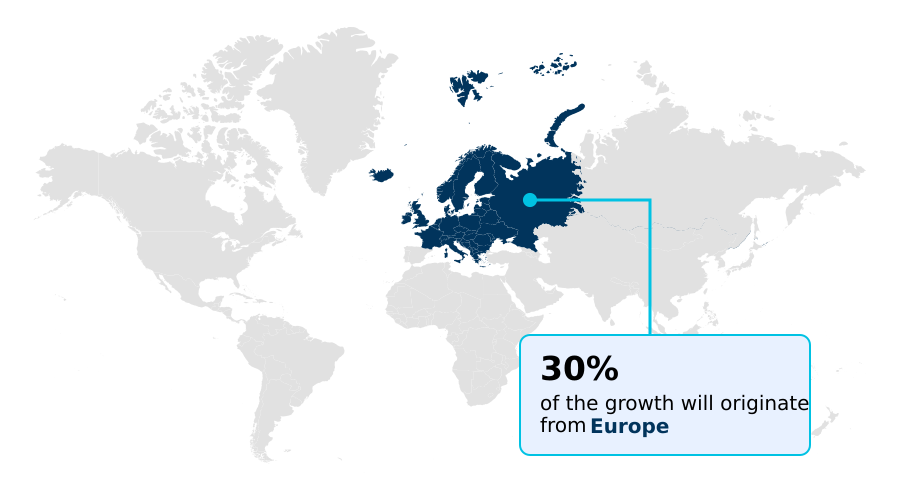
- Europe dominated the market and accounted for a 30.4% growth during the forecast period.
- By Type - Sports tourism segment was valued at USD 874.3 billion in 2024
- By Location - Domestic segment accounted for the largest market revenue share in 2024
Market Size & Forecast
- Market Opportunities: USD 1399.2 billion
- Market Future Opportunities: USD 918.6 billion
- CAGR from 2025 to 2030 : 7.1%
Market Summary
- The event tourism market is defined by organized travel to destinations for the primary purpose of attending scheduled gatherings. This sector integrates hospitality, transportation, and event management to create comprehensive experiences. The market's growth is fueled by a consumer shift toward experiential travel and the increasing globalization of business and culture.
- A key driver is the proactive investment by municipal bodies in infrastructure to host mega-events, which stimulates local economies. Technology, including digital ticketing and virtual reality previews, enhances the attendee experience and streamlines logistics.
- For instance, a city hosting an international cultural festival might use predictive analytics to manage crowd flow and optimize public transport schedules, improving safety and visitor satisfaction. However, the industry faces challenges from geopolitical instability and the high costs of infrastructure.
- A significant trend is the move toward sustainable event management, with organizers adopting eco-friendly practices like waste reduction and carbon offsetting to meet the demands of environmentally conscious travelers. This convergence of technology, sustainability, and experience-driven demand shapes the competitive landscape of the MICE industry and beyond.
What will be the Size of the Event Tourism Market during the forecast period?
Get Key Insights on Market Forecast (PDF) Get Free Sample
How is the Event Tourism Market Segmented?
The event tourism industry research report provides comprehensive data (region-wise segment analysis), with forecasts and estimates in "USD billion" for the period 2026-2030, as well as historical data from 2020-2024 for the following segments.
- Type
- Sports tourism
- Music tourism
- Business tourism
- Exhibitions tourism
- Others
- Location
- Domestic
- International
- Channel
- Physical
- Virtual
- Geography
- Europe
- UK
- Germany
- France
- North America
- US
- Canada
- Mexico
- APAC
- China
- India
- Japan
- South America
- Brazil
- Argentina
- Colombia
- Middle East and Africa
- UAE
- Saudi Arabia
- South Africa
- Rest of World (ROW)
- Europe
By Type Insights
The sports tourism segment is estimated to witness significant growth during the forecast period.
The sports tourism sub-segment is a foundational pillar of the event tourism market, driven by high-volume traveler flows and significant infrastructure investment.
This category relies on effective spectator sports logistics and meticulous venue capacity planning to accommodate major global tournaments and professional league competitions.
Successful destination marketing for these events now extends beyond the game itself, incorporating sports tourism packages that offer immersive experiential travel. Integrating data-driven fan engagement platforms has been shown to improve merchandise sales by up to 15%.
As cities compete for hosting rights, their focus shifts to legacy planning, ensuring that investments serve the local population long-term.
This requires close collaboration with firms specializing in meeting and event management and sophisticated travel management software to handle complex logistics.
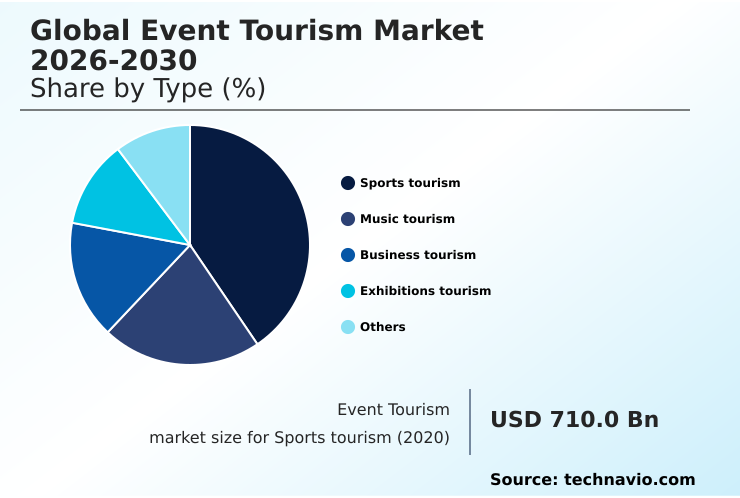
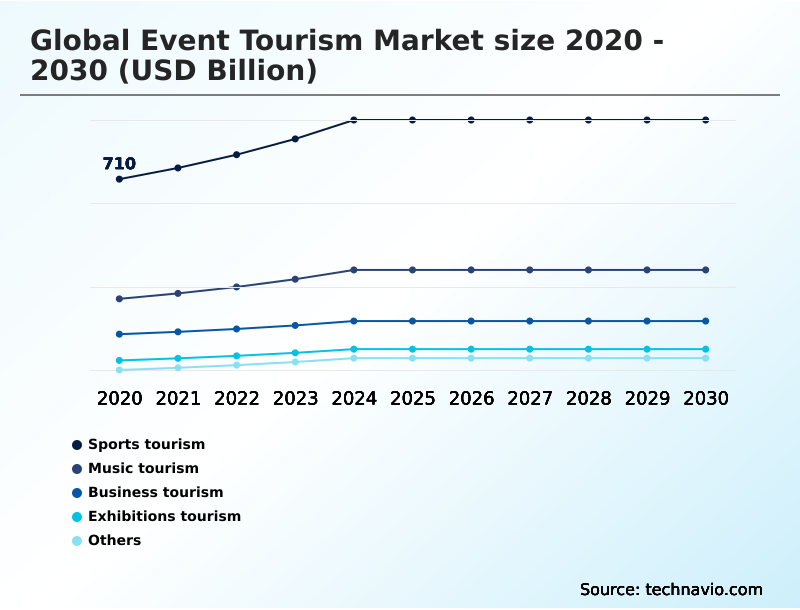
The Sports tourism segment was valued at USD 874.3 billion in 2024 and showed a gradual increase during the forecast period.
Regional Analysis
Europe is estimated to contribute 30.4% to the growth of the global market during the forecast period.Technavio’s analysts have elaborately explained the regional trends and drivers that shape the market during the forecast period.
See How Event Tourism Market Demand is Rising in Europe Get Free Sample
The Asia-Pacific region is experiencing the most rapid acceleration in the market, fueled by economic development and massive government investment in modernization. The trend of gig-tripping is particularly prominent here, where fans travel internationally for music festival management showcases.
This region leads in leveraging technology, with digital ticketing and virtual reality previews becoming standard. The adoption of hybrid event platforms has expanded audience reach by an average of 200%, integrating virtual event production with physical attendance.
This tech-forward approach supports sophisticated trade show management and innovative brand activation strategy. Effective hospitality service integration is key to handling the influx of visitors.
This combination of technological superiority and a rapidly expanding consumer base ensures the region will continue to dictate global market trends. The use of digital ticketing has also reduced fraud-related losses by over 90%.
Market Dynamics
Our researchers analyzed the data with 2025 as the base year, along with the key drivers, trends, and challenges. A holistic analysis of drivers will help companies refine their marketing strategies to gain a competitive advantage.
- The global event tourism market 2026-2030 navigates a complex landscape where strategic decisions are shaped by external and internal factors. The impact of geopolitical instability on event tourism forces organizers to develop agile contingency plans and robust security risk management for international conferences.
- Destinations that implement advanced protocols report a 40% lower insurance premium compared to those with standard security measures. Concurrently, there is a clear shift toward unique, localized experiences, demanding new strategies for hyper-localized cultural immersion festivals. The ROI of wellness and health-centric event tourism is becoming a key metric for investors, as this segment demonstrates high per-capita spending.
- A critical success factor is the technology integration in large-scale sporting events, where leveraging AR and VR for virtual site inspections is gaining traction. However, the industry faces significant challenges in eco-friendly mega-event production and must conduct thorough cost-benefit analysis of MICE infrastructure investment.
- Effective supply chain logistics for destination weddings and precise methods for measuring economic impact of music tourism are essential for niche market profitability. Furthermore, the implementation of biometric solutions for event access control, best practices for bleisure travel programs, and clear sustainability reporting for corporate events are becoming industry standards.
- Attendee engagement platforms for hybrid events and understanding the role of DMOs in attracting global conventions are pivotal for future growth.
What are the key market drivers leading to the rise in the adoption of Event Tourism Industry?
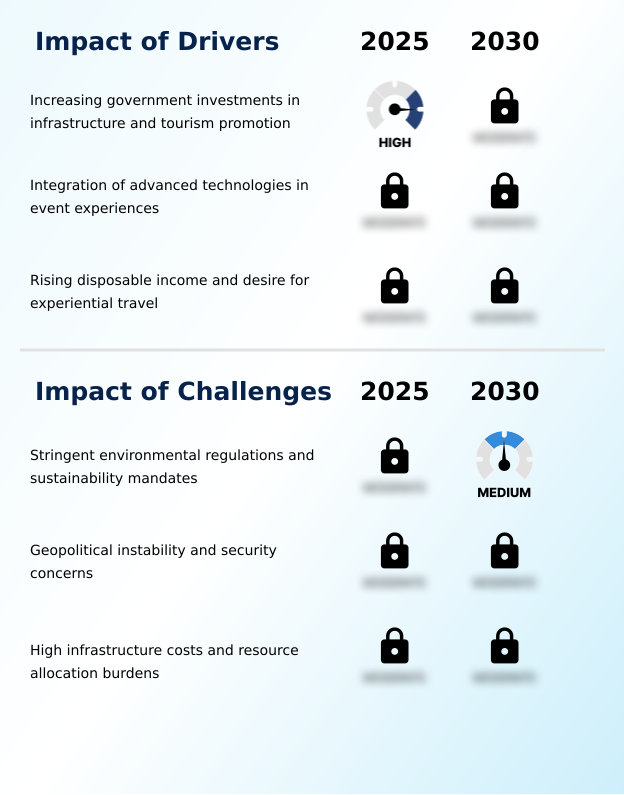
- Increasing government investments in tourism-related infrastructure and promotional activities serve as a key driver for market expansion.
- Technological innovation and strategic government investments are primary catalysts for market expansion. The integration of augmented reality applications and immersive digital experiences is transforming attendee engagement.
- Cities investing in smart-city technology for event management report a 25% improvement in traffic flow and resource distribution. This tourism infrastructure development creates an environment where destination management companies can thrive.
- Moreover, predictive analytics tools enable organizers to optimize operations, leading to an 18% increase in ancillary revenue through targeted offerings. For corporate event planning, personalized networking algorithms are becoming essential for delivering value.
- This focus on technology, combined with aggressive live entertainment promotion, ensures destinations remain competitive and can offer sophisticated, seamless event experiences that drive both attendance and economic benefit.
What are the market trends shaping the Event Tourism Industry?
- The rise of eco-tourism and the adoption of sustainable practices for mega-events are emerging as a significant trend. This shift is reshaping operational models across the event tourism market.
- A profound shift toward sustainability and authenticity is reshaping the market. The adoption of sustainable event management is no longer optional, with a focus on comprehensive carbon offset programs and verifiable sustainable tourism practices. Events integrating these measures report a 15% higher attendee satisfaction rate.
- This aligns with the growth of experiential travel and bleisure travel, where participants seek deeper connections. In response, cultural festival planning is becoming more localized, moving away from generic formats. Attendee journey mapping is now a critical tool used by experiential marketing agencies to design these personalized experiences.
- The emphasis on tangible outcomes has also elevated the importance of event ROI measurement, compelling organizers to prove value beyond attendance numbers, especially as corporate sponsorship interest grows by over 20% for green-certified events.
What challenges does the Event Tourism Industry face during its growth?
- Stringent environmental regulations and sustainability mandates present a key challenge, impacting the operational and financial aspects of industry growth.
- The market grapples with significant operational and financial headwinds, primarily from security risks and high infrastructure costs. Implementing robust event security protocols is non-negotiable, with advanced solutions like biometric ticketing and contactless entry systems reducing entry processing times by 40%. However, these systems, combined with crowd management analytics, can represent up to 30% of an event's operational budget.
- For the MICE industry, this pressure is acute, affecting everything from exhibition organization to activities led by a professional congress organization (pco). The complexities of global business travel are compounded by the need for stringent travel and expense management. These challenges require organizers to balance safety and efficiency with profitability, making risk mitigation a central theme in long-term strategic planning.
Exclusive Technavio Analysis on Customer Landscape
The event tourism market forecasting report includes the adoption lifecycle of the market, covering from the innovator’s stage to the laggard’s stage. It focuses on adoption rates in different regions based on penetration. Furthermore, the event tourism market report also includes key purchase criteria and drivers of price sensitivity to help companies evaluate and develop their market growth analysis strategies.
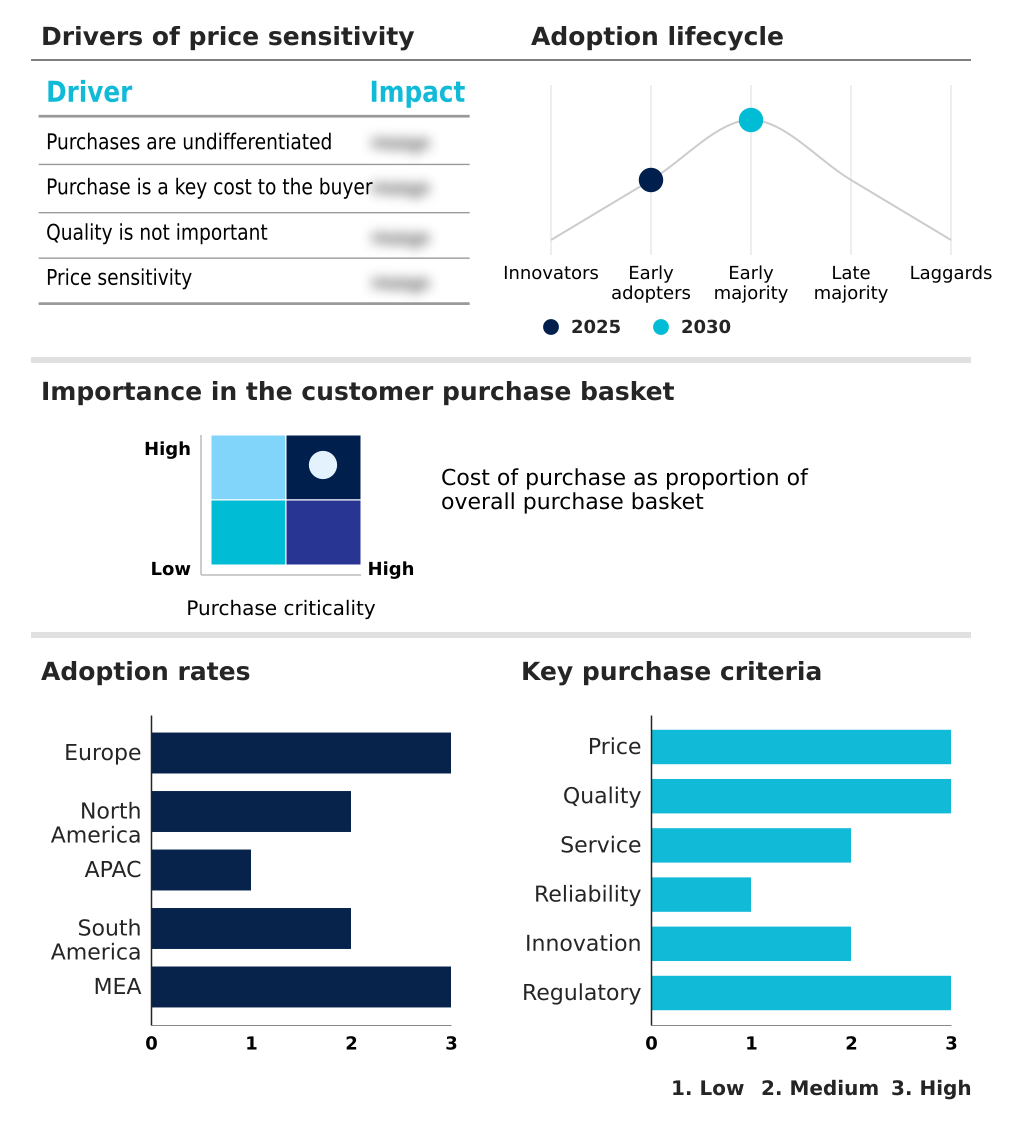
Customer Landscape of Event Tourism Industry
Competitive Landscape
Companies are implementing various strategies, such as strategic alliances, event tourism market forecast, partnerships, mergers and acquisitions, geographical expansion, and product/service launches, to enhance their presence in the industry.
AEG Worldwide - Offers a cloud-based enterprise platform for venue sourcing, event registration, and enhancing attendee engagement through integrated software solutions.
The industry research and growth report includes detailed analyses of the competitive landscape of the market and information about key companies, including:
- AEG Worldwide
- ATPI Group
- BCD Meetings and Events
- Clarion Events Ltd.
- Creative Group Inc.
- Cvent Inc
- CWT
- Emerald X LLC
- Eventbrite Inc.
- FCM Travel Solutions
- George P. Johnson
- Global Business Travel Group
- Informa PLC
- ITA Group
- Live Nation Entertainment Inc.
- Maritz Holdings Inc.
- Messe Frankfurt GmbH
- Reed Exhibitions Ltd.
- StubHub Holdings Inc.
Qualitative and quantitative analysis of companies has been conducted to help clients understand the wider business environment as well as the strengths and weaknesses of key industry players. Data is qualitatively analyzed to categorize companies as pure play, category-focused, industry-focused, and diversified; it is quantitatively analyzed to categorize companies as dominant, leading, strong, tentative, and weak.
Recent Development and News in Event tourism market
- In May 2025, the World Travel and Tourism Council announced that international visitor spending is projected to reach an unprecedented level, reflecting surging demand for cross-border event experiences.
- In March 2025, India's Ministry of Tourism, in partnership with the Federation of Indian Chambers of Commerce & Industry (FICCI), launched India Energy Week, attracting over 75,000 delegates and positioning the nation as a credible host for large-scale industrial summits.
- In February 2025, VisitBritain initiated a new campaign promoting regional centers like Birmingham and Manchester to decentralize corporate events and sporting competitions away from London.
- In November 2024, the Saudi Tourism Authority reported record-high domestic tourism spending, fueled by a national strategy to develop large-scale entertainment and sporting events to boost the internal economy.
Dive into Technavio’s robust research methodology, blending expert interviews, extensive data synthesis, and validated models for unparalleled Event Tourism Market insights. See full methodology.
| Market Scope | |
|---|---|
| Page number | 296 |
| Base year | 2025 |
| Historic period | 2020-2024 |
| Forecast period | 2026-2030 |
| Growth momentum & CAGR | Accelerate at a CAGR of 7.1% |
| Market growth 2026-2030 | USD 918.6 billion |
| Market structure | Fragmented |
| YoY growth 2025-2026(%) | 6.7% |
| Key countries | UK, Germany, France, Italy, Spain, The Netherlands, US, Canada, Mexico, China, India, Japan, South Korea, Australia, Indonesia, Brazil, Argentina, Colombia, UAE, Saudi Arabia, South Africa, Turkey and Israel |
| Competitive landscape | Leading Companies, Market Positioning of Companies, Competitive Strategies, and Industry Risks |
Research Analyst Overview
- The event tourism market is characterized by its continuous evolution, driven by technological adoption and shifting consumer preferences toward high-value experiential travel. Core to this transformation is the integration of advanced digital tools. The use of predictive analytics tools, for example, has enabled organizers to improve resource allocation accuracy by over 25%.
- Boardroom decisions are increasingly influenced by the need to balance high-impact experiential marketing with sustainable event management. Solutions range from venue sourcing solutions and brand activation services to comprehensive incentive travel programs. The rise of bleisure travel is compelling the MICE industry to innovate, blending professional obligations with leisure.
- Technology such as virtual reality previews, augmented reality applications, and smart-city technology are no longer novelties but essential components for creating immersive digital experiences. The operational backbone relies on efficient digital ticketing, biometric ticketing, and contactless entry systems, all managed through sophisticated crowd management analytics.
- For hybrid gatherings, personalized networking algorithms are key to delivering value, while a commitment to carbon offset programs addresses growing environmental concerns.
What are the Key Data Covered in this Event Tourism Market Research and Growth Report?
-
What is the expected growth of the Event Tourism Market between 2026 and 2030?
-
USD 918.6 billion, at a CAGR of 7.1%
-
-
What segmentation does the market report cover?
-
The report is segmented by Type (Sports tourism, Music tourism, Business tourism, Exhibitions tourism, and Others), Location (Domestic, and International), Channel (Physical, and Virtual) and Geography (Europe, North America, APAC, South America, Middle East and Africa)
-
-
Which regions are analyzed in the report?
-
Europe, North America, APAC, South America and Middle East and Africa
-
-
What are the key growth drivers and market challenges?
-
Increasing government investments in infrastructure and tourism promotion, Stringent environmental regulations and sustainability mandates
-
-
Who are the major players in the Event Tourism Market?
-
AEG Worldwide, ATPI Group, BCD Meetings and Events, Clarion Events Ltd., Creative Group Inc., Cvent Inc, CWT, Emerald X LLC, Eventbrite Inc., FCM Travel Solutions, George P. Johnson, Global Business Travel Group, Informa PLC, ITA Group, Live Nation Entertainment Inc., Maritz Holdings Inc., Messe Frankfurt GmbH, Reed Exhibitions Ltd. and StubHub Holdings Inc.
-
Market Research Insights
- The market's momentum is sustained by a complex interplay of logistical precision and technological innovation. Organizations utilizing integrated travel and expense management systems report processing cost reductions of up to 20%. The strategic application of attendee journey mapping is shown to improve engagement rates by over 30% during corporate event planning.
- Destination management companies are crucial in this ecosystem, ensuring seamless hospitality service integration. As global business travel recovers, the emphasis on event ROI measurement has intensified, compelling experiential marketing agencies to deliver quantifiable results.
- This dynamic environment requires sophisticated travel management software and a clear brand activation strategy to capture audience attention and justify budgetary allocations, solidifying the importance of meticulous meeting and event management in achieving strategic objectives.
We can help! Our analysts can customize this event tourism market research report to meet your requirements.
 RIA -
RIA - 
