



Fantasy Sports Market Size 2026-2030
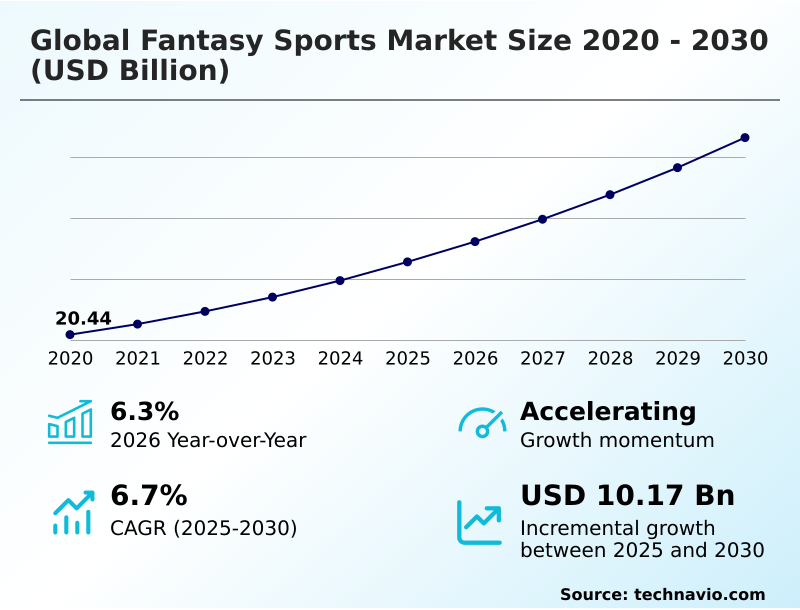
The fantasy sports market size is valued to increase by USD 10.17 billion, at a CAGR of 6.7% from 2025 to 2030. Rising global sports viewership and strong fan engagement culture will drive the fantasy sports market.
Major Market Trends & Insights
- North America dominated the market and accounted for a 46.9% growth during the forecast period.
- By Product - Fantasy soccer segment was valued at USD 9.62 billion in 2024
- By Platform - Mobile application segment accounted for the largest market revenue share in 2024
Market Size & Forecast
- Market Opportunities: USD 16.12 billion
- Market Future Opportunities: USD 10.17 billion
- CAGR from 2025 to 2030 : 6.7%
Market Summary
- The fantasy sports market has evolved into a sophisticated digital entertainment sector, fundamentally reshaping fan interaction with professional sports. This transformation is propelled by the widespread adoption of mobile-first applications and an insatiable fan engagement culture that demands more than passive viewership.
- Key trends include the integration of AI-based prediction for lineup optimization tools and the proliferation of micro contest formats, which cater to a demand for instant gratification and continuous engagement. For instance, platform operators now utilize user behavior analytics to refine gamification features, aiming to convert seasonal users into year-round subscribers by offering compelling off-season content and short-duration fantasy games.
- This strategy directly addresses the core challenge of cyclical user activity tied to sports calendars. However, the industry grapples with navigating complex skill-based gaming regulations and intense competition, which necessitates constant innovation in user acquisition strategies and customer retention models to maintain market position and profitability in this dynamic ecosystem.
What will be the Size of the Fantasy Sports Market during the forecast period?
Get Key Insights on Market Forecast (PDF) Get Free Sample
How is the Fantasy Sports Market Segmented?
The fantasy sports industry research report provides comprehensive data (region-wise segment analysis), with forecasts and estimates in "USD million" for the period 2026-2030, as well as historical data from 2020-2024 for the following segments.
- Product
- Fantasy soccer
- Fantasy baseball
- Fantasy basketball
- Fantasy hockey
- Others
- Platform
- Mobile application
- Website
- Device
- Smartphone
- Computer
- Others
- Geography
- North America
- US
- Canada
- Mexico
- Europe
- Germany
- UK
- France
- APAC
- China
- Japan
- India
- South America
- Brazil
- Argentina
- Middle East and Africa
- Saudi Arabia
- UAE
- South Africa
- Rest of World (ROW)
- North America
By Product Insights
The fantasy soccer segment is estimated to witness significant growth during the forecast period.
The fantasy soccer segment is a cornerstone of the market, driven by a strong fan engagement culture and extensive sports media integration.
This segment's stability is reinforced by a consistent schedule of global leagues, which facilitates continuous digital sports engagement through various fantasy sports platforms.
The adoption of AI-based prediction and detailed player performance metrics has become standard, enhancing the strategic depth of virtual team creation. The use of a player salary cap and real-time score updates are critical gamification features.
Operators employing sophisticated user behavior analytics for personalized user content have noted that this approach boosts participation in daily fantasy sports contests by over 15%.
This data-driven strategy, combined with influencer-driven marketing and a robust freemium business model, sustains high engagement levels.
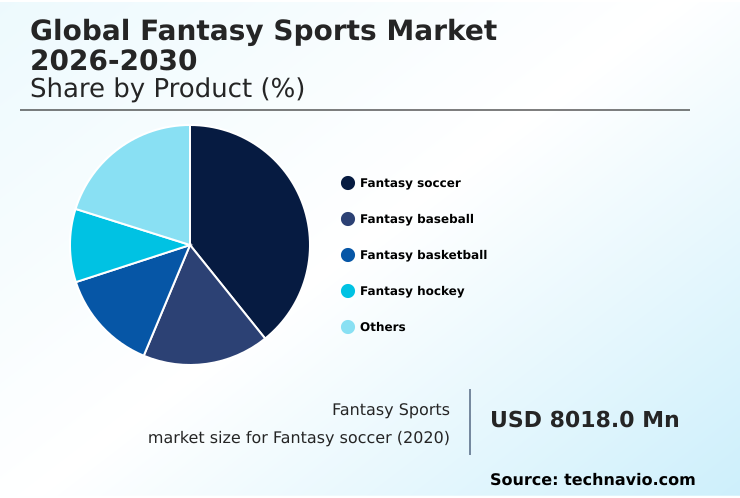
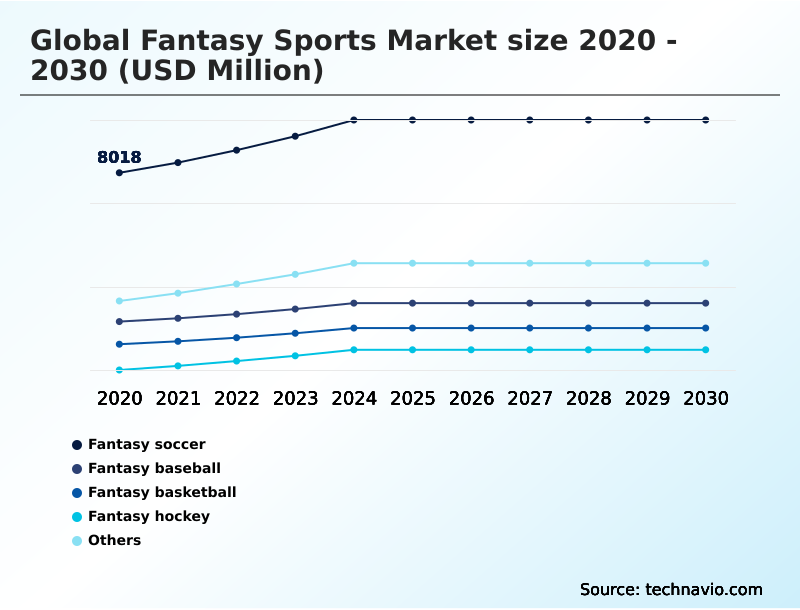
The Fantasy soccer segment was valued at USD 9.62 billion in 2024 and showed a gradual increase during the forecast period.
Regional Analysis
North America is estimated to contribute 46.9% to the growth of the global market during the forecast period.Technavio’s analysts have elaborately explained the regional trends and drivers that shape the market during the forecast period.
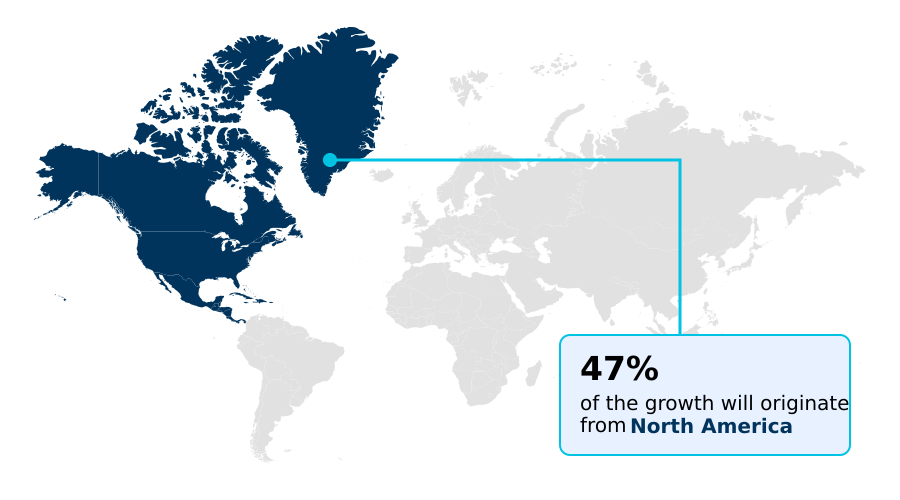
See How Fantasy Sports Market Demand is Rising in North America Get Free Sample
The geographic landscape of the fantasy sports market is characterized by a dichotomy between mature and high-growth regions. North America remains a dominant force, underpinned by established professional leagues and high digital penetration, facilitating deep integration of real-time data integration.
However, the APAC region is exhibiting rapid expansion, with user growth rates nearly 40% higher than in North America, fueled by increasing smartphone adoption and localized contest offerings.
This expansion is supported by unique user acquisition strategies and a focus on sports data providers catering to regional interests. Platforms that have implemented robust compliance management systems tailored to diverse regional laws have achieved a 25% faster market entry.
The market also sees growth from multi-sport fantasy platforms and the use of loyalty program integration to foster global communities.
Market Dynamics
Our researchers analyzed the data with 2025 as the base year, along with the key drivers, trends, and challenges. A holistic analysis of drivers will help companies refine their marketing strategies to gain a competitive advantage.
- The evolution of the fantasy sports market is increasingly tied to technological and strategic advancements. Understanding the impact of 5G on fantasy sports is crucial, as it promises lower latency for an enhanced live gaming experience. Simultaneously, the role of AI in fantasy sports player selection is becoming a standard feature, moving beyond basic statistics.
- A key debate involves integrating blockchain for fantasy sports assets, which could revolutionize digital ownership. From a business perspective, effective fantasy sports platform user retention strategies are paramount, especially given the regulatory challenges in the fantasy sports market. This is closely linked to perfecting the mobile application design for fantasy sports.
- Success hinges on using data analytics for fantasy sports to refine offerings, with platforms that are adept at analyzing player performance for fantasy teams showing a 40% higher engagement rate. For new entrants, viable fantasy sports market entry strategies must account for the diverse monetization models for fantasy sports apps.
- The role of social media in fantasy sports cannot be overstated, shaping both user engagement and marketing strategies for fantasy sports platforms. Operators are constantly enhancing user experience in fantasy sports, with the future of daily fantasy sports contests likely involving more interactive elements. This includes developing micro contests for user engagement and expanding into fantasy sports for niche sports.
- A critical hurdle remains the legal distinction between fantasy sports and gambling. Finally, the impact of live streaming on fantasy sports is creating more integrated viewing experiences, while securing fantasy sports platform from fraud and navigating the complexities of fantasy sports and sports betting integration are top operational priorities.
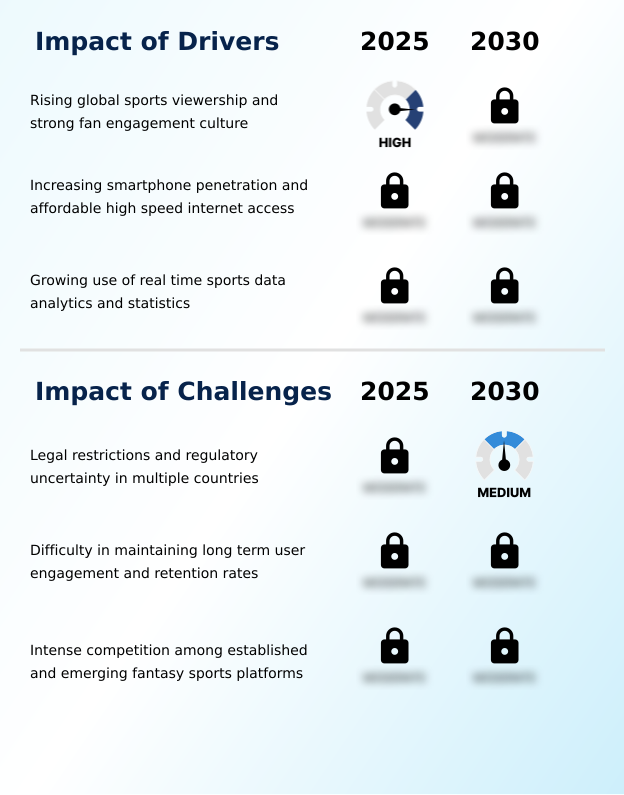
What are the key market drivers leading to the rise in the adoption of Fantasy Sports Industry?
- Rising global sports viewership, coupled with a strong culture of fan engagement, is a key driver for the fantasy sports market.
- Market growth is fundamentally driven by an intensifying fan engagement culture and enhanced digital accessibility.
- The increasing adoption of real-time sports analytics has led to a 15% rise in in-game contest entries, as users can make more informed decisions during live matches.
- Widespread smartphone penetration, coupled with the expansion of high-speed mobile networks, serves as a primary catalyst, with emerging markets showing a 50% faster growth rate in new sign-ups.
- This is amplified by the sports betting convergence, which creates a more holistic and engaging interactive fan experience.
- Furthermore, the use of gamification features and personalized push notification alerts has been shown to improve daily active user counts by up to 30%, proving the value of a well-executed customer retention model and user behavior analytics in sustaining long-term growth.
What are the market trends shaping the Fantasy Sports Industry?
- The integration of artificial intelligence for predictive analytics and automated lineup tools is emerging as a significant market trend. This technology enhances user decision-making and strategic gameplay.
- The market is undergoing a significant technological shift, with trends focused on enhancing strategic depth and user engagement. The integration of AI-based prediction is central, with platforms reporting a 25% increase in user session duration after implementing advanced lineup optimization tools.
- Another key trend is the move toward mobile-first applications, which has streamlined the user interface design and reduced onboarding friction, leading to a 40% improvement in user acquisition efficiency for new launches. The proliferation of micro contest formats and short-duration fantasy games is also notable, as these offerings can increase in-app purchase frequency by over 20% during live events.
- These trends are supported by technologies such as predictive gameplay analytics, augmented reality sports gaming, and a focus on cross-platform synchronization, shaping the next generation of digital sports engagement.
What challenges does the Fantasy Sports Industry face during its growth?
- Legal restrictions and regulatory uncertainty across various countries present a key challenge affecting the industry's growth trajectory.
- Navigating a complex web of challenges is critical for sustainable growth in the fantasy sports market. The primary obstacle remains the fragmented landscape of skill-based gaming regulations, where operators in certain jurisdictions face compliance-related costs that are up to 60% higher than in more permissive markets. This necessitates sophisticated compliance management systems.
- Intense competition puts continuous pressure on user acquisition strategies, with customer acquisition costs rising by an estimated 20% year-over-year in saturated markets. This environment forces platforms to innovate constantly with offerings like blockchain-based fantasy sports and digital collectible integration to differentiate themselves.
- Furthermore, maintaining long-term engagement is a persistent issue, as platforms must continually evolve their contest entry fees and gamified reward systems to prevent user churn.
Exclusive Technavio Analysis on Customer Landscape
The fantasy sports market forecasting report includes the adoption lifecycle of the market, covering from the innovator’s stage to the laggard’s stage. It focuses on adoption rates in different regions based on penetration. Furthermore, the fantasy sports market report also includes key purchase criteria and drivers of price sensitivity to help companies evaluate and develop their market growth analysis strategies.
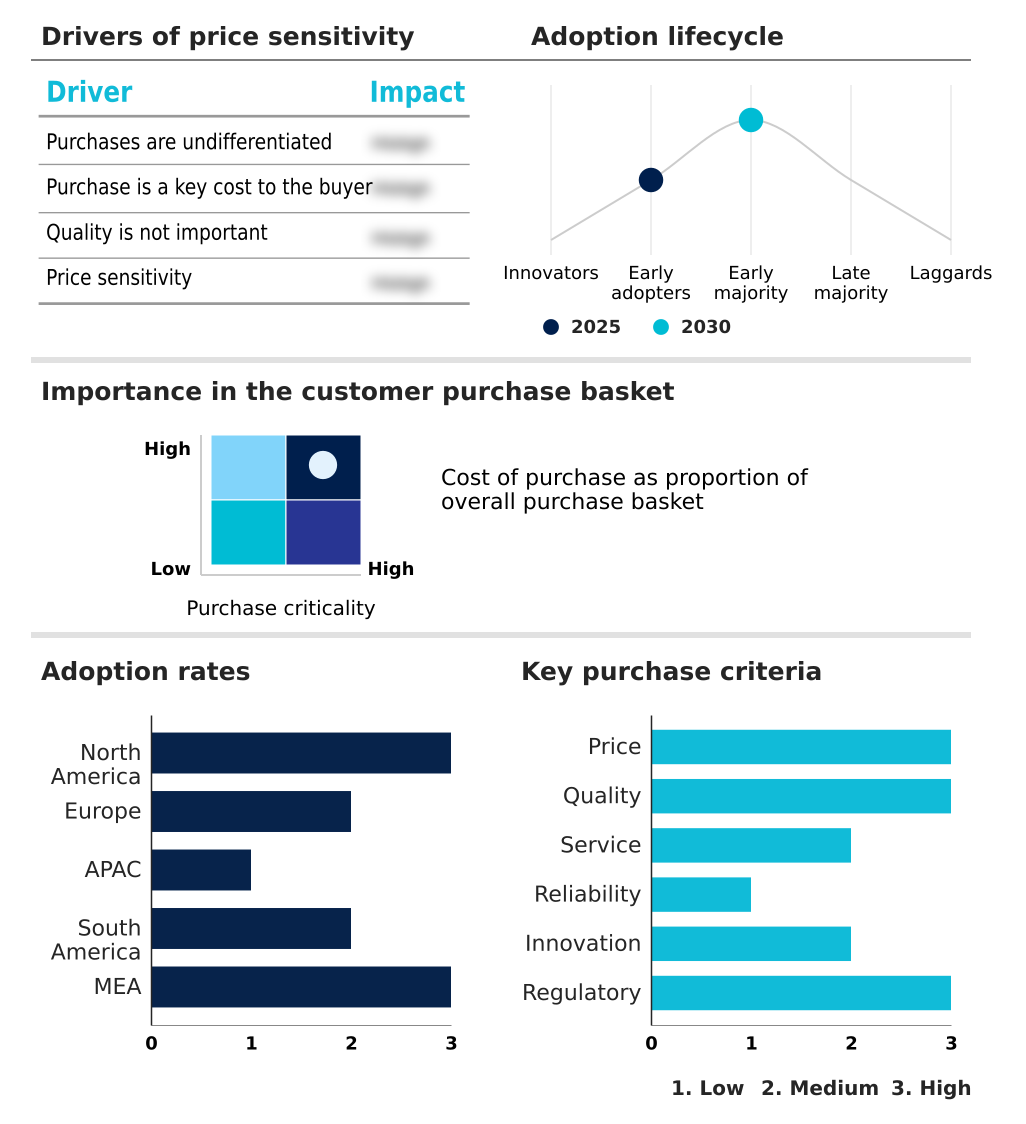
Customer Landscape of Fantasy Sports Industry
Competitive Landscape
Companies are implementing various strategies, such as strategic alliances, fantasy sports market forecast, partnerships, mergers and acquisitions, geographical expansion, and product/service launches, to enhance their presence in the industry.
Ballr Media - Key offerings include platforms for virtual team management and competitive contests based on real-time athlete statistics, central to the global fantasy sports market 2026-2030.
The industry research and growth report includes detailed analyses of the competitive landscape of the market and information about key companies, including:
- Ballr Media
- DraftKings Inc.
- Dream Sports Group
- ESPN Sports Media Ltd.
- FanDuel Inc.
- FantasyPros.com
- FanTeam
- Fantrax
- Mobile Premier League
- NFL Enterprises LLC.
- OfficeFootballPool.com
- Paramount Global
- Playerzpot Media Pvt Ltd
- RealTime Fantasy Sports Inc.
- Roto Sports Inc.
- Sideline Software Inc.
- SidePrize LLC
- Sorare SAS
- SportsHub Games Network Inc
- Yahoo
Qualitative and quantitative analysis of companies has been conducted to help clients understand the wider business environment as well as the strengths and weaknesses of key industry players. Data is qualitatively analyzed to categorize companies as pure play, category-focused, industry-focused, and diversified; it is quantitatively analyzed to categorize companies as dominant, leading, strong, tentative, and weak.
Recent Development and News in Fantasy sports market
- In January 2025, Sportradar expanded its real-time sports data partnership network with multiple fantasy sports platforms to provide faster and more accurate live match statistics, significantly improving data reliability.
- In February 2025, DraftKings introduced upgraded AI-driven lineup optimization tools that provide users with real-time predictive insights and performance probability scores to enhance strategic gameplay.
- In March 2025, FanDuel launched enhanced micro-contest formats and personalized engagement features designed to improve user retention during non-peak sports periods and stabilize activity levels.
- In March 2025, Jio Platforms expanded its affordable high-speed data plans targeting digital entertainment and gaming users across India, boosting access to mobile-based fantasy sports applications.
Dive into Technavio’s robust research methodology, blending expert interviews, extensive data synthesis, and validated models for unparalleled Fantasy Sports Market insights. See full methodology.
| Market Scope | |
|---|---|
| Page number | 294 |
| Base year | 2025 |
| Historic period | 2020-2024 |
| Forecast period | 2026-2030 |
| Growth momentum & CAGR | Accelerate at a CAGR of 6.7% |
| Market growth 2026-2030 | USD 10170.2 million |
| Market structure | Fragmented |
| YoY growth 2025-2026(%) | 6.3% |
| Key countries | US, Canada, Mexico, Germany, UK, France, Italy, Spain, The Netherlands, China, Japan, India, South Korea, Australia, Indonesia, Brazil, Argentina, Chile, Saudi Arabia, UAE, South Africa, Israel and Turkey |
| Competitive landscape | Leading Companies, Market Positioning of Companies, Competitive Strategies, and Industry Risks |
Research Analyst Overview
- The fantasy sports market is a dynamic digital ecosystem where success is dictated by technological agility and a deep understanding of user engagement. The landscape is defined by the effective use of real-time data integration from sports data providers to power fantasy sports platforms. Core operational elements include robust lineup optimization tools, sophisticated AI-based prediction algorithms, and seamless mobile-first applications.
- For boardroom consideration, the increasing complexity of skill-based gaming regulations requires a strategic shift towards proactive compliance, which now directly influences product design and market entry planning. Operators that have integrated advanced, secure payment gateways have noted a significant operational improvement, reducing transaction-related user issues by over 50%.
- The competitive environment necessitates a focus on user acquisition strategies and customer retention models, which are enhanced by features like real-time score updates, interactive dashboards, and compelling player news and analysis.
- Sustaining growth relies on mastering these elements, from virtual team creation mechanics to the implementation of a balanced in-app purchases model alongside subscription-based services, all while navigating an intensely competitive field.
What are the Key Data Covered in this Fantasy Sports Market Research and Growth Report?
-
What is the expected growth of the Fantasy Sports Market between 2026 and 2030?
-
USD 10.17 billion, at a CAGR of 6.7%
-
-
What segmentation does the market report cover?
-
The report is segmented by Product (Fantasy soccer, Fantasy baseball, Fantasy basketball, Fantasy hockey, and Others), Platform (Mobile application, and Website), Device (Smartphone, Computer, and Others) and Geography (North America, Europe, APAC, South America, Middle East and Africa)
-
-
Which regions are analyzed in the report?
-
North America, Europe, APAC, South America and Middle East and Africa
-
-
What are the key growth drivers and market challenges?
-
Rising global sports viewership and strong fan engagement culture, Legal restrictions and regulatory uncertainty in multiple countries
-
-
Who are the major players in the Fantasy Sports Market?
-
Ballr Media, DraftKings Inc., Dream Sports Group, ESPN Sports Media Ltd., FanDuel Inc., FantasyPros.com, FanTeam, Fantrax, Mobile Premier League, NFL Enterprises LLC., OfficeFootballPool.com, Paramount Global, Playerzpot Media Pvt Ltd, RealTime Fantasy Sports Inc., Roto Sports Inc., Sideline Software Inc., SidePrize LLC, Sorare SAS, SportsHub Games Network Inc and Yahoo
-
Market Research Insights
- Market dynamics are increasingly shaped by the pursuit of a superior interactive fan experience, where platforms compete on more than just contest entry fees. The sports betting convergence is a critical factor, with operators that successfully integrate both offerings seeing a 30% higher customer lifetime value.
- Furthermore, the adoption of a freemium business model supplemented by an in-app purchases model has proven effective, boosting user conversion rates by up to 18% compared to subscription-only platforms. The rise of social gaming features and influencer-driven marketing is also pivotal, as platforms leveraging these strategies report a 25% lower user acquisition cost.
- This competitive environment prioritizes continuous innovation in providing personalized user content and gamified reward systems.
We can help! Our analysts can customize this fantasy sports market research report to meet your requirements.
 RIA -
RIA - 
