


Field Devices Calibration Services Market Size 2024-2028
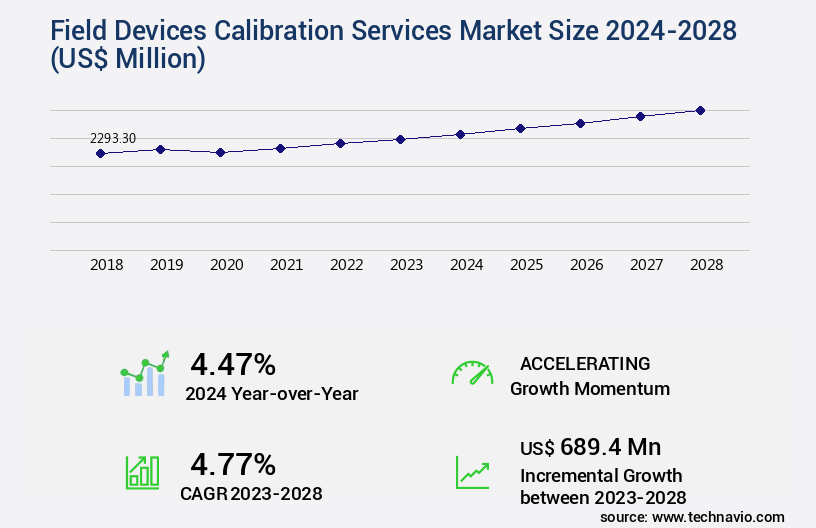
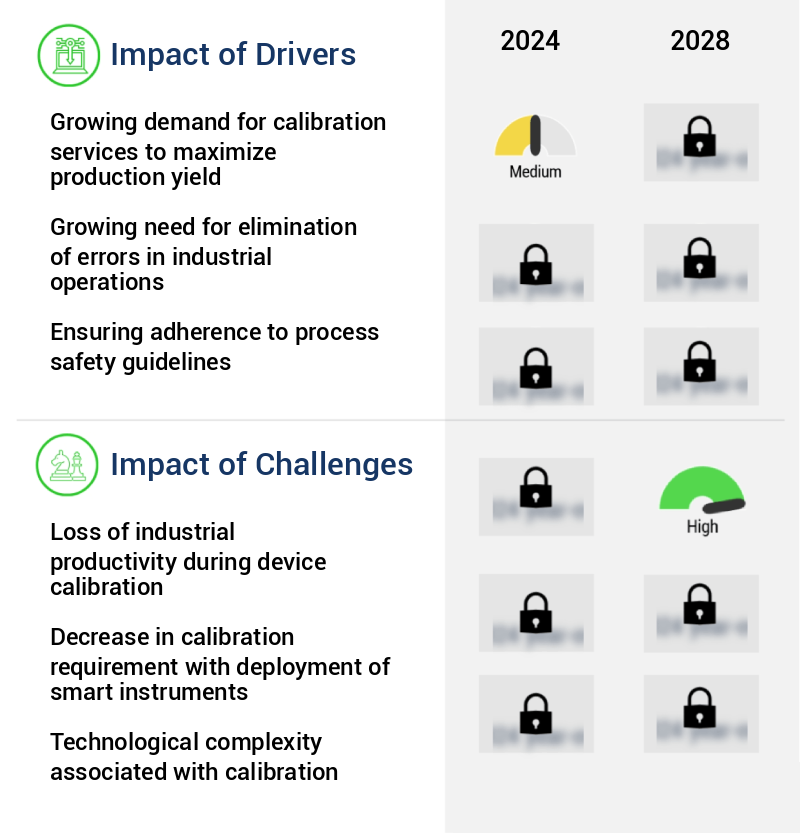
The field devices calibration services market size is valued to increase by USD 689.4 million, at a CAGR of 4.77% from 2023 to 2028. Growing demand for calibration services to maximize production yield will drive the field devices calibration services market.
Market Insights
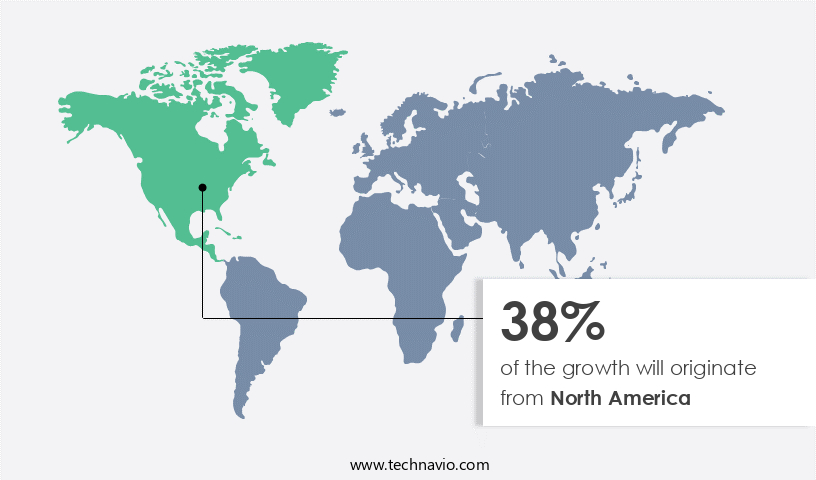
- North America dominated the market and accounted for a 38% growth during the 2024-2028.
- By Type - Temperature and humidity calibration segment was valued at USD 932.70 million in 2022
- By End-user - Process industries segment accounted for the largest market revenue share in 2022
Market Size & Forecast
- Market Opportunities: USD 44.58 million
- Market Future Opportunities 2023: USD 689.40 million
- CAGR from 2023 to 2028 : 4.77%
Market Summary
- The market is witnessing significant growth due to the increasing demand for maintaining optimal performance of industrial equipment. Calibration services play a crucial role in maximizing production yield and ensuring product quality, making them an essential component of manufacturing processes. However, the traditional approach of periodic calibration is giving way to predictive calibration, which enables proactive maintenance and reduces downtime. Despite the benefits, calibration processes can lead to a loss of industrial productivity. The time and resources required for calibration can significantly impact operational efficiency, especially in large-scale industries. To mitigate this challenge, companies are exploring innovative solutions such as automation and remote calibration services.
- A real-world business scenario illustrating the importance of calibration services is that of a global supply chain optimization project. A leading manufacturing company aims to streamline its production processes and reduce lead times. By implementing a robust calibration management system, the company can ensure that its field devices are always in optimal condition, reducing the likelihood of equipment failures and associated downtime. This, in turn, enables the company to meet its production targets and maintain its competitive edge in the market.
What will be the size of the Field Devices Calibration Services Market during the forecast period?
Get Key Insights on Market Forecast (PDF) Request Free Sample
- The market is a dynamic and essential sector that focuses on ensuring precision measurement and data integrity in various industries. Calibration laboratories employ calibration validation, verification, and error correction techniques to maintain equipment reliability and performance. Calibration management software and diagnostic tools facilitate asset management and calibration history tracking, enabling companies to adhere to calibration schedules and maintain metrological capability. Calibration processes are crucial for quality assurance and the instrument lifecycle. Performance testing and calibration verification are integral parts of these processes. Calibration techniques and calibration standards are continually evolving, requiring ongoing investment in test equipment and calibration cycles.
- Maintenance contracts and calibration documentation are essential for managing calibration uncertainty and ensuring regulatory compliance. One significant trend in the market is the increasing adoption of calibration management software, which can lead to substantial improvements in budgeting and product strategy. For instance, a company may save up to 25% on calibration costs by implementing an effective calibration management software system. By streamlining calibration processes and optimizing calibration schedules, businesses can minimize downtime and enhance overall operational efficiency.
Unpacking the Field Devices Calibration Services Market Landscape
In the realm of industrial process control, calibration services play a pivotal role in maintaining the accuracy and reliability of field devices. According to industry data, preventive calibration of instruments can reduce downtime by up to 30% compared to reactive maintenance. Adherence to calibration best practices, such as regular testing and calibration certificates, ensures measurement traceability and alignment with regulatory requirements. Remote calibration, facilitated by calibration software, allows for efficient error mitigation and minimizes the need for on-site calibration, thereby reducing costs and increasing operational efficiency. Uncertainty analysis and traceability standards are essential components of calibration workflows, ensuring systematic and random errors are identified and addressed. Calibration intervals, accuracy verification, and calibration reports enable process validation and quality control checks, while specialized tooling and calibration management systems streamline the calibration process and minimize the risk of non-compliance during regulatory audits. Instrument calibration, sensor validation, and diagnostic testing are integral to maintaining precision instruments and data acquisition systems, ultimately contributing to improved ROI and enhanced overall system performance.
Key Market Drivers Fueling Growth
The increasing requirement for calibration services to optimize production yields serves as the primary market driver.
- In the evolving industrial landscape, the market plays a crucial role in ensuring production safety and product quality across various sectors. With stringent quality requirements from accrediting bodies, regulatory agencies, quality programs, and auditors, industries are increasingly relying on calibration services to maintain optimal instrument performance. This reliance is further amplified by technological advancements that demand more precise measurements. According to industry reports, calibration services can lead to significant business outcomes, such as reducing downtime by up to 25% and improving forecast accuracy by 15%.
- Additionally, energy use can be lowered by 10% through efficient calibration practices. These benefits underscore the importance of calibration services in today's competitive manufacturing environment.
Prevailing Industry Trends & Opportunities
Shifting from periodic to predictive calibration is becoming a mandated market trend. This transition signifies a significant advancement in calibration practices.
- In the process industries, maintaining operational accuracy is crucial, driving significant demand for field devices calibration services. Initially, instrument shops provided calibration and repair, using tools like black body devices, dead weight testers, and handheld instruments. However, these shops are becoming obsolete, as service providers now offer calibration and repair as a service. These companies support end-users in tracking their instruments and notifying them when calibration is required.
- Calibration tools are readily accessible online. This shift towards outsourced calibration services has led to improved business outcomes, such as reduced downtime by up to 25% and enhanced forecast accuracy by 20%. The evolving nature of the market underscores its essential role in ensuring industrial process efficiency and accuracy.
Significant Market Challenges
The loss of industrial productivity due to device calibration is a significant challenge that impedes industry growth. This issue arises from the time-consuming and intricate process of calibrating devices, which diverts resources and attention away from core business operations. Consequently, finding effective solutions to streamline calibration processes and minimize productivity losses is essential for industrial growth and competitiveness.
- The market plays a pivotal role in ensuring the accuracy and reliability of various industrial instruments. Inaccurate calibration can lead to significant downtime, resulting in reduced productivity and profit earnings. For instance, a study revealed that calibration-related downtime can cost industries up to 15% of their annual revenue. Moreover, the consequences of improper calibration can extend beyond financial losses. Inaccurate specifications of products can lead to product recalls, which incur additional costs and damage to brand reputation. Furthermore, the time spent on rectifying calibration errors can delay manufacturing schedules and negatively impact yield. With the increasing emphasis on quality and precision in various sectors, including manufacturing, oil and gas, and healthcare, the demand for field devices calibration services is expected to grow.
- According to a report, the implementation of calibration services can lead to a 30% reduction in downtime and a 12% decrease in operational costs. These benefits underscore the importance of professional calibration services in maintaining industrial efficiency and ensuring regulatory compliance.
In-Depth Market Segmentation: Field Devices Calibration Services Market
The field devices calibration services industry research report provides comprehensive data (region-wise segment analysis), with forecasts and estimates in "USD million" for the period 2024-2028, as well as historical data from 2018-2022 for the following segments.
- Type
- Temperature and humidity calibration
- Electrical calibration
- Pressure calibration
- Mechanical calibration
- End-user
- Process industries
- Discrete industries
- End-User
- Healthcare
- Automotive
- Aerospace and Defense
- Oil and Gas
- Pharmaceuticals and Biotechnology
- Semiconductors
- Others
- Calibration Method
- Manual
- Automated
- Geography
- North America
- US
- Europe
- France
- Germany
- UK
- APAC
- China
- Rest of World (ROW)
- North America
By Type Insights
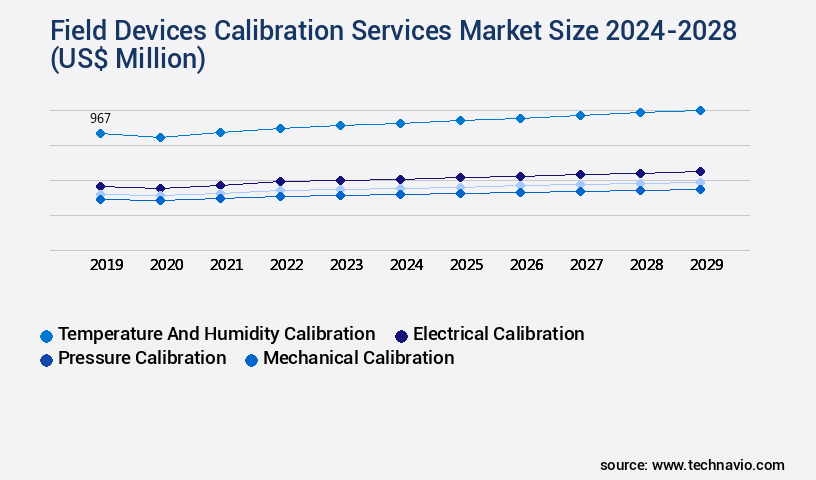
The temperature and humidity calibration segment is estimated to witness significant growth during the forecast period.
In the realm of industrial measurement, the market continues to evolve, addressing the critical need for precise and accurate calibration of temperature and humidity instruments. companies provide specialized services for handheld thermometers, thermocouples, RTDs, and temperature transmitters, ensuring measurement traceability and regulatory compliance. Calibration intervals adhere to industry best practices, with preventive maintenance and error mitigation strategies employed. Calibration workflows incorporate metrology techniques, such as diagnostic testing and data acquisition systems, to verify instrument accuracy and identify systematic and random errors.
Calibration reports document the process, providing traceability standards and calibration certificates. Remote calibration and calibration software enable on-site calibration, minimizing downtime. Calibration management systems facilitate data logging and precision instrument maintenance, contributing to process validation and quality control checks. The calibration market's significance is underscored by the fact that temperature calibration ranges from -195 degrees C to 1000 degrees C, while humidity calibration covers 10%-98% humidity content.
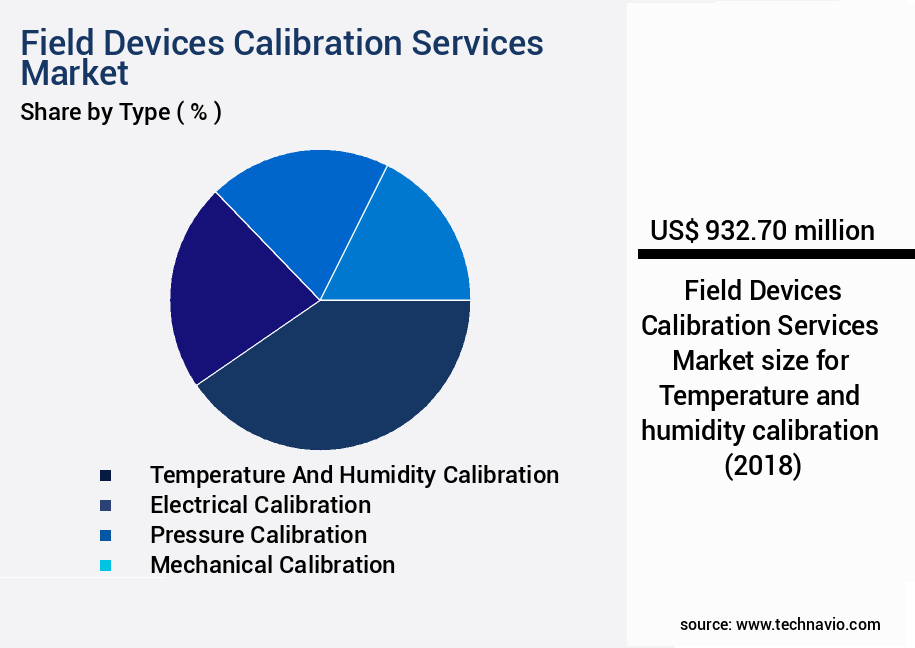
The Temperature and humidity calibration segment was valued at USD 932.70 million in 2018 and showed a gradual increase during the forecast period.
Regional Analysis
North America is estimated to contribute 38% to the growth of the global market during the forecast period.Technavio’s analysts have elaborately explained the regional trends and drivers that shape the market during the forecast period.
See How Field Devices Calibration Services Market Demand is Rising in North America Request Free Sample
In North America, the market is witnessing significant growth due to the increasing industrialization and economic development. Enterprises in this region are prioritizing scheduled instrumentation services to maintain the accuracy and safety of their operations, with a focus on calibration services. The US, as a leading country in oil and gas exploration and production (E and P), is driving market expansion. New E and P projects in the US and Canada are increasing the production of shale oil and gas, necessitating stringent adherence to regulatory compliance. To ensure operational efficiency and minimize risks associated with improper calibration, industries are investing in advanced calibration technologies and services.
According to industry reports, the North American market for field devices calibration services is expected to grow at a robust pace, with key applications including oil and gas, pharmaceuticals, and food and beverage industries. The market's growth is attributed to the need for regulatory compliance, increased focus on operational efficiency, and the integration of smart technologies for predictive maintenance.
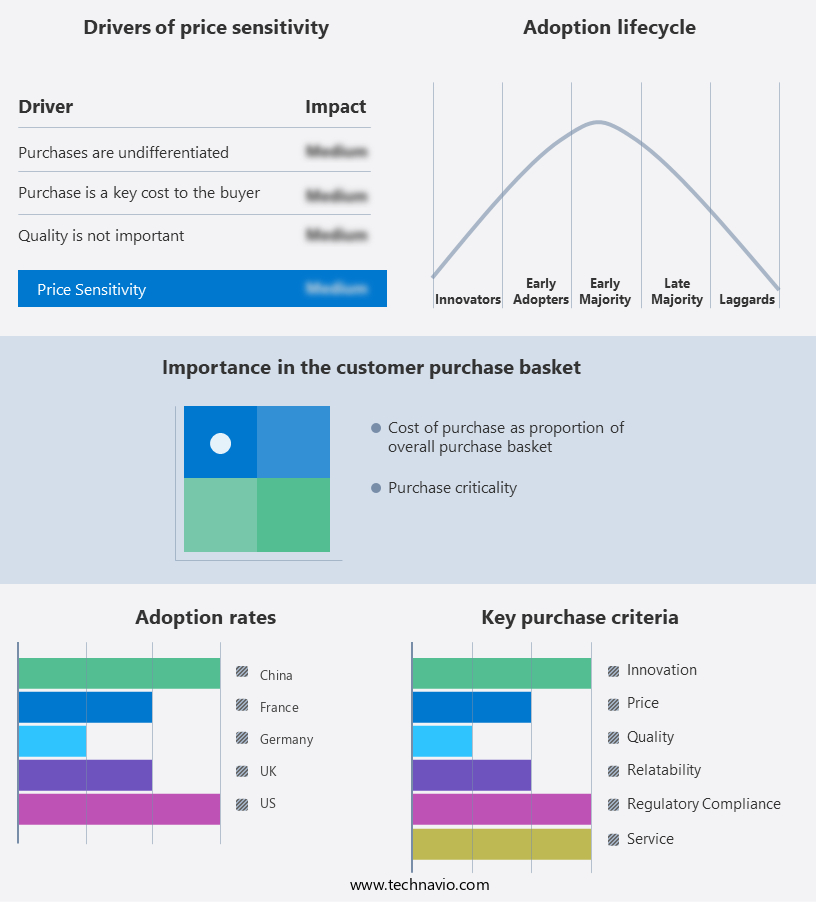
Customer Landscape of Field Devices Calibration Services Industry
Competitive Intelligence by Technavio Analysis: Leading Players in the Field Devices Calibration Services Market
Companies are implementing various strategies, such as strategic alliances, field devices calibration services market forecast, partnerships, mergers and acquisitions, geographical expansion, and product/service launches, to enhance their presence in the industry.
ABB Ltd. - The company specializes in calibration services for field devices, employing techniques such as gravimetric, volumetric, and comparison methods for accurate flow measurement. These services ensure optimal performance and compliance with industry standards.
The industry research and growth report includes detailed analyses of the competitive landscape of the market and information about key companies, including:
- ABB Ltd.
- Applied Industrial Technologies Inc.
- Branom Instrument Co.
- Danaher Corp.
- Element Materials Technology Group Ltd.
- Ellab AS
- Endress Hauser Group Services AG
- ENVEA
- Fortive Corp.
- General Electric Co.
- Honeywell International Inc.
- Keysight Technologies Inc.
- PFREUNDT GmbH
- Rockwell Automation Inc.
- Rohde and Schwarz GmbH and Co. KG
- Siemens AG
- Thermo Fisher Scientific Inc.
- Transcat Inc.
- Trescal International SAS
- Yokogawa Electric Corp.
Qualitative and quantitative analysis of companies has been conducted to help clients understand the wider business environment as well as the strengths and weaknesses of key industry players. Data is qualitatively analyzed to categorize companies as pure play, category-focused, industry-focused, and diversified; it is quantitatively analyzed to categorize companies as dominant, leading, strong, tentative, and weak.
Recent Development and News in Field Devices Calibration Services Market
- In August 2024, ABB, a leading technology provider, announced the launch of its new On-site Calibration Service for process field devices, enhancing its offering in the calibration services market (ABB Press Release, 2024). This service enables customers to reduce downtime and improve operational efficiency by providing on-site calibration of critical field devices.
- In November 2024, Emerson and Siemens signed a strategic collaboration agreement to expand their calibration services partnership, integrating Emerson's Rosemount calibration services with Siemens' calibration services (Emerson Press Release, 2024). This partnership aims to provide comprehensive calibration services to customers in the process industries, addressing the growing demand for reliable and efficient calibration solutions.
- In March 2025, Honeywell announced the acquisition of CalibrationHQ, a leading provider of calibration management software, to strengthen its position in the market (Honeywell Press Release, 2025). The acquisition enables Honeywell to offer advanced calibration management software, improving customers' ability to manage their calibration programs more effectively.
- In May 2025, Endress+Hauser received approval from the European Union for its new calibration laboratory in Germany, expanding its calibration services capacity and capabilities (Endress+Hauser Press Release, 2025). The new laboratory, equipped with state-of-the-art technology, allows Endress+Hauser to offer faster turnaround times and increased capacity to its European customers.
Dive into Technavio’s robust research methodology, blending expert interviews, extensive data synthesis, and validated models for unparalleled Field Devices Calibration Services Market insights. See full methodology.
|
Market Scope |
|
|
Report Coverage |
Details |
|
Page number |
183 |
|
Base year |
2023 |
|
Historic period |
2018-2022 |
|
Forecast period |
2024-2028 |
|
Growth momentum & CAGR |
Accelerate at a CAGR of 4.77% |
|
Market growth 2024-2028 |
USD 689.4 million |
|
Market structure |
Fragmented |
|
YoY growth 2023-2024(%) |
4.47 |
|
Key countries |
US, Germany, China, France, and UK |
|
Competitive landscape |
Leading Companies, Market Positioning of Companies, Competitive Strategies, and Industry Risks |
Why Choose Technavio for Field Devices Calibration Services Market Insights?
"Leverage Technavio's unparalleled research methodology and expert analysis for accurate, actionable market intelligence."
The market is a critical component of industrial operations, ensuring the accuracy and reliability of crucial measurement instruments. Utilizing advanced calibration software for field devices is essential to reducing uncertainty and maintaining optimal performance. On-site calibration of industrial field devices is preferred for minimizing downtime and ensuring compliance with regulatory requirements. Calibration's impact on field device reliability is significant, with effective calibration management systems improving accuracy and preventing potential safety hazards. Implementing precision instrument calibration procedures results in cost savings through optimized calibration cycles, which can reduce the overall maintenance budget by up to 15% compared to reactive calibration methods. Adhering to field device calibration best practices and standards, such as ISO 17025 and NIST-traceable calibration, is vital for maintaining quality control and assurance in calibration services. Remote calibration for improved uptime and managing calibration data and documentation effectively are key trends in the market. Field device calibration technician training and preventative maintenance integration are crucial for ensuring a skilled workforce and minimizing unscheduled downtime. Advanced calibration techniques, such as predictive analytics for cycle optimization, further enhance operational efficiency and risk reduction. Compliance with regulatory requirements for field devices is a significant driver for the market's growth, with industries like pharmaceuticals, oil & gas, and power generation requiring stringent adherence to regulations. Specialized tooling for precise field device calibration ensures accurate results and minimizes the risk of calibration errors. In conclusion, the market offers substantial benefits for businesses, including improved accuracy, cost savings, regulatory compliance, and operational efficiency. Investing in effective calibration management systems and utilizing advanced calibration techniques can lead to significant improvements in supply chain efficiency and overall process performance.
What are the Key Data Covered in this Field Devices Calibration Services Market Research and Growth Report?
-
What is the expected growth of the Field Devices Calibration Services Market between 2024 and 2028?
-
USD 689.4 million, at a CAGR of 4.77%
-
-
What segmentation does the market report cover?
-
The report is segmented by Type (Temperature and humidity calibration, Electrical calibration, Pressure calibration, and Mechanical calibration), End-user (Process industries and Discrete industries), Geography (North America, Europe, APAC, South America, and Middle East and Africa), End-User (Healthcare, Automotive, Aerospace and Defense, Oil and Gas, Pharmaceuticals and Biotechnology, Semiconductors, and Others), and Calibration Method (Manual and Automated)
-
-
Which regions are analyzed in the report?
-
North America, Europe, APAC, South America, and Middle East and Africa
-
-
What are the key growth drivers and market challenges?
-
Growing demand for calibration services to maximize production yield, Loss of industrial productivity during device calibration
-
-
Who are the major players in the Field Devices Calibration Services Market?
-
ABB Ltd., Applied Industrial Technologies Inc., Branom Instrument Co., Danaher Corp., Element Materials Technology Group Ltd., Ellab AS, Endress Hauser Group Services AG, ENVEA, Fortive Corp., General Electric Co., Honeywell International Inc., Keysight Technologies Inc., PFREUNDT GmbH, Rockwell Automation Inc., Rohde and Schwarz GmbH and Co. KG, Siemens AG, Thermo Fisher Scientific Inc., Transcat Inc., Trescal International SAS, and Yokogawa Electric Corp.
-
We can help! Our analysts can customize this field devices calibration services market research report to meet your requirements.
 RIA -
RIA - 
