


Flexible Industrial Packaging Market Analysis, Size, and Forecast 2026-2030: APAC (China, Japan, and India), North America (US, Canada, and Mexico), Europe (Germany, UK, and France), South America (Brazil, Argentina, and Colombia), Middle East and Africa (Saudi Arabia, UAE, and South Africa), and Rest of World (ROW)

Flexible Industrial Packaging Market Analysis, Size, and Forecast 2026-2030:
APAC (China, Japan, and India), North America (US, Canada, and Mexico), Europe (Germany, UK, and France), South America (Brazil, Argentina, and Colombia), Middle East and Africa (Saudi Arabia, UAE, and South Africa), and Rest of World (ROW)

Published: Jan 2026 335 Pages SKU: IRTNTR74204

Market Overview at a Glance

$45.59 B
Market Opportunity
9.1%
CAGR 2025 - 2030
42%
APAC Growth
$29.75 B
Pouches segment 2024

Flexible Industrial Packaging Market Size 2026-2030

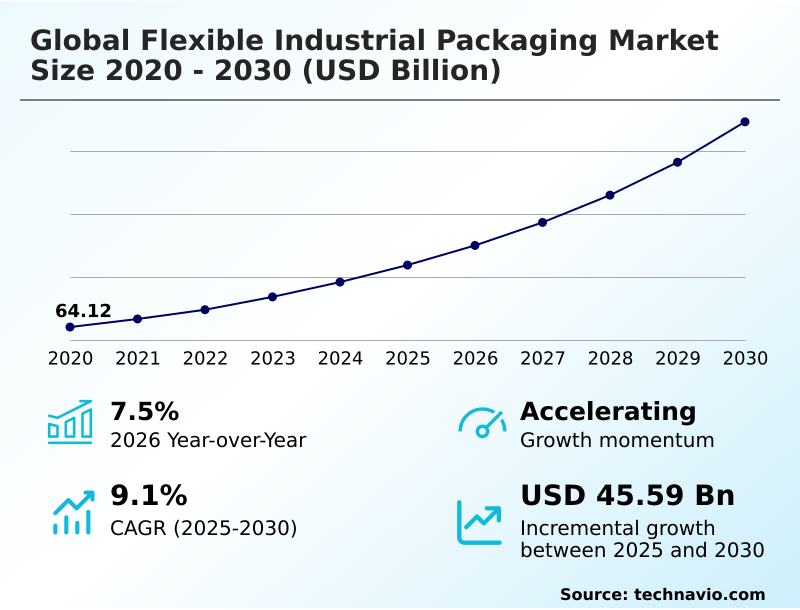
The flexible industrial packaging market size is valued to increase by USD 45.59 billion, at a CAGR of 9.1% from 2025 to 2030. Intensifying focus on sustainability and circular economy models will drive the flexible industrial packaging market.

Major Market Trends & Insights

  • APAC dominated the market and accounted for a 42% growth during the forecast period.
  • By Type - Pouches segment was valued at USD 29.75 billion in 2024
  • By Application - Chemical industry segment accounted for the largest market revenue share in 2024

Market Size & Forecast

  • Market Opportunities: USD 65.31 billion
  • Market Future Opportunities: USD 45.59 billion
  • CAGR from 2025 to 2030 : 9.1%

Market Summary

  • The flexible industrial packaging market is undergoing a significant transformation, evolving from a focus on basic containment to providing strategic, value-added solutions. This shift is driven by the dual imperatives of supply chain efficiency and sustainability. The adoption of lightweighting and downgauging principles, enabled by innovations in coextrusion technology and polymer science, directly addresses logistical cost pressures.
  • Concurrently, a powerful regulatory and corporate push toward a circular economy is accelerating the development of mono-material solutions and increasing the use of post-consumer recycled content. As a result, packaging is becoming an active component in a connected industrial ecosystem.
  • For instance, a specialty chemical firm can replace rigid drums with intelligent flexible intermediate bulk containers (FIBCs) equipped with flexible printed sensors. These containers not only reduce freight costs and warehouse space but also provide real-time data on temperature and humidity, ensuring product integrity and mitigating risks throughout the global supply chain.
  • This convergence of material science, digital technology, and sustainability is redefining the role and value of flexible packaging in modern industry, moving it from a simple cost center to a critical enabler of operational excellence and corporate responsibility.

What will be the Size of the Flexible Industrial Packaging Market during the forecast period?
Get Key Insights on Market Forecast (PDF) Request Free Sample

How is the Flexible Industrial Packaging Market Segmented?

The flexible industrial packaging industry research report provides comprehensive data (region-wise segment analysis), with forecasts and estimates in "USD million" for the period 2026-2030, as well as historical data from 2020-2024 for the following segments.

  • Type
    • Pouches
    • Wraps
    • Rollstock
    • Bags
  • Application
    • Chemical industry
    • Construction industry
    • Food and beverages industry
    • Pharmaceutical industry
    • Others
  • Material
    • Plastic
    • Paper
    • Metal
    • Bioplastic
  • Geography
    • APAC
      • China
      • Japan
      • India
    • North America
      • US
      • Canada
      • Mexico
    • Europe
      • Germany
      • UK
      • France
    • South America
      • Brazil
      • Argentina
      • Colombia
    • Middle East and Africa
      • Saudi Arabia
      • UAE
      • South Africa
    • Rest of World (ROW)

By Type Insights

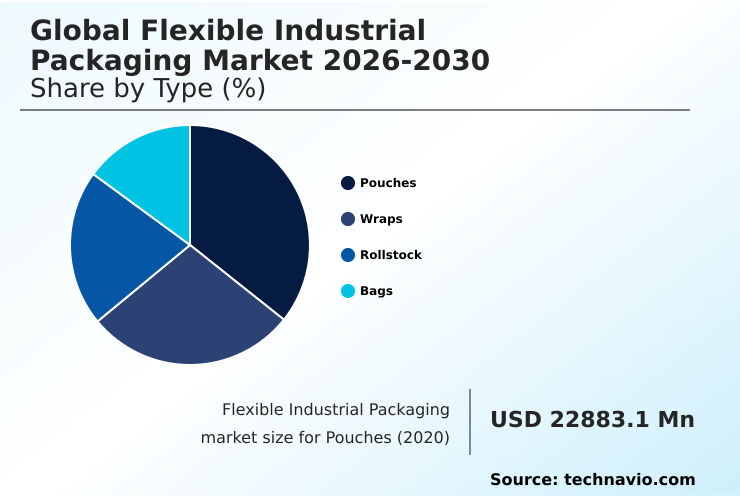
The pouches segment is estimated to witness significant growth during the forecast period.

The industrial pouches segment is evolving beyond simple containment, driven by a transition from rigid containers to flexible formats. This shift is motivated by logistical advantages, including significant source reduction and enhanced user convenience.

Innovations in multi-layer laminated structures are engineered for high-performance applications demanding superior barrier protection and chemical resistance.

A key trend is the development of recyclable mono-material structures, such as all-polyethylene (PE) constructions, which aim to replicate the performance of traditional laminates.

This focus on sustainability is reshaping product design, with redesigns of spouted stand-up pouches, for example, achieving a reduction in plastic consumption by over 60% per unit, demonstrating a tangible alignment of functionality with circular economy principles.
Request Free Sample

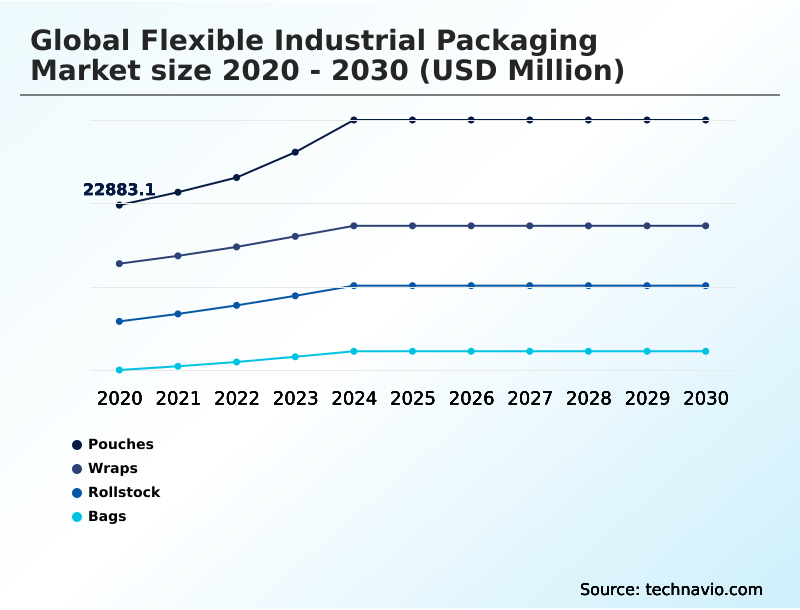
The Pouches segment was valued at USD 29.75 billion in 2024 and showed a gradual increase during the forecast period.
Request Free Sample

Regional Analysis

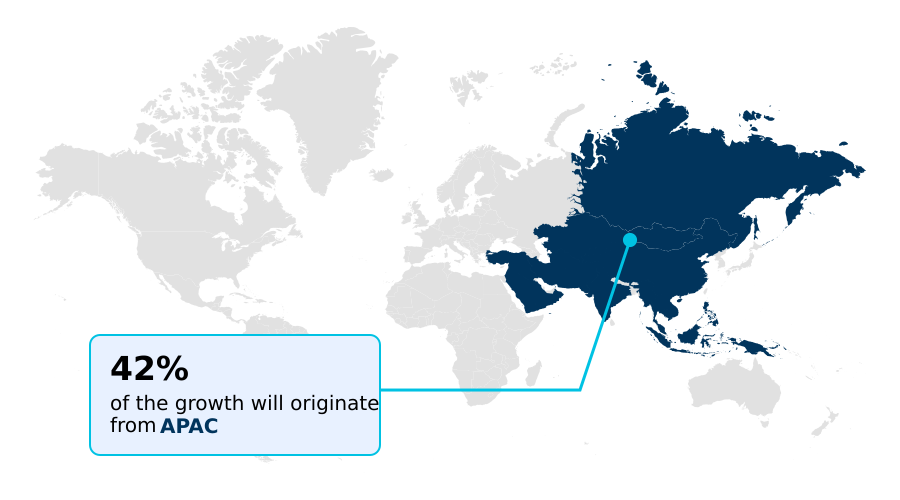
APAC is estimated to contribute 42% to the growth of the global market during the forecast period.Technavio’s analysts have elaborately explained the regional trends and drivers that shape the market during the forecast period.
See How Flexible Industrial Packaging Market Demand is Rising in APAC Request Free Sample

The geographic landscape of the flexible industrial packaging market is diverse, reflecting varied levels of industrial maturity and regulatory focus.

APAC leads in volume and growth, contributing over 42% of the market's incremental expansion, driven by its manufacturing dominance and demand for foundational products like woven polypropylene bags.

In contrast, North America is a mature market focused on supply chain optimization, with high adoption of automated systems using advanced stretch films.

Europe distinguishes itself with the most stringent regulatory framework, mandating the use of post-consumer recycled content and driving innovation in mono-material solutions.

While the adoption of recyclable materials is a global trend, the lack of comprehensive waste management infrastructure in many developing regions remains a significant barrier to achieving a true circular economy for industrial plastics.

Market Dynamics

Our researchers analyzed the data with 2025 as the base year, along with the key drivers, trends, and challenges. A holistic analysis of drivers will help companies refine their marketing strategies to gain a competitive advantage.

  • Strategic decisions in the flexible industrial packaging market are increasingly complex, balancing cost, performance, and sustainability. Companies are navigating regulations for sustainable industrial packaging while contending with the impact of raw material volatility on packaging costs.
  • The debate over spouted stand-up pouches vs rigid containers is a prime example, where lightweighting flexible packaging for cost reduction offers freight savings that can be twice as effective as those from route optimization alone.
  • Advancements in coextrusion for industrial films are enabling the creation of high-barrier films for food ingredients and the downgauging of stretch film for pallet unitization, enhancing performance while reducing material use. The flexible industrial packaging for chemical industry, for instance, is seeing a shift toward mono-material polyethylene heavy duty sacks.
  • Similarly, flexible packaging solutions for pharmaceutical APIs now involve sophisticated, sterile single-use systems. The adoption of intelligent packaging with sensor technology and the development of recyclable rollstock for FFS machines highlight the industry's technological pivot.
  • Ultimately, the successful application of circular economy models in industrial packaging hinges on innovations ranging from flexible intermediate bulk container liner technology to the widespread use of post-consumer recycled content in industrial films, even as bioplastic applications in flexible industrial packaging present new opportunities and challenges for FIBCs for bulk commodity transport.
  • The move to sustainable mono-material flexible packaging is therefore not just a trend but a fundamental reshaping of the industry.
What are the key market drivers leading to the rise in the adoption of Flexible Industrial Packaging Industry?

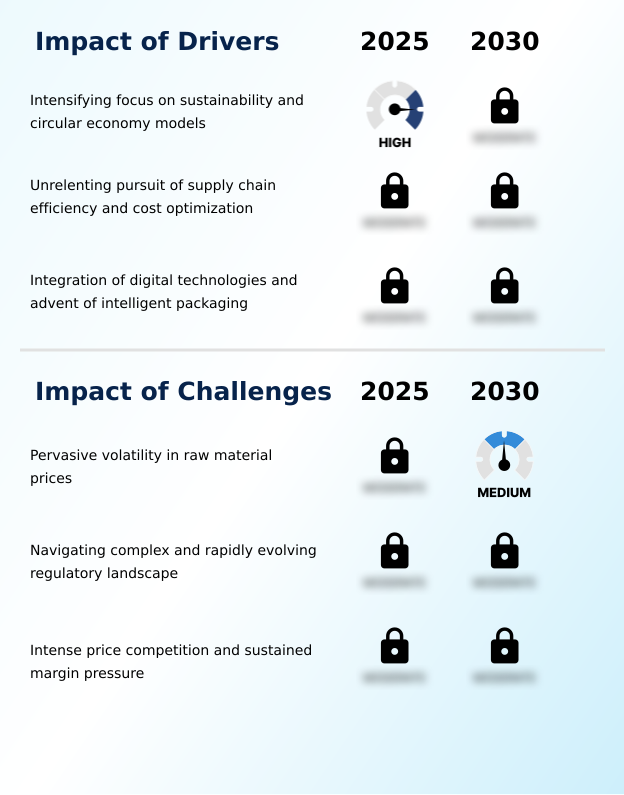
  • A key driver for the market is the intensifying global focus on sustainability and the adoption of circular economy models.

  • Market growth is propelled by three core drivers: sustainability, cost optimization, and digitalization. An intense focus on circular economy models has made sustainable packaging a primary driver, with regulatory pressures mandating changes in material use.
  • The pursuit of supply chain efficiency is another powerful force; flexible formats offer significant lightweighting benefits, which directly lowers transportation costs and carbon footprints. For example, new regulations limiting empty parcel space to 40% favor form-fitting flexible options.
  • Furthermore, the integration of digital technologies is transforming packaging into intelligent assets.
  • The use of radio-frequency identification tags and flexible printed sensors provides unprecedented real-time tracking and condition monitoring, turning a cost center into a strategic tool for risk mitigation and quality assurance.

What are the market trends shaping the Flexible Industrial Packaging Industry?

  • A primary market trend is the accelerated industry-wide shift from complex multi-material laminates. This pivot is toward innovative mono-material structures designed explicitly for recyclability.

  • Key trends are reshaping the market, driven by a focus on sustainability and efficiency. There is an accelerated shift toward mono-material structures, particularly all-polyethylene constructions, to meet recyclability mandates. These new materials are being engineered to run on existing form-fill-seal machinery at up to 95% of the speed of traditional multi-material laminates, minimizing operational disruption.
  • Concurrently, the rise of B2B ecommerce logistics is creating demand for durable, lightweight options like heavy-duty poly mailers and spouted stand-up pouches, which can reduce plastic use by over 60% compared to rigid alternatives.
  • The development of functionally enhanced films, such as multi-layer nano-layer films for pallet unitization, further exemplifies the move toward high-performance, value-added solutions that optimize the supply chain.

What challenges does the Flexible Industrial Packaging Industry face during its growth?

  • Pervasive volatility in the prices of petrochemical-derived raw materials presents a key challenge to industry growth and stability.

  • The market grapples with significant structural challenges that impact stability and profitability. The pervasive volatility in raw material prices, with petrochemical-derived polymer resins subject to monthly adjustments, creates severe margin pressure for converters operating on longer-term contracts. This financial instability is compounded by the need to navigate a complex and fragmented regulatory landscape.
  • Divergent rules on recyclability and post-consumer recycled content across regions create compliance hurdles and investment uncertainty. Furthermore, intense price competition, especially in commoditized segments, erodes margins and constrains the ability to reinvest in R&D for the very sustainable and high-performance materials the market demands, creating a difficult cycle to break.

Exclusive Technavio Analysis on Customer Landscape

The flexible industrial packaging market forecasting report includes the adoption lifecycle of the market, covering from the innovator’s stage to the laggard’s stage. It focuses on adoption rates in different regions based on penetration. Furthermore, the flexible industrial packaging market report also includes key purchase criteria and drivers of price sensitivity to help companies evaluate and develop their market growth analysis strategies.

Customer Landscape of Flexible Industrial Packaging Industry

Competitive Landscape

Companies are implementing various strategies, such as strategic alliances, flexible industrial packaging market forecast, partnerships, mergers and acquisitions, geographical expansion, and product/service launches, to enhance their presence in the industry.

Aluflexpack AG - Offerings center on advanced flexible packaging, including specialized metal-free laminates and innovative blister systems designed for high-performance industrial applications.

The industry research and growth report includes detailed analyses of the competitive landscape of the market and information about key companies, including:

  • Aluflexpack AG
  • Amcor Plc
  • Anglo American plc
  • Berry Global Inc.
  • Bulk Lift International LLC
  • Clifton Packaging Group Ltd.
  • Eskay Flexible Packaging
  • Filling and Packaging Material
  • Global Pak Inc.
  • Greif Inc.
  • Industrial Packaging supply
  • International Paper Co.
  • Kiliper Corp.
  • LC Packaging International BV
  • Safepack
  • Sealed Air Corp.
  • SIG Group AG
  • Sonoco Products Co.
  • Surepak Ltd.

Qualitative and quantitative analysis of companies has been conducted to help clients understand the wider business environment as well as the strengths and weaknesses of key industry players. Data is qualitatively analyzed to categorize companies as pure play, category-focused, industry-focused, and diversified; it is quantitatively analyzed to categorize companies as dominant, leading, strong, tentative, and weak.

Recent Development and News in Flexible industrial packaging market

  • In May, 2025, Sartorius Stedim Biotech, in partnership with Chronicled, launched its BioCertify single-use bag system, which incorporates a tamper-evident NFC chip linked to a blockchain ledger for enhanced security and traceability in transporting bulk Active Pharmaceutical Ingredients (APIs).
  • In March, 2025, BASF announced the commercialization of its ChemCycle FIBC liner, a single-component, high-density polyethylene co-polymer engineered to provide significant chemical resistance while being fully integrable into existing HDPE recycling streams.
  • In March, 2025, Mauser Packaging Solutions, in collaboration with PureCycle Technologies, announced a new line of Flexible Intermediate Bulk Containers (FIBCs) featuring an internal liner made with a minimum of 40% ultra-pure recycled polypropylene to meet new West Coast regulations.
  • In February, 2025, Heidelberg Materials, in partnership with Dow, launched its ReCon Zero sack for dry-mix mortar products, featuring a composite design where the inner polymer lining delaminates during the paper recycling process, allowing for full recovery of paper fibers.

Dive into Technavio’s robust research methodology, blending expert interviews, extensive data synthesis, and validated models for unparalleled Flexible Industrial Packaging Market insights. See full methodology.

Market Scope
Page number 335
Base year 2025
Historic period 2020-2024
Forecast period 2026-2030
Growth momentum & CAGR Accelerate at a CAGR of 9.1%
Market growth 2026-2030 USD 45587.0 million
Market structure Fragmented
YoY growth 2025-2026(%) 7.5%
Key countries China, Japan, India, South Korea, Australia, Indonesia, US, Canada, Mexico, Germany, UK, France, Italy, Spain, The Netherlands, Brazil, Argentina, Colombia, Saudi Arabia, UAE, South Africa, Israel and Turkey
Competitive landscape Leading Companies, Market Positioning of Companies, Competitive Strategies, and Industry Risks

Request Free Sample

Research Analyst Overview

  • The flexible industrial packaging market is defined by a pivotal shift from passive containment to active supply chain assets. Core products like heavy duty sacks, flexible intermediate bulk containers (FIBCs), and industrial liners are being reimagined through material science.
  • The move toward mono-material solutions, such as all-polyethylene or all-polypropylene constructions, is a direct response to global circular economy models and extended producer responsibility mandates. This trend is enabled by advancements in coextrusion technology, which produces specialty films with enhanced barrier protection and puncture resistance using less material.
  • The boardroom-level decision to invest in this technology is now directly linked to mitigating future regulatory risk and meeting corporate sustainability goals. For example, adopting multi-layer nano-layer films has enabled logistics operations to decrease plastic use by up to 40% per pallet.
  • This evolution extends to intelligent packaging, with the integration of flexible printed sensors, near-field communication chips, and radio-frequency identification tags creating data-rich, traceable systems. The development of volatile corrosion inhibitors and static-dissipative properties in films further demonstrates the market's focus on high-value, functional solutions over purely commoditized woven polypropylene or basic rollstock.

What are the Key Data Covered in this Flexible Industrial Packaging Market Research and Growth Report?

  • What is the expected growth of the Flexible Industrial Packaging Market between 2026 and 2030?

    • USD 45.59 billion, at a CAGR of 9.1%

  • What segmentation does the market report cover?

    • The report is segmented by Type (Pouches, Wraps, Rollstock, and Bags), Application (Chemical industry, Construction industry, Food and beverages industry, Pharmaceutical industry, and Others), Material (Plastic, Paper, Metal, and Bioplastic) and Geography (APAC, North America, Europe, South America, Middle East and Africa)

  • Which regions are analyzed in the report?

    • APAC, North America, Europe, South America and Middle East and Africa

  • What are the key growth drivers and market challenges?

    • Intensifying focus on sustainability and circular economy models, Pervasive volatility in raw material prices

  • Who are the major players in the Flexible Industrial Packaging Market?

    • Aluflexpack AG, Amcor Plc, Anglo American plc, Berry Global Inc., Bulk Lift International LLC, Clifton Packaging Group Ltd., Eskay Flexible Packaging, Filling and Packaging Material, Global Pak Inc., Greif Inc., Industrial Packaging supply, International Paper Co., Kiliper Corp., LC Packaging International BV, Safepack, Sealed Air Corp., SIG Group AG, Sonoco Products Co. and Surepak Ltd.

Market Research Insights

  • The market's dynamics are increasingly shaped by the pursuit of value-added functionalities that enhance supply chain optimization. The adaptation of packaging for B2B ecommerce is a significant factor, with new regulations limiting empty parcel space to 40%, thereby favoring form-fitting flexible options.
  • This shift is driving demand for functionally enhanced films and innovative formats like spouted stand-up pouches, which can reduce plastic usage by more than 60% compared to traditional rigid containers. The commercialization of high-barrier adhesive technology is crucial, enabling the creation of high-performance, recyclable packaging.
  • These advancements demonstrate a clear pivot toward intelligent, efficient, and sustainable solutions that deliver measurable business outcomes beyond basic product protection.

We can help! Our analysts can customize this flexible industrial packaging market research report to meet your requirements.

Get in touch

1. Executive Summary

1.1 Market overview

Executive Summary - Chart on Market Overview
Executive Summary - Data Table on Market Overview
Executive Summary - Chart on Global Market Characteristics
Executive Summary - Chart on Market by Geography
Executive Summary - Chart on Market Segmentation by Type
Executive Summary - Chart on Market Segmentation by Application
Executive Summary - Chart on Market Segmentation by Material
Executive Summary - Chart on Incremental Growth
Executive Summary - Data Table on Incremental Growth
Executive Summary - Chart on Company Market Positioning

2. Technavio Analysis

2.1 Analysis of price sensitivity, lifecycle, customer purchase basket, adoption rates, and purchase criteria

2.2 Criticality of inputs and Factors of differentiation

Chart on Overview on criticality of inputs and factors of differentiation

2.3 Factors of disruption

Chart on Overview on factors of disruption

2.4 Impact of drivers and challenges

Chart on Impact of drivers and challenges in 2025 and 2030

3. Market Landscape

3.1 Market ecosystem

Chart on Parent Market
Data Table on - Parent Market

3.2 Market characteristics

Chart on Market characteristics analysis

3.3 Value chain analysis

Chart on Value chain analysis

4. Market Sizing

4.1 Market definition

Data Table on Offerings of companies included in the market definition

4.2 Market segment analysis

Market segments

4.3 Market size 2025

4.4 Market outlook: Forecast for 2025-2030

Chart on Global - Market size and forecast 2025-2030 ($ million)
Data Table on Global - Market size and forecast 2025-2030 ($ million)
Chart on Global Market: Year-over-year growth 2025-2030 (%)
Data Table on Global Market: Year-over-year growth 2025-2030 (%)

5. Historic Market Size

5.1 Global Flexible Industrial Packaging Market 2020 - 2024

Historic Market Size - Data Table on Global Flexible Industrial Packaging Market 2020 - 2024 ($ million)

5.2 Type segment analysis 2020 - 2024

Historic Market Size - Type Segment 2020 - 2024 ($ million)

5.3 Application segment analysis 2020 - 2024

Historic Market Size - Application Segment 2020 - 2024 ($ million)

5.4 Material segment analysis 2020 - 2024

Historic Market Size - Material Segment 2020 - 2024 ($ million)

5.5 Geography segment analysis 2020 - 2024

Historic Market Size - Geography Segment 2020 - 2024 ($ million)

5.6 Country segment analysis 2020 - 2024

Historic Market Size - Country Segment 2020 - 2024 ($ million)

6. Qualitative Analysis

6.1 The AI impact on global flexible industrial packaging market

7. Five Forces Analysis

7.1 Five forces summary

Five forces analysis - Comparison between 2025 and 2030

7.2 Bargaining power of buyers

Bargaining power of buyers - Impact of key factors 2025 and 2030

7.3 Bargaining power of suppliers

Bargaining power of suppliers - Impact of key factors in 2025 and 2030

7.4 Threat of new entrants

Threat of new entrants - Impact of key factors in 2025 and 2030

7.5 Threat of substitutes

Threat of substitutes - Impact of key factors in 2025 and 2030

7.6 Threat of rivalry

Threat of rivalry - Impact of key factors in 2025 and 2030

7.7 Market condition

Chart on Market condition - Five forces 2025 and 2030

8. Market Segmentation by Type

8.1 Market segments

Chart on Type - Market share 2025-2030 (%)
Data Table on Type - Market share 2025-2030 (%)

8.2 Comparison by Type

Chart on Comparison by Type
Data Table on Comparison by Type

8.3 Pouches - Market size and forecast 2025-2030

Chart on Pouches - Market size and forecast 2025-2030 ($ million)
Data Table on Pouches - Market size and forecast 2025-2030 ($ million)
Chart on Pouches - Year-over-year growth 2025-2030 (%)
Data Table on Pouches - Year-over-year growth 2025-2030 (%)

8.4 Wraps - Market size and forecast 2025-2030

Chart on Wraps - Market size and forecast 2025-2030 ($ million)
Data Table on Wraps - Market size and forecast 2025-2030 ($ million)
Chart on Wraps - Year-over-year growth 2025-2030 (%)
Data Table on Wraps - Year-over-year growth 2025-2030 (%)

8.5 Rollstock - Market size and forecast 2025-2030

Chart on Rollstock - Market size and forecast 2025-2030 ($ million)
Data Table on Rollstock - Market size and forecast 2025-2030 ($ million)
Chart on Rollstock - Year-over-year growth 2025-2030 (%)
Data Table on Rollstock - Year-over-year growth 2025-2030 (%)

8.6 Bags - Market size and forecast 2025-2030

Chart on Bags - Market size and forecast 2025-2030 ($ million)
Data Table on Bags - Market size and forecast 2025-2030 ($ million)
Chart on Bags - Year-over-year growth 2025-2030 (%)
Data Table on Bags - Year-over-year growth 2025-2030 (%)

8.7 Market opportunity by Type

Market opportunity by Type ($ million)
Data Table on Market opportunity by Type ($ million)

9. Market Segmentation by Application

9.1 Market segments

Chart on Application - Market share 2025-2030 (%)
Data Table on Application - Market share 2025-2030 (%)

9.2 Comparison by Application

Chart on Comparison by Application
Data Table on Comparison by Application

9.3 Chemical industry - Market size and forecast 2025-2030

Chart on Chemical industry - Market size and forecast 2025-2030 ($ million)
Data Table on Chemical industry - Market size and forecast 2025-2030 ($ million)
Chart on Chemical industry - Year-over-year growth 2025-2030 (%)
Data Table on Chemical industry - Year-over-year growth 2025-2030 (%)

9.4 Construction industry - Market size and forecast 2025-2030

Chart on Construction industry - Market size and forecast 2025-2030 ($ million)
Data Table on Construction industry - Market size and forecast 2025-2030 ($ million)
Chart on Construction industry - Year-over-year growth 2025-2030 (%)
Data Table on Construction industry - Year-over-year growth 2025-2030 (%)

9.5 Food and beverages industry - Market size and forecast 2025-2030

Chart on Food and beverages industry - Market size and forecast 2025-2030 ($ million)
Data Table on Food and beverages industry - Market size and forecast 2025-2030 ($ million)
Chart on Food and beverages industry - Year-over-year growth 2025-2030 (%)
Data Table on Food and beverages industry - Year-over-year growth 2025-2030 (%)

9.6 Pharmaceutical industry - Market size and forecast 2025-2030

Chart on Pharmaceutical industry - Market size and forecast 2025-2030 ($ million)
Data Table on Pharmaceutical industry - Market size and forecast 2025-2030 ($ million)
Chart on Pharmaceutical industry - Year-over-year growth 2025-2030 (%)
Data Table on Pharmaceutical industry - Year-over-year growth 2025-2030 (%)

9.7 Others - Market size and forecast 2025-2030

Chart on Others - Market size and forecast 2025-2030 ($ million)
Data Table on Others - Market size and forecast 2025-2030 ($ million)
Chart on Others - Year-over-year growth 2025-2030 (%)
Data Table on Others - Year-over-year growth 2025-2030 (%)

9.8 Market opportunity by Application

Market opportunity by Application ($ million)
Data Table on Market opportunity by Application ($ million)

10. Market Segmentation by Material

10.1 Market segments

Chart on Material - Market share 2025-2030 (%)
Data Table on Material - Market share 2025-2030 (%)

10.2 Comparison by Material

Chart on Comparison by Material
Data Table on Comparison by Material

10.3 Plastic - Market size and forecast 2025-2030

Chart on Plastic - Market size and forecast 2025-2030 ($ million)
Data Table on Plastic - Market size and forecast 2025-2030 ($ million)
Chart on Plastic - Year-over-year growth 2025-2030 (%)
Data Table on Plastic - Year-over-year growth 2025-2030 (%)

10.4 Paper - Market size and forecast 2025-2030

Chart on Paper - Market size and forecast 2025-2030 ($ million)
Data Table on Paper - Market size and forecast 2025-2030 ($ million)
Chart on Paper - Year-over-year growth 2025-2030 (%)
Data Table on Paper - Year-over-year growth 2025-2030 (%)

10.5 Metal - Market size and forecast 2025-2030

Chart on Metal - Market size and forecast 2025-2030 ($ million)
Data Table on Metal - Market size and forecast 2025-2030 ($ million)
Chart on Metal - Year-over-year growth 2025-2030 (%)
Data Table on Metal - Year-over-year growth 2025-2030 (%)

10.6 Bioplastic - Market size and forecast 2025-2030

Chart on Bioplastic - Market size and forecast 2025-2030 ($ million)
Data Table on Bioplastic - Market size and forecast 2025-2030 ($ million)
Chart on Bioplastic - Year-over-year growth 2025-2030 (%)
Data Table on Bioplastic - Year-over-year growth 2025-2030 (%)

10.7 Market opportunity by Material

Market opportunity by Material ($ million)
Data Table on Market opportunity by Material ($ million)

11. Customer Landscape

11.1 Customer landscape overview

Analysis of price sensitivity, lifecycle, customer purchase basket, adoption rates, and purchase criteria

12. Geographic Landscape

12.1 Geographic segmentation

Chart on Market share by geography 2025-2030 (%)
Data Table on Market share by geography 2025-2030 (%)

12.2 Geographic comparison

Chart on Geographic comparison
Data Table on Geographic comparison

12.3 APAC - Market size and forecast 2025-2030

Chart on APAC - Market size and forecast 2025-2030 ($ million)
Data Table on APAC - Market size and forecast 2025-2030 ($ million)
Chart on APAC - Year-over-year growth 2025-2030 (%)
Data Table on APAC - Year-over-year growth 2025-2030 (%)
Chart on Regional Comparison - APAC
Data Table on Regional Comparison - APAC

12.3.1 China - Market size and forecast 2025-2030

Chart on China - Market size and forecast 2025-2030 ($ million)
Data Table on China - Market size and forecast 2025-2030 ($ million)
Chart on China - Year-over-year growth 2025-2030 (%)
Data Table on China - Year-over-year growth 2025-2030 (%)

12.3.2 Japan - Market size and forecast 2025-2030

Chart on Japan - Market size and forecast 2025-2030 ($ million)
Data Table on Japan - Market size and forecast 2025-2030 ($ million)
Chart on Japan - Year-over-year growth 2025-2030 (%)
Data Table on Japan - Year-over-year growth 2025-2030 (%)

12.3.3 India - Market size and forecast 2025-2030

Chart on India - Market size and forecast 2025-2030 ($ million)
Data Table on India - Market size and forecast 2025-2030 ($ million)
Chart on India - Year-over-year growth 2025-2030 (%)
Data Table on India - Year-over-year growth 2025-2030 (%)

12.3.4 South Korea - Market size and forecast 2025-2030

Chart on South Korea - Market size and forecast 2025-2030 ($ million)
Data Table on South Korea - Market size and forecast 2025-2030 ($ million)
Chart on South Korea - Year-over-year growth 2025-2030 (%)
Data Table on South Korea - Year-over-year growth 2025-2030 (%)

12.3.5 Australia - Market size and forecast 2025-2030

Chart on Australia - Market size and forecast 2025-2030 ($ million)
Data Table on Australia - Market size and forecast 2025-2030 ($ million)
Chart on Australia - Year-over-year growth 2025-2030 (%)
Data Table on Australia - Year-over-year growth 2025-2030 (%)

12.3.6 Indonesia - Market size and forecast 2025-2030

Chart on Indonesia - Market size and forecast 2025-2030 ($ million)
Data Table on Indonesia - Market size and forecast 2025-2030 ($ million)
Chart on Indonesia - Year-over-year growth 2025-2030 (%)
Data Table on Indonesia - Year-over-year growth 2025-2030 (%)

12.4 North America - Market size and forecast 2025-2030

Chart on North America - Market size and forecast 2025-2030 ($ million)
Data Table on North America - Market size and forecast 2025-2030 ($ million)
Chart on North America - Year-over-year growth 2025-2030 (%)
Data Table on North America - Year-over-year growth 2025-2030 (%)
Chart on Regional Comparison - North America
Data Table on Regional Comparison - North America

12.4.1 US - Market size and forecast 2025-2030

Chart on US - Market size and forecast 2025-2030 ($ million)
Data Table on US - Market size and forecast 2025-2030 ($ million)
Chart on US - Year-over-year growth 2025-2030 (%)
Data Table on US - Year-over-year growth 2025-2030 (%)

12.4.2 Canada - Market size and forecast 2025-2030

Chart on Canada - Market size and forecast 2025-2030 ($ million)
Data Table on Canada - Market size and forecast 2025-2030 ($ million)
Chart on Canada - Year-over-year growth 2025-2030 (%)
Data Table on Canada - Year-over-year growth 2025-2030 (%)

12.4.3 Mexico - Market size and forecast 2025-2030

Chart on Mexico - Market size and forecast 2025-2030 ($ million)
Data Table on Mexico - Market size and forecast 2025-2030 ($ million)
Chart on Mexico - Year-over-year growth 2025-2030 (%)
Data Table on Mexico - Year-over-year growth 2025-2030 (%)

12.5 Europe - Market size and forecast 2025-2030

Chart on Europe - Market size and forecast 2025-2030 ($ million)
Data Table on Europe - Market size and forecast 2025-2030 ($ million)
Chart on Europe - Year-over-year growth 2025-2030 (%)
Data Table on Europe - Year-over-year growth 2025-2030 (%)
Chart on Regional Comparison - Europe
Data Table on Regional Comparison - Europe

12.5.1 Germany - Market size and forecast 2025-2030

Chart on Germany - Market size and forecast 2025-2030 ($ million)
Data Table on Germany - Market size and forecast 2025-2030 ($ million)
Chart on Germany - Year-over-year growth 2025-2030 (%)
Data Table on Germany - Year-over-year growth 2025-2030 (%)

12.5.2 UK - Market size and forecast 2025-2030

Chart on UK - Market size and forecast 2025-2030 ($ million)
Data Table on UK - Market size and forecast 2025-2030 ($ million)
Chart on UK - Year-over-year growth 2025-2030 (%)
Data Table on UK - Year-over-year growth 2025-2030 (%)

12.5.3 France - Market size and forecast 2025-2030

Chart on France - Market size and forecast 2025-2030 ($ million)
Data Table on France - Market size and forecast 2025-2030 ($ million)
Chart on France - Year-over-year growth 2025-2030 (%)
Data Table on France - Year-over-year growth 2025-2030 (%)

12.5.4 Italy - Market size and forecast 2025-2030

Chart on Italy - Market size and forecast 2025-2030 ($ million)
Data Table on Italy - Market size and forecast 2025-2030 ($ million)
Chart on Italy - Year-over-year growth 2025-2030 (%)
Data Table on Italy - Year-over-year growth 2025-2030 (%)

12.5.5 Spain - Market size and forecast 2025-2030

Chart on Spain - Market size and forecast 2025-2030 ($ million)
Data Table on Spain - Market size and forecast 2025-2030 ($ million)
Chart on Spain - Year-over-year growth 2025-2030 (%)
Data Table on Spain - Year-over-year growth 2025-2030 (%)

12.5.6 The Netherlands - Market size and forecast 2025-2030

Chart on The Netherlands - Market size and forecast 2025-2030 ($ million)
Data Table on The Netherlands - Market size and forecast 2025-2030 ($ million)
Chart on The Netherlands - Year-over-year growth 2025-2030 (%)
Data Table on The Netherlands - Year-over-year growth 2025-2030 (%)

12.6 South America - Market size and forecast 2025-2030

Chart on South America - Market size and forecast 2025-2030 ($ million)
Data Table on South America - Market size and forecast 2025-2030 ($ million)
Chart on South America - Year-over-year growth 2025-2030 (%)
Data Table on South America - Year-over-year growth 2025-2030 (%)
Chart on Regional Comparison - South America
Data Table on Regional Comparison - South America

12.6.1 Brazil - Market size and forecast 2025-2030

Chart on Brazil - Market size and forecast 2025-2030 ($ million)
Data Table on Brazil - Market size and forecast 2025-2030 ($ million)
Chart on Brazil - Year-over-year growth 2025-2030 (%)
Data Table on Brazil - Year-over-year growth 2025-2030 (%)

12.6.2 Argentina - Market size and forecast 2025-2030

Chart on Argentina - Market size and forecast 2025-2030 ($ million)
Data Table on Argentina - Market size and forecast 2025-2030 ($ million)
Chart on Argentina - Year-over-year growth 2025-2030 (%)
Data Table on Argentina - Year-over-year growth 2025-2030 (%)

12.6.3 Colombia - Market size and forecast 2025-2030

Chart on Colombia - Market size and forecast 2025-2030 ($ million)
Data Table on Colombia - Market size and forecast 2025-2030 ($ million)
Chart on Colombia - Year-over-year growth 2025-2030 (%)
Data Table on Colombia - Year-over-year growth 2025-2030 (%)

12.7 Middle East and Africa - Market size and forecast 2025-2030

Chart on Middle East and Africa - Market size and forecast 2025-2030 ($ million)
Data Table on Middle East and Africa - Market size and forecast 2025-2030 ($ million)
Chart on Middle East and Africa - Year-over-year growth 2025-2030 (%)
Data Table on Middle East and Africa - Year-over-year growth 2025-2030 (%)
Chart on Regional Comparison - Middle East and Africa
Data Table on Regional Comparison - Middle East and Africa

12.7.1 Saudi Arabia - Market size and forecast 2025-2030

Chart on Saudi Arabia - Market size and forecast 2025-2030 ($ million)
Data Table on Saudi Arabia - Market size and forecast 2025-2030 ($ million)
Chart on Saudi Arabia - Year-over-year growth 2025-2030 (%)
Data Table on Saudi Arabia - Year-over-year growth 2025-2030 (%)

12.7.2 UAE - Market size and forecast 2025-2030

Chart on UAE - Market size and forecast 2025-2030 ($ million)
Data Table on UAE - Market size and forecast 2025-2030 ($ million)
Chart on UAE - Year-over-year growth 2025-2030 (%)
Data Table on UAE - Year-over-year growth 2025-2030 (%)

12.7.3 South Africa - Market size and forecast 2025-2030

Chart on South Africa - Market size and forecast 2025-2030 ($ million)
Data Table on South Africa - Market size and forecast 2025-2030 ($ million)
Chart on South Africa - Year-over-year growth 2025-2030 (%)
Data Table on South Africa - Year-over-year growth 2025-2030 (%)

12.7.4 Israel - Market size and forecast 2025-2030

Chart on Israel - Market size and forecast 2025-2030 ($ million)
Data Table on Israel - Market size and forecast 2025-2030 ($ million)
Chart on Israel - Year-over-year growth 2025-2030 (%)
Data Table on Israel - Year-over-year growth 2025-2030 (%)

12.7.5 Turkey - Market size and forecast 2025-2030

Chart on Turkey - Market size and forecast 2025-2030 ($ million)
Data Table on Turkey - Market size and forecast 2025-2030 ($ million)
Chart on Turkey - Year-over-year growth 2025-2030 (%)
Data Table on Turkey - Year-over-year growth 2025-2030 (%)

12.8 Market opportunity by geography

Market opportunity by geography ($ million)
Data Tables on Market opportunity by geography ($ million)

13. Drivers, Challenges, and Opportunity

13.1 Market drivers

Intensifying focus on sustainability and circular economy models
Unrelenting pursuit of supply chain efficiency and cost optimization
Integration of digital technologies and advent of intelligent packaging

13.2 Market challenges

Pervasive volatility in raw material prices
Navigating complex and rapidly evolving regulatory landscape
Intense price competition and sustained margin pressure

13.3 Impact of drivers and challenges

Impact of drivers and challenges in 2025 and 2030

13.4 Market opportunities

Accelerated shift toward mono-material structures
Adaptation of packaging for growing B2B ecommerce and direct to site logistics channel
Increasing demand for high performance and functionally enhanced films

14. Competitive Landscape

14.1 Overview

14.2

Overview on criticality of inputs and factors of differentiation

14.3 Landscape disruption

Overview on factors of disruption

14.4 Industry risks

Impact of key risks on business

15. Competitive Analysis

15.1 Companies profiled

Companies covered

15.2 Company ranking index

15.3 Market positioning of companies

Matrix on companies position and classification

15.4 Aluflexpack AG

Aluflexpack AG - Overview
Aluflexpack AG - Product / Service
Aluflexpack AG - Key news
Aluflexpack AG - Key offerings
SWOT

15.5 Amcor Plc

Amcor Plc - Overview
Amcor Plc - Business segments
Amcor Plc - Key news
Amcor Plc - Key offerings
Amcor Plc - Segment focus
SWOT

15.6 Anglo American plc

Anglo American plc - Overview
Anglo American plc - Business segments
Anglo American plc - Key news
Anglo American plc - Key offerings
Anglo American plc - Segment focus
SWOT

15.7 Berry Global Inc.

Berry Global Inc. - Overview
Berry Global Inc. - Business segments
Berry Global Inc. - Key news
Berry Global Inc. - Key offerings
Berry Global Inc. - Segment focus
SWOT

15.8 Bulk Lift International LLC

Bulk Lift International LLC - Overview
Bulk Lift International LLC - Product / Service
Bulk Lift International LLC - Key offerings
SWOT

15.9 Clifton Packaging Group Ltd.

Clifton Packaging Group Ltd. - Overview
Clifton Packaging Group Ltd. - Product / Service
Clifton Packaging Group Ltd. - Key offerings
SWOT

15.10 Filling and Packaging Material

Filling and Packaging Material - Overview
Filling and Packaging Material - Product / Service
Filling and Packaging Material - Key offerings
SWOT

15.11 Global Pak Inc.

Global Pak Inc. - Overview
Global Pak Inc. - Product / Service
Global Pak Inc. - Key offerings
SWOT

15.12 Greif Inc.

Greif Inc. - Overview
Greif Inc. - Business segments
Greif Inc. - Key news
Greif Inc. - Key offerings
Greif Inc. - Segment focus
SWOT

15.13 Industrial Packaging supply

Industrial Packaging supply - Overview
Industrial Packaging supply - Product / Service
Industrial Packaging supply - Key offerings
SWOT

15.14 International Paper Co.

International Paper Co. - Overview
International Paper Co. - Business segments
International Paper Co. - Key news
International Paper Co. - Key offerings
International Paper Co. - Segment focus
SWOT

15.15 LC Packaging International BV

LC Packaging International BV - Overview
LC Packaging International BV - Product / Service
LC Packaging International BV - Key offerings
SWOT

15.16 Sealed Air Corp.

Sealed Air Corp. - Overview
Sealed Air Corp. - Business segments
Sealed Air Corp. - Key news
Sealed Air Corp. - Key offerings
Sealed Air Corp. - Segment focus
SWOT

15.17 SIG Group AG

SIG Group AG - Overview
SIG Group AG - Business segments
SIG Group AG - Key news
SIG Group AG - Key offerings
SIG Group AG - Segment focus
SWOT

15.18 Sonoco Products Co.

Sonoco Products Co. - Overview
Sonoco Products Co. - Business segments
Sonoco Products Co. - Key news
Sonoco Products Co. - Key offerings
Sonoco Products Co. - Segment focus
SWOT

16. Appendix

16.1 Scope of the report

Market definition
Objectives
Notes and caveats

16.2 Inclusions and exclusions checklist

Inclusions checklist
Exclusions checklist

16.3 Currency conversion rates for US$

16.4 Research methodology

16.5 Data procurement

Information sources

16.6 Data validation

16.7 Validation techniques employed for market sizing

16.8 Data synthesis

16.9 360 degree market analysis

16.10 List of abbreviations

Research Methodology

Technavio presents a detailed picture of the market by way of study, synthesis, and summation of data from multiple sources. The analysts have presented the various facets of the market with a particular focus on identifying the key industry influencers. The data thus presented is comprehensive, reliable, and the result of extensive research, both primary and secondary.

INFORMATION SOURCES

Primary sources

  • Manufacturers and suppliers
  • Channel partners
  • Industry experts
  • Strategic decision makers

Secondary sources

  • Industry journals and periodicals
  • Government data
  • Financial reports of key industry players
  • Historical data
  • Press releases

DATA ANALYSIS

Data Synthesis

  • Collation of data
  • Estimation of key figures
  • Analysis of derived insights

Data Validation

  • Triangulation with data models
  • Reference against proprietary databases
  • Corroboration with industry experts

REPORT WRITING

Qualitative

  • Market drivers
  • Market challenges
  • Market trends
  • Five forces analysis

Quantitative

  • Market size and forecast
  • Market segmentation
  • Geographical insights
  • Competitive landscape

Interested in this report?

Get your sample now to see our research methodology and insights!

Download Now

Frequently Asked Questions

Flexible Industrial Packaging market growth will increase by USD 45587.0 million during 2026-2030.

The Flexible Industrial Packaging market is expected to grow at a CAGR of 9.1% during 2026-2030.

Flexible Industrial Packaging market is segmented by Type (Pouches, Wraps, Rollstock, Bags) Application (Chemical industry, Construction industry, Food and beverages industry, Pharmaceutical industry, Others) Material (Plastic, Paper, Metal, Bioplastic)

Aluflexpack AG, Amcor Plc, Anglo American plc, Berry Global Inc., Bulk Lift International LLC, Clifton Packaging Group Ltd., Eskay Flexible Packaging, Filling and Packaging Material, Global Pak Inc., Greif Inc., Industrial Packaging supply, International Paper Co., Kiliper Corp., LC Packaging International BV, Safepack, Sealed Air Corp., SIG Group AG, Sonoco Products Co., Surepak Ltd. are a few of the key vendors in the Flexible Industrial Packaging market.

APAC will register the highest growth rate of 42% among the other regions. Therefore, the Flexible Industrial Packaging market in APAC is expected to garner significant business opportunities for the vendors during the forecast period.

China, Japan, India, South Korea, Australia, Indonesia, US, Canada, Mexico, Germany, UK, France, Italy, Spain, The Netherlands, Brazil, Argentina, Colombia, Saudi Arabia, UAE, South Africa, Israel, Turkey

  • Intensifying focus on sustainability and circular economy models is the driving factor this market.

The Flexible Industrial Packaging market vendors should focus on grabbing business opportunities from the Type segment as it accounted for the largest market share in the base year.
