



Food Processing Machinery Market Size 2025-2029
The food processing machinery market size is forecast to increase by USD 21.69 billion, at a CAGR of 6.1% between 2024 and 2029. The market is experiencing significant growth, driven by escalating investments in the food processing sector, particularly in developing economies in Asia Pacific.
Major Market Trends & Insights
- APAC dominated the market and accounted for a 53% share in 2023.
- The market is expected to grow significantly in Europe region as well over the forecast period.
- Based on the Type, the depositors segment led the market and was valued at USD 23.83 billion of the global revenue in 2023.
- Based on the Application, the MP and S segment accounted for the largest market revenue share in 2023.
Market Size & Forecast
- Market Opportunities: USD 63.09 Billion
- Future Opportunities: USD 21.69 Billion
- CAGR (2024-2029): 6.1%
- APAC: Largest market in 2023
The market continues to evolve, driven by advancements in technology and the growing demand for efficient, sustainable, and high-quality food production. One significant trend is the integration of energy efficiency upgrades, such as thermal processing systems and heat exchangers, which have led to a 10% reduction in energy consumption in some facilities. Sterilization validation techniques, including pasteurization technology and ultrasonic processing, have become essential in ensuring food safety and extending shelf life. Form-fill-seal machines and automated packaging lines have streamlined production processes, reducing labor costs and increasing output by up to 30%. Quality control instrumentation, such as filtration and separation systems, high-shear mixing, and food texture analysis, have become indispensable tools for maintaining consistent product quality.
What will be the Size of the Food Processing Machinery Market during the forecast period?
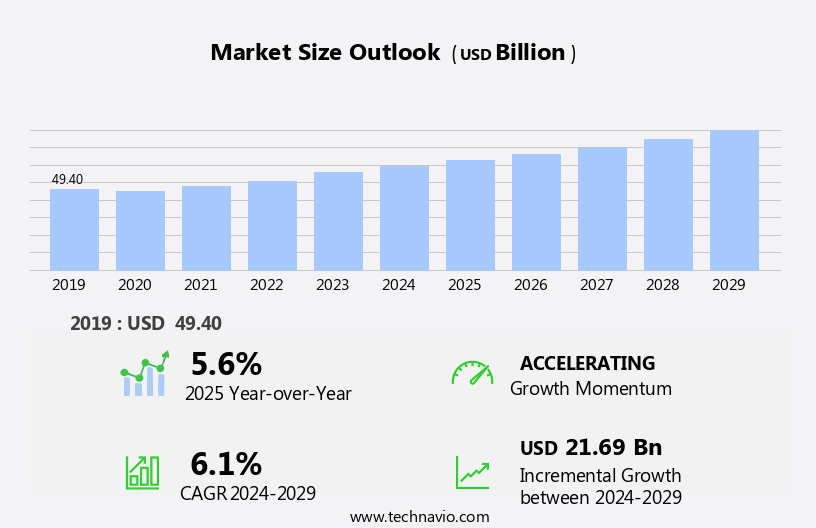
Explore in-depth regional segment analysis with market size data - historical 2019-2023 and forecasts 2025-2029 - in the full report.
Request Free Sample
- Additionally, the adoption of process optimization software and automated inspection systems has facilitated continuous flow processing and precision cutting machinery, enabling manufacturers to meet the increasing demand for customized and innovative food products. Industrial Refrigeration units and wastewater treatment methods have also gained prominence, as food manufacturers strive to minimize their environmental footprint and adhere to stricter regulations. The market for food processing machinery is expected to grow at a robust rate, with industry experts projecting a 5% annual growth rate over the next decade. For instance, a leading food manufacturer implemented a high-pressure homogenizer to improve the consistency and quality of their dairy products, resulting in a 15% increase in sales. The refrigeration segment is the second largest segment of the Type and was valued at USD 16.47 billion in 2023.
-
This trend is fueled by the increasing demand for processed food products in these regions, which is leading to a surge in the adoption of advanced food processing machinery. Another key trend shaping the market is the availability of customized food processing machinery, catering to the unique requirements of various food industries. However, the market is not without challenges. Food manufacturers are increasingly opting for refurbished machinery and retrofitting of current machinery to reduce costs.
- This trend poses a significant challenge to original equipment manufacturers, necessitating them to explore innovative business models and pricing strategies to remain competitive. Furthermore, the growing emphasis on sustainable and energy-efficient food processing solutions is adding to the complexity of the market landscape. Companies seeking to capitalize on the opportunities in this market must stay abreast of these trends and challenges, and adapt their strategies accordingly to ensure long-term success.
How is this Food Processing Machinery Industry segmented?
The food processing machinery industry research report provides comprehensive data (region-wise segment analysis), with forecasts and estimates in "USD billion" for the period 2025-2029, as well as historical data from 2019-2023 for the following segments.
- Type
- Depositors
- Refrigeration
- Sclicers and dicers
- Others
- Application
- MP and S
- Bakery
- Dairy
- Others
- Mode of Operation
- Automatic
- Semi-Automatic
- Manual
- End-use Industry
- Food Manufacturers
- Food Service Industry
- Others
- Geography
- North America
- US
- Canada
- Europe
- France
- Germany
- Italy
- UK
- Middle East and Africa
- Egypt
- KSA
- Oman
- UAE
- APAC
- China
- India
- Japan
- South America
- Argentina
- Brazil
- Rest of World (ROW)
- North America
By Type Insights
The depositors segment is estimated to witness significant growth during the forecast period. The segment was valued at USD 23.83 billion in 2023. It continued to the largest segment at a CAGR of 9.06%.
In the dynamic food processing market, form-fill-seal machines play a pivotal role in the production of various food items, particularly in the baking industry for creating muffins, jellies, and decorating cakes. Depositing, a type of extrusion process, is a crucial step in this production line. The dough is extruded through depositing machines, which use nozzles or a Conveyor Belt to distribute it evenly. Before packaging, these machines are also employed to fill, layer, or cover food items with other components. Energy efficiency upgrades and sterilization validation techniques are essential trends in the market, with thermal processing systems and pasteurization technology being key players.
Filtration and separation, quality control instrumentation, and high-shear mixing are other integral processes. Freeze Drying Equipment and batch processing equipment are vital for producing a wide range of food products. Process optimization software and automated inspection systems ensure product consistency and safety. Microwave processing systems and food texture analysis are emerging trends, while industrial refrigeration units and extrusion processing lines are essential for maintaining temperature control. Material handling systems, heat exchangers, and ingredient mixing technology streamline production processes. Wastewater treatment methods and ultrasonic processing enhance sustainability, while sanitation procedures' efficacy is a critical concern. Automated packaging lines and size reduction technology enable efficient production and continuous flow processing.
Precision cutting machinery and product traceability systems ensure consistency and accountability. A recent study projects industry growth to reach 5% annually. For instance, a food processing company increased its production capacity by 30% through the implementation of advanced form-fill-seal machines and automated packaging lines.
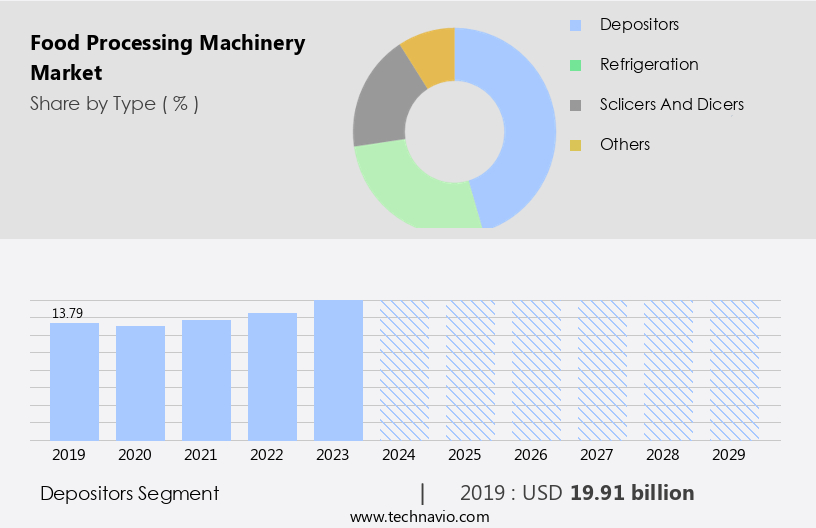
The Depositors segment was valued at USD 19.91 billion in 2019 and showed a gradual increase during the forecast period.
Regional Analysis
APAC is estimated to contribute 53% to the growth of the global market during the forecast period.Technavio's analysts have elaborately explained the regional trends and drivers that shape the market during the forecast period.
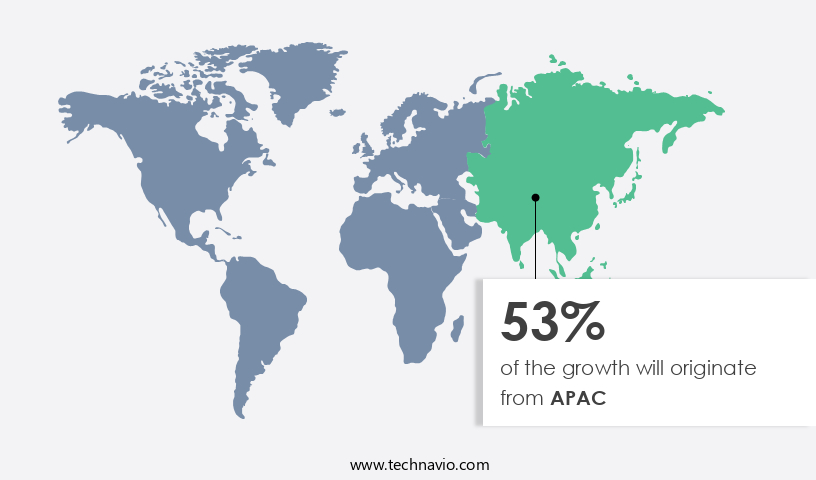
The market in APAC is experiencing significant growth due to population expansion, urbanization, and rising disposable incomes, leading to increased demand for processed foods. Data suggests that the future opportunities for growth in the APAC region estimates to be around USD 21.69 billion. China, a key player in this region, is the world's largest seafood producer, exporter, and importer. In 2022, China produced 67.5 million metric tons (MMT) of seafood, a slight increase from 66.9 MMT in 2021. This production surge is driven by the thriving aquaculture sector, which grew by 1.2% in 2022. To meet the rising demand for Processed Seafood and other food products, manufacturers are focusing on energy efficiency upgrades and implementing sterilization validation techniques, thermal processing systems, and pasteurization technology.
Filtration and separation, quality control instrumentation, high-shear mixing, and freeze-drying equipment are essential components of modern food processing lines. Additionally, process optimization software, automated inspection systems, microwave processing systems, and food texture analysis are transforming the industry. Industrial refrigeration units, extrusion processing lines, material handling systems, and heat exchangers are critical for maintaining the efficiency of food processing operations. Wastewater treatment methods, ultrasonic processing, and sanitation procedures are essential for ensuring food safety and reducing environmental impact. Automated packaging lines, size reduction technology, continuous flow processing, precision cutting machinery, and product traceability systems are vital for maintaining quality and meeting consumer demands.
According to recent industry reports, The market is projected to grow by over 5% annually, driven by the increasing demand for convenience foods and the ongoing trend towards automation and digitization. This growth is expected to continue as manufacturers invest in advanced technologies to improve efficiency, reduce waste, and enhance product quality.
Market Dynamics
"The global food processing machinery market is driven by increasing automation and IoT integration for enhanced efficiency, with Asia Pacific leading due to its 53% market share in 2023."
- Rahul Somnath, Assistant Research Manager, Technavio
The market is experiencing significant growth due to the increasing demand for automated and efficient industrial food processing solutions. This market encompasses a wide range of equipment, from high-speed food processing lines and advanced food safety control systems to sustainable food processing technologies and energy-efficient food processing solutions. Industrial food processing equipment plays a crucial role in ensuring food product consistency and maintaining high-quality standards. Automated Food Packaging machinery is essential for efficient production and reducing labor costs. High-throughput food processing systems are becoming increasingly popular to meet the demands of consumer markets. Food Waste Management systems are another critical component of the market. Advanced food waste reduction methodologies, such as precision food cutting and slicing tools and innovative food processing technologies, help minimize waste and increase profitability. Reliable food processing equipment maintenance is essential for ensuring the longevity and productivity of food processing plants.
Energy-efficient food processing solutions and food processing plant design optimization are key considerations for reducing operational costs. Food processing quality control techniques and safe food processing handling procedures are essential for maintaining food safety and regulatory compliance. Advanced food processing automation solutions and food processing line speed optimization strategies are also important for increasing production efficiency and reducing costs. Selecting high-quality food processing equipment is crucial for ensuring product consistency and meeting consumer demands. Sanitation methods and efficient food product packaging design are also important considerations for maintaining food safety and extending product shelf life. In conclusion, the market is a dynamic and evolving industry that offers numerous opportunities for innovation and growth. From high-speed food processing lines to sustainable and energy-efficient solutions, the focus is on creating efficient, safe, and cost-effective food processing systems that meet the demands of modern consumer markets.
What are the key market drivers leading to the rise in the adoption of Food Processing Machinery Industry?
- In developing economies across the Asia-Pacific region, significant investments are being made in the food processing sector, serving as the primary catalyst for market growth.
- The food processing industry significantly contributes to the economic growth of agriculture-dependent economies, such as India, by commercializing farming and increasing farmers' income. The sector's expansion is fueled by escalating investments from both private entities and governments. According to the Press Information Bureau (PIB), India's food processing sector's Gross Value Added (GVA) has been consistently growing, increasing from USD19 billion in 2013-14 to USD37.5 billion in 2018-19. This growth trajectory is expected to continue, with industry reports projecting a 12% increase in the market size by 2025.
- The rising demand for processed food products and increasing automation in food processing operations will further drive the market's growth. For example, the adoption of automated packaging systems has led to a 15% increase in production efficiency for several food processing companies.
What are the market trends shaping the Food Processing Machinery Industry?
- Customized food processing machinery is becoming increasingly available on the market, representing an emerging trend.
- Customized food processing machinery is a burgeoning trend in the global food processing equipment market, driven by the increasing demand for specialized equipment that caters to unique production needs and product requirements. This trend enables food manufacturers to optimize their processes and differentiate their products, resulting in a surge in demand for customized machinery. With this approach, every aspect of the machinery is tailored to the specific characteristics of the products being processed, including size, shape, texture, and packaging needs. This level of customization leads to enhanced product quality, reduced waste, and improved operational efficiency. According to recent studies, the customized the market is expected to grow by 15% in the next two years, reflecting the robust demand for this technology.
- This growth is attributed to the increasing focus on product differentiation and operational efficiency in the food processing industry.
What challenges does the Food Processing Machinery Industry face during its growth?
- The food manufacturing industry faces significant challenges in terms of machinery acquisition and upgrades, with the purchase of refurbished machinery and retrofitting of existing equipment being a crucial factor impeding industry growth.
- Food manufacturing companies are turning to second-hand or rebuilt machinery to reduce costs, which is approximately half the price of new equipment. Some firms also upgrade their existing machinery through retrofitting to enhance capabilities and operational efficiency. The small and medium-sized enterprises (SMEs) in the food sector, particularly in Europe, prefer refurbished machinery due to financial constraints. For instance, in Germany, over 5,500 SMEs in the food and beverages industry employ around 550,000 people. The high cost and extended mechanical lifespan of food processing machinery have fueled the demand for refurbished or retrofitted machinery.
- The market is expected to grow at a robust pace, with industry analysts projecting a significant increase in demand. For context, the global market size was valued at USD 75.3 billion in 2020 and is projected to reach USD 103.2 billion by 2026, growing at a steady rate.
Exclusive Customer Landscape
The food processing machinery market forecasting report includes the adoption lifecycle of the market, covering from the innovator's stage to the laggard's stage. It focuses on adoption rates in different regions based on penetration. Furthermore, the food processing machinery market report also includes key purchase criteria and drivers of price sensitivity to help companies evaluate and develop their market growth analysis strategies.
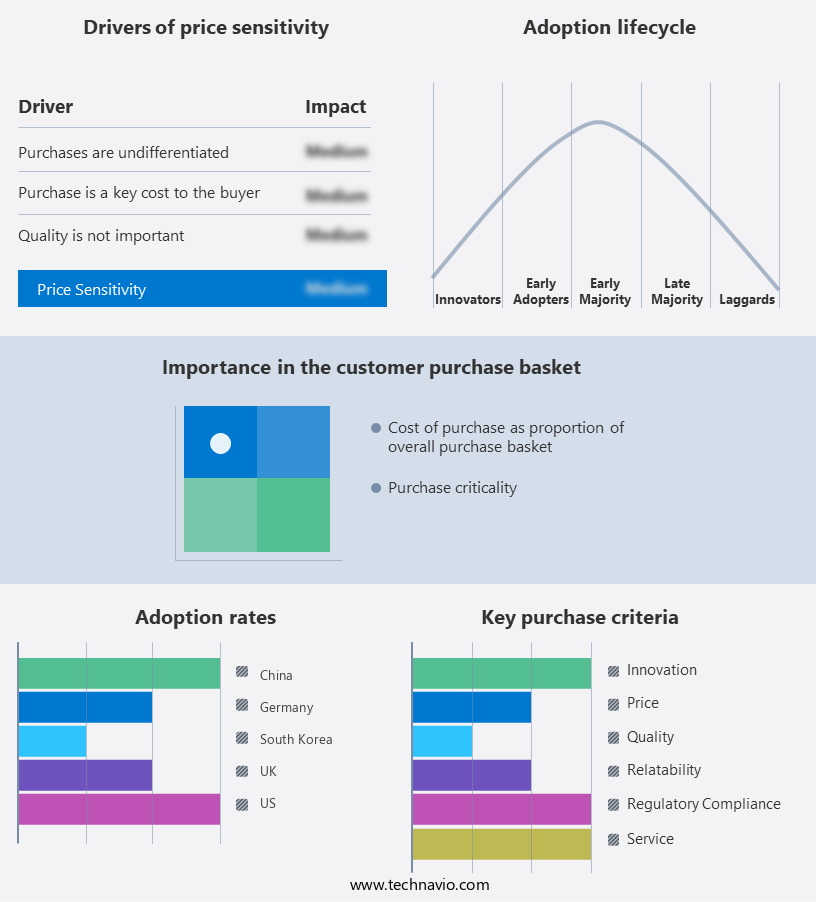
Customer Landscape
Key Companies & Market Insights
Companies are implementing various strategies, such as strategic alliances, food processing machinery market forecast, partnerships, mergers and acquisitions, geographical expansion, and product/service launches, to enhance their presence in the industry.
Alfa Laval AB - This company specializes in manufacturing advanced food processing machinery, including a High-Speed Low Acid Aseptic Filler, Rotary Jet Mixer, and Hybrid Powder Mixer, enhancing production efficiency and ensuring product quality in various industries.
The industry research and growth report includes detailed analyses of the competitive landscape of the market and information about key companies, including:
- Alfa Laval AB
- ANKO Food Machine Co. Ltd.
- Bigtem Makine A.S.
- Bucher Industries AG
- Buhler AG
- Duravant LLC
- FENCO Food Machinery s.r.l.
- GEA Group AG
- Hosokawa Micron Corp.
- Illinois Tool Works Inc.
- John Bean Technologies Corp.
- Krones AG
- LEHUI
- Marel Group
- Nichimo Co. Ltd.
- SPX FLOW Inc.
- Tetra Laval SA
- The Middleby Corp.
- TNA Australia Pty Ltd.
- Tomra Systems ASA
Qualitative and quantitative analysis of companies has been conducted to help clients understand the wider business environment as well as the strengths and weaknesses of key industry players. Data is qualitatively analyzed to categorize companies as pure play, category-focused, industry-focused, and diversified; it is quantitatively analyzed to categorize companies as dominant, leading, strong, tentative, and weak.
Recent Development and News in Food Processing Machinery Market
- In January 2024, MULTIVAC, a leading global manufacturer of packaging solutions for the food industry, launched its new ThermoFlex R 315 traysealer, which sets a new standard in sealing technology with its advanced features and increased efficiency (MULTIVAC Press Release).
- In March 2024, Tetra Pak and Danone announced a strategic partnership to jointly develop and commercialize a new line of plant-based beverages using Tetra Pak's Eco Carton packaging, marking a significant step towards sustainable food processing solutions (Danone Press Release).
- In May 2024, JBT Corporation, a leading technology solutions provider to the global food processing industry, completed the acquisition of Air Liquide's food and beverage business, expanding its portfolio and strengthening its position in the market (JBT Corporation Press Release).
- In January 2025, Bosch Packaging Technology received regulatory approval from the European Commission for its new high-performance thermoforming packaging machine, the Vacunite RS, which features advanced technology for improved food safety and longer shelf life (Bosch Press Release).
Research Analyst Overview
- The market demonstrates continuous evolution, driven by the ever-changing demands of various sectors, including food and beverage, pharmaceuticals, and cosmetics. Energy consumption reduction is a significant focus, with cleaning validation protocols and HACCP implementation essential for ensuring product safety and regulatory compliance. Process control systems and quality assurance protocols facilitate equipment sanitation, adherence to GMP compliance standards, and risk assessment procedures. Product yield improvement is a key objective, achieved through process monitoring tools, packaging material selection, and process safety management.
- A leading food processing company successfully reduced operational costs by 10% through the implementation of a predictive maintenance system and optimization of material flow. Industry growth is expected to reach 5% annually, with a strong emphasis on regulatory compliance audits, Data Analytics dashboards, and equipment lifecycle management. Employee safety protocols, water usage optimization, and waste reduction strategies further contribute to the market's dynamic nature.
Dive into Technavio's robust research methodology, blending expert interviews, extensive data synthesis, and validated models for unparalleled Food Processing Machinery Market insights. See full methodology.
|
Market Scope |
|
|
Report Coverage |
Details |
|
Page number |
208 |
|
Base year |
2024 |
|
Historic period |
2019-2023 |
|
Forecast period |
2025-2029 |
|
Growth momentum & CAGR |
Accelerate at a CAGR of 6.1% |
|
Market growth 2025-2029 |
USD 21.69 billion |
|
Market structure |
Fragmented |
|
YoY growth 2024-2025(%) |
5.6 |
|
Key countries |
US, Canada, Germany, UK, Italy, France, China, India, Japan, Brazil, Egypt, UAE, Oman, Argentina, KSA, UAE, Brazil, and Rest of World (ROW) |
|
Competitive landscape |
Leading Companies, Market Positioning of Companies, Competitive Strategies, and Industry Risks |
What are the Key Data Covered in this Food Processing Machinery Market Research and Growth Report?
- CAGR of the Food Processing Machinery industry during the forecast period
- Detailed information on factors that will drive the growth and forecasting between 2025 and 2029
- Precise estimation of the size of the market and its contribution of the industry in focus to the parent market
- Accurate predictions about upcoming growth and trends and changes in consumer behaviour
- Growth of the market across APAC, Europe, North America, Middle East and Africa, and South America
- Thorough analysis of the market's competitive landscape and detailed information about companies
- Comprehensive analysis of factors that will challenge the food processing machinery market growth of industry companies
We can help! Our analysts can customize this food processing machinery market research report to meet your requirements.
 RIA -
RIA - 
