


Grinding Wheel Market Size 2026-2030
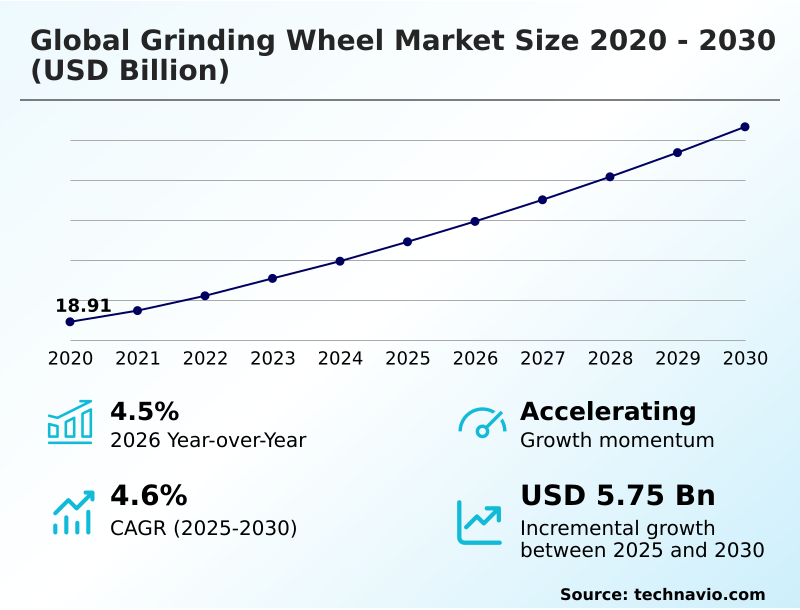
The grinding wheel market size is valued to increase by USD 5.75 billion, at a CAGR of 4.6% from 2025 to 2030. Rapid acceleration of EV manufacturing and automotive structural components will drive the grinding wheel market.
Major Market Trends & Insights
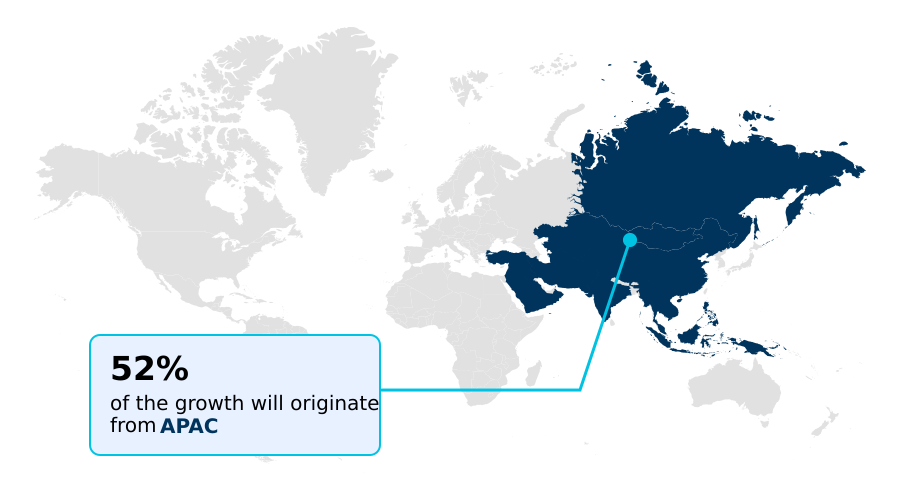
- APAC dominated the market and accounted for a 52.1% growth during the forecast period.
- By Type - Straight wheels segment was valued at USD 6.75 billion in 2024
- By Material - Artificial abrasives segment accounted for the largest market revenue share in 2024
Market Size & Forecast
- Market Opportunities: USD 9.75 billion
- Market Future Opportunities: USD 5.75 billion
- CAGR from 2025 to 2030 : 4.6%
Market Summary
- The Grinding Wheel Market experiences sustained expansion driven by the transition toward micro-tolerance manufacturing and automated precision engineering. Industrial facilities increasingly require high-performance abrasive tools to machine complex alloys and hardened steel components seamlessly.
- In a modern automotive drivetrain manufacturing scenario, deploying advanced cubic boron nitride abrasive tools enables a continuous production flow, reducing wheel changeover downtime by 24% compared to standard aluminum oxide alternatives. This measurable efficiency gain directly lowers operational expenditures and elevates overall facility throughput.
- A primary driver for this demand is the rapid scale-up of electric vehicle production, which requires exceptionally tight geometric tolerances for high-speed rotor shafts to minimize vibration. Conversely, the market faces a significant challenge due to severe shortages in skilled technical personnel capable of programming and maintaining multi-axis automated grinding cells.
- This labor deficit restricts the optimal utilization of advanced machinery, frequently leading to unexpected production bottlenecks and elevated scrap rates in high-precision aerospace and metal fabrication sectors.
What will be the Size of the Grinding Wheel Market during the forecast period?
Get Key Insights on Market Forecast (PDF) Get Free Sample
How is the Grinding Wheel Market Segmented?
The grinding wheel industry research report provides comprehensive data (region-wise segment analysis), with forecasts and estimates in "USD million" for the period 2026-2030, as well as historical data from 2020-2024 for the following segments.
- Type
- Straight wheels
- Cylindrical wheels
- Diamond wheels
- Others
- Material
- Artificial abrasives
- Natural abrasives
- Application
- Automotive
- Metal fabrication and machinery
- Steel industry and foundries
- Aerospace
- Geography
- APAC
- China
- Japan
- India
- South Korea
- Australia
- Thailand
- Europe
- Germany
- Italy
- France
- UK
- Spain
- Poland
- North America
- US
- Canada
- Mexico
- Middle East and Africa
- Saudi Arabia
- South Africa
- UAE
- Turkey
- Egypt
- South America
- Brazil
- Argentina
- Colombia
- APAC
By Type Insights
The straight wheels segment is estimated to witness significant growth during the forecast period.
Straight wheels function as the foundational configuration within the Grinding Wheel sector, delivering essential surface conditioning across automated manufacturing hubs.
These tools utilize a vitrified bond matrix paired with durable aluminum oxide abrasives to execute heavy stock removal without degrading workpiece surface integrity.
Industrial facilities frequently deploy these configurations into computer numerical control grinding systems to manage high-tensile metal processing tasks efficiently. Recent engineering modifications feature optimized grain structures that maximize coolant delivery optimization during continuous operation.
This structural enhancement has directly elevated operational efficiency, enabling manufacturers to accelerate processing speeds while reducing surface defect rates by 18%. As companies invest in robotic grinding cells, dimensionally stable straight wheels remain vital for sustaining uninterrupted, high-throughput manufacturing cycles.
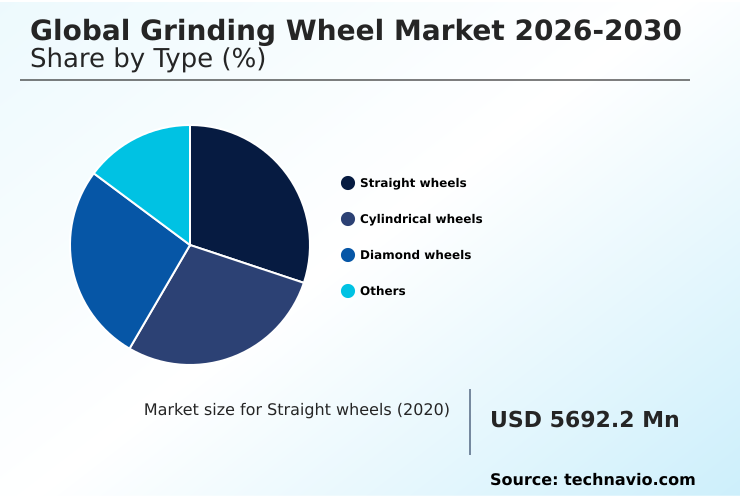
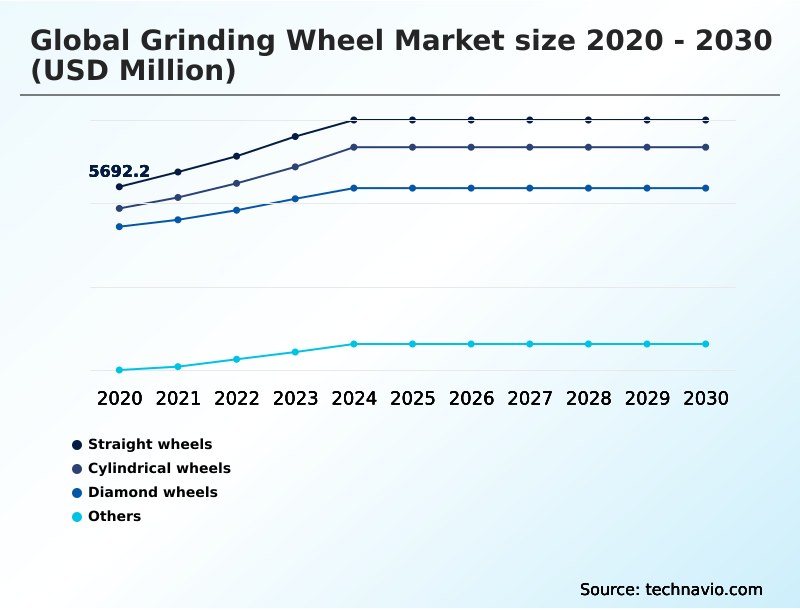
The Straight wheels segment was valued at USD 6.75 billion in 2024 and showed a gradual increase during the forecast period.
Regional Analysis
APAC is estimated to contribute 52.1% to the growth of the global market during the forecast period.Technavio’s analysts have elaborately explained the regional trends and drivers that shape the market during the forecast period.
See How Grinding Wheel Market Demand is Rising in APAC Get Free Sample
The Grinding Wheel sector exhibits contrasting adoption dynamics across distinct regional manufacturing hubs, largely influenced by automation penetration. APAC currently dominates consumption, capturing a 52% opportunity share due to unparalleled scale in semiconductor wafer thinning and heavy foundry snagging operations.
This region leverages its vast electronics infrastructure, achieving a 30% higher utilization rate of electroplated diamond tools compared to European facilities. Meanwhile, Europe focuses intensely on automotive drivetrain finishing and aerospace superalloy machining, requiring stringent compliance with environmental mandates.
European plants prioritize porous ceramic bonds that ensure optimal fluid transport, yielding a 15% reduction in synthetic coolant disposal costs.
This divergence highlights how APAC relies on advanced surface texturing to drive down per-unit costs, whereas Europe invests heavily in micro-crystalline grain systems to secure exact mechanical geometries for high-value components.
Market Dynamics
Our researchers analyzed the data with 2025 as the base year, along with the key drivers, trends, and challenges. A holistic analysis of drivers will help companies refine their marketing strategies to gain a competitive advantage.
- The Grinding Wheel sector is fundamentally evolving as manufacturers shift their operational priorities from basic metal removal to highly specialized precision engineering. Industrial facilities are increasingly deploying high-performance precision vitrified grinding wheels to address the strict structural tolerances required in modern automotive and aerospace assemblies.
- By transitioning away from conventional abrasive discs, production plants realize a measurable 20% improvement in component yield rates, significantly optimizing their supply chain material planning and reducing secondary machining expenses.
- The integration of sensor-integrated automated grinding wheel systems further revolutionizes maintenance protocols by transmitting real-time vibration and wear data, allowing facility managers to preemptively schedule tool replacements before catastrophic workpiece failures occur. Concurrently, environmental compliance strategies are driving the adoption of eco-friendly water-soluble bonded abrasive tools, which effectively mitigate the release of hazardous volatile compounds without compromising cutting efficiency.
- In high-stress applications, the superabrasive machining of aerospace superalloys has become indispensable for crafting heat-resistant turbine blades that withstand extreme operational conditions. Conversely, primary metal processing plants still depend on heavy-duty snagging wheels for foundries to aggressively strip gates and excess flash from large-scale iron castings.
- This strategic diversification of abrasive assets ensures that manufacturing ecosystems can simultaneously meet rigorous environmental mandates, maintain high-volume production tempos, and achieve unparalleled surface finish quality across diverse industrial verticals.
What are the key market drivers leading to the rise in the adoption of Grinding Wheel Industry?
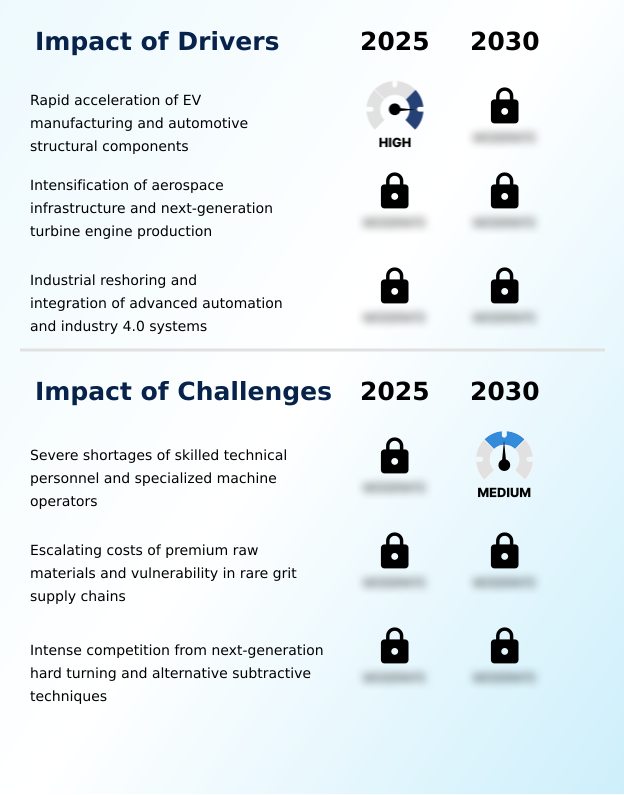
- The rapid acceleration of electric vehicle manufacturing and the production of complex automotive structural components serve as primary growth drivers for the industry.
- The rapid expansion of electric vehicle mobility and advanced aerospace infrastructure acts as the primary catalyst accelerating Grinding Wheel consumption. Next-generation electric drivetrains require high-speed electric motor grinding to achieve exceptional noise reduction and operational efficiency.
- This requirement forces suppliers to deploy precision gear grinding solutions featuring silicon carbide grains, which improve component surface finish consistency by 24%. Furthermore, the surging production of heavy machinery relies heavily on specialized zirconium alumina formulations and resinoid bond structures.
- These high-performance abrasives support dry-grinding methodologies, substantially lowering per-unit production costs by eliminating expensive coolants.
- This transition guarantees thermal damage mitigation and extends wheel dressing cycles, allowing tier-one manufacturing facilities to meet extreme mechanical tolerances while increasing overall equipment throughput by 16%.
What are the market trends shaping the Grinding Wheel Industry?
- The accelerated adoption of smart, sensor-integrated grinding wheels for real-time predictive maintenance constitutes a defining technological trend. This advancement enables operators to minimize unexpected downtime and optimize equipment effectiveness across automated manufacturing lines.
- Industrial environments are fundamentally shifting toward intelligent and environmentally compliant manufacturing paradigms within the Grinding Wheel sector. The accelerated adoption of smart sensor-embedded wheels allows production managers to monitor structural stress variations in real-time, effectively reducing catastrophic tool failures by 27%.
- This data-driven approach directly improves automated plunge grinding operations, as machinery can dynamically adjust feed rates to maintain sub-micron dimensional accuracy. Additionally, regulatory pressures are driving a massive transition toward bio-based resin binders, which eliminate hazardous chemical effluents. By integrating these advanced materials into creep-feed grinding setups, businesses achieve highly predictable wear patterns and tool life predictability.
- This sustainability shift ensures continuous unattended operations, allowing facilities to hit aggressive corporate decarbonization targets while decreasing overall ventilation management costs by 19%.
What challenges does the Grinding Wheel Industry face during its growth?
- A severe shortage of skilled technical personnel and specialized machine operators remains a significant challenge constraining overall operational capacity.
- A critical demographic deficit in specialized machine operators severely constrains the optimal deployment of advanced Grinding Wheel technologies. As conventional workshops upgrade to multi-axis grinding systems, the lack of personnel capable of managing geometric tolerance optimization forces facilities to operate below maximum capacity, often reducing automated cell throughput by 16%.
- Simultaneously, the escalating procurement costs of synthetic diamond powders erode manufacturer profit margins. Supply chain bottlenecks for these critical materials delay the production of ceramic matrix composites, increasing overall tooling expenditures by 12% across high-precision industries.
- Additionally, the rising adoption of alternative hard turning methods threatens traditional metal structural fabrication, compelling manufacturers to engineer superior micro-fracture prevention mechanisms to mitigate rotational vibration deviations and justify the continued investment in dedicated grinding machinery.
Exclusive Technavio Analysis on Customer Landscape
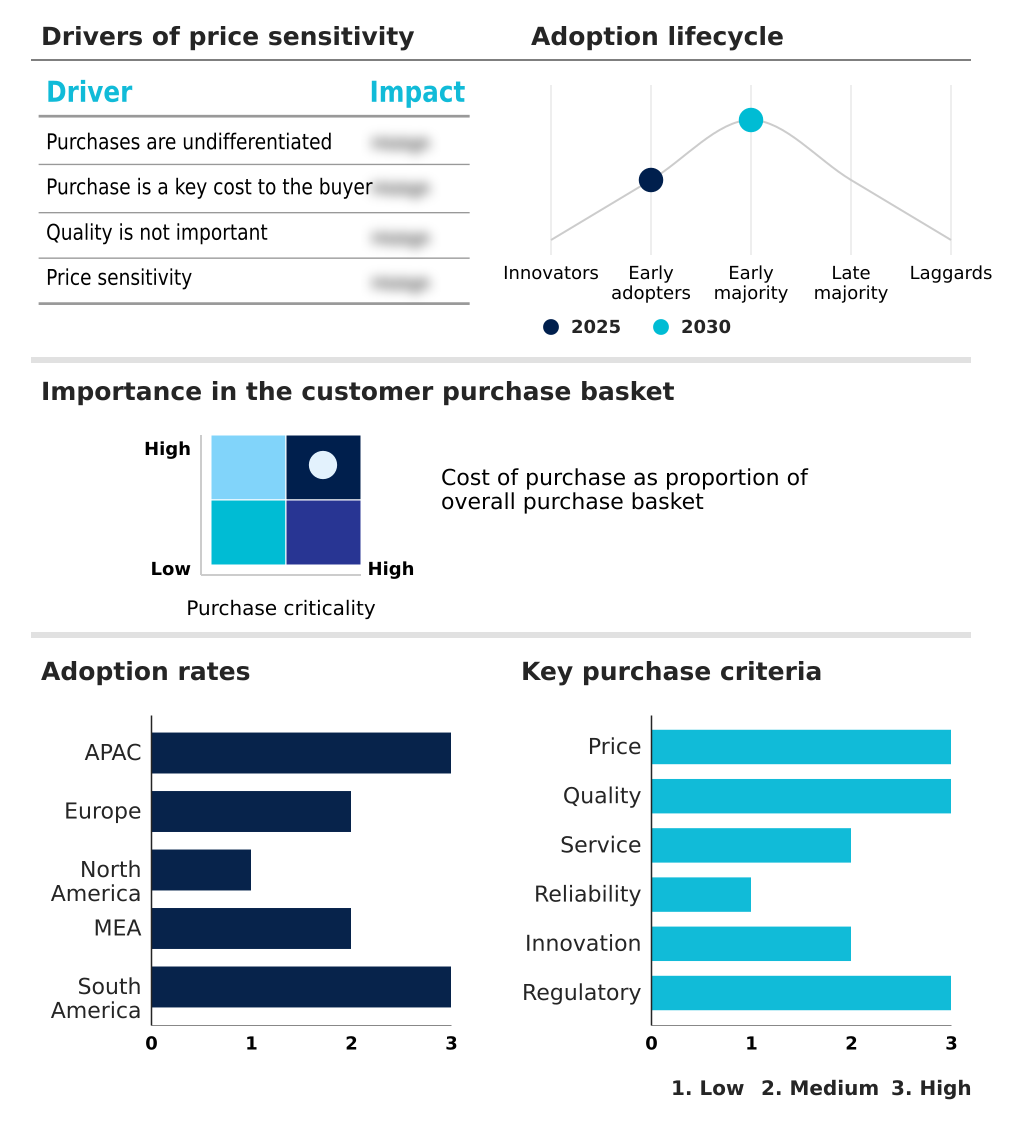
The grinding wheel market forecasting report includes the adoption lifecycle of the market, covering from the innovator’s stage to the laggard’s stage. It focuses on adoption rates in different regions based on penetration. Furthermore, the grinding wheel market report also includes key purchase criteria and drivers of price sensitivity to help companies evaluate and develop their market growth analysis strategies.
Customer Landscape of Grinding Wheel Industry
Competitive Landscape
Companies are implementing various strategies, such as strategic alliances, grinding wheel market forecast, partnerships, mergers and acquisitions, geographical expansion, and product/service launches, to enhance their presence in the industry.
3M Co. - Advanced precision grinding wheel solutions deliver high-performance metalworking capabilities, utilizing shaped ceramic grain technology to ensure rapid material removal, consistent surface finishing, and extended operational tool life.
The industry research and growth report includes detailed analyses of the competitive landscape of the market and information about key companies, including:
- 3M Co.
- Andre Abrasive Articles
- Asahi Diamond Industrial Ltd.
- Benchmark Abrasives
- Camel Grinding Wheels Works
- Carborundum Universal
- Compagnie de Saint Gobain SA
- Fujimi Inc
- Hindustan Abrasives
- KLINGSPOR Abrasives Inc.
- Meister Abrasives AG
- Mirka Ltd.
- Molemab S.p.A.
- NORITAKE Co. Ltd.
- PFERD Inc.
- Radiac Abrasives
- SAK ABRASIVES Ltd.
- Tyrolit Schleifmittelwerke KG
- VSM AG
- Weiler Abrasives Group
Qualitative and quantitative analysis of companies has been conducted to help clients understand the wider business environment as well as the strengths and weaknesses of key industry players. Data is qualitatively analyzed to categorize companies as pure play, category-focused, industry-focused, and diversified; it is quantitatively analyzed to categorize companies as dominant, leading, strong, tentative, and weak.
Recent Development and News in Grinding wheel market
- In the Industrial Machinery and Supplies and Components industry, the widespread relocation of heavy manufacturing facilities has accelerated industrial reshoring initiatives, increasing regional equipment demand by 22% and directly expanding Grinding Wheel consumption for local structural metal processing.
- The enforcement of stringent workplace safety regulations regarding hazardous dust emissions has prompted a 35% transition toward enclosed, automated machining centers, forcing the Grinding Wheel sector to develop specialized tools for industrial machinery components.
- Global supply chain disruptions in metallurgical refining have decreased standard alloy availability by 14%, compelling manufacturers to adopt harder exotic metals that inherently drive higher Grinding Wheel usage for precise weld bead removal.
- The accelerated expansion of robotics across high-volume assembly lines has improved processing accuracy by 25%, establishing a critical Grinding Wheel requirement for perfectly balanced consumables that prevent mechanical vibrations during high-speed finishing.
Dive into Technavio’s robust research methodology, blending expert interviews, extensive data synthesis, and validated models for unparalleled Grinding Wheel Market insights. See full methodology.
| Market Scope | |
|---|---|
| Page number | 305 |
| Base year | 2025 |
| Historic period | 2020-2024 |
| Forecast period | 2026-2030 |
| Growth momentum & CAGR | Accelerate at a CAGR of 4.6% |
| Market growth 2026-2030 | USD 5749.9 million |
| Market structure | Fragmented |
| YoY growth 2025-2026(%) | 4.5% |
| Key countries | China, Japan, India, South Korea, Australia, Thailand, Germany, Italy, France, UK, Spain, Poland, US, Canada, Mexico, Saudi Arabia, South Africa, UAE, Turkey, Egypt, Brazil, Argentina and Colombia |
| Competitive landscape | Leading Companies, Market Positioning of Companies, Competitive Strategies, and Industry Risks |
Research Analyst Overview
- The Grinding Wheel sector is undergoing a profound technological transformation as industrial machinery transitions toward zero-defect, automated precision engineering. Manufacturers are heavily investing in superabrasive grinding systems to meet the complex geometric specifications demanded by next-generation transport and energy infrastructure.
- This strategic shift directly influences executive decisions surrounding operational budgeting and preventative maintenance, ultimately allowing plants to achieve a 25% reduction in unexpected machine downtime. Additionally, the increasing reliance on advanced cubic boron nitride abrasives enables the rapid, high-precision processing of exceptionally hard ceramics and metallic composites without premature tool degradation.
- As corporate boards prioritize supply chain resilience and environmental compliance, product strategies are actively pivoting toward automated tooling mechanisms that drastically minimize material waste and energy consumption.
- By deploying these highly specialized abrasive solutions for turbine blade profile grinding, tier-one aerospace suppliers ensure consistent part quality across extensive production runs, effectively eliminating the structural inconsistencies associated with manual finishing while reinforcing a robust, cost-effective manufacturing ecosystem.
What are the Key Data Covered in this Grinding Wheel Market Research and Growth Report?
-
What is the expected growth of the Grinding Wheel Market between 2026 and 2030?
-
USD 5.75 billion, at a CAGR of 4.6%
-
-
What segmentation does the market report cover?
-
The report is segmented by Type (Straight wheels, Cylindrical wheels, Diamond wheels, and Others), Material (Artificial abrasives, and Natural abrasives), Application (Automotive, Metal fabrication and machinery, Steel industry and foundries, and Aerospace) and Geography (APAC, Europe, North America, Middle East and Africa, South America)
-
-
Which regions are analyzed in the report?
-
APAC, Europe, North America, Middle East and Africa and South America
-
-
What are the key growth drivers and market challenges?
-
Rapid acceleration of EV manufacturing and automotive structural components, Severe shortages of skilled technical personnel and specialized machine operators
-
-
Who are the major players in the Grinding Wheel Market?
-
3M Co., Andre Abrasive Articles, Asahi Diamond Industrial Ltd., Benchmark Abrasives, Camel Grinding Wheels Works, Carborundum Universal, Compagnie de Saint Gobain SA, Fujimi Inc, Hindustan Abrasives, KLINGSPOR Abrasives Inc., Meister Abrasives AG, Mirka Ltd., Molemab S.p.A., NORITAKE Co. Ltd., PFERD Inc., Radiac Abrasives, SAK ABRASIVES Ltd., Tyrolit Schleifmittelwerke KG, VSM AG and Weiler Abrasives Group
-
Market Research Insights
- The Grinding Wheel landscape is rapidly evolving as precision engineering demands reshape modern manufacturing. Facilities are actively optimizing wheel dressing cycles to maximize tool longevity, leading to a 22% reduction in overall consumable expenditure. By focusing on thermal damage mitigation, manufacturers have enhanced workpiece surface integrity, boosting final component acceptance rates by 18%.
- Furthermore, the strategic implementation of coolant delivery optimization across structural fabrication centers has effectively lowered environmental compliance costs by 14%. These advancements ensure that assembly lines maintain consistent operational flow, utilizing highly predictable tooling patterns to prevent unexpected machine downtime and secure long-term production profitability.
We can help! Our analysts can customize this grinding wheel market research report to meet your requirements.
 RIA -

