


Hair Color Spray Market Size 2024-2028
The hair color spray market size is forecast to increase by USD 328 million, at a CAGR of 4.39% between 2023 and 2028.
- The market is experiencing significant growth, fueled by the expanding cosmetics industry and the surge in e-commerce sales. The increasing popularity of cosmetics, driven by societal trends and cultural norms, creates a favorable environment for hair color sprays. Moreover, the rise of e-commerce platforms offers convenience and accessibility to consumers, enabling them to purchase hair color sprays from anywhere at any time. However, the market faces challenges that necessitate strategic planning and innovation. The proliferation of counterfeit products poses a significant threat to market players, eroding consumer trust and market share.
- Companies must invest in robust anti-counterfeit measures to protect their brand reputation and maintain customer loyalty. Additionally, staying abreast of evolving consumer preferences and trends is crucial for market success. By focusing on product innovation, effective marketing strategies, and competitive pricing, companies can capitalize on the market's growth potential and navigate challenges effectively.
What will be the Size of the Hair Color Spray Market during the forecast period?

Explore in-depth regional segment analysis with market size data - historical 2018-2022 and forecasts 2024-2028 - in the full report.
Request Free Sample
The market continues to evolve, driven by consumer preferences for convenience and versatility. Hydrogen peroxide, a key ingredient, facilitates the coloring process, while hair growth and gray coverage are popular applications. Ingredients lists prioritize color fade protection and minimize hair damage, aligning with the growing emphasis on hair care. Packaging materials cater to retail sales, with aerosol cans and retail packaging ensuring ease of use and portability. Manufacturing processes for permanent hair color involve rigorous quality control measures, ensuring consistent color results. Salon services offer professional application and color matching, while consumer use of temporary and semi-permanent hair color continues to rise.
New product launches cater to various hair types and textures, addressing consumer preferences for volume builders, UV protection, and color correction. Color trends influence sales, with hold level and shine enhancers adding to the appeal. UV protection and shelf life are crucial considerations, as is color correction for those seeking to remove unwanted hues. Safety regulations guide the industry, with propylene glycol and other ingredients undergoing scrutiny. Marketing strategies focus on online sales, direct sales, and consumer reviews, while distribution channels expand to cater to diverse consumer needs. Consumer use varies, with some addressing scalp health and hair loss concerns, while others prioritize hair styling and volume.
The ongoing dynamism of the market reflects its broad appeal and the continuous pursuit of innovation.
How is this Hair Color Spray Industry segmented?
The hair color spray industry research report provides comprehensive data (region-wise segment analysis), with forecasts and estimates in "USD million" for the period 2024-2028, as well as historical data from 2018-2022 for the following segments.
- Distribution Channel
- Offline
- Online
- Geography
- North America
- US
- Europe
- Germany
- APAC
- China
- Japan
- South America
- Brazil
- Rest of World (ROW)
- North America
By Distribution Channel Insights
The offline segment is estimated to witness significant growth during the forecast period.
The offline distribution channel for hair color sprays encompasses sales through specialty stores, hypermarkets, supermarkets, convenience stores, and clubhouse stores, as well as department stores, salons and spas, and drugstores. Preferences for online shopping have been dwindling, leading significant retailers to expand their offline presence in local and regional markets to boost sales. For instance, Walmart Inc. aims to open 50 new stores in India over the next 4-5 years, currently operating in nine states and 19 cities. In 2023, specialty stores held the largest market share in the offline distribution segment. The manufacturing process for hair color sprays involves hydrogen peroxide, which promotes hair growth and gray coverage while ensuring color fade protection and minimizing hair damage.
Quality control is crucial to maintain hair health, and various application methods cater to diverse consumer preferences, including semi-permanent and permanent hair color options. Retail sales are driven by color trends, and wholesale distribution enables widespread availability. Marketing strategies incorporate uv protection, shelf life, color correction, and customer reviews to enhance product positioning. Aerosol cans and retail packaging are essential for easy application and convenience. Hair dye and temporary hair color alternatives also exist for professional use, with color matching and hair color removal solutions available for various hair textures, hair loss, and scalp health concerns. Safety regulations govern the use of ingredients like propylene glycol and shine enhancers.
New product launches cater to evolving consumer preferences, and hair styling tools complement hair color sprays for a complete hair care solution.
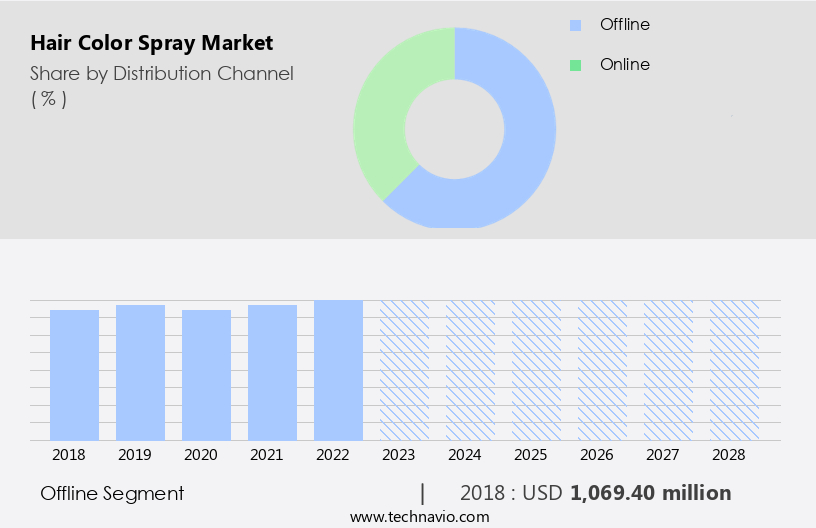
The Offline segment was valued at USD 1069.40 million in 2018 and showed a gradual increase during the forecast period.
Regional Analysis
APAC is estimated to contribute 38% to the growth of the global market during the forecast period. Technavio's analysts have elaborately explained the regional trends and drivers that shape the market during the forecast period.
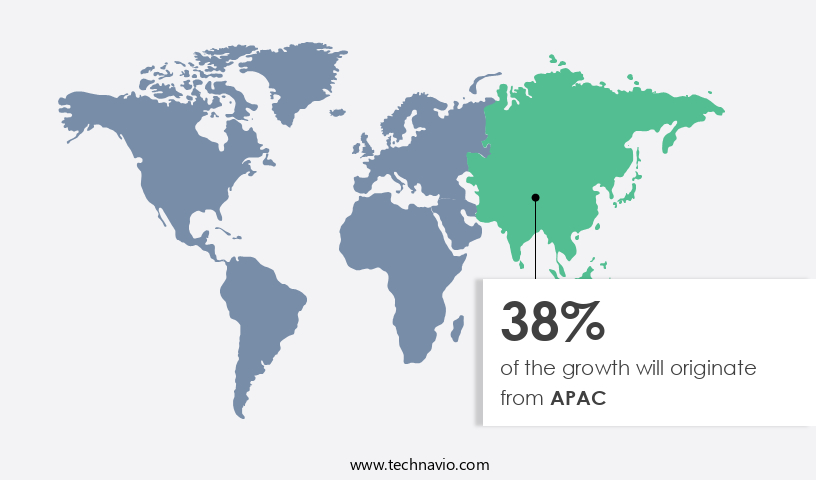
The market in the Asia Pacific region is experiencing notable growth due to the increasing disposable income among the young working population. Key markets in this region include Japan, China, and India. In 2023, India emerged as a promising market for hair color spray in APAC. Factors contributing to this growth include the rise in purchasing power and the entry of international brands into the market. companies are also leveraging social media platforms, such as Facebook and YouTube, to promote their products and increase market awareness. Hair color spray offers various benefits, including gray coverage, hair growth, and color fade protection.
The ingredients list typically includes hydrogen peroxide for color development and propylene glycol for even application. To address hair damage, manufacturers are incorporating shine enhancers into their formulations. The manufacturing process involves aerosol cans and retail packaging to ensure product stability and shelf life. Salon services continue to be a significant distribution channel, with professionals using hair color spray for temporary color or touch-ups between permanent color appointments. Quality control is crucial in the production of hair color spray, with strict safety regulations in place to ensure consumer safety. Consumer preferences for volume builders and color correction have led to new product launches and innovations in the market.
Semi-permanent hair color and temporary hair color options cater to various consumer needs and hair types. Professional use of hair color spray in hair styling and color matching is also on the rise. Color trends and hair texture play a role in consumer choices, with hold level and uv protection being essential considerations. Retail sales and wholesale distribution channels are essential for reaching a broader consumer base. Online sales and direct sales through company websites have become increasingly popular, particularly during the pandemic. Hair loss and scalp health concerns are also driving demand for hair care products, including hair color spray.
In conclusion, the market in the Asia Pacific region is witnessing significant growth due to increasing consumer awareness, purchasing power, and product innovations. The market is expected to continue evolving, with a focus on consumer preferences, product safety, and sustainability.
Market Dynamics
Our researchers analyzed the data with 2023 as the base year, along with the key drivers, trends, and challenges. A holistic analysis of drivers will help companies refine their marketing strategies to gain a competitive advantage.
What are the key market drivers leading to the rise in the adoption of Hair Color Spray Industry?
- The cosmetic industry's significant expansion serves as the primary catalyst for market growth.
- The hair styling market, specifically hair color spray, has experienced notable growth in the cosmetics industry. Factors such as increasing disposable income and a desire for high-quality, effective products have driven demand. Hair care products, which encompass hair color spray, shampoos, conditioners, styling agents, and hair dye, account for over 50% of the market's revenue. In recent years, there has been a steady increase in the demand for cosmetic products, particularly in developing economies. Aerosol cans, the primary packaging for hair color spray, offer convenience and ease of use. Temporary hair color sprays provide color matching flexibility and can be easily removed, making them popular among consumers.
- Safety regulations ensure the use of ingredients such as propylene glycol in hair color sprays, which enhance shine and provide a smooth application. Professional use of hair color sprays is also common, emphasizing color accuracy and consistency. Color matching and hair color removal are essential considerations for both personal and professional use.
What are the market trends shaping the Hair Color Spray Industry?
- The e-commerce sector is experiencing significant growth, emerging as the latest market trend. This trend reflects the increasing preference for online shopping among consumers.
- The market has experienced significant growth due to various factors. Technological advancements and the increasing popularity of e-commerce platforms have facilitated the expansion of this industry. Hydrogen peroxide-based hair color sprays offer gray coverage and permanent hair color, making them a preferred choice for consumers seeking to enhance their hair appearance. The manufacturing process ensures quality control, with ingredients such as hydrogen peroxide, colorants, and conditioning agents listed on product labels for transparency. Color fade protection and minimal hair damage are essential considerations for consumers in the hair care market. Hair growth is another factor driving demand for hair color sprays.
- Packaging materials are chosen carefully to ensure product longevity and consumer convenience. The market's growth is further fueled by the availability of salon services and the convenience of at-home hair coloring solutions. Key market companies prioritize research and development to cater to evolving consumer preferences and expectations. The manufacturing process adheres to strict quality control measures to maintain consistency and ensure customer satisfaction. The advent of social media and increasing internet penetration has allowed customers to access a wide range of hair products and make informed decisions based on reliable information.
What challenges does the Hair Color Spray Industry face during its growth?
- The proliferation of counterfeit products poses a significant threat to industry growth, requiring vigilant efforts from businesses to maintain consumer trust and ensure the authenticity of their offerings.
- The market has gained significant traction due to the increasing demand for hair health, volume builders, and color correction. Application methods, such as aerosol and mousse, cater to various consumer preferences. Retail sales dominate the distribution channel, while wholesale distribution is also a growing trend. UV protection is a crucial factor in the market, ensuring the longevity of color and maintaining hair health. Marketing strategies, including social media influencer collaborations and promotional offers, contribute to the market's growth. However, counterfeit products pose a significant challenge, as they are often priced lower and may contain harmful ingredients. These products are available globally, particularly online, making it difficult to monitor and regulate their sale.
- Consumer reviews play a vital role in market dynamics, influencing purchasing decisions and brand reputation. The hold level of hair color sprays is a critical consideration, with varying formulations catering to different needs. Shelf life is another essential factor, ensuring the product remains effective and safe for use. Overall, the market is expected to continue its growth trajectory, driven by these market dynamics.
Exclusive Customer Landscape
The hair color spray market forecasting report includes the adoption lifecycle of the market, covering from the innovator's stage to the laggard's stage. It focuses on adoption rates in different regions based on penetration. Furthermore, the hair color spray market report also includes key purchase criteria and drivers of price sensitivity to help companies evaluate and develop their market growth analysis strategies.
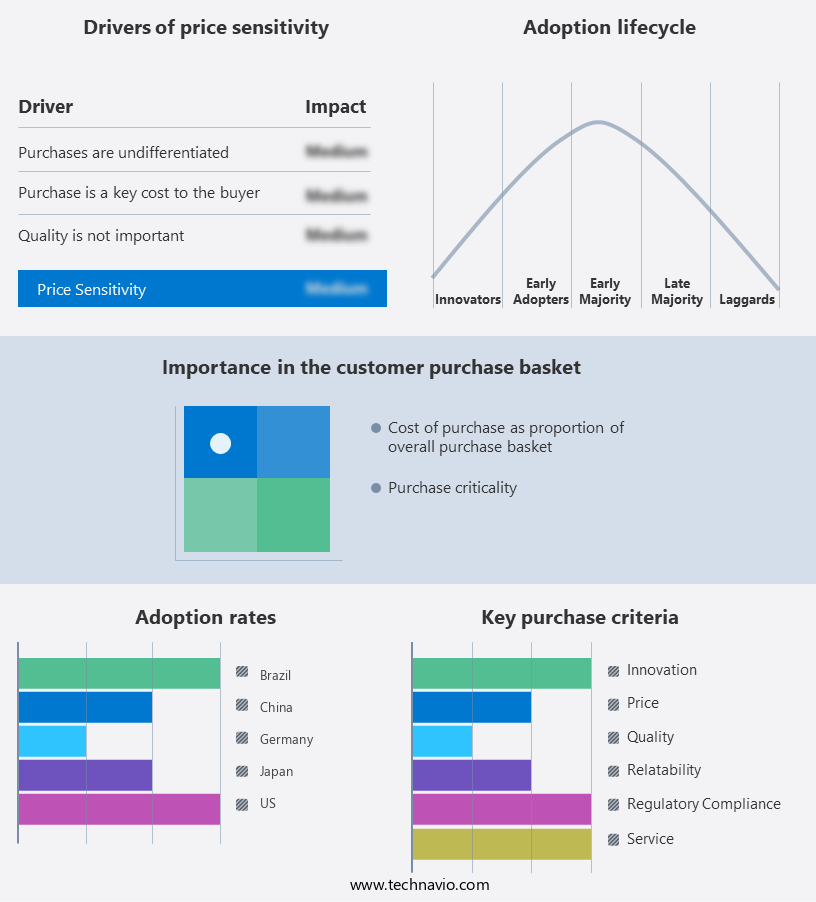
Customer Landscape
Key Companies & Market Insights
Companies are implementing various strategies, such as strategic alliances, hair color spray market forecast, partnerships, mergers and acquisitions, geographical expansion, and product/service launches, to enhance their presence in the industry.
Amika LLC - The Clairol brand, a leading innovator in hair care, introduces Root Touch Up temporary color refreshing spray as part of its hair color product line.
The industry research and growth report includes detailed analyses of the competitive landscape of the market and information about key companies, including:
- Amika LLC
- Caboki LLC
- Coty Inc.
- DMP Color LLC
- Eufora International
- Healthy Dyeit
- Henkel AG and Co. KGaA
- John Paul Mitchell Systems
- Kao Corp.
- Kristin Ess Hair
- Kryolan GmbH
- LOreal SA
- Luxury Brand Partners LLC
- Punky International Inc.
- Rita Hazan Products LLC
- Style Edit
- Tish and Snooky NYC Inc.
- Unilever PLC
Qualitative and quantitative analysis of companies has been conducted to help clients understand the wider business environment as well as the strengths and weaknesses of key industry players. Data is qualitatively analyzed to categorize companies as pure play, category-focused, industry-focused, and diversified; it is quantitatively analyzed to categorize companies as dominant, leading, strong, tentative, and weak.
Recent Development and News in Hair Color Spray Market
- In January 2024, L'Oréal, a leading cosmetics company, introduced a new line of hair color sprays, "Infinition," infused with argan oil and vitamins, aiming to cater to the growing demand for nourishing hair color solutions (L'Oréal press release).
- In March 2024, Procter & Gamble's hair care brand, Pantene, announced a strategic partnership with the popular hair influencer, Jen Atkin, to promote their new "Blends" hair color spray line, expanding their reach to younger consumers (P&G press release).
- In April 2025, Henkel, a German chemical company, acquired a significant stake in the market with the acquisition of Colomer Group's hair care division, including their popular hair color spray brand, ColorTint, for â¬450 million (Henkel press release).
- In May 2025, the European Commission approved the use of ammonia-free hair color sprays, paving the way for a more sustainable and eco-friendly market, as major players like Wella and Schwarzkopf pledged to transition their product lines (European Commission press release).
Research Analyst Overview
- The market exhibits dynamic trends, with a focus on raw material sourcing from natural extracts and the adoption of cruelty-free and vegan products. Demographic analysis reveals a growing preference for psychographic segmentation, targeting specific customer profiles based on values and lifestyle. Packaging design plays a crucial role, with an emphasis on eco-friendly materials and pump spray bottles for easy application. Product differentiation is achieved through unique selling propositions, such as color fastness, silicone- or oil-based formulas, and water-based alternatives. Influencer marketing and celebrity endorsements bolster brand awareness, while customer service and product demos foster loyalty.
- Regulatory compliance and labeling requirements ensure transparency, and cost optimization through manufacturing efficiency and return policies enhance competitiveness. Marketing campaigns leverage social media and point-of-sale displays, while online reviews provide valuable product feedback. Geographic segmentation and in-store promotions cater to diverse consumer preferences, with organic certification and non-aerosol sprays catering to niche markets. Supply chain management and regulatory compliance are essential for maintaining a competitive advantage in this evolving market.
Dive into Technavio's robust research methodology, blending expert interviews, extensive data synthesis, and validated models for unparalleled Hair Color Spray Market insights. See full methodology.
|
Market Scope |
|
|
Report Coverage |
Details |
|
Page number |
143 |
|
Base year |
2023 |
|
Historic period |
2018-2022 |
|
Forecast period |
2024-2028 |
|
Growth momentum & CAGR |
Accelerate at a CAGR of 4.39% |
|
Market growth 2024-2028 |
USD 328 million |
|
Market structure |
Fragmented |
|
YoY growth 2023-2024(%) |
4.13 |
|
Key countries |
US, China, Germany, Japan, and Brazil |
|
Competitive landscape |
Leading Companies, Market Positioning of Companies, Competitive Strategies, and Industry Risks |
What are the Key Data Covered in this Hair Color Spray Market Research and Growth Report?
- CAGR of the Hair Color Spray industry during the forecast period
- Detailed information on factors that will drive the growth and forecasting between 2024 and 2028
- Precise estimation of the size of the market and its contribution of the industry in focus to the parent market
- Accurate predictions about upcoming growth and trends and changes in consumer behaviour
- Growth of the market across APAC, Europe, North America, South America, and Middle East and Africa
- Thorough analysis of the market's competitive landscape and detailed information about companies
- Comprehensive analysis of factors that will challenge the hair color spray market growth of industry companies
We can help! Our analysts can customize this hair color spray market research report to meet your requirements.
 RIA -
RIA - 
