



Health Intelligent Virtual Assistant Market Size 2024-2028
The health intelligent virtual assistant market size is forecast to increase by USD 10.68 billion, at a CAGR of 54.16% between 2023 and 2028.
- The market is experiencing significant growth, driven by the increasing focus on digitization in healthcare and the rising adoption of technology. Healthcare providers are seeking to improve patient care and operational efficiency through the integration of AI-powered virtual assistants. These assistants offer personalized care, real-time monitoring, and automated tasks, enabling healthcare professionals to focus on more complex cases. However, the market faces challenges related to data security. With the increasing use of virtual assistants in healthcare, there is a growing concern for the protection of sensitive patient information.
- Ensuring data privacy and security is crucial for gaining patient trust and maintaining regulatory compliance. Addressing these challenges will require robust security measures and stringent data protection policies. Companies that can effectively navigate these challenges and deliver secure, reliable, and effective virtual assistant solutions will be well-positioned to capitalize on the growing demand for digital healthcare services.
What will be the Size of the Health Intelligent Virtual Assistant Market during the forecast period?
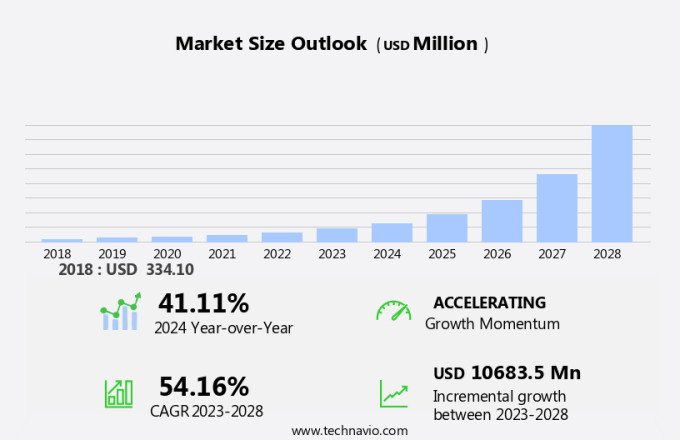
Explore in-depth regional segment analysis with market size data - historical 2018-2022 and forecasts 2024-2028 - in the full report.
Request Free Sample
The market continues to evolve, integrating various technologies and applications to enhance healthcare delivery and patient engagement. Wearable devices, nutrition guidance systems, and fitness trackers are seamlessly integrated, providing real-time health data and insights. Mental wellness programs and stress management techniques are also incorporated, offering personalized support for individuals' unique needs. Clinical decision support systems and AI-powered health assistants facilitate accurate diagnoses and treatment recommendations, while chronic disease management and patient feedback mechanisms ensure ongoing care and improvement. Sleep monitoring tools and remote patient monitoring enable continuous health monitoring, enabling early intervention and prevention. Telemedicine platforms, virtual healthcare chatbots, and appointment scheduling systems streamline healthcare access, while natural language processing and medical symptom checkers provide quick and accurate information.
Predictive health analytics and machine learning algorithms offer personalized health guidance, medication adherence support, and prescription refill reminders. The market's ongoing dynamism reflects the integration of emerging technologies and evolving healthcare needs, providing comprehensive solutions for improving patient outcomes and enhancing overall healthcare delivery.
How is this Health Intelligent Virtual Assistant Industry segmented?
The health intelligent virtual assistant industry research report provides comprehensive data (region-wise segment analysis), with forecasts and estimates in "USD million" for the period 2024-2028, as well as historical data from 2018-2022 for the following segments.
- Technology
- Speech recognition
- Text-to-speech
- Voice recognition
- Product
- Chatbots
- Smart speakers
- Geography
- North America
- US
- Europe
- France
- Germany
- UK
- APAC
- China
- Rest of World (ROW)
- North America
By Technology Insights
The speech recognition segment is estimated to witness significant growth during the forecast period.
Speech recognition technology, a crucial component of artificial intelligence in healthcare, is transforming the industry by enabling hands-free interaction and enhancing efficiency. Integration of health data, wearable devices, mental wellness programs, nutrition guidance systems, fitness trackers, telemedicine platforms, and health education resources are key trends propelling its adoption. Speech recognition systems facilitate clinical decision support, stress management techniques, and behavioral health interventions, while offering personalized health guidance and medication adherence support. Chronic disease management, patient feedback mechanisms, sleep monitoring tools, remote patient monitoring, and emergency contact systems are essential applications of speech recognition technology in healthcare. Biometric data analysis, predictive health analytics, machine learning algorithms, and natural language processing are advanced features that enhance its capabilities.
Virtual healthcare chatbots, appointment scheduling systems, and medical symptom checkers are additional use cases that streamline healthcare operations. The integration of speech recognition technology with various healthcare applications offers numerous benefits, including improved patient engagement, increased accuracy, and enhanced patient safety. As the technology continues to evolve, it is expected to revolutionize the healthcare landscape by offering immersive, harmonious, and efficient solutions for doctors, staff, and patients alike.

The Speech recognition segment was valued at USD 197.30 billion in 2018 and showed a gradual increase during the forecast period.
Regional Analysis
North America is estimated to contribute 40% to the growth of the global market during the forecast period. Technavio's analysts have elaborately explained the regional trends and drivers that shape the market during the forecast period.

The market in North America is experiencing significant growth due to increasing investments in digital health technologies and rising healthcare expenditures. This growth is driven by the high spending on major federal healthcare programs, including Medicare, Medicaid, and the Children's Health Insurance Program (CHIP), as well as the creation of health insurance exchange subsidies under the Affordable Care Act. The integration of health data, wearable devices, mental wellness programs, nutrition guidance systems, fitness trackers, telemedicine platforms, health education resources, behavioral health interventions, wellness programs, clinical decision support, stress management techniques, AI-powered health assistants, chronic disease management, patient feedback mechanisms, sleep monitoring tools, remote patient monitoring, emergency contact systems, biometric data analysis, virtual healthcare chatbots, appointment scheduling systems, natural language processing, medical symptom checkers, predictive health analytics, machine learning algorithms, patient engagement platforms, medication adherence support, prescription refill reminders, and personalized health guidance are all contributing to this trend.
Government initiatives to increase the adoption of digital health services in hospitals and clinics are further fueling market growth.
Market Dynamics
Our researchers analyzed the data with 2023 as the base year, along with the key drivers, trends, and challenges. A holistic analysis of drivers will help companies refine their marketing strategies to gain a competitive advantage.
What are the key market drivers leading to the rise in the adoption of Health Intelligent Virtual Assistant Industry?
- The relentless prioritization of digitization in the healthcare industry serves as the primary catalyst for market growth.
- The healthcare industry is experiencing a digital transformation, with the integration of IT processes becoming increasingly prevalent. This shift is fueling the adoption of health intelligent virtual assistants, such as chatbots, which streamline healthcare delivery and facilitate secure patient data management. These assistants offer numerous benefits, including mental wellness programs, nutrition guidance systems, fitness tracker integration, telemedicine platform integration, and access to health education resources. The proliferation of smartphones and the widespread availability of the internet are driving the demand for connected healthcare services, which in turn, necessitates the use of advanced technologies like health intelligent virtual assistants. As a professional virtual assistant, I can help you navigate this digital healthcare landscape and provide you with accurate and up-to-date information.
What are the market trends shaping the Health Intelligent Virtual Assistant Industry?
- The increasing prevalence of technology usage represents a significant market trend. This shift towards advanced technologies is a mandatory development in today's professional environment.
- The healthcare industry has seen a significant shift towards data-driven interventions in response to the challenges posed by the COVID-19 pandemic. Healthcare facilities have invested heavily in data analytics to optimize resource allocation, identify patient trends, and deliver personalized care. Behavioral health interventions, such as stress management techniques and chronic disease management, have integrated AI-powered health assistants into their wellness programs. These virtual assistants utilize clinical decision support systems to provide patients with personalized recommendations based on their unique health profiles.
- Patient feedback mechanisms are also essential in this process, enabling continuous improvement and refinement of care plans. As data becomes an increasingly valuable asset in healthcare, organizations will continue to explore new ways to leverage it to improve patient outcomes and enhance the overall healthcare experience.
What challenges does the Health Intelligent Virtual Assistant Industry face during its growth?
- Data security challenges represent a significant impediment to industry growth, as businesses must prioritize safeguarding sensitive information to maintain consumer trust and comply with regulations.
- Health intelligent virtual assistants, which include sleep monitoring tools, virtual healthcare chatbots, remote patient monitoring systems, and appointment scheduling systems, have become increasingly important in the healthcare industry. These advanced technologies offer numerous benefits, such as improved patient engagement, enhanced data analysis through biometric data, and streamlined administrative tasks. However, they also pose significant risks, particularly in terms of data security. The healthcare industry handles vast amounts of sensitive patient information, making it an attractive target for cybercriminals. Data breaches, data piracy, and security issues are common threats, with risks including data theft, unauthorized access, improper disposal of data, data loss, and hacking.
- The implementation of the bring-your-own-device (BYOD) policy in many hospitals further increases these risks. Cybersecurity is a major concern for the healthcare sector, with the adoption of new technologies intensifying the threat of cyberattacks. It's essential to understand the importance of implementing robust security measures to protect sensitive patient information. These measures may include encryption, multi-factor authentication, regular software updates, and employee training on cybersecurity best practices. By prioritizing cybersecurity, healthcare organizations can mitigate risks and maintain the trust of their patients.
Exclusive Customer Landscape
The health intelligent virtual assistant market forecasting report includes the adoption lifecycle of the market, covering from the innovator's stage to the laggard's stage. It focuses on adoption rates in different regions based on penetration. Furthermore, the health intelligent virtual assistant market report also includes key purchase criteria and drivers of price sensitivity to help companies evaluate and develop their market growth analysis strategies.

Customer Landscape
Key Companies & Market Insights
Companies are implementing various strategies, such as strategic alliances, health intelligent virtual assistant market forecast, partnerships, mergers and acquisitions, geographical expansion, and product/service launches, to enhance their presence in the industry.
Ada Health GmbH - This company specializes in health intelligent virtual assistant technologies, including the innovative solution, Ada Lovelace.
The industry research and growth report includes detailed analyses of the competitive landscape of the market and information about key companies, including:
- Ada Health GmbH
- Babylon Healthcare Services Ltd.
- Buoy Health Inc.
- CodeBaby LLC
- CSS Corp.
- eGain Corp.
- HealthTap Inc.
- Infermedica Sp. z o.o.
- Kognito Solutions LLC
- MedRespond
- Microsoft Corp.
- Orbita Inc.
- PACT Care BV
- Sense.ly Corp.
- True Image Interactive Inc.
- Verint Systems Inc.
- Virgin Pulse Inc.
Qualitative and quantitative analysis of companies has been conducted to help clients understand the wider business environment as well as the strengths and weaknesses of key industry players. Data is qualitatively analyzed to categorize companies as pure play, category-focused, industry-focused, and diversified; it is quantitatively analyzed to categorize companies as dominant, leading, strong, tentative, and weak.
Recent Development and News in Health Intelligent Virtual Assistant Market
- In January 2024, IBM Watson Health announced the launch of its new AI-powered virtual nursing assistant, "Watson for Nurses," designed to support clinical decision-making and improve patient care. This innovative solution, which integrates with electronic health records, was showcased at the Consumer Electronics Show (CES) and received positive feedback from healthcare providers (IBM Press Release, 2024).
- In March 2024, Amazon announced a strategic partnership with Cerner Corporation, a major electronic health record provider, to integrate Amazon Alexa with Cerner's health platforms. This collaboration aimed to provide patients with hands-free access to their health information and appointments, further expanding the reach of intelligent virtual assistants in healthcare (Amazon Press Release, 2024).
- In May 2024, Google's DeepMind Health secured a significant investment of USD500 million from SoftBank Vision Fund to accelerate the development and deployment of its AI-driven healthcare solutions. The investment marked a major milestone for the company as it continued to expand its presence in the market (Bloomberg, 2024).
- In April 2025, Microsoft's HealthVault and Amazon's Alexa announced a collaboration to enable users to access their HealthVault health records through Alexa. This integration aimed to improve patient engagement and convenience, allowing users to manage their health data using voice commands (Microsoft Press Release, 2025).
Research Analyst Overview
- The market is experiencing significant growth, driven by the integration of advanced technologies such as speech synthesis technology and voice recognition technology. Patient communication tools are becoming increasingly important, with virtual assistants providing personalized medicine support and self-care guidance. However, data privacy regulations and healthcare interoperability remain key challenges. Public health surveillance and disease prevention strategies are also gaining traction, with virtual assistants facilitating clinical trial recruitment and medication management. Healthcare cost reduction and health equity initiatives are also priorities, with virtual assistants offering user-friendly solutions for health information privacy and healthcare data security. Algorithm accuracy metrics and health outcome measurement are essential for ensuring the effectiveness of these digital health solutions, while user experience design plays a crucial role in patient satisfaction surveys.
- Virtual assistant APIs and health chatbot development continue to advance, enabling seamless integration with various healthcare systems and improving health literacy. Chronic condition monitoring and disease management are further areas of focus, with virtual assistants providing valuable support for patients and healthcare providers alike.
Dive into Technavio's robust research methodology, blending expert interviews, extensive data synthesis, and validated models for unparalleled Health Intelligent Virtual Assistant Market insights. See full methodology.
|
Market Scope |
|
|
Report Coverage |
Details |
|
Page number |
165 |
|
Base year |
2023 |
|
Historic period |
2018-2022 |
|
Forecast period |
2024-2028 |
|
Growth momentum & CAGR |
Accelerate at a CAGR of 54.16% |
|
Market growth 2024-2028 |
USD 10683.5 million |
|
Market structure |
Fragmented |
|
YoY growth 2023-2024(%) |
41.11 |
|
Key countries |
US, Germany, UK, China, and France |
|
Competitive landscape |
Leading Companies, Market Positioning of Companies, Competitive Strategies, and Industry Risks |
What are the Key Data Covered in this Health Intelligent Virtual Assistant Market Research and Growth Report?
- CAGR of the Health Intelligent Virtual Assistant industry during the forecast period
- Detailed information on factors that will drive the growth and forecasting between 2024 and 2028
- Precise estimation of the size of the market and its contribution of the industry in focus to the parent market
- Accurate predictions about upcoming growth and trends and changes in consumer behaviour
- Growth of the market across North America, Europe, APAC, South America, and Middle East and Africa
- Thorough analysis of the market's competitive landscape and detailed information about companies
- Comprehensive analysis of factors that will challenge the health intelligent virtual assistant market growth of industry companies
We can help! Our analysts can customize this health intelligent virtual assistant market research report to meet your requirements.