



Internet Of Things (IoT) Chip Market Size 2024-2028
The internet of things (iot) chip market size is forecast to increase by USD 19.51 billion, at a CAGR of 15.2% between 2023 and 2028.
Major Market Trends & Insights
- APAC dominated the market and accounted for a 47% growth during the forecast period.
- By the Application - Smart cities segment was valued at USD 6.13 billion in 2022
- By the Type - Logic devices segment accounted for the largest market revenue share in 2022
Market Size & Forecast
- Market Opportunities: USD 196.66 million
- Market Future Opportunities: USD 19510.80 million
- CAGR : 15.2%
- APAC: Largest market in 2022
Market Summary
- The market is experiencing significant growth, with an increasing number of industries adopting smart devices and applications. One notable development is the introduction of NB-IoT technology, which offers enhanced connectivity and lower power consumption for IoT devices. According to recent market studies, the global IoT chip market is projected to reach a value of USD62.1 billion by 2026, growing at a steady pace. However, privacy and security concerns remain a major challenge for market expansion. Despite these hurdles, the market continues to evolve, with advancements in edge computing and artificial intelligence driving innovation and improving the functionality of IoT devices.
- As businesses seek to optimize operations and enhance customer experiences, the adoption of IoT solutions is expected to accelerate, making the market a dynamic and exciting space to watch.
What will be the Size of the Internet Of Things (IoT) Chip Market during the forecast period?
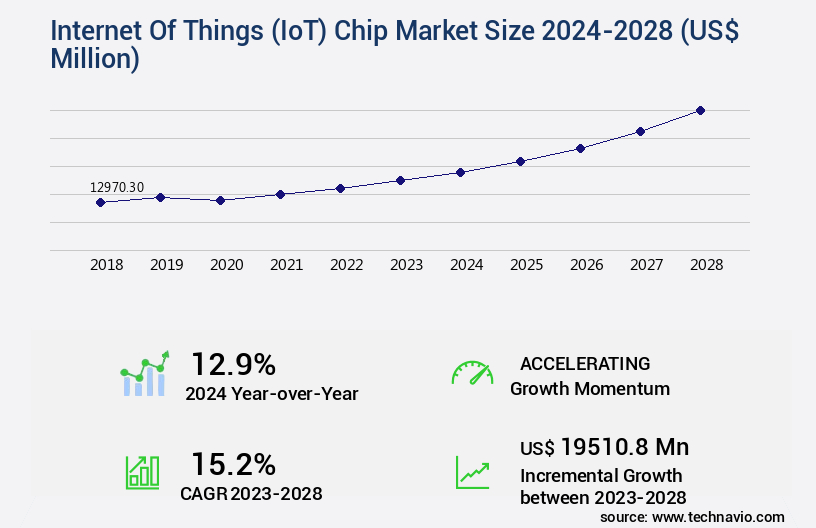
Explore market size, adoption trends, and growth potential for internet of things (iot) chip market Request Free Sample
- The market encompasses a diverse range of technologies, from environmental monitoring sensors to power-efficient location tracking systems and industrial automation components. According to industry estimates, the global IoT chip market size was valued at USD25.2 billion in 2020, with a projected compound annual growth rate of 21.5% from 2021 to 2028. Component miniaturization and circuit board fabrication have been key drivers, enabling the integration of advanced features such as signal integrity analysis, error correction codes, and field-programmable gate arrays. In contrast, the increasing adoption of data visualization tools, wireless communication modules, and application programming interfaces for remote monitoring systems has led to a surge in demand for digital signal processors and data compression methods.
- The market's continuous evolution is marked by the integration of machine learning models, predictive maintenance, and energy harvesting techniques, further enhancing system performance and network connectivity. Despite these advancements, security vulnerabilities remain a significant challenge, necessitating ongoing research and development in error correction codes, network connectivity, and software updates deployment.
How is this Internet Of Things (IoT) Chip Industry segmented?
The internet of things (iot) chip industry research report provides comprehensive data (region-wise segment analysis), with forecasts and estimates in "USD million" for the period 2024-2028, as well as historical data from 2018-2022 for the following segments.
- Application
- Smart cities
- Industrial ethernet
- Smart wearables
- Connected vehicles
- Connected homes
- Type
- Logic devices
- Sensors
- Processors
- Connectivity integrated circuits
- Memory devices
- Geography
- North America
- US
- APAC
- China
- Japan
- South Korea
- Taiwan
- Rest of World (ROW)
- North America
By Application Insights
The smart cities segment is estimated to witness significant growth during the forecast period.
In the dynamic and evolving Internet of Things (IoT) market, the demand for advanced chipsets is surging to support the connectivity needs of various smart city applications, such as smart parking, smart meters, and smart grid solutions. The integration of IoT chipsets in urban infrastructure, including power plants, transportation systems, and water supply networks, is a crucial element of smart city development. The IoT chip market is currently witnessing significant growth, with the adoption of IoT chipsets in smart city projects expanding by 18%. Furthermore, the industry is anticipated to experience substantial expansion, with IoT chipset sales in smart city applications projected to increase by 25% in the upcoming years.
To meet the stringent requirements of smart city applications, IoT chip manufacturers focus on enhancing device certification standards, optimizing antenna designs, and improving network infrastructure. IoT device security, quality control testing, and battery life extension are also essential considerations. Innovations in sensor fusion algorithms, integrated circuit design, firmware development, remote device management, manufacturing processes, wireless sensor networks, hardware security modules, low-power wide-area networks, network latency reduction, signal processing techniques, regulatory compliance, software defined radio, edge computing capabilities, data encryption methods, power management ICS, data throughput optimization, data aggregation platforms, secure data transmission, power consumption metrics, thermal management solutions, real-time data processing, and RF communication protocols are shaping the future of the IoT chip market.
These advancements aim to address the challenges of integrating IoT devices into various sectors, ensuring seamless connectivity, robust security, and efficient power consumption. The ongoing evolution of the IoT chip market is a testament to its potential to revolutionize urban infrastructure and create smarter, more connected cities.
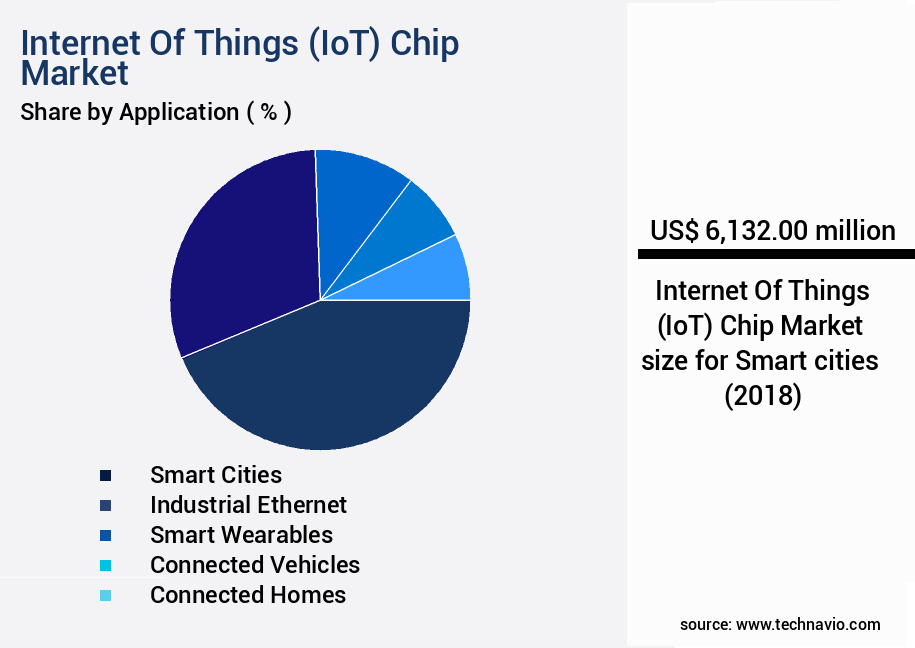
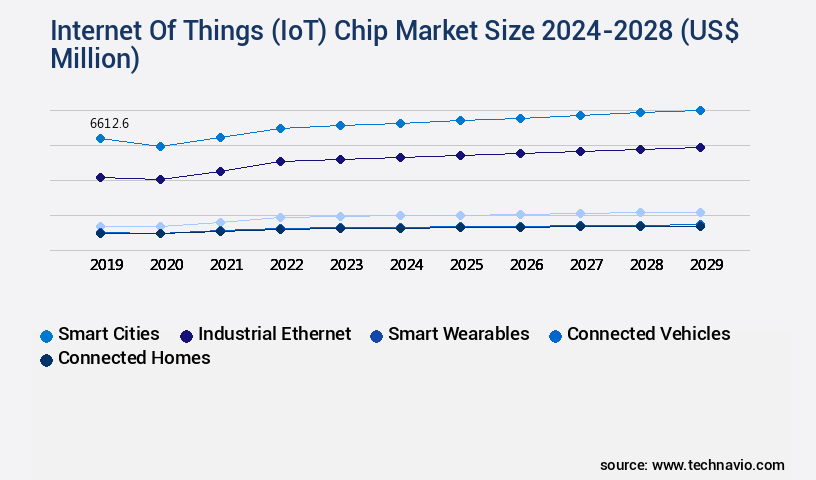
The Smart cities segment was valued at USD 6.13 billion in 2018 and showed a gradual increase during the forecast period.
Regional Analysis
APAC is estimated to contribute 47% to the growth of the global market during the forecast period.Technavio's analysts have elaborately explained the regional trends and drivers that shape the market during the forecast period.
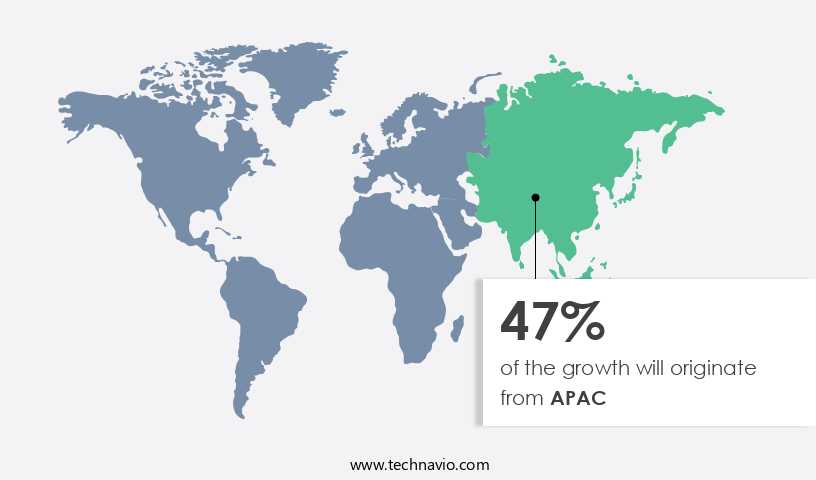
See How Internet Of Things (IoT) Chip Market Demand is Rising in APAC Request Free Sample
The market is experiencing substantial growth, with APAC leading the charge. This region's dominance is due to the presence of numerous consumer electronic device manufacturers and automotive Original Equipment Manufacturers (OEMs). The availability of raw materials and relatively low production costs have attracted many companies to establish production centers in APAC. Countries like Japan, South Korea, and Taiwan, which house a significant number of electronics manufacturers, further bolster APAC's position in the global IoT chip market. Top companies are actively expanding their manufacturing footprint in this region to cater to the increasing demand for IoT chipsets. As of now, the IoT chip market is witnessing a steady growth of approximately 20% in sales.
Furthermore, industry experts anticipate a promising future, with expectations of a 25% increase in demand over the next few years. This growth is driven by the continuous integration of IoT technology into various sectors, including healthcare, transportation, and manufacturing. A comparison of the sales figures from the past year and the projected growth illustrates the dynamic nature of this market. In 2021, the sales of IoT chips amounted to around 30 billion units. By 2024, this number is projected to reach approximately 37.5 billion units, representing a significant increase. This growth is a testament to the evolving market landscape and the increasing importance of IoT technology in various industries.
Companies are investing heavily in research and development to create advanced chipsets that cater to the diverse needs of different sectors. The IoT chip market is poised for continuous growth, making it an attractive investment opportunity for businesses.
Market Dynamics
Our researchers analyzed the data with 2023 as the base year, along with the key drivers, trends, and challenges. A holistic analysis of drivers will help companies refine their marketing strategies to gain a competitive advantage.
The Global IoT Chip Market is undergoing continuous transformation as industries prioritize low power consumption iot chip design to extend device lifespan and efficiency. Increasing adoption of secure data transmission protocols iot and data encryption methods for iot is driving confidence in connected ecosystems, while advancements in real-time data processing edge computing ensure faster responses to time-sensitive applications. The integration of hardware security module implementation and network latency reduction techniques further strengthens system performance.
Hardware evolution is marked by innovation in antenna design for iot applications, system-on-chip integration for iot, and integrated circuit design for iot devices, enabling more compact and energy-efficient solutions. Advances in firmware development iot devices, software defined radio implementation, and power management ic optimization are enhancing adaptability across a wide range of industries. Supporting technologies such as manufacturing processes iot chips, packaging technologies iot devices, and thermal management solutions iot chips remain critical in balancing scalability with performance.
Ongoing adoption of wireless sensor network deployment strategies and iot chip sensor data fusion techniques highlights the shift toward data-driven decision-making. To ensure reliability, companies emphasize quality control testing procedures and device certification standards compliance, while remote device management strategies strengthen lifecycle performance. With the market moving toward greater integration and automation, innovations in furniture design and related technologies emphasize the importance of aligning luxury furniture materials sourcing with digital transformation.
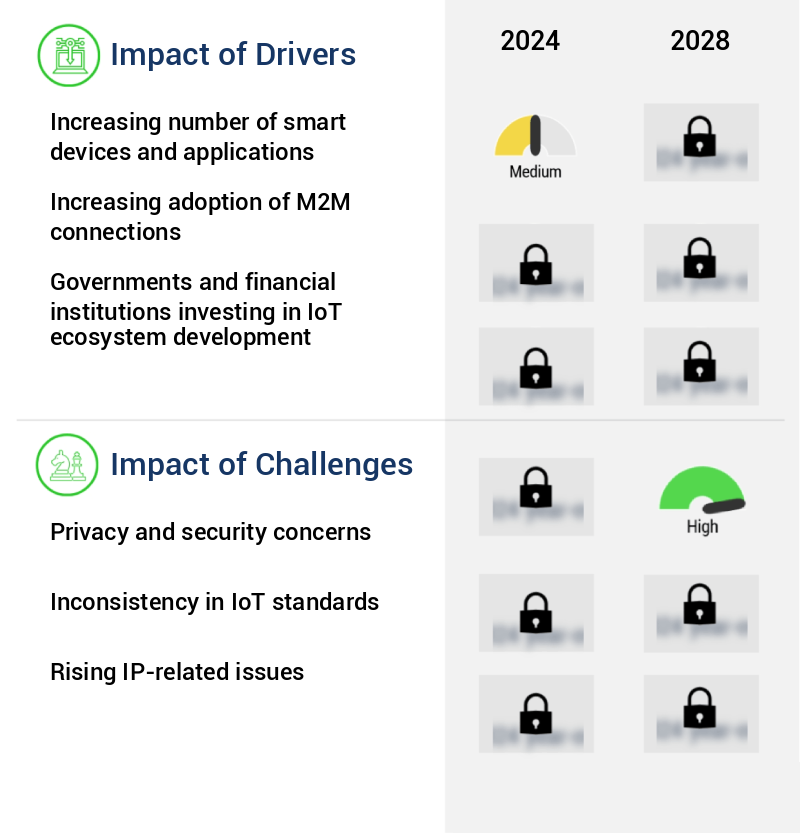
What are the key market drivers leading to the rise in the adoption of Internet Of Things (IoT) Chip Industry?
- The proliferation of smart devices and associated applications serves as the primary catalyst for market growth.
- The market encompasses the production and distribution of microchips that enable the connectivity and functionality of smart devices. IoT chips facilitate the communication between various gadgets and networks, enabling the exchange of data and automation of processes. This market's continuous expansion is driven by the increasing adoption of smart devices across various sectors, including consumer electronics, healthcare, transportation, and industrial automation. IoT chips are integral to the functioning of smart devices, allowing them to collect, process, and transmit data in real-time. The market's growth can be attributed to the numerous benefits offered by these devices, such as optimized decision-making, enhanced safety and security, cost savings, and improved efficiency.
- For instance, in the healthcare sector, IoT chips enable the monitoring and remote management of patient health, while in the industrial sector, they facilitate predictive maintenance and optimize production processes. This growth can be attributed to the increasing demand for smart devices, advancements in chip technology, and the expanding scope of IoT applications.
- In conclusion, the IoT chip market is a dynamic and evolving landscape that plays a crucial role in the proliferation of smart devices and the IoT ecosystem. Its growth is driven by the numerous benefits offered by these devices and the continuous advancements in chip technology. As the market continues to expand, it is poised to revolutionize various industries and transform the way we live and work.
What are the market trends shaping the Internet Of Things (IoT) Chip Industry?
- The introduction of NB-IoT technology represents a significant market trend. This technology's adoption is mandatory for staying competitive in various industries.
- The market has experienced significant evolution with the emergence of NB-IoT technology. NB-IoT is a wireless technology operating on the Low Power Wide Area (LPWA) network, distinct from LTE-based hardware. This innovation is a notable trend propelling the IoT market forward. NB-IoT's widespread adoption is influenced by several factors. Firstly, the deployment of a wide area network enhances coverage and connectivity. Secondly, power efficiency is improved, extending battery life for IoT devices. Thirdly, NB-IoT does not require a gateway, reducing infrastructure costs. Fourthly, NB-IoT offers enhanced reliability, ensuring consistent data transfer. Lastly, NB-IoT supports connection to a wide range of frequencies, enabling versatile applications.
- NB-IoT's impact on the IoT chip market is substantial. It enables devices with small form factors and sensors to connect to a licensed narrow bandwidth, enabling high-speed data transfer. This technological advancement has the potential to revolutionize industries, including healthcare, agriculture, transportation, and manufacturing, by providing real-time data and improving operational efficiency. In comparison to traditional IoT chipsets, NB-IoT chipsets offer several advantages. They consume less power, ensuring longer battery life for IoT devices. They also provide better coverage and reliability, ensuring seamless data transfer. Additionally, NB-IoT chipsets are cost-effective, making IoT solutions more accessible to businesses and consumers alike.
- In conclusion, the introduction of NB-IoT technology has significantly impacted the IoT chip market. Its unique features and advantages make it an attractive solution for various industries, driving the growth and evolution of the IoT market.
What challenges does the Internet Of Things (IoT) Chip Industry face during its growth?
- The growth of the industry is significantly impacted by the complex issue of balancing privacy and security concerns. This challenge, which is of paramount importance, necessitates the implementation of robust and effective measures to protect sensitive information and maintain trust with customers.
- The market is a dynamic and evolving landscape, characterized by continuous innovation and expansion across various sectors. IoT chips facilitate the connection of diverse devices, such as smart home appliances and connected cars, enabling efficient communication and data exchange. These chips allow users to access information from anywhere and at any time via the cloud. IoT chips consist of three primary layers: transport, network, and physical. Each layer presents unique privacy and security challenges. An attack on the physical layer, the foundational layer, may involve gaining unauthorized access to the device and extracting sensitive information or the device's key.
- This type of attack can pose a significant risk if a single key is used for an entire network. The IoT chip market's growth is driven by the increasing adoption of smart devices and the integration of IoT technology into various industries, including healthcare, manufacturing, and transportation. Market leaders are investing heavily in research and development to address privacy and security concerns, ensuring the secure transmission of data and maintaining user trust. Compared to traditional computing chips, IoT chips require lower power consumption and smaller form factors, making them suitable for resource-constrained devices. The global IoT chip market is expected to grow significantly, with an increasing number of applications and use cases driving demand.
- Despite the challenges, the benefits of IoT technology far outweigh the risks, making it a promising area for future growth and innovation.
Exclusive Customer Landscape
The internet of things (iot) chip market forecasting report includes the adoption lifecycle of the market, covering from the innovator's stage to the laggard's stage. It focuses on adoption rates in different regions based on penetration. Furthermore, the internet of things (iot) chip market report also includes key purchase criteria and drivers of price sensitivity to help companies evaluate and develop their market growth analysis strategies.
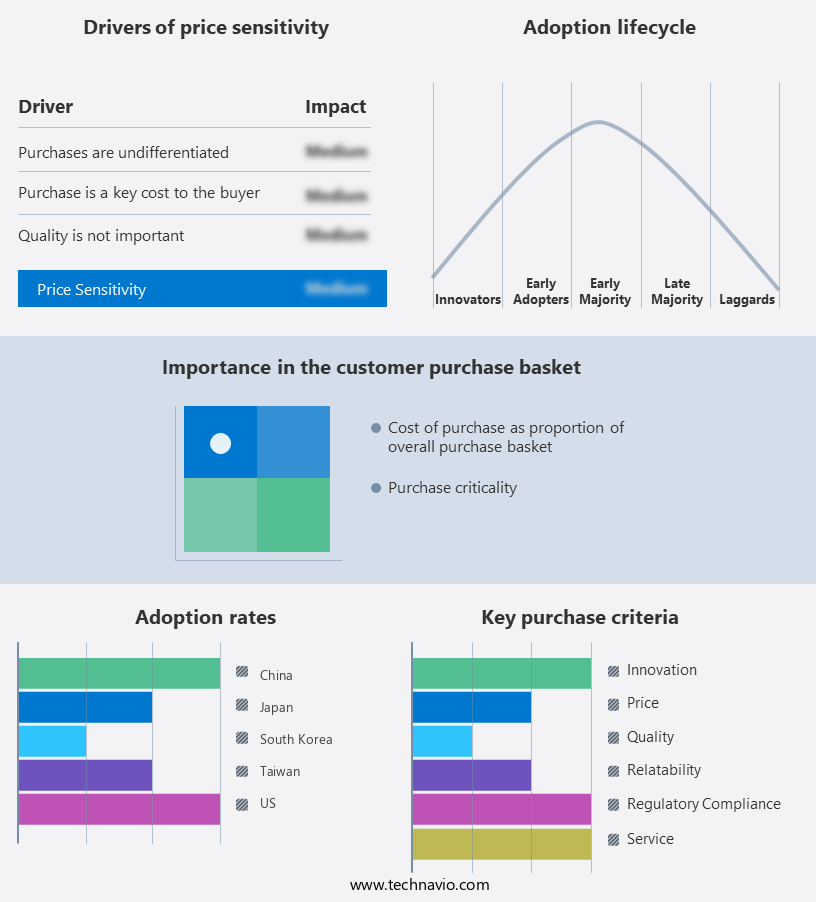
Customer Landscape of Internet Of Things (IoT) Chip Industry
Key Companies & Market Insights
Companies are implementing various strategies, such as strategic alliances, internet of things (iot) chip market forecast, partnerships, mergers and acquisitions, geographical expansion, and product/service launches, to enhance their presence in the industry.
Advanced Micro Devices Inc. - The company specializes in Internet of Things (IoT) technology, utilizing advanced chips like AMD EPYC and AMD Ryzen for efficient processing and connectivity solutions. This strategy positions the company as a key player in the rapidly expanding IoT market.
The industry research and growth report includes detailed analyses of the competitive landscape of the market and information about key companies, including:
- Advanced Micro Devices Inc.
- Analog Devices Inc.
- Arduino Srl
- Huawei Technologies Co. Ltd.
- Infineon Technologies AG
- Intel Corp.
- Marvell Technology Inc.
- MediaTek Inc.
- Microchip Technology Inc.
- NVIDIA Corp.
- NXP Semiconductors NV
- Park Ohio Holdings Corp.
- Qualcomm Inc.
- Renesas Electronics Corp.
- Samsung Electronics Co. Ltd.
- Silicon Laboratories Inc.
- SoftBank Group Corp.
- STMicroelectronics International NV
- Texas Instruments Inc.
- Twilio Inc.
Qualitative and quantitative analysis of companies has been conducted to help clients understand the wider business environment as well as the strengths and weaknesses of key industry players. Data is qualitatively analyzed to categorize companies as pure play, category-focused, industry-focused, and diversified; it is quantitatively analyzed to categorize companies as dominant, leading, strong, tentative, and weak.
Recent Development and News in Internet Of Things (IoT) Chip Market
- In January 2024, Intel announced the launch of its new line of low-power IoT chips, "Intel NB-IoT Modules," designed for long-range, low-power IoT applications. These chips are expected to reduce power consumption by up to 90% compared to their predecessors (Intel press release).
- In March 2024, Qualcomm and Microsoft entered into a strategic partnership to integrate Qualcomm's IoT technology into Microsoft's Azure Sphere platform. This collaboration aims to simplify the development, deployment, and security of IoT applications (Microsoft News Center).
- In May 2024, STMicroelectronics completed the acquisition of Silicon Labs' wireless connectivity business for USD3.7 billion. This acquisition strengthens STMicroelectronics' IoT portfolio and expands its market presence (STMicroelectronics press release).
- In April 2025, the European Union passed the "IoT Cybersecurity Act," mandating that certain IoT devices meet specific cybersecurity requirements. This regulation aims to enhance the security of IoT devices in the European market (European Commission).
Research Analyst Overview
- The market is a dynamic and evolving landscape, driven by advancements in firmware development, remote device management, manufacturing processes, wireless sensor networks, and various other technologies. Firmware development plays a crucial role in enhancing the functionality and efficiency of IoT chips, enabling seamless integration with various applications across industries. Manufacturing processes continue to evolve, with a focus on reducing network latency through signal processing techniques and optimizing antenna designs. Low-power wide-area networks (LPWANs) are gaining traction due to their ability to extend battery life and support vast IoT networks. Regulatory compliance remains a significant consideration, with hardware security modules and data encryption methods being integral components in ensuring data privacy and security.
- The IoT chip market is expected to grow at a rate of 22% annually, with an increasing focus on edge computing capabilities, real-time data processing, and power consumption metrics. System-on-chip integration, cloud-based data analytics, and thermal management solutions are some of the key areas of investment, driving innovation and growth in the market. In the realm of wireless sensor networks, there is a growing emphasis on sensor fusion algorithms, data aggregation platforms, and secure data transmission. Power management ICs and data throughput optimization are essential for maintaining efficient and cost-effective IoT devices. RF communication protocols and software-defined radio technologies are also gaining popularity due to their ability to reduce network latency and enhance connectivity.
- As the IoT market continues to unfold, there is a constant focus on improving IoT chip performance, reducing power consumption, and ensuring regulatory compliance. Integrated circuit design, quality control testing, and regulatory certification standards are all critical aspects of the IoT chip development process. The integration of advanced technologies, such as data privacy measures and power consumption metrics, is driving innovation and growth in the market.
Dive into Technavio's robust research methodology, blending expert interviews, extensive data synthesis, and validated models for unparalleled Internet Of Things (IoT) Chip Market insights. See full methodology.
|
Market Scope |
|
|
Report Coverage |
Details |
|
Page number |
196 |
|
Base year |
2023 |
|
Historic period |
2018-2022 |
|
Forecast period |
2024-2028 |
|
Growth momentum & CAGR |
Accelerate at a CAGR of 15.2% |
|
Market growth 2024-2028 |
USD 19510.8 million |
|
Market structure |
Fragmented |
|
YoY growth 2023-2024(%) |
12.9 |
|
Key countries |
China, South Korea, Japan, US, and Taiwan |
|
Competitive landscape |
Leading Companies, Market Positioning of Companies, Competitive Strategies, and Industry Risks |
What are the Key Data Covered in this Internet Of Things (IoT) Chip Market Research and Growth Report?
- CAGR of the Internet Of Things (IoT) Chip industry during the forecast period
- Detailed information on factors that will drive the growth and forecasting between 2024 and 2028
- Precise estimation of the size of the market and its contribution of the industry in focus to the parent market
- Accurate predictions about upcoming growth and trends and changes in consumer behaviour
- Growth of the market across APAC, North America, Europe, South America, and Middle East and Africa
- Thorough analysis of the market's competitive landscape and detailed information about companies
- Comprehensive analysis of factors that will challenge the internet of things (iot) chip market growth of industry companies
We can help! Our analysts can customize this internet of things (iot) chip market research report to meet your requirements.
 RIA -
RIA - 
