


Laminated Busbar Market Size 2026-2030
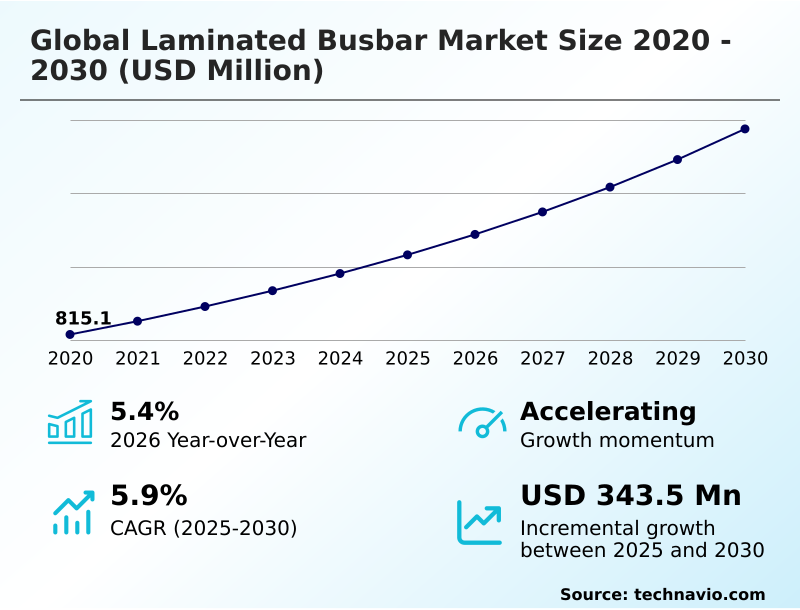
The laminated busbar market size is valued to increase by USD 343.5 million, at a CAGR of 5.9% from 2025 to 2030. Increasing use of laminated busbars in EVs will drive the laminated busbar market.
Major Market Trends & Insights
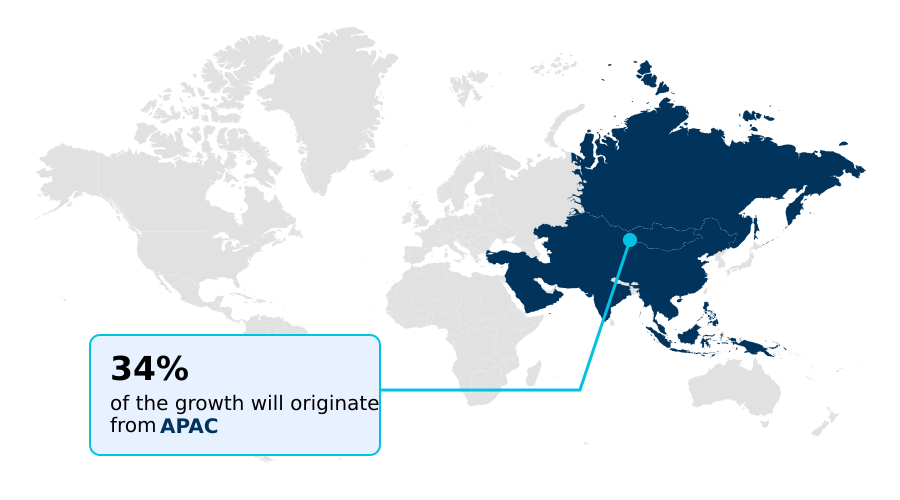
- APAC dominated the market and accounted for a 33.5% growth during the forecast period.
- By Material - Copper segment was valued at USD 651.4 million in 2024
- By Application - Power distribution segment accounted for the largest market revenue share in 2024
Market Size & Forecast
- Market Opportunities: USD 560.6 million
- Market Future Opportunities: USD 343.5 million
- CAGR from 2025 to 2030 : 5.9%
Market Summary
- The laminated busbar market is defined by a fundamental shift away from conventional wiring toward integrated, high-performance power distribution solutions. This transition is driven by the need for enhanced electrical system reliability and power transmission efficiency in sectors where space and thermal performance are critical.
- Applications in electric vehicle (EV) battery packs and automotive powertrain systems are expanding rapidly, as these components offer a compact footprint and superior heat dissipation, improving power density optimization. Similarly, renewable energy inverters and smart grid infrastructure rely on low inductance designs to handle high-frequency switching and mitigate voltage spikes.
- However, manufacturers face challenges related to the procurement of advanced insulation materials and fluctuating raw material costs.
- For an OEM developing a new EV platform, integrating custom busbar design early in the process is crucial for achieving vehicle miniaturization goals and ensuring the electrical interconnect solutions meet stringent safety and performance standards, reducing system weight by over 10% compared to traditional cable harnesses.
What will be the Size of the Laminated Busbar Market during the forecast period?
Get Key Insights on Market Forecast (PDF) Get Free Sample
How is the Laminated Busbar Market Segmented?
The laminated busbar industry research report provides comprehensive data (region-wise segment analysis), with forecasts and estimates in "USD million" for the period 2026-2030, as well as historical data from 2020-2024 for the following segments.
- Material
- Copper
- Aluminium
- Others
- Application
- Power distribution
- Energy storage systems
- Others
- End-user
- Utilities
- Industrial
- Commercial
- Others
- Geography
- Europe
- Germany
- UK
- France
- APAC
- China
- Japan
- India
- North America
- US
- Canada
- Mexico
- Middle East and Africa
- Saudi Arabia
- UAE
- South Africa
- South America
- Brazil
- Argentina
- Colombia
- Rest of World (ROW)
- Europe
By Material Insights
The copper segment is estimated to witness significant growth during the forecast period.
Copper remains the material of choice, establishing the industry benchmark with an International Annealed Copper Standard (IACS) rating of 100% for electrical conductivity.
This property is crucial for demanding power electronics solutions and high-voltage direct current (HVDC) systems where efficiency is non-negotiable. The material's superior mechanical performance ensures durability in multilayer copper busbars, which are created through a precise busbar lamination process.
Engineers rely on custom busbar design using these low impedance interconnects to enhance power conversion efficiency in critical power conditioning systems.
Its ability to manage high thermal loads while maintaining structural integrity solidifies its dominant position for high-performance applications where reliability cannot be compromised.
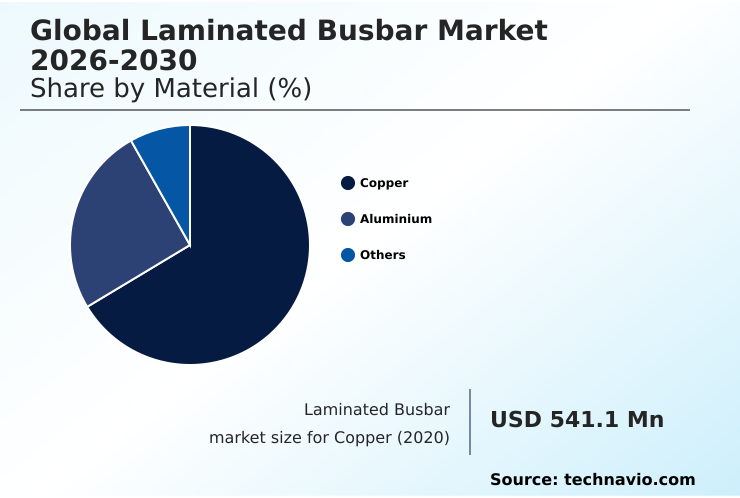
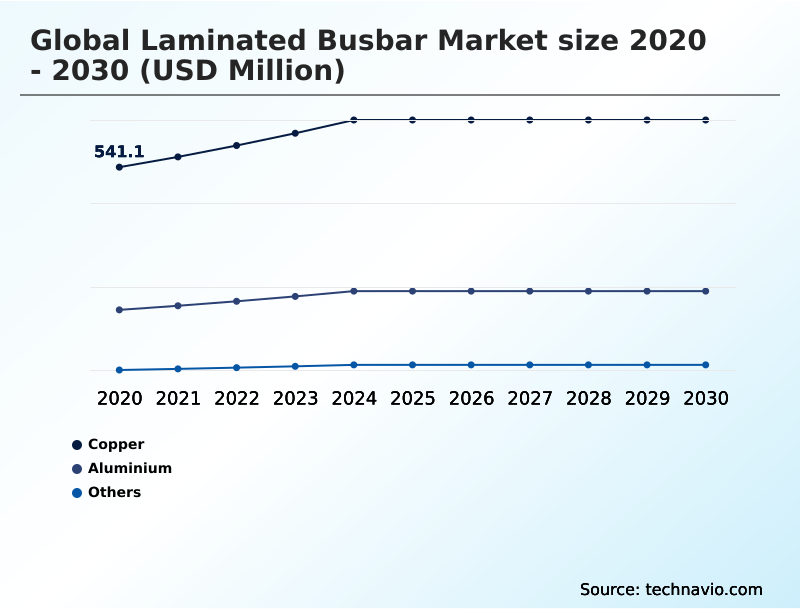
The Copper segment was valued at USD 651.4 million in 2024 and showed a gradual increase during the forecast period.
Regional Analysis
APAC is estimated to contribute 33.5% to the growth of the global market during the forecast period.Technavio’s analysts have elaborately explained the regional trends and drivers that shape the market during the forecast period.
See How Laminated Busbar Market Demand is Rising in APAC Get Free Sample
The geographic landscape is characterized by strong demand in regions with advanced industrial and technological ecosystems. North America, driven by the expansion of data center power distribution and EV manufacturing, shows significant adoption.
The region accounts for over 20% of the market. APAC leads in incremental growth, contributing over 33%, fueled by investments in industrial automation power and renewable energy.
In these regions, the use of laminated busbars in high-voltage applications is critical for stray inductance reduction and voltage spike mitigation, especially with the adoption of silicon carbide (SiC) devices.
Proper power module integration within switchgear applications using these components improves system safety and efficiency.
Market Dynamics
Our researchers analyzed the data with 2025 as the base year, along with the key drivers, trends, and challenges. A holistic analysis of drivers will help companies refine their marketing strategies to gain a competitive advantage.
- An in-depth review of the Global Laminated Busbar Market 2026-2030 reveals a landscape shaped by distinct technological needs. The core Global Laminated Busbar Market 2026-2030 drivers include the push for electrification and efficiency, while key Global Laminated Busbar Market 2026-2030 trends point toward wider adoption in renewables and EVs.
- The technical discussion often centers on the laminated busbar vs cable solutions debate, where busbars offer superior performance by improving power density with busbars and reducing EMI in power systems. For instance, a system utilizing a laminated busbar for EV inverters can be significantly more compact than a cabled equivalent.
- The Global Laminated Busbar Market 2026-2030 applications are diverse, spanning from laminated busbar for industrial automation to large-scale grid infrastructure. Specific engineering focus is on high voltage busbar thermal performance and creating the ideal low inductance busbar for SiC and other wide-bandgap semiconductors to optimize busbar performance in high frequency switching.
- Key growth areas include custom busbar design for switchgear and effective busbar design for renewable energy. The reliability of busbars in smart grids and successful busbar integration in energy storage are also paramount. However, the Global Laminated Busbar Market 2026-2030 challenges, primarily the cost analysis of laminated busbars influenced by raw materials, persist.
- Future progress will depend on advancements in busbar insulation materials and innovations in thermal management in laminated busbars. The Global Laminated Busbar Market 2026-2030 segmentation reflects these varied uses and material choices.
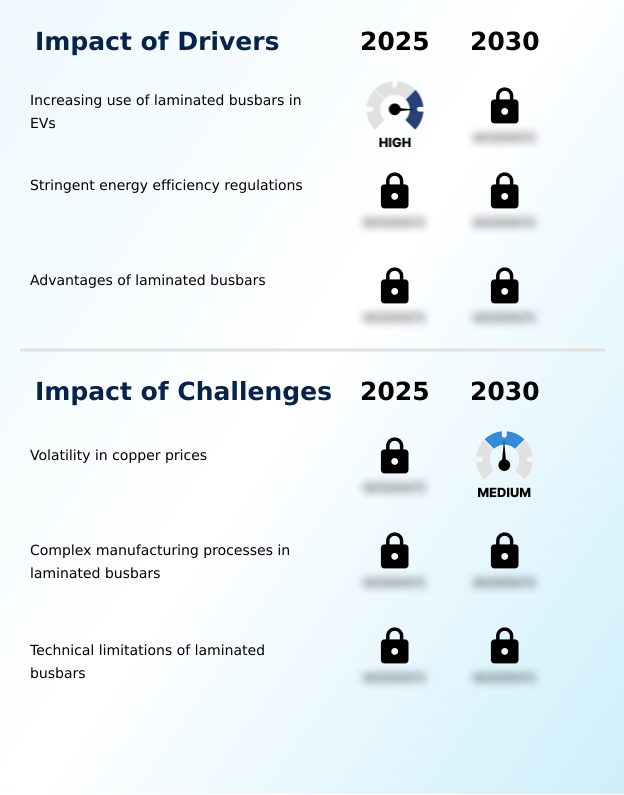
What are the key market drivers leading to the rise in the adoption of Laminated Busbar Industry?
- The expanding use of laminated busbars within electric vehicle powertrains and charging systems is a primary driver fueling market growth.
- The electrification of the transport sector is a major market driver, particularly the expansion of electric vehicle (EV) battery packs and automotive powertrain systems.
- Laminated busbars provide essential electrical interconnect solutions that support vehicle miniaturization by offering a low inductance design in a consolidated form factor, reducing component weight by up to 30%.
- Their inherent electromagnetic interference (EMI) shielding properties are critical for protecting sensitive electronics. With high current capacity, these components enhance the performance of high-speed train power systems and railway traction converters.
- The superior current carrying capability of busbars allows for designs that handle peak loads more effectively than wire harnesses, improving system reliability by 15%.
What are the market trends shaping the Laminated Busbar Industry?
- The increasing adoption of renewable energy sources is an influential market trend. This development drives the need for advanced components to ensure efficiency in solar and wind power systems.
- The accelerating adoption of renewable energy is a primary trend shaping the market, with grid modernization projects increasingly specifying advanced components. The integration of large-scale solar and wind farms into the smart grid infrastructure requires robust thermal management solutions to ensure operational stability.
- Laminated busbars are critical within renewable energy inverters and wind turbine converters, where their compact footprint facilitates power density optimization. In energy storage systems (ESS), these components improve heat dissipation improvement by over 25% compared to legacy wiring.
- Their design, optimized for insulated gate bipolar transistors (IGBT), also helps reduce energy loss during power conversion, boosting overall system efficiency by as much as 3%.
What challenges does the Laminated Busbar Industry face during its growth?
- Volatility in copper prices presents a significant challenge to the industry, directly affecting manufacturing costs and market price stability.
- Navigating material science and supply chain complexities presents an ongoing challenge. While advanced insulation materials like polyethylene terephthalate (PET) and specialized epoxy insulation improve dielectric material performance, their cost can be volatile, impacting final product pricing by up to 20%. Achieving consistent thermal conductivity enhancement for high-frequency switching applications requires significant R&D investment.
- Furthermore, providing extensive OEM engineering support for modular busbar configurations adds to operational overhead. Balancing the need for superior electrical system reliability and power transmission efficiency with these cost pressures is a key strategic hurdle for manufacturers, as material costs can constitute over 50% of the total manufacturing expense.
Exclusive Technavio Analysis on Customer Landscape
The laminated busbar market forecasting report includes the adoption lifecycle of the market, covering from the innovator’s stage to the laggard’s stage. It focuses on adoption rates in different regions based on penetration. Furthermore, the laminated busbar market report also includes key purchase criteria and drivers of price sensitivity to help companies evaluate and develop their market growth analysis strategies.
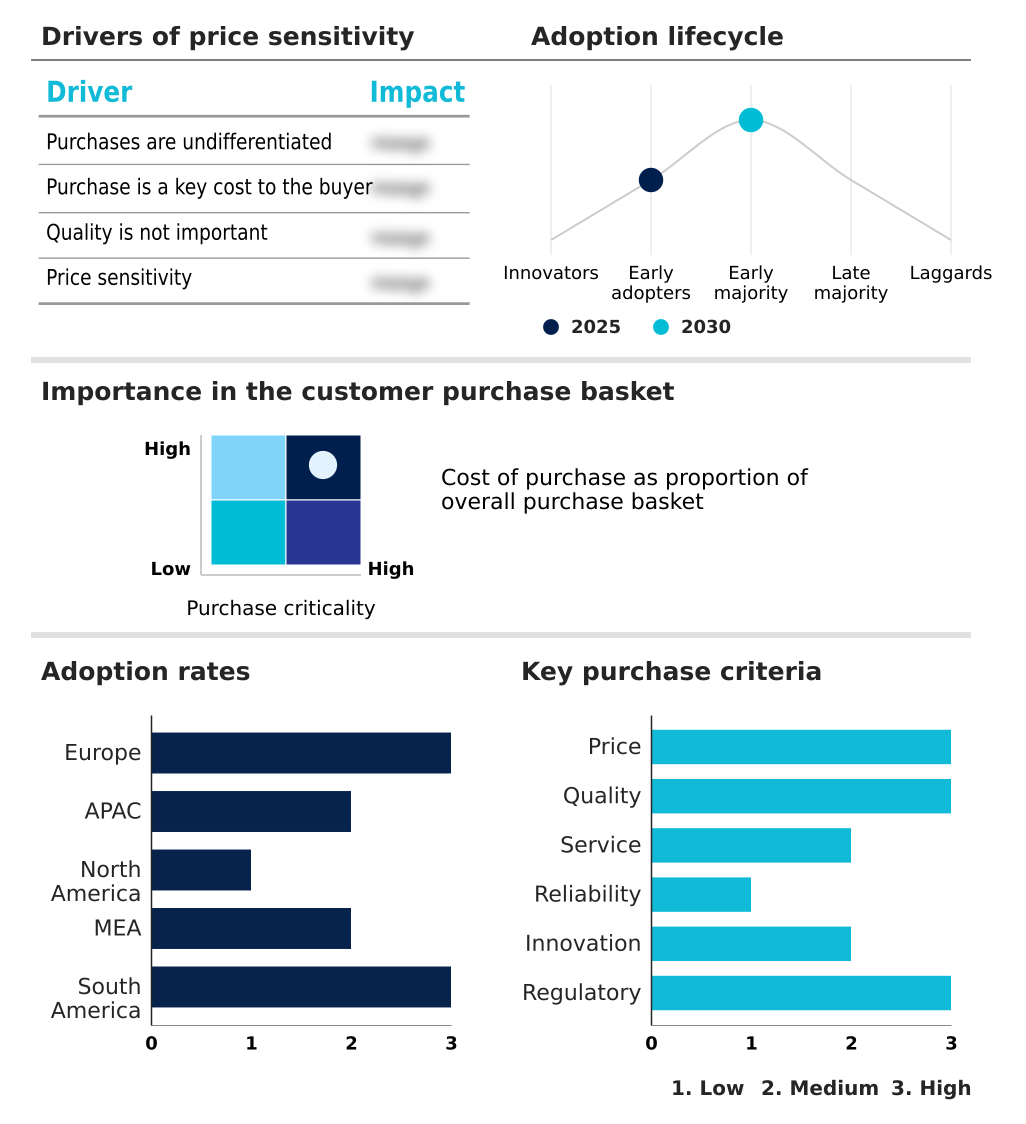
Customer Landscape of Laminated Busbar Industry
Competitive Landscape
Companies are implementing various strategies, such as strategic alliances, laminated busbar market forecast, partnerships, mergers and acquisitions, geographical expansion, and product/service launches, to enhance their presence in the industry.
Amphenol Corp. - Engineered interconnect solutions, including custom laminated busbars, optimize power distribution for demanding high-performance applications and systems.
The industry research and growth report includes detailed analyses of the competitive landscape of the market and information about key companies, including:
- Amphenol Corp.
- Electronic Systems Packaging LLC
- EMS Elektro Metall GmbH
- KINTO Electric Co. Ltd
- Mersen Corporate Services SAS
- Methode Electronics Inc.
- Molex LLC
- Raychem RPG Pvt. Ltd.
- Rogers Corp.
- Ryoden Kasei Co. Ltd.
- Schneider Electric SE
- Segue Electronics Inc.
- Shenzhen Woer Techn Co.Ltd
- Storm Power Components Co.
- Sun King Technology Ltd.
- Zhejiang RHI Co. Ltd.
Qualitative and quantitative analysis of companies has been conducted to help clients understand the wider business environment as well as the strengths and weaknesses of key industry players. Data is qualitatively analyzed to categorize companies as pure play, category-focused, industry-focused, and diversified; it is quantitatively analyzed to categorize companies as dominant, leading, strong, tentative, and weak.
Recent Development and News in Laminated busbar market
- In August 2024, Molex LLC introduced a new series of high-density laminated busbars engineered to manage the extreme power loads and thermal challenges present in liquid-cooled data center server racks.
- In September 2024, Siemens AG launched a new line of laminated busbars specifically designed for high-voltage applications, seeking to improve efficiency in renewable energy grid connections and industrial power systems.
- In February 2025, Mersen announced a strategic investment of $20 million to increase its production capacity for laminated busbars, targeting growing demand from the electric vehicle and renewable energy markets.
- In April 2025, Mersen Corporate Services SAS inaugurated a new production facility in Europe dedicated to laminated busbar manufacturing, aiming to double its output for the energy storage sector.
Dive into Technavio’s robust research methodology, blending expert interviews, extensive data synthesis, and validated models for unparalleled Laminated Busbar Market insights. See full methodology.
| Market Scope | |
|---|---|
| Page number | 287 |
| Base year | 2025 |
| Historic period | 2020-2024 |
| Forecast period | 2026-2030 |
| Growth momentum & CAGR | Accelerate at a CAGR of 5.9% |
| Market growth 2026-2030 | USD 343.5 million |
| Market structure | Fragmented |
| YoY growth 2025-2026(%) | 5.4% |
| Key countries | Germany, UK, France, Italy, Spain, The Netherlands, China, Japan, India, South Korea, Australia, Indonesia, US, Canada, Mexico, Saudi Arabia, UAE, South Africa, Turkey, Israel, Brazil, Argentina and Colombia |
| Competitive landscape | Leading Companies, Market Positioning of Companies, Competitive Strategies, and Industry Risks |
Research Analyst Overview
- The market for advanced electrical interconnect solutions is driven by the need for power density optimization and superior mechanical performance in increasingly demanding environments. Multilayer copper busbars, valued for their high electrical conductivity, are fundamental to modern power distribution systems.
- A meticulous busbar lamination process using materials like polyethylene terephthalate (PET) and epoxy insulation ensures excellent dielectric material performance and electromagnetic interference (EMI) shielding. Boardroom decisions on R&D budgets are increasingly influenced by the transition to wide-bandgap semiconductors; adopting silicon carbide (SiC) devices and gallium nitride (GaN) devices necessitates a low inductance design for effective voltage spike mitigation.
- This focus on engineering has led to designs that offer stray inductance reduction of up to 40% compared to traditional wiring. Effective thermal management solutions are critical for achieving heat dissipation improvement in high-voltage applications, especially around insulated gate bipolar transistors (IGBT).
- The goal is to enhance power conversion efficiency and leverage the high current capacity and current carrying capability of busbars, all within a compact footprint. Success hinges on thermal conductivity enhancement to ensure reliability.
What are the Key Data Covered in this Laminated Busbar Market Research and Growth Report?
-
What is the expected growth of the Laminated Busbar Market between 2026 and 2030?
-
USD 343.5 million, at a CAGR of 5.9%
-
-
What segmentation does the market report cover?
-
The report is segmented by Material (Copper, Aluminium, and Others), Application (Power distribution, Energy storage systems, and Others), End-user (Utilities, Industrial, Commercial, and Others) and Geography (Europe, APAC, North America, Middle East and Africa, South America)
-
-
Which regions are analyzed in the report?
-
Europe, APAC, North America, Middle East and Africa and South America
-
-
What are the key growth drivers and market challenges?
-
Increasing use of laminated busbars in EVs, Volatility in copper prices
-
-
Who are the major players in the Laminated Busbar Market?
-
Amphenol Corp., Electronic Systems Packaging LLC, EMS Elektro Metall GmbH, KINTO Electric Co. Ltd, Mersen Corporate Services SAS, Methode Electronics Inc., Molex LLC, Raychem RPG Pvt. Ltd., Rogers Corp., Ryoden Kasei Co. Ltd., Schneider Electric SE, Segue Electronics Inc., Shenzhen Woer Techn Co.Ltd, Storm Power Components Co., Sun King Technology Ltd. and Zhejiang RHI Co. Ltd.
-
Market Research Insights
- The market is shaped by demand for advanced power electronics solutions across multiple sectors. Grid modernization projects are driving adoption in smart grid infrastructure and high-voltage direct current (HVDC) systems, while renewable energy inverters and wind turbine converters require them for efficient power conditioning systems.
- The automotive sector utilizes them in EV battery packs and automotive powertrain systems to enable vehicle miniaturization, often through custom busbar design and OEM engineering support. In industrial settings, they are found in industrial automation power and switchgear applications. Transport applications include railway traction converters and high-speed train power systems.
- Efficient power module integration and low impedance interconnects are critical for data center power distribution and energy storage systems (ESS). Using advanced insulation materials for high-frequency switching improves electrical system reliability and can increase power transmission efficiency by over 5%, while modular busbar configurations reduce assembly time by 20%.
We can help! Our analysts can customize this laminated busbar market research report to meet your requirements.
 RIA -
RIA - 
