


Leather And Allied Products Market Size 2024-2028
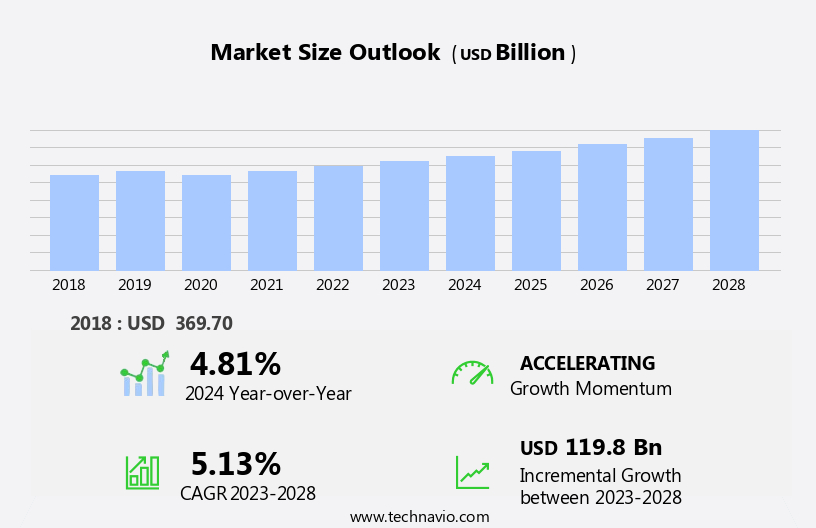
The leather and allied products market size is forecast to increase by USD 119.8 billion at a CAGR of 5.13% between 2023 and 2028.
- The market is experiencing significant growth, driven by several key trends and challenges. One notable trend is the increasing influence of celebrity endorsements on consumer purchase decisions. This trend is particularly prevalent in the fashion industry, where celebrities often serve as brand ambassadors for leather goods.
- Another trend is the advancement in manufacturing technology, which is leading to the production of high-quality leather products at more affordable prices. However, the market is also facing challenges such as rising labor costs and fluctuating raw material prices of leather, including bio-based leather. These factors are putting pressure on manufacturers to find ways to reduce costs while maintaining product quality.
What will be the Size of the Leather And Allied Products Market During the Forecast Period?
- The market encompasses a diverse range of industries, including footwear, apparel, accessories, upholstery, and fashion trends. This market experiences dynamic fluctuations due to various factors, such as consumer preferences for ethically sourced products and increasing awareness of animal cruelty and environmental effects. Non-essential items, like fashion accessories, remain popular, particularly in footwear and handbag segments.
- The automotive upholstery segment also contributes significantly to market growth, driven by demand for premium interiors and lifestyle changes. Counterfeit products pose a challenge, requiring vigilant inventory management. Domestic and international tourism, social media trends, and the rise of sportswear and performance wear further influence market dynamics.
- Artisanal skill continues to be a key differentiator in the luxury goods sector. Overall, the market exhibits resilience and adaptability, reflecting evolving consumer preferences and industry trends.
How is this Leather And Allied Products Industry segmented and which is the largest segment?
The leather and allied products industry research report provides comprehensive data (region-wise segment analysis), with forecasts and estimates in "USD billion" for the period 2024-2028, as well as historical data from 2018-2022 for the following segments.
- Product
- Footwear
- Luggage, bags, wallets and purses
- Others
- Geography
- APAC
- China
- Japan
- North America
- US
- Europe
- France
- Italy
- South America
- Middle East and Africa
- APAC
By Product Insights
- The footwear segment is estimated to witness significant growth during the forecast period.
Leather boots, crafted from tanned animal hide, have gained significant popularity as fashion items, particularly among women. Ankle boots and booties, two common sub-segments, are widely adopted due to their versatility and compatibility with various apparel. These footwear styles are favored for their casual appeal and are available in numerous ranges and designs for both genders. The leather boot market is expected to expand steadily due to the increasing preference for ankle boots. Sustainability concerns, including deforestation, habitat loss, and biodiversity depletion, have led to regulatory pressures and certification schemes. Manufacturing hubs, such as Italy, India, and China, house numerous leather clusters and artisanal skills, producing high-quality leather goods.
Fashion trends lean towards premium materials, iconic designs, and eco-friendly alternatives, such as vegan leather and DriTan leather. Online shopping platforms, e-commerce giants, and ethical sourcing practices have influenced consumer behavior. Technological advancements, including data analytics, artificial intelligence, and personalized marketing, offer customization options and smart features. However, concerns regarding animal cruelty, environmental effects, and counterfeit products necessitate stringent regulations and industry standards. Inventory levels, cultural tourism, social media, and lifestyle changes continue to impact market dynamics.
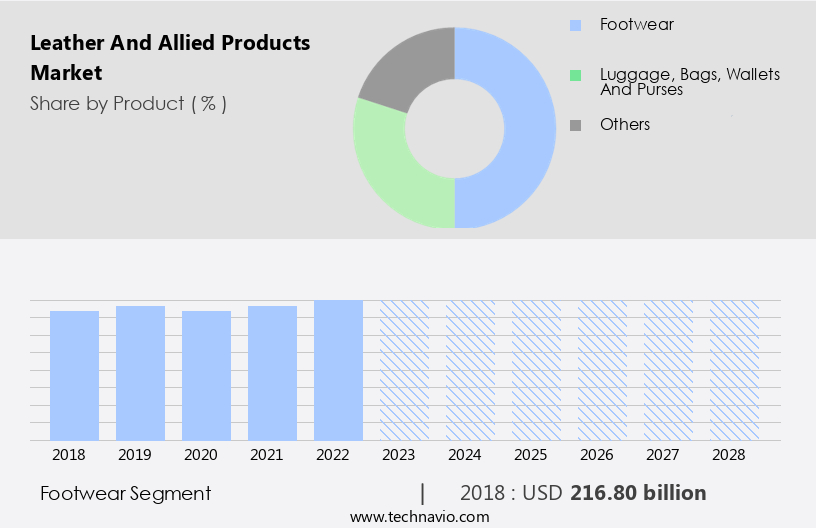
Get a glance at the Leather And Allied Products Industry report of share of various segments Request Free Sample
The Footwear segment was valued at USD 216.80 billion in 2018 and showed a gradual increase during the forecast period.
Regional Analysis
- APAC is estimated to contribute 38% to the growth of the global market during the forecast period.
Technavio's analysts have elaborately explained the regional trends and drivers that shape the market during the forecast period.
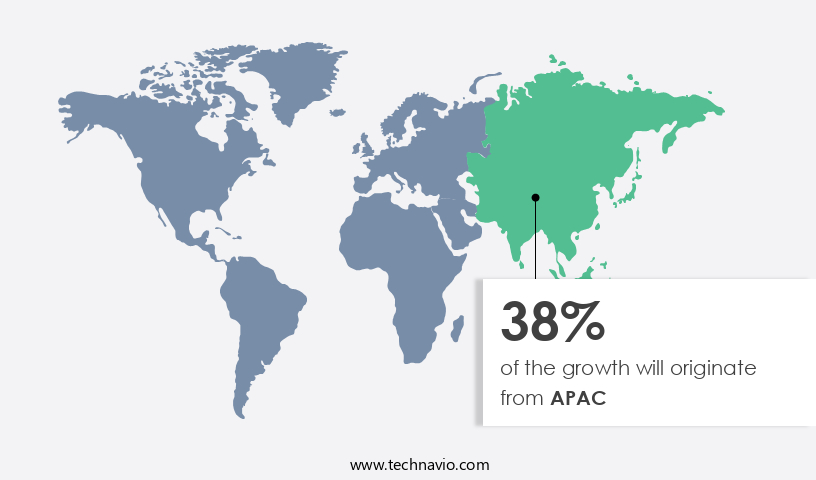
For more insights on the market share of various regions, Request Free Sample
The market in 2023 is significantly driven by the APAC region, which holds the largest market share. This growth is attributed to the increasing consumer awareness and preference for authentic and branded products, the expanding reach of luxury and international leather and allied product brands, and the rising purchasing power of consumers. The fashion industry's growth, fueled by an increase in fashion events and celebrity endorsements, particularly from the entertainment industries like Bollywood in India, further boosts demand for leather and allied products, especially among the younger demographic. China is the leading market within APAC due to the significant spending on fashion items by Chinese consumers.
The demand for leather and allied products is also influenced by fashion trends, with a shift towards sustainable fabrics, eco-friendly dyes, and personalized marketing and product customization. Certification schemes, material technology, and smart features are essential factors driving the market's growth. Online shopping platforms, e-commerce giants, and retail stores are the primary sales channels. However, concerns regarding animal cruelty, environmental effects, and counterfeit products pose challenges to the market.
Market Dynamics
Our researchers analyzed the data with 2023 as the base year, along with the key drivers, trends, and challenges. A holistic analysis of drivers will help companies refine their marketing strategies to gain a competitive advantage.
What are the key market drivers leading to the rise In the adoption of Leather And Allied Products Industry?
High influence of celebrity endorsements on purchase decisions is the key driver of the market.
- The market encompasses various segments, including footwear, apparel, accessories, upholstery, and fashion trends. In the footwear segment, both leather and non-leather options are popular, with leather footwear being synonymous with style, durability, and premium quality. The apparel and accessories sectors offer a wide range of products, from high-end fashion accessories to everyday essentials. Upholstery applications include furniture, where leather is preferred for its luxury and durability. Fashion trends continually evolve, influencing consumer preferences for leather and allied products. Non-essential items, such as luxury handbags and patent leather shoes, remain in demand due to their iconic designs and association with craftsmanship.
- Online shopping platforms and e-commerce marketplaces have transformed the industry, enabling consumers to access a vast array of products from the comfort of their homes. Certification schemes, such as those addressing sustainability and animal welfare, are increasingly important. Split leather, vegan leather, and DriTan leather are alternatives to traditional leather, addressing concerns related to deforestation, habitat loss, and biodiversity depletion. Regulatory pressures and manufacturing hubs in countries like Italy, India, and China contribute to the industry's growth. Consumer goods, including leather and allied products, face challenges from regulatory pressures, counterfeit products, and ethical sourcing concerns. Brands employ various strategies to differentiate themselves, such as smart features, premium interiors, and customization options.
- Material technology, artisanal skill, and sustainable fabrics are essential components of the industry's evolution. Inventory levels, domestic and international tourism, social media, and lifestyle changes are significant factors influencing the market. Sportswear and performance wear segments are growing, with leather and non-leather options catering to diverse consumer needs. E-commerce platforms, sustainable fabrics, and eco-friendly dyes are trends shaping the future of the market. Data analytics, artificial intelligence, and personalized marketing are essential tools for brands to engage consumers effectively. The industry continues to adapt to changing consumer preferences and regulatory requirements, ensuring the production of high-quality, ethical, and sustainable products.
What are the market trends shaping the Leather And Allied Products Industry?
Advancement in manufacturing technology is the upcoming market trend.
- The market encompasses a range of items including footwear, apparel, accessories, upholstery, and fashion trends. Non-essential items such as fashion accessories, luxury brands, and premium materials continue to drive demand in this sector. Online shopping platforms and e-commerce giants have significantly influenced consumer behavior, leading to increased sales of leather goods. However, concerns over animal cruelty, habitat loss, biodiversity depletion, and regulatory pressures are mounting, necessitating certification schemes and the adoption of sustainable fabrics and eco-friendly dyes. Manufacturing hubs and leather clusters in countries like India, China, and Brazil are key contributors to the global leather industry. The footwear segment, which includes leather footwear and non-leather footwear, dominates the market.
- Lifestyle changes and the rise of premium interiors have fueled demand for leather upholstery in furniture. Customization options, material technology, and smart features are becoming increasingly important in both consumer goods and luxury goods. Counterfeit products pose a significant challenge to the industry, requiring stricter inventory management and anti-counterfeit measures. Domestic and international tourism have also played a role In the growth of the market. Social media and digital marketing have transformed the way brands reach consumers, with personalized marketing and product customization becoming key differentiators. Animal welfare concerns and environmental effects have led to the emergence of alternatives such as vegan leather, DriTan leather, and other synthetic materials.
- Data analytics, artificial intelligence, and smart technology are being employed to optimize manufacturing processes and improve product quality while minimizing costs and environmental impact. Trade policies and retail stores, both online and offline, continue to shape the market dynamics. Ethical sourcing and sustainable practices are becoming increasingly important for brands seeking to maintaIn their reputation and stay competitive.
What challenges does the Leather And Allied Products Industry face during its growth?
Rising labor costs and fluctuating raw material prices of leather is a key challenge affecting the industry growth.
- The market includes footwear, apparel, accessories, upholstery, and various fashion trends. Non-essential items such as fashion accessories, online shopping, and luxury brands dominate this sector. Split leather and patent leather are commonly used in furniture, clothing, and accessories. Premium materials like full-grain leather and top-grain leather are preferred for high-quality products. However, concerns over deforestation, habitat loss, and biodiversity depletion have led to regulatory pressures and certification schemes. Manufacturing hubs and leather clusters in countries like India and China showcase artisanal skill and craftsmanship. Animal cruelty and environmental impacts are significant issues, driving demand for sustainable fabrics and eco-friendly dyes.
- Counterfeit products pose a threat to market growth, requiring effective inventory management, data analytics, artificial intelligence, and personalized marketing for product customization. Consumer preferences for vegan leather and DriTan leather are increasing. Popular categories include automotive upholstery, leather footwear, non-leather footwear, leather luggage, handbags, and non-leather luggage. Leather tanning and material technology advancements offer smart features, including GPS tracking and RFID technology. Trade policies and ethical sourcing are crucial factors for branded goods. The market is influenced by lifestyle changes, premium interiors, customization options, and the integration of the Internet of Things, wearable tech, and sustainability concerns.
Exclusive Customer Landscape
The leather and allied products market forecasting report includes the adoption lifecycle of the market, covering from the innovator's stage to the laggard's stage. It focuses on adoption rates in different regions based on penetration. Furthermore, the leather and allied products market report also includes key purchase criteria and drivers of price sensitivity to help companies evaluate and develop their market growth analysis strategies.
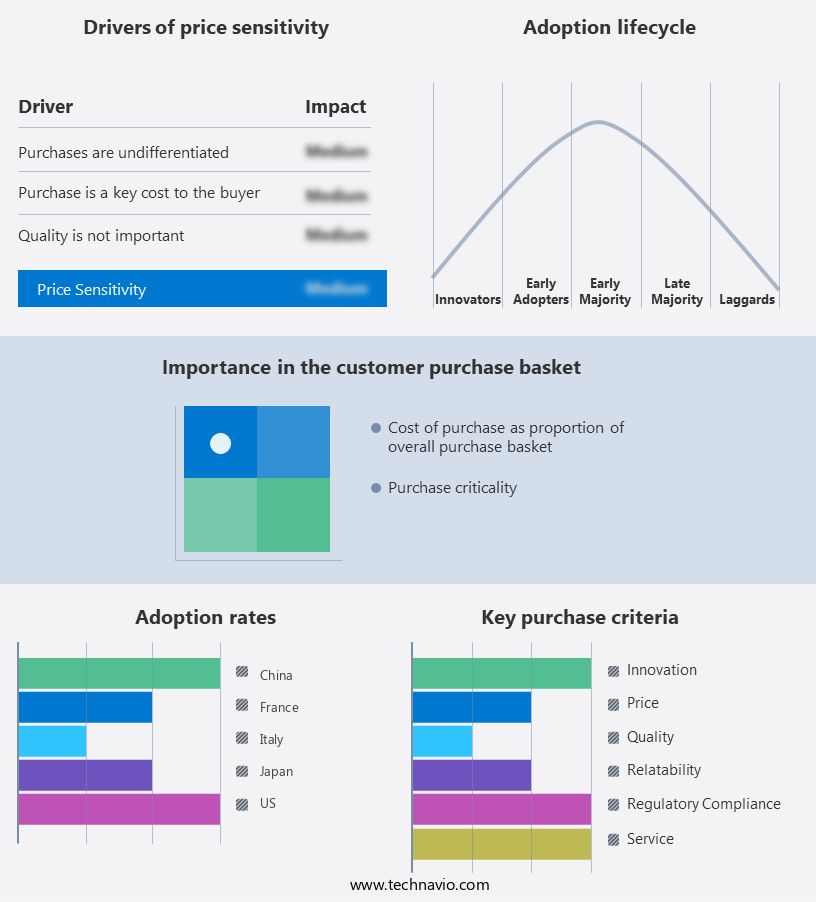
Customer Landscape
Key Companies & Market Insights
Companies are implementing various strategies, such as strategic alliances, leather and allied products market forecast, partnerships, mergers and acquisitions, geographical expansion, and product/service launches, to enhance their presence In the industry.
The industry research and growth report includes detailed analyses of the competitive landscape of the market and information about key companies, including:
- Adidas AG
- ASICS Corp.
- Belmarel srl
- Capri Holdings Ltd.
- Chanel Ltd.
- Christian Dior SE
- Fast Retailing Co. Ltd.
- Furgamurga
- Hennes and Mauritz AB
- Hermes International SA
- Industria de Diseno Textil SA
- Kering SA
- Levi Strauss and Co.
- LVMH Group.
- Nike Inc.
- Nordstrom Inc.
- Prada Spa
- PVH Corp.
- Ralph Lauren Corp.
- The Gap Inc.
Qualitative and quantitative analysis of companies has been conducted to help clients understand the wider business environment as well as the strengths and weaknesses of key industry players. Data is qualitatively analyzed to categorize companies as pure play, category-focused, industry-focused, and diversified; it is quantitatively analyzed to categorize companies as dominant, leading, strong, tentative, and weak.
Research Analyst Overview
The market encompasses a diverse range of items, including footwear, apparel, accessories, upholstery, and fashion trends. These products are sought after for their durability, premium quality, and timeless appeal. The market is influenced by various factors, with consumer preferences and lifestyle trends being key drivers. One notable trend In the market is the increasing demand for non-essential items, such as fashion accessories. This trend is driven by a desire for self-expression and the quest for unique, high-quality products. Consumers are also increasingly seeking out sustainable and eco-friendly alternatives, such as vegan leather and other synthetic materials. Another trend is the growing importance of online shopping.
E-commerce platforms have made it easier for consumers to access a wide range of leather and allied products from the comfort of their own homes. This trend is particularly prevalent In the footwear segment, where consumers can easily compare prices and styles from various retailers. However, the market is not without its challenges. Regulatory pressures, including those related to animal welfare and environmental sustainability, are becoming more stringent. Manufacturing hubs and leather clusters are facing scrutiny over issues such as deforestation, habitat loss, and biodiversity depletion. These challenges are leading to increased focus on ethical sourcing and the adoption of sustainable practices.
The market is also being shaped by technological advancements. Data analytics and artificial intelligence are being used to personalize marketing and product customization. Smart features and smart technology, such as GPS tracking and RFID technology, are being integrated into leather and allied products to enhance their functionality. Despite these challenges and trends, the market for leather and allied products remains strong. Consumers continue to be drawn to the timeless appeal and durability of these products. Premium materials and iconic designs remain in demand, particularly In the luxury goods sector. The market is also being influenced by lifestyle changes and the rise of premium interiors.
Customization options and material technology are becoming increasingly important, as consumers seek out products that reflect their unique style and preferences. In conclusion, the market is a dynamic and complex ecosystem. It is influenced by a range of factors, including consumer preferences, lifestyle trends, regulatory pressures, and technological advancements. Despite the challenges, the market remains strong, with consumers continuing to seek out high-quality, sustainable, and personalized products.
|
Market Scope |
|
|
Report Coverage |
Details |
|
Page number |
141 |
|
Base year |
2023 |
|
Historic period |
2018-2022 |
|
Forecast period |
2024-2028 |
|
Growth momentum & CAGR |
Accelerate at a CAGR of 5.13% |
|
Market growth 2024-2028 |
USD 119.8 billion |
|
Market structure |
Fragmented |
|
YoY growth 2023-2024(%) |
4.81 |
|
Key countries |
China, US, France, Japan, and Italy |
|
Competitive landscape |
Leading Companies, Market Positioning of Companies, Competitive Strategies, and Industry Risks |
What are the Key Data Covered in this Leather And Allied Products Market Research and Growth Report?
- CAGR of the Leather And Allied Products industry during the forecast period
- Detailed information on factors that will drive the growth and forecasting between 2024 and 2028
- Precise estimation of the size of the market and its contribution of the industry in focus to the parent market
- Accurate predictions about upcoming growth and trends and changes in consumer behaviour
- Growth of the market across APAC, North America, Europe, South America, and Middle East and Africa
- Thorough analysis of the market's competitive landscape and detailed information about companies
- Comprehensive analysis of factors that will challenge the leather and allied products market growth of industry companies
We can help! Our analysts can customize this leather and allied products market research report to meet your requirements.
 RIA -
RIA - 
