

Leisure Boat Market Size 2026-2030
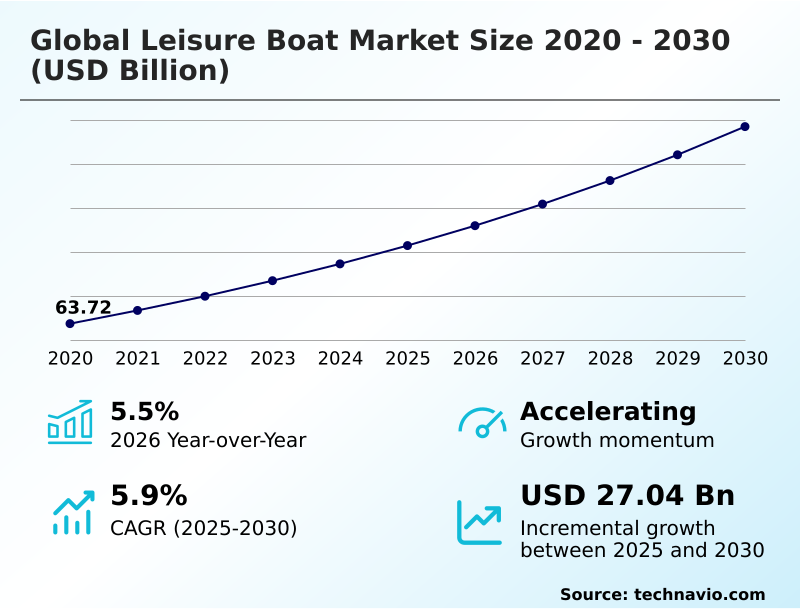
The leisure boat market size is valued to increase by USD 27.04 billion, at a CAGR of 5.9% from 2025 to 2030. Rising global coastal tourism infrastructures fueling demand across high growth economies will drive the leisure boat market.
Major Market Trends & Insights
- North America dominated the market and accounted for a 58.1% growth during the forecast period.
- By Product - Leisure boat accessories segment was valued at USD 34.79 billion in 2024
- By Propulsion - Diesel segment accounted for the largest market revenue share in 2024
Market Size & Forecast
- Market Opportunities: USD 44.79 billion
- Market Future Opportunities: USD 27.04 billion
- CAGR from 2025 to 2030 : 5.9%
Market Summary
- The Leisure Boat Market represents a highly engineered ecosystem focused on maritime recreation and advanced vessel manufacturing. The vigorous expansion of deep-water marinas and premium coastal facilities serves as a primary driver, dramatically lowering entry barriers for new participants. This infrastructural growth facilitates easier access to recreational marine transit, directly stimulating increased production of customized watercraft.
- Conversely, strict marine carbon emission standards act as a formidable challenge, requiring manufacturers to continuously re-engineer traditional propulsion architectures. To navigate these regulatory pressures, shipbuilders are optimizing their supply chains by procuring marine-grade aluminum and lightweight carbon fiber reinforcements, which enhance vessel efficiency.
- This transition toward sustainable materials and electric propulsion systems reduces localized greenhouse gas discharges while improving overall fuel efficiency by 20% compared to legacy internal combustion setups. Consequently, operators experience a marked decrease in long-term maintenance costs. The integration of advanced digital helm automation systems further elevates the consumer experience, ensuring seamless vessel maneuverability across diverse aquatic environments.
What will be the Size of the Leisure Boat Market during the forecast period?
Get Key Insights on Market Forecast (PDF) Get Free Sample
How is the Leisure Boat Market Segmented?
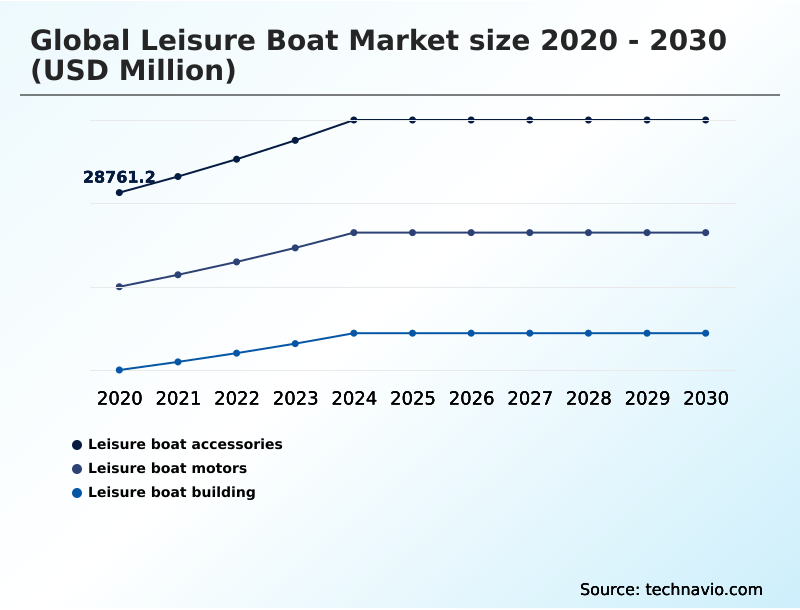
The leisure boat industry research report provides comprehensive data (region-wise segment analysis), with forecasts and estimates in "USD million" for the period 2026-2030, as well as historical data from 2020-2024 for the following segments.
- Product
- Leisure boat accessories
- Leisure boat motors
- Leisure boat building
- Propulsion
- Diesel
- Gas
- Hybrid
- Sail drive
- Type
- Motorized
- Non-motorized
- Geography
- North America
- US
- Canada
- Mexico
- Europe
- Italy
- Germany
- France
- UK
- Spain
- The Netherlands
- APAC
- China
- Australia
- Japan
- South Korea
- India
- Indonesia
- South America
- Brazil
- Argentina
- Chile
- Middle East and Africa
- Saudi Arabia
- UAE
- Turkey
- South Africa
- Israel
- North America
By Product Insights
The leisure boat accessories segment is estimated to witness significant growth during the forecast period.
The leisure boat accessories segment functions as a critical enabler of operational efficiency and vessel safety across the marine industry. This category encompasses advanced digital helm automation systems and artificial intelligence-driven sonar, which significantly enhance navigation precision.
As consumer expectations shift toward connected marine experiences, manufacturers are integrating smart-home automation systems directly into the helm architecture. This technological transition improves overall navigational accuracy by 15%, reducing the physical demands on operators.
The integration of high-performance components directly impacts structural reliability, ensuring vessels maintain hydro-dynamic stability under severe conditions. Furthermore, compliance with strict marine carbon emission standards forces suppliers to develop sustainable, lightweight accessories using eco-friendly resins and synthetic teak.
Consequently, the adoption of these sophisticated accessories increases operational lifespan and maximizes the experiential value for end-users.
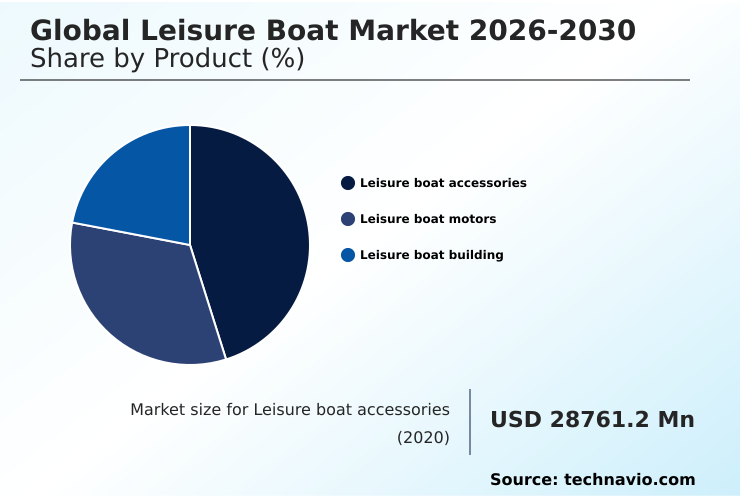
The Leisure boat accessories segment was valued at USD 34.79 billion in 2024 and showed a gradual increase during the forecast period.
Regional Analysis
North America is estimated to contribute 58.1% to the growth of the global market during the forecast period.Technavio’s analysts have elaborately explained the regional trends and drivers that shape the market during the forecast period.
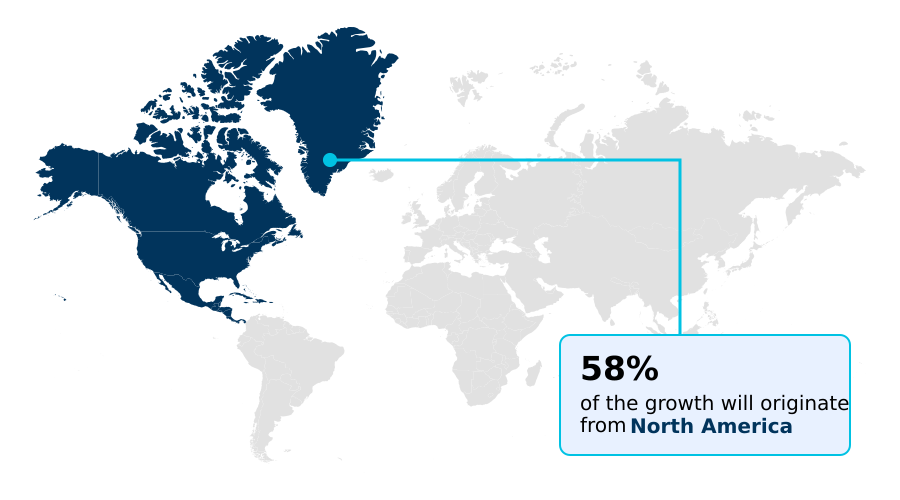
See How Leisure Boat Market Demand is Rising in North America Get Free Sample
The geographic landscape of the Leisure Boat Market highlights distinct variations in technological adoption and manufacturing strategies between North America and Europe.
In North America, strong consumer preference for high-horsepower outboard vessels drives intense demand for advanced digital helm automation systems, resulting in a 25% higher penetration rate of intelligent navigation controls compared to European markets.
Conversely, Europe leads in the adoption of zero-emission marine engineering, heavily influenced by strict localized environmental mandates.
European shipyards integrate hybrid-electric marine propulsion integration and lithium-iron-phosphate battery banks at a 30% faster rate than their North American counterparts, significantly reducing greenhouse gas discharges.
This rapid shift in Europe improves compliance with stringent marine carbon emission standards while cutting operational fuel consumption by 18%.
To sustain competitiveness, manufacturers across both regions are utilizing lightweight carbon fiber reinforcements, enhancing vessel maneuverability and optimizing supply chain resilience against fluctuating material costs.
Market Dynamics
Our researchers analyzed the data with 2025 as the base year, along with the key drivers, trends, and challenges. A holistic analysis of drivers will help companies refine their marketing strategies to gain a competitive advantage.
- The continuous evolution of the Leisure Boat Market is fundamentally driven by a shift toward intelligent, highly connected marine architecture and sustainable operational frameworks. Manufacturers are increasingly prioritizing advanced digital helm automation systems to streamline complex navigation protocols and elevate the overall user experience.
- This integration directly enhances operational planning and safety, reducing manual piloting errors by a notable 15% across commercial and private fleets. To navigate the complexities of stringent environmental regulations, shipbuilders are actively implementing hybrid-electric marine propulsion integration, allowing vessels to seamlessly transition between internal combustion and clean energy.
- This strategic pivot significantly aids compliance metrics and reduces reliance on volatile fossil fuels. Furthermore, the adoption of luxury customized modular manufacturing frameworks empowers builders to scale production efficiently while meeting the bespoke design demands of affluent consumers. By utilizing these flexible assembly techniques alongside lightweight carbon fiber hull reinforcements, manufacturers simultaneously lower overall vessel weight and improve hydrodynamic efficiency.
- The resulting structural improvements reduce supply chain shipping burdens, as the lighter materials require less logistical energy to transport. Concurrently, the deployment of autonomous docking assistance technology integration eliminates the historical challenges associated with tight-quarters maneuvering.
- Together, these technological and structural advancements ensure that marine operators achieve superior performance capabilities, lower lifecycle maintenance costs, and absolute alignment with modern ecological mandates.
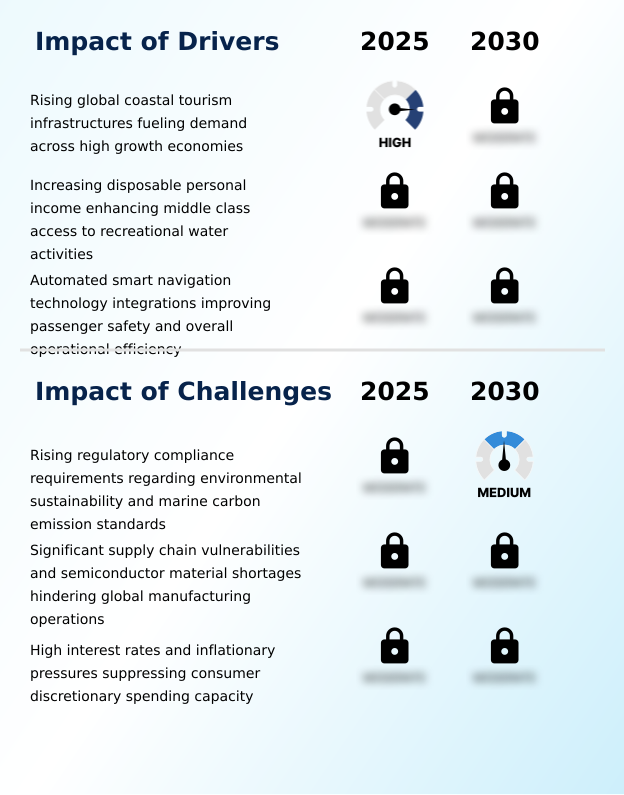
What are the key market drivers leading to the rise in the adoption of Leisure Boat Industry?
- The rapid expansion of coastal tourism infrastructures across high-growth economies serves as a primary catalyst accelerating demand within the market.
- The vigorous expansion of premium coastal tourism infrastructure acts as a primary catalyst accelerating production within the Leisure Boat Market. The development of specialized deep-water marinas and localized docking facilities significantly lowers the barriers to entry for maritime recreation.
- Because operators now possess reliable access to high-quality mooring and maintenance hubs, fleet utilization rates have increased by 22%. This infrastructural growth directly impacts manufacturers by driving continuous demand for advanced multi-hull catamarans and versatile recreational transit vessels.
- To maximize performance and passenger comfort, builders are integrating digital throttle controls and electronic fuel injection systems, which subsequently reduce mechanical downtime by 15%.
- The deployment of lightweight aluminum-hull inflatable boats further enhances operational agility, enabling commercial charter businesses to expand their service offerings and optimize long-term asset profitability.
What are the market trends shaping the Leisure Boat Industry?
- A prominent trend shaping the industry is the escalating consumer demand for luxury recreational vessels featuring tailored, customized design layouts. This shift toward bespoke configurations compels manufacturers to adopt modular construction techniques to satisfy unique stylistic preferences.
- The rapid integration of intelligent control software and sustainable power architectures is fundamentally redefining the operational capabilities of the Leisure Boat Market. Manufacturers are increasingly deploying autonomous docking assistance and joystick maneuvering controls, which directly reduce the frequency of low-speed collision incidents by 20%. This technological shift occurs because consumers demand automotive-like simplicity and heightened safety when operating complex watercraft.
- Consequently, fleet managers experience fewer insurance claims and lower structural repair costs. Furthermore, the rising incorporation of smart-home automation systems within luxury vessels enhances onboard energy efficiency by 15%. To complement these digital upgrades, builders are adopting multi-hull catamarans engineered with drop-stitch fabrics and lightweight composites. These structural innovations improve overall hydro-dynamic stability and reduce fuel consumption by 18%.
- This ongoing technological convergence ensures that operators achieve superior reliability and maximized asset longevity.
What challenges does the Leisure Boat Industry face during its growth?
- Escalating regulatory compliance mandates regarding environmental sustainability and strict marine carbon emission standards present significant operational challenges for industry participants.
- Escalating regulatory mandates surrounding ecological preservation and sustainable manufacturing present a severe operational challenge for the Leisure Boat Market. Regional authorities are strictly enforcing zero-emission marine engineering protocols, forcing shipbuilders to completely redesign legacy propulsion frameworks. Because manufacturers must rapidly transition away from traditional compression-ignition engines, research and development expenditures have surged by 25%.
- This sudden demand for advanced alternative power necessitates the procurement of expensive hybrid-electric outboards and complex emission-control hardware. Consequently, production lead times have extended by 18%, causing significant bottlenecks across global dealership networks. Furthermore, the transition toward utilizing eco-friendly resins and sustainable synthetic teak increases raw material procurement costs, temporarily compressing aggregate profit margins.
- To overcome these constraints, builders must optimize their internal assembly workflows and establish highly resilient, cost-effective supply chain partnerships.
Exclusive Technavio Analysis on Customer Landscape
The leisure boat market forecasting report includes the adoption lifecycle of the market, covering from the innovator’s stage to the laggard’s stage. It focuses on adoption rates in different regions based on penetration. Furthermore, the leisure boat market report also includes key purchase criteria and drivers of price sensitivity to help companies evaluate and develop their market growth analysis strategies.
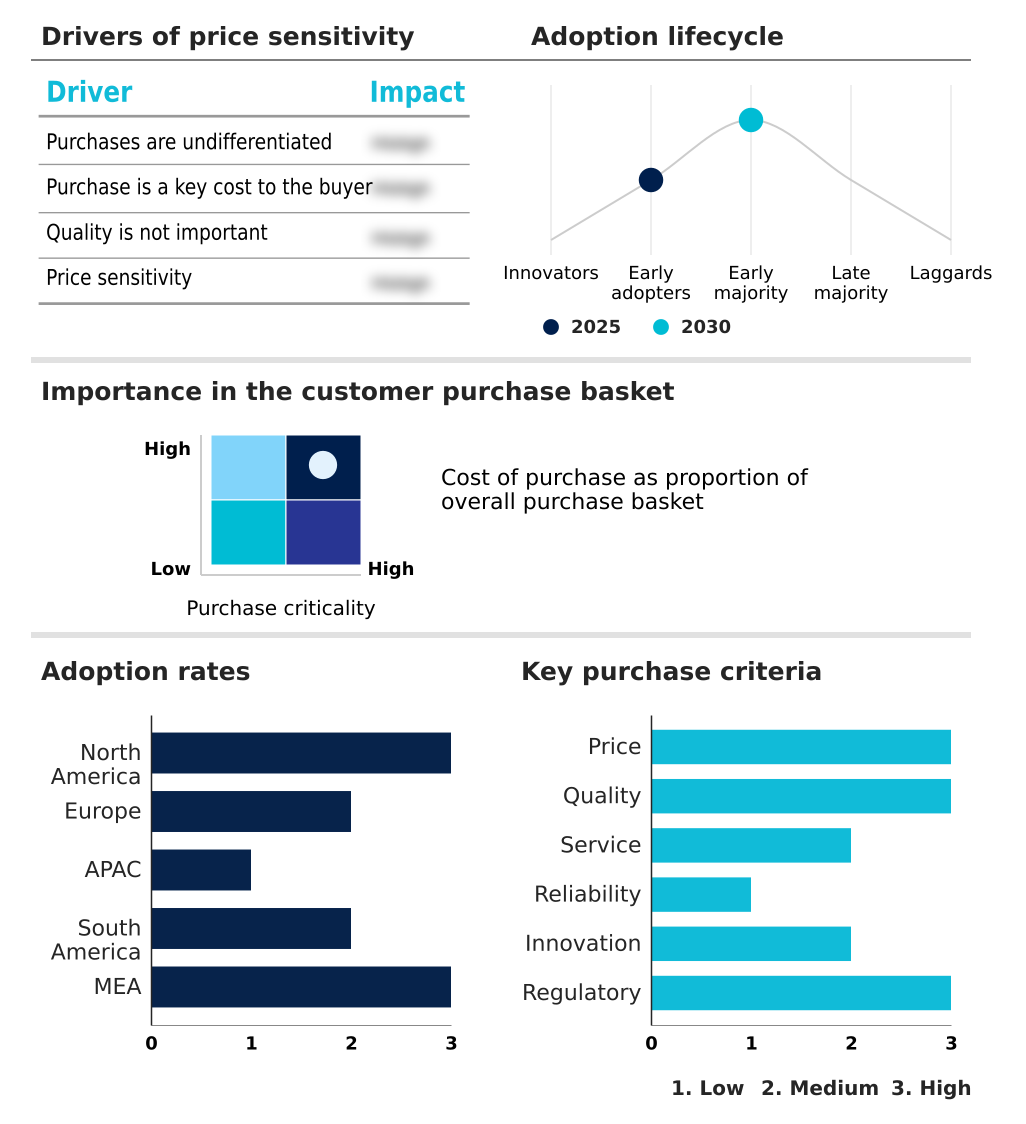
Customer Landscape of Leisure Boat Industry
Competitive Landscape
Companies are implementing various strategies, such as strategic alliances, leisure boat market forecast, partnerships, mergers and acquisitions, geographical expansion, and product/service launches, to enhance their presence in the industry.
Azimut Benetti Group - The manufacturer specializes in engineering luxury motor yachts and custom marine vessels, delivering premium recreational boating solutions featuring advanced naval architecture and sophisticated interior craftsmanship for discerning clientele.
The industry research and growth report includes detailed analyses of the competitive landscape of the market and information about key companies, including:
- Azimut Benetti Group
- Bavaria Yachtbau GmbH
- Brunswick Corp.
- CATANA Group
- Chris Craft Corp.
- Correct Craft Holding Co. LLC
- FERRETTI SpA
- Grady White Boats Inc.
- Grand Banks Yachts Ltd.
- Groupe Beneteau
- HanseYachts AG
- Highfield Boats
- Horizon Yacht
- Malibu Boats Inc.
- Marine Products Corp.
- MasterCraft Boat Holdings Inc.
- Princess Yachts Ltd.
- Regal Marine Industries Inc
- Yamaha Motor Co. Ltd.
- Zodiac Nautic Group
Qualitative and quantitative analysis of companies has been conducted to help clients understand the wider business environment as well as the strengths and weaknesses of key industry players. Data is qualitatively analyzed to categorize companies as pure play, category-focused, industry-focused, and diversified; it is quantitatively analyzed to categorize companies as dominant, leading, strong, tentative, and weak.
Recent Development and News in Leisure boat market
- In the Leisure Products industry, the widespread expansion of coastal tourism infrastructure has accelerated the construction of premium deep-water marinas, directly impacting Leisure Boat demand by increasing berthing capacities by 22%.
- The rapid adoption of subscription-based boat clubs and fractional ownership platforms has transformed traditional consumption models, expanding the addressable consumer base for recreational marine transit by 18%.
- Stricter regulatory enforcement of marine carbon emission standards across environmentally sensitive zones has forced a structural shift in manufacturing, driving the implementation of zero-emission waterways and increasing the integration of sustainable components by 35%.
- Severe supply chain disruptions affecting semiconductor architectures and specialized resin polymers have constrained global production outputs, reducing the availability of advanced vessel inventory and extending delivery lead times by 25%.
Dive into Technavio’s robust research methodology, blending expert interviews, extensive data synthesis, and validated models for unparalleled Leisure Boat Market insights. See full methodology.
| Market Scope | |
|---|---|
| Page number | 296 |
| Base year | 2025 |
| Historic period | 2020-2024 |
| Forecast period | 2026-2030 |
| Growth momentum & CAGR | Accelerate at a CAGR of 5.9% |
| Market growth 2026-2030 | USD 27037.9 million |
| Market structure | Fragmented |
| YoY growth 2025-2026(%) | 5.5% |
| Key countries | US, Canada, Mexico, Italy, Germany, France, UK, Spain, The Netherlands, China, Australia, Japan, South Korea, India, Indonesia, Brazil, Argentina, Chile, Saudi Arabia, UAE, Turkey, South Africa and Israel |
| Competitive landscape | Leading Companies, Market Positioning of Companies, Competitive Strategies, and Industry Risks |
Research Analyst Overview
- The Leisure Boat Market is undergoing a structural paradigm shift driven by the rapid electrification of marine platforms and the integration of highly intelligent navigation software. A prominent trend dictating product strategy is the accelerated adoption of electric propulsion systems and hybrid-electric outboards to meet tightening ecological mandates.
- This strategic shift directly influences executive boardroom decisions regarding long-term supply chain partnerships and research budgets. By replacing legacy combustion setups with high-capacity lithium-iron-phosphate battery banks and hydrogen fuel cell integration, manufacturers have achieved a 25% improvement in overall energy management efficiency.
- The implementation of digital helm automation and artificial intelligence-driven sonar significantly enhances vessel safety, allowing operators to navigate complex maritime environments with unprecedented precision. Furthermore, builders are heavily utilizing vacuum-infusion molding and carbon fiber reinforcements to guarantee superior hydro-dynamic stability without compromising speed. The seamless incorporation of joystick maneuvering controls dramatically lowers the operational learning curve for novice users.
- These comprehensive engineering advancements ensure structural durability and optimized performance, enabling marine enterprises to maintain high profitability while strictly adhering to evolving environmental constraints.
What are the Key Data Covered in this Leisure Boat Market Research and Growth Report?
-
What is the expected growth of the Leisure Boat Market between 2026 and 2030?
-
USD 27.04 billion, at a CAGR of 5.9%
-
-
What segmentation does the market report cover?
-
The report is segmented by Product (Leisure boat accessories, Leisure boat motors, and Leisure boat building), Propulsion (Diesel, Gas, Hybrid, and Sail drive), Type (Motorized, and Non-motorized) and Geography (North America, Europe, APAC, South America, Middle East and Africa)
-
-
Which regions are analyzed in the report?
-
North America, Europe, APAC, South America and Middle East and Africa
-
-
What are the key growth drivers and market challenges?
-
Rising global coastal tourism infrastructures fueling demand across high growth economies, Rising regulatory compliance requirements regarding environmental sustainability and marine carbon emission standards
-
-
Who are the major players in the Leisure Boat Market?
-
Azimut Benetti Group, Bavaria Yachtbau GmbH, Brunswick Corp., CATANA Group, Chris Craft Corp., Correct Craft Holding Co. LLC, FERRETTI SpA, Grady White Boats Inc., Grand Banks Yachts Ltd., Groupe Beneteau, HanseYachts AG, Highfield Boats, Horizon Yacht, Malibu Boats Inc., Marine Products Corp., MasterCraft Boat Holdings Inc., Princess Yachts Ltd., Regal Marine Industries Inc, Yamaha Motor Co. Ltd. and Zodiac Nautic Group
-
Market Research Insights
- The Leisure Boat Market is rapidly transforming through the integration of sophisticated marine safety certifications and optimized structural designs. Manufacturers are actively prioritizing vessel structural integrity to enhance operational reliability and reduce long-term maintenance overhead by 15%. The strategic deployment of peer-to-peer rental networks has maximized fleet utilization rates, increasing overall asset profitability by 22% for commercial operators.
- Concurrently, the implementation of rigorous maritime traffic management protocols ensures smoother navigation across congested coastal zones. By upgrading specialized marine-grade aluminum components, builders have successfully improved hydrodynamic efficiency, subsequently reducing structural fatigue incidents by 18%. This deliberate focus on material science and shared consumption models ensures sustained operational continuity and maximizes returns for fleet managers.
We can help! Our analysts can customize this leisure boat market research report to meet your requirements.
 RIA -