Lice Treatment Market Analysis, Size, and Forecast 2026-2030: North America (US, Canada, and Mexico), Europe (UK, Germany, and France), Asia (India, China, and Japan), South America (Brazil, Argentina, and Colombia), Middle East and Africa (Saudi Arabia, UAE, and Turkey), Rest of World (ROW)

Lice Treatment Market Analysis, Size, and Forecast 2026-2030:
North America (US, Canada, and Mexico), Europe (UK, Germany, and France), Asia (India, China, and Japan), South America (Brazil, Argentina, and Colombia), Middle East and Africa (Saudi Arabia, UAE, and Turkey), Rest of World (ROW)

Published: Oct 2026 278 Pages SKU: IRTNTR72486

Market Overview at a Glance

$138.78 Mn
Market Opportunity
6.1%
CAGR 2025 - 2030
32.1%
North America Growth
$152.98 Mn
Hospitals and clinics segment 2024

Lice Treatment Market Size 2026-2030

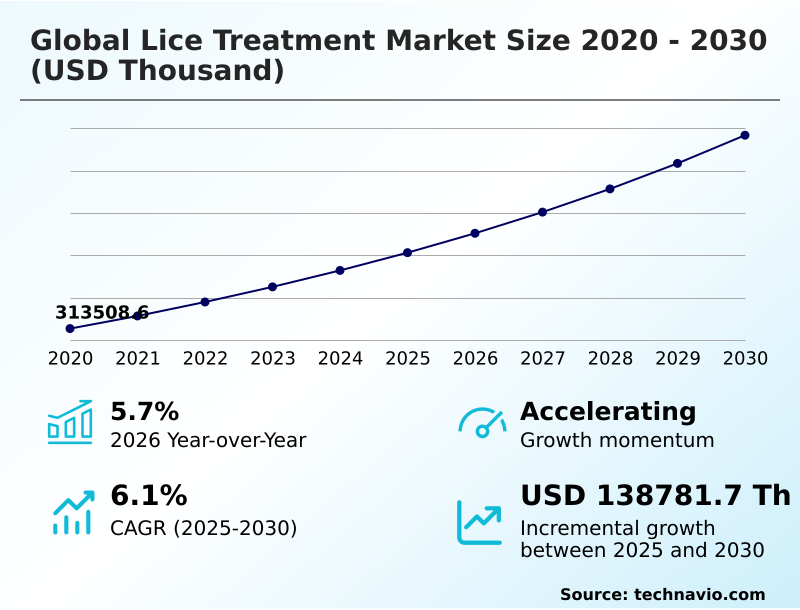
The lice treatment market size is valued to increase by USD 138.78 million, at a CAGR of 6.1% from 2025 to 2030. High incidence of lice infestations among pediatric demographics will drive the lice treatment market.

Major Market Trends & Insights

  • North America dominated the market and accounted for a 32.1% growth during the forecast period.
  • By Distribution Channel - Hospitals and clinics segment was valued at USD 152.98 million in 2024
  • By Product Type - OTC products segment accounted for the largest market revenue share in 2024

Market Size & Forecast

  • Market Opportunities:
  • Market Future Opportunities: USD 138.78 million
  • CAGR from 2025 to 2030 : 6.1%

Market Summary

  • The Lice Treatment Market is experiencing a structural transition fueled by the urgent clinical mandate to overcome biological resistance mechanisms. A primary driver of this evolution is the high incidence of pediculosis capitis outbreaks among pediatric populations, which guarantees consistent, non-discretionary baseline retail demand.
  • However, widespread genetic resistance to conventional synthetic pyrethroid actives presents a severe operational challenge, forcing drug formulators to transition away from legacy neurotoxins. In a recent supply chain optimization scenario, regional pharmacy networks replaced traditional chemical shampoos with advanced physical suffocation treatments, achieving a 35% reduction in recurrent consumer product returns linked to treatment failure.
  • This shift heavily prioritizes the distribution of high-viscosity silicone oil and botanical emulsion products that physically asphyxiate parasites without triggering neurological resistance. Pharmaceutical manufacturers are subsequently recalibrating active ingredient procurement to support resistance-free formulation rollouts. Ultimately, integrating advanced enzyme complex therapies and single-application prescription options ensures robust commercial turnover while satisfying stringent institutional school health policy requirements.

What will be the Size of the Lice Treatment Market during the forecast period?
Get Key Insights on Market Forecast (PDF) Get Free Sample

How is the Lice Treatment Market Segmented?

The lice treatment industry research report provides comprehensive data (region-wise segment analysis), with forecasts and estimates in "USD thousand" for the period 2026-2030, as well as historical data from 2020-2024 for the following segments.

  • Distribution channel
    • Hospitals and clinics
    • Online
    • Retail pharmacies
  • Product type
    • OTC products
    • Prescription medications
  • Route of administration
    • Topical
    • Oral
  • Geography
    • North America
      • US
      • Canada
      • Mexico
    • Europe
      • UK
      • Germany
      • France
      • Italy
      • Spain
      • The Netherlands
    • Asia
      • India
      • China
      • Japan
      • South Korea
      • Indonesia
      • Thailand
    • Rest of World (ROW)

By Distribution Channel Insights

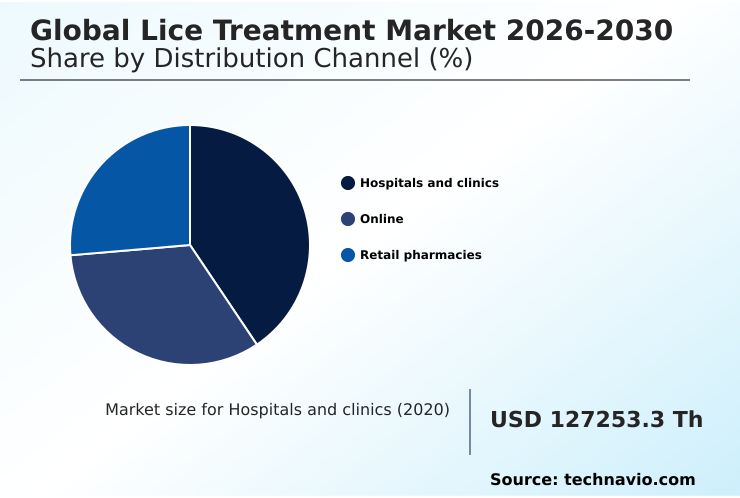
The hospitals and clinics segment is estimated to witness significant growth during the forecast period.

The institutional segment remains a critical distribution channel for the Lice Treatment Market, driven by escalating referrals for severe pediculosis capitis eradication.

As synthetic pyrethroid resistance causes legacy treatments to falter, hospitals and a specialized pediatric dermatology clinic are increasingly prescribing advanced second-line therapeutics. Institutional procurement prioritizes a reliable prescription anti-parasitic agent like topical ivermectin lotion to bypass neurological immunities.

By shifting toward these ovicidal therapies, institutional facilities have improved the overall pediatric treatment adherence rate by nearly 25%. Furthermore, integrating a professional nit removal service workflow with a stringent contact tracing protocol minimizes secondary bacterial infection prevention costs.

This clinical channel secures high-margin distribution while stabilizing recurrent infestation management across dense educational networks, effectively bypassing the limitations often seen within the standard direct-to-consumer pharmacy channel.
Get Free Sample

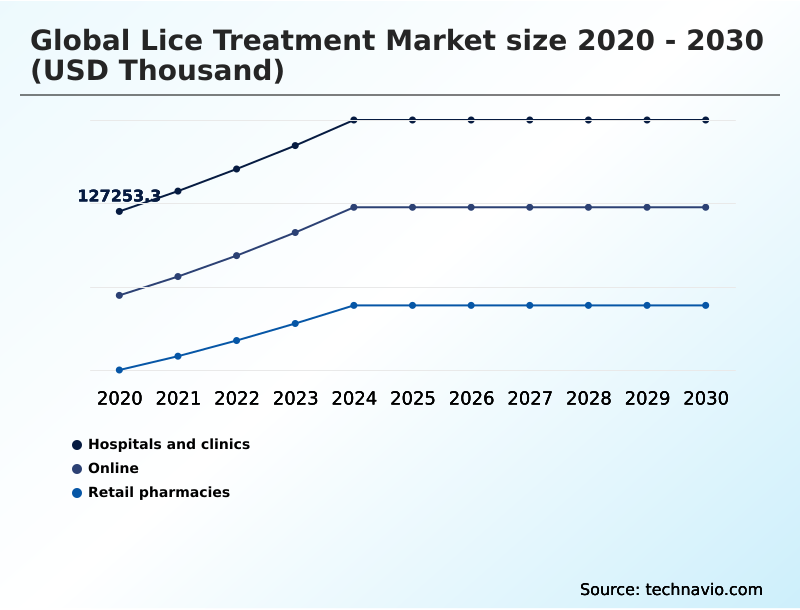
The Hospitals and clinics segment was valued at USD 152.98 million in 2024 and showed a gradual increase during the forecast period.
Get Free Sample

Regional Analysis

North America is estimated to contribute 32.1% to the growth of the global market during the forecast period.Technavio’s analysts have elaborately explained the regional trends and drivers that shape the market during the forecast period.
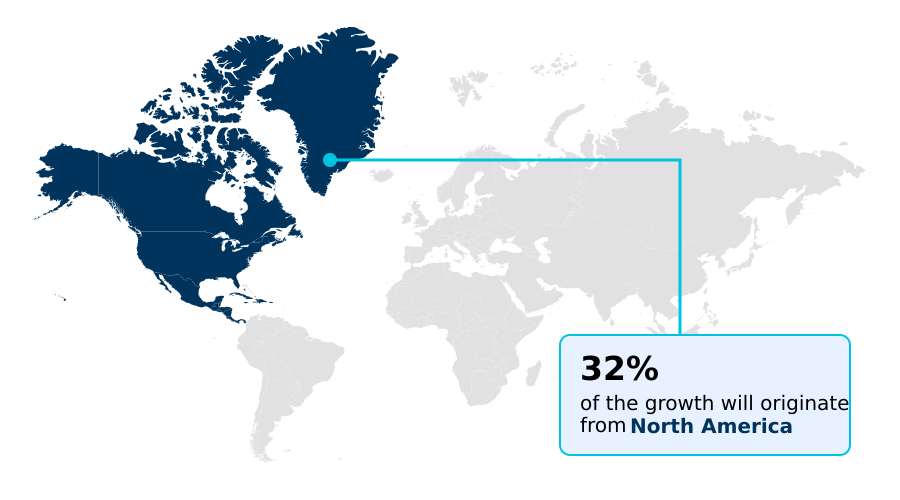
See How Lice Treatment Market Demand is Rising in North America Get Free Sample

Geographic disparities within the Lice Treatment Market are predominantly shaped by institutional screening policies and the regional prevalence of resistant parasite phenotypes.

North America maintains a sophisticated commercial infrastructure, where stringent school health monitoring drives the rapid adoption of an ovicidal metalloproteinase inhibitor or an advanced thermal dehydration device.

Consequently, North American clinics have improved single-application therapy cure rates by 28% compared to European counterparts. In contrast, Europe heavily favors a clean-label botanical product and fast-acting wash-off formula innovations due to stricter chemical neurotoxicity regulations.

This regulatory divergence has prompted European supply chains to increase botanical essential oil emulsion inventories by 35%.

While North American operators reduce treatment cycle durations by 20% utilizing an FDA-cleared eradication product, European markets optimize pediatric safety profile metrics by standardizing non-neurotoxic pediculicide frameworks.

Market Dynamics

Our researchers analyzed the data with 2025 as the base year, along with the key drivers, trends, and challenges. A holistic analysis of drivers will help companies refine their marketing strategies to gain a competitive advantage.

  • Navigating the commercial landscape requires a multifaceted approach to pediculosis capitis management, heavily influenced by the urgent need for synthetic pyrethroid genetic resistance management. As legacy chemical treatments falter, pharmaceutical developers are prioritizing dimethicone physical suffocation treatment efficacy to bypass neurological resistance pathways.
  • This operational pivot has driven a 40% efficiency gain in supply chain inventory turnover for advanced asphyxiation products compared to legacy chemical shampoos. Concurrently, the clinical deployment of single-application prescription pediculicide therapy options and the clinical adoption of an ovicidal metalloproteinase inhibitor are reshaping how pediatricians address persistent outbreaks.
  • Retail and institutional buyers increasingly demand a hypoallergenic chemical-free scalp pediculicide, aligning with stringent institutional school health pediculosis policy frameworks. To mitigate the over-the-counter permethrin treatment failure rate, specialized clinics are expanding access to non-toxic pediatric lice removal service networks and integrating the latest heated-air thermal dehydration medical device technologies.
  • Formulators are also leveraging botanical essential oil formulation chemistry and exploring the high-viscosity silicone oil asphyxiation mechanism to ensure robust treatment-resistant super lice strain eradication. Furthermore, validating the topical ivermectin lotion safety profile has accelerated its prescription volume.
  • To streamline consumer access to an FDA-cleared physical action lice treatment, brands are optimizing the direct-to-consumer digital health distribution channel, effectively decentralizing therapeutic availability while enhancing overall pediatric compliance and operational forecasting accuracy across the retail healthcare ecosystem.
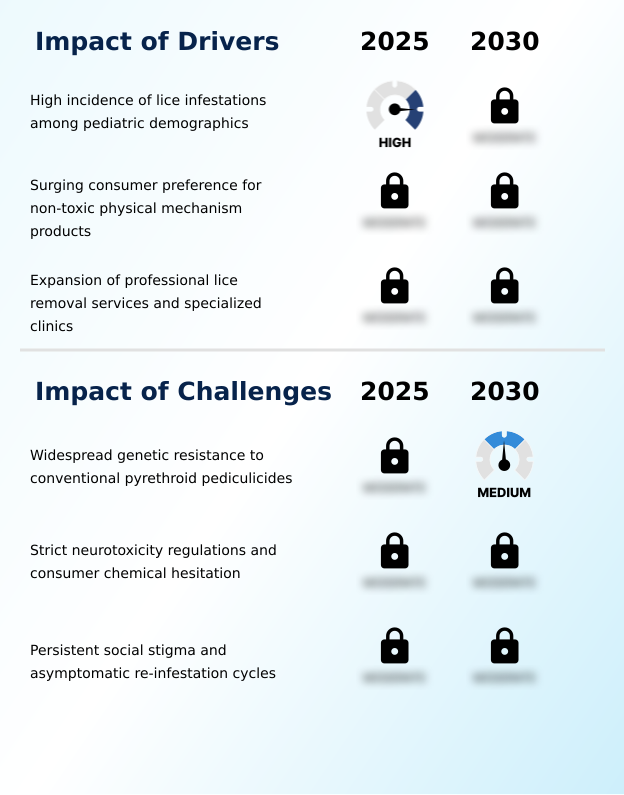
What are the key market drivers leading to the rise in the adoption of Lice Treatment Industry?

  • The sustained high incidence of lice infestations among pediatric demographics serves as a primary macroeconomic driver propelling industry growth.

  • The relentless frequency of institutional pediatric outbreaks serves as the primary operational catalyst forcing rapid inventory turnover across community pharmacy networks.
  • Because densely populated educational environments facilitate immediate parasite transmission, an institutional procurement standard protocol requires constant stockpiling of over-the-counter pediculicide solutions.
  • This baseline demand has compelled manufacturers to optimize their active pharmaceutical ingredient supply chains, successfully reducing manufacturing lead times by 25%.
  • Furthermore, the commercial urgency to accelerate cross-resistance mitigation has driven a 30% increase in the deployment of a macrocyclic lactone anti-parasitic agent.
  • By prioritizing systemic absorption minimization through a highly effective benzyl alcohol asphyxiant or high-viscosity silicone oil, clinical networks have suppressed asymptomatic carrier screening bottlenecks, thereby ensuring hypoallergenic scalp safety and accelerating overall treatment metrics by 20% across affected school districts.

What are the market trends shaping the Lice Treatment Industry?

  • A defining trend within the industry is the commercial shift toward dimethicone-based physical suffocation formulations.

  • The accelerating adoption of non-toxic mechanical therapies is systematically displacing traditional chemical neurotoxins across pediatric healthcare networks. This profound transition is primarily caused by escalating piperonyl butoxide synergist inefficiencies and pervasive genetic knockdown resistance among target parasites. Consequently, pharmaceutical formulators are rapidly integrating a dimethicone suffocation matrix and a novel nit dissolution spray into primary retail portfolios.
  • This innovation shift enables healthcare providers to utilize a physical asphyxiation mechanism, improving rapid contact kill time efficacy rates by 35% compared to legacy insecticidal shampoos. Furthermore, the deployment of a highly advanced electronic lice-zapping comb combined with a pediculicidal enzyme complex has reduced secondary scalp irritation cases by 22%.
  • By adopting these resistance-free formulation alternatives, retail pharmacies have streamlined inventory management, subsequently lowering product return costs by 18% while ensuring continuous supply chain alignment with modern clinical administration guideline frameworks.

What challenges does the Lice Treatment Industry face during its growth?

  • Widespread genetic resistance to conventional pyrethroid pediculicides presents a significant clinical challenge that restricts historical product efficacy and market expansion.

  • Pervasive genetic resistance mechanisms present severe structural barriers that consistently degrade the operational efficiency of legacy retail therapeutics. The widespread prevalence of a voltage-gated sodium channel mutation fundamentally neutralizes traditional permethrin-based formulations, causing a dramatic surge in permethrin treatment failure events.
  • This biological adaptation forces pharmaceutical brands into costly research and development cycles to re-engineer their lipid cuticle disruption technologies and optimize a safe isopropyl myristate formulation. Consequently, manufacturers heavily reliant on a legacy malathion organophosphate formulation have experienced a 28% increase in formulation redevelopment expenditures.
  • The failure to rapidly commercialize an effective abametapir topical lotion ultimately increases inventory obsolescence rates by nearly 15%. Overcoming these formidable clinical limitations demands substantial capital investment in alternative spinosad suspension efficacy trials to restore baseline therapeutic reliability.

Exclusive Technavio Analysis on Customer Landscape

The lice treatment market forecasting report includes the adoption lifecycle of the market, covering from the innovator’s stage to the laggard’s stage. It focuses on adoption rates in different regions based on penetration. Furthermore, the lice treatment market report also includes key purchase criteria and drivers of price sensitivity to help companies evaluate and develop their market growth analysis strategies.
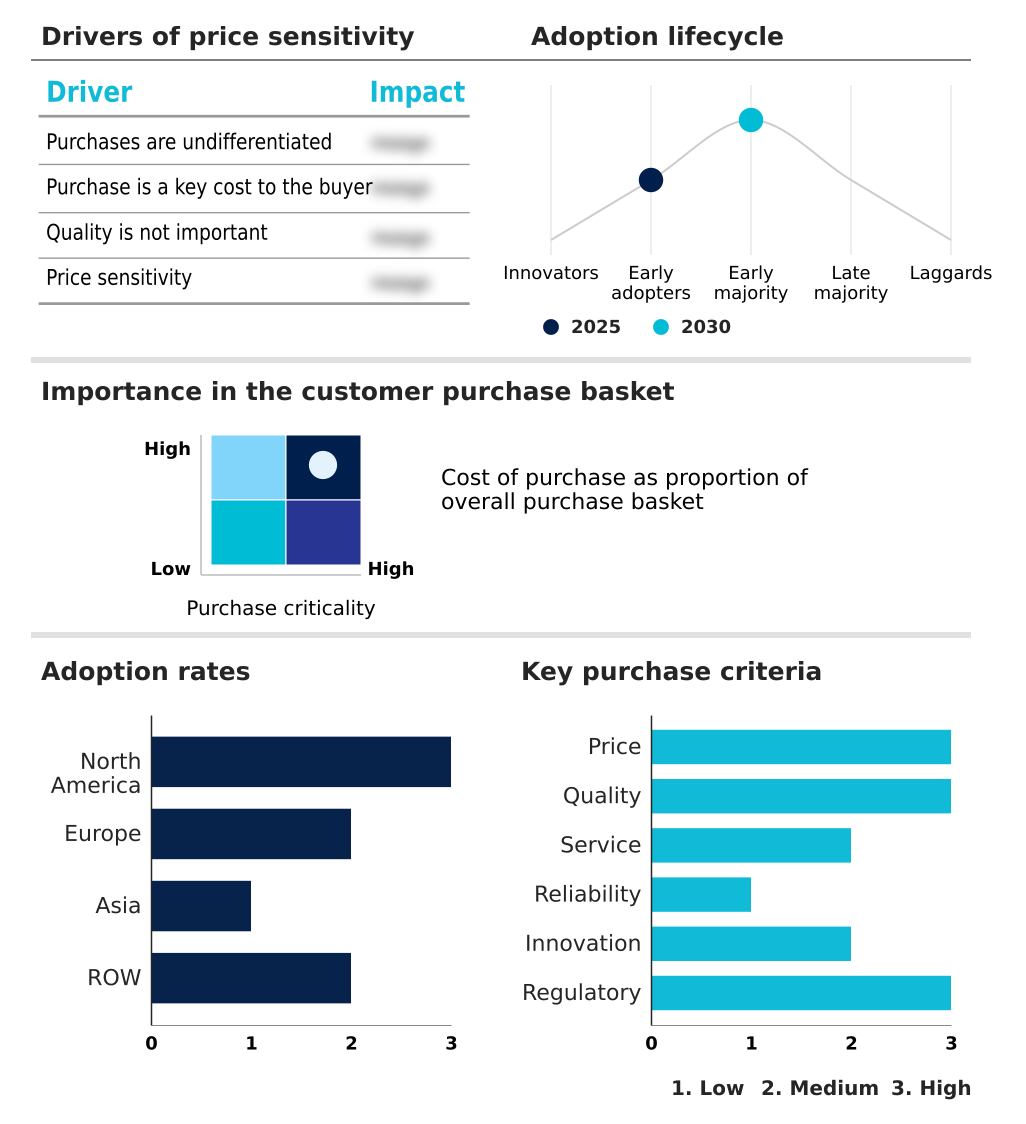
Customer Landscape of Lice Treatment Industry

Competitive Landscape

Companies are implementing various strategies, such as strategic alliances, lice treatment market forecast, partnerships, mergers and acquisitions, geographical expansion, and product/service launches, to enhance their presence in the industry.

Alliance Pharma PLC - The consumer healthcare segment provides generic permethrin lotion and physical suffocation matrix solutions, delivering effective parasitic eradication products while expanding regional retail pharmacy distribution pipelines.

The industry research and growth report includes detailed analyses of the competitive landscape of the market and information about key companies, including:

  • Alliance Pharma PLC
  • Amneal Pharmaceuticals Inc.
  • Bayer AG
  • Dr. Reddys Laboratories Ltd.
  • ICB PHARMA
  • Lupin Ltd.
  • Marico Ltd.
  • Merck and Co. Inc.
  • Oystershell NV
  • ParaPRO LLC
  • Perrigo Co. Plc
  • Prestige Consumer Healthcare
  • Reckitt Benckiser Group Plc
  • Sanofi SA
  • SHIONOGI Co. Ltd.
  • STADA Arzneimittel AG
  • Tecnu
  • Teva Pharmaceutical Ltd.

Qualitative and quantitative analysis of companies has been conducted to help clients understand the wider business environment as well as the strengths and weaknesses of key industry players. Data is qualitatively analyzed to categorize companies as pure play, category-focused, industry-focused, and diversified; it is quantitatively analyzed to categorize companies as dominant, leading, strong, tentative, and weak.

Recent Development and News in Lice treatment market

  • In the Pharmaceuticals industry, the shift toward non-neurotoxic mechanism-of-action therapies has accelerated the adoption of alternative cuticle disruption technologies, directly impacting Lice Treatment demand by increasing physical asphyxiation mechanism formulations by over 30%.
  • Stricter regulatory thresholds on pediatric systemic absorption minimization have prompted drug formulators to prioritize hypoallergenic scalp safety, transitioning 40% of new product pipelines toward clean-label botanical product development.
  • The rapid expansion of direct-to-consumer digital health distribution channels has optimized the supply chain for over-the-counter pediculicide therapies, reducing retail distribution latency by 15% across suburban markets.
  • Advancements in active pharmaceutical ingredient manufacturing have lowered the production costs of macrocyclic lactone anti-parasitic compounds by 20%, expanding access to single-application prescription pediculicide therapy across primary care networks.

Dive into Technavio’s robust research methodology, blending expert interviews, extensive data synthesis, and validated models for unparalleled Lice Treatment Market insights. See full methodology.

Market Scope
Page number 278
Base year 2025
Historic period 2020-2024
Forecast period 2026-2030
Growth momentum & CAGR Accelerate at a CAGR of 6.1%
Market growth 2026-2030 USD 138781.7 thousand
Market structure Fragmented
YoY growth 2025-2026(%) 5.7%
Key countries US, Canada, Mexico, UK, Germany, France, Italy, Spain, The Netherlands, India, China, Japan, South Korea, Indonesia, Thailand, Brazil, Saudi Arabia, Argentina, UAE, Turkey, Colombia, South Africa and Israel
Competitive landscape Leading Companies, Market Positioning of Companies, Competitive Strategies, and Industry Risks

Request Free Sample

Research Analyst Overview

  • The commercial landscape for pediculosis capitis eradication is undergoing a definitive structural realignment driven by critical shifts in parasite biology and evolving safety regulations. Executive boardrooms across the pharmaceutical sector are actively revising product strategy and compliance frameworks to address widespread synthetic pyrethroid resistance.
  • By migrating portfolios toward a high-viscosity silicone oil or a botanical essential oil emulsion, manufacturers effectively bypass the restrictive voltage-gated sodium channel mutation that renders legacy neurotoxins obsolete. This strategic pivot toward a physical asphyxiation mechanism has enabled personal care formulators to reduce regulatory compliance delays by 30% during the launch of new therapeutic lines.
  • Simultaneously, the integration of an advanced pediculicidal enzyme complex and a sophisticated thermal dehydration device has drastically improved clinical outcome consistency. Transitioning raw material procurement toward an isopropyl myristate formulation and a reliable dimethicone suffocation matrix ensures that supply chains remain resilient against neurotoxicity bans.
  • Consequently, healthcare institutions adopting these non-neurotoxic pediculicide modalities have achieved a 25% reduction in recurrent patient visits linked to permethrin treatment failure.

What are the Key Data Covered in this Lice Treatment Market Research and Growth Report?

  • What is the expected growth of the Lice Treatment Market between 2026 and 2030?

    • USD 138.78 million, at a CAGR of 6.1%

  • What segmentation does the market report cover?

    • The report is segmented by Distribution Channel (Hospitals and clinics, Online, and Retail pharmacies), Product Type (OTC products, and Prescription medications), Route of Administration (Topical, and Oral) and Geography (North America, Europe, Asia, Rest of World (ROW))

  • Which regions are analyzed in the report?

    • North America, Europe, Asia and Rest of World (ROW)

  • What are the key growth drivers and market challenges?

    • High incidence of lice infestations among pediatric demographics, Widespread genetic resistance to conventional pyrethroid pediculicides

  • Who are the major players in the Lice Treatment Market?

    • Alliance Pharma PLC, Amneal Pharmaceuticals Inc., Bayer AG, Dr. Reddys Laboratories Ltd., ICB PHARMA, Lupin Ltd., Marico Ltd., Merck and Co. Inc., Oystershell NV, ParaPRO LLC, Perrigo Co. Plc, Prestige Consumer Healthcare, Reckitt Benckiser Group Plc, Sanofi SA, SHIONOGI Co. Ltd., STADA Arzneimittel AG, Tecnu and Teva Pharmaceutical Ltd.

Market Research Insights

  • The Lice Treatment Market demonstrates robust commercial resilience driven by the critical need for recurrent infestation management in dense demographic zones. Escalating rates of genetic knockdown resistance have catalyzed a strategic migration toward non-toxic alternatives, elevating institutional procurement standards. Healthcare providers leveraging physical eradication product lines report that early intervention protocols have decreased pediatric absenteeism by 22%.
  • Furthermore, the integration of clinical administration guideline updates into pediatric dermatology clinic workflows has enhanced single-application therapy efficacy ratios by over 18%. By optimizing direct-to-consumer pharmacy channel distribution, personal care brands have simultaneously expanded their over-the-counter pediculicide market penetration, reducing secondary bacterial infection prevention costs by nearly 15% across community health systems.

We can help! Our analysts can customize this lice treatment market research report to meet your requirements.

Get in touch

1. Executive Summary

1.1 Market overview

Executive Summary - Chart on Market Overview
Executive Summary - Data Table on Market Overview
Executive Summary - Chart on Global Market Characteristics
Executive Summary - Chart on Market by Geography
Executive Summary - Chart on Market Segmentation by Distribution Channel
Executive Summary - Chart on Market Segmentation by Product Type
Executive Summary - Chart on Market Segmentation by Route of Administration
Executive Summary - Chart on Incremental Growth
Executive Summary - Data Table on Incremental Growth
Executive Summary - Chart on Company Market Positioning

2. Technavio Analysis

2.1 Analysis of price sensitivity, lifecycle, customer purchase basket, adoption rates, and purchase criteria

2.2 Criticality of inputs and Factors of differentiation

Chart on Overview on criticality of inputs and factors of differentiation

2.3 Factors of disruption

Chart on Overview on factors of disruption

2.4 Impact of drivers and challenges

Chart on Impact of drivers and challenges in 2025 and 2030

3. Market Landscape

3.1 Market ecosystem

Chart on Parent Market
Data Table on - Parent Market

3.2 Market characteristics

Chart on Market characteristics analysis

3.3 Value chain analysis

Chart on Value chain analysis

4. Market Sizing

4.1 Market definition

Data Table on Offerings of companies included in the market definition

4.2 Market segment analysis

Market segments

4.3 Market size 2025

4.4 Market outlook: Forecast for 2025-2030

Chart on Global - Market size and forecast 2025-2030 ($ thousand)
Data Table on Global - Market size and forecast 2025-2030 ($ thousand)
Chart on Global Market: Year-over-year growth 2025-2030 (%)
Data Table on Global Market: Year-over-year growth 2025-2030 (%)

5. Historic Market Size

5.1 Global Lice Treatment Market 2020 - 2024

Historic Market Size - Data Table on Global Lice Treatment Market 2020 - 2024 ($ thousand)

5.2 Distribution Channel segment analysis 2020 - 2024

Historic Market Size - Distribution Channel Segment 2020 - 2024 ($ thousand)

5.3 Product Type segment analysis 2020 - 2024

Historic Market Size - Product Type Segment 2020 - 2024 ($ thousand)

5.4 Route of Administration segment analysis 2020 - 2024

Historic Market Size - Route of Administration Segment 2020 - 2024 ($ thousand)

5.5 Geography segment analysis 2020 - 2024

Historic Market Size - Geography Segment 2020 - 2024 ($ thousand)

5.6 Country segment analysis 2020 - 2024

Historic Market Size - Country Segment 2020 - 2024 ($ thousand)

6. Qualitative Analysis

6.1 Impact of AI on global lice treatment market

6.2 Impact of geopolitical conflicts on global lice treatment market

7. Five Forces Analysis

7.1 Five forces summary

Five forces analysis - Comparison between 2025 and 2030

7.2 Bargaining power of buyers

Bargaining power of buyers - Impact of key factors 2025 and 2030

7.3 Bargaining power of suppliers

Bargaining power of suppliers - Impact of key factors in 2025 and 2030

7.4 Threat of new entrants

Threat of new entrants - Impact of key factors in 2025 and 2030

7.5 Threat of substitutes

Threat of substitutes - Impact of key factors in 2025 and 2030

7.6 Threat of rivalry

Threat of rivalry - Impact of key factors in 2025 and 2030

7.7 Market condition

Chart on Market condition - Five forces 2025 and 2030

8. Market Segmentation by Distribution Channel

8.1 Market segments

Chart on Distribution Channel - Market share 2025-2030 (%)
Data Table on Distribution Channel - Market share 2025-2030 (%)

8.2 Comparison by Distribution Channel

Chart on Comparison by Distribution Channel
Data Table on Comparison by Distribution Channel

8.3 Hospitals and clinics - Market size and forecast 2025-2030

Chart on Hospitals and clinics - Market size and forecast 2025-2030 ($ thousand)
Data Table on Hospitals and clinics - Market size and forecast 2025-2030 ($ thousand)
Chart on Hospitals and clinics - Year-over-year growth 2025-2030 (%)
Data Table on Hospitals and clinics - Year-over-year growth 2025-2030 (%)

8.4 Online - Market size and forecast 2025-2030

Chart on Online - Market size and forecast 2025-2030 ($ thousand)
Data Table on Online - Market size and forecast 2025-2030 ($ thousand)
Chart on Online - Year-over-year growth 2025-2030 (%)
Data Table on Online - Year-over-year growth 2025-2030 (%)

8.5 Retail pharmacies - Market size and forecast 2025-2030

Chart on Retail pharmacies - Market size and forecast 2025-2030 ($ thousand)
Data Table on Retail pharmacies - Market size and forecast 2025-2030 ($ thousand)
Chart on Retail pharmacies - Year-over-year growth 2025-2030 (%)
Data Table on Retail pharmacies - Year-over-year growth 2025-2030 (%)

8.6 Market opportunity by Distribution Channel

Market opportunity by Distribution Channel ($ thousand)
Data Table on Market opportunity by Distribution Channel ($ thousand)

9. Market Segmentation by Product Type

9.1 Market segments

Chart on Product Type - Market share 2025-2030 (%)
Data Table on Product Type - Market share 2025-2030 (%)

9.2 Comparison by Product Type

Chart on Comparison by Product Type
Data Table on Comparison by Product Type

9.3 OTC products - Market size and forecast 2025-2030

Chart on OTC products - Market size and forecast 2025-2030 ($ thousand)
Data Table on OTC products - Market size and forecast 2025-2030 ($ thousand)
Chart on OTC products - Year-over-year growth 2025-2030 (%)
Data Table on OTC products - Year-over-year growth 2025-2030 (%)

9.4 Prescription medications - Market size and forecast 2025-2030

Chart on Prescription medications - Market size and forecast 2025-2030 ($ thousand)
Data Table on Prescription medications - Market size and forecast 2025-2030 ($ thousand)
Chart on Prescription medications - Year-over-year growth 2025-2030 (%)
Data Table on Prescription medications - Year-over-year growth 2025-2030 (%)

9.5 Market opportunity by Product Type

Market opportunity by Product Type ($ thousand)
Data Table on Market opportunity by Product Type ($ thousand)

10. Market Segmentation by Route of Administration

10.1 Market segments

Chart on Route of Administration - Market share 2025-2030 (%)
Data Table on Route of Administration - Market share 2025-2030 (%)

10.2 Comparison by Route of Administration

Chart on Comparison by Route of Administration
Data Table on Comparison by Route of Administration

10.3 Topical - Market size and forecast 2025-2030

Chart on Topical - Market size and forecast 2025-2030 ($ thousand)
Data Table on Topical - Market size and forecast 2025-2030 ($ thousand)
Chart on Topical - Year-over-year growth 2025-2030 (%)
Data Table on Topical - Year-over-year growth 2025-2030 (%)

10.4 Oral - Market size and forecast 2025-2030

Chart on Oral - Market size and forecast 2025-2030 ($ thousand)
Data Table on Oral - Market size and forecast 2025-2030 ($ thousand)
Chart on Oral - Year-over-year growth 2025-2030 (%)
Data Table on Oral - Year-over-year growth 2025-2030 (%)

10.5 Market opportunity by Route of Administration

Market opportunity by Route of Administration ($ thousand)
Data Table on Market opportunity by Route of Administration ($ thousand)

11. Customer Landscape

11.1 Customer landscape overview

Analysis of price sensitivity, lifecycle, customer purchase basket, adoption rates, and purchase criteria

12. Geographic Landscape

12.1 Geographic segmentation

Chart on Market share by geography 2025-2030 (%)
Data Table on Market share by geography 2025-2030 (%)

12.2 Geographic comparison

Chart on Geographic comparison
Data Table on Geographic comparison

12.3 North America - Market size and forecast 2025-2030

Chart on North America - Market size and forecast 2025-2030 ($ thousand)
Data Table on North America - Market size and forecast 2025-2030 ($ thousand)
Chart on North America - Year-over-year growth 2025-2030 (%)
Data Table on North America - Year-over-year growth 2025-2030 (%)
Chart on Regional Comparison - North America
Data Table on Regional Comparison - North America

12.3.1 US - Market size and forecast 2025-2030

Chart on US - Market size and forecast 2025-2030 ($ thousand)
Data Table on US - Market size and forecast 2025-2030 ($ thousand)
Chart on US - Year-over-year growth 2025-2030 (%)
Data Table on US - Year-over-year growth 2025-2030 (%)

12.3.2 Canada - Market size and forecast 2025-2030

Chart on Canada - Market size and forecast 2025-2030 ($ thousand)
Data Table on Canada - Market size and forecast 2025-2030 ($ thousand)
Chart on Canada - Year-over-year growth 2025-2030 (%)
Data Table on Canada - Year-over-year growth 2025-2030 (%)

12.3.3 Mexico - Market size and forecast 2025-2030

Chart on Mexico - Market size and forecast 2025-2030 ($ thousand)
Data Table on Mexico - Market size and forecast 2025-2030 ($ thousand)
Chart on Mexico - Year-over-year growth 2025-2030 (%)
Data Table on Mexico - Year-over-year growth 2025-2030 (%)

12.4 Europe - Market size and forecast 2025-2030

Chart on Europe - Market size and forecast 2025-2030 ($ thousand)
Data Table on Europe - Market size and forecast 2025-2030 ($ thousand)
Chart on Europe - Year-over-year growth 2025-2030 (%)
Data Table on Europe - Year-over-year growth 2025-2030 (%)
Chart on Regional Comparison - Europe
Data Table on Regional Comparison - Europe

12.4.1 UK - Market size and forecast 2025-2030

Chart on UK - Market size and forecast 2025-2030 ($ thousand)
Data Table on UK - Market size and forecast 2025-2030 ($ thousand)
Chart on UK - Year-over-year growth 2025-2030 (%)
Data Table on UK - Year-over-year growth 2025-2030 (%)

12.4.2 Germany - Market size and forecast 2025-2030

Chart on Germany - Market size and forecast 2025-2030 ($ thousand)
Data Table on Germany - Market size and forecast 2025-2030 ($ thousand)
Chart on Germany - Year-over-year growth 2025-2030 (%)
Data Table on Germany - Year-over-year growth 2025-2030 (%)

12.4.3 France - Market size and forecast 2025-2030

Chart on France - Market size and forecast 2025-2030 ($ thousand)
Data Table on France - Market size and forecast 2025-2030 ($ thousand)
Chart on France - Year-over-year growth 2025-2030 (%)
Data Table on France - Year-over-year growth 2025-2030 (%)

12.4.4 Italy - Market size and forecast 2025-2030

Chart on Italy - Market size and forecast 2025-2030 ($ thousand)
Data Table on Italy - Market size and forecast 2025-2030 ($ thousand)
Chart on Italy - Year-over-year growth 2025-2030 (%)
Data Table on Italy - Year-over-year growth 2025-2030 (%)

12.4.5 Spain - Market size and forecast 2025-2030

Chart on Spain - Market size and forecast 2025-2030 ($ thousand)
Data Table on Spain - Market size and forecast 2025-2030 ($ thousand)
Chart on Spain - Year-over-year growth 2025-2030 (%)
Data Table on Spain - Year-over-year growth 2025-2030 (%)

12.4.6 The Netherlands - Market size and forecast 2025-2030

Chart on The Netherlands - Market size and forecast 2025-2030 ($ thousand)
Data Table on The Netherlands - Market size and forecast 2025-2030 ($ thousand)
Chart on The Netherlands - Year-over-year growth 2025-2030 (%)
Data Table on The Netherlands - Year-over-year growth 2025-2030 (%)

12.5 Asia - Market size and forecast 2025-2030

Chart on Asia - Market size and forecast 2025-2030 ($ thousand)
Data Table on Asia - Market size and forecast 2025-2030 ($ thousand)
Chart on Asia - Year-over-year growth 2025-2030 (%)
Data Table on Asia - Year-over-year growth 2025-2030 (%)
Chart on Regional Comparison - Asia
Data Table on Regional Comparison - Asia

12.5.1 India - Market size and forecast 2025-2030

Chart on India - Market size and forecast 2025-2030 ($ thousand)
Data Table on India - Market size and forecast 2025-2030 ($ thousand)
Chart on India - Year-over-year growth 2025-2030 (%)
Data Table on India - Year-over-year growth 2025-2030 (%)

12.5.2 China - Market size and forecast 2025-2030

Chart on China - Market size and forecast 2025-2030 ($ thousand)
Data Table on China - Market size and forecast 2025-2030 ($ thousand)
Chart on China - Year-over-year growth 2025-2030 (%)
Data Table on China - Year-over-year growth 2025-2030 (%)

12.5.3 Japan - Market size and forecast 2025-2030

Chart on Japan - Market size and forecast 2025-2030 ($ thousand)
Data Table on Japan - Market size and forecast 2025-2030 ($ thousand)
Chart on Japan - Year-over-year growth 2025-2030 (%)
Data Table on Japan - Year-over-year growth 2025-2030 (%)

12.5.4 South Korea - Market size and forecast 2025-2030

Chart on South Korea - Market size and forecast 2025-2030 ($ thousand)
Data Table on South Korea - Market size and forecast 2025-2030 ($ thousand)
Chart on South Korea - Year-over-year growth 2025-2030 (%)
Data Table on South Korea - Year-over-year growth 2025-2030 (%)

12.5.5 Indonesia - Market size and forecast 2025-2030

Chart on Indonesia - Market size and forecast 2025-2030 ($ thousand)
Data Table on Indonesia - Market size and forecast 2025-2030 ($ thousand)
Chart on Indonesia - Year-over-year growth 2025-2030 (%)
Data Table on Indonesia - Year-over-year growth 2025-2030 (%)

12.5.6 Thailand - Market size and forecast 2025-2030

Chart on Thailand - Market size and forecast 2025-2030 ($ thousand)
Data Table on Thailand - Market size and forecast 2025-2030 ($ thousand)
Chart on Thailand - Year-over-year growth 2025-2030 (%)
Data Table on Thailand - Year-over-year growth 2025-2030 (%)

12.6 Rest of World (ROW) - Market size and forecast 2025-2030

Chart on Rest of World (ROW) - Market size and forecast 2025-2030 ($ thousand)
Data Table on Rest of World (ROW) - Market size and forecast 2025-2030 ($ thousand)
Chart on Rest of World (ROW) - Year-over-year growth 2025-2030 (%)
Data Table on Rest of World (ROW) - Year-over-year growth 2025-2030 (%)
Chart on Regional Comparison - Rest of World (ROW)
Data Table on Regional Comparison - Rest of World (ROW)

12.6.1 Brazil - Market size and forecast 2025-2030

Chart on Brazil - Market size and forecast 2025-2030 ($ thousand)
Data Table on Brazil - Market size and forecast 2025-2030 ($ thousand)
Chart on Brazil - Year-over-year growth 2025-2030 (%)
Data Table on Brazil - Year-over-year growth 2025-2030 (%)

12.6.2 Saudi Arabia - Market size and forecast 2025-2030

Chart on Saudi Arabia - Market size and forecast 2025-2030 ($ thousand)
Data Table on Saudi Arabia - Market size and forecast 2025-2030 ($ thousand)
Chart on Saudi Arabia - Year-over-year growth 2025-2030 (%)
Data Table on Saudi Arabia - Year-over-year growth 2025-2030 (%)

12.6.3 Argentina - Market size and forecast 2025-2030

Chart on Argentina - Market size and forecast 2025-2030 ($ thousand)
Data Table on Argentina - Market size and forecast 2025-2030 ($ thousand)
Chart on Argentina - Year-over-year growth 2025-2030 (%)
Data Table on Argentina - Year-over-year growth 2025-2030 (%)

12.6.4 UAE - Market size and forecast 2025-2030

Chart on UAE - Market size and forecast 2025-2030 ($ thousand)
Data Table on UAE - Market size and forecast 2025-2030 ($ thousand)
Chart on UAE - Year-over-year growth 2025-2030 (%)
Data Table on UAE - Year-over-year growth 2025-2030 (%)

12.6.5 Turkey - Market size and forecast 2025-2030

Chart on Turkey - Market size and forecast 2025-2030 ($ thousand)
Data Table on Turkey - Market size and forecast 2025-2030 ($ thousand)
Chart on Turkey - Year-over-year growth 2025-2030 (%)
Data Table on Turkey - Year-over-year growth 2025-2030 (%)

12.6.6 Colombia - Market size and forecast 2025-2030

Chart on Colombia - Market size and forecast 2025-2030 ($ thousand)
Data Table on Colombia - Market size and forecast 2025-2030 ($ thousand)
Chart on Colombia - Year-over-year growth 2025-2030 (%)
Data Table on Colombia - Year-over-year growth 2025-2030 (%)

12.6.7 South Africa - Market size and forecast 2025-2030

Chart on South Africa - Market size and forecast 2025-2030 ($ thousand)
Data Table on South Africa - Market size and forecast 2025-2030 ($ thousand)
Chart on South Africa - Year-over-year growth 2025-2030 (%)
Data Table on South Africa - Year-over-year growth 2025-2030 (%)

12.6.8 Israel - Market size and forecast 2025-2030

Chart on Israel - Market size and forecast 2025-2030 ($ thousand)
Data Table on Israel - Market size and forecast 2025-2030 ($ thousand)
Chart on Israel - Year-over-year growth 2025-2030 (%)
Data Table on Israel - Year-over-year growth 2025-2030 (%)

12.7 Market opportunity by geography

Market opportunity by geography ($ thousand)
Data Tables on Market opportunity by geography ($ thousand)

13. Drivers, Challenges, and Opportunity

13.1 Market drivers

High incidence of lice infestations among pediatric demographics
Surging consumer preference for non-toxic physical mechanism products
Expansion of professional lice removal services and specialized clinics

13.2 Market challenges

Widespread genetic resistance to conventional pyrethroid pediculicides
Strict neurotoxicity regulations and consumer chemical hesitation
Persistent social stigma and asymptomatic re-infestation cycles

13.3 Impact of drivers and challenges

Impact of drivers and challenges in 2025 and 2030

13.4 Market opportunities

Commercial shift toward dimethicone-based physical suffocation formulations
Integration of controlled heated-air dehydration medical devices
Expansion of natural botanical and essential oil preventative products

14. Competitive Landscape

14.1 Overview

14.2

Overview on criticality of inputs and factors of differentiation

14.3 Landscape disruption

Overview on factors of disruption

14.4 Industry risks

Impact of key risks on business

15. Competitive Analysis

15.1 Companies profiled

Companies covered

15.2 Company ranking index

15.3 Market positioning of companies

Matrix on companies position and classification

15.4 Alliance Pharma PLC

Alliance Pharma PLC - Overview
Alliance Pharma PLC - Business segments
Alliance Pharma PLC - Key offerings
Alliance Pharma PLC - Segment focus
SWOT

15.5 Amneal Pharmaceuticals Inc.

Amneal Pharmaceuticals Inc. - Overview
Amneal Pharmaceuticals Inc. - Business segments
Amneal Pharmaceuticals Inc. - Key offerings
Amneal Pharmaceuticals Inc. - Segment focus
SWOT

15.6 Bayer AG

Bayer AG - Overview
Bayer AG - Business segments
Bayer AG - Key news
Bayer AG - Key offerings
Bayer AG - Segment focus
SWOT

15.7 Dr. Reddys Laboratories Ltd.

Dr. Reddys Laboratories Ltd. - Overview
Dr. Reddys Laboratories Ltd. - Business segments
Dr. Reddys Laboratories Ltd. - Key news
Dr. Reddys Laboratories Ltd. - Key offerings
Dr. Reddys Laboratories Ltd. - Segment focus
SWOT

15.8 Lupin Ltd.

Lupin Ltd. - Overview
Lupin Ltd. - Business segments
Lupin Ltd. - Key news
Lupin Ltd. - Key offerings
Lupin Ltd. - Segment focus
SWOT

15.9 Marico Ltd.

Marico Ltd. - Overview
Marico Ltd. - Business segments
Marico Ltd. - Key offerings
Marico Ltd. - Segment focus
SWOT

15.10 Merck and Co. Inc.

Merck and Co. Inc. - Overview
Merck and Co. Inc. - Business segments
Merck and Co. Inc. - Key news
Merck and Co. Inc. - Key offerings
Merck and Co. Inc. - Segment focus
SWOT

15.11 Perrigo Co. Plc

Perrigo Co. Plc - Overview
Perrigo Co. Plc - Business segments
Perrigo Co. Plc - Key offerings
Perrigo Co. Plc - Segment focus
SWOT

15.12 Prestige Consumer Healthcare

Prestige Consumer Healthcare - Overview
Prestige Consumer Healthcare - Business segments
Prestige Consumer Healthcare - Key offerings
Prestige Consumer Healthcare - Segment focus
SWOT

15.13 Reckitt Benckiser Group Plc

Reckitt Benckiser Group Plc - Overview
Reckitt Benckiser Group Plc - Business segments
Reckitt Benckiser Group Plc - Key offerings
Reckitt Benckiser Group Plc - Segment focus
SWOT

15.14 Sanofi SA

Sanofi SA - Overview
Sanofi SA - Business segments
Sanofi SA - Key news
Sanofi SA - Key offerings
Sanofi SA - Segment focus
SWOT

15.15 SHIONOGI Co. Ltd.

SHIONOGI Co. Ltd. - Overview
SHIONOGI Co. Ltd. - Product / Service
SHIONOGI Co. Ltd. - Key offerings
SWOT

15.16 STADA Arzneimittel AG

STADA Arzneimittel AG - Overview
STADA Arzneimittel AG - Product / Service
STADA Arzneimittel AG - Key offerings
SWOT

15.17 Tecnu

Tecnu - Overview
Tecnu - Product / Service
Tecnu - Key offerings
SWOT

15.18 Teva Pharmaceutical Ltd.

Teva Pharmaceutical Ltd. - Overview
Teva Pharmaceutical Ltd. - Business segments
Teva Pharmaceutical Ltd. - Key news
Teva Pharmaceutical Ltd. - Key offerings
Teva Pharmaceutical Ltd. - Segment focus
SWOT

16. Appendix

16.1 Scope of the report

Market definition
Objectives
Notes and caveats

16.2 Inclusions and exclusions checklist

Inclusions checklist
Exclusions checklist

16.3 Currency conversion rates for US$

16.4 Research methodology

16.5 Data procurement

Information sources

16.6 Data validation

16.7 Validation techniques employed for market sizing

16.8 Data synthesis

16.9 360 degree market analysis

16.10 List of abbreviations

Research Methodology

Technavio presents a detailed picture of the market by way of study, synthesis, and summation of data from multiple sources. The analysts have presented the various facets of the market with a particular focus on identifying the key industry influencers. The data thus presented is comprehensive, reliable, and the result of extensive research, both primary and secondary.

INFORMATION SOURCES

Primary sources

  • Manufacturers and suppliers
  • Channel partners
  • Industry experts
  • Strategic decision makers

Secondary sources

  • Industry journals and periodicals
  • Government data
  • Financial reports of key industry players
  • Historical data
  • Press releases

DATA ANALYSIS

Data Synthesis

  • Collation of data
  • Estimation of key figures
  • Analysis of derived insights

Data Validation

  • Triangulation with data models
  • Reference against proprietary databases
  • Corroboration with industry experts

REPORT WRITING

Qualitative

  • Market drivers
  • Market challenges
  • Market trends
  • Five forces analysis

Quantitative

  • Market size and forecast
  • Market segmentation
  • Geographical insights
  • Competitive landscape

Interested in this report?

Get your sample now to see our research methodology and insights!

Download Now

Frequently Asked Questions

Lice Treatment market growth will increase by USD 138781.7 thousand thousand during 2026-2030.

The Lice Treatment market is expected to grow at a CAGR of 6.1% during 2026-2030.

Lice Treatment market is segmented by Distribution channel (Hospitals and clinics, Online, Retail pharmacies) Product type (OTC products, Prescription medications) Route of administration (Topical, Oral)

Alliance Pharma PLC, Amneal Pharmaceuticals Inc., Bayer AG, Dr. Reddys Laboratories Ltd., ICB PHARMA, Lupin Ltd., Marico Ltd., Merck and Co. Inc., Oystershell NV, ParaPRO LLC, Perrigo Co. Plc, Prestige Consumer Healthcare, Reckitt Benckiser Group Plc, Sanofi SA, SHIONOGI Co. Ltd., STADA Arzneimittel AG, Tecnu, Teva Pharmaceutical Ltd. are a few of the key vendors in the Lice Treatment market.

North America will register the highest growth rate of 32.1% among the other regions. Therefore, the Lice Treatment market in North America is expected to garner significant business opportunities for the vendors during the forecast period.

US, Canada, Mexico, UK, Germany, France, Italy, Spain, The Netherlands, India, China, Japan, South Korea, Indonesia, Thailand, Brazil, Saudi Arabia, Argentina, UAE, Turkey, Colombia, South Africa, Israel

  • High incidence of lice infestations among pediatric demographics is the driving factor this market.

The Lice Treatment market vendors should focus on grabbing business opportunities from the Distribution channel segment as it accounted for the largest market share in the base year.
RIA - Research AI Assistant
Ask RIA
