


Logistics Market For Industrial Sector Size 2024-2028
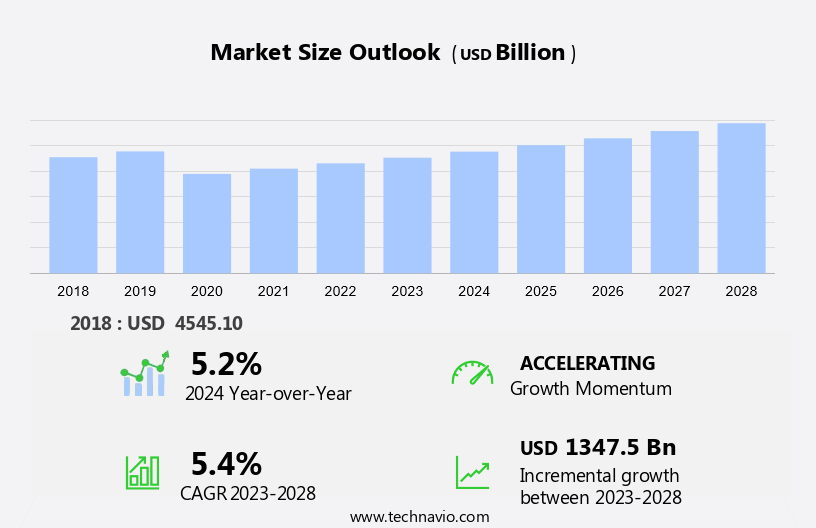
The logistics market for industrial sector size is forecast to increase by USD 1347.5 billion at a CAGR of 5.4% between 2023 and 2028.
- The market is experiencing significant advancements, driven by key trends and challenges. Notable trends include the increasing adoption of technologies such as artificial intelligence (AI), electric vehicles (EVs), blockchain technology, last-mile delivery, and Internet of Things (IoT). Investments in industrial logistics are surging, with companies prioritizing the implementation of these advanced technologies to streamline operations and enhance efficiency. Moreover, there is a growing emphasis on sustainable modes of logistics, with the adoption of EVs gaining traction. However, cybersecurity threats pose a significant challenge to the industry, necessitating security measures to protect sensitive data and ensure supply chain transparency. In addition, the market is witnessing substantial growth, fueled by technological advancements, investments, and the demand for sustainable and efficient logistics solutions. Companies must stay abreast of these trends and address cybersecurity challenges to remain competitive in the evolving landscape.
What will be the Size of the Market During the Forecast Period?
- The market is experiencing a significant shift towards e-commerce, with both B2B and B2C transactions increasing at an unprecedented rate. This trend poses unique challenges for logistics services, requiring efficient and cost-effective solutions for last-mile delivery, route optimization, and supply chain management. Third-party service providers play a crucial role in addressing these challenges. They offer specialized logistics services, leveraging advanced technologies such as Artificial Intelligence (AI), Software-as-a-Service (SaaS), and the Internet of Things (IoT). Logistics 4.0, the latest evolution of logistics, integrates AI and automation into transportation systems. AI algorithms optimize transportation modes, including roadways, seaways, railways, and airways, to ensure timely and cost-effective delivery of consumer goods, food and beverages, healthcare products, and other industrial items. Route optimization is a critical component of logistics services, particularly for last-mile delivery. AI-driven algorithms analyze real-time traffic data and delivery schedules to determine the most efficient routes, reducing delivery times and fuel consumption. Electric Vehicles (EVs) and Blockchain technology are key enablers of logistics optimization.
- EVs offer environmental benefits and lower operational costs, while Blockchain ensures secure and transparent tracking of goods, enhancing trust and accountability in the supply chain. Quickcommerce, a new business model, is gaining popularity in the industrial sector. It combines the speed and convenience of e-commerce with the efficiency of traditional supply chain management. AI and IoT technologies enable real-time inventory management, order processing, and delivery tracking, ensuring timely and accurate fulfillment of customer orders. Transportation modes, including roadways, seaways, railways, and airways, are undergoing digital transformation. AI and IoT technologies are being integrated into transportation systems to optimize routes, reduce fuel consumption, and improve safety and reliability. In conclusion, the industrial sector is undergoing a digital transformation, driven by the growing importance of e-commerce and the need for efficient logistics services. Third-party service providers are leveraging advanced technologies, including AI, SaaS, IoT, EVs, and Blockchain, to optimize transportation systems, route planning, and supply chain management. By embracing these technologies, industrial businesses can enhance their competitiveness, improve customer satisfaction, and reduce operational costs.
How is this market segmented and which is the largest segment?
The market research report provides comprehensive data (region-wise segment analysis), with forecasts and estimates in "USD billion" for the period 2024-2028, as well as historical data from 2018-2022 for the following segments.
- Type
- Transportation Services
- Warehousing and Storage
- Third-Party Logistics (3PL)
- Value-added services
- End-user
- Manufacturing
- Construction
- Energy
- Others
- Geography
- APAC
- China
- India
- Japan
- South Korea
- North America
- Canada
- US
- Europe
- Germany
- UK
- France
- Middle East and Africa
- South America
- APAC
By Type Insights
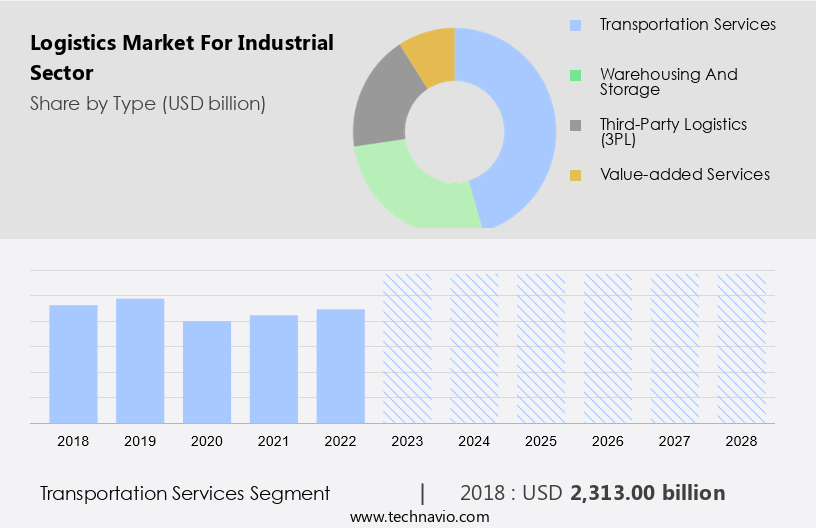
- The transportation services segment is estimated to witness significant growth during the forecast period.
The logistics market for the industrial sector is divided into multiple transportation services, catering to distinct logistical requirements. Notable transportation methods include air freight, ocean freight, ground freight, and railway freight. Air freight is recognized for its superior performance and extensive international network. Suitable for time-critical consignments, this mode of transport ensures swift delivery across borders. Its efficiency and speed make it a popular option for high-value and perishable goods, even though it carries a higher price tag compared to other alternatives. Ocean freight plays a pivotal role in global trade, enabling the transfer of substantial quantities of goods between continents.
Furthermore, this transportation method is particularly advantageous for businesses involved in international trade due to its cost-effectiveness. Radio Frequency Identification (RFID) technology and cloud computing are transforming logistics operations, enhancing efficiency and accuracy. Furthermore, the adoption of alternative fuels and the establishment of micro-fulfillment centers are crucial trends shaping the logistics landscape. International trade continues to be a significant driver for the logistics market's growth. Despite the challenges posed by carbon emissions, the industry is proactively seeking solutions, such as implementing greener practices and exploring renewable energy sources.
Get a glance at the market report of share of various segments Request Free Sample
The transportation services segment was valued at USD 2313.00 billion in 2018 and showed a gradual increase during the forecast period.
Regional Analysis
- APAC is estimated to contribute 50% to the growth of the global market during the forecast period.
Technavio's analysts have elaborately explained the regional trends and drivers that shape the market during the forecast period.
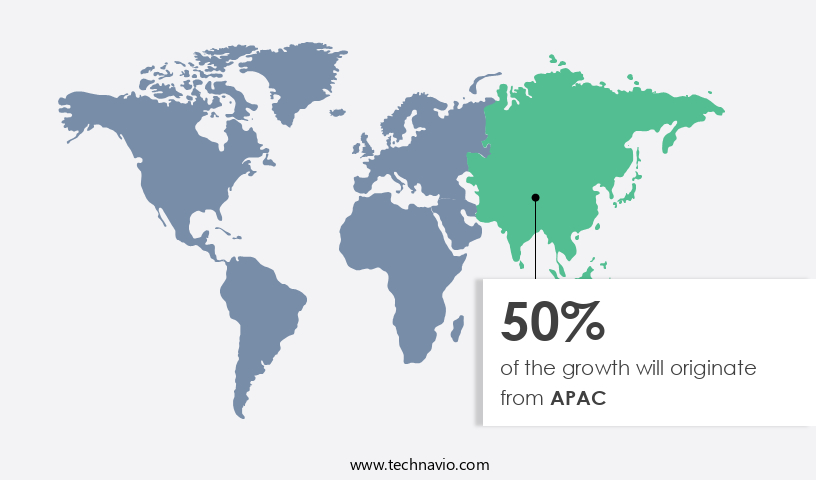
For more insights on the market share of various regions Request Free Sample
The Asia-Pacific region plays a significant role in the global logistics market for the industrial sector, fueled by substantial investments in infrastructure and strategic advancements. This budget allocation represents a 5% increase from the previous year, demonstrating the Indian government's dedication to improving infrastructure and urbanization. Meanwhile, China has made remarkable progress in enhancing its logistics capabilities. In May 2024, the first TIR Logistics Hub accredited by the International Road Transport Union (IRU) was launched in Kashgar, Western China.
Furthermore, this development underscores China's ongoing efforts to optimize its logistics services, particularly in the context of the growing e-commerce market. Third-party service providers play a crucial role in facilitating logistics services for both B2B and B2C e-commerce businesses in the region. Last-mile delivery, a critical component of the supply chain, is a key focus area for these providers, as they strive to ensure timely and efficient delivery of goods to customers. Route optimization is another essential aspect of logistics services, enabling providers to minimize costs and improve delivery times. In the market, the logistics sector continues to evolve, with e-commerce driving significant growth.
Market Dynamics
Our researchers analyzed the data with 2023 as the base year, along with the key drivers, trends, and challenges. A holistic analysis of drivers will help companies refine their marketing strategies to gain a competitive advantage.
What are the key market drivers leading to the rise in adoption of Logistics Market For Industrial Sector?
Investments in industrial logistics is the key driver of the market.
- The industrial sector logistics market is witnessing significant growth, primarily due to substantial investments being made in logistics infrastructure. With a portfolio of 25 assets spread across seven locations in the US, this investment underscores the escalating need for sophisticated logistics solutions to accommodate the expanding industrial sector. The transportation system in the US is undergoing a digital transformation, with Software-as-a-Service (SaaS) solutions playing an increasingly important role.
- Artificial intelligence (AI) is being integrated into transportation and logistics systems to optimize routes, improve efficiency, and enhance overall performance. This integration of technology is set to revolutionize the logistics industry, making it more agile and responsive to the dynamic needs of the industrial sector.
What are the market trends shaping the Logistics Market For Industrial Sector?
The adoption of sustainable modes of logistics is the upcoming trend in the market.
- The industrial logistics sector is transforming, with a focus on sustainable practices becoming increasingly important. One significant development in this regard is this initiative, based in Bhiwandi, India, a major warehousing hub, that aims to decarbonize logistics operations.
- This a dedicated charging depot to facilitate the use of electric vehicles (EVs) in a hub-and-spoke logistics model. This approach offers operational efficiency gains while aligning with environmental objectives. Another trend shaping the logistics landscape is the integration of technology, such as Artificial Intelligence (AI), the Internet of Things (IoT), and Blockchain Technology. These advancements contribute to a more efficient and sustainable industrial logistics sector.
What challenges does Logistics Market For Industrial Sector face during the growth?
Cybersecurity threats is a key challenge affecting the market growth.
- The industrial sector logistics market is experiencing significant challenges due to the rising threat of cybersecurity breaches. Between July 2023 and July 2024, there were 27 publicly reported cyber incidents affecting organizations in the transport and logistics sector. These incidents underscore the sector's vulnerability to cyberattacks, which can result in operational disruptions and data compromise.
- For instance, the attack caused significant technical disruptions, impacting customer service, billing, and payment systems, as well as the integration of data with customer and company systems. The healthcare, oil and gas, and container trade industries are particularly at risk due to the digital transformation and automation of their supply chain management systems. Ensuring strong cybersecurity measures is essential to mitigate these risks and safeguard sensitive information.
Exclusive Customer Landscape
The market forecasting report includes the adoption lifecycle of the market, covering from the innovator's stage to the laggard's stage. It focuses on adoption rates in different regions based on penetration. Furthermore, the market report also includes key purchase criteria and drivers of price sensitivity to help companies evaluate and develop their market growth analysis strategies.
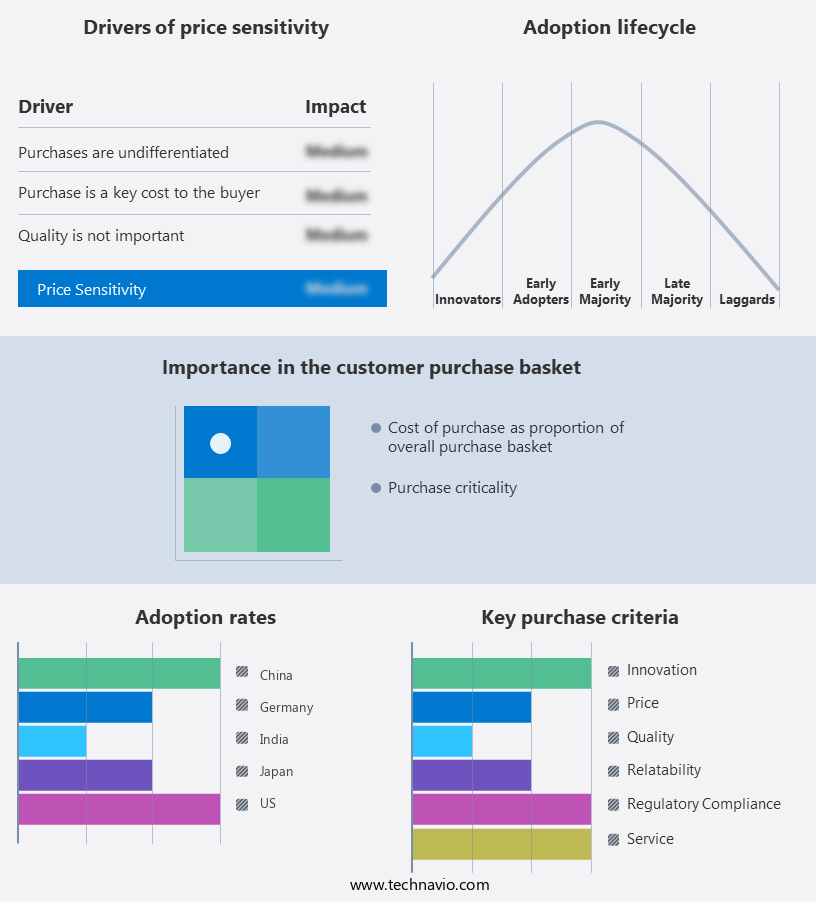
Customer Landscape
Key Companies & Market Insights
Companies are implementing various strategies, such as strategic alliances, market forecast, partnerships, mergers and acquisitions, geographical expansion, and product/service launches, to enhance their presence in the market. The market research and growth report includes detailed analyses of the competitive landscape of the market and information about key companies, including:
- Agility Public Warehousing Co. K.S.C.P
- Bollore SE
- C H Robinson Worldwide Inc.
- CEVA Logistics
- DB Schenker
- DHL Express Ltd.
- DSV AS
- Expeditors International of Washington Inc.
- GEODIS
- Hitachi Ltd.
- J B Hunt Transport Services Inc.
- Kuehne Nagel Management AG
- Nippon Express Holdings Inc.
- Penske Truck Leasing Co. L.P.
- Ryder System Inc.
- Sinotrans Ltd
- Toll Holdings Ltd.
- United Parcel Service Inc.
- XPO Inc.
- YUSEN LOGISTICS CO. LTD.
Qualitative and quantitative analysis of companies has been conducted to help clients understand the wider business environment as well as the strengths and weaknesses of key market players. Data is qualitatively analyzed to categorize companies as pure play, category-focused, industry-focused, and diversified; it is quantitatively analyzed to categorize companies as dominant, leading, strong, tentative, and weak.
Research Analyst Overview
Logistics services play a crucial role in the industrial sector, particularly in the context of e-commerce. With the rise in B2B and B2C transactions, third-party service providers have become indispensable in ensuring seamless logistics operations. Last-mile delivery, route optimization, and digital transformation are key focus areas for logistics providers. Artificial intelligence (AI) and SAAS transportation systems are revolutionizing the industry, enabling real-time tracking, predictive analytics, and automated dispatch. The logistics landscape is diverse, catering to various sectors such as healthcare, oil and gas, container trade, and consumer goods. The transportation system relies on roadways, railways, airways, seaways, and alternative fuels like electric vehicles (EVs) to facilitate the movement of goods.
Furthermore, the use of blockchain technology, IoT, RFID, and cloud computing enhances supply chain management, ensuring transparency and efficiency. Logistics automation through AI and robotics is reducing carbon emissions and optimizing freight transport. Micro-fulfillment centers and quick commerce are gaining popularity, enabling faster delivery of goods. The logistics industry is undergoing a digital transformation, with a focus on reducing costs, improving efficiency, and enhancing customer experience. The use of AI, alternative fuels, and transportation modes is expected to continue shaping the future of logistics services.
|
Market Scope |
|
|
Report Coverage |
Details |
|
Page number |
216 |
|
Base year |
2023 |
|
Historic period |
2018-2022 |
|
Forecast period |
2024-2028 |
|
Growth momentum & CAGR |
Accelerate at a CAGR of 5.4% |
|
Market Growth 2024-2028 |
USD 1347.5 billion |
|
Market structure |
Fragmented |
|
YoY growth 2023-2024(%) |
5.2 |
|
Key countries |
US, China, Japan, India, Germany, UK, Canada, South Korea, France, and Australia |
|
Competitive landscape |
Leading Companies, Market Positioning of Companies, Competitive Strategies, and Industry Risks |
What are the Key Data Covered in this Market Research and Growth Report?
- CAGR of the market during the forecast period
- Detailed information on factors that will drive the market growth and forecasting between 2024 and 2028
- Precise estimation of the size of the market and its contribution of the market in focus to the parent market
- Accurate predictions about upcoming market growth and trends and changes in consumer behaviour
- Growth of the market across APAC, North America, Europe, Middle East and Africa, and South America
- Thorough analysis of the market's competitive landscape and detailed information about companies
- Comprehensive analysis of factors that will challenge the growth of market companies
We can help! Our analysts can customize this market research report to meet your requirements. Get in touch
 RIA -
RIA - 
