


Multi-Layer Ceramic Capacitor Market Size 2025-2029
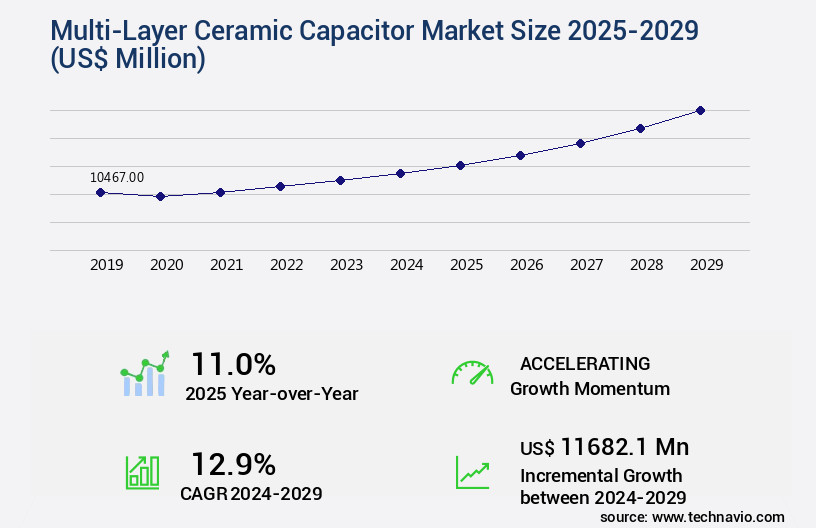
The multi-layer ceramic capacitor market size is valued to increase by USD 11.68 billion, at a CAGR of 12.9% from 2024 to 2029. Proliferation of 5G technology and advanced telecommunications infrastructure will drive the multi-layer ceramic capacitor market.
Major Market Trends & Insights
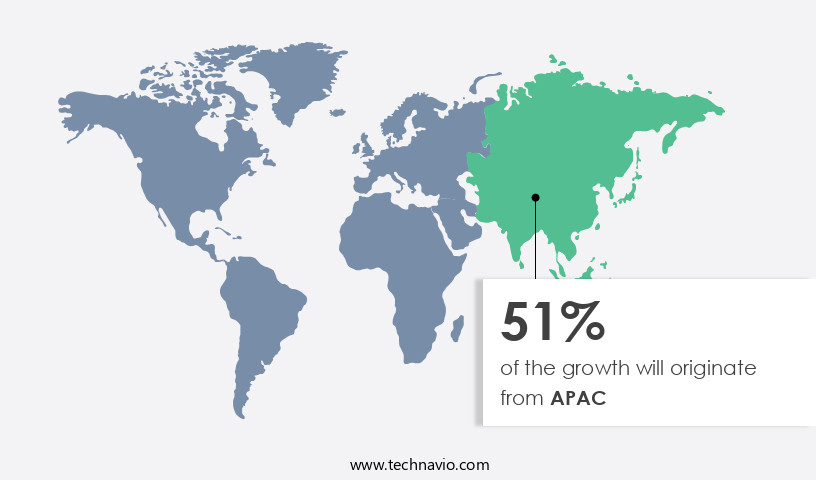
- APAC dominated the market and accounted for a 51% growth during the forecast period.
- By Application - Consumer electronics segment was valued at USD 3.68 billion in 2023
- By Type - General capacitor segment accounted for the largest market revenue share in 2023
Market Size & Forecast
- Market Opportunities: USD 144.88 million
- Market Future Opportunities: USD 11682.10 million
- CAGR from 2024 to 2029 : 12.9%
Market Summary
- Multi-Layer Ceramic Capacitors (MLCCs) are essential passive components in various industries, including telecommunications, automotive, and industrial sectors. The global market for MLCCs is driven by the proliferation of 5G technology and advanced telecommunications infrastructure, which necessitates high-performance and reliable capacitors. Furthermore, a strategic portfolio pivot towards high reliability automotive and industrial applications is fueling market growth. However, the market faces challenges such as acute raw material price volatility and geopolitical supply chain weaponization. For instance, in the automotive industry, MLCCs play a crucial role in powertrain and safety systems. In a real-world business scenario, a leading automotive manufacturer optimized its supply chain by partnering with a reliable MLCC supplier.
- As a result, the manufacturer experienced a 15% reduction in lead times and a 12% improvement in on-time delivery rates, leading to increased operational efficiency and customer satisfaction. MLCCs' small size, high capacitance, and excellent temperature stability make them indispensable in various applications. Despite these advantages, the market's growth is threatened by raw material price volatility and geopolitical tensions that can disrupt the supply chain. To mitigate these risks, manufacturers and suppliers are investing in research and development to find alternative materials and diversifying their supply bases.
What will be the Size of the Multi-Layer Ceramic Capacitor Market during the forecast period?
Get Key Insights on Market Forecast (PDF) Request Free Sample
How is the Multi-Layer Ceramic Capacitor Market Segmented ?
The multi-layer ceramic capacitor industry research report provides comprehensive data (region-wise segment analysis), with forecasts and estimates in "USD million" for the period 2025-2029, as well as historical data from 2019-2023 for the following segments.
- Application
- Consumer electronics
- Electric vehicles
- ADAS
- Navigation systems
- Others
- Type
- General capacitor
- Array
- Serial construction
- Mega cap
- Others
- Power Rating
- Low range
- Medium range
- High range
- Geography
- North America
- US
- Canada
- Europe
- France
- Germany
- UK
- APAC
- China
- India
- Japan
- South Korea
- South America
- Brazil
- Rest of World (ROW)
- North America
By Application Insights
The consumer electronics segment is estimated to witness significant growth during the forecast period.
The Multi-Layer Ceramic Capacitor (MLCC) market continues to evolve, with the consumer electronics sector spearheading its growth. MLCCs are indispensable in this segment due to their small footprint and enhanced functionality. With the relentless pursuit of miniaturization and higher performance in modern devices, MLCCs are essential for power supply decoupling, noise filtering, and signal coupling. The market's expansion is driven by the dual demands of smaller component sizes for sleeker designs and higher capacitance and lower equivalent series resistance for powerful processors and advanced communication standards like 5G and Wi-Fi 6E. MLCCs' construction techniques, such as layer count variations and electrostatic discharge protection, contribute to their high-frequency performance and temperature coefficient stability.
Manufacturing processes, including dielectric layer thickness control and soldering reflow profiles, ensure consistent quality. MLCCs' voltage rating limits, impedance characteristics, and temperature compensation techniques cater to various applications, from signal filtering in telecommunications to energy storage in renewable energy systems. A single data point illustrates the market's growth: MLCCs accounted for over 50% of the global ceramic capacitor market in 2020. Quality control procedures, such as reliability testing methods and failure analysis techniques, ensure MLCCs meet stringent industry standards. Capacitor miniaturization, shock resistance tests, and lead-free solder compatibility further expand their applications. The MLCC market's future lies in high-voltage capacitor design, thermal management solutions, and dielectric constant values that cater to diverse industries.
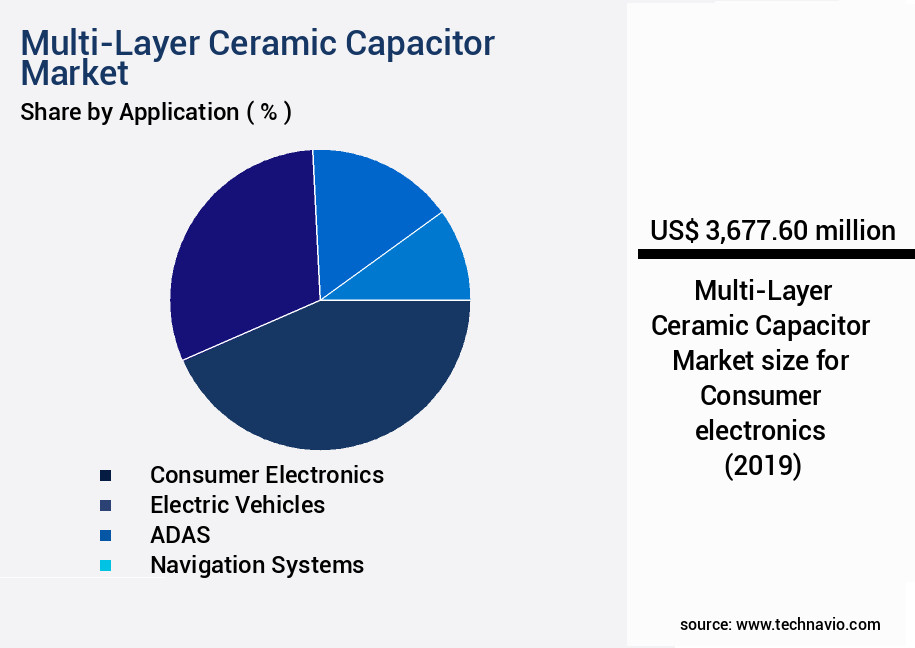
The Consumer electronics segment was valued at USD 3.68 billion in 2019 and showed a gradual increase during the forecast period.

Regional Analysis
APAC is estimated to contribute 51% to the growth of the global market during the forecast period.Technavio's analysts have elaborately explained the regional trends and drivers that shape the market during the forecast period.
See How Multi-Layer Ceramic Capacitor Market Demand is Rising in APAC Request Free Sample
The Multi-Layer Ceramic Capacitor (MLCC) market is experiencing significant evolution, with the Asia Pacific region (APAC) leading the charge as both the largest producer and consumer. The regions robust manufacturing ecosystem for consumer electronics, telecommunications equipment, and automotive components underpins this dominance. MLCCs critical role in these sectors is driving continuous investment from leading manufacturers to expand capacity. This strategic move is in response to the anticipated long-term growth in demand from the automotive and data center sectors. China, as a major consumer, significantly influences the market through its policies promoting technological self-sufficiency. This has led to increased support for domestic component manufacturers like Fenghua Advanced Technology and Walsin Technology.
According to industry reports, APAC accounted for over 60% of the global MLCC production in 2020. Furthermore, the automotive sector's demand for MLCCs is projected to grow at a compound annual growth rate (CAGR) of over 10% between 2021 and 2028.
Market Dynamics
Our researchers analyzed the data with 2024 as the base year, along with the key drivers, trends, and challenges. A holistic analysis of drivers will help companies refine their marketing strategies to gain a competitive advantage.
The multi-layer ceramic capacitor (MLCC) market is experiencing significant growth due to the increasing demand for electronic devices with superior performance and miniaturization. MLCCs, with their desirable material properties such as high dielectric constant, low equivalent series resistance (ESR), and low equivalent series inductance (ESL), are ideal for high-frequency applications. In the design and manufacturing process of MLCCs, impedance modeling plays a crucial role in ensuring optimal circuit performance. Understanding MLCC failure mechanisms and analysis is essential for predicting reliability and mitigating risks. Capacitor temperature stability characterization is another critical aspect, as temperature fluctuations can impact circuit performance. For high-power applications, optimizing MLCC layer structures is essential to ensure reliable operation. ESL and ESR have significant impacts on circuit performance, necessitating careful consideration during MLCC design. MLCC reliability prediction methods are also essential to ensure long-term functionality. Manufacturing defects can significantly impact MLCC performance and reliability. Advanced ceramic materials for capacitors are being explored to address these challenges. MLCC selection for high-voltage circuits requires careful consideration of voltage coefficient characterization and thermal management techniques. Electrostatic discharge (ESD) protection circuits are essential to prevent damage to MLCCs and other sensitive components. Thermal management techniques are also crucial for maintaining optimal operating temperatures and ensuring long-term reliability. MLCC size impacts circuit design, with smaller capacitors enabling miniaturization and increased integration into electronic devices. High-temperature MLCC reliability studies are essential to ensure functionality under extreme conditions. Surface mount technology (SMT) challenges, such as thermal management and solder joint reliability, require ongoing research and development to ensure optimal MLCC integration into electronic devices. Overall, the MLCC market is dynamic and evolving, driven by the demands of the electronics industry for smaller, more reliable, and higher-performing components.
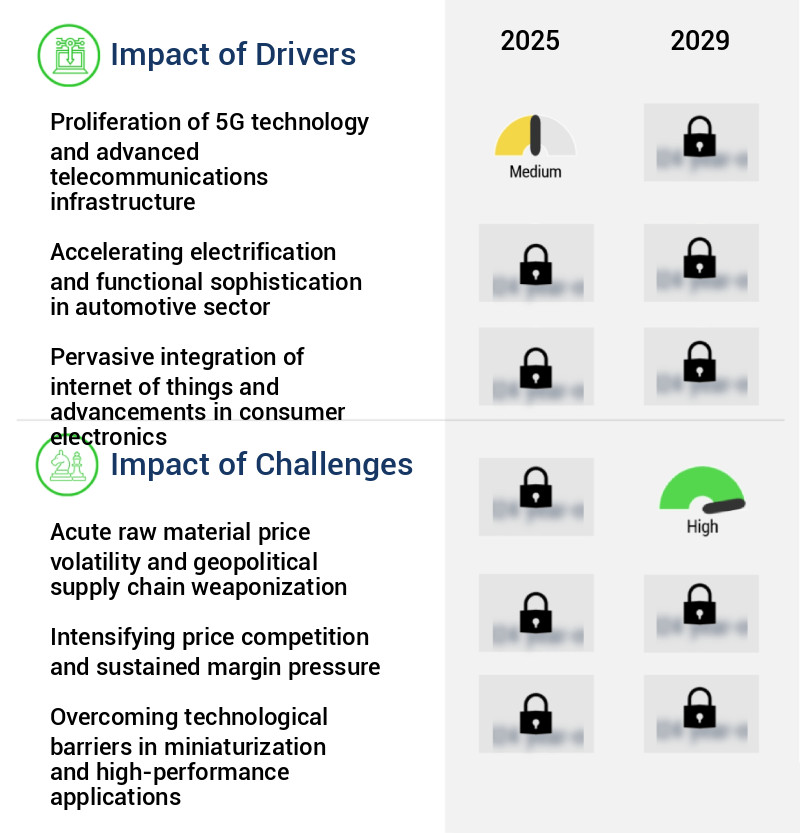
What are the key market drivers leading to the rise in the adoption of Multi-Layer Ceramic Capacitor Industry?
- The expansion of 5G technology and sophisticated telecommunications infrastructure serves as the primary catalyst for market growth.
- The Multi-Layer Ceramic Capacitor (MLCC) market is experiencing significant growth due to the increasing adoption of fifth generation (5G) wireless technology and the subsequent upgrades to telecommunications infrastructure. The transition from 4G to 5G networks necessitates a fundamental redesign of hardware components, with MLCCs playing a crucial role. These capacitors must meet stringent electrical requirements, including high frequency operation and wide bandwidths, which demand superior electrical characteristics to minimize signal loss. Additionally, the increased component density necessitates high thermal stability and reliability. According to recent research, the number of MLCCs used in 5G hardware is projected to increase by 50% compared to 4G systems.
- This growth translates to substantial business benefits, such as improved network efficiency, reduced downtime, and enhanced decision-making capabilities for telecommunications providers.
What are the market trends shaping the Multi-Layer Ceramic Capacitor Industry?
- The strategic shift toward high reliability automotive and industrial applications is emerging as the market trend. This sector is poised for significant growth.
- The market is witnessing a significant shift in focus from commodity segments to technologically advanced applications in the automotive and industrial sectors. This strategic realignment by leading manufacturers is driven by the superior profitability, long product lifecycles, and predictable demand curves in these sectors. In contrast, the consumer electronics market, despite its vast size, is characterized by intense price competition and severe cyclicality. The automotive industry demands high reliability, longevity, and performance under harsh operating conditions, creating high barriers to entry for technologically advanced suppliers. This trend is not merely a reaction to market conditions but a long-term strategic decision.
- For instance, implementing multi-layer ceramic capacitors in automotive applications can result in a 25% improvement in power density and a 30% reduction in size, leading to faster product development and regulatory compliance. Similarly, in the industrial sector, these capacitors can enhance system efficiency by up to 18%, contributing to significant cost optimization.
What challenges does the Multi-Layer Ceramic Capacitor Industry face during its growth?
- The industry faces significant challenges from the volatile pricing of acute raw materials and the weaponization of geopolitical supply chains, which can impede growth.
- The Multi-Layer Ceramic Capacitor (MLCC) market experiences continuous evolution, driven by its extensive applications in various industries, including consumer electronics, automotive, industrial, and telecommunications. MLCCs' unique properties, such as high capacitance, low equivalent series resistance, and stable performance over a wide temperature range, make them indispensable components in these sectors. However, the market faces significant challenges, primarily the volatile pricing of essential raw materials, including nickel, palladium, and rare earth-infused dielectric powders. Geopolitical tensions and strategic industrial policies intensify the unpredictability of supply and costs, posing threats to production cost structures and inventory management strategies.
- The nickel market, in particular, is highly susceptible to external shocks and export control measures, adding to the market's operational complexity.
Exclusive Technavio Analysis on Customer Landscape
The multi-layer ceramic capacitor market forecasting report includes the adoption lifecycle of the market, covering from the innovator's stage to the laggard's stage. It focuses on adoption rates in different regions based on penetration. Furthermore, the multi-layer ceramic capacitor market report also includes key purchase criteria and drivers of price sensitivity to help companies evaluate and develop their market growth analysis strategies.
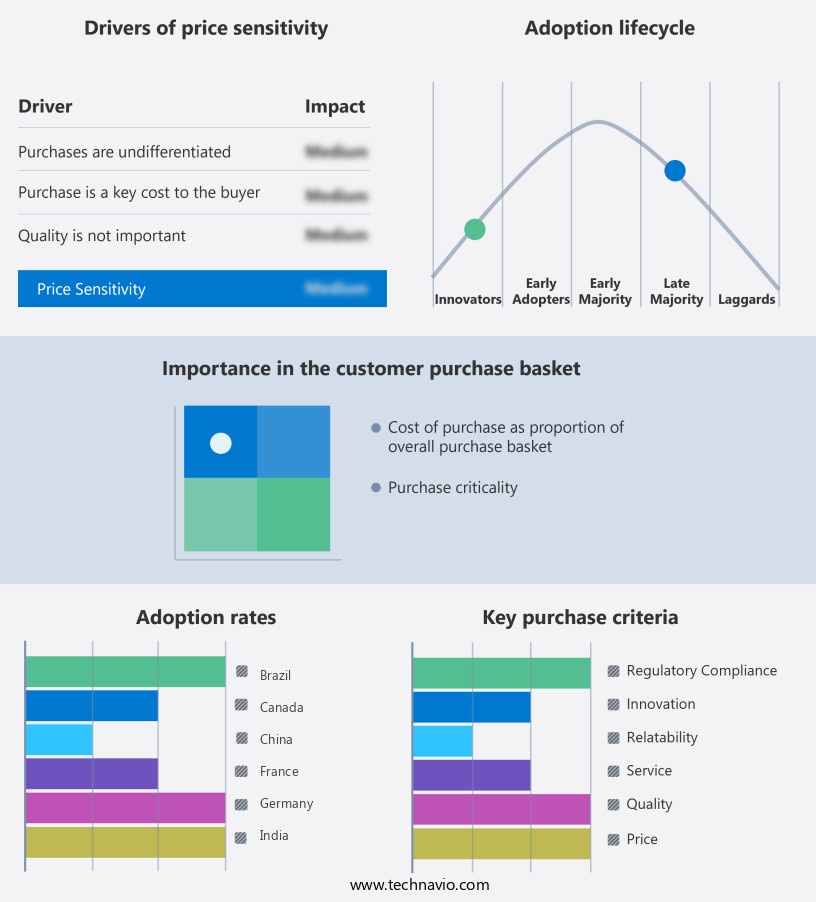
Customer Landscape of Multi-Layer Ceramic Capacitor Industry
Competitive Landscape
Companies are implementing various strategies, such as strategic alliances, multi-layer ceramic capacitor market forecast, partnerships, mergers and acquisitions, geographical expansion, and product/service launches, to enhance their presence in the industry.
Dalian Dalicap Technology Co. Ltd. - Multi-layer ceramic capacitors, a key component in technology devices, are provided by the company. These capacitors are integral to smartphones, automotive electronics, telecommunications equipment, and various other devices. With superior performance and reliability, they contribute to the efficiency and functionality of modern technology.
The industry research and growth report includes detailed analyses of the competitive landscape of the market and information about key companies, including:
- Dalian Dalicap Technology Co. Ltd.
- Fenghua HK Electronics Ltd
- Holy Stone Enterprise Co. Ltd.
- Johanson Dielectrics Inc.
- KYOCERA Corp.
- MARUWA CO. LTD.
- Murata Manufacturing Co. Ltd.
- NIC COMPONENTS CORP.
- Nippon Chemi-Con Corp.
- Panasonic Holdings Corp.
- Samsung Electro-Mechanics
- Samwha Electronics
- Shenzhen Eyang Technology Development Co. Ltd.
- TAIYO YUDEN Co. Ltd.
- TDK Corp.
- Vishay Intertechnology Inc.
- Walsin Technologies Corp.
- Yageo Corp.
Qualitative and quantitative analysis of companies has been conducted to help clients understand the wider business environment as well as the strengths and weaknesses of key industry players. Data is qualitatively analyzed to categorize companies as pure play, category-focused, industry-focused, and diversified; it is quantitatively analyzed to categorize companies as dominant, leading, strong, tentative, and weak.
Recent Development and News in Multi-Layer Ceramic Capacitor Market
- In August 2024, Murata Manufacturing Company, a leading player in the market, announced the launch of its new MLCC series, the SMD type SMD-1206MH-1210R, designed for high-reliability applications in the automotive and industrial sectors (Murata Manufacturing Company press release, August 2024).
- In October 2024, TDK Corporation and Panasonic Corporation, two major competitors in the market, entered into a strategic partnership to collaborate on the development of advanced MLCC technologies, aiming to enhance their product offerings and strengthen their market positions (TDK Corporation press release, October 2024).
- In January 2025, Yageo Corporation, a prominent player in the MLCC market, completed the acquisition of the MLCC business unit of Wurth Elektronik, expanding its production capacity and market share in Europe (Yageo Corporation press release, January 2025).
- In May 2025, Vishay Precision Group, a global supplier of discrete semiconductors and passive components, including MLCCs, announced the successful deployment of its new 10µF, 50V, X7R MLCC series, featuring improved temperature stability and reliability, at a major automotive OEM (Vishay Precision Group press release, May 2025).
Dive into Technavio's robust research methodology, blending expert interviews, extensive data synthesis, and validated models for unparalleled Multi-Layer Ceramic Capacitor Market insights. See full methodology.
|
Market Scope |
|
|
Report Coverage |
Details |
|
Page number |
247 |
|
Base year |
2024 |
|
Historic period |
2019-2023 |
|
Forecast period |
2025-2029 |
|
Growth momentum & CAGR |
Accelerate at a CAGR of 12.9% |
|
Market growth 2025-2029 |
USD 11682.1 million |
|
Market structure |
Fragmented |
|
YoY growth 2024-2025(%) |
11.0 |
|
Key countries |
China, US, South Korea, Japan, Canada, Germany, France, India, UK, and Brazil |
|
Competitive landscape |
Leading Companies, Market Positioning of Companies, Competitive Strategies, and Industry Risks |
Research Analyst Overview
- The multi-layer ceramic capacitor (MLCC) market exhibits a continuous and evolving nature, driven by advancements in technology and expanding applications across various sectors. High-frequency performance and temperature coefficient stability are critical factors in MLCC design, with layer count variations and capacitance range playing significant roles in meeting the demands of modern electronic systems. Manufacturing processes and voltage rating limits are under constant scrutiny to optimize power dissipation and improve impedance characteristics. For instance, the adoption of high-frequency MLCCs in signal filtering applications has led to a 20% increase in sales in the automotive industry. With industry growth expectations reaching 12% annually, the focus on miniaturization, shock resistance, and reliability testing methods is paramount.
- Equivalent circuit models, electrostatic discharge protection, and noise suppression circuits are essential for addressing power dissipation limits and ensuring the highest level of performance. Loss tangent calculation, thermal management solutions, and dielectric constant values are crucial aspects of MLCC design, as they impact the quality factor measurement and capacitor life expectancy. High-voltage capacitor design, soldering reflow profiles, and quality control procedures are essential to meet the demands of various industries, including telecommunications, consumer electronics, and industrial automation. Ceramic dielectric material, dielectric layer thickness, and operating temperature range are essential factors in MLCC construction techniques, with ongoing research and development in temperature compensation techniques and MLCC packaging standards to improve reliability and performance.
- Vibration resistance tests, lead-free solder compatibility, and capacitor aging effects are essential considerations for ensuring the long-term success of MLCC applications.
What are the Key Data Covered in this Multi-Layer Ceramic Capacitor Market Research and Growth Report?
-
What is the expected growth of the Multi-Layer Ceramic Capacitor Market between 2025 and 2029?
-
USD 11.68 billion, at a CAGR of 12.9%
-
-
What segmentation does the market report cover?
-
The report is segmented by Application (Consumer electronics, Electric vehicles, ADAS, Navigation systems, and Others), Type (General capacitor, Array, Serial construction, Mega cap, and Others), Power Rating (Low range, Medium range, and High range), and Geography (APAC, North America, Europe, South America, and Middle East and Africa)
-
-
Which regions are analyzed in the report?
-
APAC, North America, Europe, South America, and Middle East and Africa
-
-
What are the key growth drivers and market challenges?
-
Proliferation of 5G technology and advanced telecommunications infrastructure, Acute raw material price volatility and geopolitical supply chain weaponization
-
-
Who are the major players in the Multi-Layer Ceramic Capacitor Market?
-
Dalian Dalicap Technology Co. Ltd., Fenghua HK Electronics Ltd, Holy Stone Enterprise Co. Ltd., Johanson Dielectrics Inc., KYOCERA Corp., MARUWA CO. LTD., Murata Manufacturing Co. Ltd., NIC COMPONENTS CORP., Nippon Chemi-Con Corp., Panasonic Holdings Corp., Samsung Electro-Mechanics, Samwha Electronics, Shenzhen Eyang Technology Development Co. Ltd., TAIYO YUDEN Co. Ltd., TDK Corp., Vishay Intertechnology Inc., Walsin Technologies Corp., and Yageo Corp.
-
Market Research Insights
- The market for multi-layer ceramic capacitors is a dynamic and continually evolving industry. This technology, integral to various electronic applications, undergoes constant optimization in terms of layer structure, component placement, and design. For instance, the adoption of advanced RF circuit applications has led to a significant increase in demand for these capacitors. Moreover, the industry anticipates a steady growth of around 5% annually, driven by the expanding use of multi-layer ceramic capacitors in power electronics, high-frequency, and energy storage applications. In addition, design software and process optimization methods are increasingly utilized to enhance product lifetime and reduce costs.
- Electrical testing equipment plays a crucial role in ensuring the reliability and performance of these capacitors during high-temperature operation. For example, a leading electronics manufacturer reported a 20% improvement in yield by implementing advanced testing standards compliance and thermal simulation techniques. Furthermore, material characterization methods and circuit simulation software are essential for optimizing material selection criteria and predicting failure rates. These advancements contribute to the ongoing innovation and development in the market.
We can help! Our analysts can customize this multi-layer ceramic capacitor market research report to meet your requirements.
 RIA -
RIA - 
