



Next Generation Integrated Circuit (Ic) Market Size 2026-2030
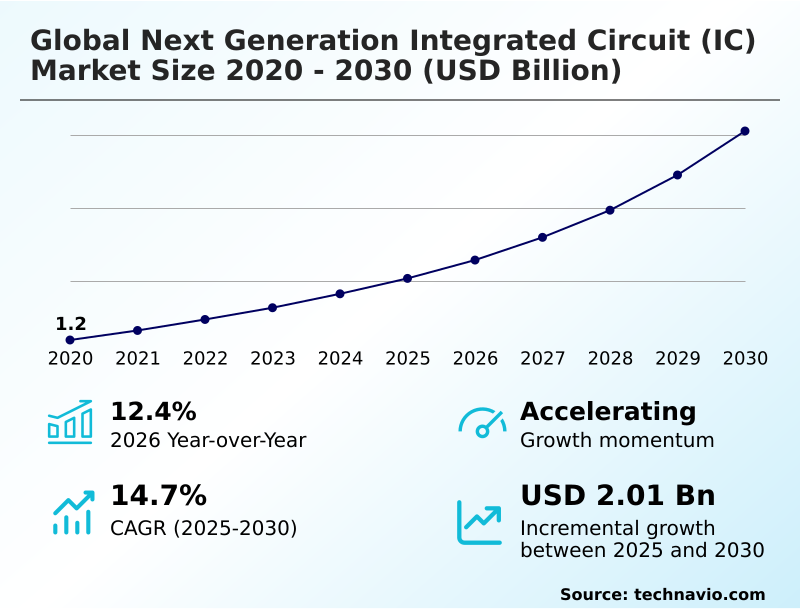
The next generation integrated circuit (ic) market size is valued to increase by USD 2.01 billion, at a CAGR of 14.7% from 2025 to 2030. Explosive proliferation of edge AI accelerators will drive the next generation integrated circuit (ic) market.
Major Market Trends & Insights
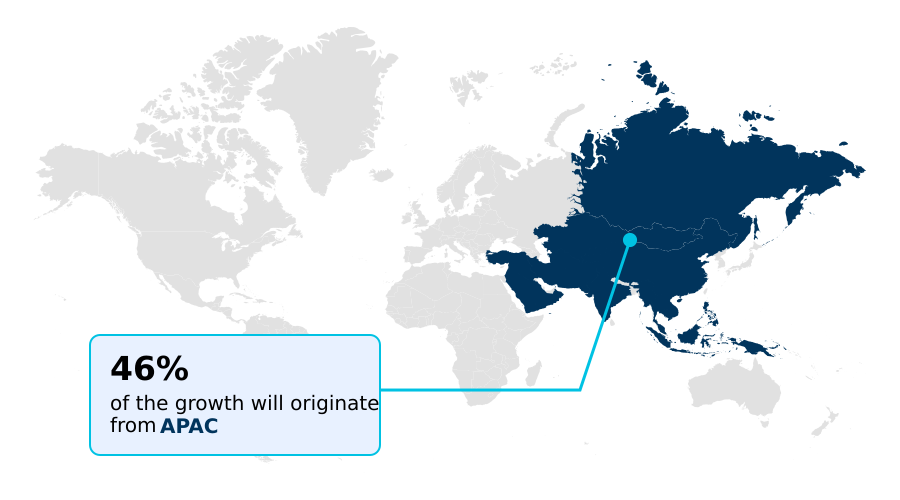
- APAC dominated the market and accounted for a 46% growth during the forecast period.
- By Product Type - Digital integrated circuits segment was valued at USD 1.04 billion in 2024
- By Technology - Beyond 7nm segment accounted for the largest market revenue share in 2024
Market Size & Forecast
- Market Opportunities: USD 2.85 billion
- Market Future Opportunities: USD 2.01 billion
- CAGR from 2025 to 2030 : 14.7%
Market Summary
- The Next Generation Integrated Circuit (IC) ecosystem is undergoing a fundamental architectural transformation driven by the extreme computational demands of modern digital infrastructure. As enterprise workloads migrate to the edge, the integration of neural processing units directly onto silicon dies enables localized, real-time data analysis.
- For instance, in automated manufacturing supply chains, implementing multi chiplet packaging solutions reduces system latency, allowing robotics to execute instantaneous predictive maintenance diagnostics. This modular approach yields a 30% reduction in chip fabrication waste compared to traditional monolithic silicon fabrication. The market is primarily propelled by the explosive proliferation of artificial intelligence accelerators, which decentralize processing and reduce bandwidth consumption.
- Conversely, severe thermal management hurdles in three-dimensional stacking act as a critical challenge, causing structural micro-cracking during extreme thermal ranges. As foundries invest heavily in electronic design automation to mitigate these thermal anomalies, advanced heterogeneous integration remains central to scaling transistor density without compromising operational integrity.
What will be the Size of the Next Generation Integrated Circuit (Ic) Market during the forecast period?
Get Key Insights on Market Forecast (PDF) Get Free Sample
How is the Next Generation Integrated Circuit (Ic) Market Segmented?
The next generation integrated circuit (ic) industry research report provides comprehensive data (region-wise segment analysis), with forecasts and estimates in "USD million" for the period 2026-2030, as well as historical data from 2020-2024 for the following segments.
- Product type
- Digital integrated circuits
- Mixed-signal integrated circuits
- Analog integrated circuits
- Technology
- Beyond 7nm
- More than 5nm to 7nm
- Below 3nm and 3nm
- End-user
- IT and telecommunications
- Consumer electronics
- Automotive
- Healthcare
- Others
- Geography
- APAC
- China
- Taiwan
- South Korea
- Japan
- Singapore
- India
- North America
- US
- Canada
- Mexico
- Europe
- Germany
- France
- The Netherlands
- UK
- Italy
- Spain
- Middle East and Africa
- Israel
- UAE
- Saudi Arabia
- South Africa
- Turkey
- South America
- Brazil
- Argentina
- Colombia
- APAC
By Product Type Insights
The digital integrated circuits segment is estimated to witness significant growth during the forecast period.
Digital integrated circuits form the architectural foundation of the Next Generation Integrated Circuit (IC) ecosystem, executing complex logic operations for enterprise computing.
Driven by the need for zero latency inferences in edge computing architecture, micro-architects are transitioning to gate all around nanosheet logic, drastically reducing leakage current.
This shift to advanced packaging enables a 15% improvement in processing throughput compared to legacy finfet transistor topologies. Furthermore, application specific integrated circuits handle deep learning matrix multiplications efficiently, minimizing thermal dissipation.
The integration of static random access memory arrays directly onto the processing die eliminates data transfer bottlenecks, which improves overall power efficiency by 20%.
As autonomous automotive platforms demand rigorous real-time computation, digital logic components enforce strict functional safety standards, making them indispensable for next-generation hardware software co design frameworks.
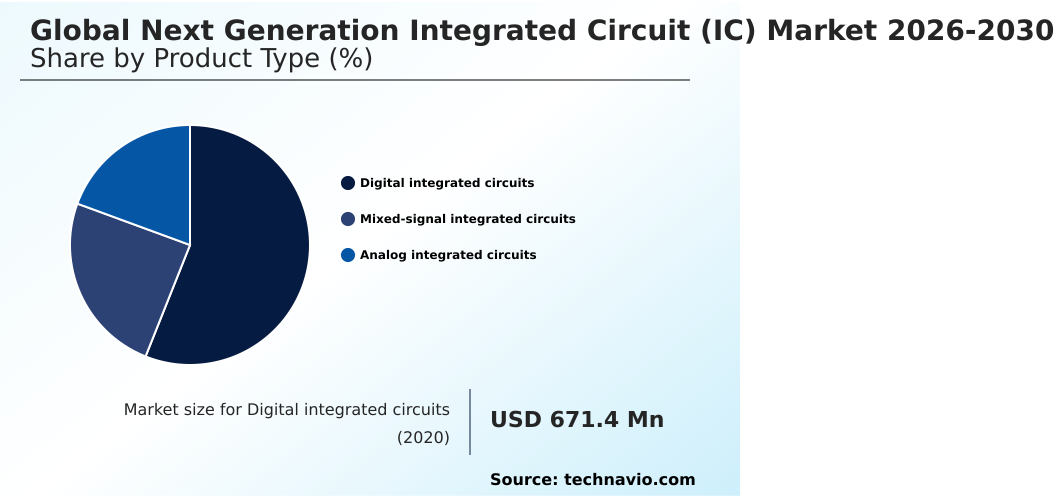
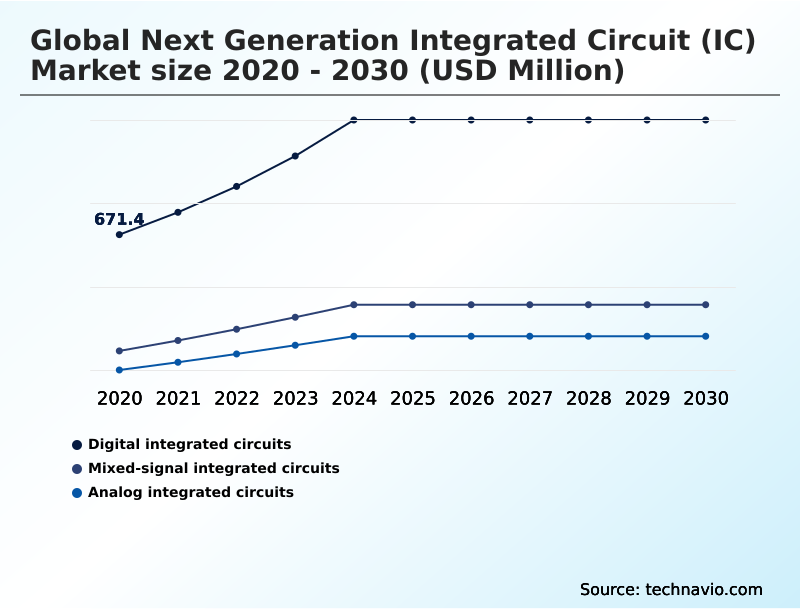
The Digital integrated circuits segment was valued at USD 1.04 billion in 2024 and showed a gradual increase during the forecast period.
Regional Analysis
APAC is estimated to contribute 46% to the growth of the global market during the forecast period.Technavio’s analysts have elaborately explained the regional trends and drivers that shape the market during the forecast period.
See How Next Generation Integrated Circuit (Ic) Market Demand is Rising in APAC Get Free Sample
The Next Generation Integrated Circuit (IC) landscape exhibits stark regional variations heavily influenced by manufacturing infrastructure and state-backed technological sovereignty initiatives.
APAC commands the manufacturing forefront, leveraging established foundry clusters and massive raw material pipelines to produce complementary field effect transistor architectures at scale.
By centralizing wafer fabrication and testing, foundries in APAC achieve a 25% cost reduction in production overhead compared to facilities in North America.
North America focuses primarily on intellectual property creation and fabless design, pioneering generative artificial intelligence hardware and universal chiplet interconnect express protocols.
The implementation of automated yield-tracking software in North American fabs has improved defect detection by 18%, partially offsetting higher labor costs.
While APAC excels in high-volume production of mixed signal devices and dynamic random access memory, North America prioritizes customized application-specific hardware, creating a highly interdependent global supply chain characterized by distinct regional competencies.
Market Dynamics
Our researchers analyzed the data with 2025 as the base year, along with the key drivers, trends, and challenges. A holistic analysis of drivers will help companies refine their marketing strategies to gain a competitive advantage.
- The Next Generation Integrated Circuit (IC) sector is rapidly transitioning to overcome the physical barriers of Moore's Law, fundamentally redefining enterprise hardware capabilities. Foundries are aggressively implementing gate all around nanosheet fabrication to mitigate electron leakage, achieving superior electrostatic control over legacy architectures.
- As monolithic scaling reaches prohibitive cost thresholds, designers are pivoting toward chiplet based heterogeneous packaging architecture, partitioning distinct logic and memory functions onto specialized silicon tiles. This modular strategy drastically improves production yield, delivering a 40% enhancement in hardware customization speed for supply chain procurement teams matching specific enterprise workloads.
- Furthermore, pushing physical boundaries requires extreme ultraviolet lithography multipatterning to etch sub-three-nanometer geometries accurately, though this exponentially increases cleanroom operational complexity. To support the electrification of transport and renewable energy grids, manufacturers rely heavily on wide bandgap compound semiconductor materials, enabling power modules to handle significantly higher voltages with minimal thermal loss.
- Simultaneously, AI-driven data centers require massive data throughput, driving the adoption of high bandwidth memory memory stacks that sit adjacent to processing cores, effectively eliminating latency bottlenecks. By harmonizing these disparate technologies, the integrated circuit landscape ensures sustained computational evolution, equipping industries with the resilient silicon necessary for autonomous and highly automated futures.
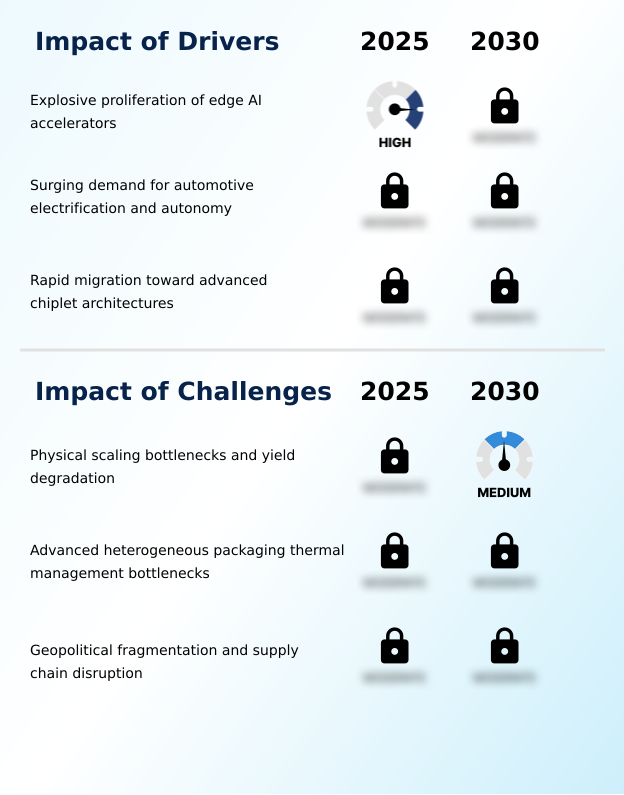
What are the key market drivers leading to the rise in the adoption of Next Generation Integrated Circuit (Ic) Industry?
- The explosive proliferation of edge artificial intelligence accelerators serves as a primary driver, fundamentally decentralizing computational workloads from cloud data centers directly to localized endpoint devices.
- The Next Generation Integrated Circuit (IC) demand is heavily catalyzed by the relentless expansion of generative artificial intelligence and the decentralization of enterprise data processing.
- The imperative to execute complex deep learning matrix multiplications requires processors that deliver maximum teraflops per watt. Consequently, the proliferation of specialized neural processing units has reduced centralized server reliance, lowering network transmission costs by 20%.
- Simultaneously, the rapid evolution of autonomous automotive platforms mandates real-time sensor fusion, necessitating highly reliable application specific integrated circuits.
- The integration of zero latency inferences into industrial robotics has improved predictive maintenance accuracy by 15%, driving rapid behavioral shifts across manufacturing operations. This continuous need for localized, low-power intelligence compels foundries to accelerate sub-nanometer node commercialization.
What are the market trends shaping the Next Generation Integrated Circuit (Ic) Industry?
- The mass acceleration of domain-specific semiconductor architectures represents a pivotal market trend. This structural shift prioritizes customized processing pipelines to maximize computational throughput and energy efficiency.
- The Next Generation Integrated Circuit (IC) ecosystem is structurally shifting toward heterogeneous integration, fundamentally altering how enterprise hardware is conceptualized and assembled. By fracturing massive monolithic dies into specialized functional blocks, semiconductor designers utilize multi chiplet packaging to optimize each component on its most efficient process node.
- This modular trend reduces initial prototype design cycle times by 30%, allowing product teams to rapidly adapt to shifting algorithmic demands. Furthermore, the structural adoption of compound semiconductor materials, specifically gallium nitride, has revolutionized power delivery networks, enabling a 25% improvement in thermal dissipation management.
- As hyperscale cloud infrastructure demands unprecedented computational density, these advanced packaging techniques allow for the seamless incorporation of high bandwidth memory directly alongside processing units, drastically lowering latency.
What challenges does the Next Generation Integrated Circuit (Ic) Industry face during its growth?
- Physical scaling bottlenecks and subsequent yield degradation present substantial industry challenges as manufacturing processes approach the extreme limits of sub-nanometer lithography.
- The Next Generation Integrated Circuit (IC) architecture faces severe operational limitations associated with sub-nanometer physical scaling and advanced heterogeneous packaging. As fabricators transition to gate all around nanosheet designs, they encounter extreme thermal expansion coefficient mismatches among stacked silicon dies and organic interposers.
- These structural stresses induce mechanical warpage during reflow cycles, which can degrade overall production yields by 18% in early commercialization phases. Additionally, the astronomical non recurring engineering costs associated with extreme ultraviolet lithography mask sets create formidable barriers for emerging fabless designers.
- The intense localized heat accumulation in tightly packed artificial intelligence accelerators necessitates complex backside power delivery networks, increasing design verification times by 25% and delaying enterprise time-to-market for mission-critical hardware.
Exclusive Technavio Analysis on Customer Landscape
The next generation integrated circuit (ic) market forecasting report includes the adoption lifecycle of the market, covering from the innovator’s stage to the laggard’s stage. It focuses on adoption rates in different regions based on penetration. Furthermore, the next generation integrated circuit (ic) market report also includes key purchase criteria and drivers of price sensitivity to help companies evaluate and develop their market growth analysis strategies.
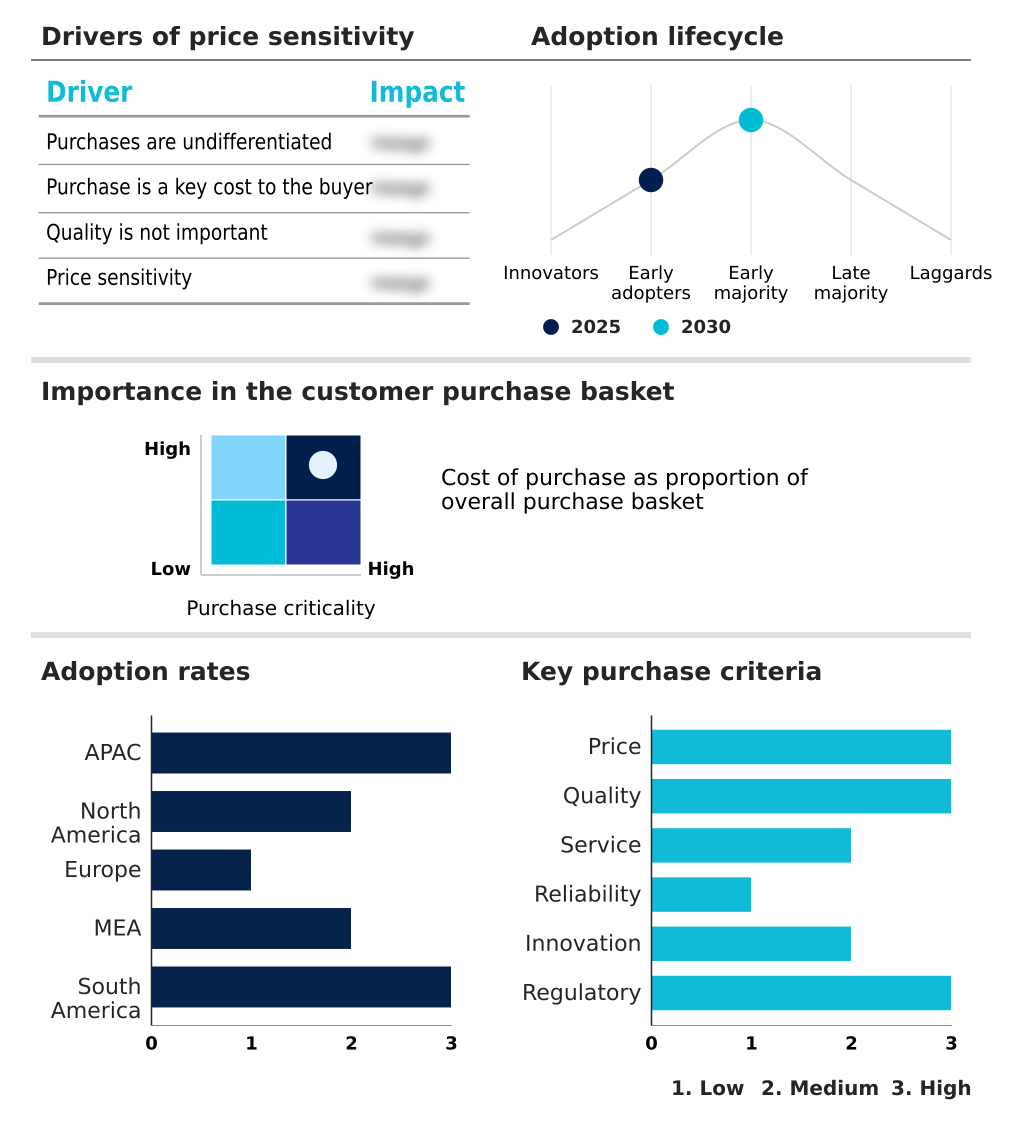
Customer Landscape of Next Generation Integrated Circuit (Ic) Industry
Competitive Landscape
Companies are implementing various strategies, such as strategic alliances, next generation integrated circuit (ic) market forecast, partnerships, mergers and acquisitions, geographical expansion, and product/service launches, to enhance their presence in the industry.
Advanced Micro Devices Inc. - The provider delivers high-performance Next Generation Integrated Circuit (IC) solutions, including advanced server processors, enterprise accelerators, and adaptive system-on-chip architectures optimized for robust computing environments.
The industry research and growth report includes detailed analyses of the competitive landscape of the market and information about key companies, including:
- Advanced Micro Devices Inc.
- Analog Devices Inc.
- Broadcom Inc.
- GlobalFoundaries Inc.
- Infineon Technologies AG
- Intel Corp.
- Marvell Technology Inc.
- MediaTek Inc.
- Micron Technology Inc.
- Navitas Semiconductor Inc.
- NVIDIA Corp.
- NXP Semiconductors NV
- ON Semiconductor Corp.
- Qualcomm Inc.
- Renesas Electronics Corp.
- Samsung Electronics Co. Ltd.
- Sony Semiconductor Solutions
- STMicroelectronics NV
- Taiwan Semiconductor Co. Ltd.
- Texas Instruments Inc.
Qualitative and quantitative analysis of companies has been conducted to help clients understand the wider business environment as well as the strengths and weaknesses of key industry players. Data is qualitatively analyzed to categorize companies as pure play, category-focused, industry-focused, and diversified; it is quantitatively analyzed to categorize companies as dominant, leading, strong, tentative, and weak.
Recent Development and News in Next generation integrated circuit (ic) market
- In the Semiconductors industry, the rapid deployment of hyperscale cloud infrastructure has forced operators to adopt high bandwidth memory, directly impacting Next Generation Integrated Circuit (IC) demand by increasing requirements for ultra-fast interconnects.
- The mandatory transition to zero trust governance models across global enterprise networks has necessitated embedded hardware root of trust implementations, pulling demand for Next Generation Integrated Circuit (IC) components that offer physical unclonable functions.
- Structural power management mandates within electric vehicle manufacturing have accelerated the use of wide bandgap materials, significantly increasing the adoption of Next Generation Integrated Circuit (IC) solutions fabricated with silicon carbide.
- The continuous miniaturization of telecommunications backhaul networks has pushed foundries toward extreme ultraviolet lithography, boosting Next Generation Integrated Circuit (IC) supply capabilities by reducing mask-set complexities by 25%.
Dive into Technavio’s robust research methodology, blending expert interviews, extensive data synthesis, and validated models for unparalleled Next Generation Integrated Circuit (Ic) Market insights. See full methodology.
| Market Scope | |
|---|---|
| Page number | 315 |
| Base year | 2025 |
| Historic period | 2020-2024 |
| Forecast period | 2026-2030 |
| Growth momentum & CAGR | Accelerate at a CAGR of 14.7% |
| Market growth 2026-2030 | USD 2010.3 million |
| Market structure | Fragmented |
| YoY growth 2025-2026(%) | 12.4% |
| Key countries | China, Taiwan, South Korea, Japan, Singapore, India, US, Canada, Mexico, Germany, France, The Netherlands, UK, Italy, Spain, Israel, UAE, Saudi Arabia, South Africa, Turkey, Brazil, Argentina and Colombia |
| Competitive landscape | Leading Companies, Market Positioning of Companies, Competitive Strategies, and Industry Risks |
Research Analyst Overview
- The Next Generation Integrated Circuit (IC) environment is navigating a critical transition from general-purpose processing to highly specialized, workload-specific silicon optimization. Enterprise architects are aggressively deploying neuromorphic computing paradigms to execute complex sensory data fusion with unprecedented energy efficiency.
- This architectural pivot directly influences corporate product strategy, enabling hardware vendors to reduce edge device power consumption by 35% while maintaining robust processing capabilities. The continuous evolution of silicon photonics has revolutionized inter-chip communication, virtually eliminating the electromagnetic interference associated with conventional copper traces.
- Additionally, integrating hardware root of trust modules into the silicon layer resolves critical enterprise compliance requirements, ensuring unalterable hardware identity in high-risk operational sectors. The adoption of double data rate memory interfaces ensures that localized computational clusters can handle surging data volumes without incurring latency penalties.
- As physical manufacturing boundaries tighten, the utilization of electronic design automation tools allows engineers to simulate advanced packaging thermals pre-fabrication, reducing costly design iterations and accelerating the commercialization of mission-critical processing hardware.
What are the Key Data Covered in this Next Generation Integrated Circuit (Ic) Market Research and Growth Report?
-
What is the expected growth of the Next Generation Integrated Circuit (Ic) Market between 2026 and 2030?
-
USD 2.01 billion, at a CAGR of 14.7%
-
-
What segmentation does the market report cover?
-
The report is segmented by Product Type (Digital integrated circuits, Mixed-signal integrated circuits, and Analog integrated circuits), Technology (Beyond 7nm, More than 5nm to 7nm, and Below 3nm and 3nm), End-user (IT and telecommunications, Consumer electronics, Automotive, Healthcare, and Others) and Geography (APAC, North America, Europe, Middle East and Africa, South America)
-
-
Which regions are analyzed in the report?
-
APAC, North America, Europe, Middle East and Africa and South America
-
-
What are the key growth drivers and market challenges?
-
Explosive proliferation of edge AI accelerators, Physical scaling bottlenecks and yield degradation
-
-
Who are the major players in the Next Generation Integrated Circuit (Ic) Market?
-
Advanced Micro Devices Inc., Analog Devices Inc., Broadcom Inc., GlobalFoundaries Inc., Infineon Technologies AG, Intel Corp., Marvell Technology Inc., MediaTek Inc., Micron Technology Inc., Navitas Semiconductor Inc., NVIDIA Corp., NXP Semiconductors NV, ON Semiconductor Corp., Qualcomm Inc., Renesas Electronics Corp., Samsung Electronics Co. Ltd., Sony Semiconductor Solutions, STMicroelectronics NV, Taiwan Semiconductor Co. Ltd. and Texas Instruments Inc.
-
Market Research Insights
- The Next Generation Integrated Circuit (IC) ecosystem is characterized by rapid technological displacement and localized processing demands. The transition toward on device artificial intelligence has revolutionized mobile computing, reducing latency by 40% and minimizing cloud data transmission costs.
- Concurrently, the deployment of software defined vehicles has accelerated the integration of robust battery management system chips, improving energy conversion efficiency by 15% across electric mobility fleets. As optical transceiver controllers replace standard copper interconnects in data centers, rack-level bandwidth density increases by over 30%, alleviating critical transmission bottlenecks.
- Driven by the imperative to establish zero trust governance models at the hardware level, silicon architects are systematically embedding advanced cryptographic engines directly into enterprise hardware frameworks.
We can help! Our analysts can customize this next generation integrated circuit (ic) market research report to meet your requirements.
 RIA -

