


Wood Coatings Market Analysis North America - US, Canada, Mexico - Size and Forecast 2024-2028

Wood Coatings Market Analysis North America - US, Canada, Mexico - Size and Forecast 2024-2028

Published: May 2024 169 Pages SKU: IRTNTR77907

Market Overview at a Glance

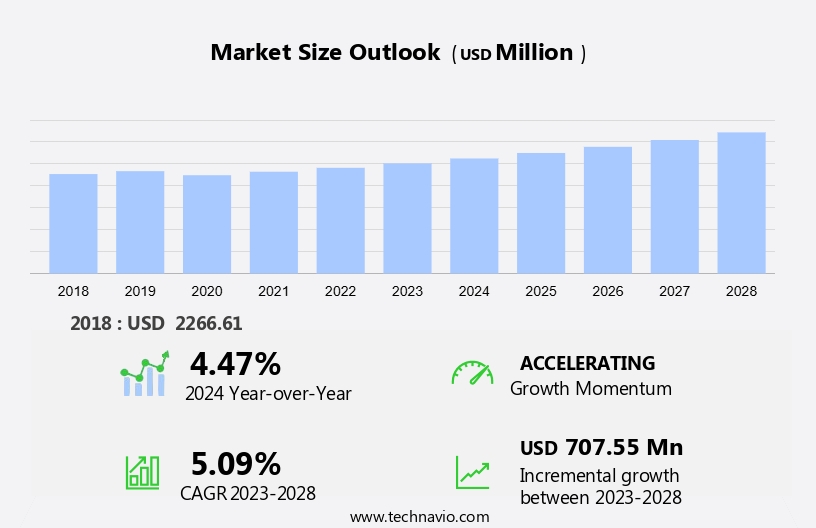
$707.55 Mn
Market Opportunity
5.09%
CAGR
4.47
YoY growth 2023-2024(%)

North America Wood Coatings Market Size 2024-2028 

The North America wood coatings market size is forecast to increase by USD 707.55 million at a CAGR of 5.09% between 2023 and 2028.

  • In the dynamic wood coatings market, three key drivers are shaping its growth trajectory. Firstly, the increasing adoption of renewable and sustainable raw materials is a significant trend, as environmental concerns gain prominence. Secondly, user-friendly DIY wood coating products are gaining traction due to their convenience and cost-effectiveness. These coatings offer benefits like moisture resistance, UV protection, and resistance to air pollution, ensuring the longevity of furniture in residential spaces, hotels, corporate offices, and the furniture rental industry. Lastly, constantly evolving standards and regulations for wood coatings necessitate continuous innovation and compliance. These factors, in conjunction, present both opportunities and challenges for market participants. Adhering to regulatory requirements while maintaining product quality and affordability is a delicate balance that requires strategic planning and agility. Consequently, the market is poised for growth, driven by these evolving market dynamics.

What will be the size of the North America Wood Coatings Market during the forecast period?
Wood Coatings Market in North America Size

 Request Free Sample

  • The market plays a significant role In the furniture industry, enhancing the visual appeal of various furniture items such as beds, chairs, shelves, tables, cabinets, and more. Wood coating technologies, including nanotechnology, UV-curable coatings, and water-based coatings, contribute to the production of durable and aesthetically pleasing furniture. The furniture manufacturing sector relies heavily on wood coatings for housing construction and office furniture production. Traditional solvent-based coatings have been commonly used, but the market is shifting towards eco-friendly and health-conscious alternatives due to concerns about adverse health effects and transportation disruptions. The market is expected to grow, driven by the increasing demand for sustainable and high-performance coatings.

How is this market segmented and which is the largest segment?

The market research report provides comprehensive data (region-wise segment analysis), with forecasts and estimates in "USD million" for the period 2024-2028, as well as historical data from 2018-2022 for the following segments.

  • Product
    • Stains and varnishes
    • Shellacs
    • Wood preservatives
    • Others
  • Technology
    • Solvent-based
    • Water-based
    • Others
  • Geography
    • North America
      • Canada
      • Mexico
      • US

By Product Insights

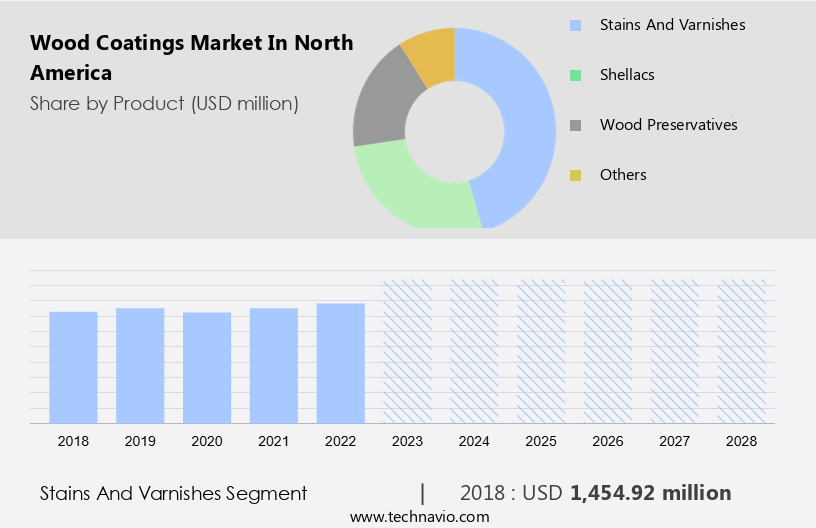
  • The stains and varnishes segment is estimated to witness significant growth during the forecast period. The indoor air quality consciousness of consumers in North America fuels the growth of the market, particularly in home renovation projects. DIY enthusiasts also contribute to the demand in the production and manufacturing of wood furniture and interior decoration projects. Aesthetic appeal and visual appeal are significant factors driving the preference for various colors and finishes in wooden furniture, including high-traffic environments such as hotels, corporate offices, and residential spaces. Moisture resistance and UV protection are essential features of wood coatings, making them indispensable in furniture production and manufacturing.
  • Temperature fluctuations and durability are also critical considerations In the selection of protective layers for wooden products, including cupboards, dining sets, beds, chairs, shelves, tables, and cabinets. The market caters to various industries, including furniture stores and rental industries, where the demand for office furniture, household furniture, and wooden products remains high. High-rise buildings and other commercial constructions also require wood coatings for their wooden surfaces, ensuring their longevity and resistance to wear and tear. In summary, the market is thriving due to the increasing demand for customized and personalized home decor, the importance of indoor air quality, and the need for moisture resistance, UV protection, and durability in wooden furniture and surfaces.
Wood Coatings Market in North America Size

Get a glance at the market share of various segments Request Free Sample

  • The stains and varnishes segment was valued at  USD 1.45 billion in 2018 and showed a gradual increase during the forecast period.

Market Dynamics

Our researchers analyzed the data with 2023 as the base year, along with the key drivers, trends, and challenges. A holistic analysis of drivers will help companies refine their marketing strategies to gain a competitive advantage.

What are the key market drivers leading to the rise in adoption of North America Wood Coatings Market?

  • The growing use of renewable and sustainable raw materials is the key driver of the market. The market is witnessing significant advancements as manufacturers focus on developing eco-friendly formulations to combat rot, decay, and wear and tear in outdoor applications. These innovative coatings cater to various sectors, including fences, decks, home décor, and flooring and decking In the wooden decking market. 
  • By incorporating bio-based resins and low-volatile organic compound (VOC) waterborne coatings, manufacturers ensure superior performance characteristics without compromising the environment. In North America, companies successfully integrating sustainable raw materials into their products can distinguish themselves, as eco-friendly labels and certifications, such as GreenGuard, LEED, and others, boost brand reputation and attract environmentally conscious consumers and businesses. Technological progress has led to the creation of bio-based resins, solvents, and additives derived from renewable sources, like plants, algae, and biomass, further enhancing the market's growth.

What are the market trends shaping the North America Wood Coatings Market?

  • Growing adoption of user-friendly DIY wood coating products is the upcoming trend in the market. The market is experiencing significant growth due to the increasing trend of DIY home improvement projects. Consumers are seeking out wood coating solutions that are simple to apply, even for those without extensive experience in woodworking or painting. Clear instructions on packaging, user-friendly application methods such as brushing or spraying, and minimal prep work requirements are essential selling points. Moreover, the demand for wood coatings extends beyond structural applications like fences and decks, as they are also used for enhancing home décor and aesthetics. In the flooring and decking sector, the wooden decking market is a significant contributor to the demand for wood coatings.
  • Outdoor applications, particularly in regions with harsh weather conditions, require wood coatings with superior performance characteristics. Resin-based, solvent-borne coatings have traditionally been popular for their durability against rot, decay, and wear and tear. However, the shift towards eco-friendly and low-odor alternatives, such as water-borne paints and coatings, is gaining momentum. These coatings offer self-priming properties and one-coat coverage, making them ideal for smaller-scale DIY projects like refinishing furniture or painting cabinets. Wood coating manufacturers in North America are catering to this trend by introducing dedicated lines of DIY wood coatings with features that ensure faster project completion and excellent results.

What challenges does North America Wood Coatings Market face during the growth?

  • Constantly changing standards and regulations for wood coatings is a key challenge affecting the market growth. The wood coatings market is subject to rigorous regulations aimed at limiting Volatile Organic Compound (VOC) emissions, with organizations such as the Environmental Protection Agency (EPA) and Environment and Climate Change Canada (ECCC) enforcing these standards. These regulations necessitate the innovation and development of low-VOC or VOC-free formulations to prevent rot, decay, and wear and tear in outdoor applications, including fences, decks, and home décor.
  • As sustainability criteria expand, manufacturers must also consider the use of renewable resources, recyclability, and overall environmental impact. Certifications like Leadership in Energy and Environmental Design (LEED) further influence product development. Superior performance characteristics, such as resistance to water and UV light, are essential for flooring and decking In the wooden decking market. Resin-based, solvent-borne paints and coatings are being replaced with water-borne alternatives to meet these evolving requirements and ensure the continued safety and health of consumers.

Exclusive North America Wood Coatings Market Customer Landscape

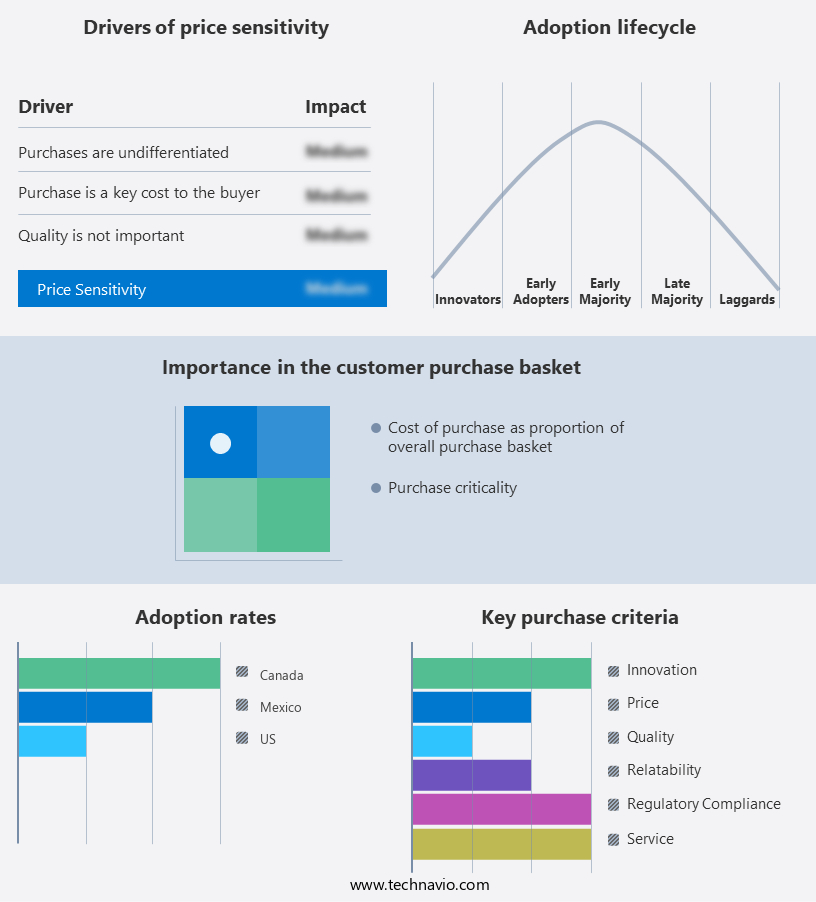
The market forecasting report includes the adoption lifecycle of the market, covering from the innovator's stage to the laggard's stage. It focuses on adoption rates in different regions based on penetration. Furthermore, the report also includes key purchase criteria and drivers of price sensitivity to help companies evaluate and develop their market growth analysis strategies.
Wood Coatings Market in North America Share by Geography

 Customer Landscape

Key Companies & Market Insights

Companies are implementing various strategies, such as strategic alliances, market forecast partnerships, mergers and acquisitions, geographical expansion, and product/service launches, to enhance their presence In the market.

The market research and growth report includes detailed analyses of the competitive landscape of the market and information about key companies, including:

  • Akzo Nobel NV
  • Arkema Group
  • Axalta Coating Systems Ltd.
  • BASF SE
  • Berkshire Hathaway Inc.
  • Cabot Corp.
  • Dow Chemical Co.
  • Eastman Chemical Co.
  • Engineered Polymer Solutions and Color Corporation of America
  • Evonik Industries AG
  • Kansai Paint Co. Ltd.
  • Katilac Coatings
  • Koppers Holdings Inc.
  • Lanxess AG
  • Nippon Paint Holdings Co. Ltd.
  • PPG Industries Inc.
  • RPM International Inc.
  • SAICOS Canada
  • The Sherwin Williams Co.
  • W. R. Grace and Co.

Qualitative and quantitative analysis of companies has been conducted to help clients understand the wider business environment as well as the strengths and weaknesses of key market players. Data is qualitatively analyzed to categorize companies as pure play, category-focused, industry-focused, and diversified; it is quantitatively analyzed to categorize companies as dominant, leading, strong, tentative, and weak.

Research Analyst Overview

The wood coatings market encompasses the production, sale, and application of coatings used to protect and enhance the aesthetic value of various wood types. These coatings are essential In the construction, furniture, and decor industries. The demand for wood coatings is driven by factors such as increasing urbanization, rising disposable income, and growing awareness of the importance of maintaining the durability and appearance of wood surfaces. Wood coatings come in various types, including water-based, solvent-based, and powder coatings. Each type offers unique benefits, such as ease of application, quick drying time, and high resistance to wear and tear. The choice of coating type depends on the specific application and desired properties.

The global Wood Coatings market is expected to grow significantly due to the increasing demand for sustainable and eco-friendly coatings. The use of renewable raw materials and the development of advanced technologies to improve the performance and durability of wood coatings are key trends driving market growth. Wood coatings are applied through various methods, including brushing, rolling, spraying, and dipping. The choice of application method depends on the size and complexity of the project, as well as the desired finish and coating thickness. Thus, the Wood Coatings market is a dynamic and growing industry, driven by the increasing demand for high-performance, sustainable, and eco-friendly coatings. The market offers various types and application methods to cater to the diverse needs of the construction, furniture, and decor industries.

Market Scope

Report Coverage

Details

Page number

169

Base year

2023

Historic period

2018-2022

Forecast period

2024-2028

Growth momentum & CAGR

Accelerate at a CAGR of 5.09%

Market growth 2024-2028

USD 707.55 million

Market structure

Fragmented

YoY growth 2023-2024(%)

4.47

Competitive landscape

Leading Companies, Market Positioning of Companies, Competitive Strategies, and Industry Risks

Request Free Sample

What are the Key Data Covered in this Market Research Report?

  • CAGR of the market during the forecast period
  • Detailed information on factors that will drive the market growth and forecasting between 2024 and 2028
  • Precise estimation of the size of the market  and its contribution of the market in focus to the parent market
  • Accurate predictions about upcoming market growth and trends and changes in consumer behaviour
  • Growth of the market across North America
  • Thorough analysis of the market's competitive landscape and detailed information about companies
  • Comprehensive analysis of factors that will challenge the growth of market companies

We can help! Our analysts can customize this market research report to meet your requirements Get in touch

1 Executive Summary

  • 1.1 Market overview
    • Exhibit 01: Executive Summary – Chart on Market Overview
    • Exhibit 02: Executive Summary – Data Table on Market Overview
    • Exhibit 03: Executive Summary – Chart on Country Market Characteristics
    • Exhibit 04: Executive Summary – Chart on Market by Geography
    • Exhibit 05: Executive Summary – Chart on Market Segmentation by Product
    • Exhibit 06: Executive Summary – Chart on Market Segmentation by Technology
    • Exhibit 07: Executive Summary – Chart on Incremental Growth
    • Exhibit 08: Executive Summary – Data Table on Incremental Growth
    • Exhibit 09: Executive Summary – Chart on Vendor Market Positioning

2 Market Landscape

  • 2.1 Market ecosystem
    • Exhibit 10: Parent market
    • Exhibit 11: Market Characteristics

3 Market Sizing

  • 3.1 Market definition
    • Exhibit 12: Offerings of vendors included in the market definition
  • 3.2 Market segment analysis
    • Exhibit 13: Market segments
  • 3.3 Market size 2023
    • 3.4 Market outlook: Forecast for 2023-2028
      • Exhibit 14: Chart on North America - Market size and forecast 2023-2028 ($ million)
      • Exhibit 15: Data Table on Regional - Market size and forecast 2023-2028 ($ million)
      • Exhibit 16: Chart on North America: Year-over-year growth 2023-2028 (%)
      • Exhibit 17: Data Table on Regional - Market size and forecast 2023-2028 ($ million)

    4 Historic Market Size

    • 4.1 Wood coatings market in North America 2018 - 2022
      • Exhibit 18: Historic Market Size – Data Table on wood coatings market in north America 2018 - 2022 ($ million)
    • 4.2 Product Segment Analysis 2018 - 2022
      • Exhibit 19: Historic Market Size – Product Segment 2018 - 2022 ($ million)
    • 4.3 Technology Segment Analysis 2018 - 2022
      • Exhibit 20: Historic Market Size – Technology Segment 2018 - 2022 ($ million)
    • 4.4 Geography Segment Analysis 2018 - 2022
      • Exhibit 21: Historic Market Size – Geography Segment 2018 - 2022 ($ million)

    5 Five Forces Analysis

    • 5.1 Five forces summary
      • Exhibit 22: Five forces analysis - Comparison between 2023 and 2028
    • 5.2 Bargaining power of buyers
      • Exhibit 23: Chart on Bargaining power of buyers – Impact of key factors 2023 and 2028
    • 5.3 Bargaining power of suppliers
      • Exhibit 24: Bargaining power of suppliers – Impact of key factors in 2023 and 2028
    • 5.4 Threat of new entrants
      • Exhibit 25: Threat of new entrants – Impact of key factors in 2023 and 2028
    • 5.5 Threat of substitutes
      • Exhibit 26: Threat of substitutes – Impact of key factors in 2023 and 2028
    • 5.6 Threat of rivalry
      • Exhibit 27: Threat of rivalry – Impact of key factors in 2023 and 2028
    • 5.7 Market condition
      • Exhibit 28: Chart on Market condition - Five forces 2023 and 2028

    6 Market Segmentation by Product

    • 6.1 Market segments
      • Exhibit 29: Chart on Product - Market share 2023-2028 (%)
      • Exhibit 30: Data Table on Product - Market share 2023-2028 (%)
    • 6.2 Comparison by Product
      • Exhibit 31: Chart on Comparison by Product
      • Exhibit 32: Data Table on Comparison by Product
    • 6.3 Stains and varnishes - Market size and forecast 2023-2028
      • Exhibit 33: Chart on Stains and varnishes - Market size and forecast 2023-2028 ($ million)
      • Exhibit 34: Data Table on Stains and varnishes - Market size and forecast 2023-2028 ($ million)
      • Exhibit 35: Chart on Stains and varnishes - Year-over-year growth 2023-2028 (%)
      • Exhibit 36: Data Table on Stains and varnishes - Year-over-year growth 2023-2028 (%)
    • 6.4 Shellacs - Market size and forecast 2023-2028
      • Exhibit 37: Chart on Shellacs - Market size and forecast 2023-2028 ($ million)
      • Exhibit 38: Data Table on Shellacs - Market size and forecast 2023-2028 ($ million)
      • Exhibit 39: Chart on Shellacs - Year-over-year growth 2023-2028 (%)
      • Exhibit 40: Data Table on Shellacs - Year-over-year growth 2023-2028 (%)
    • 6.5 Wood preservatives - Market size and forecast 2023-2028
      • Exhibit 41: Chart on Wood preservatives - Market size and forecast 2023-2028 ($ million)
      • Exhibit 42: Data Table on Wood preservatives - Market size and forecast 2023-2028 ($ million)
      • Exhibit 43: Chart on Wood preservatives - Year-over-year growth 2023-2028 (%)
      • Exhibit 44: Data Table on Wood preservatives - Year-over-year growth 2023-2028 (%)
    • 6.6 Others - Market size and forecast 2023-2028
      • Exhibit 45: Chart on Others - Market size and forecast 2023-2028 ($ million)
      • Exhibit 46: Data Table on Others - Market size and forecast 2023-2028 ($ million)
      • Exhibit 47: Chart on Others - Year-over-year growth 2023-2028 (%)
      • Exhibit 48: Data Table on Others - Year-over-year growth 2023-2028 (%)
    • 6.7 Market opportunity by Product
      • Exhibit 49: Market opportunity by Product ($ million)
      • Exhibit 50: Data Table on Market opportunity by Product ($ million)

    7 Market Segmentation by Technology

    • 7.1 Market segments
      • Exhibit 51: Chart on Technology - Market share 2023-2028 (%)
      • Exhibit 52: Data Table on Technology - Market share 2023-2028 (%)
    • 7.2 Comparison by Technology
      • Exhibit 53: Chart on Comparison by Technology
      • Exhibit 54: Data Table on Comparison by Technology
    • 7.3 Solvent-based - Market size and forecast 2023-2028
      • Exhibit 55: Chart on Solvent-based - Market size and forecast 2023-2028 ($ million)
      • Exhibit 56: Data Table on Solvent-based - Market size and forecast 2023-2028 ($ million)
      • Exhibit 57: Chart on Solvent-based - Year-over-year growth 2023-2028 (%)
      • Exhibit 58: Data Table on Solvent-based - Year-over-year growth 2023-2028 (%)
    • 7.4 Water-based - Market size and forecast 2023-2028
      • Exhibit 59: Chart on Water-based - Market size and forecast 2023-2028 ($ million)
      • Exhibit 60: Data Table on Water-based - Market size and forecast 2023-2028 ($ million)
      • Exhibit 61: Chart on Water-based - Year-over-year growth 2023-2028 (%)
      • Exhibit 62: Data Table on Water-based - Year-over-year growth 2023-2028 (%)
    • 7.5 Others - Market size and forecast 2023-2028
      • Exhibit 63: Chart on Others - Market size and forecast 2023-2028 ($ million)
      • Exhibit 64: Data Table on Others - Market size and forecast 2023-2028 ($ million)
      • Exhibit 65: Chart on Others - Year-over-year growth 2023-2028 (%)
      • Exhibit 66: Data Table on Others - Year-over-year growth 2023-2028 (%)
    • 7.6 Market opportunity by Technology
      • Exhibit 67: Market opportunity by Technology ($ million)
      • Exhibit 68: Data Table on Market opportunity by Technology ($ million)

    8 Customer Landscape

    • 8.1 Customer landscape overview
      • Exhibit 69: Analysis of price sensitivity, lifecycle, customer purchase basket, adoption rates, and purchase criteria

    9 Geographic Landscape

    • 9.1 Geographic segmentation
      • Exhibit 70: Chart on Market share by geography - 2023-2028 (%)
      • Exhibit 71: Data Table on Market share by geography - 2023-2028 (%)
    • 9.2 Geographic comparison
      • Exhibit 72: Chart on Geographic comparison
      • Exhibit 73: Data Table on Geographic comparison
    • 9.3 US - Market size and forecast 2023-2028
      • Exhibit 74: Chart on US - Market size and forecast 2023-2028 ($ million)
      • Exhibit 75: Data Table on US - Market size and forecast 2023-2028 ($ million)
      • Exhibit 76: Chart on US - Year-over-year growth 2023-2028 (%)
      • Exhibit 77: Data Table on US - Year-over-year growth 2023-2028 (%)
    • 9.4 Canada - Market size and forecast 2023-2028
      • Exhibit 78: Chart on Canada - Market size and forecast 2023-2028 ($ million)
      • Exhibit 79: Data Table on Canada - Market size and forecast 2023-2028 ($ million)
      • Exhibit 80: Chart on Canada - Year-over-year growth 2023-2028 (%)
      • Exhibit 81: Data Table on Canada - Year-over-year growth 2023-2028 (%)
    • 9.5 Mexico - Market size and forecast 2023-2028
      • Exhibit 82: Chart on Mexico - Market size and forecast 2023-2028 ($ million)
      • Exhibit 83: Data Table on Mexico - Market size and forecast 2023-2028 ($ million)
      • Exhibit 84: Chart on Mexico - Year-over-year growth 2023-2028 (%)
      • Exhibit 85: Data Table on Mexico - Year-over-year growth 2023-2028 (%)
    • 9.6 Market opportunity by geography
      • Exhibit 86: Market opportunity by geography ($ million)
      • Exhibit 87: Data Table on Market opportunity by geography ($ million)

    10 Drivers, Challenges, and Trends

    • 10.1 Market drivers
      • 10.2 Market challenges
        • 10.3 Impact of drivers and challenges
          • Exhibit 88: Impact of drivers and challenges in 2023 and 2028
        • 10.4 Market trends

          11 Vendor Landscape

          • 11.1 Overview
            • 11.2 Vendor landscape
              • Exhibit 89: Overview on Criticality of inputs and Factors of differentiation
            • 11.3 Landscape disruption
              • Exhibit 90: Overview on factors of disruption
            • 11.4 Industry risks
              • Exhibit 91: Impact of key risks on business

            12 Vendor Analysis

            • 12.1 Vendors covered
              • Exhibit 92: Vendors covered
            • 12.2 Market positioning of vendors
              • Exhibit 93: Matrix on vendor position and classification
            • 12.3 Akzo Nobel NV
              • Exhibit 94: Akzo Nobel NV - Overview
              • Exhibit 95: Akzo Nobel NV - Business segments
              • Exhibit 96: Akzo Nobel NV - Key offerings
              • Exhibit 97: Akzo Nobel NV - Segment focus
            • 12.4 Arkema Group
              • Exhibit 98: Arkema Group - Overview
              • Exhibit 99: Arkema Group - Business segments
              • Exhibit 100: Arkema Group - Key news
              • Exhibit 101: Arkema Group - Key offerings
              • Exhibit 102: Arkema Group - Segment focus
            • 12.5 Axalta Coating Systems Ltd.
              • Exhibit 103: Axalta Coating Systems Ltd. - Overview
              • Exhibit 104: Axalta Coating Systems Ltd. - Business segments
              • Exhibit 105: Axalta Coating Systems Ltd. - Key offerings
              • Exhibit 106: Axalta Coating Systems Ltd. - Segment focus
            • 12.6 BASF SE
              • Exhibit 107: BASF SE - Overview
              • Exhibit 108: BASF SE - Business segments
              • Exhibit 109: BASF SE - Key news
              • Exhibit 110: BASF SE - Key offerings
              • Exhibit 111: BASF SE - Segment focus
            • 12.7 Berkshire Hathaway Inc.
              • Exhibit 112: Berkshire Hathaway Inc. - Overview
              • Exhibit 113: Berkshire Hathaway Inc. - Business segments
              • Exhibit 114: Berkshire Hathaway Inc. - Key news
              • Exhibit 115: Berkshire Hathaway Inc. - Key offerings
              • Exhibit 116: Berkshire Hathaway Inc. - Segment focus
            • 12.8 Cabot Corp.
              • Exhibit 117: Cabot Corp. - Overview
              • Exhibit 118: Cabot Corp. - Business segments
              • Exhibit 119: Cabot Corp. - Key offerings
              • Exhibit 120: Cabot Corp. - Segment focus
            • 12.9 Dow Chemical Co.
              • Exhibit 121: Dow Chemical Co. - Overview
              • Exhibit 122: Dow Chemical Co. - Business segments
              • Exhibit 123: Dow Chemical Co. - Key news
              • Exhibit 124: Dow Chemical Co. - Key offerings
              • Exhibit 125: Dow Chemical Co. - Segment focus
            • 12.10 Eastman Chemical Co.
              • Exhibit 126: Eastman Chemical Co. - Overview
              • Exhibit 127: Eastman Chemical Co. - Business segments
              • Exhibit 128: Eastman Chemical Co. - Key news
              • Exhibit 129: Eastman Chemical Co. - Key offerings
              • Exhibit 130: Eastman Chemical Co. - Segment focus
            • 12.11 Evonik Industries AG
              • Exhibit 131: Evonik Industries AG - Overview
              • Exhibit 132: Evonik Industries AG - Business segments
              • Exhibit 133: Evonik Industries AG - Key news
              • Exhibit 134: Evonik Industries AG - Key offerings
              • Exhibit 135: Evonik Industries AG - Segment focus
            • 12.12 Kansai Paint Co. Ltd.
              • Exhibit 136: Kansai Paint Co. Ltd. - Overview
              • Exhibit 137: Kansai Paint Co. Ltd. - Business segments
              • Exhibit 138: Kansai Paint Co. Ltd. - Key offerings
              • Exhibit 139: Kansai Paint Co. Ltd. - Segment focus
            • 12.13 Lanxess AG
              • Exhibit 140: Lanxess AG - Overview
              • Exhibit 141: Lanxess AG - Business segments
              • Exhibit 142: Lanxess AG - Key news
              • Exhibit 143: Lanxess AG - Key offerings
              • Exhibit 144: Lanxess AG - Segment focus
            • 12.14 Nippon Paint Holdings Co. Ltd.
              • Exhibit 145: Nippon Paint Holdings Co. Ltd. - Overview
              • Exhibit 146: Nippon Paint Holdings Co. Ltd. - Business segments
              • Exhibit 147: Nippon Paint Holdings Co. Ltd. - Key offerings
              • Exhibit 148: Nippon Paint Holdings Co. Ltd. - Segment focus
            • 12.15 PPG Industries Inc.
              • Exhibit 149: PPG Industries Inc. - Overview
              • Exhibit 150: PPG Industries Inc. - Business segments
              • Exhibit 151: PPG Industries Inc. - Key news
              • Exhibit 152: PPG Industries Inc. - Key offerings
              • Exhibit 153: PPG Industries Inc. - Segment focus
            • 12.16 RPM International Inc.
              • Exhibit 154: RPM International Inc. - Overview
              • Exhibit 155: RPM International Inc. - Business segments
              • Exhibit 156: RPM International Inc. - Key news
              • Exhibit 157: RPM International Inc. - Key offerings
              • Exhibit 158: RPM International Inc. - Segment focus
            • 12.17 The Sherwin Williams Co.
              • Exhibit 159: The Sherwin Williams Co. - Overview
              • Exhibit 160: The Sherwin Williams Co. - Business segments
              • Exhibit 161: The Sherwin Williams Co. - Key news
              • Exhibit 162: The Sherwin Williams Co. - Key offerings
              • Exhibit 163: The Sherwin Williams Co. - Segment focus

            13 Appendix

            • 13.1 Scope of the report
              • 13.2 Inclusions and exclusions checklist
                • Exhibit 164: Inclusions checklist
                • Exhibit 165: Exclusions checklist
              • 13.3 Currency conversion rates for US$
                • Exhibit 166: Currency conversion rates for US$
              • 13.4 Research methodology
                • Exhibit 167: Research methodology
                • Exhibit 168: Validation techniques employed for market sizing
                • Exhibit 169: Information sources
              • 13.5 List of abbreviations
                • Exhibit 170: List of abbreviations

              Research Methodology

              Technavio presents a detailed picture of the market by way of study, synthesis, and summation of data from multiple sources. The analysts have presented the various facets of the market with a particular focus on identifying the key industry influencers. The data thus presented is comprehensive, reliable, and the result of extensive research, both primary and secondary.

              INFORMATION SOURCES

              Primary sources

              • Manufacturers and suppliers
              • Channel partners
              • Industry experts
              • Strategic decision makers

              Secondary sources

              • Industry journals and periodicals
              • Government data
              • Financial reports of key industry players
              • Historical data
              • Press releases

              DATA ANALYSIS

              Data Synthesis

              • Collation of data
              • Estimation of key figures
              • Analysis of derived insights

              Data Validation

              • Triangulation with data models
              • Reference against proprietary databases
              • Corroboration with industry experts

              REPORT WRITING

              Qualitative

              • Market drivers
              • Market challenges
              • Market trends
              • Five forces analysis

              Quantitative

              • Market size and forecast
              • Market segmentation
              • Geographical insights
              • Competitive landscape

              Interested in this report?

              Get your sample now to see our research methodology and insights!

              Download Now

              Frequently Asked Questions

              Wood Coatingsin North America market growth will increase by $ 707.55 mn during 2024-2028.

              The Wood Coatingsin North America market is expected to grow at a CAGR of 5.09% during 2024-2028.

              Wood Coatingsin North America market is segmented by Product( Stains and varnishes, Shellacs, Wood preservatives, Others) Technology( Solvent-based, Water-based, Others)

              Akzo Nobel NV, Arkema Group, Axalta Coating Systems Ltd., BASF SE, Berkshire Hathaway Inc., Cabot Corp., Dow Chemical Co., Eastman Chemical Co., Engineered Polymer Solutions and Color Corporation of America, Evonik Industries AG, Kansai Paint Co. Ltd., Katilac Coatings, Koppers Holdings Inc., Lanxess AG, Nippon Paint Holdings Co. Ltd., PPG Industries Inc., RPM International Inc., SAICOS CANADA, The Sherwin Williams Co., W. R. Grace and Co. are a few of the key vendors in the Wood Coatingsin North America market.

              North America will register the highest growth rate of 100% among the other regions. Therefore, the Wood Coatingsin North America market in North America is expected to garner significant business opportunities for the vendors during the forecast period.

              US, Canada, Mexico

              • Growing use of renewable and sustainable raw materialsThe shift toward renewable and sustainable raw materials is driving innovation in product formulations. Manufacturers are developing new wood coatings that offer enhanced environmental profiles without compromising on performance. For example is the driving factor this market.
              • bio-based resins and low-VOC waterborne wood coatings are becoming more common. Additionally is the driving factor this market.
              • wood coating manufacturers in North America that successfully incorporate sustainable raw materials into their products can differentiate themselves in the market. Eco-friendly labels and certifications (such as GreenGuard is the driving factor this market.
              • LEED is the driving factor this market.
              • and others) can enhance brand reputation and appeal to the growing segment of environmentally conscious consumers and businesses. Furthermore is the driving factor this market.
              • advances in technology have led to the development of bio-based resins is the driving factor this market.
              • solvents is the driving factor this market.
              • and additives derived from renewable sources is the driving factor this market.
              • such as plants is the driving factor this market.
              • algae is the driving factor this market.
              • and biomass. These materials can match or even exceed the performance of traditional petrochemical-based raw materials. Moreover is the driving factor this market.
              • sustainable raw materials can offer unique performance benefits. For example is the driving factor this market.
              • certain bio-based resins provide superior flexibility is the driving factor this market.
              • UV resistance is the driving factor this market.
              • and durability than their traditional petrochemical-based counterparts. These enhanced characteristics can lead to better-performing wood coatings. For instance is the driving factor this market.
              • Nippon Paint Holdings Co. is the driving factor this market.
              • Ltd. offers a range of sustainable wood coatings for furniture and wooden surfaces. Nippon Paints products are designed to be environment-friendly and safe for health and are made with renewable raw materials is the driving factor this market.
              • without any added lead or mercury is the driving factor this market.
              • near-zero VOC content is the driving factor this market.
              • and Aqua Bodelac water-based paint series is the driving factor this market.
              • which comprises eco-friendly and non-toxic wood coatings. Nippon Paint Holdings Co. is the driving factor this market.
              • Ltd offers Nippon Wood Magic is the driving factor this market.
              • which is a coating designed for wooden furniture that is durable is the driving factor this market.
              • lead-free is the driving factor this market.
              • environment-friendly is the driving factor this market.
              • and flexible. Furthermore is the driving factor this market.
              • BASF SE offers a range of renewable wood coatings that are designed to protect and enhance the beauty of wood while also meeting sustainability needs. Joncryl 953X from BASF SE is a portfolio of five acrylic wood coatings that are designed to protect and highlight the natural grain of the wood while meeting sustainability needs is the driving factor this market.
              • while the companys Wolmanit Firestop is a flame-retardant wood coating. Thus is the driving factor this market.
              • the growing use of renewable and sustainable raw materials in wood coatings will boost the growth of the wood coatings market in North America during the forecast period. is the driving factor this market.

              The Wood Coatingsin North America market vendors should focus on grabbing business opportunities from the Stains and varnishes segment as it accounted for the largest market share in the base year.
