



Polymer Modified Bitumen Market Size 2024-2028
The polymer modified bitumen market size is forecast to increase by USD 2.45 billion, at a CAGR of 3.8% between 2023 and 2028.
- The market is experiencing significant growth due to the rise in construction activities and infrastructure development projects worldwide. The elasticity and resistance to deformation offered by PMB make it an ideal choice for road construction applications, particularly in regions susceptible to global warming. However, the market is facing challenges from the volatility in raw material prices, which includes bitumen and polymers. To mitigate these challenges, alternative binders such as bio-oils are being explored. Engineering properties of PMB, including its improved durability and flexibility, continue to drive demand in the construction industry.
What will be the Size of the Market During the Forecast Period?
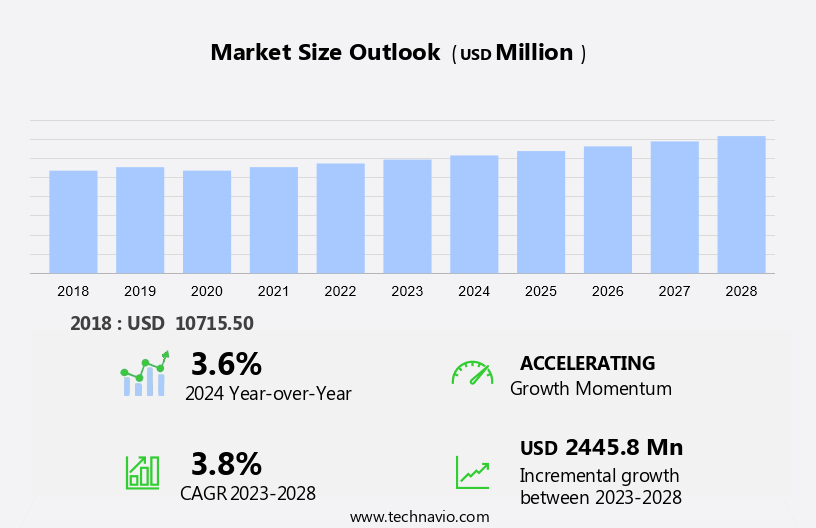
- Polymer modified bitumen (PMB), also known as plasticized bitumen, is a type of bitumen that has been blended with polymers to improve its engineering properties. The use of PMB in various construction applications, including green roofing technologies and road construction, has gained significant traction due to its enhanced elasticity and resistance to deformation. PMB's elasticity makes it an ideal choice for green roofing systems, which are becoming increasingly popular as a sustainable infrastructure solution. These systems help mitigate the effects of global warming by reducing urban heat islands and promoting vegetation growth. PMB's resistance to deformation ensures the longevity of these roofs, reducing the need for frequent repairs and maintenance. Bio-asphalt, a type of PMB, is another sustainable alternative to traditional binders. It is produced using bio-oils derived from renewable sources, making it an eco-friendly option for construction projects. This innovation contributes to the reduction of greenhouse gas emissions, aligning with the global efforts towards sustainable infrastructure.
- In road construction, PMB is used to create high-strength pavements. Its elasticity and resistance to deformation help improve road safety features, ensuring a smoother and safer driving experience. Additionally, PMB's waterproofing properties make it an essential component in the construction of bridges and other water-exposed structures. The engineering properties of PMB can be further enhanced through the development of advanced PMB formulations. For instance, the addition of polymers such as polypropylene (PP) and polyethylene wax can improve the overall performance of PMB. These additives can be characterized using techniques like Fourier Transform Infrared Spectroscopy (FTIR) and Nuclear Magnetic Resonance (NMR)-based approach to optimize the PMB formulation.
How is this market segmented and which is the largest segment?
The market research report provides comprehensive data (region-wise segment analysis), with forecasts and estimates in "USD billion" for the period 2024-2028, as well as historical data from 2018-2022 for the following segments.
- End-user
- Road construction
- Roofing
- Others
- Geography
- APAC
- China
- India
- North America
- Canada
- US
- Europe
- South America
- Middle East and Africa
- APAC
By End-user Insights
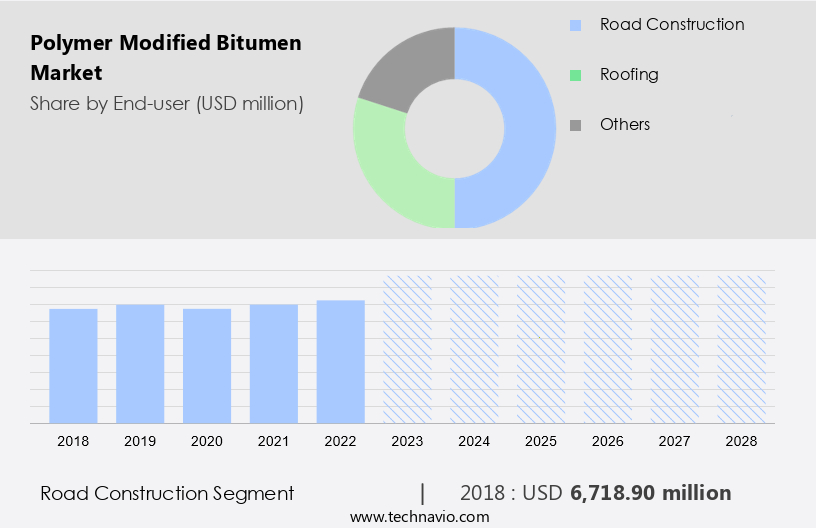
- The road construction segment is estimated to witness significant growth during the forecast period.
The market experienced significant growth in 2023, with the construction sector leading the demand due to its elasticity and resistance to deformation. PMB, including thermoplastic elastomers, asphalt modifiers, and plastomers, is derived from refined crude oil by-products and is widely used as an alternative binder in road construction. The increasing demand for better infrastructure in developing countries like China and India, driven by rising disposable income and automotive expenditure, is fueling the need for high-quality roads. As global warming continues to impact infrastructure, PMB's engineering properties make it a preferred choice for road construction, providing improved resistance to temperature fluctuations.
Get a glance at the market report of share of various segments Request Free Sample
The road construction segment was valued at USD 6.72 billion in 2018 and showed a gradual increase during the forecast period.
Regional Analysis
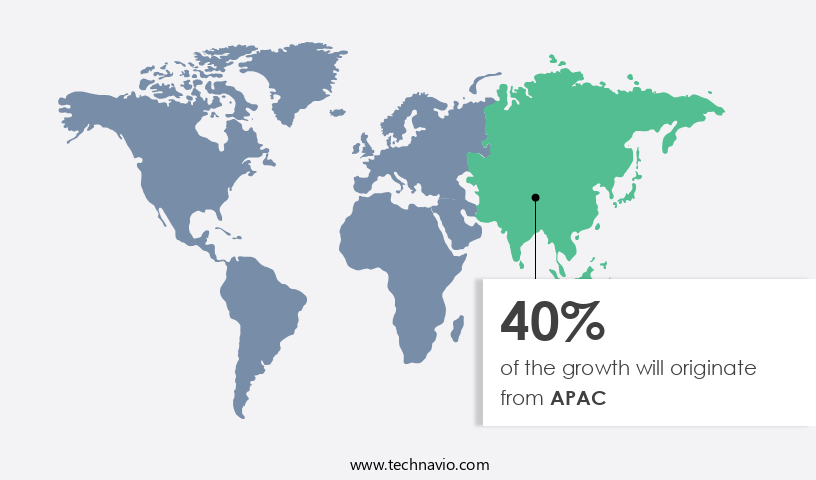
- APAC is estimated to contribute 40% to the growth of the global market during the forecast period.
Technavio's analysts have elaborately explained the regional trends and drivers that shape the market during the forecast period.
For more insights on the market share of various regions, Request Free Sample
In the building materials sector, polymer modified bitumen (PMB) has gained significant traction due to its unique properties. The APAC region is anticipated to witness notable growth in the PMB market by 2023, fueled by the increasing per capita income in countries like China and India. This economic development empowers consumers with greater purchasing power, thereby driving demand for superior quality products in the region. PMB, a blend of bitumen and polymers like polypropylene (PP) and polyethylene wax, is extensively used in the construction industry for road construction and roofing applications. Its enhanced features, such as improved consistency, increased strength, and viscoelastic behavior, make it a preferred choice over traditional bitumen.
Polymers added to bitumen increase its flexibility and aesthetic appeal, making it more resilient to various pressures. Machine learning and datafication are transforming the PMB industry, with NMR-based approaches being used to analyze PMB formulations. Crumb rubber, another essential component, is increasingly being incorporated into PMB to enhance its durability and sustainability. The infrastructure and building industries are expected to continue investing in PMB due to its superior performance and long-term benefits during the forecast period.
Market Dynamics
Our researchers analyzed the data with 2023 as the base year, along with the key drivers, trends, and challenges. A holistic analysis of drivers will help companies refine their marketing strategies to gain a competitive advantage.
What are the key market drivers leading to the rise in the adoption of the Polymer Modified Bitumen Market?
Global increase in road construction activities is the key driver of the market.
- The global construction industry is experiencing significant growth due to an increase in public infrastructure projects in various regions, including the United States with initiatives like the I-35 Northeast Expansion. This expansion, among others, such as the Northern Stretch Ring Road in Sao Paulo, Brazil, and the G4 Beijing-HongKong-Macao Expressway expansion in China, has led to a rise in road construction activities. The increasing usage of vehicles, particularly in developing countries like China and India, necessitates the need for better and wider roads. Furthermore, the rise in disposable income and consumer spending on automobiles is fueling the demand for superior quality roads and infrastructure.
- Rapid industrialization and urbanization have led to a growing demand for roads, houses, water retention structures, tunnels, and bridges. In response to these requirements, the use of Polymer Modified Bitumen (PMB) in sustainable pavement construction has gained popularity. PMB offers advantages such as oxidation resistance, enhanced adhesive properties, and reduced carbon footprint through the use of thermoplastic elastomers. Warm Mix PMB is a notable innovation in the PMB market, as it reduces water-induced degradation and energy consumption during the production and application process. E-commerce platforms have made it easier for contractors and construction companies to procure PMB materials, contributing to the market's growth.
What are the market trends shaping the Polymer Modified Bitumen Market?
The rapid rise in infrastructure development projects across emerging economies is the upcoming trend in the market.
- The construction industry in various developing countries, including India, Japan, and China, is experiencing notable expansion due to the increasing demand for office spaces, commercial complexes, and residential buildings. This growth is driven by urbanization and substantial investments in infrastructure development projects. For instance, India is working on the Mumbai Trans Harbor Link and the Delhi-Mumbai Expressway, while Japan is expanding the Tokyo Outer Ring Road (Gaikan Expressway) to enhance connectivity around Tokyo. In China, significant projects include the G4 Beijing-Hong Kong-Macao Expressway expansion and the Chongqing Smart City Initiative. The construction sector has witnessed consistent growth over the past five years, primarily due to the economic recovery of several nations.
- In the realm of construction materials, the use of polymer modified bitumen (PMB) has gained considerable traction. PMB, which is produced by blending bitumen with plastomers, offers enhanced load-bearing capacity and UV resistance. These properties make PMB an ideal choice for bridge construction and road paving in various infrastructure projects. Furthermore, the recyclability of PMB makes it a sustainable and eco-friendly alternative to traditional construction materials. The adoption of PMB is not limited to infrastructure projects alone; it is increasingly being used in smart city projects and housing developments to create durable, long-lasting structures. The use of PMB in construction is expected to continue growing as the industry focuses on sustainable and efficient construction methods.
What challenges does the Polymer Modified Bitumen Market face during the growth?
Volatility in raw material prices is a key challenge affecting the market growth.
- The market is experiencing significant growth due to the increasing demand for skid resistance, climate change challenges, and advanced road safety features. Digital technology is playing a crucial role in the market's expansion, enabling the development of hybrid PMB solutions that combine the benefits of both traditional bitumen and polymers. Elastomers, a key component of PMB, enhance the material's durability and flexibility, making it an ideal choice for pavements and roofing applications. However, the market faces challenges due to the price volatility of raw materials, primarily crude oil. The price of crude oil, which is a primary feedstock for bitumen production, has seen significant fluctuations in recent years.
- In 2014, the price was around USD 93.17 per barrel, but it dropped to nearly USD 43.29 in 2016. The price rebounded to USD 65.23 per barrel in 2018, and as of October 15, 2024, it stands at USD 73.68 per barrel. These price fluctuations directly impact the cost of bitumen, which is produced by removing lighter fractions such as liquefied petroleum gas, gasoline, and diesel during the refining process. Despite these challenges, the market for PMB is expected to continue its growth trajectory due to its numerous benefits, including improved durability, flexibility, and resistance to weather conditions. Additionally, the increasing focus on recycling and sustainability is driving demand for PMB, as it can be reused and recycled, reducing the need for new raw materials.
Exclusive Customer Landscape
The market forecasting report includes the adoption lifecycle of the market, covering from the innovator's stage to the laggard's stage. It focuses on adoption rates in different regions based on penetration. Furthermore, the market report also includes key purchase criteria and drivers of price sensitivity to help companies evaluate and develop their market growth analysis strategies.
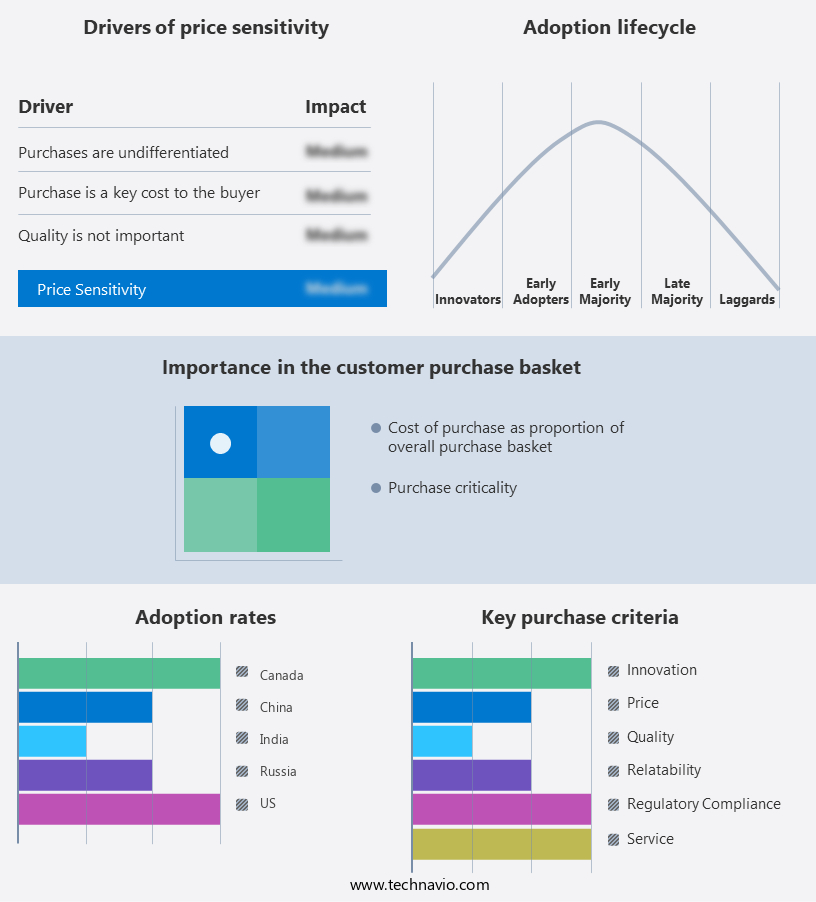
Customer Landscape
Key Companies & Market Insights
Companies are implementing various strategies, such as strategic alliances, market forecast, partnerships, mergers and acquisitions, geographical expansion, and product/service launches, to enhance their presence in the market.
The market research and growth report includes detailed analyses of the competitive landscape of the market and information about key companies, including:
- AMT Techno
- Benzene International Pte Ltd.
- Bitumat Company Ltd.
- Breedon Group plc
- Colas SA
- FAYAT SAS
- Fosroc International Ltd.
- IKA-Werke Staufen GmbH&Co.KG
- Indian Oil Corp. Ltd.
- JMVD Industries Pvt. Ltd.
- Maruti Bitumen Pvt. Ltd.
- Nynas AB
- Ooms International BV
- PJSC Gazprom Neft
- RoadStar
- Shell plc
- Sika AG
- The Richmond Group
- Tiki Tar Industries
- Veekay Industries
Qualitative and quantitative analysis of companies has been conducted to help clients understand the wider business environment as well as the strengths and weaknesses of key market players. Data is qualitatively analyzed to categorize companies as pure play, category-focused, industry-focused, and diversified; it is quantitatively analyzed to categorize companies as dominant, leading, strong, tentative, and weak.
Research Analyst Overview
Polymer-modified bitumen, or PMB, is a type of bitumen that has been enhanced with polymers to improve its engineering properties for construction applications. These polymers, such as styrene butadiene styrene (SBS) and ethylene vinyl acetate (EVA), increase the elasticity and resistance to deformation of PMB, making it a popular choice for road construction and waterproofing. With the growing concerns over global warming and the need for sustainable infrastructure, PMB is increasingly being considered as an alternative to traditional binders like bio-oils. PMB formulations offer several advantages over conventional bitumen. They have lower temperature sensitivity, higher strength, and better oxidation resistance.
Additionally, they exhibit excellent adhesive properties and can be used in various applications, including pavements, roofing, bridge construction, and housing projects. Digital technology plays a significant role in the PMB market, with datafication and machine learning being used to optimize PMB formulations and improve their performance. Recycling is another key trend, with the use of recycled materials like crumb rubber, polypropylene (PP), and polyethylene wax in PMB production. The use of PMB in sustainable pavement construction is a significant development in infrastructure development. It offers carbon footprint reduction and road safety features, making it an essential component of smart city projects.
|
Market Scope |
|
|
Report Coverage |
Details |
|
Page number |
140 |
|
Base year |
2023 |
|
Historic period |
2018-2022 |
|
Forecast period |
2024-2028 |
|
Growth momentum & CAGR |
Accelerate at a CAGR of 3.8% |
|
Market Growth 2024-2028 |
USD 2.45 billion |
|
Market structure |
Fragmented |
|
YoY growth 2023-2024(%) |
3.6 |
|
Key countries |
China, US, Russia, Canada, and India |
|
Competitive landscape |
Leading Companies, Market Positioning of Companies, Competitive Strategies, and Industry Risks |
What are the Key Data Covered in this Market Research and Growth Report?
- CAGR of the market during the forecast period
- Detailed information on factors that will drive the market growth and forecasting between 2024 and 2028
- Precise estimation of the size of the market and its contribution of the market in focus to the parent market
- Accurate predictions about upcoming market growth and trends and changes in consumer behaviour
- Growth of the market across APAC, North America, Europe, South America, and Middle East and Africa
- Thorough analysis of the market's competitive landscape and detailed information about companies
- Comprehensive analysis of factors that will challenge the growth of market companies
We can help! Our analysts can customize this market research report to meet your requirements.
 RIA -
RIA - 
