
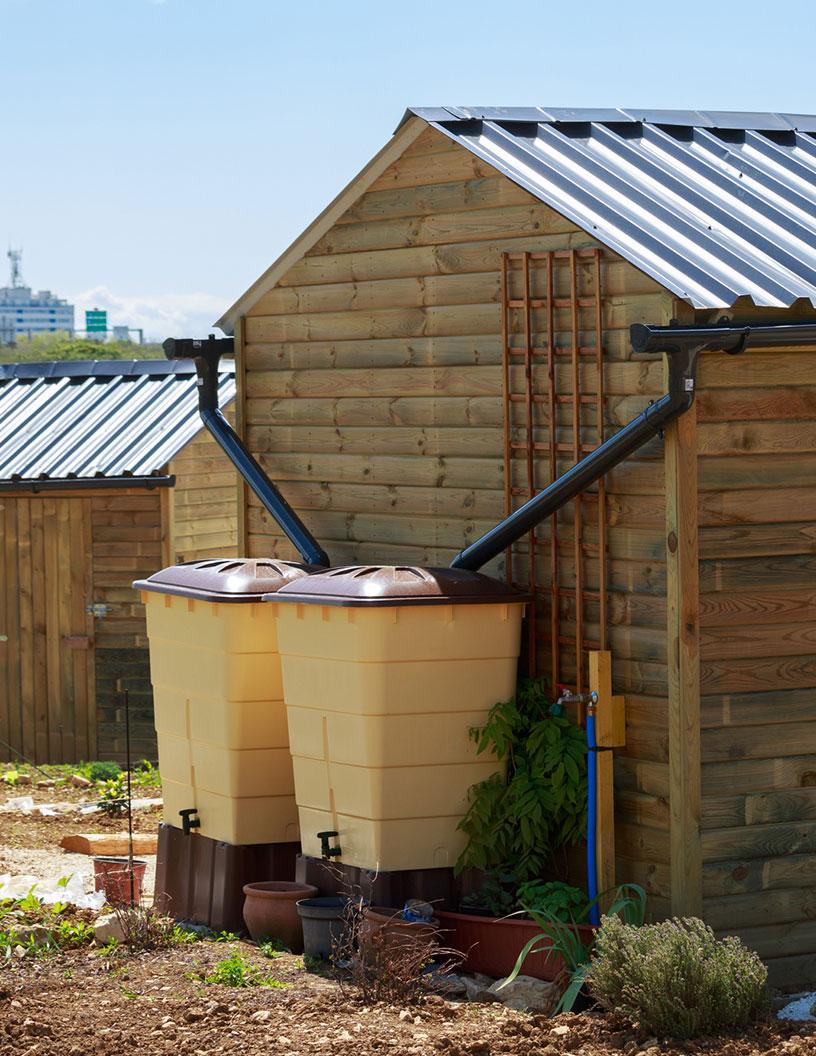


Rainwater Harvesting Systems Market Size 2025-2029
The rainwater harvesting systems market size is forecast to increase by USD 1.04 billion, at a CAGR of 10% between 2024 and 2029.
- The market is driven by the global increase in water consumption, which has led to a growing demand for sustainable water management solutions. Another key trend is the emergence of smart cities and green buildings, where rainwater harvesting systems are integrated into infrastructure to reduce reliance on municipal water supplies and promote eco-friendly construction. However, uneven distribution of rainfall and lack of awareness about the benefits of rainwater harvesting pose significant challenges to market growth.
- By focusing on innovation, sustainability, and customer education, businesses can differentiate themselves and successfully navigate the dynamic market landscape. Effective marketing strategies and educational initiatives are essential to increase awareness and overcome these obstacles, allowing companies to capitalize on the opportunities presented by this expanding market. Rainwater harvesting systems come in various forms, such as rain barrel systems and dry systems, and are constructed using materials like plastic, fiberglass, concrete, stainless steel, and galvanized steel.
What will be the Size of the Rainwater Harvesting Systems Market during the forecast period?

- The water harvesting market encompasses a range of technologies and services aimed at collecting, managing, and distributing rainwater for various uses. Water harvesting innovation continues to drive growth in this sector, with water reuse technologies and advanced water treatment solutions gaining traction. Integrated water management systems, which combine rainwater collection, data analytics, and water distribution, are increasingly popular. Government incentives and public awareness campaigns are fostering the adoption of water harvesting services and water conservation strategies. Resilient water systems, including smart water systems and water-sensitive urban design, are essential components of climate change adaptation. Rainwater tank sizing and maintenance are crucial aspects of effective water storage.
- Water resource management and water quality monitoring are integral to the successful implementation of water harvesting systems. Water conservation technologies, such as water harvesting software and consulting services, are essential for businesses seeking to reduce water usage and costs. Water scarcity solutions, including rainwater collection and green infrastructure, are vital for ensuring long-term water security. The availability of land space is a crucial factor in the implementation of these systems, with larger companies and newer entrants investing in rainwater harvesters and recharge structures like recharge pits, recharge trenches, dug wells, catchments, coarse mesh, conduits, first flushing devices, sand filters, charcoal, salt water filters.
How is this Rainwater Harvesting Systems Industry segmented?
The rainwater harvesting systems industry research report provides comprehensive data (region-wise segment analysis), with forecasts and estimates in "USD million" for the period 2025-2029, as well as historical data from 2019-2023 for the following segments.
- End-user
- Non-residential
- Residential
- Application
- Surface-based
- Rooftop-based
- Component
- Storage tanks
- Filters and purification systems
- Distribution systems
- Geography
- North America
- US
- Canada
- Europe
- France
- Germany
- UK
- APAC
- Australia
- China
- India
- Japan
- South America
- Brazil
- Rest of World (ROW)
- North America
By End-user Insights
The non-residential segment is estimated to witness significant growth during the forecast period. The market is experiencing significant growth due to increasing water conservation efforts and the need for sustainable water management. Green building design is a key driver, with many architects and builders incorporating rainwater harvesting systems into new constructions to reduce reliance on municipal water supplies and decrease water consumption. Rainwater harvesting kits are gaining popularity for their ease of installation and affordability. Water quality analysis is crucial for ensuring the safety and suitability of harvested rainwater for various uses, including domestic water supply and irrigation systems. Permitting procedures vary by location, requiring adherence to regulatory compliance and water harvesting regulations.
Gravity-fed systems are commonly used for rainwater harvesting due to their simplicity and cost-effectiveness. Total dissolved solids (TDS) levels must be monitored and controlled to maintain water quality. Cleaning and disinfection methods are essential for preventing bacterial growth and ensuring the water is safe for use. Bioretention ponds and other natural systems can be used for water treatment and urban runoff reduction. Data logging, water level sensors, and remote monitoring systems enable efficient management and maintenance of rainwater harvesting systems. Greywater recycling and water footprint reduction are additional benefits of rainwater harvesting. Water filtration and softening systems can be integrated to address specific water quality concerns.
The non-residential segment is expected to grow at a moderate rate due to the increasing adoption of rainwater harvesting systems in this sector. The tourism and hospitality industry, in particular, is a significant contributor to the market, with many hotels and resorts implementing rainwater harvesting systems to reduce their water consumption and carbon footprint. Maintenance and repair services are essential for ensuring the long-term functionality and efficiency of rainwater harvesting systems.
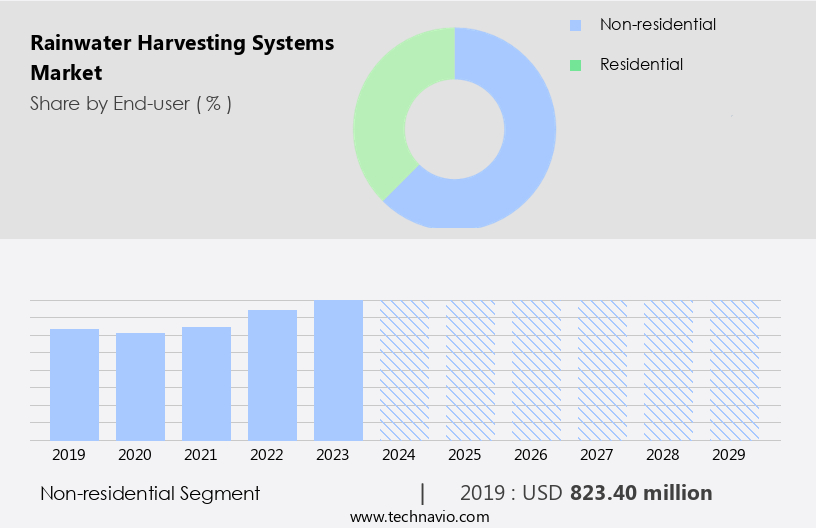
The Non-residential segment was valued at USD 823.40 billion in 2019 and showed a gradual increase during the forecast period.
Underground storage tanks provide additional storage capacity and help ensure a consistent water supply. Cistern systems and first flush diverters are effective methods for collecting and storing rainwater. Hydroponic systems and DIY rainwater harvesting projects are growing trends in the residential sector. Environmental sustainability and drought tolerance are major factors driving the adoption of rainwater harvesting systems in both residential and non-residential sectors. Building codes and regulations continue to evolve to support the use of rainwater harvesting systems. Agricultural applications, landscape watering, and stormwater management are significant areas of growth for the market. Sustainable architecture and water conservation are key priorities for many industries, including commercial and industrial sectors. The installation cost of rainwater harvesting systems is a significant factor, with systems made of various materials, including plastic, fiberglass, concrete, stainless steel, and galvanized steel, available to suit different budgets and land space requirements.
The Rainwater Harvesting Systems Market is expanding due to increased demand for sustainable solutions. Efficient water harvesting design ensures optimal collection, while proper water harvesting installation enhances performance. Regular water tank maintenance is essential for longevity and water quality. Awareness programs focusing on water harvesting education drive adoption among individuals and businesses. The industry supports both residential and commercial sectors, fostering growth in water harvesting business opportunities. Experts in water harvesting consulting assist clients in selecting the right systems and optimizing efficiency.
Regional Analysis
North America is estimated to contribute 41% to the growth of the global market during the forecast period. Technavio's analysts have elaborately explained the regional trends and drivers that shape the market during the forecast period.
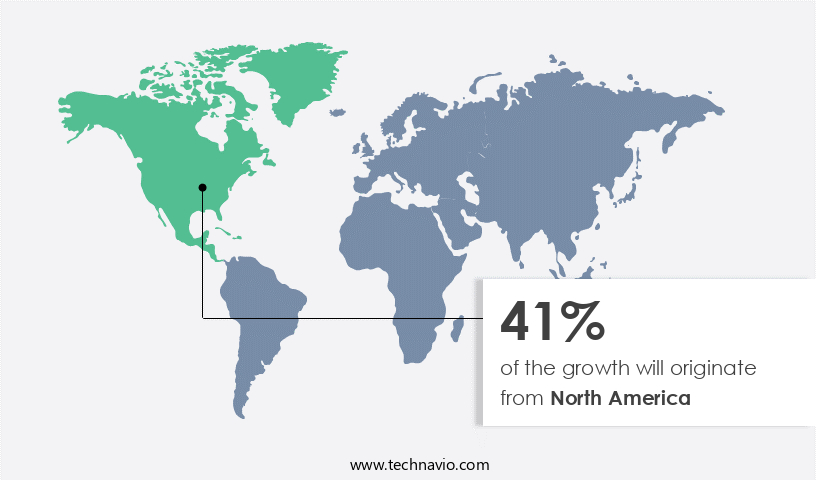
The market in North America is experiencing growth due to increasing water demand resulting from industrialization and urbanization. Water scarcity is a significant issue in cities and agricultural regions across the US, including Los Angeles, Salt Lake City, Miami, California, Arizona, Texas, and Georgia. In response, farmers are turning to rainwater harvesting for irrigation in arid areas and supplementing soil moisture in humid regions with insufficient precipitation during the growing season. This practice enhances agricultural productivity and profitability. Rainwater harvesting is also gaining popularity in residential and commercial sectors for water conservation and urban runoff reduction. Gravity-fed systems and rainwater harvesting kits are commonly used for collecting and storing rainwater.
Water quality analysis is crucial to ensure the harvested water is safe for various uses, including toilet flushing, laundry, and irrigation. Regulatory compliance, cleaning, and disinfection are essential aspects of rainwater harvesting systems. Bioretention ponds and rain gardens are effective methods for treating harvested water before use. Data logging, water level sensors, and remote monitoring systems facilitate efficient water management. Greywater recycling and water footprint reduction are essential components of sustainable water management. Water filtration systems, water softening systems, and undergroud storage tanks are integral parts of comprehensive rainwater harvesting systems. Water reuse and maintenance and repair are essential for ensuring the longevity and effectiveness of rainwater harvesting systems.
Building codes and sustainable architecture promote the integration of rainwater harvesting into green building design. Rainwater harvesting systems contribute to environmental sustainability, drought tolerance, and carbon footprint reduction. Urban runoff reduction, stormwater management, and landscape watering are additional benefits. pH levels, insurance coverage, water metering, and water treatment systems are essential considerations for rainwater harvesting systems. Pump systems and water security are crucial for ensuring consistent water supply. The market in North America is witnessing growth due to increasing water demand and scarcity. Rainwater harvesting is essential for agricultural operations, water conservation, and urban runoff reduction.
Comprehensive systems include filtration, storage, and treatment components, ensuring regulatory compliance and water quality. Rainwater harvesting contributes to environmental sustainability, drought tolerance, and carbon footprint reduction.
Market Dynamics
Our researchers analyzed the data with 2024 as the base year, along with the key drivers, trends, and challenges. A holistic analysis of drivers will help companies refine their marketing strategies to gain a competitive advantage.
What are the Rainwater Harvesting Systems market drivers leading to the rise in the adoption of Industry?
- The worldwide increase in water consumption serves as the primary driver for market growth in this sector. Rainwater harvesting systems have gained significant attention in the wake of increasing water consumption and the need for environmental sustainability. Initially, these systems were not widely adopted due to a lack of awareness and building codes. However, governments have implemented regulations mandating the installation of rainwater harvesting systems in new construction projects. Both residential and non-residential sectors are embracing this trend, with rooftop collection systems becoming increasingly popular for water reuse in various applications such as laundry use, landscape watering, and agricultural applications.
- DIY rainwater harvesting systems are also gaining popularity as an affordable and eco-friendly alternative to traditional water sources. Hydroponic systems are another application of rainwater harvesting that allows for water reuse in indoor farming. The adoption of rainwater harvesting systems is on the rise due to government regulations, increasing water consumption, and the need for environmental sustainability. These systems offer several benefits, including water consumption reduction, carbon footprint reduction, and drought tolerance, making them an essential component of building design and a valuable tool for water management. Cistern systems and first flush diverters are common technologies used in rainwater harvesting. Moreover, rainwater harvesting systems offer several benefits, including water consumption reduction, carbon footprint reduction, and drought tolerance.
What are the Rainwater Harvesting Systems market trends shaping the Industry?
- The emergence of smart cities and green buildings is a significant market trend. This trend is marked by the increasing adoption of advanced technology and sustainable design in urban development and architectural projects, respectively. The market is experiencing significant growth due to the increasing focus on sustainable architecture and water management solutions. This market is driven by the need for efficient stormwater management and securing water resources. Sustainable water management practices, such as the use of soil moisture sensors, bacteria testing, irrigation systems, and permeable paving, are becoming increasingly popular. These systems help in reducing water consumption, minimizing runoff, and improving water quality. Moreover, the integration of water metering, water treatment systems, and pump systems in rainwater harvesting systems is further enhancing their appeal. The importance of maintaining optimal pH levels in harvested water for various applications is also a key factor driving market growth.
- Insurance coverage for properties equipped with rainwater harvesting systems is another trend that is gaining traction. Governments worldwide are encouraging the adoption of these systems through incentives and subsidies, further boosting market growth. The emphasis on water security, especially in regions prone to droughts and water scarcity, is also contributing to the market's expansion. The construction and development sector is expected to be the major growth driver for the market, as there is a growing demand for sustainable infrastructure in both residential and commercial projects. Overall, the market is expected to continue its growth trajectory in the coming years, offering significant opportunities for stakeholders.
How does Rainwater Harvesting Systems market face challenges during its growth?
- The uneven distribution of rainfall and limited awareness regarding rainwater harvesting pose significant challenges to the industry's growth. This issue hinders the effective collection and utilization of rainwater, thereby impeding the expansion and sustainability of the industry. Rainwater harvesting systems have gained significant importance due to the unpredictability and uneven distribution of rainfall worldwide. On average, rainfall occurs on only one-third of the days in a year, with over three-fourths of it concentrated during these days. The impact of rainfall on the economy is substantial, with favorable monsoons contributing to economic growth and weak monsoons leading to agricultural losses. Rainwater harvesting systems help mitigate the effects of unpredictable rainfall by collecting and storing water for later use. However, the installation and maintenance of these systems require careful consideration of water chemistry and permitting procedures to ensure water quality and regulatory compliance.
- Green building design incorporates rainwater harvesting kits as a sustainable solution for domestic water supply. Gravity-fed systems are popular due to their simplicity and cost-effectiveness. Water quality analysis is crucial to ensure the total dissolved solids (TDS) levels are within acceptable limits for various uses. Cleaning and disinfection methods are essential to maintain system hygiene and prevent contamination. Bioretention ponds and data logging with water level sensors are effective urban runoff reduction techniques. Ensuring regulatory compliance and adhering to proper cleaning and disinfection procedures are crucial to the success and sustainability of rainwater harvesting systems.
Exclusive Customer Landscape
The rainwater harvesting systems market forecasting report includes the adoption lifecycle of the market, covering from the innovator's stage to the laggard's stage. It focuses on adoption rates in different regions based on penetration. Furthermore, the rainwater harvesting systems market report also includes key purchase criteria and drivers of price sensitivity to help companies evaluate and develop their market growth analysis strategies.
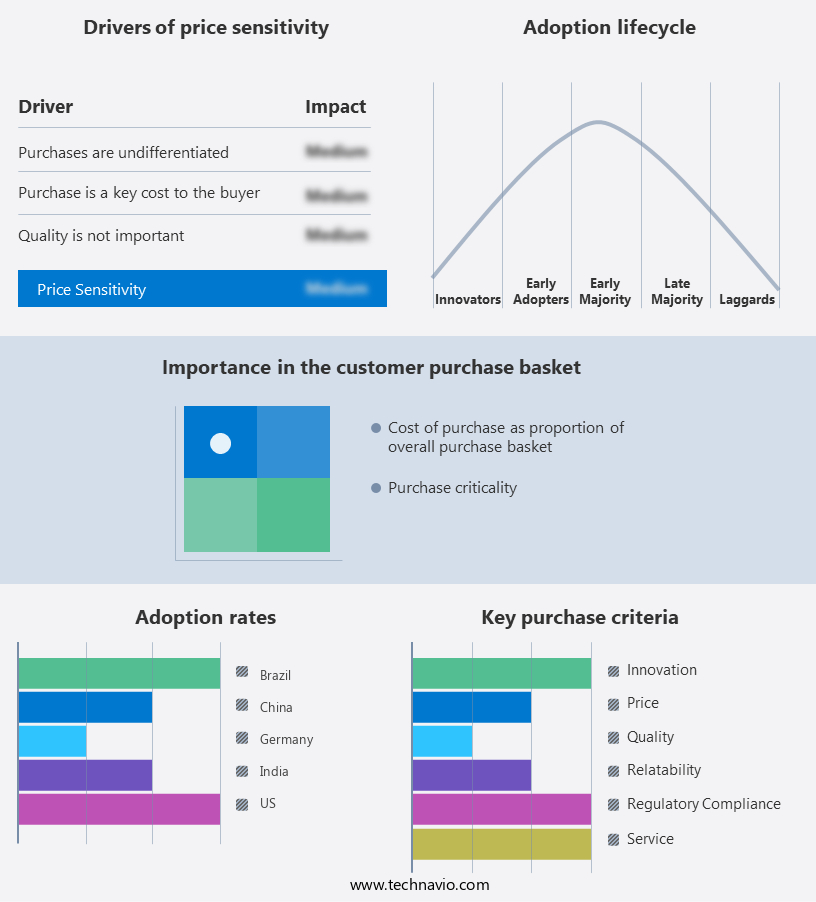
Customer Landscape
Key Companies & Market Insights
Companies are implementing various strategies, such as strategic alliances, rainwater harvesting systems market forecast, partnerships, mergers and acquisitions, geographical expansion, and product/service launches, to enhance their presence in the industry.
Barr Plastics Inc. - The company specializes in rainwater harvesting solutions, featuring the Graf Belowground system.
The industry research and growth report includes detailed analyses of the competitive landscape of the market and information about key companies, including:
- Barr Plastics Inc.
- D and D Ecotech Services
- Ecozi Ltd.
- HarvestH2o
- Heritage Water Tanks
- Innovative Water Solutions LLC
- Kingspan Group Plc
- Metroll
- Molloy Precast Products Ltd.
- Oasis Water Harvesting
- Osmosis Autopump India Pvt. Ltd.
- Otto Graf GmbH Kunststofferzeugnisse
- RainHarvest Systems LLC
- Rainwater Connection
- Stormsaver Ltd.
- Vareo Blu Ltd.
- Water Field Technologies Pvt. Ltd.
- Water Harvesting Solutions Inc.
- Watts Water Technologies Inc.
- WISY AG
Qualitative and quantitative analysis of companies has been conducted to help clients understand the wider business environment as well as the strengths and weaknesses of key industry players. Data is qualitatively analyzed to categorize companies as pure play, category-focused, industry-focused, and diversified; it is quantitatively analyzed to categorize companies as dominant, leading, strong, tentative, and weak.
Recent Development and News in Rainwater Harvesting Systems Market
- In February 2023, Bluewater, a leading water technology company, announced the launch of its new rainwater harvesting system, HydroFill, designed for residential use (Bluewater Press Release, 2023). This innovative system features a compact design and is easy to install, making it an attractive option for homeowners seeking sustainable water solutions.
- In July 2024, Veolia Water Technologies, a global water solutions provider, entered into a strategic partnership with Coca-Cola to implement rainwater harvesting systems in various manufacturing plants across India (Veolia Water Technologies Press Release, 2024). This collaboration aims to reduce the companies' water consumption and promote sustainable water management practices.
- In November 2024, the Indian government announced the National Water Mission's expansion, which includes a focus on rainwater harvesting and water conservation (India Water Portal, 2024). This initiative will provide financial incentives and technical support to encourage the adoption of rainwater harvesting systems, particularly in rural areas.
- In March 2025, Siemens Water Technologies, a global leader in water infrastructure solutions, secured a contract to provide rainwater harvesting systems for a large-scale residential project in Dubai (Siemens Water Technologies Press Release, 2025). The project, valued at over USD 100 million, will incorporate advanced technologies to maximize water efficiency and reduce reliance on conventional water sources.
Research Analyst Overview
The market continues to evolve, driven by the increasing demand for sustainable water management solutions across various sectors. Stormwater management, a critical application, integrates rainwater harvesting systems to mitigate urban runoff and reduce the strain on traditional water supply sources. Sustainable architecture also embraces this technology to minimize water consumption and promote environmental sustainability. Soil moisture sensors and bacteria testing ensure optimal water quality for irrigation systems, while regulatory compliance and water level sensors facilitate efficient water usage. Permeable paving and bioretention ponds are innovative applications that address urban water management challenges, reducing the volume of stormwater runoff and improving water quality.
Water metering, water treatment systems, and pump systems are essential components that optimize rainwater harvesting systems' performance and efficiency. Insurance coverage and pH level monitoring address potential risks and ensure water safety. Sustainable water management, water reuse, and water consumption reduction are significant benefits that contribute to the market's ongoing growth. Maintenance and repair, water filtration systems, water softening systems, and underground storage tanks are crucial aspects of rainwater harvesting systems' lifecycle management. Remote monitoring and data logging enable real-time system performance analysis and optimization. Rainwater harvesting systems' applications extend to agriculture, where they contribute to drought tolerance and reduce water footprint through greywater recycling and cistern systems.
First flush diverters and hydroponic systems are innovative applications that cater to specific water usage requirements. DIY rainwater harvesting kits and regulations promoting water conservation further fuel the market's growth. The market dynamics continue to unfold, with new applications and technologies shaping the future of rainwater harvesting systems.
Dive into Technavio's strong research methodology, blending expert interviews, extensive data synthesis, and validated models for unparalleled Rainwater Harvesting Systems Market insights. See full methodology.
|
Market Scope |
|
|
Report Coverage |
Details |
|
Page number |
215 |
|
Base year |
2024 |
|
Historic period |
2019-2023 |
|
Forecast period |
2025-2029 |
|
Growth momentum & CAGR |
Accelerate at a CAGR of 10% |
|
Market growth 2025-2029 |
USD 1.04 billion |
|
Market structure |
Fragmented |
|
YoY growth 2024-2025(%) |
8.9 |
|
Key countries |
US, India, China, Canada, Germany, Australia, UK, Brazil, France, and Japan |
|
Competitive landscape |
Leading Companies, Market Positioning of Companies, Competitive Strategies, and Industry Risks |
What are the Key Data Covered in this Rainwater Harvesting Systems Market Research and Growth Report?
- CAGR of the Rainwater Harvesting Systems industry during the forecast period
- Detailed information on factors that will drive the growth and forecasting between 2025 and 2029
- Precise estimation of the size of the market and its contribution of the industry in focus to the parent market
- Accurate predictions about upcoming growth and trends and changes in consumer behaviour
- Growth of the market across North America, APAC, Europe, South America, and Middle East and Africa
- Thorough analysis of the market's competitive landscape and detailed information about companies
- Comprehensive analysis of factors that will challenge the rainwater harvesting systems market growth of industry companies
We can help! Our analysts can customize this rainwater harvesting systems market research report to meet your requirements.
 RIA -
RIA - 
