



Biofuels Market Size 2025-2029
The biofuels market size is forecast to increase by USD 32.6 billion at a CAGR of 3.8% between 2024 and 2029.
- The market is experiencing significant growth due to the increasing adoption of renewable energy sources as a response to reducing greenhouse gas emissions. Key biofuels include those derived from corn, sugarcane, vegetable oil, and biomass. This shift towards sustainable energy solutions is being fueled by both environmental concerns and regulatory mandates. However, market expansion is not without challenges. Fluctuations in oil prices pose a significant threat to the competitiveness of biofuels, as they can impact the cost-effectiveness of production. Additionally, regulatory hurdles impact adoption, particularly in regards to the approval and implementation of new biofuel technologies and standards.
- Supply chain inconsistencies, including the availability and cost of raw materials, also temper growth potential. Companies seeking to capitalize on market opportunities must navigate these challenges effectively, focusing on innovation, cost reduction, and regulatory compliance. By doing so, they can position themselves as leaders in the rapidly evolving biofuels landscape.
What will be the Size of the Biofuels Market during the forecast period?

- The market is experiencing dynamic shifts driven by environmental concerns, regulatory frameworks, and technological advancements. Biofuel environmental impact is a critical factor influencing consumer awareness and public perception. Regulatory environments, such as renewable fuel mandates, shape the market landscape and drive investment opportunities in advanced biofuels like cellulosic ethanol. Biofuel lifecycle analysis and sustainability are key considerations for biofuel certification and consumer acceptance. Sustainable aviation fuel and drop-in fuels are gaining traction due to their reduced carbon footprint and compatibility with existing infrastructure. Biomass conversion and feedstock supply chain are essential components of the biofuel industry, with innovation ecosystems fostering breakthroughs in biofuel technology and biomass utilization.
- Biofuel adoption rates are influenced by cost competitiveness and blending ratios, while infrastructure development and industry consolidation shape market penetration. Biofuel standards and certification play a crucial role in ensuring transparency and trust in the market. Social impact assessments and continuous innovation are essential for addressing challenges and seizing opportunities in the evolving biofuels landscape. Biofuels are derived from renewable sources, including plants, algae, and organic waste, and are utilized to fuel various vehicles, such as cars, trucks, ships, and airplanes. The market's expansion is driven by environmental regulations, the need for GHG reductions, and energy security concerns. Key biofuels include ethanol, biodiesel, renewable diesel, hydrogenated oil, biojet, and sustainable aviation fuel. Feedstocks for biofuel production include vegetable oil, molasses, coarse grain, sugar crops, and biomass, among others.
How is this Biofuels Industry segmented?
The biofuels industry research report provides comprehensive data (region-wise segment analysis), with forecasts and estimates in "USD billion" for the period 2025-2029, as well as historical data from 2019-2023 for the following segments.
- Application
- Transportation
- Aviation
- Heating
- Energy generation
- Others
- Product
- Ethanol
- Biodiesel
- Material
- Starch crops and sugar crops
- Agricultural residues
- Oil crops
- Waste oils and fats
- Algae and non-food crops
- Geography
- North America
- US
- Canada
- Europe
- France
- Germany
- UK
- APAC
- China
- India
- Indonesia
- South America
- Argentina
- Brazil
- Rest of World (ROW)
- North America
By Application Insights
The transportation segment is estimated to witness significant growth during the forecast period.
The transportation market has witnessed substantial expansion in the last decade, fueled by growing concerns over climate change, the imperative to decrease greenhouse gas emissions, and the pursuit of energy security. Governments worldwide have enacted regulations and policies to encourage biofuel adoption, contributing to market growth. Biofuels, derived from renewable sources such as plants, algae, and organic waste, are used to power various vehicles, including automobiles, heavy-duty trucks, ships, and aircraft. These alternative fuels offer improved fuel efficiency, reduced carbon emissions, and contribute to a low-carbon economy and circular economy. Biofuel production processes include the conversion of waste biomass into bioethanol, biodiesel, renewable diesel, biojet fuel, and other advanced biofuels.
The industrial sector and agricultural sector are significant contributors to biofuel feedstock production. Biofuel infrastructure development includes fuel distribution, storage, and blending technology, enabling seamless integration with traditional fuel distribution networks. The energy transition towards renewable energy sources is accelerating, with biofuels playing a crucial role in decarbonizing the transportation sector. Policymakers continue to establish renewable energy mandates and biofuel standards to promote market growth and ensure energy independence for various industries.
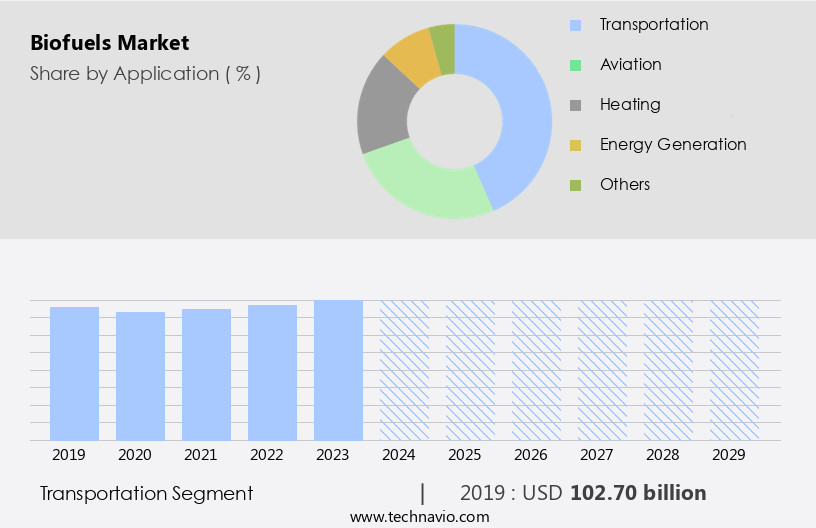
The Transportation segment was valued at USD 102.70 billion in 2019 and showed a gradual increase during the forecast period.
Regional Analysis
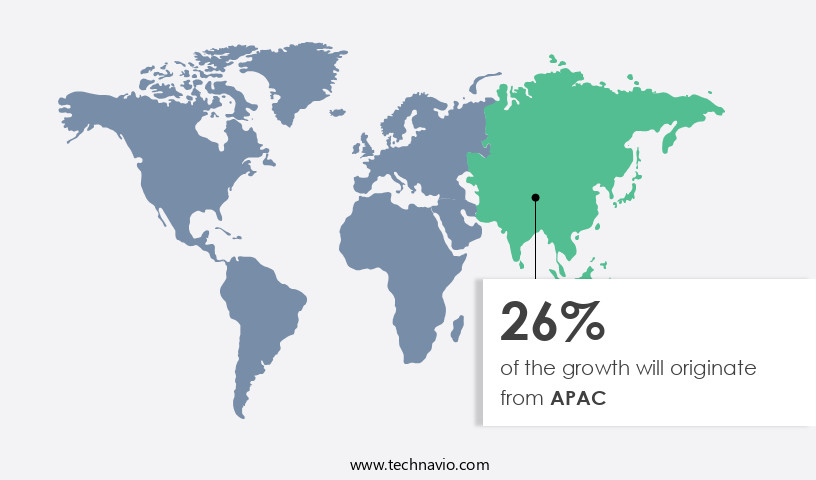
APAC is estimated to contribute 26% to the growth of the global market during the forecast period. Technavio's analysts have elaborately explained the regional trends and drivers that shape the market during the forecast period.
In North America, the market is significant, with the United States, Mexico, and Canada being the major contributors. End-use industries, including automotive, mining, agriculture, power generation, marine, and railway, drive the demand for biofuels in this region. The growth rate of the North American market is anticipated to be moderate due to trade influences, such as tariff changes and import-export regulations, impacting biofuel imports from countries like Argentina, Indonesia, and Malaysia. In the US, companies such as POET and Renewable Energy Group (REG) are at the forefront of biofuel production. POET, headquartered in Sioux Falls, South Dakota, is a leading bioethanol producer, primarily using corn as a feedstock.
The US government's biofuel policy, carbon tax, and focus on renewable energy and energy security contribute to the market's expansion. The circular economy and low carbon economy principles are also driving the innovation and development of biofuels in the industrial sector. The market encompasses various types, including biojet fuel, renewable diesel, and transportation fuels. Biofuel production processes involve converting waste biomass into biofuels, with fuel blending technology playing a crucial role in the energy transition. The market also caters to the aviation sector, aiming to reduce carbon emissions. The agricultural sector is another significant contributor to biofuel production, with renewable energy sources and biofuel standards setting the industry's guidelines.
Renewable energy mandates and the growing focus on heavy-duty vehicles further boost the market's expansion.
Market Dynamics
Our researchers analyzed the data with 2024 as the base year, along with the key drivers, trends, and challenges. A holistic analysis of drivers will help companies refine their marketing strategies to gain a competitive advantage.
What are the Biofuels market drivers leading to the rise in the adoption of Industry?
- The significant expansion in the utilization of renewable energy sources serves as the primary market catalyst. The market is experiencing significant growth due to increasing concerns over greenhouse gas emissions and the need for sustainable development. Biofuels, derived from renewable biomass, offer a viable solution to reduce carbon emissions and promote renewable energy. The market dynamics are driven by various factors, including government subsidies, carbon tax policies, and fuel efficiency regulations. Biofuel processing technologies have advanced significantly, making biofuels cost-competitive with fossil fuels. Waste biomass, such as agricultural waste and industrial by-products, are increasingly being used as feedstocks for biofuel production. This not only reduces waste but also contributes to a circular economy.
- Governments worldwide are implementing biofuel policies to reduce reliance on fossil fuels and mitigate the environmental impact of transportation. Renewable energy sources, including biofuels, are becoming increasingly important in the global energy mix. According to the US Energy Information Administration, the share of renewables in the global net electricity generation is projected to rise from 21% in 2020 to 30% by 2025. The market is expected to continue its growth trajectory due to the increasing focus on reducing greenhouse gas emissions and promoting sustainable development. The market dynamics are driven by various factors, including government policies, fuel efficiency regulations, and advancements in biofuel processing technologies.
What are the Biofuels market trends shaping the Industry?
- The emerging market trend in biofuel research focuses on third-generation fuels, specifically algae fuel. Algae fuel is a promising alternative to traditional biofuels due to its high yield potential and minimal impact on food production and land use. Biofuels, a critical component of sustainable fuel and circular economy, are derived from various feedstocks, including vegetable oil, starch, sugar, animal fats, and non-food crops such as wood, organic waste, jatropha, camelina, and switchgrass. First-generation biofuels, produced from food-based feedstocks, have been in use for decades. However, the focus has shifted towards second-generation biofuels, also known as advanced biofuels, which are derived from non-food feedstocks. These fuels offer significant advantages in terms of energy security and reducing carbon emissions in a low-carbon economy.
- The market has witnessed substantial innovation, with the introduction of third-generation biofuels derived from algae. Algae are a promising feedstock due to their ability to produce diverse and high-quantity biofuels, including biodiesel, butanol, gasoline, methane, ethanol, vegetable oil, and jet fuels. This evolution in biofuel technology is crucial for the power generation and transportation sectors, contributing to a more sustainable and secure energy future.
How does Biofuels market faces challenges during its growth?
- The volatility of oil prices poses a significant challenge to the growth of the industry. Biofuels have emerged as a promising alternative to conventional fossil fuels in the industrial sector, particularly in the context of energy independence and reducing carbon emissions. The development of biofuels is gaining momentum as renewable energy sources become increasingly important. In the aviation sector, biofuels are becoming a focus area due to the high carbon footprint of air travel. The agricultural sector is a significant contributor to biofuel production, and renewable energy mandates and biofuel standards are driving demand. However, the global crude oil market, which is the primary competitor to biofuels, exhibits volatility due to fluctuating prices.
- This volatility can impact the growth of the market, which is still in its nascent stages and has a relatively low share in global fuel consumption in the forecast period. Despite these challenges, the potential benefits of biofuels, such as energy security and reduced carbon emissions, make it an attractive option for businesses and governments alike.
Exclusive Customer Landscape
The biofuels market forecasting report includes the adoption lifecycle of the market, covering from the innovator's stage to the laggard's stage. It focuses on adoption rates in different regions based on penetration. Furthermore, the biofuels market report also includes key purchase criteria and drivers of price sensitivity to help companies evaluate and develop their market growth analysis strategies.
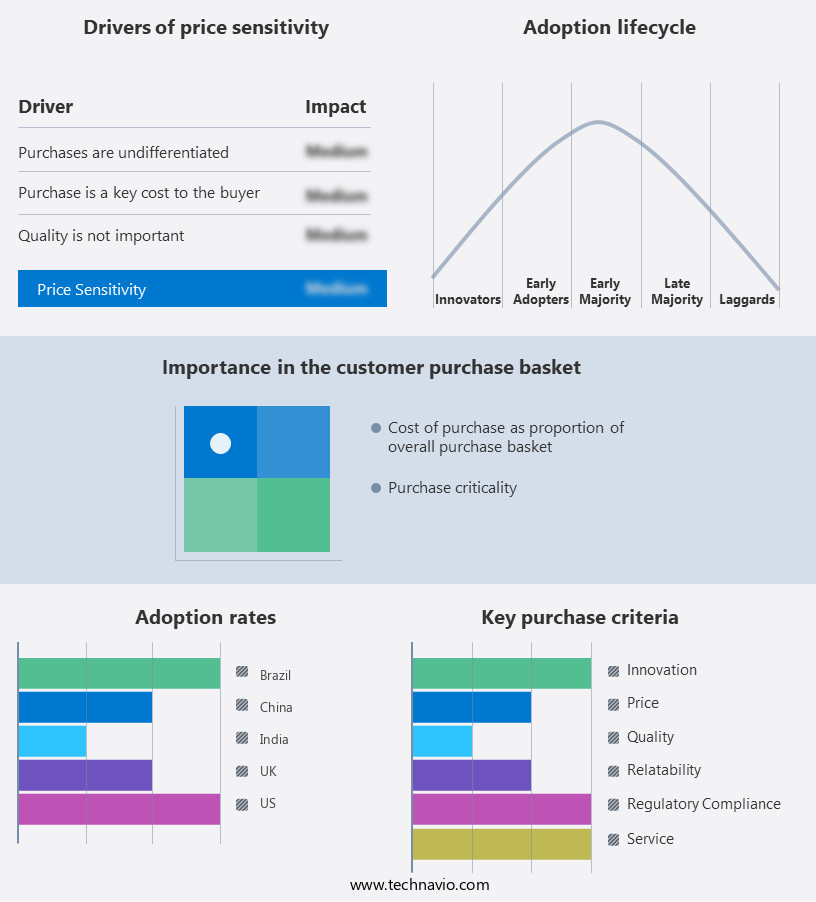
Customer Landscape
Key Companies & Market Insights
Companies are implementing various strategies, such as strategic alliances, biofuels market forecast, partnerships, mergers and acquisitions, geographical expansion, and product/service launches, to enhance their presence in the industry.
Advance Biofuel - The company offers biofuels such renewable fuels which produces high quality, bio based alcohols that catalyze innovation, empower transportation, and improve everyday products.
The industry research and growth report includes detailed analyses of the competitive landscape of the market and information about key companies, including:
- Advance Biofuel
- ALTO INGREDIENTS Inc.
- Archer Daniels Midland Co.
- Argent Energy UK Ltd.
- BlueFire Renewables Inc.
- Bunge Global SA
- Cargill Inc.
- Chevron Corp.
- ENERKEM Inc.
- KFS Biodiesel GmbH and Co. KG
- Louis Dreyfus Co. BV
- Munzer Bioindustrie GmbH
- Neste Corp.
- POET LLC
- RB FUELS
- Shell plc
- Valero Energy Corp.
- Vance Group Ltd.
- Wilmar International Ltd.
Qualitative and quantitative analysis of companies has been conducted to help clients understand the wider business environment as well as the strengths and weaknesses of key industry players. Data is qualitatively analyzed to categorize companies as pure play, category-focused, industry-focused, and diversified; it is quantitatively analyzed to categorize companies as dominant, leading, strong, tentative, and weak.
Recent Development and News in Biofuels Market
- In February 2024, Shell and BMW announced a strategic collaboration to develop and produce bio-based e-fuels using renewable hydrogen and green electricity at Shell's European refineries. This partnership marks a significant step towards reducing carbon emissions in the transportation sector (Shell press release, 2024).
- In October 2024, LanzaTech, a global leader in gas fermentation technology, raised USD110 million in a Series D funding round. This investment will support the expansion of their industrial gas fermentation technology, enabling the production of ethanol from industrial emissions, thereby reducing greenhouse gas emissions (LanzaTech press release, 2024).
- In March 2025, the European Union (EU) approved the Renewable Energy Directive II, increasing the biofuels share in the EU's transport sector to 14% by 2030. This policy change is expected to boost the demand for biofuels in Europe and accelerate the transition towards renewable energy sources (European Commission press release, 2025).
- In July 2025, Archer Daniels Midland Company (ADM) and Velocys announced the start of operations at the first commercial-scale cellulosic bioethanol plant in the United States. The plant, located in Louisiana, has an annual production capacity of 20 million gallons and is expected to significantly reduce greenhouse gas emissions compared to traditional corn ethanol production (ADM press release, 2025).
Research Analyst Overview
The market continues to evolve, driven by various factors that shape its dynamics and applications across diverse sectors. Sustainable development and the reduction of greenhouse gas emissions are key catalysts, leading to the processing of biofuels from renewable energy sources such as waste biomass. Government policies, including carbon taxes and renewable energy mandates, influence market trends, fostering the growth of biofuel infrastructure and fuel distribution networks. Fuel storage and sustainable fuel solutions play a crucial role in ensuring energy security and power generation in a low carbon economy. The circular economy ethos is increasingly influencing the biofuels industry, with innovation in biofuel production and biojet fuel commercialization gaining momentum.
The industrial sector, aviation fuels, and heavy-duty vehicles are among the sectors embracing biofuels for their fuel efficiency and reduced carbon emissions. Biofuel development is a continuous process, with ongoing advancements in fuel blending technology and biofuel innovation shaping the energy transition. The agricultural sector is also adapting, with biofuels offering potential for energy independence and sustainable farming practices. The market remains dynamic, with renewable energy sources and evolving biofuel standards shaping the future of transportation fuels.
Dive into Technavio's strong research methodology, blending expert interviews, extensive data synthesis, and validated models for unparalleled Biofuels Market insights. See full methodology.
|
Market Scope |
|
|
Report Coverage |
Details |
|
Page number |
231 |
|
Base year |
2024 |
|
Historic period |
2019-2023 |
|
Forecast period |
2025-2029 |
|
Growth momentum & CAGR |
Accelerate at a CAGR of 3.8% |
|
Market growth 2025-2029 |
USD 32.6 billion |
|
Market structure |
Fragmented |
|
YoY growth 2024-2025(%) |
3.6 |
|
Key countries |
US, Canada, China, Germany, Brazil, UK, Argentina, India, France, and Indonesia |
|
Competitive landscape |
Leading Companies, Market Positioning of Companies, Competitive Strategies, and Industry Risks |
What are the Key Data Covered in this Biofuels Market Research and Growth Report?
- CAGR of the Biofuels industry during the forecast period
- Detailed information on factors that will drive the growth and forecasting between 2025 and 2029
- Precise estimation of the size of the market and its contribution of the industry in focus to the parent market
- Accurate predictions about upcoming growth and trends and changes in consumer behaviour
- Growth of the market across North America, Europe, APAC, South America, and Middle East and Africa
- Thorough analysis of the market's competitive landscape and detailed information about companies
- Comprehensive analysis of factors that will challenge the biofuels market growth and forecasting
We can help! Our analysts can customize this biofuels market research report to meet your requirements.