
Smart Air Purifier Market Analysis APAC, Europe, North America, South America, Middle East and Africa - China, US, Japan, UK, Canada - Size and Forecast 2024-2028

Smart Air Purifier Market Analysis APAC, Europe, North America, South America, Middle East and Africa - China, US, Japan, UK, Canada - Size and Forecast 2024-2028

Published: Oct 2024 163 Pages SKU: IRTNTR43364

Market Overview at a Glance

$5.19 B
Market Opportunity
11.5%
CAGR
9.4
YoY growth 2023-2024(%)

Smart Air Purifier Market Size 2024-2028

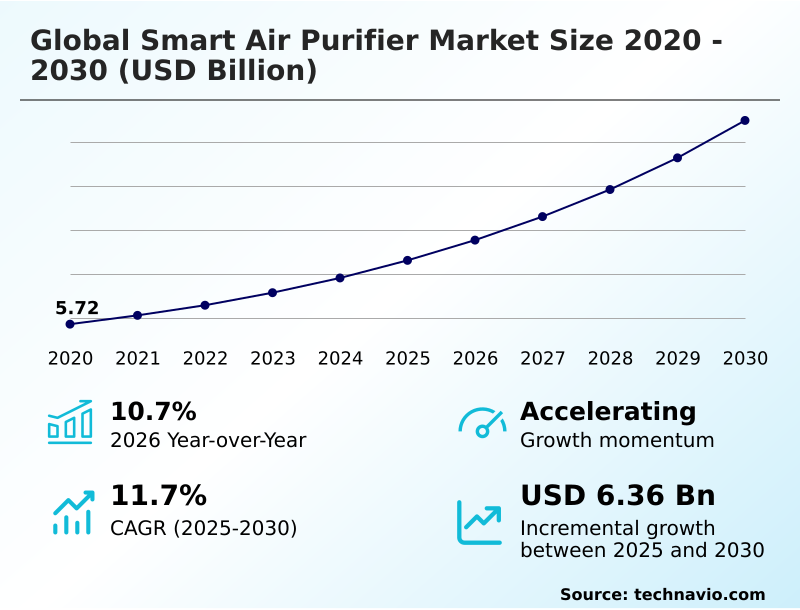
The smart air purifier market size is forecast to increase by USD 5.19 billion, at a CAGR of 11.5% between 2023 and 2028.

  • The market witnesses significant growth, driven by the increasing trend towards home automation and the integration of air purifiers into this category. This development is fueled by consumers' desire for convenience and improved indoor air quality. Another key driver is the increasing adoption of smart air purifiers in healthcare facilities, where maintaining optimal air quality is essential for patient health and safety. However, the market faces challenges, including the availability of substitutes such as traditional air purifiers and HEPA filters.
  • Companies in this market must differentiate themselves by offering advanced features, integrating with home automation systems, and providing effective marketing strategies to reach consumers and healthcare facilities. To capitalize on opportunities and navigate challenges, market participants should focus on innovation, competitive pricing, and strategic partnerships.

What will be the Size of the Smart Air Purifier Market during the forecast period?
Smart Air Purifier Market Size

Explore in-depth regional segment analysis with market size data - historical 2018-2022 and forecasts 2024-2028 - in the full report.  
Request Free Sample

The market continues to evolve, driven by advancements in air quality technologies and consumer demand for improved indoor air quality. Air purifiers equipped with filter replacement indicators offer convenience and ensure optimal performance, while adherence to stringent air quality standards ensures effective filtration. Real-time monitoring and remote diagnostics enable proactive maintenance, enhancing user experience. VOC removal and hepa filtration technologies are at the forefront of air purification, addressing various pollutants and allergens. Consumer perception is shaped by factors such as room coverage, noise levels, and dust mite removal capabilities. Customer service and mobile app control add to the value proposition, offering ease of use and convenience.

Price competitiveness and energy management are key considerations for consumers, with energy-efficient models and data analysis tools gaining popularity. Ultraviolet (UV) lamps and UV-C sterilization offer additional benefits, addressing microorganisms and enhancing overall air quality. Marketing strategies focus on highlighting the health benefits of smart air purifiers, targeting various sectors including healthcare applications and smart home integration. Design aesthetics and brand reputation also play a role in consumer decision-making. Evolving air purification technologies include plasma technology, electrostatic precipitation, and activated carbon filters, each offering unique advantages. Environmental regulations continue to shape the market, driving innovation and ensuring compliance.

Data security and privacy concerns are addressed through secure data analysis and distribution channels, ensuring user confidence. Smart sensors and air quality monitoring offer real-time insights, enabling users to make informed decisions about their indoor environment. Ongoing advancements in air purification technologies and consumer preferences shape the dynamic the market, offering opportunities for innovation and growth.

How is this Smart Air Purifier Industry segmented?

The smart air purifier industry research report provides comprehensive data (region-wise segment analysis), with forecasts and estimates in "USD million" for the period 2024-2028, as well as historical data from 2018-2022 for the following segments.

  • Product
    • Dust collectors
    • Fume and smoke collectors
  • Technology
    • HEPA
    • Activated carbon
    • Others
  • Geography
    • North America
      • US
      • Canada
    • Europe
      • UK
    • APAC
      • China
      • Japan
    • Rest of World (ROW)

By Product Insights

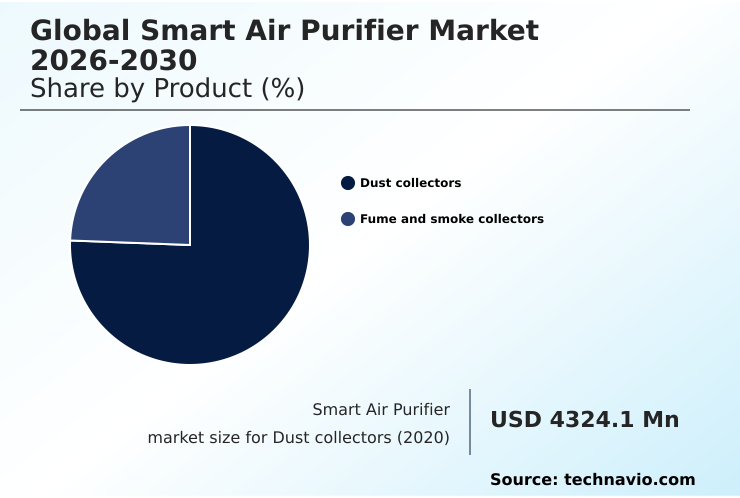
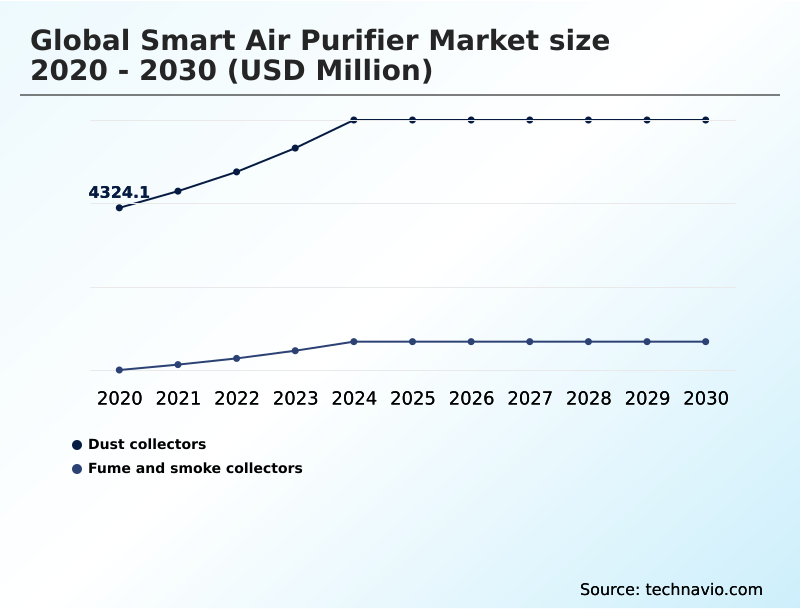
The dust collectors segment is estimated to witness significant growth during the forecast period.

Smart air purifiers have gained significant traction in the market due to rising health concerns and increasing awareness about indoor air quality. These devices utilize various filtration technologies, including HEPA filters and activated carbon filters, to remove pollutants such as dust, allergens, pet dander, and volatile organic compounds (VOCs). Consumers prioritize features like real-time monitoring, remote diagnostics, and mobile app control for enhanced user experience. Air quality standards and environmental regulations drive the market's evolution, with a focus on energy efficiency, energy management, and noise levels. HEPA filtration, with its multi-stage filtration process, effectively removes particles as small as 0.3 microns.

Plasma technology and electrostatic precipitation are alternative air purification technologies that eliminate pollutants through ionization and electrostatic attraction. Brand reputation and customer service are crucial factors in consumer perception. Effective dust mite removal and mold spore elimination contribute to the overall health benefits of these devices. Smart sensors and data analysis enable remote monitoring and particle filtration efficiency, while UV-C sterilization and ozone generation provide additional disinfection capabilities. Marketing strategies emphasize design aesthetics, healthcare applications, and smart home integration. Price competitiveness and distribution channels are essential for reaching a broader audience. Data security and privacy concerns are addressed through secure data transmission and storage.

Air purifier lifespan and filter replacement are essential considerations, with some devices offering long-lasting filters and easy replacement options. UV-C sterilization and HEPA filtration contribute to the air purifier's effectiveness in removing various pollutants, ensuring cleaner and healthier indoor environments.

Smart Air Purifier Market Size

Request Free Sample

The Dust collectors segment was valued at USD 4.32 billion in 2018 and showed a gradual increase during the forecast period.
Regional Analysis

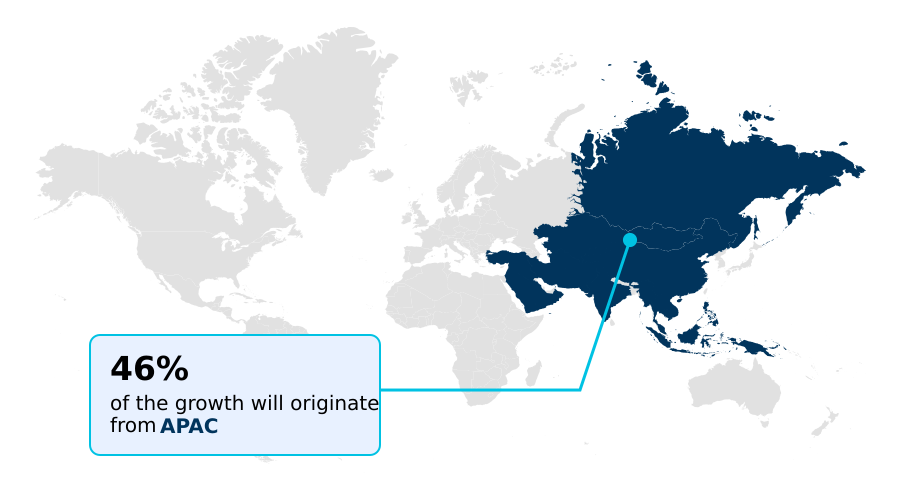
APAC is estimated to contribute 48% to the growth of the global market during the forecast period. Technavio's analysts have elaborately explained the regional trends and drivers that shape the market during the forecast period.
Smart Air Purifier Market Share by Geography

 Request Free Sample

The market in Asia Pacific (APAC) is experiencing notable growth, surpassing other regions. This expansion is primarily driven by the influx of global brands and advanced air purifiers in the market. For example, Coway Co., Ltd., based in South Korea, launched smart home products, including Airmega air purifiers, in India in January 2022. Increasing consumer awareness regarding air quality and its health benefits, as well as the expansion of the commercial sector, are additional factors fueling market growth. Air quality standards and real-time monitoring are essential features in modern air purifiers, ensuring cleaner and healthier indoor environments.

Remote diagnostics and VOC removal are other advanced technologies gaining popularity. Hepa filters, with their high filtration efficiency, are a preferred choice for many consumers. Consumer perception, room coverage, noise levels, and dust mite removal are crucial factors influencing purchasing decisions. Customer service, mobile app control, and price competitiveness are also significant considerations. Energy management and ultraviolet lamps contribute to energy efficiency and improved air quality. Data analysis and air purification technologies, such as plasma technology and electrostatic precipitation, enhance the overall performance of air purifiers. Pet dander reduction, mold spore removal, and allergen removal are essential features for those suffering from allergies or asthma.

Marketing strategies and brand reputation play a vital role in the market. Activated carbon filters, remote monitoring, and particle filtration efficiency are essential components of air purification systems. Data security and distribution channels are essential for maintaining user trust and convenience. Ozone generation and smart sensors are other emerging trends, addressing privacy concerns and offering customized air purification solutions. The lifespan of air purifiers and UV-C sterilization are essential factors for long-term investment. Smart home integration and air quality monitoring are also gaining traction, enhancing user experience and convenience. Design aesthetics and healthcare applications are essential considerations for manufacturers, catering to diverse consumer preferences and needs.

Hepa filtration, filtration stages, air flow rate, and air circulation are essential factors affecting the performance and efficiency of air purifiers. Environmental regulations and energy efficiency are crucial aspects for sustainable and eco-friendly air purification solutions.

Market Dynamics

Our researchers analyzed the data with 2023 as the base year, along with the key drivers, trends, and challenges. A holistic analysis of drivers will help companies refine their marketing strategies to gain a competitive advantage.

What are the key market drivers leading to the rise in the adoption of Smart Air Purifier Industry?

  • The home automation market is propelled forward by the growing demand for such products, reflecting a significant trend in modern residential living. 
  • The market for smart air purification systems is experiencing significant growth due to the increasing preference for improved indoor air quality and home automation. These advanced air purifiers utilize technologies such as smart sensors, electrostatic precipitation, and activated carbon layers for allergen removal and mold spore reduction. Users can operate these systems via smartphones, tablets, or remotes, ensuring a seamless and immersive experience. Energy efficiency is another key benefit, as smart air purifiers can be integrated with HVAC systems to optimize energy consumption. However, privacy concerns regarding data security are emerging as potential challenges. Ozone generation, a feature found in some air purifiers, is a topic of debate due to potential health risks.
  • Distributors play a crucial role in reaching consumers, and establishing robust distribution channels is essential for market success. In conclusion, the market is poised for continued growth, driven by consumer demand for healthier indoor environments and the convenience of home automation.

What are the market trends shaping the Smart Air Purifier Industry?

  • The rising adoption of smart air purifiers is a notable trend in the healthcare sector. This technological advancement is increasingly being integrated into healthcare facilities to enhance indoor air quality and create healthier environments for patients and staff.
  • Smart air purifiers play a crucial role in maintaining indoor air quality in healthcare facilities, where the elimination of contaminants is essential for patient health. These advanced devices utilize HEPA filters, VOC removal technology, and real-time monitoring to ensure adherence to air quality standards. Filter replacement and remote diagnostics ensure uninterrupted operation, while dust mite removal and noise levels are considerations for optimal patient comfort.
  • Consumer perception and customer service are vital in the selection process, with mobile app control offering convenience and ease of use. Effective air filtration is essential for reducing the risk of airborne infectious diseases, making smart air purifiers an indispensable investment for healthcare providers.

What challenges does the Smart Air Purifier Industry face during its growth?

  • The availability of substitutes poses a significant challenge to the industry's growth trajectory. In today's competitive business landscape, companies must continually innovate and differentiate themselves to maintain market share and outpace competitors. The emergence of viable alternatives can threaten a company's profitability and market position, necessitating a strategic response. Effective market analysis, product development, and customer engagement are essential to mitigating the impact of substitutes and sustaining industry growth. 
  • Smart air purifiers represent an advanced category of air filtration systems, incorporating features such as energy management, ultraviolet (UV) lamps, data analysis, and air quality monitoring. These technologies enhance the air purification process and offer additional benefits like pet dander reduction and UV-C sterilization. However, the market for smart air purifiers faces a significant threat of substitution from conventional air purifiers due to their higher price point. Energy efficiency and smart home integration are key selling points, but these features come at a premium.
  • To appeal to a wider audience, marketing strategies focusing on the long-term cost savings and improved air quality may be effective. The smart air purifier's lifespan, a crucial consideration for consumers, is another factor influencing market dynamics. As the market evolves, continued innovation in air purification technologies and integration with smart home systems will be essential for maintaining competitiveness.

Exclusive Customer Landscape

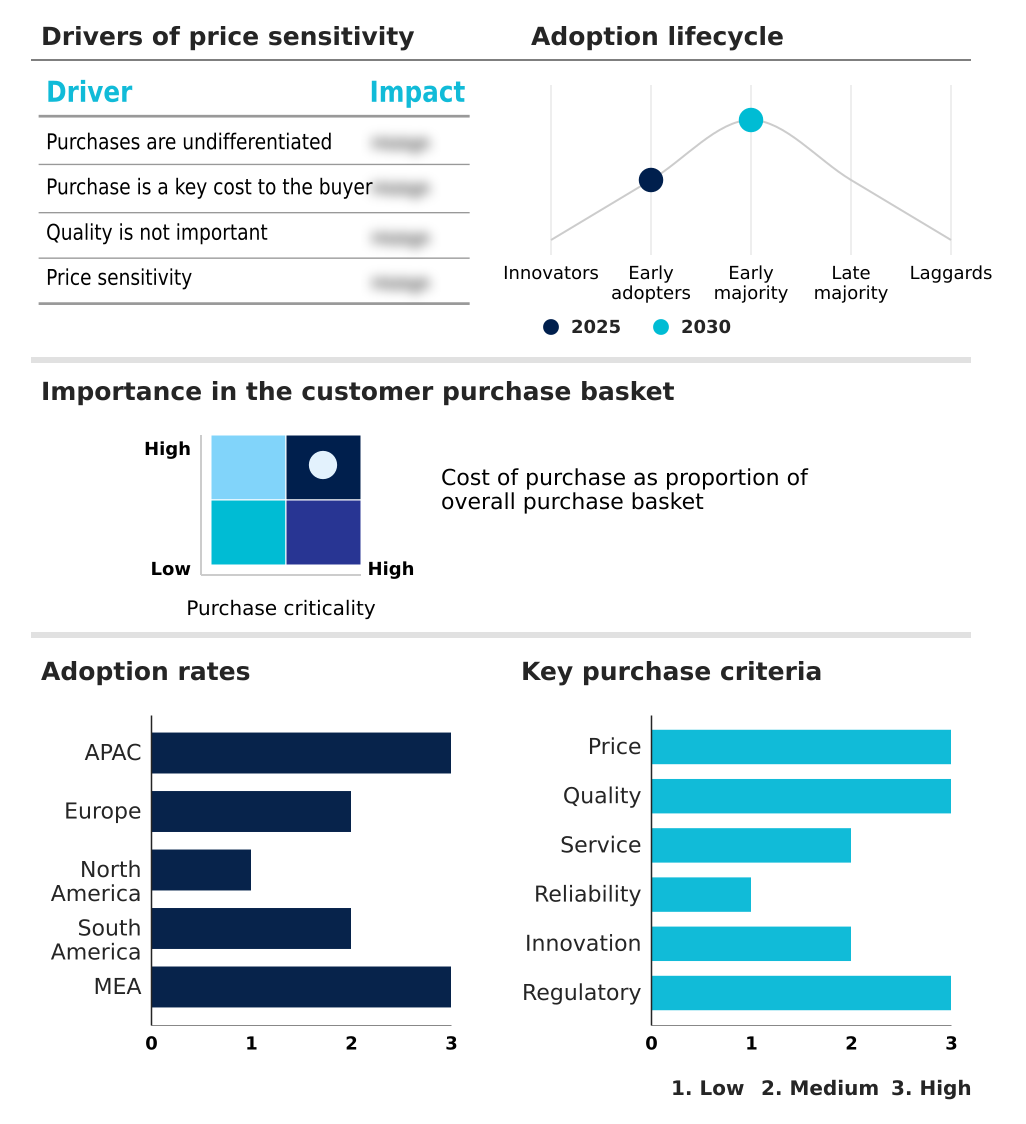
The smart air purifier market forecasting report includes the adoption lifecycle of the market, covering from the innovator's stage to the laggard's stage. It focuses on adoption rates in different regions based on penetration. Furthermore, the smart air purifier market report also includes key purchase criteria and drivers of price sensitivity to help companies evaluate and develop their market growth analysis strategies.
Smart Air Purifier Market Share by Geography

 Customer Landscape

Key Companies & Market Insights

Companies are implementing various strategies, such as strategic alliances, smart air purifier market forecast, partnerships, mergers and acquisitions, geographical expansion, and product/service launches, to enhance their presence in the industry.

Acer Inc. - The company introduces the Hot cool HP07 air purifier, featuring an advanced high efficiency particulate air filter enclosed with vacuum seals. 

The industry research and growth report includes detailed analyses of the competitive landscape of the market and information about key companies, including:

  • Acer Inc.
  • AllerAir Industries Inc.
  • Blue Star Ltd.
  • Coway Co. Ltd.
  • Dyson Technology India Pvt. Ltd.
  • Guardian Technologies LLC
  • Honeywell International Inc.
  • IQAir AG
  • Koninklijke Philips N.V.
  • LG Electronics Inc.
  • Rabbit Air
  • Radic8 Pte Ltd.
  • Samsung Electronics Co. Ltd.
  • Shapoorji Pallonji And Co. Pvt. Ltd.
  • Sharp Corp.
  • Silicon Valley Air Expert Inc.
  • Smart Air
  • Unilever PLC
  • Winix America Inc.
  • Xiaomi Inc

Qualitative and quantitative analysis of companies has been conducted to help clients understand the wider business environment as well as the strengths and weaknesses of key industry players. Data is qualitatively analyzed to categorize companies as pure play, category-focused, industry-focused, and diversified; it is quantitatively analyzed to categorize companies as dominant, leading, strong, tentative, and weak.

Recent Development and News in Smart Air Purifier Market

  • In January 2023, Dyson, a leading technology company, announced the launch of its new Dyson Pure Cool Link Air Purifier, which integrates air purification with heating and cooling capabilities (Dyson, 2023). This innovative product expansion underscores Dyson's commitment to providing comprehensive home solutions.
  • In March 2024, Philips and Google entered into a strategic partnership to integrate Google Assistant into Philips' air purifier line, enabling users to control their devices using voice commands (Google, 2024). This collaboration underscores the growing importance of smart home technology in the air purifier market.
  • In May 2024, Blueair, a Swedish air purifier manufacturer, secured a strategic investment of USD50 million from EQT Ventures, a leading European venture capital firm (EQT Ventures, 2024). This funding round will support Blueair's continued growth and innovation in the air purifier market.
  • In August 2025, the European Union passed new regulations mandating the inclusion of air quality sensors in all new residential buildings (European Commission, 2025). This policy change represents a significant shift towards proactive air quality management and is expected to drive demand for smart air purifiers in Europe.

Research Analyst Overview

  • The market is experiencing significant growth as consumers prioritize indoor air quality for health and comfort. PM10 filtration and PM2.5 filtration technologies are crucial for removing airborne pollutants, including particulate matter and chemical fumes. Advanced features such as smoke removal, virus inactivation, and bacteria removal cater to concerns over airborne pathogens. Wi-Fi connectivity and cloud connectivity enable remote monitoring and control, while quiet operation ensures minimal disruption to daily activities.
  • Energy-saving modes and gas sensors further enhance the air purifiers' efficiency and effectiveness. Bluetooth connectivity and sleep mode add to the user-friendly experience, making these devices indispensable tools for businesses seeking to maintain optimal indoor air quality.

Dive into Technavio's robust research methodology, blending expert interviews, extensive data synthesis, and validated models for unparalleled Smart Air Purifier Market insights. See full methodology.

Market Scope

Report Coverage

Details

Page number

163

Base year

2023

Historic period

2018-2022

Forecast period

2024-2028

Growth momentum & CAGR

Accelerate at a CAGR of 11.5%

Market growth 2024-2028

USD 5192.6 million

Market structure

Fragmented

YoY growth 2023-2024(%)

9.4

Key countries

China, US, Japan, UK, and Canada

Competitive landscape

Leading Companies, Market Positioning of Companies, Competitive Strategies, and Industry Risks

Request Free Sample

What are the Key Data Covered in this Smart Air Purifier Market Research and Growth Report?

  • CAGR of the Smart Air Purifier industry during the forecast period
  • Detailed information on factors that will drive the growth and forecasting between 2024 and 2028
  • Precise estimation of the size of the market and its contribution of the industry in focus to the parent market
  • Accurate predictions about upcoming growth and trends and changes in consumer behaviour
  • Growth of the market across APAC, Europe, North America, South America, and Middle East and Africa
  • Thorough analysis of the market's competitive landscape and detailed information about companies
  • Comprehensive analysis of factors that will challenge the smart air purifier market growth of industry companies

We can help! Our analysts can customize this smart air purifier market research report to meet your requirements.

Get in touch

1 Executive Summary

  • 1.1 Market overview
    • Executive Summary - Chart on Market Overview
    • Executive Summary - Data Table on Market Overview
    • Executive Summary - Chart on Global Market Characteristics
    • Executive Summary - Chart on Market by Geography
    • Executive Summary - Chart on Market Segmentation by Product
    • Executive Summary - Chart on Market Segmentation by Technology
    • Executive Summary - Chart on Incremental Growth
    • Executive Summary - Data Table on Incremental Growth
    • Executive Summary - Chart on Company Market Positioning

2 Market Landscape

  • 2.1 Market ecosystem
    • Parent Market
    • Data Table on - Parent Market
  • 2.2 Market characteristics
    • Market characteristics analysis
  • 2.3 Value chain analysis
    • Value Chain Analysis

3 Market Sizing

  • 3.1 Market definition
    • Offerings of companies included in the market definition
  • 3.2 Market segment analysis
    • Market segments
  • 3.3 Market size 2023
    • 3.4 Market outlook: Forecast for 2023-2028
      • Chart on Global - Market size and forecast 2023-2028 ($ million)
      • Data Table on Global - Market size and forecast 2023-2028 ($ million)
      • Chart on Global Market: Year-over-year growth 2023-2028 (%)
      • Data Table on Global Market: Year-over-year growth 2023-2028 (%)

    4 Historic Market Size

    • 4.1 Global Smart Air Purifier Market 2018 - 2022
      • Historic Market Size - Data Table on Global Smart Air Purifier Market 2018 - 2022 ($ million)
    • 4.2 Product segment analysis 2018 - 2022
      • Historic Market Size - Product Segment 2018 - 2022 ($ million)
    • 4.3 Technology segment analysis 2018 - 2022
      • Historic Market Size - Technology Segment 2018 - 2022 ($ million)
    • 4.4 Geography segment analysis 2018 - 2022
      • Historic Market Size - Geography Segment 2018 - 2022 ($ million)
    • 4.5 Country segment analysis 2018 - 2022
      • Historic Market Size - Country Segment 2018 - 2022 ($ million)

    5 Five Forces Analysis

    • 5.1 Five forces summary
      • Five forces analysis - Comparison between 2023 and 2028
    • 5.2 Bargaining power of buyers
      • Bargaining power of buyers - Impact of key factors 2023 and 2028
    • 5.3 Bargaining power of suppliers
      • Bargaining power of suppliers - Impact of key factors in 2023 and 2028
    • 5.4 Threat of new entrants
      • Threat of new entrants - Impact of key factors in 2023 and 2028
    • 5.5 Threat of substitutes
      • Threat of substitutes - Impact of key factors in 2023 and 2028
    • 5.6 Threat of rivalry
      • Threat of rivalry - Impact of key factors in 2023 and 2028
    • 5.7 Market condition
      • Chart on Market condition - Five forces 2023 and 2028

    6 Market Segmentation by Product

    • 6.1 Market segments
      • Chart on Product - Market share 2023-2028 (%)
      • Data Table on Product - Market share 2023-2028 (%)
    • 6.2 Comparison by Product
      • Chart on Comparison by Product
      • Data Table on Comparison by Product
    • 6.3 Dust collectors - Market size and forecast 2023-2028
      • Chart on Dust collectors - Market size and forecast 2023-2028 ($ million)
      • Data Table on Dust collectors - Market size and forecast 2023-2028 ($ million)
      • Chart on Dust collectors - Year-over-year growth 2023-2028 (%)
      • Data Table on Dust collectors - Year-over-year growth 2023-2028 (%)
    • 6.4 Fume and smoke collectors - Market size and forecast 2023-2028
      • Chart on Fume and smoke collectors - Market size and forecast 2023-2028 ($ million)
      • Data Table on Fume and smoke collectors - Market size and forecast 2023-2028 ($ million)
      • Chart on Fume and smoke collectors - Year-over-year growth 2023-2028 (%)
      • Data Table on Fume and smoke collectors - Year-over-year growth 2023-2028 (%)
    • 6.5 Market opportunity by Product
      • Market opportunity by Product ($ million)
      • Data Table on Market opportunity by Product ($ million)

    7 Market Segmentation by Technology

    • 7.1 Market segments
      • Chart on Technology - Market share 2023-2028 (%)
      • Data Table on Technology - Market share 2023-2028 (%)
    • 7.2 Comparison by Technology
      • Chart on Comparison by Technology
      • Data Table on Comparison by Technology
    • 7.3 HEPA - Market size and forecast 2023-2028
      • Chart on HEPA - Market size and forecast 2023-2028 ($ million)
      • Data Table on HEPA - Market size and forecast 2023-2028 ($ million)
      • Chart on HEPA - Year-over-year growth 2023-2028 (%)
      • Data Table on HEPA - Year-over-year growth 2023-2028 (%)
    • 7.4 Activated carbon - Market size and forecast 2023-2028
      • Chart on Activated carbon - Market size and forecast 2023-2028 ($ million)
      • Data Table on Activated carbon - Market size and forecast 2023-2028 ($ million)
      • Chart on Activated carbon - Year-over-year growth 2023-2028 (%)
      • Data Table on Activated carbon - Year-over-year growth 2023-2028 (%)
    • 7.5 Others - Market size and forecast 2023-2028
      • Chart on Others - Market size and forecast 2023-2028 ($ million)
      • Data Table on Others - Market size and forecast 2023-2028 ($ million)
      • Chart on Others - Year-over-year growth 2023-2028 (%)
      • Data Table on Others - Year-over-year growth 2023-2028 (%)
    • 7.6 Market opportunity by Technology
      • Market opportunity by Technology ($ million)
      • Data Table on Market opportunity by Technology ($ million)

    8 Customer Landscape

    • 8.1 Customer landscape overview
      • Analysis of price sensitivity, lifecycle, customer purchase basket, adoption rates, and purchase criteria

    9 Geographic Landscape

    • 9.1 Geographic segmentation
      • Chart on Market share by geography 2023-2028 (%)
      • Data Table on Market share by geography 2023-2028 (%)
    • 9.2 Geographic comparison
      • Chart on Geographic comparison
      • Data Table on Geographic comparison
    • 9.3 APAC - Market size and forecast 2023-2028
      • Chart on APAC - Market size and forecast 2023-2028 ($ million)
      • Data Table on APAC - Market size and forecast 2023-2028 ($ million)
      • Chart on APAC - Year-over-year growth 2023-2028 (%)
      • Data Table on APAC - Year-over-year growth 2023-2028 (%)
    • 9.4 Europe - Market size and forecast 2023-2028
      • Chart on Europe - Market size and forecast 2023-2028 ($ million)
      • Data Table on Europe - Market size and forecast 2023-2028 ($ million)
      • Chart on Europe - Year-over-year growth 2023-2028 (%)
      • Data Table on Europe - Year-over-year growth 2023-2028 (%)
    • 9.5 North America - Market size and forecast 2023-2028
      • Chart on North America - Market size and forecast 2023-2028 ($ million)
      • Data Table on North America - Market size and forecast 2023-2028 ($ million)
      • Chart on North America - Year-over-year growth 2023-2028 (%)
      • Data Table on North America - Year-over-year growth 2023-2028 (%)
    • 9.6 South America - Market size and forecast 2023-2028
      • Chart on South America - Market size and forecast 2023-2028 ($ million)
      • Data Table on South America - Market size and forecast 2023-2028 ($ million)
      • Chart on South America - Year-over-year growth 2023-2028 (%)
      • Data Table on South America - Year-over-year growth 2023-2028 (%)
    • 9.7 Middle East and Africa - Market size and forecast 2023-2028
      • Chart on Middle East and Africa - Market size and forecast 2023-2028 ($ million)
      • Data Table on Middle East and Africa - Market size and forecast 2023-2028 ($ million)
      • Chart on Middle East and Africa - Year-over-year growth 2023-2028 (%)
      • Data Table on Middle East and Africa - Year-over-year growth 2023-2028 (%)
    • 9.8 China - Market size and forecast 2023-2028
      • Chart on China - Market size and forecast 2023-2028 ($ million)
      • Data Table on China - Market size and forecast 2023-2028 ($ million)
      • Chart on China - Year-over-year growth 2023-2028 (%)
      • Data Table on China - Year-over-year growth 2023-2028 (%)
    • 9.9 US - Market size and forecast 2023-2028
      • Chart on US - Market size and forecast 2023-2028 ($ million)
      • Data Table on US - Market size and forecast 2023-2028 ($ million)
      • Chart on US - Year-over-year growth 2023-2028 (%)
      • Data Table on US - Year-over-year growth 2023-2028 (%)
    • 9.10 Japan - Market size and forecast 2023-2028
      • Chart on Japan - Market size and forecast 2023-2028 ($ million)
      • Data Table on Japan - Market size and forecast 2023-2028 ($ million)
      • Chart on Japan - Year-over-year growth 2023-2028 (%)
      • Data Table on Japan - Year-over-year growth 2023-2028 (%)
    • 9.11 UK - Market size and forecast 2023-2028
      • Chart on UK - Market size and forecast 2023-2028 ($ million)
      • Data Table on UK - Market size and forecast 2023-2028 ($ million)
      • Chart on UK - Year-over-year growth 2023-2028 (%)
      • Data Table on UK - Year-over-year growth 2023-2028 (%)
    • 9.12 Canada - Market size and forecast 2023-2028
      • Chart on Canada - Market size and forecast 2023-2028 ($ million)
      • Data Table on Canada - Market size and forecast 2023-2028 ($ million)
      • Chart on Canada - Year-over-year growth 2023-2028 (%)
      • Data Table on Canada - Year-over-year growth 2023-2028 (%)
    • 9.13 Market opportunity by geography
      • Market opportunity by geography ($ million)
      • Data Tables on Market opportunity by geography ($ million)

    10 Drivers, Challenges, and Opportunity/Restraints

    • 10.1 Market drivers
      • 10.2 Market challenges
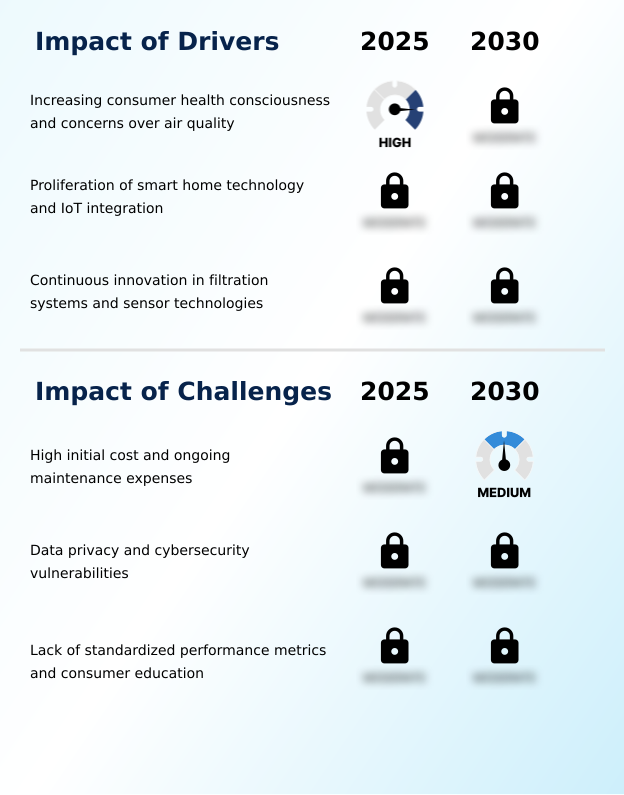
        • 10.3 Impact of drivers and challenges
          • Impact of drivers and challenges in 2023 and 2028
        • 10.4 Market opportunities/restraints

          11 Competitive Landscape

          • 11.1 Overview
            • 11.2 Competitive Landscape
              • Overview on criticality of inputs and factors of differentiation
            • 11.3 Landscape disruption
              • Overview on factors of disruption
            • 11.4 Industry risks
              • Impact of key risks on business

            12 Competitive Analysis

            • 12.1 Companies profiled
              • Companies covered
            • 12.2 Market positioning of companies
              • Matrix on companies position and classification
            • 12.3 Dyson Technology India Pvt. Ltd.
              • Dyson Technology India Pvt. Ltd. - Overview
              • Dyson Technology India Pvt. Ltd. - Product / Service
              • Dyson Technology India Pvt. Ltd. - Key offerings
            • 12.4 Guardian Technologies LLC
              • Guardian Technologies LLC - Overview
              • Guardian Technologies LLC - Product / Service
              • Guardian Technologies LLC - Key offerings
            • 12.5 Honeywell International Inc.
              • Honeywell International Inc. - Overview
              • Honeywell International Inc. - Business segments
              • Honeywell International Inc. - Key news
              • Honeywell International Inc. - Key offerings
              • Honeywell International Inc. - Segment focus
            • 12.6 IQAir AG
              • IQAir AG - Overview
              • IQAir AG - Product / Service
              • IQAir AG - Key offerings
            • 12.7 Koninklijke Philips N.V.
              • Koninklijke Philips N.V. - Overview
              • Koninklijke Philips N.V. - Business segments
              • Koninklijke Philips N.V. - Key news
              • Koninklijke Philips N.V. - Key offerings
              • Koninklijke Philips N.V. - Segment focus
            • 12.8 Samsung Electronics Co. Ltd.
              • Samsung Electronics Co. Ltd. - Overview
              • Samsung Electronics Co. Ltd. - Business segments
              • Samsung Electronics Co. Ltd. - Key news
              • Samsung Electronics Co. Ltd. - Key offerings
              • Samsung Electronics Co. Ltd. - Segment focus
            • 12.9 Sharp Corp.
              • Sharp Corp. - Overview
              • Sharp Corp. - Business segments
              • Sharp Corp. - Key news
              • Sharp Corp. - Key offerings
              • Sharp Corp. - Segment focus
            • 12.10 Unilever PLC
              • Unilever PLC - Overview
              • Unilever PLC - Business segments
              • Unilever PLC - Key offerings
              • Unilever PLC - Segment focus
            • 12.11 Winix America Inc.
              • Winix America Inc. - Overview
              • Winix America Inc. - Product / Service
              • Winix America Inc. - Key offerings
            • 12.12 Xiaomi Inc
              • Xiaomi Inc - Overview
              • Xiaomi Inc - Business segments
              • Xiaomi Inc - Key news
              • Xiaomi Inc - Key offerings
              • Xiaomi Inc - Segment focus

            13 Appendix

            • 13.1 Scope of the report
              • 13.2 Inclusions and exclusions checklist
                • Inclusions checklist
                • Exclusions checklist
              • 13.3 Currency conversion rates for US$
                • Currency conversion rates for US$
              • 13.4 Research methodology
                • Research methodology
              • 13.5 Data procurement
                • Information sources
              • 13.6 Data validation
                • Data validation
              • 13.7 Validation techniques employed for market sizing
                • Validation techniques employed for market sizing
              • 13.8 Data synthesis
                • Data synthesis
              • 13.9 360 degree market analysis
                • 360 degree market analysis
              • 13.10 List of abbreviations
                • List of abbreviations

              Research Methodology

              Technavio presents a detailed picture of the market by way of study, synthesis, and summation of data from multiple sources. The analysts have presented the various facets of the market with a particular focus on identifying the key industry influencers. The data thus presented is comprehensive, reliable, and the result of extensive research, both primary and secondary.

              INFORMATION SOURCES

              Primary sources

              • Manufacturers and suppliers
              • Channel partners
              • Industry experts
              • Strategic decision makers

              Secondary sources

              • Industry journals and periodicals
              • Government data
              • Financial reports of key industry players
              • Historical data
              • Press releases

              DATA ANALYSIS

              Data Synthesis

              • Collation of data
              • Estimation of key figures
              • Analysis of derived insights

              Data Validation

              • Triangulation with data models
              • Reference against proprietary databases
              • Corroboration with industry experts

              REPORT WRITING

              Qualitative

              • Market drivers
              • Market challenges
              • Market trends
              • Five forces analysis

              Quantitative

              • Market size and forecast
              • Market segmentation
              • Geographical insights
              • Competitive landscape

              Interested in this report?

              Get your sample now to see our research methodology and insights!

              Download Now

              Frequently Asked Questions

              Smart Air Purifier market growth will increase by $ 5192.6 mn during 2024-2028 .

              The Smart Air Purifier market is expected to grow at a CAGR of 11.5% during 2024-2028 .

              Smart Air Purifier market is segmented by Product( Dust collectors, Fume and smoke collectors, Others) Technology( HEPA, Activated carbon, Others, MEA, South America)

              Acer Inc., AllerAir Industries Inc., Blue Star Ltd., Coway Co. Ltd., Dyson Technology India Pvt. Ltd., Guardian Technologies LLC, Honeywell International Inc., IQAir AG, Koninklijke Philips N.V., LG Electronics Inc., Rabbit Air, Radic8 Pte Ltd., Samsung Electronics Co. Ltd., Shapoorji Pallonji And Co. Pvt. Ltd., Sharp Corp., Silicon Valley Air Expert Inc., Smart Air, Unilever PLC, Winix America Inc., Xiaomi Inc are a few of the key vendors in the Smart Air Purifier market.

              APAC will register the highest growth rate of 48% among the other regions. Therefore, the Smart Air Purifier market in APAC is expected to garner significant business opportunities for the vendors during the forecast period.

              China, US, Japan, UK, Canada

              • Increasing demand for home automation productsAn increasing number of consumers prefer convenient and comfortable lifestyles is the driving factor this market.
              • which is driving the demand for home automation appliances. Home automation systems use the Internet of Things (IoT) is the driving factor this market.
              • which helps monitor and control home appliances remotely. Smart air purifiers have advanced technology and can be operated with a certain level of automation.  They also help monitor and reduce the energy consumption of general lighting controls and heating is the driving factor this market.
              • ventilation is the driving factor this market.
              • and air conditioning (HVAC) through automated control. Thus is the driving factor this market.
              • automation in smart air purifiers plays a major role in reducing energy consumption in residential buildings. Moreover is the driving factor this market.
              • smart air purifiers can be operated through smartphones is the driving factor this market.
              • remotes is the driving factor this market.
              • and tablets in an easy and convenient manner.The smart air purifiers offered in the market are user-friendly and feature various technologies is the driving factor this market.
              • and are aesthetically pleasing is the driving factor this market.
              • thus enabling users to operate air purifiers easily without any hassle.  Smart air purifiers are equipped with the following features to enhance the comfort of users:  Energy Star certification: This indicates the energy savings per year as they are standardized as Energy Star-rated appliances.  Hassle-free maintenance: Appliances are automatically cleaned and maintained at the required time as instructed without manual intervention.  Alert system: Appliances are equipped with alarms that alert users when faults or issues are detected.  Enhanced safety: Appliances maintain regulations and norms as mandated by government authorities to ensure the safety of users.  Remote control: Appliances can be operated remotely using applications installed on smartphones. These appliances can be turned on and off remotely using the applications and can also be set for auto shut-off is the driving factor this market.
              • thus saving electricity and money.  Functionality: Appliances are equipped with various features is the driving factor this market.
              • such as adjustable backlight (if featured) and controls.Smart air purifiers are gaining popularity as consumers are striving for luxury and household convenience. Some of these smart air purifiers are embedded with artificial intelligence technology to predict consumer preferences accurately based on past data. Hence is the driving factor this market.
              • the global smart air purifier market will grow at a significant rate during the forecast period.   is the driving factor this market.

              The Smart Air Purifier market vendors should focus on grabbing business opportunities from the Dust collectors segment as it accounted for the largest market share in the base year.