


Smart Speaker Market Size 2024-2028
The smart speaker market size is forecast to increase by USD 50.75 billion, at a CAGR of 34.28% between 2023 and 2028.
- The market is experiencing significant growth, driven by the increasing unit sales of these devices. This trend is fueled by the convenience and accessibility they offer, as well as the expanding functionality and integration with various home automation systems. However, the market faces challenges related to privacy and security concerns. With the widespread adoption of smart speakers, there is a growing awareness of potential risks, such as unauthorized access to personal information and data breaches. Companies must prioritize addressing these concerns through robust security measures and transparent data handling practices to maintain consumer trust and ensure the continued growth of the market.
- Additionally, the increasing popularity of voice commerce adds a new dimension to the market, presenting opportunities for innovation and differentiation. Companies can capitalize on this trend by offering seamless and personalized shopping experiences, integrating with various e-commerce platforms, and providing value-added services beyond voice commands. Navigating these challenges and opportunities requires a strategic approach, focusing on consumer privacy, security, and innovation to capitalize on the market's potential.
What will be the Size of the Smart Speaker Market during the forecast period?
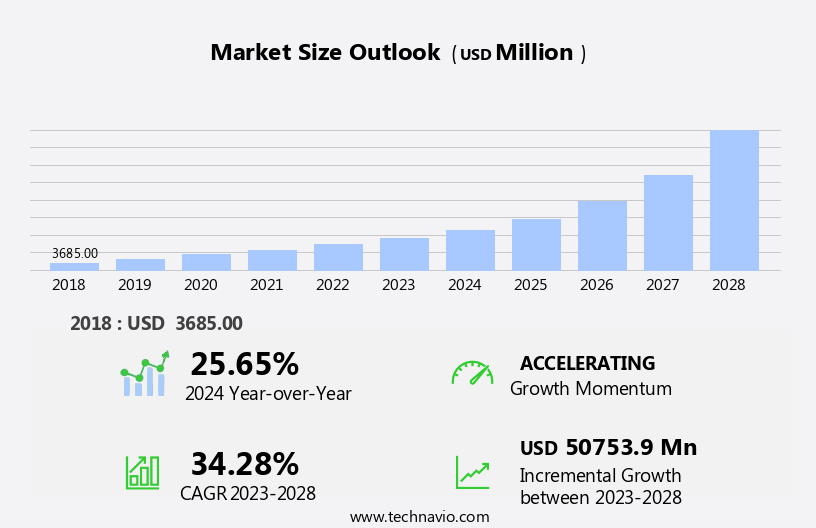
Explore in-depth regional segment analysis with market size data - historical 2018-2022 and forecasts 2024-2028 - in the full report.
Request Free Sample
The market continues to evolve, with dynamic market activities unfolding across various sectors. Audio playback capabilities are a key focus, with ongoing advancements in frequency response, audio quality, and sound customization. Privacy concerns persist, driving the development of advanced security updates and data security measures. Embedded systems enable hands-free operation, while IoT connectivity and voice search facilitate seamless integration with other smart devices. Echo cancellation and noise reduction technologies enhance user experience, as do form factor innovations and improved charging time. Smart home automation and e-commerce integration are driving new applications, with voice commands and multi-microphone arrays enabling more sophisticated user interactions.
Power management and energy efficiency remain critical considerations, as does user privacy in the context of voice biometrics and user profiles. Software updates and over-the-air firmware improvements ensure ongoing functionality and performance enhancements. Calendar integration, music streaming, and podcast playback add value for consumers, while pricing strategies and retail channels continue to evolve. Weather updates and traffic information are essential features for commuters, and virtual assistant capabilities offer convenience and ease of use. In the realm of consumer electronics, smart speakers represent the latest advancements in voice recognition and AI technology. Appliance control and lighting integration offer new possibilities for home automation, while security systems and speaker recognition provide added peace of mind.
Manufacturing processes and supply chain management are also critical components of the smart speaker ecosystem. The market's ongoing dynamism is reflected in the continuous development of features such as far-field microphone technology, touchscreen interfaces, and wearable technology integration. Dialog management and context awareness enable more natural and intuitive user interactions, while noise cancellation and battery life enhancements ensure optimal performance. In summary, the market is characterized by a constant state of evolution, with ongoing advancements in audio playback, privacy, connectivity, automation, and user experience. These innovations are driving new applications and use cases, making smart speakers an essential component of modern life.
How is this Smart Speaker Industry segmented?
The smart speaker industry research report provides comprehensive data (region-wise segment analysis), with forecasts and estimates in "USD million" for the period 2024-2028, as well as historical data from 2018-2022 for the following segments.
- End-user
- Residential
- Commercial
- Distribution Channel
- Offline
- Online
- Geography
- North America
- US
- Europe
- Germany
- UK
- APAC
- China
- Japan
- Rest of World (ROW)
- North America
By End-user Insights
The residential segment is estimated to witness significant growth during the forecast period.
The residential segment of the market is experiencing notable growth due to the increasing demand for hands-free operation and seamless connectivity to digital content and subscription services. Smart speakers, equipped with virtual assistants and voice search capabilities, serve as central hubs for accessing various digital platforms, TVs, and other devices. The popularity of services like Amazon Prime, Netflix, and YouTube has emphasized the importance of smart speakers in modern households worldwide. These devices offer user-friendly features such as text-to-speech, calendar integration, and music streaming, catering to the evolving needs of consumers. The integration of IoT connectivity, smart home automation, and e-commerce platforms further enhances the convenience and functionality of smart speakers.
Privacy concerns have been addressed with security updates and data security measures, ensuring user privacy. Manufacturers have also focused on energy efficiency, noise cancellation, and far-field microphone technology to improve the overall user experience. Smart speakers are designed with embedded systems and multi-microphone arrays, enabling voice commands, intent recognition, and dialog management. Over-the-air updates and firmware upgrades maintain the devices' performance and functionality. The market trends include the integration of various features such as weather updates, traffic updates, news updates, and even voice biometrics for added security. Additionally, the emergence of wearable technology and email notifications has expanded the application areas for smart speakers.
The market is expected to continue evolving with advancements in speakerphone functionality, lighting control, thermostat control, and other innovative features. The market's growth is driven by the increasing demand for smart home integration, context awareness, and the convenience offered by these devices.
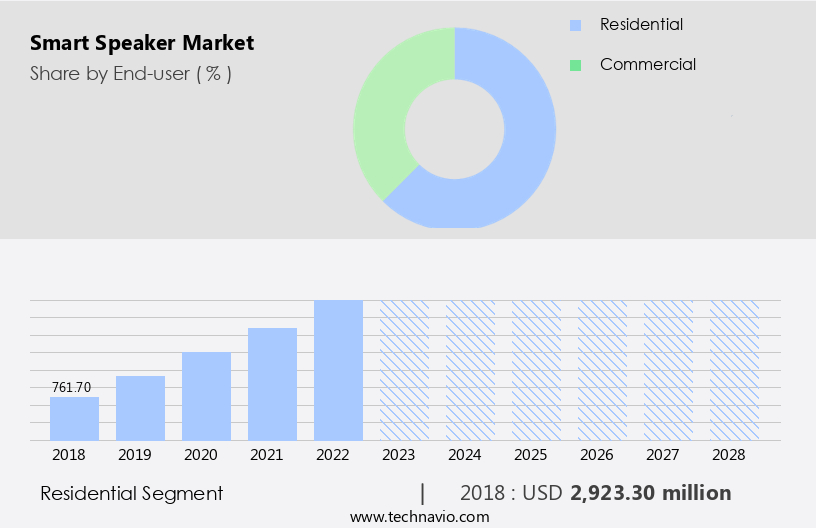
The Residential segment was valued at USD 2.92 billion in 2018 and showed a gradual increase during the forecast period.
Regional Analysis
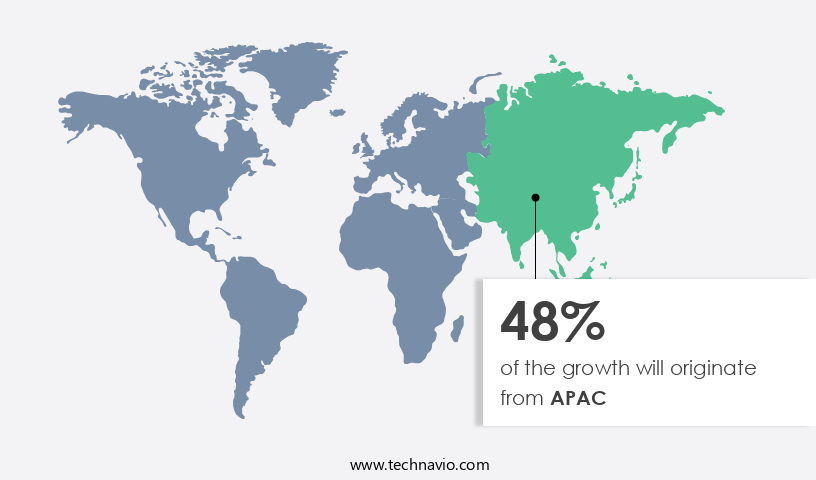
APAC is estimated to contribute 48% to the growth of the global market during the forecast period.Technavio’s analysts have elaborately explained the regional trends and drivers that shape the market during the forecast period.
In the North American market, smart speakers have gained popularity in the US and Canada due to their convenience and versatility. Key companies, including Alphabet Inc., Amazon.Com Inc., Apple Inc., and Sonos Inc., cater to the region's growing demand for these devices. The market's expansion is driven by the increasing adoption of smart homes and the numerous applications of smart speakers, such as music streaming, voice shopping, making calls, and accessing weather, traffic, and news updates. Consumers prioritize energy efficiency, hands-free operation, and smart home integration in their purchasing decisions. Smart speakers come equipped with advanced features like text-to-speech, voice search, intent recognition, and virtual assistant technology.
These devices ensure user privacy through security updates and encryption. Consumers can control various appliances and systems, including lighting, thermostats, and security systems, using voice commands. The market's evolution includes advancements in audio quality, microphone array design, and speakerphone functionality. Moreover, the integration of e-commerce platforms and payment systems enables seamless shopping experiences. Smart speakers also support calendar integration, podcast playback, and news updates, making them an essential part of modern households. The market's pricing strategy remains competitive, with frequent software updates, over-the-air firmware updates, and signal-to-noise ratio enhancements ensuring a high-quality user experience. Manufacturers prioritize energy efficiency, power management, and battery life to cater to consumer preferences.
The market's future trends include advancements in context awareness, far-field microphone technology, and voice biometrics for enhanced user experiences. The supply chain remains a critical factor, with manufacturers focusing on optimizing their manufacturing processes to meet increasing demand.
Market Dynamics
Our researchers analyzed the data with 2023 as the base year, along with the key drivers, trends, and challenges. A holistic analysis of drivers will help companies refine their marketing strategies to gain a competitive advantage.
What are the key market drivers leading to the rise in the adoption of Smart Speaker Industry?
- The significant growth in the number of units sold for smart speakers serves as the primary market driver.
- The market is experiencing notable growth, with companies such as Amazon and Google leading the charge. In 2022, these companies accounted for a significant portion of the smart speaker units sold. Other prominent players in the market included Alibaba, Baidu, and Xiaomi. The primary driver behind the increasing sales is the multi-functional capabilities of smart speakers, which include audio playback, LED display, voice shopping, and virtual assistant features. These devices offer hands-free operation, IoT connectivity, and security updates. Additionally, text-to-speech (TTS) technology, voice search, intent recognition, smart home integration, weather updates, and payment integration are other attractive features.
- With privacy concerns becoming increasingly important, companies are focusing on improving security measures. Frequency response and immersive, harmonious design are also essential factors influencing consumer preferences. The market is expected to continue growing during the forecast period, as more consumers adopt these innovative devices for their homes and daily lives.
What are the market trends shaping the Smart Speaker Industry?
- The rising prevalence of voice commerce signifies a significant market trend. This emerging technology enables users to make purchases through spoken commands, offering convenience and ease of use.
- Smart speakers, equipped with virtual assistants like Google Assistant and Amazon Alexa, are revolutionizing the way consumers interact with technology for voice commerce. This innovative technology enables users to search and purchase products online through voice commands, offering hands-free convenience and multitasking capabilities. Key features such as traffic updates, energy efficiency, echo cancellation, and form factor contribute to the growing appeal of smart speakers. Additionally, consumers value the integration of music streaming, calendar management, and smart home automation. Power management and user privacy are essential considerations, ensuring efficient energy usage and protecting personal information.
- E-commerce integration, audio quality, software updates, and podcast playback further enhance the user experience. Pricing strategy plays a significant role in the market dynamics, making these devices accessible to a wide audience. Voice commerce is poised to disrupt traditional input methods, offering a faster and more immersive shopping experience.
What challenges does the Smart Speaker Industry face during its growth?
- The expansion of the market is confronted by significant challenges related to privacy and security concerns. These issues, which include potential data breaches and unauthorized access to personal information, pose a substantial risk to both consumers and industry players, necessitating robust solutions to mitigate these threats and ensure user trust.
- The market faces growing concerns regarding privacy and security, as consumers express apprehension over potential threats to their conversation and personal data. To address these concerns, manufacturers employ teams of people to listen to voice recordings captured in users' homes, enhancing the devices' ability to understand human speech and respond accurately to voice commands. However, smart speakers also pose significant cybersecurity risks, including denial-of-service (DoS) attacks, man-in-the-middle (MitM) attacks, data breaches, advanced persistent threats (APTs), and ransomware attacks. To mitigate these risks, manufacturers invest in advanced technologies such as multi-microphone arrays, far-field microphones, wake word detection, and cloud connectivity.
- These technologies enable over-the-air updates, firmware updates, and dialog management, ensuring that devices remain secure and up-to-date. Additionally, context awareness and user profiles help personalize the user experience while maintaining data security. The supply chain for smart speakers involves numerous components, including appliance control, security systems, and signal-to-noise ratio optimization. Manufacturers prioritize data security, ensuring that voice commands are encrypted and transmitted securely. With the increasing adoption of smart speakers, it is crucial for businesses to stay informed about the latest security measures and best practices to protect their networks and data.
Exclusive Customer Landscape
The smart speaker market forecasting report includes the adoption lifecycle of the market, covering from the innovator’s stage to the laggard’s stage. It focuses on adoption rates in different regions based on penetration. Furthermore, the smart speaker market report also includes key purchase criteria and drivers of price sensitivity to help companies evaluate and develop their market growth analysis strategies.
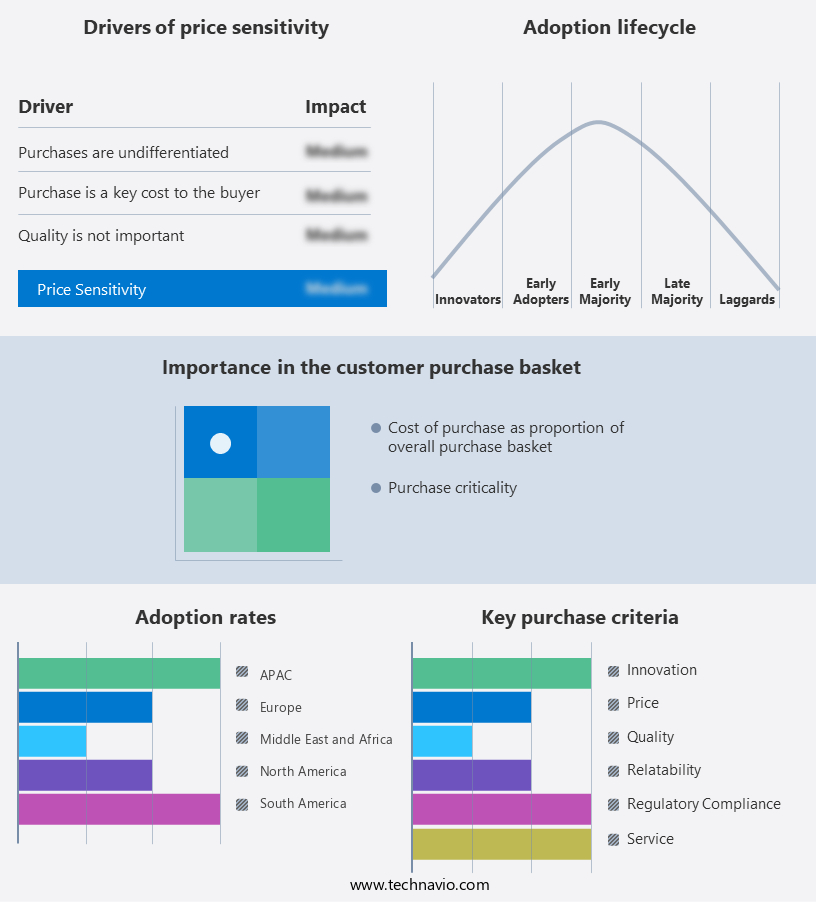
Customer Landscape
Key Companies & Market Insights
Companies are implementing various strategies, such as strategic alliances, smart speaker market forecast, partnerships, mergers and acquisitions, geographical expansion, and product/service launches, to enhance their presence in the industry.
Alphabet Inc. - This tech firm specializes in producing advanced smart speakers, including the Nest Mini and Nest Audio models. These devices utilize cutting-edge technology to enhance users' home experiences with features like voice control and superior sound quality. The company's commitment to innovation sets it apart in the competitive tech market.
The industry research and growth report includes detailed analyses of the competitive landscape of the market and information about key companies, including:
- Alphabet Inc.
- Amazon.com Inc.
- Apple Inc.
- Bang and Olufsen Group
- Belkin International Inc.
- Bose Corp.
- Edifier International Ltd.
- Imagine Marketing Pvt. Ltd.
- Lenovo Group Ltd.
- LG Electronics Inc.
- NXP Semiconductors NV
- Onkyo Corp.
- Portronics Digital Pvt. Ltd.
- Qualcomm Inc.
- Samsung Electronics Co. Ltd.
- Sonos Inc.
- Sony Group Corp.
- Xiaomi Communications Co. Ltd.
- Zebronics India Pvt. Ltd.
- Zound Industries International AB
Qualitative and quantitative analysis of companies has been conducted to help clients understand the wider business environment as well as the strengths and weaknesses of key industry players. Data is qualitatively analyzed to categorize companies as pure play, category-focused, industry-focused, and diversified; it is quantitatively analyzed to categorize companies as dominant, leading, strong, tentative, and weak.
Recent Development and News in Smart Speaker Market
- In January 2024, Amazon introduced the Echo Dot with a new design and improved sound quality, making it an affordable and attractive option for consumers looking to add smart speakers to their homes (Amazon Press Release). In March 2024, Google and Apple announced a partnership to integrate Google's Assistant with Apple's HomePod, allowing users to access Google services through the HomePod for the first time (Google and Apple Press Releases). In April 2025, Sonos, a leading player in the market, raised USD210 million in a funding round to expand its product line and enhance its voice assistant capabilities (Bloomberg). In May 2025, Samsung announced its entry into the market with the Galaxy Home Mini, featuring Bixby voice assistant integration and a compact design (Samsung Press Release). These developments underscore the growing competition and innovation in the market, with companies introducing new products, forming strategic partnerships, and securing significant investments to enhance their offerings and expand their customer base.
Research Analyst Overview
- In the dynamic the market, power consumption is a significant concern as these devices are continually active to listen for user commands. To address this issue, product development focuses on improving energy efficiency through advanced AI algorithms like neural networks and machine learning. Data analytics plays a crucial role in understanding consumer behavior and enhancing user experience (UX) by analyzing product reviews and sentiment analysis. Moreover, human-computer interaction (HCI) and conversational AI are essential components of the smart speaker ecosystem, driving sales forecasting and brand loyalty through adaptive dialogue systems and speech synthesis. Environmental impact is also a growing concern, leading to the development of open source software for speaker diarization and acoustic modeling.
- Revenue generation relies on intellectual property protection and regulatory compliance, with deep learning and language modeling enabling context modeling and emotion recognition for personalized user experiences. Big data and cloud computing facilitate data analytics and sales forecasting, while conversational AI and user interface (UI) design require standards compliance and microphone calibration for optimal performance. Competitor analysis and future trends include advancements in conversational AI, AI algorithms, and conversational systems, as well as the integration of conversational interfaces with other smart devices and services. Adaptive noise reduction and acoustic modeling continue to improve user satisfaction, while regulatory compliance and environmental impact remain critical considerations for market growth.
Dive into Technavio’s robust research methodology, blending expert interviews, extensive data synthesis, and validated models for unparalleled Smart Speaker Market insights. See full methodology.
|
Market Scope |
|
|
Report Coverage |
Details |
|
Page number |
171 |
|
Base year |
2023 |
|
Historic period |
2018-2022 |
|
Forecast period |
2024-2028 |
|
Growth momentum & CAGR |
Accelerate at a CAGR of 34.28% |
|
Market growth 2024-2028 |
USD 50753.9 million |
|
Market structure |
Fragmented |
|
YoY growth 2023-2024(%) |
25.65 |
|
Key countries |
US, Germany, China, UK, and Japan |
|
Competitive landscape |
Leading Companies, Market Positioning of Companies, Competitive Strategies, and Industry Risks |
What are the Key Data Covered in this Smart Speaker Market Research and Growth Report?
- CAGR of the Smart Speaker industry during the forecast period
- Detailed information on factors that will drive the growth and forecasting between 2024 and 2028
- Precise estimation of the size of the market and its contribution of the industry in focus to the parent market
- Accurate predictions about upcoming growth and trends and changes in consumer behaviour
- Growth of the market across North America, Europe, APAC, South America, and Middle East and Africa
- Thorough analysis of the market’s competitive landscape and detailed information about companies
- Comprehensive analysis of factors that will challenge the smart speaker market growth of industry companies
We can help! Our analysts can customize this smart speaker market research report to meet your requirements.
 RIA -
RIA - 
