



Smart Toys Market Size 2024-2028
The smart toys market size is forecast to increase by USD 7.39 billion at a CAGR of 17.61% between 2023 and 2028. The market is experiencing significant growth due to the increasing digital engagement of tech-savvy youngsters. Interactive games and educational robots are gaining popularity as they offer unique learning experiences. Advanced technologies such as Radio-Frequency Identification (RFID) and Near Field Communication (NFC) are being integrated into toys, enabling offline and online interactions. The adoption of STEM toys for children's skills enhancement is another driving factor. However, the high availability of substitutes may pose a challenge to market growth. Companies must focus on innovation and providing value-added features to maintain a competitive edge. This market analysis report provides an in-depth examination of these trends and challenges, offering insights into the future growth prospects of the smart toys industry.
Market Analysis
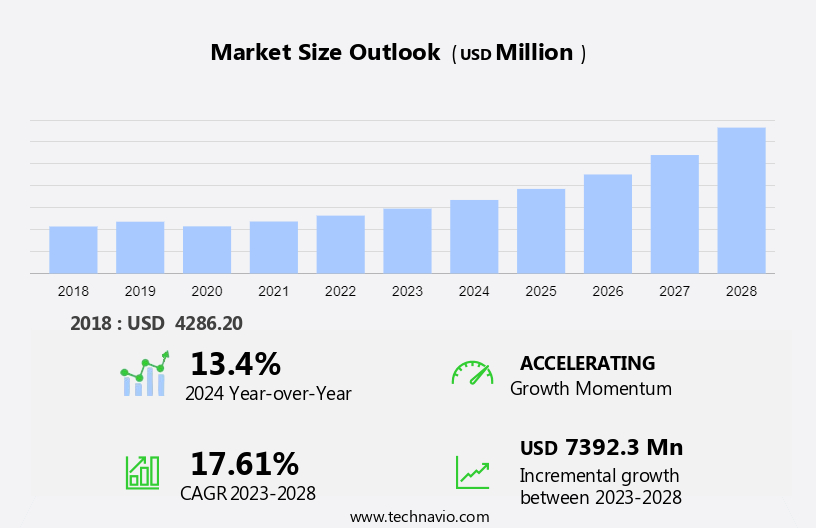
The market is witnessing significant growth as technology continues to play a pivotal role in children's education. These innovative toys integrate science, technology, engineering, and mathematics (STEM) concepts into play, making learning fun and engaging. Smart toys are not just toys; they are interactive devices designed to stimulate creativity and critical thinking skills. They use various technologies like robotics, AI algorithms, and IoT to create lucrative experiences.
Moreover, one of the most popular trends in the market is education-based toys. Companies like Fisher-Price and Mattel Creations Virtual have introduced AI-powered toys that teach STEM content through gamification. For instance, Fisher-Price's Brown Toy Box series uses cause-and-effect interactions to help children understand basic concepts in science and math. Similarly, Smartgurlz offers robotics kits that allow girls to build and code their own robots. Another trend is the integration of blockchain technology into smart toys. Companies like Velan Studios and Rarible are developing digital collectibles that can be bought, sold, and traded on the blockchain. This not only adds a new layer of excitement to play but also introduces children to the concept of digital ownership and transactions.
Further, the middle class family population is a significant target demographic for smart toys. Parents are increasingly looking for ways to provide their children with high-quality educational experiences at home. Smart toys offer an affordable and convenient solution, allowing children to learn while having fun. In conclusion, the market is witnessing rapid growth as technology continues to transform the way children learn. Education-based toys, gamification, and blockchain integration are some of the key trends driving this growth. Smart toys provide an engaging and interactive way for children to learn STEM concepts, making them an essential tool for modern education.
Market Segmentation
The market research report provides comprehensive data (region-wise segment analysis), with forecasts and estimates in "USD million" for the period 2024-2028, as well as historical data from 2018-2022 for the following segments.
- Technology
- Wi-Fi
- Bluetooth
- Others
- Distribution Channel
- Offline
- Online
- Geography
- North America
- US
- Europe
- Germany
- UK
- APAC
- China
- Japan
- Middle East and Africa
- South America
- North America
By Technology Insights
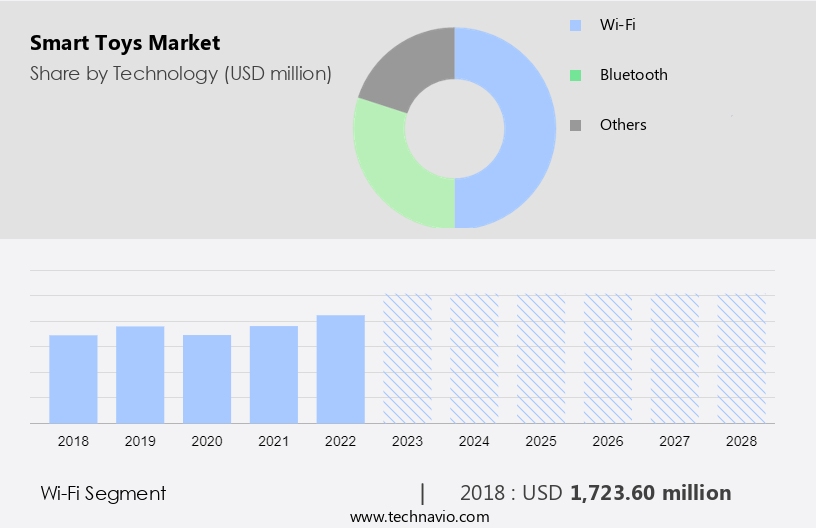
The wi-fi segment is estimated to witness significant growth during the forecast period. In the realm of modern education and entertainment, the market for smart toys integrating Artificial Intelligence (AI) is experiencing substantial growth. These innovative toys, which incorporate elements of Science, Technology, Engineering, and Math (STEM), are designed to engage and educate children in a fun and interactive way. One notable example is SmartGurlz, a line of AI-driven dolls that teach coding and programming skills. Wi-Fi connectivity is a fundamental aspect of these smart toys, enabling high-speed data transmission within a confined area. Wi-Fi's extensive coverage and swift data transfer capabilities surpass those of Bluetooth and Near Field Communication (NFC), making it the preferred choice for smart toys.
However, this Internet connectivity poses potential privacy concerns. Once connected, smart toys collect and transmit data to manufacturers or developers, raising questions about data security and privacy. As the demand for AI-infused smart toys continues to escalate, it is essential for parents and educators to prioritize online safety and privacy. Implementing strong passwords, limiting data access, and regularly updating software are some effective measures to ensure the protection of personal information. However, it is crucial to address privacy concerns and ensure the secure handling of collected data to maintain trust and confidence in these innovative products.
Get a glance at the market share of various segments Request Free Sample
The Wi-Fi segment accounted for USD 1.72 billion in 2018 and showed a gradual increase during the forecast period.
Regional Insights
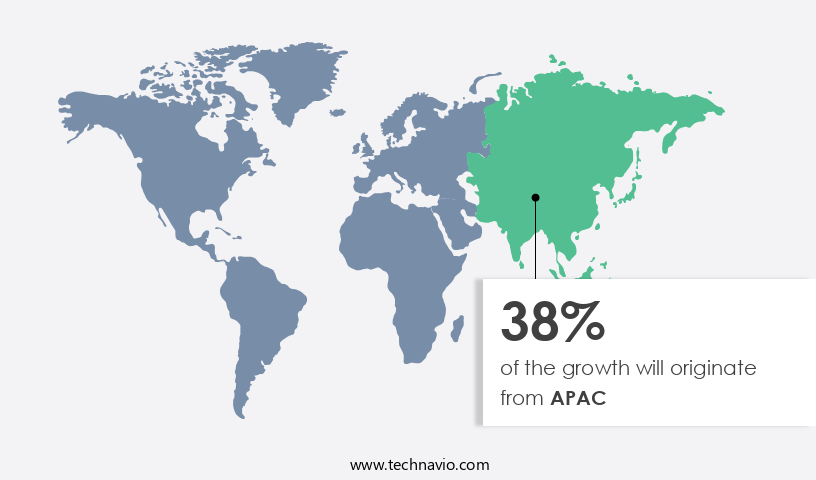
APAC is estimated to contribute 38% to the growth of the global market during the forecast period. Technavio's analysts have elaborately explained the regional trends and drivers that shape the market during the forecast period.
For more insights on the market share of various regions Request Free Sample
In North America, the market is experiencing significant growth, with the United States and Canada being the primary contributors to the region's revenue. The region's affinity for modern technology and innovation drives a high demand for interactive and digitally enhanced toys. Major end-users of the market include individual purchasers such as parents and children, millennials, schools, and childcare facilities. companies in North America are expanding their businesses in the smart toys segment due to the region's early adoption of technology. Additionally, the region's high per capita income and standard of living enable consumers to afford new technology-driven gadgets, including smart toys and games. Further, connectivity and interactive features are key elements of smart toys, providing an educational experience for children and entertainment for all ages. As a result, the market for these toys is poised for continued expansion in North America.
Market Dynamics
Our researchers analyzed the data with 2023 as the base year, along with the key drivers, trends, and challenges. A holistic analysis of drivers will help companies refine their marketing strategies to gain a competitive advantage.
Market Driver
The adoption of STEM toys for children's skills enhancement is the key driver of the market. Smart toys equipped with Wi-Fi and Bluetooth capabilities are revolutionizing children's playtime experience. These interactive toys, powered by artificial intelligence and sensors, encourage critical thinking and creativity among kids. Parents and educators can utilize these toys to teach professional skills, such as coding and programming, fostering digital literacy. Schools and parents can leverage STEM toys to improve cognitive abilities and promote logic, collaboration, problem-solving, and creativity in students. By integrating technology into traditional play, smart toys offer a unique blend of education and entertainment.
Market Trends
The emergence of 3D printing is the upcoming trend in the market. The advent of 3D printing technology poses a significant challenge for manufacturers and licensors in the market. With this technology becoming increasingly accessible, consumers have the ability to create customized toys with their preferred characters and complex shapes. However, this also raises concerns regarding copyright and trademark infringements.
Hasbro is one such example, granting licenses to 3D printing companies to use specific assets and differentiate their products from other licensed merchandise in the market. The ITU highlights the importance of implementing effective intellectual property protection measures to safeguard the interests of manufacturers and license providers.
Market Challenge
The high availability of substitutes is a key challenge affecting the market growth. Smart toys, which offer digital engagement through interactive games and educational robots, are gaining traction among tech-savvy youngsters. However, their premium prices may deter price-conscious consumers, particularly in economies with limited purchasing power. In contrast, traditional toys and video games, which are more affordable alternatives, continue to thrive. The popularity of video games, fueled by advancements in technology and the rise of esports, is on the rise and is expected to persist during the forecast period. Smart toys, with features such as RFID and NFC, offer offline and online experiences, making them attractive to consumers seeking both convenience and education.
Exclusive Customer Landscape
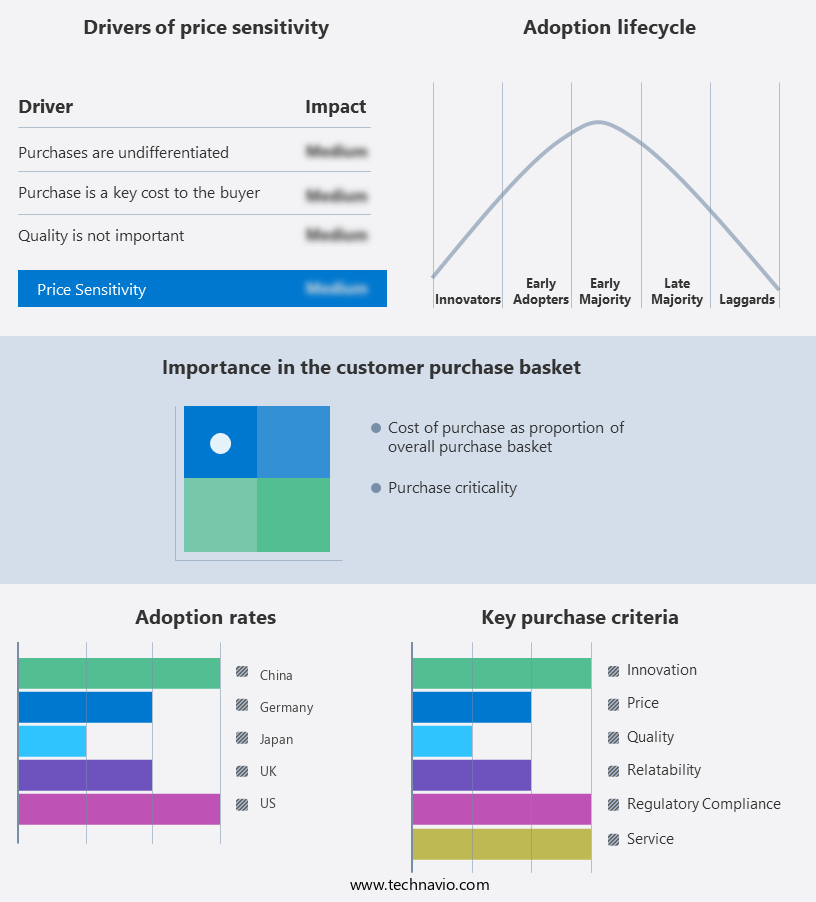
The market forecasting report includes the adoption lifecycle of the market, covering from the innovator's stage to the laggard's stage. It focuses on adoption rates in different regions based on penetration. Furthermore, the report also includes key purchase criteria and drivers of price sensitivity to help companies evaluate and develop their market growth analysis strategies.
Customer Landscape
Key Companies & Market Insights
Companies are implementing various strategies, such as strategic alliances, partnerships, mergers and acquisitions, geographical expansion, and product/service launches, to enhance their presence in the market.
Activision Blizzard Inc. - The company offers smart toys that includes diverse game categories, including action, adventure, action sports, racing, role playing, simulation, first-person action, music-based gaming, and strategy.
The market research and growth report includes detailed analyses of the competitive landscape of the market and information about key companies, including:
- Digital Dream Labs
- Genesis
- geobra Brandstatter Stiftung and Co. KG
- Hasbro Inc.
- Innovation First International Inc.
- LEGO System AS
- Makeblock Co. Ltd.
- Mattel Inc.
- Ozo EDU Inc.
- Primo Toys
- RN Chidakashi Technologies Inc.
- Silverlit Toys Manufactory Ltd.
- Sony Group Corp.
- Sphero Inc.
- Spin Master Corp.
- UBTECH Robotics Inc.
- VTech Holdings Ltd.
- WowWee Group Ltd.
- ZURU Inc.
Qualitative and quantitative analysis of companies has been conducted to help clients understand the wider business environment as well as the strengths and weaknesses of key market players. Data is qualitatively analyzed to categorize companies as pure play, category-focused, industry-focused, and diversified; it is quantitatively analyzed to categorize companies as dominant, leading, strong, tentative, and weak.
Research Analyst Overview
The smart toys industry is experiencing significant growth due to the integration of artificial intelligence (AI) and the Internet of Things (IoT) in educational toys. These innovative products offer an interactive and engaging experience for children, blending traditional play with digital elements. STEM-based toys, which focus on science, technology, engineering, and math, are particularly popular. Education-based toys have become a favorite among parents, as they aim to promote digital literacy and enhance the learning experience for tech-savvy youngsters. Gamification, AI algorithms, and robotics are key features in these toys, providing cause-and-effect interactions and social media integration. Middle-class family populations are driving the demand for smart toys, with brands like Fisher-Price, Mattel Creations, and Hot Wheels leading the way.
Further, e-commerce portals, app stores, and platforms like Rarible and Velan Studios are making it easier for parents to purchase and download content for their children's smart toys. PlayStation 4 and PlayStation 5 are also entering the market with AI-powered toys, expanding the possibilities for interactive play. Offline and online experiences are merging in smart toys, with RFID and NFC technologies enabling seamless integration between physical and digital worlds. Parents appreciate the educational value of these toys, as they offer a balance between traditional play and digital engagement.
|
Market Scope |
|
|
Report Coverage |
Details |
|
Page number |
164 |
|
Base year |
2023 |
|
Historic period |
2018-2022 |
|
Forecast period |
2024-2028 |
|
Growth momentum & CAGR |
Accelerate at a CAGR of 17.61% |
|
Market growth 2024-2028 |
USD 7.39 billion |
|
Market structure |
Fragmented |
|
YoY growth 2023-2024(%) |
13.4 |
|
Regional analysis |
North America, Europe, APAC, Middle East and Africa, and South America |
|
Performing market contribution |
APAC at 38% |
|
Key countries |
US, China, Japan, UK, and Germany |
|
Competitive landscape |
Leading Companies, Market Positioning of Companies, Competitive Strategies, and Industry Risks |
|
Key companies profiled |
Activision Blizzard Inc., Digital Dream Labs, Genesis, geobra Brandstatter Stiftung and Co. KG, Hasbro Inc., Innovation First International Inc., LEGO System AS, Makeblock Co. Ltd., Mattel Inc., Ozo EDU Inc., Primo Toys, RN Chidakashi Technologies Inc., Silverlit Toys Manufactory Ltd., Sony Group Corp., Sphero Inc., Spin Master Corp., UBTECH Robotics Inc., VTech Holdings Ltd., WowWee Group Ltd., and ZURU Inc. |
|
Market dynamics |
Parent market analysis, market growth inducers and obstacles, market forecast, fast-growing and slow-growing segment analysis, COVID-19 impact and recovery analysis and future consumer dynamics, market condition analysis for the forecast period |
|
Customization purview |
If our market report has not included the data that you are looking for, you can reach out to our analysts and get segments customized. |
What are the Key Data Covered in this Market Research and Growth Report?
- CAGR of the market during the forecast period
- Detailed information on factors that will drive the market growth and forecasting between 2024 and 2028
- Precise estimation of the size of the market and its contribution of the market in focus to the parent market
- Accurate predictions about upcoming market growth and trends and changes in consumer behaviour
- Growth of the market across North America, Europe, APAC, Middle East and Africa, and South America
- Thorough analysis of the market's competitive landscape and detailed information about companies
- Comprehensive analysis of factors that will challenge the growth of market companies
We can help! Our analysts can customize this market research report to meet your requirements. Get in touch
 RIA -
RIA - 
