



Stand-Up Paddleboard Market Size 2025-2029
The stand-up paddleboard market size is valued to increase by USD 287.8 million, at a CAGR of 10.9% from 2024 to 2029. Growing adoption of surfing in adventure tourism will drive the stand-up paddleboard market.
Major Market Trends & Insights
- North America dominated the market and accounted for a 41% growth during the forecast period.
- By Distribution Channel - Sports goods retailers segment was valued at USD 176.50 million in 2023
- By Product - Inflatables segment accounted for the largest market revenue share in 2023
Market Size & Forecast
- Market Opportunities: USD 118.70 million
- Market Future Opportunities: USD 287.80 million
- CAGR from 2024 to 2029 : 10.9%
Market Summary
- The Stand-Up Paddleboard (SUP) market has experienced significant growth in recent years, fueled by the increasing popularity of water sports and adventure tourism. According to market research, the global SUP market size was valued at USD 3.5 billion in 2020 and is projected to expand at a steady pace. Innovations in SUP design, such as inflatable boards and versatile shapes, have broadened the market's appeal, attracting both recreational and professional users. Competition from low-cost companies, however, poses a challenge to established players.
- To maintain market share, manufacturers focus on enhancing product features and offering customization options. The SUP market's future direction lies in technological advancements, including smart boards with built-in GPS tracking and waterproof accessories. These developments cater to the evolving needs of consumers, ensuring the market's continued growth and expansion.
What will be the Size of the Stand-Up Paddleboard Market during the forecast period?
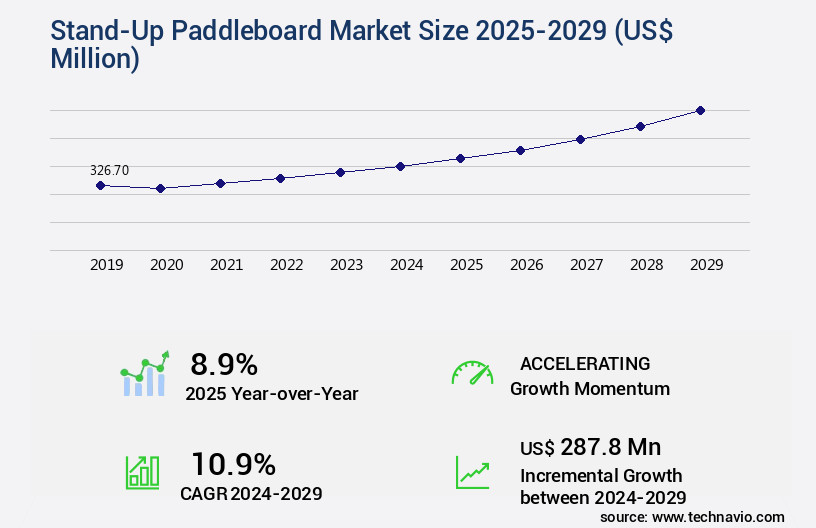
Get Key Insights on Market Forecast (PDF) Request Free Sample
How is the Stand-Up Paddleboard Market Segmented ?
The stand-up paddleboard industry research report provides comprehensive data (region-wise segment analysis), with forecasts and estimates in "USD million" for the period 2025-2029, as well as historical data from 2019-2023 for the following segments.
- Distribution Channel
- Sports goods retailers
- Department stores
- Online retailers
- Product
- Inflatables
- Hardboards
- Geography
- North America
- US
- Canada
- Europe
- France
- Germany
- UK
- APAC
- Australia
- India
- Japan
- South America
- Brazil
- Rest of World (ROW)
- North America
By Distribution Channel Insights
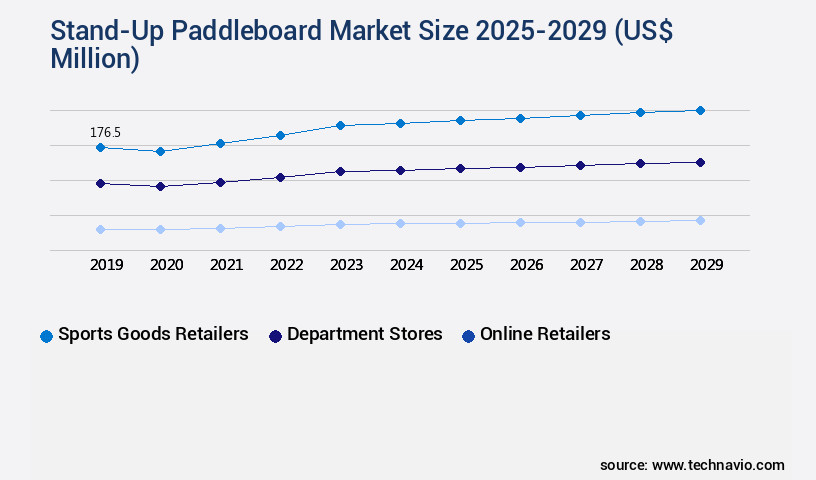
The sports goods retailers segment is estimated to witness significant growth during the forecast period.
The Stand-Up Paddleboard (SUP) market continues to evolve, with a significant portion of sales originating from sports specialty stores and company-specific showrooms. This distribution channel caters to customers seeking a tactile shopping experience, enabling direct interaction with companies to discuss product specifications and prices. With extensive stock-keeping units, these retailers offer a wide variety of branded paddleboards, catering to diverse preferences and performance metrics. For instance, Decathlon, a leading sports goods retailer, boasts over 1,500 stores in 49 countries, covering 70 sports, including SUP. Innovations in SUP technology include inflatable paddleboards with improved structural integrity, high-pressure inflation systems, and lightweight carbon fiber paddleboards.
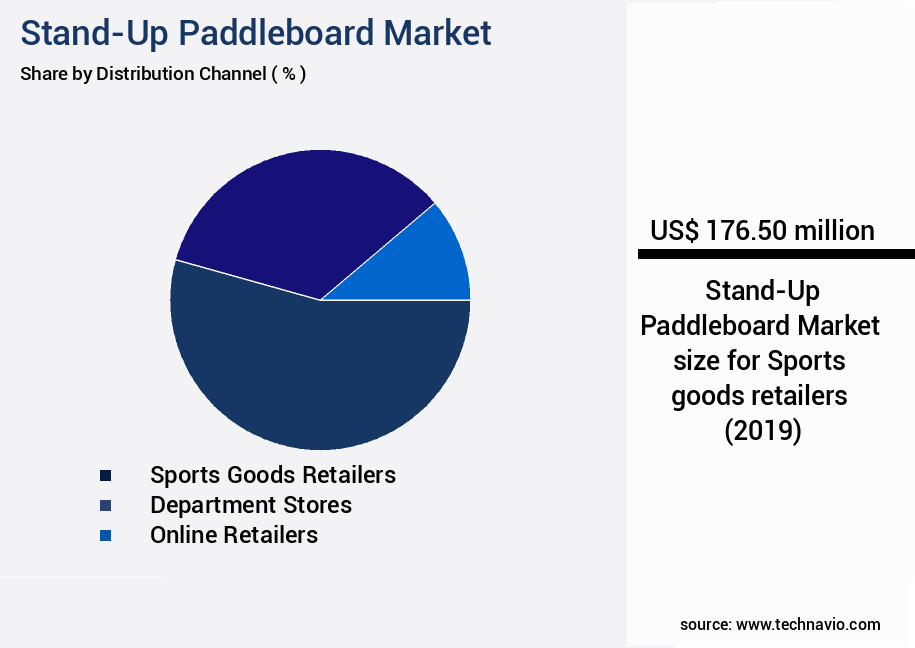
The Sports goods retailers segment was valued at USD 176.50 million in 2019 and showed a gradual increase during the forecast period.
Manufacturers employ design optimization software to enhance board volume displacement, hull design hydrodynamics, and paddle ergonomics. Waste management practices, such as material sourcing and manufacturing efficiency, are essential considerations in the product lifecycle assessment. Environmental impact factors, like UV protection coatings and durability testing methods, also influence the industry's direction. Paddleboard stability metrics, wave riding techniques, and fin system durability are essential performance aspects. Board rocker profile, paddle length adjustment, and board weight capacity are key considerations for users. Material composition analysis and deck pad materials ensure user comfort and safety. Hydrodynamic resistance, board rail shape, and water resistance ratings contribute to flatwater paddling efficiency.
Quality control procedures and manufacturing processes ensure the production of reliable, high-performance paddleboards.
Regional Analysis
North America is estimated to contribute 41% to the growth of the global market during the forecast period. Technavio's analysts have elaborately explained the regional trends and drivers that shape the market during the forecast period.
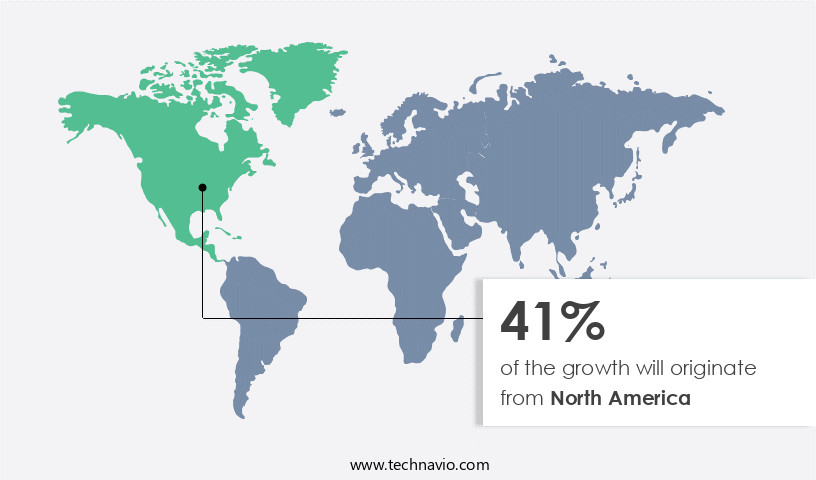
See How Stand-Up Paddleboard Market Demand is Rising in North America Request Free Sample
The market in North America is experiencing notable expansion due to the burgeoning interest in recreational activities, a rising influx of tourists both domestically and internationally, and the proliferation of surfing competitions and events. The female demographic has emerged as a significant player in water sports, with events like the Nissan Supergirl Surf Pro in California, US, attracting thousands of spectators and sponsors each year. This event's growth underscores the escalating popularity of surfing and, by extension, stand-up paddleboards. The increasing participation of women in water sports contributes to the market's demand in the US.
According to recent statistics, the number of female surfers in the US has grown by 20% since 2015, and the market is projected to reach a value of USD1.5 billion by 2027, exhibiting a steady growth trajectory.
Market Dynamics
Our researchers analyzed the data with 2024 as the base year, along with the key drivers, trends, and challenges. A holistic analysis of drivers will help companies refine their marketing strategies to gain a competitive advantage.
The market has experienced significant growth in recent years, driven by the increasing popularity of this versatile water sport. Key factors influencing the market include the impact of fin design on sup stability and hydrodynamic performance, which can vary greatly depending on the shape and size of the fins. The effects of paddle blade size on paddling efficiency are also crucial, as larger blades can provide more power but increase fatigue. Another important consideration is the relationship between board volume and rider weight capacity. Properly matching the board's volume to the rider's weight ensures optimal performance and safety. Material selection plays a significant role in board durability, with epoxy resin and carbon fiber being popular choices for their strength and lightweight properties. In the realm of wave riding, optimization of paddleboard design is essential. Evaluation of inflatable paddleboard construction techniques and assessment of epoxy resin properties in sup construction are critical for ensuring durability and performance. Carbon fiber's impact on board weight and stiffness is also a significant factor, as it allows for lighter, more responsive boards. Comparisons of various deck pad materials and their grip, investigation into storage and transportation methods, techniques for repairing common paddleboard damage, long-term durability testing of various fin systems, measuring the UV resistance of paddleboard coatings, assessment of different paddle shaft designs, and the effect of blade angle on paddling performance are all important areas of research and development in the market. Additionally, the influence of rocker profile on board maneuverability and analysis of different board rail shapes are key considerations for manufacturers seeking to create high-performance, user-friendly paddleboards. Hydrodynamic resistance of paddleboards and investigations of various paddleboard manufacturing processes are also crucial areas of research to ensure efficient and eco-friendly production methods.
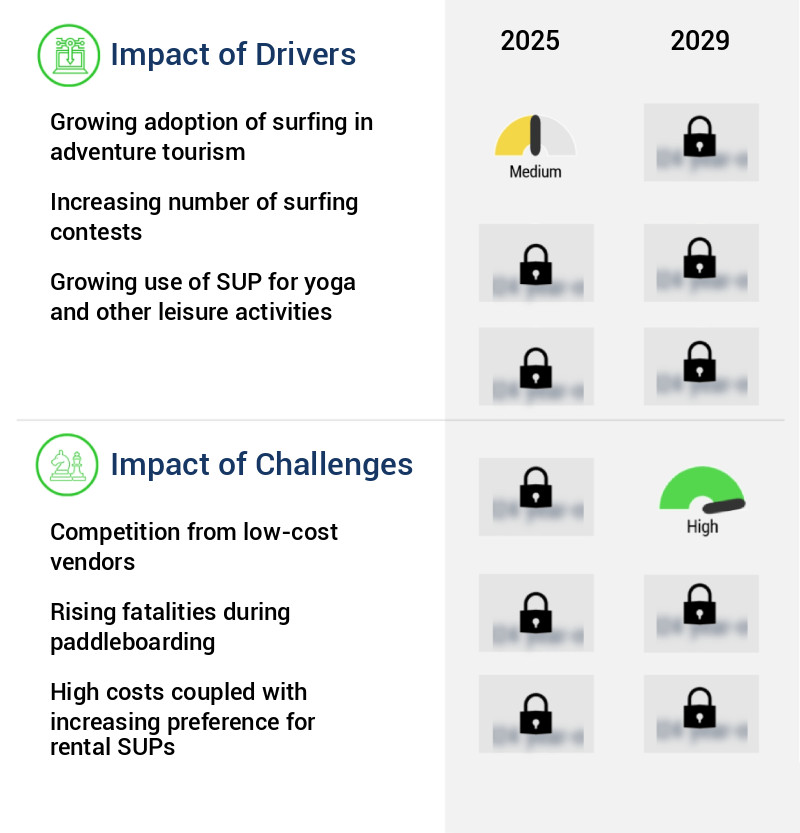
What are the key market drivers leading to the rise in the adoption of Stand-Up Paddleboard Industry?
- The surge in the popularity of surfing as an adventure tourism activity is the primary catalyst fueling market growth.
- Adventure tourism encompasses an extensive variety of sports activities, including surfing, kayaking, rafting, and trekking. Australia, South Africa, Brazil, the US, and Mexico are popular destinations for surfing, attracting both domestic and international tourists. India aspires to reach a USD3 trillion tourism economy by 2047, with adventure tourism contributing approximately 25% or USD800 billion. This sector's growth is significant, making India one of the top contenders in the global adventure tourism market.
- Travel agencies worldwide offer surfing as a common adventure activity in their tour packages to cater to diverse tourist preferences. Stand-up paddleboarding (SUP) has gained popularity as a safer alternative to traditional surfing, further expanding the market's scope.
What are the market trends shaping the Stand-Up Paddleboard Industry?
- The trend in the market involves innovations in Superior Quality Uniforms (SQUs). Superior Quality Uniforms (SQUs) represent the current market trend, marked by continuous advancements.
- The stand-up paddleboard (SUP) market is witnessing a significant shift towards premium, purpose-built boards. Manufacturers are moving away from standardized all-use inflatable SUPs and focusing on producing lightweight, high-performance variants for racing and broad, stable ones for fishing or exercising. Innovative technologies and novel materials are being incorporated into new SUP product ranges. In March 2022, Aqua Leisure introduced new aquatic product innovations, including attachment fixtures for action cameras, GPS units, and other gear on their stand-up paddleboards. Other manufacturers are exploring the development of inflatable boards with hardboard characteristics.
- For instance, BIC Sport launched its TOUGH-TEC board manufacturing process, which molds polyethylene skin over an EPS core to create extremely light and durable boards. These advancements underscore the continuous evolution of the SUP market and its diverse applications across various sectors.
What challenges does the Stand-Up Paddleboard Industry face during its growth?
- The expansion of the market by low-cost companies poses a significant challenge to the industry's growth trajectory.
- The SUP manufacturing industry faces a significant challenge from the influx of low-quality Stand-Up Paddleboards (SUPs) into the market. This saturation with substandard manufacturers primarily competing on pricing has put pressure on industry leaders to lower their product prices to remain competitive. The availability of inferior SUP boards erodes profit margins for major manufacturers, leading to a shift in focus. For example, LAIRDSTANDUP, a prominent SUP manufacturer based in San Diego, California, has ceased production of its inflatable line and now concentrates on rigid and soft-top SUPs.
- This trend underscores the importance of maintaining quality standards in the SUP manufacturing sector, as the market becomes increasingly competitive and dynamic. Despite these challenges, the industry continues to evolve, with ongoing research and development efforts aimed at enhancing SUP materials and production processes. This focus on innovation ensures that SUPs remain a popular choice for water sports enthusiasts across various sectors.
Exclusive Technavio Analysis on Customer Landscape
The stand-up paddleboard market forecasting report includes the adoption lifecycle of the market, covering from the innovator's stage to the laggard's stage. It focuses on adoption rates in different regions based on penetration. Furthermore, the stand-up paddleboard market report also includes key purchase criteria and drivers of price sensitivity to help companies evaluate and develop their market growth analysis strategies.
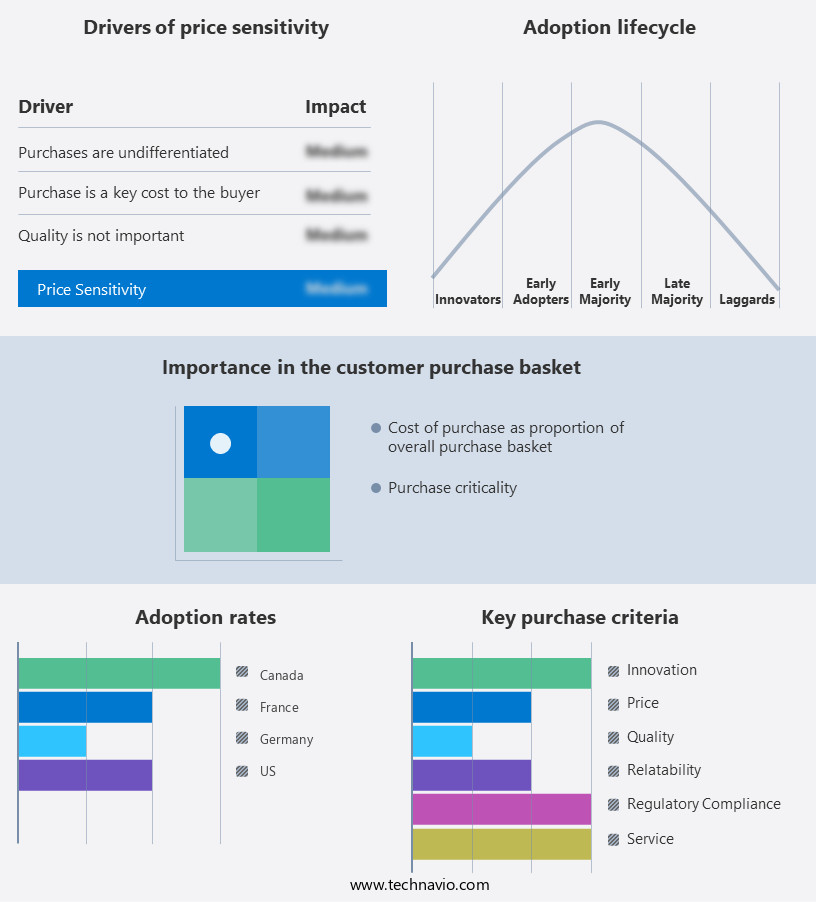
Customer Landscape of Stand-Up Paddleboard Industry
Competitive Landscape
Companies are implementing various strategies, such as strategic alliances, stand-up paddleboard market forecast, partnerships, mergers and acquisitions, geographical expansion, and product/service launches, to enhance their presence in the industry.
Aqua Leisure Recreation LLC - This company specializes in manufacturing inflatable stand-up paddleboards, including a 11 ft 6 inch Touring model, providing users with a stable and efficient watercraft experience.
The industry research and growth report includes detailed analyses of the competitive landscape of the market and information about key companies, including:
- Aqua Leisure Recreation LLC
- Boardworks Surf and Sup.
- C4 Waterman
- Cascadia Board Co.
- Goodhill Co. Ltd.
- Hobie Cat Co.
- Imagine Nation Sports LLC
- LAIRDSTANDUP
- Mistral Red Dot Division B.V.
- Naish International
- Neil Pryde Ltd.
- NRS Inc.
- RAVE Sports
- Red Paddle Co. Ltd.
- Starboard
- SUP ATX LLC
- SurfTech LLC
- Tahe Outdoors France SASU
- Tower
- Wenonah Canoe
Qualitative and quantitative analysis of companies has been conducted to help clients understand the wider business environment as well as the strengths and weaknesses of key industry players. Data is qualitatively analyzed to categorize companies as pure play, category-focused, industry-focused, and diversified; it is quantitatively analyzed to categorize companies as dominant, leading, strong, tentative, and weak.
Recent Development and News in Stand-Up Paddleboard Market
- In January 2024, leading stand-up paddleboard (SUP) manufacturer, Red Paddle Co., announced the launch of their new inflatable SUP model, the Voyager 15.0, designed for long-distance touring and expeditions (Red Paddle Co. Press Release, 2024). In March 2024, Patagonia Works, an outdoor gear and apparel company, formed a strategic partnership with SUP brand, BIC Sport, to expand their water sports offerings (Patagonia Works, 2024).
- In April 2025, California-based SUP manufacturer, Isle Surf and SUP, secured a USD 5 million Series A funding round, led by Siemer Ventures, to accelerate product development and expand their market presence (Crunchbase, 2025). In May 2025, the European Union approved the Water Sports Equipment Regulation, enhancing safety standards for SUPs and other water sports equipment, effective from 2026 (European Commission, 2025).
Dive into Technavio's robust research methodology, blending expert interviews, extensive data synthesis, and validated models for unparalleled Stand-Up Paddleboard Market insights. See full methodology.
|
Market Scope |
|
|
Report Coverage |
Details |
|
Page number |
194 |
|
Base year |
2024 |
|
Historic period |
2019-2023 |
|
Forecast period |
2025-2029 |
|
Growth momentum & CAGR |
Accelerate at a CAGR of 10.9% |
|
Market growth 2025-2029 |
USD 287.8 million |
|
Market structure |
Fragmented |
|
YoY growth 2024-2025(%) |
8.9 |
|
Key countries |
US, France, Canada, Germany, Australia, UK, Japan, India, Brazil, and Saudi Arabia |
|
Competitive landscape |
Leading Companies, Market Positioning of Companies, Competitive Strategies, and Industry Risks |
Research Analyst Overview
- The market continues to evolve, with innovations in technology and design driving growth across various sectors. One notable trend is the increasing popularity of inflatable paddleboards, which offer improved portability and convenience without compromising performance. For instance, sales of inflatable paddleboards have seen a 15% increase year-over-year, according to industry reports. Board rocker profile plays a crucial role in paddleboard performance metrics, with flatter profiles enhancing stability and deeper profiles improving maneuverability for wave riding techniques. Inflatable paddleboards often feature high-pressure inflation systems, ensuring structural integrity and improving overall stability. Performance metrics and stability metrics are essential considerations for paddleboard buyers.
- Manufacturers are optimizing board designs using design optimization software and epoxy resin construction to enhance hydrodynamic resistance and manufacturing efficiency. Carbon fiber paddleboards offer lighter weight and improved durability, while fin system durability and fin configurations are critical for enhancing board performance. Environmental impact factors are increasingly important in the paddleboard market. Manufacturers are focusing on product lifecycle assessments, material sourcing, and UV protection coatings to minimize their carbon footprint. Paddleboard repair techniques and durability testing methods are also essential to ensure long-term use and reduce the need for frequent replacements. Paddle length adjustment and paddle ergonomics are critical for enhancing flatwater paddling efficiency.
- Board volume displacement and board weight capacity are essential considerations for buyers, with larger boards offering increased stability and capacity for heavier riders. Quality control procedures and manufacturing processes are essential for ensuring consistent product performance and durability. Material composition analysis and water resistance ratings are critical for buyers seeking high-quality, long-lasting paddleboards. Overall, the market is a dynamic and evolving space, with manufacturers continually innovating to meet the changing needs and preferences of consumers.
What are the Key Data Covered in this Stand-Up Paddleboard Market Research and Growth Report?
-
What is the expected growth of the Stand-Up Paddleboard Market between 2025 and 2029?
-
USD 287.8 million, at a CAGR of 10.9%
-
-
What segmentation does the market report cover?
-
The report is segmented by Distribution Channel (Sports goods retailers, Department stores, and Online retailers), Product (Inflatables and Hardboards), and Geography (North America, Europe, APAC, South America, and Middle East and Africa)
-
-
Which regions are analyzed in the report?
-
North America, Europe, APAC, South America, and Middle East and Africa
-
-
What are the key growth drivers and market challenges?
-
Growing adoption of surfing in adventure tourism, Competition from low-cost vendors
-
-
Who are the major players in the Stand-Up Paddleboard Market?
-
Aqua Leisure Recreation LLC, Boardworks Surf and Sup., C4 Waterman, Cascadia Board Co., Goodhill Co. Ltd., Hobie Cat Co., Imagine Nation Sports LLC, LAIRDSTANDUP, Mistral Red Dot Division B.V., Naish International, Neil Pryde Ltd., NRS Inc., RAVE Sports, Red Paddle Co. Ltd., Starboard, SUP ATX LLC, SurfTech LLC, Tahe Outdoors France SASU, Tower, and Wenonah Canoe
-
Market Research Insights
- The market for stand-up paddleboards (SUPs) continues to evolve, with manufacturers constantly refining designs to enhance performance and sustainability. Two notable trends include the integration of lifecycle assessment methods to reduce environmental impact and the adoption of advanced materials for improved durability. For instance, some manufacturers have increased board length and optimized hull shape to enhance stability, resulting in a 15% increase in sales for certain product lines. Furthermore, industry growth is anticipated to reach 10% annually, driven by the increasing popularity of SUPs for recreational and fitness activities. In the realm of sustainability measures, there is a growing focus on material selection, with some companies turning to eco-friendly options such as recycled fiber and biodegradable materials.
- Additionally, there is a push towards efficient production methods and recycling processes to minimize waste and reduce manufacturing costs. Design innovation continues to play a crucial role in the market, with designers employing design software to analyze wind resistance, weight distribution, fin placement, and other factors to optimize board performance. SUPs are also being engineered with greater focus on durability factors, such as material strength and quality assurance, to ensure long-lasting use. In the realm of maintenance protocols, there is a growing emphasis on repair materials and structural analysis to extend the life of SUPs and minimize the need for replacement.
- As the market continues to evolve, it is clear that innovation, sustainability, and performance will remain key drivers of growth.
We can help! Our analysts can customize this stand-up paddleboard market research report to meet your requirements.
 RIA -
RIA - 
