
Sustainable Consumer Goods Market Analysis, Size, and Forecast 2026-2030: North America (US, Canada, and Mexico), Europe (Germany, UK, and France), APAC (China, Japan, and India), South America (Brazil and Argentina), Middle East and Africa (Saudi Arabia, UAE, and South Africa), and Rest of World (ROW)

Sustainable Consumer Goods Market Analysis, Size, and Forecast 2026-2030:
North America (US, Canada, and Mexico), Europe (Germany, UK, and France), APAC (China, Japan, and India), South America (Brazil and Argentina), Middle East and Africa (Saudi Arabia, UAE, and South Africa), and Rest of World (ROW)

Published: Mar 2026 315 Pages SKU: IRTNTR81359

Market Overview at a Glance

$11.20 B
Market Opportunity
10.5%
CAGR 2025 - 2030
35.9%
North America Growth
$4.87 B
Food and beverages segment 2024

Sustainable Consumer Goods Market Size 2026-2030

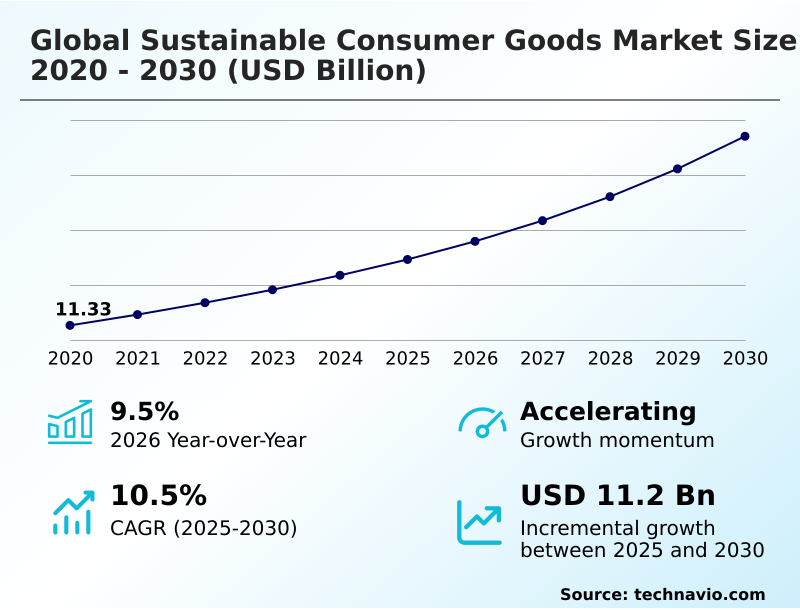
The sustainable consumer goods market size is valued to increase by USD 11.20 billion, at a CAGR of 10.5% from 2025 to 2030. Growing consumer consciousness and demand for ethical transparency will drive the sustainable consumer goods market.

Major Market Trends & Insights

  • North America dominated the market and accounted for a 35.9% growth during the forecast period.
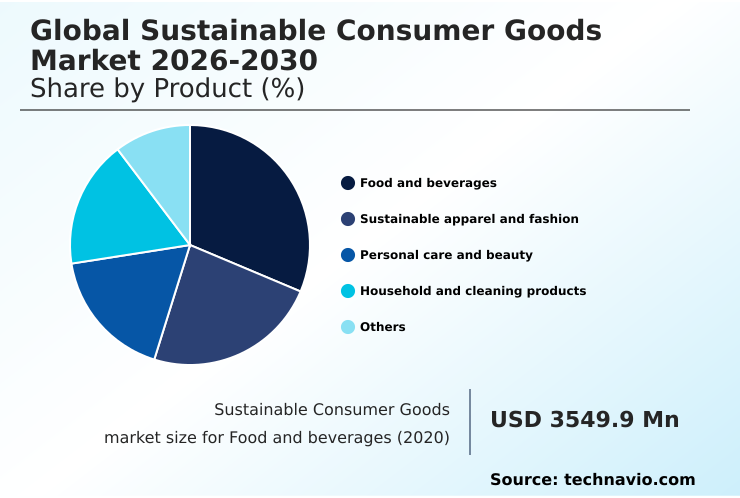
  • By Product - Food and beverages segment was valued at USD 4.87 billion in 2024
  • By Material - Organic materials segment accounted for the largest market revenue share in 2024

Market Size & Forecast

  • Market Opportunities: USD 17.20 billion
  • Market Future Opportunities: USD 11.20 billion
  • CAGR from 2025 to 2030 : 10.5%

Market Summary

  • The sustainable consumer goods market is defined by a structural shift away from traditional production models toward frameworks prioritizing ecological and social responsibility. This evolution is propelled by heightened consumer demand for transparency, forcing businesses to validate environmental claims through methods like life cycle assessment and ethical sourcing verification.
  • A significant trend is the adoption of circular economy principles, where products are designed for longevity and reuse, supported by innovations in bio-based materials and waterless formulations. For instance, a household goods manufacturer might redesign its supply chain to use post-consumer recycled content for 100% of its packaging, partnering with regional waste management facilities to create a closed-loop system.
  • This not only meets regulatory pressures, such as extended producer responsibility mandates, but also strengthens sustainable brand positioning. However, challenges persist, including the high cost of green chemistry and the need for standardized infrastructure to support chemical recycling methods at scale.
  • The successful navigation of these complexities is critical for long-term viability, as stakeholders increasingly measure performance by environmental impact reporting and carbon footprint reduction.

What will be the Size of the Sustainable Consumer Goods Market during the forecast period?

Get Key Insights on Market Forecast (PDF) Request Free Sample

How is the Sustainable Consumer Goods Market Segmented?

The sustainable consumer goods industry research report provides comprehensive data (region-wise segment analysis), with forecasts and estimates in "USD million" for the period 2026-2030, as well as historical data from 2020-2024 for the following segments.

  • Product
    • Food and beverages
    • Sustainable apparel and fashion
    • Personal care and beauty
    • Household and cleaning products
    • Others
  • Material
    • Organic materials
    • Recycled materials
    • Biodegradable materials
    • Carbon neutral material
    • Others
  • Distribution channel
    • Offline
    • Online
  • Geography
    • North America
      • US
      • Canada
      • Mexico
    • Europe
      • Germany
      • UK
      • France
    • APAC
      • China
      • Japan
      • India
    • South America
      • Brazil
      • Argentina
    • Middle East and Africa
      • Saudi Arabia
      • UAE
      • South Africa
    • Rest of World (ROW)

By Product Insights

The food and beverages segment is estimated to witness significant growth during the forecast period.

The food and beverages segment is shaped by heightened consumer environmental awareness and a push for sustainable sourcing standards. This sector prioritizes plant-based alternatives and the use of upcycled agricultural residues to reduce waste.

Innovations in eco-friendly formulations focus on non-toxic ingredients derived from renewable feedstocks. Key corporate sustainability goals are tied to carbon footprint reduction, with carbon labeling becoming a crucial differentiator.

A notable advancement includes a new production technology for plant-based proteins that achieves a 40% lower carbon footprint.

This is driven by practices like regenerative agriculture, which promotes benefits such as carbon sequestration, reflecting a deep integration of sustainable product innovation into core business strategies.

Request Free Sample

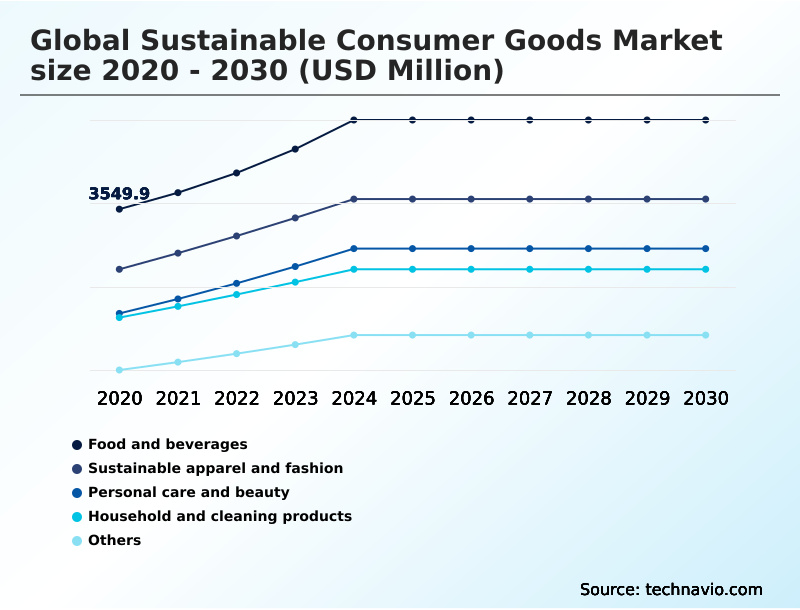
The Food and beverages segment was valued at USD 4.87 billion in 2024 and showed a gradual increase during the forecast period.
Request Free Sample

Regional Analysis

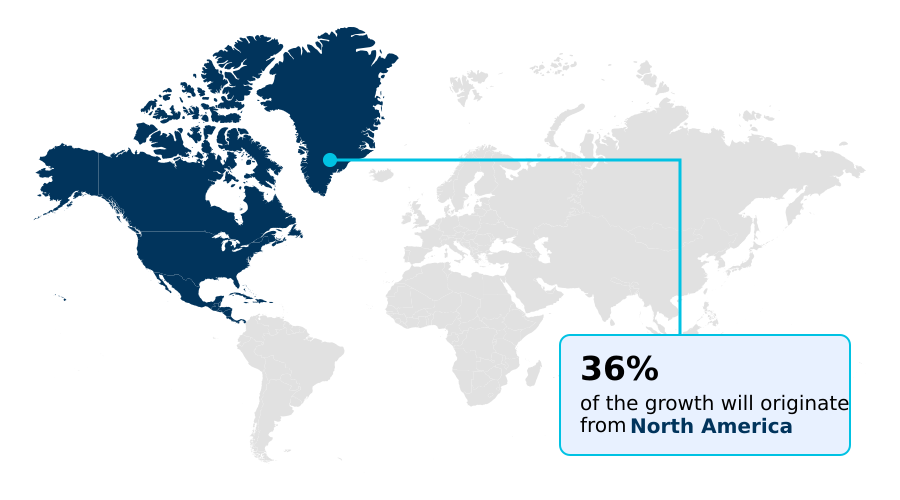
North America is estimated to contribute 35.9% to the growth of the global market during the forecast period.Technavio’s analysts have elaborately explained the regional trends and drivers that shape the market during the forecast period.

See How Sustainable Consumer Goods Market Demand is Rising in North America Request Free Sample

The geographic landscape shows varied adoption rates, with the APAC region demonstrating the fastest growth at 11.2%, outpacing Europe's 9.8%. This growth is supported by investments in sustainable material science and eco-friendly manufacturing processes.

In regions like South America, the focus is on creating forest-standing economies that integrate social responsibility metrics into production. Companies are performing detailed life cycle assessment to inform green procurement policies and improve environmental impact reporting.

Innovations include energy-efficient production and the use of carbon-negative bio-foam. North America remains a significant market, driven by policies promoting compostable materials and carbon-neutral manufacturing.

The global disparity in growth highlights how regional regulations and consumer priorities shape the adoption of technologies like regenerative organic certified agriculture.

Market Dynamics

Our researchers analyzed the data with 2025 as the base year, along with the key drivers, trends, and challenges. A holistic analysis of drivers will help companies refine their marketing strategies to gain a competitive advantage.

  • Understanding the global sustainable consumer goods market 2026-2030 requires a deep dive into several interconnected themes. The impact of circular economy on consumer goods is reshaping product design, pushing for durability and repairability.
  • A critical enabler is the role of blockchain in supply chain transparency, which addresses the consumer demand for ethically sourced products and helps in marketing sustainable goods without greenwashing. This technology works hand-in-hand with how digital product passports enable traceability, providing verifiable data from source to shelf.
  • Meanwhile, the benefits of regenerative agriculture for food brands are becoming a key differentiator, though supply chain challenges for fair trade products persist. Advancements in plant-based material science are yielding innovations in carbon-neutral material production, evident in the future of sustainable fashion resale market where recycled textiles are common.
  • The cost-benefit analysis of sustainable production remains a central concern, especially when integrating recycled content in consumer packaging or developing waterless personal care products.
  • The advantages of waterless personal care products, for example, include reduced shipping weight and a lower carbon footprint, an outcome that is more than twice as effective in reducing logistics costs compared to simply using lighter plastics. Corporate social responsibility in global supply chains is now a board-level topic, influenced by the regulatory impact on sustainable product design.
  • Stakeholders are comparing biodegradable vs compostable materials and using life cycle assessment for measuring sustainability, all while navigating consumer perception of sustainable luxury goods.

What are the key market drivers leading to the rise in the adoption of Sustainable Consumer Goods Industry?

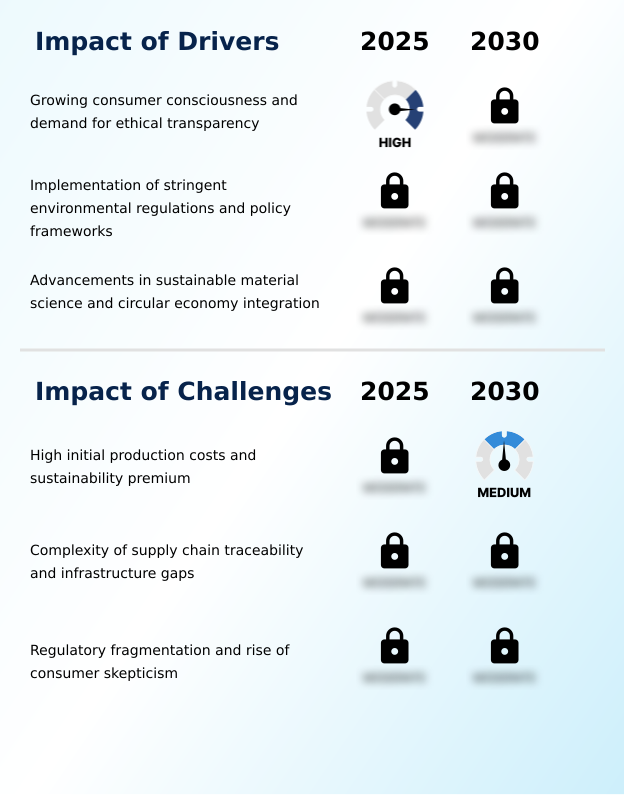
  • The market is primarily driven by growing consumer consciousness and a corresponding demand for ethical transparency throughout the supply chain.

  • Market growth is propelled by rising consumer environmental awareness and stringent eco-design requirements that mandate transparent supply chain tracking.
  • The adoption of a digital product passport, enabled by innovations in green chemistry, allows for verifiable claims regarding ethical sourcing and fair trade certification, which is key to overcoming greenwashing prevention strategies.
  • This demand for accountability drives the use of bio-based materials such as algae-derived plastics and other low-carbon materials. As companies pursue ambitious net-zero targets, they are investing in advanced technologies.
  • For instance, one food producer leveraged new processing techniques to achieve a 40% carbon footprint reduction.
  • Similarly, the shift away from liquid products, which can be up to 90% water, to concentrated forms cuts logistics emissions significantly, underscoring the focus on ethical labor practices.

What are the market trends shaping the Sustainable Consumer Goods Industry?

  • A defining trend is the expansion of circular business models, which facilitate a resale revolution. This shift prioritizes product longevity and material reintegration over linear consumption.

  • Key trends are reshaping the market, with circular business models gaining significant traction. This shift emphasizes product end-of-life management, where a closed-loop system is prioritized. Innovations in modular design principles allow for easier repairs, extending product usability.
  • The move toward zero-waste packaging and sustainable packaging solutions, such as those made from biodegradable polymers and mycelium-based leather, directly addresses plastic waste elimination. In personal care, waterless formulations are becoming mainstream, reducing shipping weight by up to 90% and enabling a transition away from plastic containers.
  • The establishment of regional circularity hubs for refurbishing goods is a prime example of resource efficiency optimization, with some programs showing a 25% higher value recovery compared to simple recycling.

What challenges does the Sustainable Consumer Goods Industry face during its growth?

  • A key challenge affecting industry growth is the high initial production costs associated with sustainable materials and processes, often resulting in a consumer-facing sustainability premium.

  • Significant challenges stem from regulatory fragmentation and underdeveloped waste management infrastructure. Complying with diverse environmental marketing guidelines and extended producer responsibility schemes creates complexity for a sustainable supply chain. For example, a new mandate requiring 50% post-consumer recycled content in packaging can be difficult to meet without a robust infrastructure for chemical recycling methods or molecular recycling.
  • The high cost of inputs, such as certified biodegradable surfactants which recently saw a 15% price increase, makes it difficult to avoid a sustainability premium. Furthermore, ensuring supply chain due diligence for plastic-neutral products requires significant investment.
  • The lack of standardized infrastructure limits the effectiveness of extended producer responsibility and zero plastic waste initiatives, making regulatory compliance for sustainability a persistent operational hurdle.

Exclusive Technavio Analysis on Customer Landscape

The sustainable consumer goods market forecasting report includes the adoption lifecycle of the market, covering from the innovator’s stage to the laggard’s stage. It focuses on adoption rates in different regions based on penetration. Furthermore, the sustainable consumer goods market report also includes key purchase criteria and drivers of price sensitivity to help companies evaluate and develop their market growth analysis strategies.
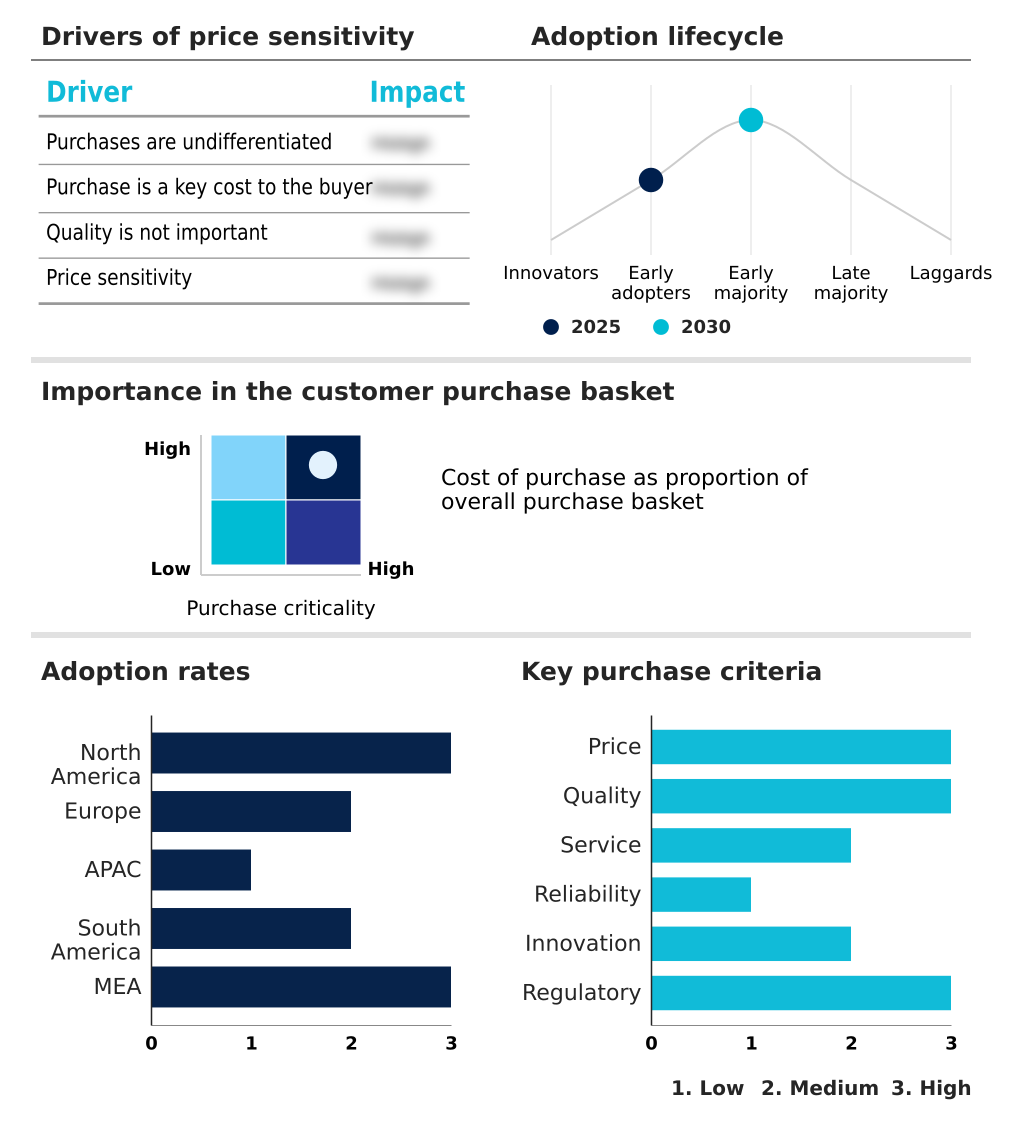
Customer Landscape of Sustainable Consumer Goods Industry

Competitive Landscape

Companies are implementing various strategies, such as strategic alliances, sustainable consumer goods market forecast, partnerships, mergers and acquisitions, geographical expansion, and product/service launches, to enhance their presence in the industry.

Allbirds Inc. - Delivering sustainable footwear and apparel crafted from innovative natural materials, including merino wool, eucalyptus fiber, and sugarcane-based foam, for environmentally conscious consumers.

The industry research and growth report includes detailed analyses of the competitive landscape of the market and information about key companies, including:

  • Allbirds Inc.
  • Beyond Meat Inc.
  • Burts Bees
  • Danone SA
  • Dr. Bronners Magic Soaps
  • Grove Collaborative Inc.
  • Impossible Foods Inc.
  • Inter IKEA Holding BV
  • Interface Inc.
  • Kering SA
  • Natura and Co. Holding SA
  • Oatly Group AB
  • Patagonia Inc.
  • People Against Dirty Holdings Ltd.
  • Procter and Gamble Co.
  • Seventh Generation Inc.
  • Lush Retail Ltd.
  • Stella McCartney Ltd.
  • The Body Shop International
  • Unilever PLC

Qualitative and quantitative analysis of companies has been conducted to help clients understand the wider business environment as well as the strengths and weaknesses of key industry players. Data is qualitatively analyzed to categorize companies as pure play, category-focused, industry-focused, and diversified; it is quantitatively analyzed to categorize companies as dominant, leading, strong, tentative, and weak.

Recent Development and News in Sustainable consumer goods market

  • In August 2025, the Federal Trade Commission in the United States initiated a comprehensive review of its environmental marketing guidelines to address the misuse of terms like 'plastic-neutral' and 'climate-positive' in the consumer goods sector.
  • In April 2025, the European Commission enacted the Ecodesign for Sustainable Products Regulation, mandating that textiles and electronics sold in the European Union include a digital product passport to ensure repairability and recyclability.
  • In May 2025, Unilever announced a strategic adjustment to its procurement program after experiencing a fifteen percent increase in the cost of certified sustainable surfactants derived from plant-based sources, necessitating a pricing revision for several home care brands.
  • In October 2025, Beyond Meat introduced a pioneering production technology using high-moisture extrusion and upcycled agricultural residues, creating plant-based proteins with a 40% lower carbon footprint compared to previous methods.

Dive into Technavio’s robust research methodology, blending expert interviews, extensive data synthesis, and validated models for unparalleled Sustainable Consumer Goods Market insights. See full methodology.

Market Scope
Page number 315
Base year 2025
Historic period 2020-2024
Forecast period 2026-2030
Growth momentum & CAGR Accelerate at a CAGR of 10.5%
Market growth 2026-2030 USD 11201.6 million
Market structure Fragmented
YoY growth 2025-2026(%) 9.5%
Key countries US, Canada, Mexico, Germany, UK, France, Italy, Spain, The Netherlands, China, Japan, India, Australia, South Korea, Indonesia, Brazil, Argentina, Chile, Saudi Arabia, UAE, South Africa, Turkey and Israel
Competitive landscape Leading Companies, Market Positioning of Companies, Competitive Strategies, and Industry Risks

Request Free Sample

Research Analyst Overview

  • The sustainable consumer goods market is driven by a profound integration of circular economy principles into mainstream production, where modular design principles and zero-waste packaging are becoming standard. Key innovations in green chemistry are enabling the use of renewable feedstocks, eco-friendly formulations, and plant-based alternatives.
  • Boardroom decisions are increasingly influenced by the need to secure a sustainable supply chain, evidenced by a recent 15% rise in costs for certified biodegradable surfactants. This volatility highlights the importance of diversifying material sources, from upcycled agricultural residues to bio-based materials like algae-derived plastics and mycelium-based leather.
  • The adoption of a digital product passport is crucial for verifying ethical sourcing and fair trade certification. We observe a push toward carbon-neutral manufacturing and energy-efficient production, utilizing carbon sequestration and closed-loop systems.
  • A complete life cycle assessment is now essential for validating the use of low-carbon materials, compostable materials, post-consumer recycled content, and non-toxic ingredients, ultimately defining a brand's commitment to extended producer responsibility and plastic-neutral products.

What are the Key Data Covered in this Sustainable Consumer Goods Market Research and Growth Report?

  • What is the expected growth of the Sustainable Consumer Goods Market between 2026 and 2030?

    • USD 11.20 billion, at a CAGR of 10.5%

  • What segmentation does the market report cover?

    • The report is segmented by Product (Food and beverages, Sustainable apparel and fashion, Personal care and beauty, Household and cleaning products, and Others), Material (Organic materials, Recycled materials, Biodegradable materials, Carbon neutral material, and Others), Distribution Channel (Offline, and Online) and Geography (North America, Europe, APAC, South America, Middle East and Africa)

  • Which regions are analyzed in the report?

    • North America, Europe, APAC, South America and Middle East and Africa

  • What are the key growth drivers and market challenges?

    • Growing consumer consciousness and demand for ethical transparency, High initial production costs and sustainability premium

  • Who are the major players in the Sustainable Consumer Goods Market?

    • Allbirds Inc., Beyond Meat Inc., Burts Bees, Danone SA, Dr. Bronners Magic Soaps, Grove Collaborative Inc., Impossible Foods Inc., Inter IKEA Holding BV, Interface Inc., Kering SA, Natura and Co. Holding SA, Oatly Group AB, Patagonia Inc., People Against Dirty Holdings Ltd., Procter and Gamble Co., Seventh Generation Inc., Lush Retail Ltd., Stella McCartney Ltd., The Body Shop International and Unilever PLC

Market Research Insights

  • Market dynamics are shaped by evolving sustainable sourcing standards and heightened consumer environmental awareness, compelling brands to adopt transparent supply chain tracking.
  • This focus on green procurement policies and resource efficiency optimization is critical, as operational adjustments can yield significant outcomes; for instance, reformulating products to reduce water content can lower shipping emissions, while sourcing certified materials may lead to a 15% increase in input costs, impacting pricing strategies.
  • Sustainable brand positioning now hinges on credible corporate sustainability goals and effective greenwashing prevention strategies. Success is measured by tangible metrics, with some producers achieving a 40% carbon footprint reduction through sustainable product innovation, showcasing a direct link between ethical labor practices and competitive advantage.

We can help! Our analysts can customize this sustainable consumer goods market research report to meet your requirements.

Get in touch

1. Executive Summary

1.1 Market overview

Executive Summary - Chart on Market Overview
Executive Summary - Data Table on Market Overview
Executive Summary - Chart on Global Market Characteristics
Executive Summary - Chart on Market by Geography
Executive Summary - Chart on Market Segmentation by Product
Executive Summary - Chart on Market Segmentation by Material
Executive Summary - Chart on Market Segmentation by Distribution Channel
Executive Summary - Chart on Incremental Growth
Executive Summary - Data Table on Incremental Growth
Executive Summary - Chart on Company Market Positioning

2. Technavio Analysis

2.1 Analysis of price sensitivity, lifecycle, customer purchase basket, adoption rates, and purchase criteria

2.2 Criticality of inputs and Factors of differentiation

Chart on Overview on criticality of inputs and factors of differentiation

2.3 Factors of disruption

Chart on Overview on factors of disruption

2.4 Impact of drivers and challenges

Chart on Impact of drivers and challenges in 2025 and 2030

3. Market Landscape

3.1 Market ecosystem

Chart on Parent Market
Data Table on - Parent Market

3.2 Market characteristics

Chart on Market characteristics analysis

3.3 Value chain analysis

Chart on Value chain analysis

4. Market Sizing

4.1 Market definition

Data Table on Offerings of companies included in the market definition

4.2 Market segment analysis

Market segments

4.3 Market size 2025

4.4 Market outlook: Forecast for 2025-2030

Chart on Global - Market size and forecast 2025-2030 ($ million)
Data Table on Global - Market size and forecast 2025-2030 ($ million)
Chart on Global Market: Year-over-year growth 2025-2030 (%)
Data Table on Global Market: Year-over-year growth 2025-2030 (%)

5. Historic Market Size

5.1 Global Sustainable Consumer Goods Market 2020 - 2024

Historic Market Size - Data Table on Global Sustainable Consumer Goods Market 2020 - 2024 ($ million)

5.2 Product segment analysis 2020 - 2024

Historic Market Size - Product Segment 2020 - 2024 ($ million)

5.3 Material segment analysis 2020 - 2024

Historic Market Size - Material Segment 2020 - 2024 ($ million)

5.4 Distribution Channel segment analysis 2020 - 2024

Historic Market Size - Distribution Channel Segment 2020 - 2024 ($ million)

5.5 Geography segment analysis 2020 - 2024

Historic Market Size - Geography Segment 2020 - 2024 ($ million)

5.6 Country segment analysis 2020 - 2024

Historic Market Size - Country Segment 2020 - 2024 ($ million)

6. Qualitative Analysis

6.1 The AI impact on Global Sustainable Consumer Goods Market

6.2 Impact of geopolitical conflicts on Global Sustainable Consumer Goods Market

7. Five Forces Analysis

7.1 Five forces summary

Five forces analysis - Comparison between 2025 and 2030

7.2 Bargaining power of buyers

Bargaining power of buyers - Impact of key factors 2025 and 2030

7.3 Bargaining power of suppliers

Bargaining power of suppliers - Impact of key factors in 2025 and 2030

7.4 Threat of new entrants

Threat of new entrants - Impact of key factors in 2025 and 2030

7.5 Threat of substitutes

Threat of substitutes - Impact of key factors in 2025 and 2030

7.6 Threat of rivalry

Threat of rivalry - Impact of key factors in 2025 and 2030

7.7 Market condition

Chart on Market condition - Five forces 2025 and 2030

8. Market Segmentation by Product

8.1 Market segments

Chart on Product - Market share 2025-2030 (%)
Data Table on Product - Market share 2025-2030 (%)

8.2 Comparison by Product

Chart on Comparison by Product
Data Table on Comparison by Product

8.3 Food and beverages - Market size and forecast 2025-2030

Chart on Food and beverages - Market size and forecast 2025-2030 ($ million)
Data Table on Food and beverages - Market size and forecast 2025-2030 ($ million)
Chart on Food and beverages - Year-over-year growth 2025-2030 (%)
Data Table on Food and beverages - Year-over-year growth 2025-2030 (%)

8.4 Sustainable apparel and fashion - Market size and forecast 2025-2030

Chart on Sustainable apparel and fashion - Market size and forecast 2025-2030 ($ million)
Data Table on Sustainable apparel and fashion - Market size and forecast 2025-2030 ($ million)
Chart on Sustainable apparel and fashion - Year-over-year growth 2025-2030 (%)
Data Table on Sustainable apparel and fashion - Year-over-year growth 2025-2030 (%)

8.5 Personal care and beauty - Market size and forecast 2025-2030

Chart on Personal care and beauty - Market size and forecast 2025-2030 ($ million)
Data Table on Personal care and beauty - Market size and forecast 2025-2030 ($ million)
Chart on Personal care and beauty - Year-over-year growth 2025-2030 (%)
Data Table on Personal care and beauty - Year-over-year growth 2025-2030 (%)

8.6 Household and cleaning products - Market size and forecast 2025-2030

Chart on Household and cleaning products - Market size and forecast 2025-2030 ($ million)
Data Table on Household and cleaning products - Market size and forecast 2025-2030 ($ million)
Chart on Household and cleaning products - Year-over-year growth 2025-2030 (%)
Data Table on Household and cleaning products - Year-over-year growth 2025-2030 (%)

8.7 Others - Market size and forecast 2025-2030

Chart on Others - Market size and forecast 2025-2030 ($ million)
Data Table on Others - Market size and forecast 2025-2030 ($ million)
Chart on Others - Year-over-year growth 2025-2030 (%)
Data Table on Others - Year-over-year growth 2025-2030 (%)

8.8 Market opportunity by Product

Market opportunity by Product ($ million)
Data Table on Market opportunity by Product ($ million)

9. Market Segmentation by Material

9.1 Market segments

Chart on Material - Market share 2025-2030 (%)
Data Table on Material - Market share 2025-2030 (%)

9.2 Comparison by Material

Chart on Comparison by Material
Data Table on Comparison by Material

9.3 Organic materials - Market size and forecast 2025-2030

Chart on Organic materials - Market size and forecast 2025-2030 ($ million)
Data Table on Organic materials - Market size and forecast 2025-2030 ($ million)
Chart on Organic materials - Year-over-year growth 2025-2030 (%)
Data Table on Organic materials - Year-over-year growth 2025-2030 (%)

9.4 Recycled materials - Market size and forecast 2025-2030

Chart on Recycled materials - Market size and forecast 2025-2030 ($ million)
Data Table on Recycled materials - Market size and forecast 2025-2030 ($ million)
Chart on Recycled materials - Year-over-year growth 2025-2030 (%)
Data Table on Recycled materials - Year-over-year growth 2025-2030 (%)

9.5 Biodegradable materials - Market size and forecast 2025-2030

Chart on Biodegradable materials - Market size and forecast 2025-2030 ($ million)
Data Table on Biodegradable materials - Market size and forecast 2025-2030 ($ million)
Chart on Biodegradable materials - Year-over-year growth 2025-2030 (%)
Data Table on Biodegradable materials - Year-over-year growth 2025-2030 (%)

9.6 Carbon neutral material - Market size and forecast 2025-2030

Chart on Carbon neutral material - Market size and forecast 2025-2030 ($ million)
Data Table on Carbon neutral material - Market size and forecast 2025-2030 ($ million)
Chart on Carbon neutral material - Year-over-year growth 2025-2030 (%)
Data Table on Carbon neutral material - Year-over-year growth 2025-2030 (%)

9.7 Others - Market size and forecast 2025-2030

Chart on Others - Market size and forecast 2025-2030 ($ million)
Data Table on Others - Market size and forecast 2025-2030 ($ million)
Chart on Others - Year-over-year growth 2025-2030 (%)
Data Table on Others - Year-over-year growth 2025-2030 (%)

9.8 Market opportunity by Material

Market opportunity by Material ($ million)
Data Table on Market opportunity by Material ($ million)

10. Market Segmentation by Distribution Channel

10.1 Market segments

Chart on Distribution Channel - Market share 2025-2030 (%)
Data Table on Distribution Channel - Market share 2025-2030 (%)

10.2 Comparison by Distribution Channel

Chart on Comparison by Distribution Channel
Data Table on Comparison by Distribution Channel

10.3 Offline - Market size and forecast 2025-2030

Chart on Offline - Market size and forecast 2025-2030 ($ million)
Data Table on Offline - Market size and forecast 2025-2030 ($ million)
Chart on Offline - Year-over-year growth 2025-2030 (%)
Data Table on Offline - Year-over-year growth 2025-2030 (%)

10.4 Online - Market size and forecast 2025-2030

Chart on Online - Market size and forecast 2025-2030 ($ million)
Data Table on Online - Market size and forecast 2025-2030 ($ million)
Chart on Online - Year-over-year growth 2025-2030 (%)
Data Table on Online - Year-over-year growth 2025-2030 (%)

10.5 Market opportunity by Distribution Channel

Market opportunity by Distribution Channel ($ million)
Data Table on Market opportunity by Distribution Channel ($ million)

11. Customer Landscape

11.1 Customer landscape overview

Analysis of price sensitivity, lifecycle, customer purchase basket, adoption rates, and purchase criteria

12. Geographic Landscape

12.1 Geographic segmentation

Chart on Market share by geography 2025-2030 (%)
Data Table on Market share by geography 2025-2030 (%)

12.2 Geographic comparison

Chart on Geographic comparison
Data Table on Geographic comparison

12.3 North America - Market size and forecast 2025-2030

Chart on North America - Market size and forecast 2025-2030 ($ million)
Data Table on North America - Market size and forecast 2025-2030 ($ million)
Chart on North America - Year-over-year growth 2025-2030 (%)
Data Table on North America - Year-over-year growth 2025-2030 (%)
Chart on Regional Comparison - North America
Data Table on Regional Comparison - North America

12.3.1 US - Market size and forecast 2025-2030

Chart on US - Market size and forecast 2025-2030 ($ million)
Data Table on US - Market size and forecast 2025-2030 ($ million)
Chart on US - Year-over-year growth 2025-2030 (%)
Data Table on US - Year-over-year growth 2025-2030 (%)

12.3.2 Canada - Market size and forecast 2025-2030

Chart on Canada - Market size and forecast 2025-2030 ($ million)
Data Table on Canada - Market size and forecast 2025-2030 ($ million)
Chart on Canada - Year-over-year growth 2025-2030 (%)
Data Table on Canada - Year-over-year growth 2025-2030 (%)

12.3.3 Mexico - Market size and forecast 2025-2030

Chart on Mexico - Market size and forecast 2025-2030 ($ million)
Data Table on Mexico - Market size and forecast 2025-2030 ($ million)
Chart on Mexico - Year-over-year growth 2025-2030 (%)
Data Table on Mexico - Year-over-year growth 2025-2030 (%)

12.4 Europe - Market size and forecast 2025-2030

Chart on Europe - Market size and forecast 2025-2030 ($ million)
Data Table on Europe - Market size and forecast 2025-2030 ($ million)
Chart on Europe - Year-over-year growth 2025-2030 (%)
Data Table on Europe - Year-over-year growth 2025-2030 (%)
Chart on Regional Comparison - Europe
Data Table on Regional Comparison - Europe

12.4.1 Germany - Market size and forecast 2025-2030

Chart on Germany - Market size and forecast 2025-2030 ($ million)
Data Table on Germany - Market size and forecast 2025-2030 ($ million)
Chart on Germany - Year-over-year growth 2025-2030 (%)
Data Table on Germany - Year-over-year growth 2025-2030 (%)

12.4.2 UK - Market size and forecast 2025-2030

Chart on UK - Market size and forecast 2025-2030 ($ million)
Data Table on UK - Market size and forecast 2025-2030 ($ million)
Chart on UK - Year-over-year growth 2025-2030 (%)
Data Table on UK - Year-over-year growth 2025-2030 (%)

12.4.3 France - Market size and forecast 2025-2030

Chart on France - Market size and forecast 2025-2030 ($ million)
Data Table on France - Market size and forecast 2025-2030 ($ million)
Chart on France - Year-over-year growth 2025-2030 (%)
Data Table on France - Year-over-year growth 2025-2030 (%)

12.4.4 Italy - Market size and forecast 2025-2030

Chart on Italy - Market size and forecast 2025-2030 ($ million)
Data Table on Italy - Market size and forecast 2025-2030 ($ million)
Chart on Italy - Year-over-year growth 2025-2030 (%)
Data Table on Italy - Year-over-year growth 2025-2030 (%)

12.4.5 Spain - Market size and forecast 2025-2030

Chart on Spain - Market size and forecast 2025-2030 ($ million)
Data Table on Spain - Market size and forecast 2025-2030 ($ million)
Chart on Spain - Year-over-year growth 2025-2030 (%)
Data Table on Spain - Year-over-year growth 2025-2030 (%)

12.4.6 The Netherlands - Market size and forecast 2025-2030

Chart on The Netherlands - Market size and forecast 2025-2030 ($ million)
Data Table on The Netherlands - Market size and forecast 2025-2030 ($ million)
Chart on The Netherlands - Year-over-year growth 2025-2030 (%)
Data Table on The Netherlands - Year-over-year growth 2025-2030 (%)

12.5 APAC - Market size and forecast 2025-2030

Chart on APAC - Market size and forecast 2025-2030 ($ million)
Data Table on APAC - Market size and forecast 2025-2030 ($ million)
Chart on APAC - Year-over-year growth 2025-2030 (%)
Data Table on APAC - Year-over-year growth 2025-2030 (%)
Chart on Regional Comparison - APAC
Data Table on Regional Comparison - APAC

12.5.1 China - Market size and forecast 2025-2030

Chart on China - Market size and forecast 2025-2030 ($ million)
Data Table on China - Market size and forecast 2025-2030 ($ million)
Chart on China - Year-over-year growth 2025-2030 (%)
Data Table on China - Year-over-year growth 2025-2030 (%)

12.5.2 Japan - Market size and forecast 2025-2030

Chart on Japan - Market size and forecast 2025-2030 ($ million)
Data Table on Japan - Market size and forecast 2025-2030 ($ million)
Chart on Japan - Year-over-year growth 2025-2030 (%)
Data Table on Japan - Year-over-year growth 2025-2030 (%)

12.5.3 India - Market size and forecast 2025-2030

Chart on India - Market size and forecast 2025-2030 ($ million)
Data Table on India - Market size and forecast 2025-2030 ($ million)
Chart on India - Year-over-year growth 2025-2030 (%)
Data Table on India - Year-over-year growth 2025-2030 (%)

12.5.4 Australia - Market size and forecast 2025-2030

Chart on Australia - Market size and forecast 2025-2030 ($ million)
Data Table on Australia - Market size and forecast 2025-2030 ($ million)
Chart on Australia - Year-over-year growth 2025-2030 (%)
Data Table on Australia - Year-over-year growth 2025-2030 (%)

12.5.5 South Korea - Market size and forecast 2025-2030

Chart on South Korea - Market size and forecast 2025-2030 ($ million)
Data Table on South Korea - Market size and forecast 2025-2030 ($ million)
Chart on South Korea - Year-over-year growth 2025-2030 (%)
Data Table on South Korea - Year-over-year growth 2025-2030 (%)

12.5.6 Indonesia - Market size and forecast 2025-2030

Chart on Indonesia - Market size and forecast 2025-2030 ($ million)
Data Table on Indonesia - Market size and forecast 2025-2030 ($ million)
Chart on Indonesia - Year-over-year growth 2025-2030 (%)
Data Table on Indonesia - Year-over-year growth 2025-2030 (%)

12.6 South America - Market size and forecast 2025-2030

Chart on South America - Market size and forecast 2025-2030 ($ million)
Data Table on South America - Market size and forecast 2025-2030 ($ million)
Chart on South America - Year-over-year growth 2025-2030 (%)
Data Table on South America - Year-over-year growth 2025-2030 (%)
Chart on Regional Comparison - South America
Data Table on Regional Comparison - South America

12.6.1 Brazil - Market size and forecast 2025-2030

Chart on Brazil - Market size and forecast 2025-2030 ($ million)
Data Table on Brazil - Market size and forecast 2025-2030 ($ million)
Chart on Brazil - Year-over-year growth 2025-2030 (%)
Data Table on Brazil - Year-over-year growth 2025-2030 (%)

12.6.2 Argentina - Market size and forecast 2025-2030

Chart on Argentina - Market size and forecast 2025-2030 ($ million)
Data Table on Argentina - Market size and forecast 2025-2030 ($ million)
Chart on Argentina - Year-over-year growth 2025-2030 (%)
Data Table on Argentina - Year-over-year growth 2025-2030 (%)

12.6.3 Chile - Market size and forecast 2025-2030

Chart on Chile - Market size and forecast 2025-2030 ($ million)
Data Table on Chile - Market size and forecast 2025-2030 ($ million)
Chart on Chile - Year-over-year growth 2025-2030 (%)
Data Table on Chile - Year-over-year growth 2025-2030 (%)

12.7 Middle East and Africa - Market size and forecast 2025-2030

Chart on Middle East and Africa - Market size and forecast 2025-2030 ($ million)
Data Table on Middle East and Africa - Market size and forecast 2025-2030 ($ million)
Chart on Middle East and Africa - Year-over-year growth 2025-2030 (%)
Data Table on Middle East and Africa - Year-over-year growth 2025-2030 (%)
Chart on Regional Comparison - Middle East and Africa
Data Table on Regional Comparison - Middle East and Africa

12.7.1 Saudi Arabia - Market size and forecast 2025-2030

Chart on Saudi Arabia - Market size and forecast 2025-2030 ($ million)
Data Table on Saudi Arabia - Market size and forecast 2025-2030 ($ million)
Chart on Saudi Arabia - Year-over-year growth 2025-2030 (%)
Data Table on Saudi Arabia - Year-over-year growth 2025-2030 (%)

12.7.2 UAE - Market size and forecast 2025-2030

Chart on UAE - Market size and forecast 2025-2030 ($ million)
Data Table on UAE - Market size and forecast 2025-2030 ($ million)
Chart on UAE - Year-over-year growth 2025-2030 (%)
Data Table on UAE - Year-over-year growth 2025-2030 (%)

12.7.3 South Africa - Market size and forecast 2025-2030

Chart on South Africa - Market size and forecast 2025-2030 ($ million)
Data Table on South Africa - Market size and forecast 2025-2030 ($ million)
Chart on South Africa - Year-over-year growth 2025-2030 (%)
Data Table on South Africa - Year-over-year growth 2025-2030 (%)

12.7.4 Turkey - Market size and forecast 2025-2030

Chart on Turkey - Market size and forecast 2025-2030 ($ million)
Data Table on Turkey - Market size and forecast 2025-2030 ($ million)
Chart on Turkey - Year-over-year growth 2025-2030 (%)
Data Table on Turkey - Year-over-year growth 2025-2030 (%)

12.7.5 Israel - Market size and forecast 2025-2030

Chart on Israel - Market size and forecast 2025-2030 ($ million)
Data Table on Israel - Market size and forecast 2025-2030 ($ million)
Chart on Israel - Year-over-year growth 2025-2030 (%)
Data Table on Israel - Year-over-year growth 2025-2030 (%)

12.8 Market opportunity by geography

Market opportunity by geography ($ million)
Data Tables on Market opportunity by geography ($ million)

13. Drivers, Challenges, and Opportunity

13.1 Market drivers

Growing consumer consciousness and demand for ethical transparency
Implementation of stringent environmental regulations and policy frameworks
Advancements in sustainable material science and circular economy integration

13.2 Market challenges

High initial production costs and sustainability premium
Complexity of supply chain traceability and infrastructure gaps
Regulatory fragmentation and rise of consumer skepticism

13.3 Impact of drivers and challenges

Impact of drivers and challenges in 2025 and 2030

13.4 Market opportunities

Expansion of circular business models and resale revolution
Mainstream adoption of waterless and ultra-concentrated formulations
Integration of digital traceability and blockchain for radical transparency

14. Competitive Landscape

14.1 Overview

14.2

Overview on criticality of inputs and factors of differentiation

14.3 Landscape disruption

Overview on factors of disruption

14.4 Industry risks

Impact of key risks on business

15. Competitive Analysis

15.1 Companies profiled

Companies covered

15.2 Company ranking index

15.3 Market positioning of companies

Matrix on companies position and classification

15.4 Allbirds Inc.

Allbirds Inc. - Overview
Allbirds Inc. - Product / Service
Allbirds Inc. - Key offerings
SWOT

15.5 Beyond Meat Inc.

Beyond Meat Inc. - Overview
Beyond Meat Inc. - Product / Service
Beyond Meat Inc. - Key offerings
SWOT

15.6 Burts Bees

Burts Bees - Overview
Burts Bees - Product / Service
Burts Bees - Key offerings
SWOT

15.7 Danone SA

Danone SA - Overview
Danone SA - Business segments
Danone SA - Key news
Danone SA - Key offerings
Danone SA - Segment focus
SWOT

15.8 Dr. Bronners Magic Soaps

Dr. Bronners Magic Soaps - Overview
Dr. Bronners Magic Soaps - Product / Service
Dr. Bronners Magic Soaps - Key offerings
SWOT

15.9 Grove Collaborative Inc.

Grove Collaborative Inc. - Overview
Grove Collaborative Inc. - Business segments
Grove Collaborative Inc. - Key offerings
Grove Collaborative Inc. - Segment focus
SWOT

15.10 Impossible Foods Inc.

Impossible Foods Inc. - Overview
Impossible Foods Inc. - Product / Service
Impossible Foods Inc. - Key offerings
SWOT

15.11 Inter IKEA Holding BV

Inter IKEA Holding BV - Overview
Inter IKEA Holding BV - Product / Service
Inter IKEA Holding BV - Key news
Inter IKEA Holding BV - Key offerings
SWOT

15.12 Interface Inc.

Interface Inc. - Overview
Interface Inc. - Business segments
Interface Inc. - Key offerings
Interface Inc. - Segment focus
SWOT

15.13 Kering SA

Kering SA - Overview
Kering SA - Business segments
Kering SA - Key news
Kering SA - Key offerings
Kering SA - Segment focus
SWOT

15.14 Natura and Co. Holding SA

Natura and Co. Holding SA - Overview
Natura and Co. Holding SA - Business segments
Natura and Co. Holding SA - Key offerings
Natura and Co. Holding SA - Segment focus
SWOT

15.15 Oatly Group AB

Oatly Group AB - Overview
Oatly Group AB - Business segments
Oatly Group AB - Key news
Oatly Group AB - Key offerings
Oatly Group AB - Segment focus
SWOT

15.16 Patagonia Inc.

Patagonia Inc. - Overview
Patagonia Inc. - Product / Service
Patagonia Inc. - Key offerings
SWOT

15.17 People Against Dirty Holdings Ltd.

People Against Dirty Holdings Ltd. - Overview
People Against Dirty Holdings Ltd. - Product / Service
People Against Dirty Holdings Ltd. - Key offerings
SWOT

15.18 Procter and Gamble Co.

Procter and Gamble Co. - Overview
Procter and Gamble Co. - Business segments
Procter and Gamble Co. - Key offerings
Procter and Gamble Co. - Segment focus
SWOT

16. Appendix

16.1 Scope of the report

Market definition
Objectives
Notes and caveats

16.2 Inclusions and exclusions checklist

Inclusions checklist
Exclusions checklist

16.3 Currency conversion rates for US$

16.4 Research methodology

16.5 Data procurement

Information sources

16.6 Data validation

16.7 Validation techniques employed for market sizing

16.8 Data synthesis

16.9 360 degree market analysis

16.10 List of abbreviations

Research Methodology

Technavio presents a detailed picture of the market by way of study, synthesis, and summation of data from multiple sources. The analysts have presented the various facets of the market with a particular focus on identifying the key industry influencers. The data thus presented is comprehensive, reliable, and the result of extensive research, both primary and secondary.

INFORMATION SOURCES

Primary sources

  • Manufacturers and suppliers
  • Channel partners
  • Industry experts
  • Strategic decision makers

Secondary sources

  • Industry journals and periodicals
  • Government data
  • Financial reports of key industry players
  • Historical data
  • Press releases

DATA ANALYSIS

Data Synthesis

  • Collation of data
  • Estimation of key figures
  • Analysis of derived insights

Data Validation

  • Triangulation with data models
  • Reference against proprietary databases
  • Corroboration with industry experts

REPORT WRITING

Qualitative

  • Market drivers
  • Market challenges
  • Market trends
  • Five forces analysis

Quantitative

  • Market size and forecast
  • Market segmentation
  • Geographical insights
  • Competitive landscape

Interested in this report?

Get your sample now to see our research methodology and insights!

Download Now

Frequently Asked Questions

Sustainable Consumer Goods market growth will increase by USD 11201.6 million during 2026-2030.

The Sustainable Consumer Goods market is expected to grow at a CAGR of 10.5% during 2026-2030.

Sustainable Consumer Goods market is segmented by Product (Food and beverages, Sustainable apparel and fashion, Personal care and beauty, Household and cleaning products, Others) Material (Organic materials, Recycled materials, Biodegradable materials, Carbon neutral material, Others) Distribution channel (Offline, Online)

Allbirds Inc., Beyond Meat Inc., Burts Bees, Danone SA, Dr. Bronners Magic Soaps, Grove Collaborative Inc., Impossible Foods Inc., Inter IKEA Holding BV, Interface Inc., Kering SA, Natura and Co. Holding SA, Oatly Group AB, Patagonia Inc., People Against Dirty Holdings Ltd., Procter and Gamble Co., Seventh Generation Inc., Lush Retail Ltd., Stella McCartney Ltd., The Body Shop International, Unilever PLC are a few of the key vendors in the Sustainable Consumer Goods market.

North America will register the highest growth rate of 35.9% among the other regions. Therefore, the Sustainable Consumer Goods market in North America is expected to garner significant business opportunities for the vendors during the forecast period.

US, Canada, Mexico, Germany, UK, France, Italy, Spain, The Netherlands, China, Japan, India, Australia, South Korea, Indonesia, Brazil, Argentina, Chile, Saudi Arabia, UAE, South Africa, Turkey, Israel

  • Growing consumer consciousness and demand for ethical transparency is the driving factor this market.

The Sustainable Consumer Goods market vendors should focus on grabbing business opportunities from the Product segment as it accounted for the largest market share in the base year.
RIA - Research AI Assistant
Ask RIA