


Tank Trucking Market Size 2026-2030
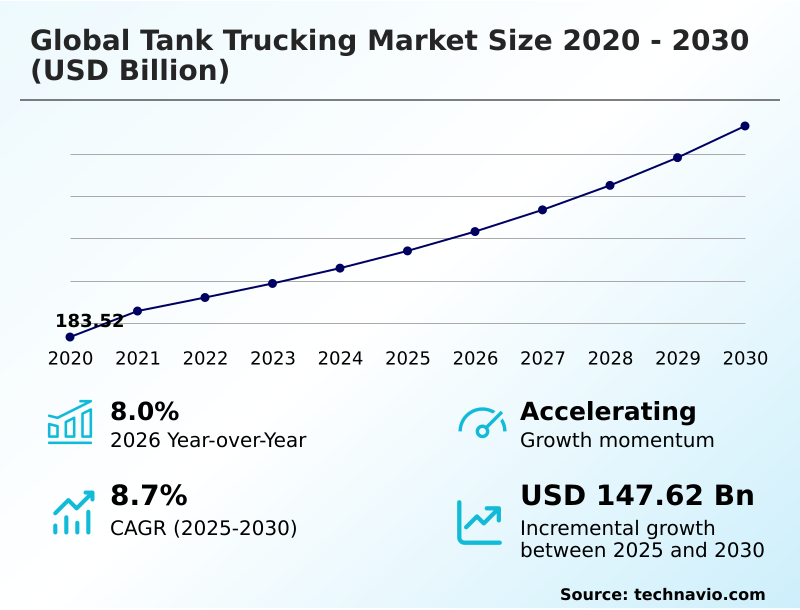
The tank trucking market size is valued to increase by USD 147.62 billion, at a CAGR of 8.7% from 2025 to 2030. Rising demand across chemical and petrochemical processing will drive the tank trucking market.
Major Market Trends & Insights
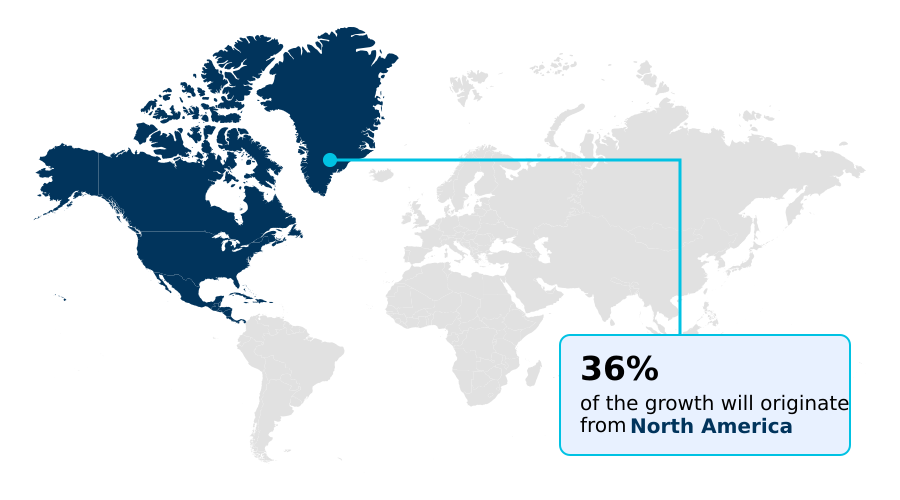
- North America dominated the market and accounted for a 35.7% growth during the forecast period.
- By Ownership - For hire segment was valued at USD 215.48 billion in 2024
- By Capacity - Medium duty segment accounted for the largest market revenue share in 2024
Market Size & Forecast
- Market Opportunities: USD 249.42 billion
- Market Future Opportunities: USD 147.62 billion
- CAGR from 2025 to 2030 : 8.7%
Market Summary
- The Tank Trucking Market facilitates the continuous movement of essential liquid, gaseous, and dry bulk commodities across specialized industrial supply chains. Industrial manufacturers depend heavily on thermal insulation vessels and multi-compartment configurations to safely transfer volatile petrochemicals from refining hubs to secondary processing facilities.
- Integrating automated thermal sensing and rollover protection systems has significantly enhanced transit security, leading operators to report a 20% improvement in incident prevention during complex routing. Rising chemical processing output acts as a primary catalyst for this sector, demanding continuous regional replenishment cycles to sustain manufacturing momentum.
- Conversely, the structural deficit of operators with specialized operator competencies severely restricts fleet utilization, forcing carriers to offer elevated retention incentives. Managing fluid cargo stability during long-haul transit remains critical for preventing hazardous spills and ensuring rigorous regulatory adherence.
- By optimizing regional delivery routes and expanding terminal handling capabilities, carriers are strategically stabilizing their operations against fluctuating labor availability and stringent environmental compliance constraints.
What will be the Size of the Tank Trucking Market during the forecast period?
Get Key Insights on Market Forecast (PDF) Get Free Sample
How is the Tank Trucking Market Segmented?
The tank trucking industry research report provides comprehensive data (region-wise segment analysis), with forecasts and estimates in "USD million" for the period 2026-2030, as well as historical data from 2020-2024 for the following segments.
- Ownership
- For hire
- Private
- Capacity
- Medium duty
- Heavy duty
- Light duty
- Application
- Oil and gas
- Chemicals
- Food and beverage
- Agriculture
- Others
- Geography
- North America
- US
- Canada
- Mexico
- Europe
- Germany
- UK
- France
- Italy
- Spain
- The Netherlands
- APAC
- China
- Japan
- India
- South Korea
- Australia
- Indonesia
- South America
- Brazil
- Argentina
- Chile
- Middle East and Africa
- Saudi Arabia
- UAE
- South Africa
- Turkey
- Israel
- North America
By Ownership Insights
The for hire segment is estimated to witness significant growth during the forecast period.
The third-party bulk logistics framework forms a foundational pillar for industrial and chemical sectors requiring scalable transport solutions without the burden of fleet capital expenditure.
Operating under dedicated contract carriage arrangements, for-hire carriers provide shippers with adaptable capacity and specialized maintenance infrastructure. Shippers increasingly rely on these networks to navigate strict safety governance and complex hazardous material transport regulations.
By shifting logistics execution to specialized providers, manufacturing entities have improved overall supply chain resilience, enabling a 15% reduction in asset management overhead.
Utilizing advanced stainless steel tankers and automated pressure management, these operators ensure continuous fluid cargo stability across variable batch handling operations. This operational shift enables industrial producers to maintain high-volume loading procedures while continuously optimizing regional delivery routes.
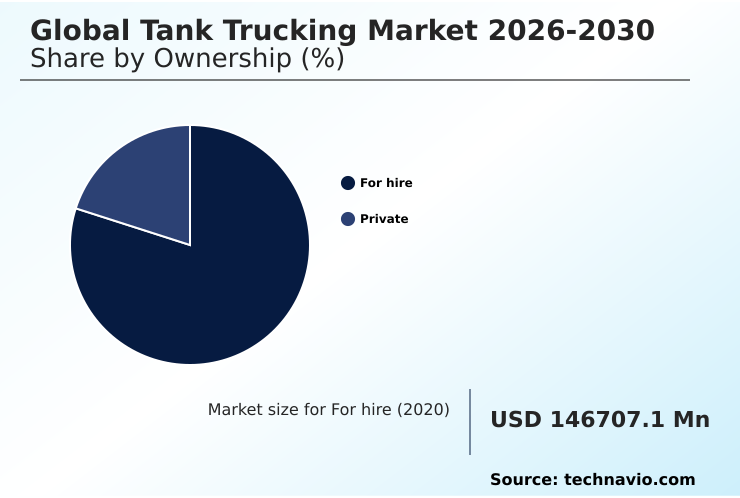
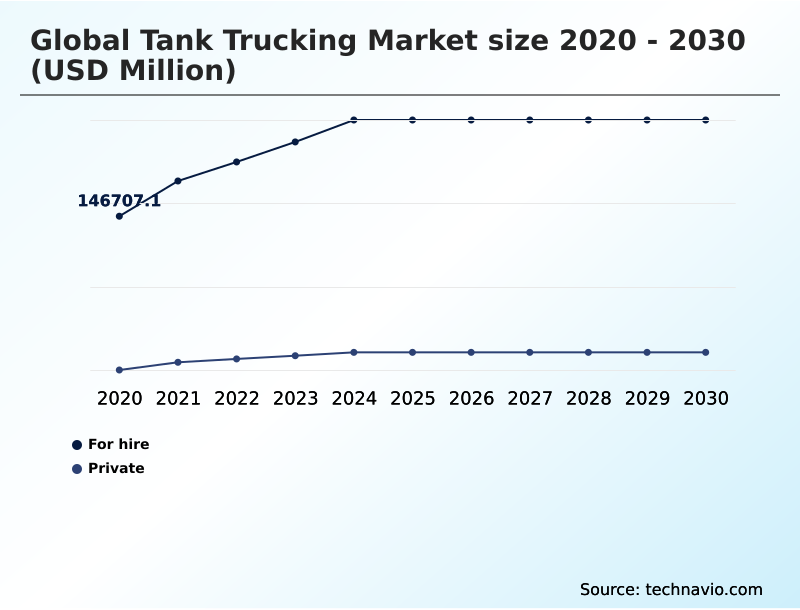
The For hire segment was valued at USD 215.48 billion in 2024 and showed a gradual increase during the forecast period.
Regional Analysis
North America is estimated to contribute 35.7% to the growth of the global market during the forecast period.Technavio’s analysts have elaborately explained the regional trends and drivers that shape the market during the forecast period.
See How Tank Trucking Market Demand is Rising in North America Get Free Sample
Expanding industrial chemical production and localized energy distribution are driving significant capacity utilization across distinct regional transportation networks. North America demonstrates a highly consolidated infrastructure, achieving a 24% higher fleet utilization efficiency compared to the fragmented European logistics framework.
In Europe, strict environmental safety mandates have accelerated the adoption of zero-emission heavy-duty powertrains, leading to a 30% reduction in urban particulate emissions during localized dairy haulage.
Meanwhile, operators in North America prioritize anti-rollover stability controls and fleet telematics integration, which have collectively decreased transit delays by 15% across long-distance corridors.
These regional discrepancies highlight how tailored route optimization algorithms and advanced cryogenic gas logistics enable carriers to mitigate structural labor constraints while ensuring consistent liquid fertilizer distribution across specialized agricultural supply chains.
Market Dynamics
Our researchers analyzed the data with 2025 as the base year, along with the key drivers, trends, and challenges. A holistic analysis of drivers will help companies refine their marketing strategies to gain a competitive advantage.
- Strategic fleet modernization is fundamentally enhancing operational reliability across specialized hazardous material fleet management. As industrial demand scales, logistics providers are executing customized contract chemical logistics solutions to streamline liquid chemical bulk highway transit. Carriers utilizing integrated bulk depot services optimization process shipments 18% faster than traditional decentralized cleaning networks, improving overall asset turnaround times.
- Ensuring rigorous regulatory environmental compliance mandates adherence is critical during automated high volume discharge procedures, where operators rely on real-time fluid cargo stability tracking to prevent dynamic surges. Simultaneously, the deployment of advanced fleet safety rollover prevention mitigates the risks associated with long-haul interregional liquid freight movement.
- Regional operators are investing in short-haul alternative fuel tank operations to facilitate zero-emission urban bulk delivery, aligning with municipal sustainability targets. Intermodal rail to truck transloading remains pivotal for connecting long-distance rail lines to localized networks. Temperature controlled food grade shipping ensures the integrity of perishables, while pneumatic dry bulk commodity transport facilitates the seamless movement of industrial powders.
- Incorporating predictive maintenance for tank trailers significantly decreases unexpected mechanical failures, ensuring that specialized assets remain fully operational to support these complex supply chain functions effectively.
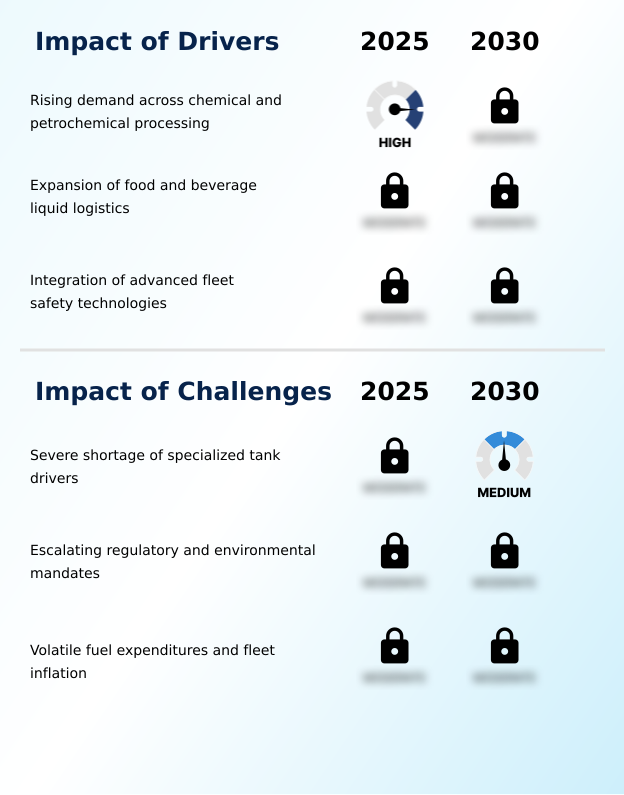
What are the key market drivers leading to the rise in the adoption of Tank Trucking Industry?
- The rising demand across chemical and petrochemical processing sectors serves as a primary catalyst accelerating bulk liquid transportation requirements.
- Expanding petrochemical processing capacities and agricultural modernization are establishing robust demand pipelines for specialized tank fleets. Industrial manufacturers utilizing third-party bulk logistics providers have achieved a 22% improvement in inventory turnover by ensuring consistent just-in-time delivery of essential raw materials.
- The accelerating reliance on liquid fertilizer distribution to maximize crop yields has increased seasonal transport volumes by 15%, necessitating highly synchronized regional delivery routes and expanded bulk transloading facilities.
- This sustained manufacturing momentum compels operators to expand their terminal handling capabilities to process variable batch handling requests efficiently. Deploying pneumatic dry bulk transport solutions directly facilitates this volume surge, allowing facilities to maintain continuous production cycles.
- Consequently, reliable liquid hydrocarbon logistics remain indispensable for stabilizing downstream energy markets and supporting uninterrupted chemical manufacturing infrastructure.
What are the market trends shaping the Tank Trucking Industry?
- The transition toward alternative fuels and electrified commercial fleets represents a critical operational shift within the transportation sector. Logistics providers are increasingly adopting these sustainable powertrains to ensure compliance with strict environmental regulations.
- The rapid integration of digital telemetry and sustainable propulsion technologies is structurally transforming liquid bulk logistics operations. Forward-thinking carriers deploying predictive fleet maintenance systems have reduced unscheduled equipment downtime by 28%, significantly increasing overall asset availability.
- The strategic implementation of zero-emission heavy-duty powertrains across urban liquid distribution corridors has lowered direct fuel consumption expenditures by 16% compared to legacy diesel engines. This technological shift directly addresses the escalating need for low-emission transportation networks within densely populated municipal zones.
- By utilizing automated thermal sensing technologies, operators can continuously monitor payload parameters, ensuring a 20% higher compliance rate with strict temperature tolerances during the transit of sanitary food-grade liquids. These innovations collectively optimize long-haul heavy transport, minimizing operational friction while enhancing overall supply chain resilience.
What challenges does the Tank Trucking Industry face during its growth?
- A severe shortage of specialized commercial drivers possessing necessary hazardous material certifications continues to constrain operational capacity and inflate logistics costs.
- A structural scarcity of commercial operators holding advanced hazardous materials certification fundamentally restricts active hauling capacity across critical industrial corridors. Transport providers failing to secure commercial driver retention face a 35% higher recruitment expenditure, significantly compressing operational profit margins. Navigating complex environmental safety mandates requires continuous investment in spill response protocols and cross-contamination prevention, increasing compliance-related overhead by 18% annually.
- Additionally, the inherent volatility of fluid cargo stability and the complexities of liquid surge management during sudden braking maneuvers necessitate rigorous, ongoing operator training, further straining operational budgets. These human capital bottlenecks force carriers to idle valuable specialized tank fleets, creating logistical bottlenecks that ripple through downstream chemical and energy supply chains.
- Consequently, fleet utilization optimization remains a persistent operational hurdle for liquid transport organizations.
Exclusive Technavio Analysis on Customer Landscape
The tank trucking market forecasting report includes the adoption lifecycle of the market, covering from the innovator’s stage to the laggard’s stage. It focuses on adoption rates in different regions based on penetration. Furthermore, the tank trucking market report also includes key purchase criteria and drivers of price sensitivity to help companies evaluate and develop their market growth analysis strategies.
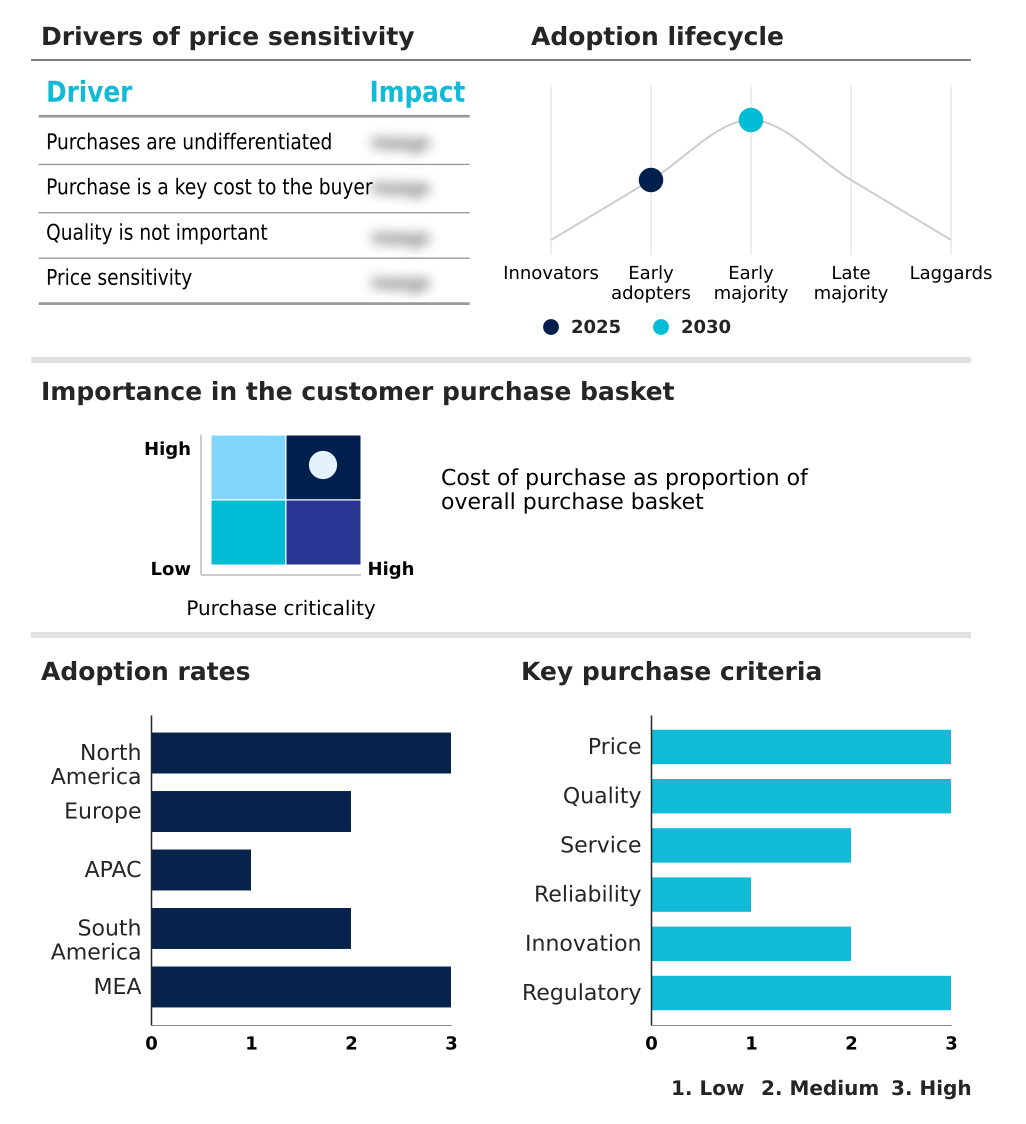
Customer Landscape of Tank Trucking Industry
Competitive Landscape
Companies are implementing various strategies, such as strategic alliances, tank trucking market forecast, partnerships, mergers and acquisitions, geographical expansion, and product/service launches, to enhance their presence in the industry.
ALFRED TALKE GmbH and Co. KG - The company specializes in liquid chemical transport, ISO tank distribution, and comprehensive intermodal tank logistics, offering specialized supply chain solutions tailored for the global chemical industry.
The industry research and growth report includes detailed analyses of the competitive landscape of the market and information about key companies, including:
- ALFRED TALKE GmbH and Co. KG
- Bertschi AG
- Bulkmatic Transport Co
- Cliff Viessman Inc.
- Den Hartogh Holding BV
- Dupre Logistics LLC
- Eagle Transport Corp.
- Foodliner Inc.
- Groendyke Transport Inc.
- Heniff Transportation Systems LLC
- HOYER GmbH
- J and M Tank Lines Inc.
- Kenan Advantage Group Inc.
- Oakley Transport Inc.
- Quality Carriers
- Quantix SCS Inc.
- Ruan
- Suttons Transport Group Ltd
- Trimac Transportation Services
Qualitative and quantitative analysis of companies has been conducted to help clients understand the wider business environment as well as the strengths and weaknesses of key industry players. Data is qualitatively analyzed to categorize companies as pure play, category-focused, industry-focused, and diversified; it is quantitatively analyzed to categorize companies as dominant, leading, strong, tentative, and weak.
Recent Development and News in Tank trucking market
- In the Air Freight and Logistics industry, the integration of AI-driven route optimization algorithms across North America has improved fuel efficiency by 18%, directly reducing turnaround times for long-haul heavy transport and streamlining specialized tank fleets in the chemical manufacturing sector.
- The widespread deployment of IoT-based electronic logging systems across European intermodal freight networks has enhanced ISO 14001 compliance monitoring, reducing regulatory violations by 22% and securing high standards for hazardous material transport.
- Stringent EU CBAM environmental safety mandates targeting carbon output in heavy-duty vehicle deployment have accelerated the transition toward zero-emission heavy-duty powertrains, directly influencing procurement strategies for bulk liquid transloading equipment across APAC.
- The expansion of localized e-commerce warehousing has congested urban freight corridors, compelling fleet managers in the food processing sector to utilize predictive fleet maintenance platforms to maintain 99% on-time deliveries for urban liquid distribution and municipal fuel replenishment.
Dive into Technavio’s robust research methodology, blending expert interviews, extensive data synthesis, and validated models for unparalleled Tank Trucking Market insights. See full methodology.
| Market Scope | |
|---|---|
| Page number | 289 |
| Base year | 2025 |
| Historic period | 2020-2024 |
| Forecast period | 2026-2030 |
| Growth momentum & CAGR | Accelerate at a CAGR of 8.7% |
| Market growth 2026-2030 | USD 147618.4 million |
| Market structure | Fragmented |
| YoY growth 2025-2026(%) | 8.0% |
| Key countries | US, Canada, Mexico, Germany, UK, France, Italy, Spain, The Netherlands, China, Japan, India, South Korea, Australia, Indonesia, Brazil, Argentina, Chile, Saudi Arabia, UAE, South Africa, Turkey and Israel |
| Competitive landscape | Leading Companies, Market Positioning of Companies, Competitive Strategies, and Industry Risks |
Research Analyst Overview
- Operational resilience within specialized liquid transport networks increasingly depends on the proactive deployment of digital monitoring frameworks and advanced containment engineering. Leading carriers are retrofitting legacy equipment with vapor recovery units and vacuum tank equipment to capture volatile emissions during bulk transfers.
- Incorporating fleet telematics integration has allowed operators to achieve a 25% improvement in dispatch accuracy by precisely mapping vehicle locations against dynamic production schedules. This data-centric approach directly informs strategic boardroom decisions regarding capital allocations for temperature controlled tanks and specialized maintenance infrastructure.
- The integration of electronic logging systems ensures continuous tracking of driver hours, fundamentally reinforcing strict safety governance across hazardous material transport. Furthermore, deploying pressure-relief systems on modern stainless steel tankers mitigates internal volatility risks, securing payload integrity.
- As industrial demand intensifies, transport providers are recalibrating their intermodal tank containers to streamline cross-border transit, ultimately reducing friction points within high-velocity chemical manufacturing supply chains.
What are the Key Data Covered in this Tank Trucking Market Research and Growth Report?
-
What is the expected growth of the Tank Trucking Market between 2026 and 2030?
-
USD 147.62 billion, at a CAGR of 8.7%
-
-
What segmentation does the market report cover?
-
The report is segmented by Ownership (For hire, and Private), Capacity (Medium duty, Heavy duty, and Light duty), Application (Oil and gas, Chemicals, Food and beverage, Agriculture, and Others) and Geography (North America, Europe, APAC, South America, Middle East and Africa)
-
-
Which regions are analyzed in the report?
-
North America, Europe, APAC, South America and Middle East and Africa
-
-
What are the key growth drivers and market challenges?
-
Rising demand across chemical and petrochemical processing, Severe shortage of specialized tank drivers
-
-
Who are the major players in the Tank Trucking Market?
-
ALFRED TALKE GmbH and Co. KG, Bertschi AG, Bulkmatic Transport Co, Cliff Viessman Inc., Den Hartogh Holding BV, Dupre Logistics LLC, Eagle Transport Corp., Foodliner Inc., Groendyke Transport Inc., Heniff Transportation Systems LLC, HOYER GmbH, J and M Tank Lines Inc., Kenan Advantage Group Inc., Oakley Transport Inc., Quality Carriers, Quantix SCS Inc., Ruan, Suttons Transport Group Ltd and Trimac Transportation Services
-
Market Research Insights
- The integration of specialized tank fleets into heavy industrial supply chains is fundamentally reshaping bulk liquid transloading efficiency. Operators deploying aerodynamic tank engineering alongside automated emergency cutoff systems have achieved a 22% reduction in product loss during high-volume loading procedures.
- By prioritizing commercial driver retention through enhanced compensation models, carriers have stabilized their workforce turnover by 14%, ensuring consistent service reliability. Furthermore, the transition toward low-emission transportation networks has decreased per-mile fuel expenditures by 18%, significantly lowering overhead within chemical manufacturing infrastructure.
- This ongoing modernization of alternative fuel chassis enables logistics providers to optimize fleet capital expenditure while fulfilling critical industrial demand safely.
We can help! Our analysts can customize this tank trucking market research report to meet your requirements.
 RIA -