


Tokenization Market Analysis North America, Europe, APAC, South America, Middle East and Africa - US, China, UK, Germany, Japan - Size and Forecast 2024-2028

Tokenization Market Analysis North America, Europe, APAC, South America, Middle East and Africa - US, China, UK, Germany, Japan - Size and Forecast 2024-2028

Published: Oct 2024 137 Pages SKU: IRTNTR71697

Market Overview at a Glance

$4.32 B
Market Opportunity
25.2%
CAGR
19.8
YoY growth 2023-2024(%)

Tokenization Market Size 2024-2028

The tokenization market size is forecast to increase by USD 4.32 billion at a CAGR of 25.2% between 2023 and 2028.

  • The market is experiencing significant growth due to the rising number of online transactions, which necessitates secure and efficient payment processing solutions. Additionally, the increasing demand for cloud-based services is driving market expansion, as tokenization offers a cost-effective and scalable alternative to traditional payment methods. However, the market faces challenges such as system integration and interoperability issues, which can hinder market growth. To address these challenges, market participants are focusing on developing open standards and collaborating with industry players to ensure seamless integration and compatibility. Overall, the market is poised for robust growth In the coming years, with the potential to revolutionize the payments industry and enhance security and convenience for consumers.
  • What will be the Size of the Tokenization Market During the Forecast Period?
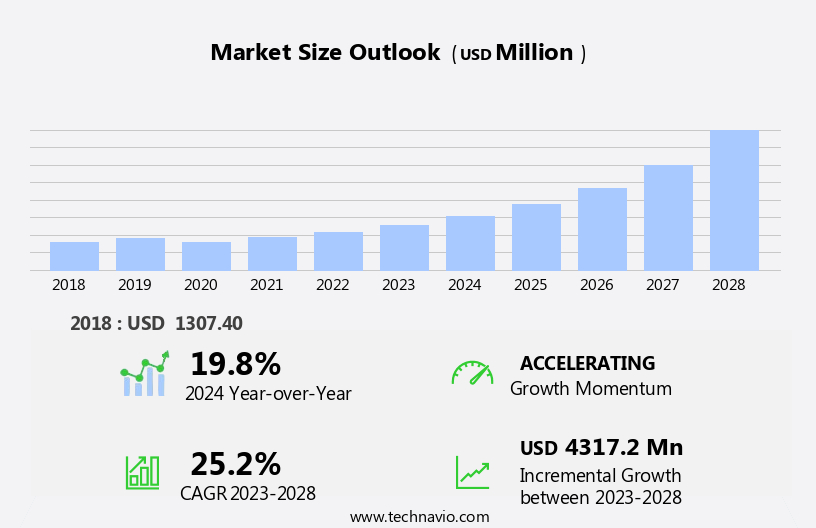
    Tokenization Market Size

     Request Free Sample

  • The market is experiencing significant growth as businesses seek to enhance digital payment security and reduce financial risks. Tokenization replaces sensitive data, such as credit card numbers, with unique identification symbols, mitigating the impact of data breaches and cyber attacks. Implementation costs and complex integration are challenges for Small and Medium Enterprises (SMEs), but cloud-based tokenization solutions offer cost-effective and efficient alternatives. Patent analysis indicates a competitive landscape, with stakeholders continually innovating to improve compliance, fraud prevention levels, and mobility restrictions. Despite these advancements, tokenization's success is not without challenges. Compliance with various regulatory frameworks and ensuring high fraud prevention levels remain crucial.
  • As the market evolves, stakeholders must remain vigilant against the ever-present threat of financial frauds and cyber attacks from virus-laden malware.
  • How is this Tokenization Industry segmented and which is the largest segment?

    The tokenization industry research report provides comprehensive data (region-wise segment analysis), with forecasts and estimates in "USD million" for the period 2024-2028, as well as historical data from 2018-2022 for the following segments.

    • Deployment
      • On-premises
      • Cloud
    • Geography
      • North America
        • US
      • Europe
        • Germany
        • UK
      • APAC
        • China
        • Japan
      • South America
        • Middle East and Africa

        By Deployment Insights

        • The on-premises segment is estimated to witness significant growth during the forecast period.

        Tokenization is a critical aspect of payment security for businesses, particularly those In the eCommerce and financial sectors. This process involves replacing sensitive financial data, such as credit card numbers, with non-sensitive placeholders or tokens. On-premises servers have long been the traditional deployment model for tokenization infrastructure. In this setup, companies own and manage their servers and storage units, which are typically located in secure, climate-controlled facilities. However, managing on-premises servers requires specialized IT support and ongoing maintenance, including user access policies, security patches, and antivirus software. Businesses must also ensure data protection against cyber attacks, which can result in negative financial impacts from data theft or breaches.

        With the rising demand for tokenization solutions, cloud-based options have emerged as an alternative to on-premises servers. These solutions offer easier integration, affordability, and compliance with various regulations. Despite the benefits, organizations must consider the complexities of management and user adoption processes. Additionally, businesses must prioritize training programs for their workforce to ensure reliable implementation and maintenance. Ultimately, the choice between on-premises and cloud-based tokenization depends on an organization's internal systems, reliability, and compliance scope.
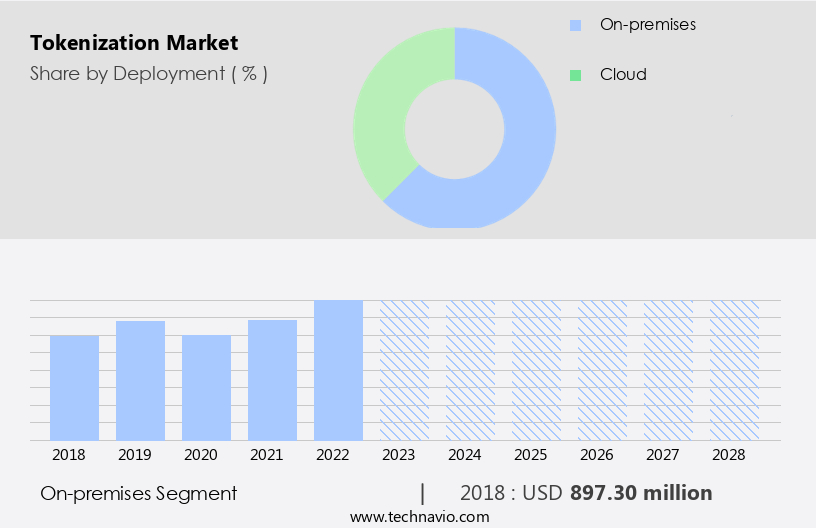
        Tokenization Market Size

        Get a glance at the  Tokenization Industry report of share of various segments Request Free Sample

        The On-premises segment was valued at USD 897.30 billion in 2018 and showed a gradual increase during the forecast period.

        Regional Analysis

        • North America is estimated to contribute 38% to the growth of the global market during the forecast period.

        Technavio’s analysts have elaborately explained the regional trends and drivers that shape the market during the forecast period.
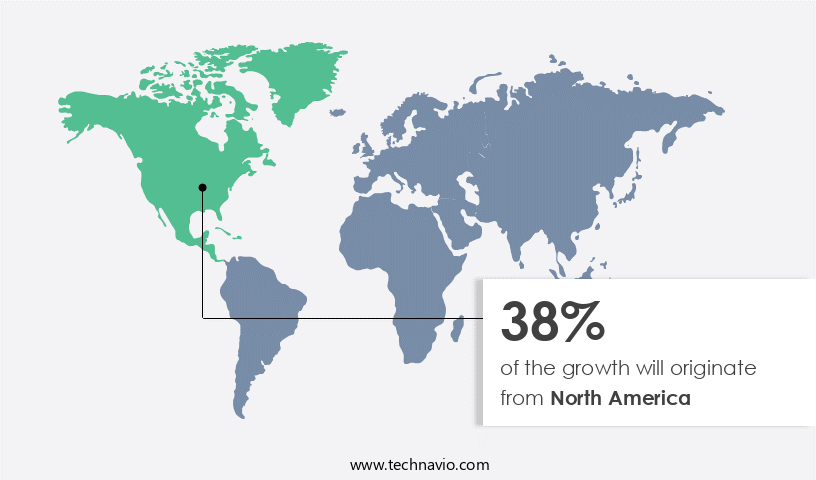
        Tokenization Market Share by Geography

        For more insights on the market share of various regions, Request Free Sample

        The North American market holds significant potential In the tokenization industry due to its technologically advanced economies and increasing smartphone usage. With a growing number of mobile and cloud solutions, payment systems are integrating with social media apps, fostering a co-dependent and intelligent economy. The young and socially active population In the region is driving the e-commerce payment market growth, subsequently increasing the demand for tokenization. This process reduces the risk of data breaches and theft by replacing sensitive payment information with non-sensitive placeholders or tokens. Despite the complexities in management and integration, tokenization is gaining popularity among businesses, particularly online ones, due to its affordability and compliance with security standards.

        The increasing number of cyber attacks and data breaches has emphasized the need for payment security solutions, further fueling the demand for tokenization. SMEs and large enterprises alike are adopting tokenization to protect their payment information, mitigate risks, and maintain organizational reliability. The implementation of tokens in credit and debit cards, POS machines, and internal systems is essential for businesses to ensure data protection and prevent negative financial impacts. Cloud-based tokenization offers scalability and flexibility, making it a preferred solution for businesses with mobility restrictions or offices in multiple locations. The coronavirus pandemic has accelerated the adoption of contactless payments, further increasing the demand for tokenization.

        Market Dynamics

        Our  researchers analyzed the data with 2023 as the base year, along with the key drivers, trends, and challenges. A holistic analysis of drivers will help companies refine their marketing strategies to gain a competitive advantage.

        What are the key market drivers leading to the rise In the adoption of Tokenization Industry?

        Rising number of online transactions is the key driver of the market.

      • In today's digital economy, online transactions have become increasingly popular for both consumers and businesses. However, this shift towards digital payments comes with its own set of challenges, particularly in terms of data protection. Cyber attackers continue to pose a significant risk to financial and e-commerce transactions, leading to negative financial impacts from data breaches and theft of personal information. To mitigate these risks, tokenization has emerged as a promising solution. Tokenization involves replacing sensitive payment information, such as Bank Identification Numbers, card type, and country of issuance, with non-sensitive placeholders or tokens. These tokens are stored securely in token vaults, reducing the risk of data theft and breach.
      • Tokenization is not limited to e-commerce but is also being adopted by Small and Medium Enterprises (SMEs) and businesses in various verticals, including contactless payments and mobility restrictions. Cloud-based tokenization solutions offer affordability and ease of integration, making them a popular choice for organizations. However, complexities in management and implementation can pose challenges, requiring proper training programs for employees and leadership to ensure organizational reliability and talent retention for company growth. The rising demand for payment security products is driven by the need to protect sensitive data and prevent frauds. Tokenization is an automation technique that offers length-preserving tokens, real-time screening, and compliance with various security and compliance standards.
      • Despite these benefits, organizations must consider the complexities of integration and compliance scope when implementing tokenization. In conclusion, tokenization plays a crucial role in securing financial transactions In the digital age. As the use of online transactions continues to grow, particularly In the wake of the coronavirus pandemic, the importance of payment security and data protection cannot be overstated. Tokenization offers a viable solution to these challenges, but organizations must carefully consider the complexities of implementation and management to ensure the reliability and security of their internal systems and online payments.
      • What are the market trends shaping the Tokenization Industry?

        Growing demand for cloud-based services is the upcoming market trend.

      • In today's digital economy, securing financial transactions is of paramount importance for businesses of all sizes. Tokenization, an automation technique used to replace sensitive data with non-sensitive placeholders, has emerged as a promising solution for reducing the risk of data breaches and theft. With the rising demand for secure digital payments, cloud-based tokenization services are gaining popularity, especially among small and medium enterprises (SMEs). These services offer several advantages, including low capital expenditures, scalability, and flexibility, making them an affordable option for businesses with limited resources. The adoption of cloud-based tokenization is not limited to SMEs alone. With the increasing trend of remote work and mobility restrictions due to the coronavirus pandemic, organizations are implementing cloud-based services for various business functions to ensure seamless access to data from anywhere.
      • Moreover, cloud-based tokenization offers real-time screening and compliance with various security standards, ensuring the protection of sensitive data such as Bank Identification Numbers, card type, country of issuance, and personal data. Cybercriminals continue to pose a significant threat to businesses, with data breaches resulting in negative financial impacts. Tokenization offers a reliable and secure alternative to traditional payment methods by replacing sensitive data with irreversible tokens, which are stored in token vaults. This not only reduces the risk of data breaches but also ensures the reliability and maintenance of the organization's internal systems. The implementation of tokenization requires proper training programs for the workforce, including employees and leadership, to ensure a smooth user adoption process.
      • Compliance with various security and compliance standards is also crucial to mitigate risks and frauds. With the increasing importance of data security, the demand for payment security products and solutions is expected to continue rising in various verticals, including eCommerce, finance, and healthcare.
      • What challenges does the Tokenization Industry face during its growth?

        System integration and interoperability issues is a key challenge affecting the industry growth.

      • Tokenization, a digital payments security solution, is gaining significant traction in various industries such as BFSI, telecom, transportation, and public sector. This trend is driven by the increasing need to reduce the risk of data breaches and cyber attacks, particularly for small and medium-sized enterprises (SMEs) that may lack the resources to effectively manage and protect sensitive payment information. However, the adoption of tokenization comes with complexities, particularly In the integration process. Technical challenges during implementation can result in financial expenditures and operational inefficiencies. For instance, onsite deployment of tokenization solutions may require extensive training programs for workforce and leadership to ensure organizational reliability and talent retention.
      • Moreover, cloud-based tokenization solutions may face compliance scope issues and affordability concerns. Cybercriminals continue to target payment information, leading to negative financial impacts for businesses. Tokenization offers a viable solution by replacing sensitive data with non-sensitive placeholders, or tokens, which are stored in token vaults. These tokens are irreversible and do not reveal any sensitive data, reducing the risk of data theft and breaches. Tokenization is essential for contactless payments and eCommerce transactions, which have seen a surge due to mobility restrictions and the coronavirus pandemic. However, the use of tokenization extends beyond online payments. It can also be used in real-time screening of payment methods and transactions, as well as in Bank Identification Number (BIN) and issuer verification, card type and country of issuance identification, and length-preserving tokens for internal systems and Point of Sale (POS) machines.
      • Despite its benefits, tokenization implementation comes with challenges. These include the complexities of managing tokens, ensuring compliance with security and data protection standards, and dealing with potential risks such as frauds. companies must provide unified data security solutions that can be seamlessly integrated with an organization's internal systems to mitigate these challenges. In conclusion, tokenization is an essential payment security solution that offers significant benefits for businesses. However, its implementation comes with complexities, particularly In the integration process. companies must provide unified data security solutions that can be easily integrated with existing IT infrastructure to ensure operational efficiency and minimize financial expenditures.
      • By addressing these challenges, organizations can effectively mitigate the risks of data breaches and cyber attacks, ensuring the security and reliability of their payment systems.
      • Exclusive Customer Landscape

        The tokenization market forecasting report includes the adoption lifecycle of the market, covering from the innovator’s stage to the laggard’s stage. It focuses on adoption rates in different regions based on penetration. Furthermore, the tokenization market report also includes key purchase criteria and drivers of price sensitivity to help companies evaluate and develop their market growth analysis strategies.
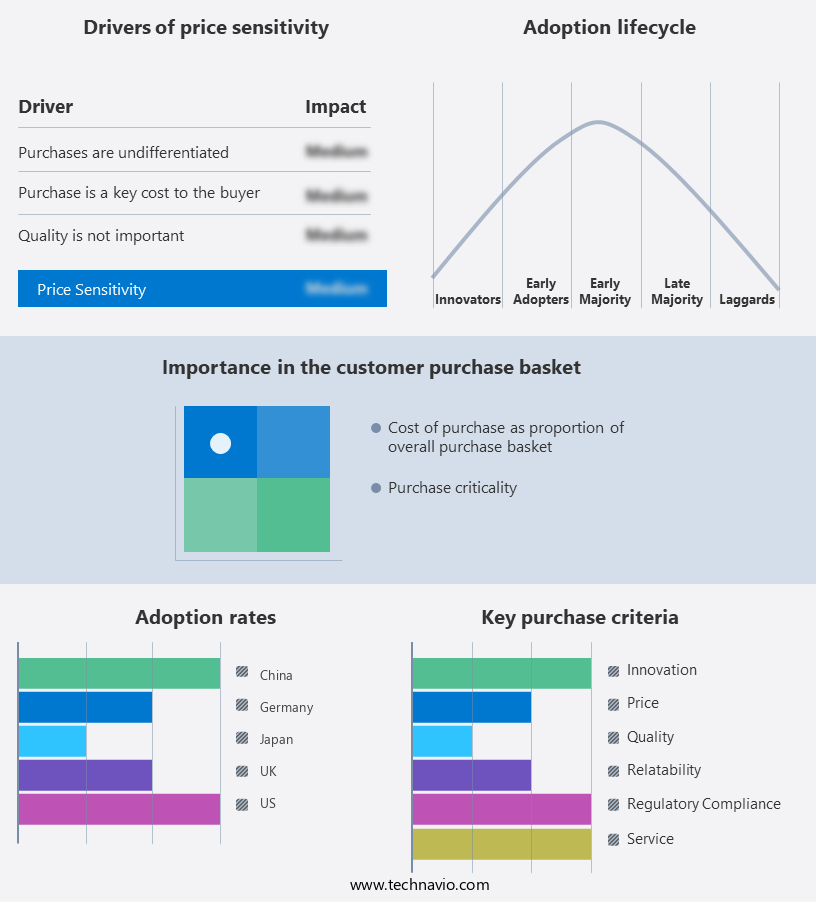
        Tokenization Market Share by Geography

         Customer Landscape

        Key Companies & Market Insights

        Companies are implementing various strategies, such as strategic alliances, tokenization market forecast, partnerships, mergers and acquisitions, geographical expansion, and product/service launches, to enhance their presence In the industry.

        American Express Co. - The company provides a comprehensive tokenization solution encompassing a secure token vault, payment token issuance, and lifecycle management for secure online transactions. This service ensures the protection of sensitive payment data during digital transactions by replacing it with unique, non-sensitive tokens. By implementing this tokenization approach, businesses can enhance security and streamline payment processing, ultimately improving customer experience and reducing the risk of fraud.

        The industry research and growth report includes detailed analyses of the competitive landscape of the market and information about key companies, including:

        • American Express Co.
        • AsiaPay Ltd.
        • BLUEFIN PAYMENT SYSTEMS LLC
        • Entrust Corp.
        • Fiserv Inc.
        • Futurex
        • HelpSystems LLC
        • Ingenico Group SA
        • IntegraPay Pty Ltd.
        • Lookout Inc.
        • Marqeta Inc.
        • Mastercard Inc.
        • Meawallet AS
        • Open Text Corp.
        • Paragon Payment Solutions
        • SafeNet Assured Technologies LLC
        • TokenEx
        • VeriFone Inc.
        • Visa Inc.

        Qualitative and quantitative analysis of companies has been conducted to help clients understand the wider business environment as well as the strengths and weaknesses of key industry players. Data is qualitatively analyzed to categorize companies as pure play, category-focused, industry-focused, and diversified; it is quantitatively analyzed to categorize companies as dominant, leading, strong, tentative, and weak.

        Research Analyst Overview

        The market is experiencing significant growth due to the increasing demand for secure and efficient digital payment solutions. This trend is driven by various factors, including the complexities of integrating digital payment systems into existing financial expenditures and the need to reduce the risk of data breaches and theft. Tokenization is an automation technique used to replace sensitive data, such as credit card information, with non-sensitive placeholder tokens. These tokens retaIn the original data's length and structure, making them suitable for use in various applications, including ecommerce and contactless payments. The rising demand for tokenization is driven by several factors.

        One of the primary reasons is the increasing number of cyber attacks targeting financial institutions and small and medium-sized enterprises (SMEs). These attacks can result in negative financial impacts, including data breaches and theft of personal data. Another factor driving the growth of the market is the shift towards cloud-based solutions. Cloud-based tokenization offers several advantages, including reduced implementation costs, easier integration, and improved scalability. However, it also presents new challenges, such as data protection and compliance with various security and regulatory standards. The implementation of tokenization requires careful planning and management. Organizations must ensure that their internal systems are reliable and capable of handling the new technology.

        This may involve training employees, investing in new hardware and software, and implementing new compliance standards. One of the challenges of tokenization is affordability. Smaller organizations may not have the resources to invest in new payment security products or to hire external experts to help with implementation. Additionally, the complexity of the technology can make it difficult for some organizations to adopt, particularly those with limited technical expertise. Despite these challenges, the benefits of tokenization are clear. By replacing sensitive data with non-sensitive tokens, organizations can significantly reduce the risk of data breaches and theft. This is particularly important In the current business environment, where mobility restrictions and the coronavirus pandemic have increased the reliance on online transactions.

        Moreover, tokenization offers several other advantages, including improved operational efficiency, reduced transaction processing times, and increased customer trust. It also enables organizations to comply with various security and regulatory standards, such as real-time screening and compliance with card issuers' obligations. In conclusion, the market is experiencing significant growth due to the increasing demand for secure and efficient digital payment solutions. While there are challenges associated with the implementation and management of tokenization, the benefits are clear. Organizations that invest in this technology will be well-positioned to meet the evolving needs of their customers and to stay ahead of the competition.

        Market Scope

        Report Coverage

        Details

        Page number

        137

        Base year

        2023

        Historic period

        2018-2022

        Forecast period

        2024-2028

        Growth momentum & CAGR

        Accelerate at a CAGR of 25.2%

        Market growth 2024-2028

        USD 4317.2 million

        Market structure

        Fragmented

        YoY growth 2023-2024(%)

        19.8

        Key countries

        US, China, UK, Germany, and Japan

        Competitive landscape

        Leading Companies, Market Positioning of Companies, Competitive Strategies, and Industry Risks

        Request Free Sample

        What are the Key Data Covered in this Tokenization Market Research and Growth Report?

        • CAGR of the Tokenization industry during the forecast period
        • Detailed information on factors that will drive the growth and forecasting between 2024 and 2028
        • Precise estimation of the size of the market and its contribution of the industry in focus to the parent market
        • Accurate predictions about upcoming growth and trends and changes in consumer behaviour
        • Growth of the market across North America, Europe, APAC, South America, and Middle East and Africa
        • Thorough analysis of the market’s competitive landscape and detailed information about companies
        • Comprehensive analysis of factors that will challenge the tokenization market growth of industry companies

        We can help! Our analysts can customize this tokenization market research report to meet your requirements.

        Get in touch


        1 Executive Summary

        • 1.1 Market overview
          • Executive Summary - Chart on Market Overview
          • Executive Summary - Data Table on Market Overview
          • Executive Summary - Chart on Global Market Characteristics
          • Executive Summary - Chart on Market by Geography
          • Executive Summary - Chart on Market Segmentation by Deployment
          • Executive Summary - Chart on Incremental Growth
          • Executive Summary - Data Table on Incremental Growth
          • Executive Summary - Chart on Company Market Positioning

        2 Market Landscape

        • 2.1 Market ecosystem
          • Parent Market
          • Data Table on - Parent Market
        • 2.2 Market characteristics
          • Market characteristics analysis
        • 2.3 Value chain analysis
          • Value Chain Analysis

        3 Market Sizing

        • 3.1 Market definition
          • Offerings of companies included in the market definition
        • 3.2 Market segment analysis
          • Market segments
        • 3.3 Market size 2023
          • 3.4 Market outlook: Forecast for 2023-2028
            • Chart on Global - Market size and forecast 2023-2028 ($ million)
            • Data Table on Global - Market size and forecast 2023-2028 ($ million)
            • Chart on Global Market: Year-over-year growth 2023-2028 (%)
            • Data Table on Global Market: Year-over-year growth 2023-2028 (%)

          4 Historic Market Size

          • 4.1 Global Tokenization Market 2018 - 2022
            • Historic Market Size - Data Table on Global Tokenization Market 2018 - 2022 ($ million)
          • 4.2 Deployment segment analysis 2018 - 2022
            • Historic Market Size - Deployment Segment 2018 - 2022 ($ million)
          • 4.3 Geography segment analysis 2018 - 2022
            • Historic Market Size - Geography Segment 2018 - 2022 ($ million)
          • 4.4 Country segment analysis 2018 - 2022
            • Historic Market Size - Country Segment 2018 - 2022 ($ million)

          5 Five Forces Analysis

          • 5.1 Five forces summary
            • Five forces analysis - Comparison between 2023 and 2028
          • 5.2 Bargaining power of buyers
            • Bargaining power of buyers - Impact of key factors 2023 and 2028
          • 5.3 Bargaining power of suppliers
            • Bargaining power of suppliers - Impact of key factors in 2023 and 2028
          • 5.4 Threat of new entrants
            • Threat of new entrants - Impact of key factors in 2023 and 2028
          • 5.5 Threat of substitutes
            • Threat of substitutes - Impact of key factors in 2023 and 2028
          • 5.6 Threat of rivalry
            • Threat of rivalry - Impact of key factors in 2023 and 2028
          • 5.7 Market condition
            • Chart on Market condition - Five forces 2023 and 2028

          6 Market Segmentation by Deployment

          • 6.1 Market segments
            • Chart on Deployment - Market share 2023-2028 (%)
            • Data Table on Deployment - Market share 2023-2028 (%)
          • 6.2 Comparison by Deployment
            • Chart on Comparison by Deployment
            • Data Table on Comparison by Deployment
          • 6.3 On-premises - Market size and forecast 2023-2028
            • Chart on On-premises - Market size and forecast 2023-2028 ($ million)
            • Data Table on On-premises - Market size and forecast 2023-2028 ($ million)
            • Chart on On-premises - Year-over-year growth 2023-2028 (%)
            • Data Table on On-premises - Year-over-year growth 2023-2028 (%)
          • 6.4 Cloud - Market size and forecast 2023-2028
            • Chart on Cloud - Market size and forecast 2023-2028 ($ million)
            • Data Table on Cloud - Market size and forecast 2023-2028 ($ million)
            • Chart on Cloud - Year-over-year growth 2023-2028 (%)
            • Data Table on Cloud - Year-over-year growth 2023-2028 (%)
          • 6.5 Market opportunity by Deployment
            • Market opportunity by Deployment ($ million)
            • Data Table on Market opportunity by Deployment ($ million)

          7 Customer Landscape

          • 7.1 Customer landscape overview
            • Analysis of price sensitivity, lifecycle, customer purchase basket, adoption rates, and purchase criteria

          8 Geographic Landscape

          • 8.1 Geographic segmentation
            • Chart on Market share by geography 2023-2028 (%)
            • Data Table on Market share by geography 2023-2028 (%)
          • 8.2 Geographic comparison
            • Chart on Geographic comparison
            • Data Table on Geographic comparison
          • 8.3 North America - Market size and forecast 2023-2028
            • Chart on North America - Market size and forecast 2023-2028 ($ million)
            • Data Table on North America - Market size and forecast 2023-2028 ($ million)
            • Chart on North America - Year-over-year growth 2023-2028 (%)
            • Data Table on North America - Year-over-year growth 2023-2028 (%)
          • 8.4 Europe - Market size and forecast 2023-2028
            • Chart on Europe - Market size and forecast 2023-2028 ($ million)
            • Data Table on Europe - Market size and forecast 2023-2028 ($ million)
            • Chart on Europe - Year-over-year growth 2023-2028 (%)
            • Data Table on Europe - Year-over-year growth 2023-2028 (%)
          • 8.5 APAC - Market size and forecast 2023-2028
            • Chart on APAC - Market size and forecast 2023-2028 ($ million)
            • Data Table on APAC - Market size and forecast 2023-2028 ($ million)
            • Chart on APAC - Year-over-year growth 2023-2028 (%)
            • Data Table on APAC - Year-over-year growth 2023-2028 (%)
          • 8.6 South America - Market size and forecast 2023-2028
            • Chart on South America - Market size and forecast 2023-2028 ($ million)
            • Data Table on South America - Market size and forecast 2023-2028 ($ million)
            • Chart on South America - Year-over-year growth 2023-2028 (%)
            • Data Table on South America - Year-over-year growth 2023-2028 (%)
          • 8.7 Middle East and Africa - Market size and forecast 2023-2028
            • Chart on Middle East and Africa - Market size and forecast 2023-2028 ($ million)
            • Data Table on Middle East and Africa - Market size and forecast 2023-2028 ($ million)
            • Chart on Middle East and Africa - Year-over-year growth 2023-2028 (%)
            • Data Table on Middle East and Africa - Year-over-year growth 2023-2028 (%)
          • 8.8 US - Market size and forecast 2023-2028
            • Chart on US - Market size and forecast 2023-2028 ($ million)
            • Data Table on US - Market size and forecast 2023-2028 ($ million)
            • Chart on US - Year-over-year growth 2023-2028 (%)
            • Data Table on US - Year-over-year growth 2023-2028 (%)
          • 8.9 China - Market size and forecast 2023-2028
            • Chart on China - Market size and forecast 2023-2028 ($ million)
            • Data Table on China - Market size and forecast 2023-2028 ($ million)
            • Chart on China - Year-over-year growth 2023-2028 (%)
            • Data Table on China - Year-over-year growth 2023-2028 (%)
          • 8.10 UK - Market size and forecast 2023-2028
            • Chart on UK - Market size and forecast 2023-2028 ($ million)
            • Data Table on UK - Market size and forecast 2023-2028 ($ million)
            • Chart on UK - Year-over-year growth 2023-2028 (%)
            • Data Table on UK - Year-over-year growth 2023-2028 (%)
          • 8.11 Germany - Market size and forecast 2023-2028
            • Chart on Germany - Market size and forecast 2023-2028 ($ million)
            • Data Table on Germany - Market size and forecast 2023-2028 ($ million)
            • Chart on Germany - Year-over-year growth 2023-2028 (%)
            • Data Table on Germany - Year-over-year growth 2023-2028 (%)
          • 8.12 Japan - Market size and forecast 2023-2028
            • Chart on Japan - Market size and forecast 2023-2028 ($ million)
            • Data Table on Japan - Market size and forecast 2023-2028 ($ million)
            • Chart on Japan - Year-over-year growth 2023-2028 (%)
            • Data Table on Japan - Year-over-year growth 2023-2028 (%)
          • 8.13 Market opportunity by geography
            • Market opportunity by geography ($ million)
            • Data Tables on Market opportunity by geography ($ million)

          9 Drivers, Challenges, and Opportunity/Restraints

          • 9.1 Market drivers
            • 9.2 Market challenges
              • 9.3 Impact of drivers and challenges
                • Impact of drivers and challenges in 2023 and 2028
              • 9.4 Market opportunities/restraints

                10 Competitive Landscape

                • 10.1 Overview
                  • 10.2 Competitive Landscape
                    • Overview on criticality of inputs and factors of differentiation
                  • 10.3 Landscape disruption
                    • Overview on factors of disruption
                  • 10.4 Industry risks
                    • Impact of key risks on business

                  11 Competitive Analysis

                  • 11.1 Companies profiled
                    • Companies covered
                  • 11.2 Market positioning of companies
                    • Matrix on companies position and classification
                  • 11.3 American Express Co.
                    • American Express Co. - Overview
                    • American Express Co. - Business segments
                    • American Express Co. - Key offerings
                    • American Express Co. - Segment focus
                  • 11.4 Fiserv Inc.
                    • Fiserv Inc. - Overview
                    • Fiserv Inc. - Business segments
                    • Fiserv Inc. - Key news
                    • Fiserv Inc. - Key offerings
                    • Fiserv Inc. - Segment focus
                  • 11.5 Futurex
                    • Futurex - Overview
                    • Futurex - Product / Service
                    • Futurex - Key offerings
                  • 11.6 HelpSystems LLC
                    • HelpSystems LLC - Overview
                    • HelpSystems LLC - Product / Service
                    • HelpSystems LLC - Key offerings
                  • 11.7 Lookout Inc.
                    • Lookout Inc. - Overview
                    • Lookout Inc. - Product / Service
                    • Lookout Inc. - Key offerings
                  • 11.8 Mastercard Inc.
                    • Mastercard Inc. - Overview
                    • Mastercard Inc. - Product / Service
                    • Mastercard Inc. - Key news
                    • Mastercard Inc. - Key offerings
                  • 11.9 Meawallet AS
                    • Meawallet AS - Overview
                    • Meawallet AS - Product / Service
                    • Meawallet AS - Key offerings
                  • 11.10 Open Text Corp.
                    • Open Text Corp. - Overview
                    • Open Text Corp. - Business segments
                    • Open Text Corp. - Key news
                    • Open Text Corp. - Key offerings
                    • Open Text Corp. - Segment focus
                  • 11.11 SafeNet Assured Technologies LLC
                    • SafeNet Assured Technologies LLC - Overview
                    • SafeNet Assured Technologies LLC - Product / Service
                    • SafeNet Assured Technologies LLC - Key offerings
                  • 11.12 Visa Inc.
                    • Visa Inc. - Overview
                    • Visa Inc. - Product / Service
                    • Visa Inc. - Key news
                    • Visa Inc. - Key offerings

                  12 Appendix

                  • 12.1 Scope of the report
                    • 12.2 Inclusions and exclusions checklist
                      • Inclusions checklist
                      • Exclusions checklist
                    • 12.3 Currency conversion rates for US$
                      • Currency conversion rates for US$
                    • 12.4 Research methodology
                      • Research methodology
                    • 12.5 Data procurement
                      • Information sources
                    • 12.6 Data validation
                      • Data validation
                    • 12.7 Validation techniques employed for market sizing
                      • Validation techniques employed for market sizing
                    • 12.8 Data synthesis
                      • Data synthesis
                    • 12.9 360 degree market analysis
                      • 360 degree market analysis
                    • 12.10 List of abbreviations
                      • List of abbreviations

                    Research Methodology

                    Technavio presents a detailed picture of the market by way of study, synthesis, and summation of data from multiple sources. The analysts have presented the various facets of the market with a particular focus on identifying the key industry influencers. The data thus presented is comprehensive, reliable, and the result of extensive research, both primary and secondary.

                    INFORMATION SOURCES

                    Primary sources

                    • Manufacturers and suppliers
                    • Channel partners
                    • Industry experts
                    • Strategic decision makers

                    Secondary sources

                    • Industry journals and periodicals
                    • Government data
                    • Financial reports of key industry players
                    • Historical data
                    • Press releases

                    DATA ANALYSIS

                    Data Synthesis

                    • Collation of data
                    • Estimation of key figures
                    • Analysis of derived insights

                    Data Validation

                    • Triangulation with data models
                    • Reference against proprietary databases
                    • Corroboration with industry experts

                    REPORT WRITING

                    Qualitative

                    • Market drivers
                    • Market challenges
                    • Market trends
                    • Five forces analysis

                    Quantitative

                    • Market size and forecast
                    • Market segmentation
                    • Geographical insights
                    • Competitive landscape

                    Interested in this report?

                    Get your sample now to see our research methodology and insights!

                    Download Now

                    Frequently Asked Questions

                    Tokenization market growth will increase by $ 4317.2 mn during 2024-2028.

                    The Tokenization market is expected to grow at a CAGR of 25.2% during 2024-2028.

                    Tokenization market is segmented by Deployment( On-premises, Cloud)

                    American Express Co., AsiaPay Ltd., BLUEFIN PAYMENT SYSTEMS LLC, Entrust Corp., Fiserv Inc., Futurex, HelpSystems LLC, Ingenico Group SA, IntegraPay Pty Ltd., Lookout Inc., Marqeta Inc., Mastercard Inc., Meawallet AS, Open Text Corp., Paragon Payment Solutions, SafeNet Assured Technologies LLC, TokenEx, VeriFone Inc., Visa Inc. are a few of the key vendors in the Tokenization market.

                    North America will register the highest growth rate of 38% among the other regions. Therefore, the Tokenization market in North America is expected to garner significant business opportunities for the vendors during the forecast period.

                    US, China, UK, Germany, Japan

                    • Rising number of online transactionsAs per the present market scenario is the driving factor this market.
                    • consumers are progressively adopting internet-connected devices for some transactions. The financial and e-commerce sectors are the main adopters of online transactions. Online transactions are gaining importance among individual consumers as they are very easy is the driving factor this market.
                    • quick is the driving factor this market.
                    • and convenient to use as compared to traditional methods. Consumers are also using smartphones to make online transactions at any time. However is the driving factor this market.
                    • these financial and e-commerce transactions are vulnerable to the threat of cyber-attacks. Vendors such as Visa and American Express are using tokenization to secure the sensitive information required for tokenization.The use of e-commerce is influenced by the COVID-19 pandemic. To avoid the spread of COVID-19 is the driving factor this market.
                    • many countries announced lockdowns and travel restrictions in 2020. Hence is the driving factor this market.
                    • the time spent by people on e-commerce websites increased in countries such as the US is the driving factor this market.
                    • the UAE is the driving factor this market.
                    • Italy is the driving factor this market.
                    • India is the driving factor this market.
                    • China is the driving factor this market.
                    • Spain is the driving factor this market.
                    • and Germany in 2020. The increase in the use of e-commerce websites is also increasing the demand for e-payment platforms and is the driving factor this market.
                    • consequently is the driving factor this market.
                    • will drive the growth of the global tokenization market during the forecast period. is the driving factor this market.

                    The Tokenization market vendors should focus on grabbing business opportunities from the On-premises segment as it accounted for the largest market share in the base year.
