



India Travel Services Market Size 2026-2030
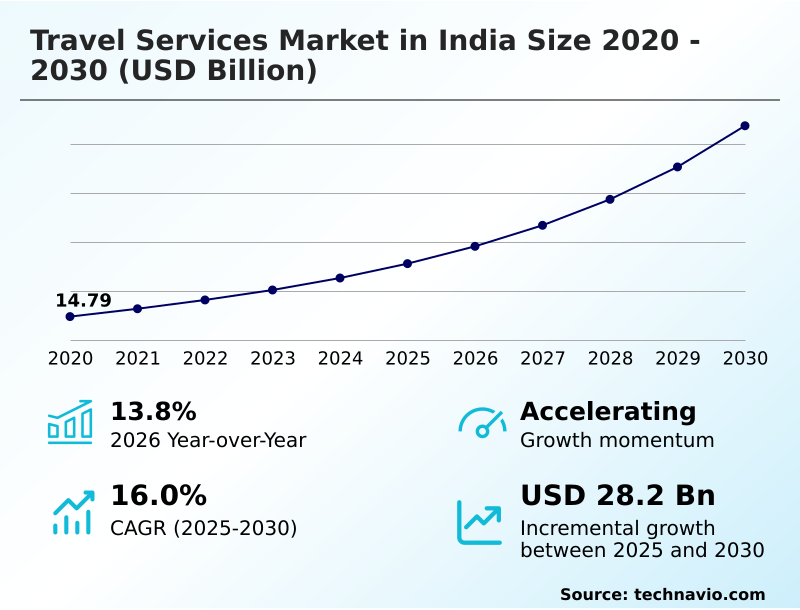
The india travel services market size is valued to increase by USD 28.20 billion, at a CAGR of 16% from 2025 to 2030. Incorporation of middle-class discretionary spending and industrialization of experiential and premium travel services will drive the india travel services market.
Major Market Trends & Insights
- By Mode of Booking - Online segment was valued at USD 15.93 billion in 2024
- By Service - Domestic flight services segment accounted for the largest market revenue share in 2024
Market Size & Forecast
- Market Opportunities: USD 39.03 billion
- Market Future Opportunities: USD 28.20 billion
- CAGR from 2025 to 2030 : 16%
Market Summary
- The travel services market in India is undergoing a sophisticated recalibration, transitioning from a volume-based model to a highly personalized, experience-led economy. This evolution is driven by the convergence of rising middle-class discretionary spending, a robust digital payment framework, and strategic government investments in national infrastructure.
- A key dynamic is the integration of advanced technologies like AI-driven recommendation engines and conversational commerce interfaces, which are democratizing access to complex travel planning, particularly in tier-two and tier-three cities.
- For instance, a corporate entity can now leverage a unified corporate travel management platform to implement a dynamic bleisure travel policy, optimizing costs while adhering to ESG goals through integrated carbon footprint tracking. However, the industry faces challenges related to the high cost of deploying generative engine optimization (geo) at scale and ensuring cyber-resiliency across interconnected systems.
- The market's trajectory is toward creating frictionless, end-to-end booking capabilities that merge high-tech personalization with high-touch, value-added services.
What will be the Size of the India Travel Services Market during the forecast period?
Get Key Insights on Market Forecast (PDF) Get Free Sample
How is the India Travel Services Market Segmented?
The india travel services industry research report provides comprehensive data (region-wise segment analysis), with forecasts and estimates in "USD million" for the period 2026-2030, as well as historical data from 2020-2024 for the following segments.
- Mode of booking
- Online
- Offline
- Service
- Domestic flight services
- Hotel accommodation services
- Rail ticket services
- Cab services
- Others
- Type
- Leisure travel
- Business travel
- Specialty travel
- Geography
- APAC
- India
- APAC
By Mode of Booking Insights
The online segment is estimated to witness significant growth during the forecast period.
The online segment is the primary growth catalyst, driven by high smartphone penetration and a mature digital payment ecosystem leveraging the unified payments interface (upi).
This shift is most pronounced among younger demographics who prioritize the speed and transparency of an online travel agency (ota) platform for managing travel.
The segment's digital maturity is significant, with over seventy percent of corporations now adopting technology-led solutions for corporate travel management. This transition reflects a strategic move toward value-driven travel management.
The integration of a generative ai assistant and dynamic pricing model further enhances the user experience and seamless itinerary management, solidifying the dominance of the digital-first booking ecosystem and end-to-end booking capability.
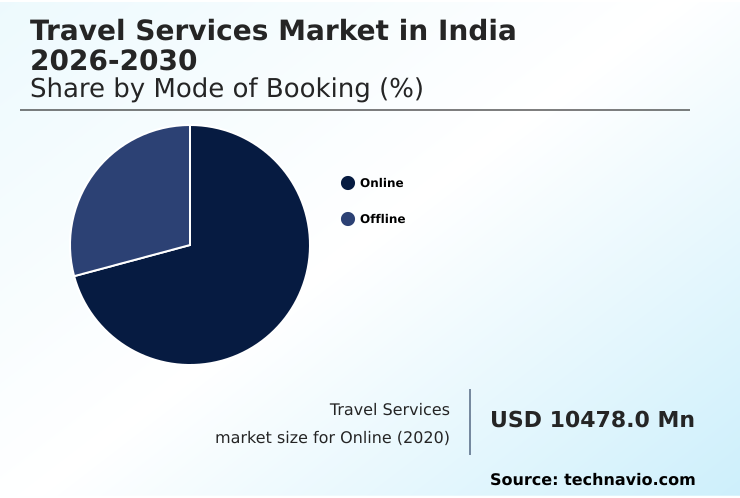
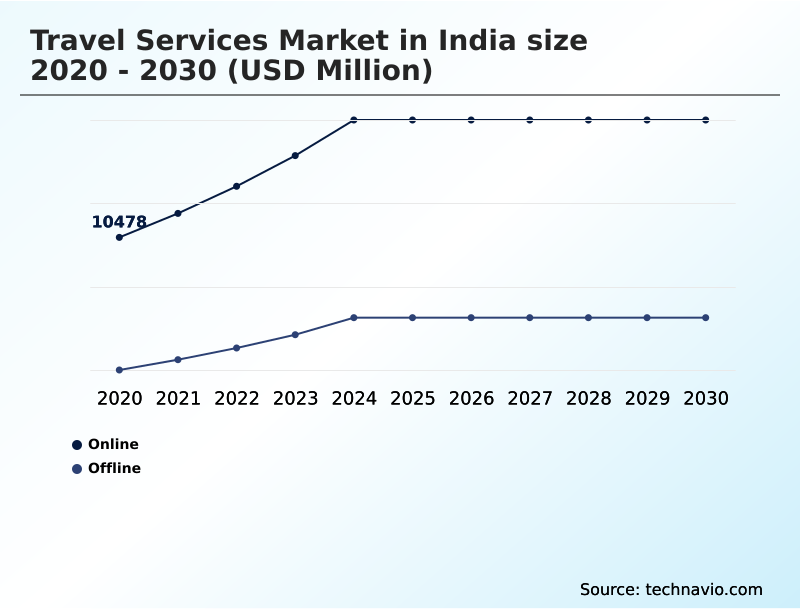
The Online segment was valued at USD 15.93 billion in 2024 and showed a gradual increase during the forecast period.
Market Dynamics
Our researchers analyzed the data with 2025 as the base year, along with the key drivers, trends, and challenges. A holistic analysis of drivers will help companies refine their marketing strategies to gain a competitive advantage.
- The strategic direction of the travel services market in India is increasingly influenced by several interconnected long-tail factors that redefine both opportunities and operational complexities. The widespread impact of upi on online travel agencies has been transformative, creating a frictionless payment layer that dramatically lowers transaction costs and enables instant refunds, thereby reducing customer friction.
- However, this digital acceleration highlights the persistent challenges in tier-2 city travel expansion, where inadequate last-mile infrastructure and inconsistent digital connectivity can impede service delivery and erode margins. To bridge this gap, firms are investing in generative ai for multilingual trip planning, a critical tool for engaging a diverse, non-English-speaking customer base and personalizing outreach.
- Simultaneously, boardroom strategies are adapting to new traveler behaviors and regulatory landscapes. The need for integrating bleisure travel in corporate policy has become a key focus, forcing a re-evaluation of duty of care, expense management, and tax implications.
- This is compounded by escalating cybersecurity risks in travel data localization, which mandate significant investment in localized data centers and compliant security architectures. The successful infrastructure impact on spiritual tourism growth, which has turned pilgrimage sites into high-capacity destinations, provides a blueprint for leveraging public investment.
- Forward-looking strategies now involve optimizing gds for dynamic package pricing and defining the role of agentic planning in travel automation, which has been shown to reduce manual booking interventions by more than double compared to legacy processes, to maintain a competitive edge.
What are the key market drivers leading to the rise in the adoption of India Travel Services Industry?
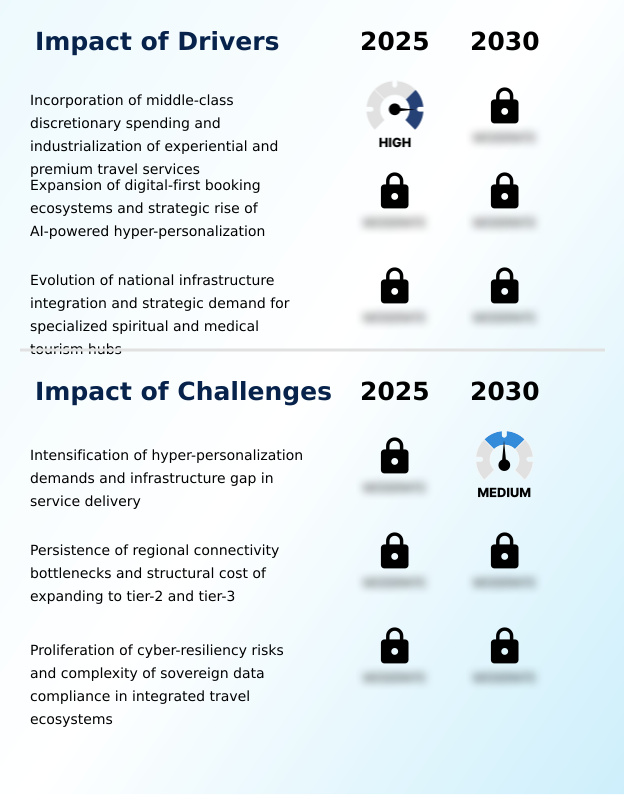
- The market's primary driver is the growth in middle-class discretionary spending, which is fueling the industrialization of experiential and premium travel services.
- Market expansion is fundamentally propelled by rising middle-class discretionary spending, which fuels the industrialization of experiential and premium travel services, leading to an 11% growth rate in outbound demand. This shift toward curated high-value journeys requires sophisticated systems.
- A key driver is the proliferation of digital-first booking ecosystems and AI-powered hyper-personalization, with the hyper-personalization algorithm enabling frictionless travel experiences. These mobile-centric platforms leverage predictive analytics for travel and a robust passenger reservation system.
- Furthermore, strategic infrastructure integration, including high-speed rail corridor and regional airport connectivity improvements, is unlocking demand for specialized spiritual tourism infrastructure and medical tourism hubs, diversifying the market.
What are the market trends shaping the India Travel Services Industry?
- A key market trend involves the institutionalization of spiritual tourism, signaling a structural shift toward professionalized pilgrimage infrastructure from previously unorganized excursions.
- The market is structurally realigning toward the institutionalization of spiritual tourism, transitioning from unorganized excursions to professionalized pilgrimage ecosystems supported by new infrastructure. This includes deploying ai-driven crowd monitoring and digital visitor management systems to handle high-density traffic, with online bookings now accounting for nearly half of temple-vicinity services.
- Simultaneously, the proliferation of AI-native travel assistants is enabling autonomous travel orchestration. Nearly 68% of leisure travelers now use AI for agentic planning, leveraging generative engine optimization (geo) and digital identity wallet integration.
- Another key trend is the strategic expansion of outbound experientialism, as non-metro international travel now accounts for a majority of outbound volume, driven by a 40% increase in event-led tourism.
What challenges does the India Travel Services Industry face during its growth?
- A primary industry challenge is the growing demand for hyper-personalization, which is intensifying the existing infrastructure gap in service delivery capabilities.
- A primary challenge is navigating intensified consumer demand for hyper-personalized itineraries, which strains providers lacking modern omnichannel distribution models. While demand in emerging cities grows at nearly 12% year-on-year, the high structural cost of expanding last-mile infrastructure and ensuring reliable connectivity remains a deterrent. Another critical issue is the proliferation of cyber-resiliency risks.
- As providers adopt cloud-integrated travel environments, the complexity of adhering to stringent data sovereignty compliance and implementing robust global distribution system (gds) security becomes paramount, impacting meetings, incentives, conferences, and exhibitions (mice) planning.
Exclusive Technavio Analysis on Customer Landscape
The india travel services market forecasting report includes the adoption lifecycle of the market, covering from the innovator’s stage to the laggard’s stage. It focuses on adoption rates in different regions based on penetration. Furthermore, the india travel services market report also includes key purchase criteria and drivers of price sensitivity to help companies evaluate and develop their market growth analysis strategies.
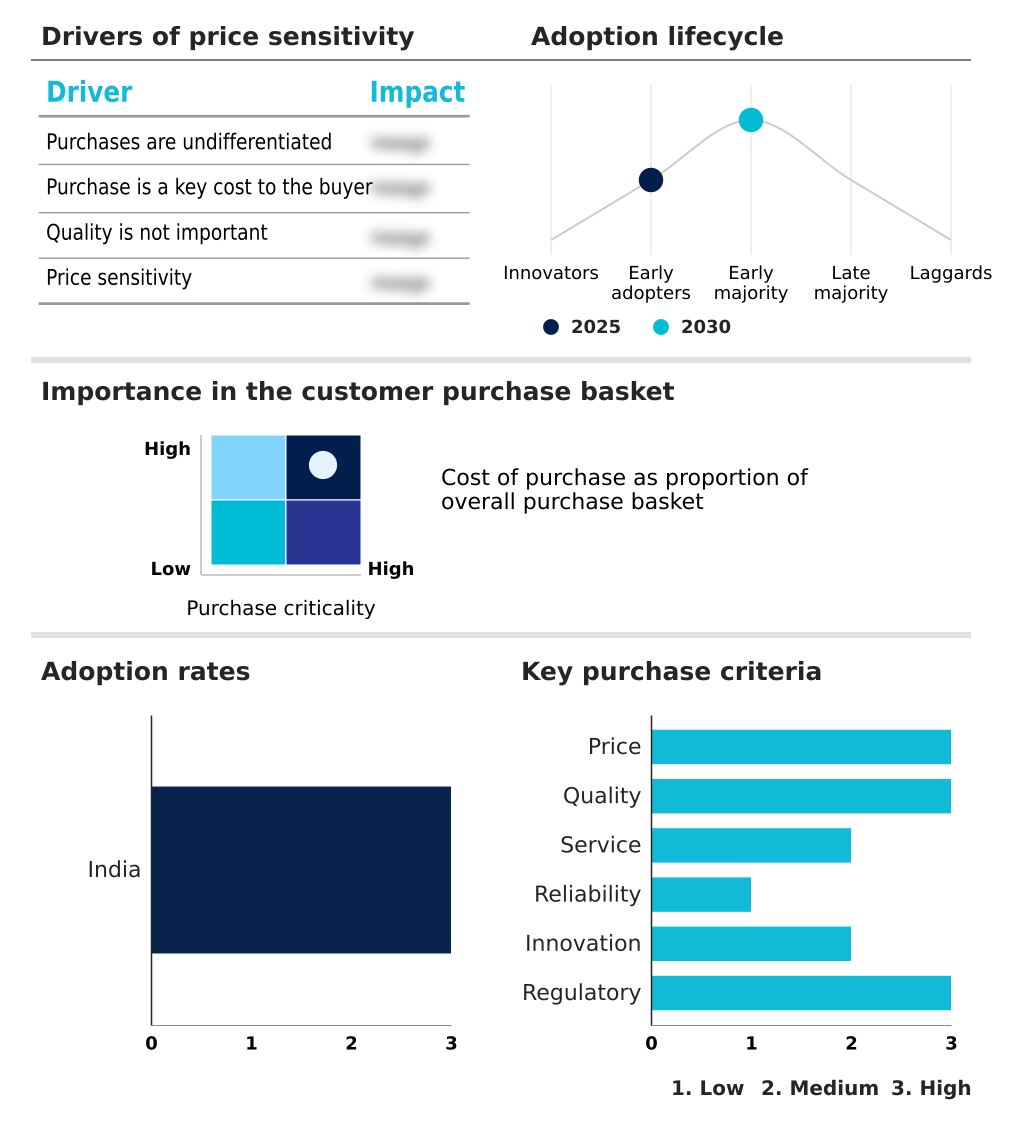
Customer Landscape of India Travel Services Industry
Competitive Landscape
Companies are implementing various strategies, such as strategic alliances, india travel services market forecast, partnerships, mergers and acquisitions, geographical expansion, and product/service launches, to enhance their presence in the industry.
Agoda Co. Pte. Ltd. - Delivers technology solutions, including global distribution systems and booking platforms, that power airlines and travel agencies.
The industry research and growth report includes detailed analyses of the competitive landscape of the market and information about key companies, including:
- Agoda Co. Pte. Ltd.
- Airbnb Inc.
- Akbar Online Booking Co Pvt Ltd
- Amadeus IT Group SA
- BCD Travel
- Cleartrip Pvt. Ltd.
- CWT
- Easy Trip Planners Ltd
- Expedia Group Inc.
- FCM Travel Solutions
- Global Business Travel Group
- Holiday Triangle Travel Ltd
- Le Travenues Technology Ltd
- MakeMyTrip Ltd.
- Skyscanner Ltd.
- Thrillophilia
- Travelport LP
- Tripfactory Pvt Ltd
- Triptool Global Pvt Ltd
- Yatra Online Inc.
Qualitative and quantitative analysis of companies has been conducted to help clients understand the wider business environment as well as the strengths and weaknesses of key industry players. Data is qualitatively analyzed to categorize companies as pure play, category-focused, industry-focused, and diversified; it is quantitatively analyzed to categorize companies as dominant, leading, strong, tentative, and weak.
Recent Development and News in India travel services market
- In October 2024, MakeMyTrip Ltd. announced the integration of an advanced generative AI assistant into its platform, designed to offer hyper-personalized itinerary planning and multi-lingual support for travelers in Tier-II cities.
- In January 2025, Yatra Online Inc. entered a strategic partnership with a major hospitality group to deploy an integrated corporate travel management solution, focusing on bleisure travel policies and ESG compliance tracking for enterprise clients.
- In March 2025, Le Travenues Technology Ltd (ixigo) launched a new feature within its app offering real-time fare prediction and dynamic pricing alerts for domestic flights, utilizing predictive analytics to enhance traveler booking decisions.
- In April 2025, Easy Trip Planners Ltd. expanded its service portfolio to include curated spiritual tourism packages, leveraging new government-led infrastructure developments to offer seamless pilgrimage experiences.
Dive into Technavio’s robust research methodology, blending expert interviews, extensive data synthesis, and validated models for unparalleled India Travel Services Market insights. See full methodology.
| Market Scope | |
|---|---|
| Page number | 189 |
| Base year | 2025 |
| Historic period | 2020-2024 |
| Forecast period | 2026-2030 |
| Growth momentum & CAGR | Accelerate at a CAGR of 16% |
| Market growth 2026-2030 | USD 28204.4 million |
| Market structure | Fragmented |
| YoY growth 2025-2026(%) | 13.8% |
| Key countries | India |
| Competitive landscape | Leading Companies, Market Positioning of Companies, Competitive Strategies, and Industry Risks |
Research Analyst Overview
- The market is defined by a strategic pivot toward AI-driven personalization and the industrialization of niche tourism segments. The deployment of a sophisticated hyper-personalization algorithm is no longer a luxury but a core operational requirement for any competitive online travel agency (ota) platform.
- This technological shift, combined with an upgraded passenger reservation system and expanded regional airport connectivity, is enabling providers to offer highly tailored experiences at scale. A critical boardroom consideration is the integration of a bleisure travel policy, as data shows a significant rise in employees extending work trips, impacting budgeting and duty of care protocols.
- This trend has compelled firms to adopt advanced corporate travel management solutions that can track and manage blended itineraries. This operational pivot has yielded tangible results, with early adopters reporting a 20% improvement in compliance with travel and expense policies.
- The development of specialized spiritual tourism infrastructure and medical tourism hubs, supported by government initiatives, further diversifies revenue streams away from traditional routes.
What are the Key Data Covered in this India Travel Services Market Research and Growth Report?
-
What is the expected growth of the India Travel Services Market between 2026 and 2030?
-
USD 28.20 billion, at a CAGR of 16%
-
-
What segmentation does the market report cover?
-
The report is segmented by Mode of Booking (Online, and Offline), Service (Domestic flight services, Hotel accommodation services, Rail ticket services, Cab services, and Others), Type (Leisure travel, Business travel, and Specialty travel) and Geography (APAC)
-
-
Which regions are analyzed in the report?
-
APAC
-
-
What are the key growth drivers and market challenges?
-
Incorporation of middle-class discretionary spending and industrialization of experiential and premium travel services, Intensification of hyper-personalization demands and infrastructure gap in service delivery
-
-
Who are the major players in the India Travel Services Market?
-
Agoda Co. Pte. Ltd., Airbnb Inc., Akbar Online Booking Co Pvt Ltd, Amadeus IT Group SA, BCD Travel, Cleartrip Pvt. Ltd., CWT, Easy Trip Planners Ltd, Expedia Group Inc., FCM Travel Solutions, Global Business Travel Group, Holiday Triangle Travel Ltd, Le Travenues Technology Ltd, MakeMyTrip Ltd., Skyscanner Ltd., Thrillophilia, Travelport LP, Tripfactory Pvt Ltd, Triptool Global Pvt Ltd and Yatra Online Inc.
-
Market Research Insights
- Market dynamics are increasingly shaped by a definitive shift toward an experience-led economy, where seamless itinerary management and curated high-value journeys are paramount. The adoption of digital-first booking ecosystems has accelerated, with over 70% of corporations now using technology-led solutions for value-driven travel management, a clear move away from simple cost-cutting.
- This is supported by the rise of mobility-as-a-service models and autonomous travel orchestration, which enhance user convenience. The impact is measurable; some platforms report that integrating multi-lingual support systems has broadened their user base in non-metro areas by over 30%.
- Concurrently, a focus on duty of care solutions and selecting green-certified hotels reflects a growing emphasis on traveler well-being and sustainability, further defining the competitive landscape.
We can help! Our analysts can customize this india travel services market research report to meet your requirements.
 RIA -
RIA - 
