

Vial Adaptors For Reconstitution Drug Market Analysis North America, Europe, Asia, Rest of World (ROW) - US, Germany, UK, China, Japan - Size and Forecast 2024-2028

Vial Adaptors For Reconstitution Drug Market Analysis North America, Europe, Asia, Rest of World (ROW) - US, Germany, UK, China, Japan - Size and Forecast 2024-2028

Published: Jul 2024 138 Pages SKU: IRTNTR72543

Market Overview at a Glance

$425.8 Mn
Market Opportunity
7.08%
CAGR
6.49
YoY growth 2023-2024(%)

Vial Adaptors For Reconstitution Drug Market Size 2024-2028

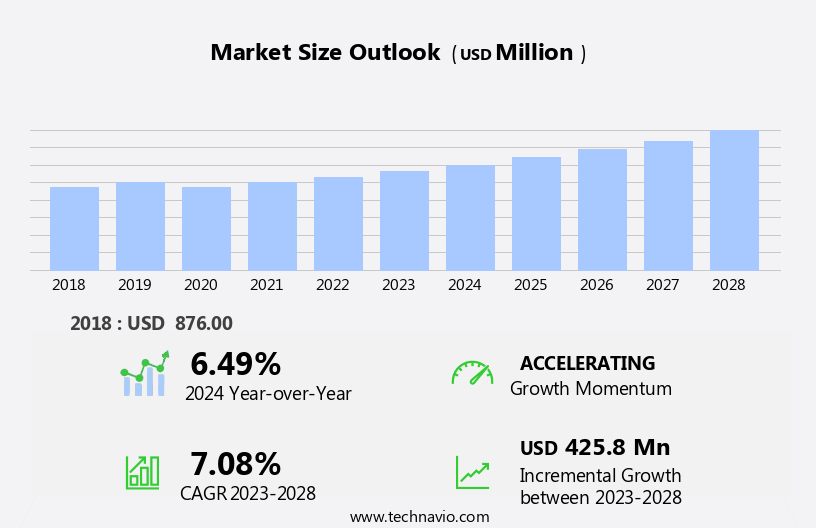
The vial adaptors for reconstitution drug market size is forecast to increase by USD 425.8 million at a CAGR of 7.08% between 2023 and 2028.

  • The market is experiencing significant growth due to the rising prevalence of chronic conditions, leading to an increased demand for convenient and efficient drug administration methods. However, the market is also facing challenges such as fluctuating prices of raw materials used in manufacturing vial adaptors and the lack of a skilled workforce to meet the growing demand. These factors are impacting the market's growth trajectory. Additionally, advancements in technology are driving innovation In the development of more sophisticated vial adaptors, offering improved functionality and patient safety features. Overall, the market is expected to continue growing, driven by these trends and challenges.
  • What will be the Size of the Vial Adaptors For Reconstitution Drug Market During the Forecast Period?
    Vial Adaptors For Reconstitution Drug Market Size

     Request Free Sample

  • The vial adaptor market for reconstitution drugs caters to the growing demand for convenient and safe administration of various therapeutic areas, including autoimmune diseases, infectious diseases, metabolic conditions, vaccines, and chronic diseases. These adaptors facilitate the transfer of drugs from original vials into smaller, easier-to-handle containers, enabling healthcare providers to prepare and administer medications more efficiently. Materials such as polycarbonate, silicon, and polyethylene are commonly used in manufacturing these adaptors due to their compatibility with a wide range of reconstitution drugs. The market is driven by the increasing prevalence of hospital-acquired infections, needlestick injuries, and the rising trend of self-administration practices among patients.
  • Additionally, the growing popularity of biologics, biosimilars, cytotoxic medications, and biologic medications In the treatment of various conditions, such as genital herpes, diabetes, geriatrics, reproductive health, and healthcare technology, further boosts market growth. Medication preparation and medication errors are significant concerns in healthcare, and filtration systems integrated into vial adaptors help ensure patient safety. Overall, the vial adaptor market for reconstitution drugs is expected to experience significant growth due to its role in enhancing medication delivery systems and improving patient outcomes.
  • How is this Vial Adaptors For Reconstitution Drug Industry segmented and which is the largest segment?

    The vial adaptors for reconstitution drug industry research report provides comprehensive data (region-wise segment analysis), with forecasts and estimates in "USD million" for the period 2024-2028, as well as historical data from 2018-2022 for the following segments.

    • Therapeutic Area
      • Infectious diseases
      • Autoimmune diseases
      • Metabolic conditions
      • Others
    • Geography
      • North America
        • US
      • Europe
        • Germany
        • UK
      • Asia
        • China
        • Japan
      • Rest of World (ROW)

      By Therapeutic Area Insights

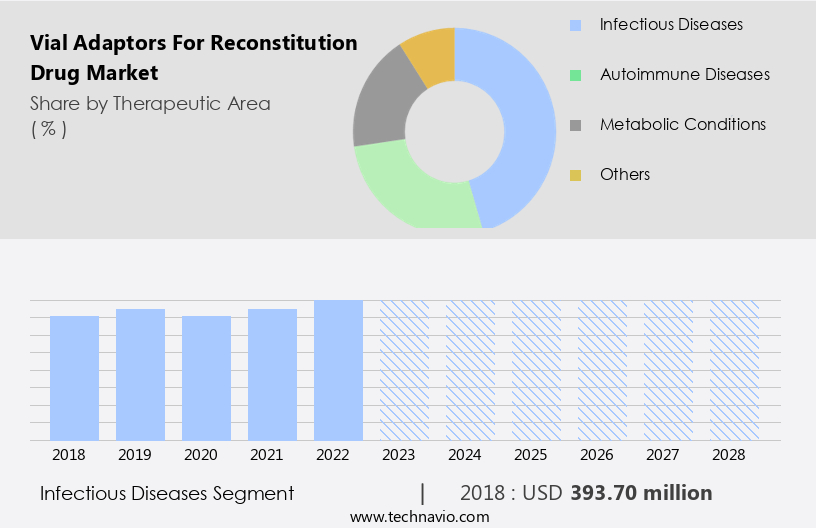
      • The infectious diseases segment is estimated to witness significant growth during the forecast period.

      Infectious diseases, including HIV/AIDS, influenza, hepatitis A, B, and C, cholera, meningitis, pneumonia, anthrax, tuberculosis, aspergillosis, candidiasis, onychomycosis, cryptosporidiosis, amebiasis, and isosporiasis, are caused by various pathogenic organisms. The healthcare industry relies on vial adaptors to facilitate medication preparation for these conditions. Vial adaptors are increasingly used In the reconstitution of biopharmaceuticals, vaccines, and cytotoxic medications. They enable the use of various syringes and drug delivery systems, ensuring compatibility with different medication types. In addition, vial adaptors help reduce medication errors and improve patient safety by minimizing the risk of needlestick injuries. The market for vial adaptors is driven by the growing prevalence of chronic diseases, hospital-acquired infections, and the increasing adoption of self-administration practices.

      Furthermore, the use of vial adaptors in geriatrics, reproductive health, and therapeutic areas such as diabetes, inflammatory diseases, and oncology, is expanding. Healthcare facilities are integrating advanced filtration systems and focusing on environmental concerns, recyclable materials, and personalized medicine to enhance patient care and reduce contamination risks.
      Vial Adaptors For Reconstitution Drug Market Size

      Get a glance at the  Vial Adaptors For Reconstitution Drug Industry report of share of various segments Request Free Sample

      The Infectious diseases segment was valued at USD 393.70 million in 2018 and showed a gradual increase during the forecast period.

      Regional Analysis

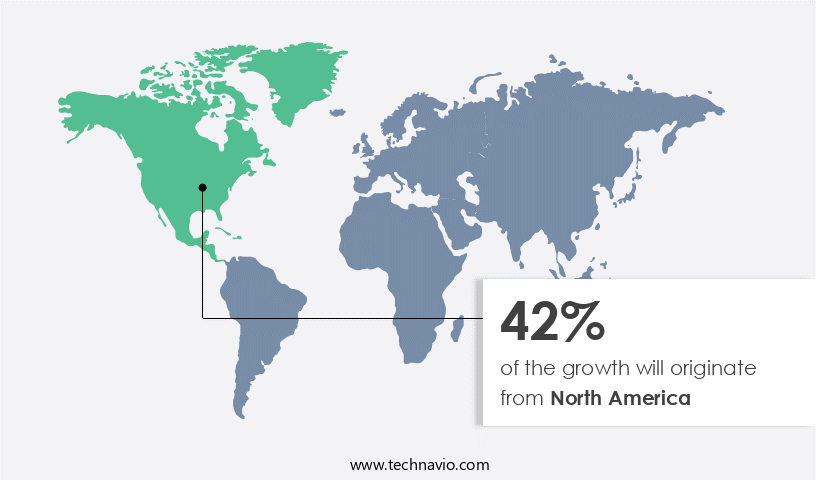
      • North America is estimated to contribute 42% to the growth of the global market during the forecast period.

      Technavio’s analysts have elaborately explained the regional trends and drivers that shape the market during the forecast period.
      Vial Adaptors For Reconstitution Drug Market Share by Geography

      For more insights on the market share of various regions, Request Free Sample

      The North American market holds a significant share In the global vial adaptors for reconstitution drugs market, with the US and Canada being major contributors. The region's dominance is attributed to the presence of numerous key players and the escalating demand for these adaptors in pharmaceutical research and diagnostics. Key players, including Baxter International, Becton, Dickinson and Company, Cardinal Health, and Sensile Medical AG, are focusing on delivering high-quality and sterile products to meet the stringent regulatory requirements of laboratories In the pharmaceutical and biotechnology sectors. Vial adaptors are essential components in medication preparation, enabling the transfer of drugs from vials to syringes or other delivery systems.

      They are used extensively in various therapeutic areas, such as autoimmune diseases, infectious diseases, metabolic conditions, chronic diseases, and vaccines. These adaptors are integral to healthcare facilities, including hospitals, clinics, and home healthcare providers, as they ensure medication accuracy and patient safety. Additionally, they are utilized In the administration of cytotoxic medications, biologic medications, and self-administration practices. Key considerations for the market include compatibility issues, filtration systems, medication errors, and patient safety. The market is expected to grow due to the increasing prevalence of chronic diseases, the rising demand for personalized medicine, and the focus on environmental concerns and recyclable materials.

      Market Dynamics

      Our  researchers analyzed the data with 2023 as the base year, along with the key drivers, trends, and challenges. A holistic analysis of drivers will help companies refine their marketing strategies to gain a competitive advantage.

      What are the key market drivers leading to the rise In the adoption of Vial Adaptors For Reconstitution Drug Industry?

      Growing prevalence of chronic conditions is the key driver of the market.

    • The global market for vial adaptors used In the reconstitution of drugs, including those for biopharmaceuticals, vaccines, and self-administration practices, is experiencing significant growth due to the increasing prevalence of chronic diseases such as diabetes, cancer, arthritis, and Alzheimer's disease. In developed countries like the US, Canada, the UK, Australia, France, and Germany, the number of individuals diagnosed with these conditions is continuously rising, driven by lifestyle and dietary changes. According to the International Diabetes Federation (IDF), an estimated 537 million adults lived with diabetes in 2021, and this number is projected to reach 643 million by 2030 and 783 million by 2045.
    • Vial adaptors are essential components in medication preparation, enabling the transfer of drugs from vials to syringes or filtration systems. These adaptors are available in various materials, including polycarbonate, silicon, polyethylene, polypropylene, and glass. Compatibility issues with different drug formulations and medication errors due to inappropriate use of vial adaptors can lead to patient safety concerns, such as needlestick injuries, particulate contamination, and medication errors. Healthcare facilities, hospitals, clinics, and home healthcare providers are increasingly adopting advanced drug delivery systems, such as prefilled syringes and auto-injectors, to mitigate the risks associated with vial adaptors. Furthermore, there is a growing focus on personalized medicine, environmental concerns, and recyclable materials In the development of vial adaptors.
    • In addition, filtration systems and compatibility issues are critical considerations In the therapeutic areas of autoimmune diseases, infectious diseases, metabolic conditions, oncology, and hepatitis A, B, and C. The market for vial adaptors is expected to grow significantly due to the increasing demand for biologic medications, biosimilars, and cytotoxic medications, as well as the rising trend of self-administration practices among patients. However, challenges such as regulatory requirements, compatibility issues, and the high cost of advanced vial adaptors may hinder market growth. Overall, the vial adaptors market is an essential component of healthcare technology, playing a crucial role in ensuring medication safety and efficacy for patients with various medical conditions.
    • What are the market trends shaping the Vial Adaptors For Reconstitution Drug Industry?

      Fluctuating prices of raw materials used in vial adaptors manufacturing is the upcoming market trend.

    • Vial adaptors are essential components In the healthcare industry, particularly for the administration of reconstitution drugs used In the treatment of various medical conditions, including autoimmune diseases, infectious diseases, metabolic conditions, and chronic diseases. These adaptors are manufactured using high-grade polymers such as polycarbonate, silicon, polyethylene, polytetrafluoroethylene, polylactic acid, and high-density polyethylene. Established companies rely on strategic partnerships with suppliers to ensure a consistent supply of these raw materials while maintaining low costs. However, the prices of these polymers are subject to significant fluctuations due to the volatility of crude oil prices. For instance, polymers such as polypropylene and polyethylene, which are commonly used In the production of vial adaptors, have seen price increases due to the rise in crude oil prices.
    • This poses a challenge for companies in making informed procurement decisions to source raw materials at the right time and cost. Moreover, the use of vial adaptors extends to various therapeutic areas, including oncology, where they are used for the administration of chemotherapy and biologic medications. In addition, they are used In the delivery of vaccines for infectious diseases such as influenza viruses, tuberculosis, hepatitis A, hepatitis B, and hepatitis C. The market for vial adaptors is driven by the increasing prevalence of chronic diseases, the growing demand for self-administration practices, and the expanding use of biopharmaceuticals, biosimilars, and personalized medicine.
    • However, compatibility issues, medication errors, and patient safety concerns remain key challenges In the market. To mitigate these challenges, healthcare technology companies are developing filtration systems to reduce particulate contamination and improve medication preparation. In addition, there is a growing trend towards the use of recyclable materials, such as PET glycol and glass, to address environmental concerns in healthcare facilities. In conclusion, the market for vial adaptors is a dynamic and complex one, driven by various factors, including raw material prices, therapeutic areas, and healthcare technology advancements. companies must navigate these challenges to maintain consistency In their supply chain and meet the evolving needs of healthcare providers and patients.
    • What challenges does the Vial Adaptors For Reconstitution Drug Industry face during its growth?

      Lack of skilled workforce is a key challenge affecting the industry growth.

    • Vial adaptors for reconstitution drugs play a crucial role in various therapeutic areas, including autoimmune diseases, infectious diseases, metabolic conditions, and chronic diseases. These adaptors are essential in drug delivery systems for medications such as vaccines, chemotherapy, oncology, influenza viruses, tuberculosis, biopharmaceuticals, hepatitis A, hepatitis B, and hepatitis C. The compatibility issues between different materials, such as polycarbonate, silicon, polyethylene, polypropylene, glass, and PET glycol, necessitate the use of vial adaptors to ensure accurate medication preparation. Healthcare facilities, including hospitals, clinics, and home healthcare providers, use these adaptors to minimize medication errors and patient safety concerns, such as needlestick injuries.
    • In the context of self-administration practices, vial adaptors facilitate the use of biologics and biosimilars, ensuring the proper administration of cytotoxic medications and biologic medications. Filtration systems and compatibility issues are essential considerations In the use of vial adaptors. Environmental concerns and the availability of recyclable materials are also essential factors In the selection of these adaptors. Personalized medicine and the increasing use of healthcare technologies further expand the market for vial adaptors. End-users, including healthcare providers, research and academic institutes, diagnostic laboratories, pharmaceutical and biotechnology companies, the food and beverage industry, and the cosmetic industry, require stringent adherence to high accuracy and precision standards In their operations.
    • The lack of trained personnel with practical experiences in handling sophisticated equipment has resulted in a shortage of individuals capable of performing complex analytical procedures. This highlights the importance of vial adaptors in ensuring the success of these operations while maintaining patient safety and regulatory compliance.
    • Exclusive Customer Landscape

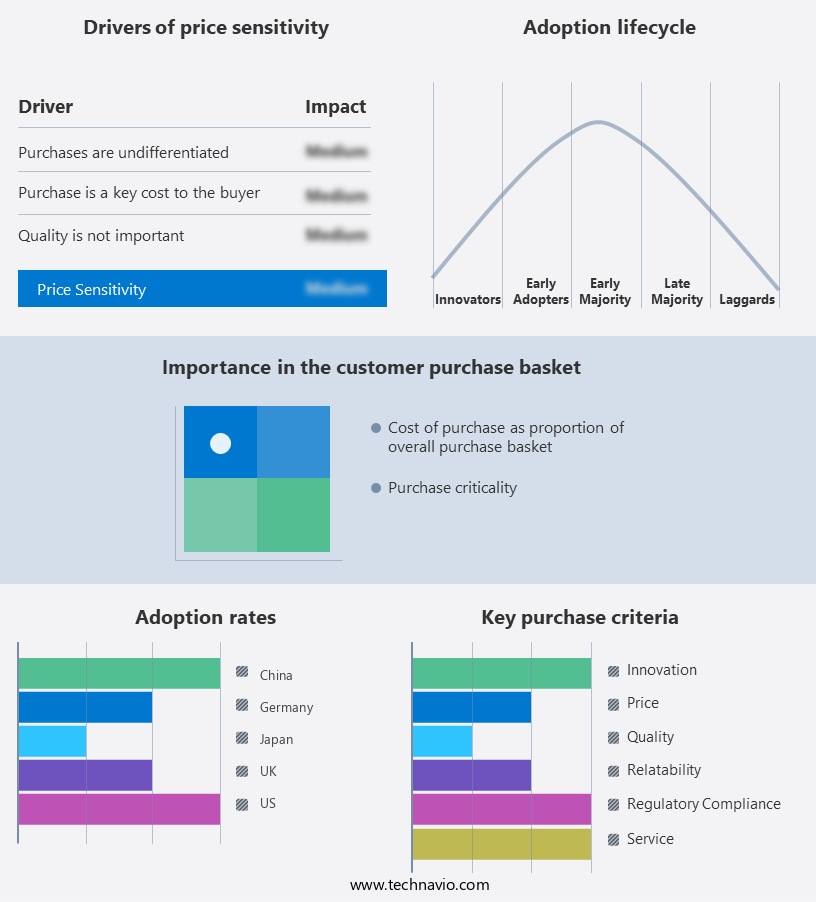
      The vial adaptors for reconstitution drug market forecasting report includes the adoption lifecycle of the market, covering from the innovator’s stage to the laggard’s stage. It focuses on adoption rates in different regions based on penetration. Furthermore, the vial adaptors for reconstitution drug market report also includes key purchase criteria and drivers of price sensitivity to help companies evaluate and develop their market growth analysis strategies.
      Vial Adaptors For Reconstitution Drug Market Share by Geography

       Customer Landscape

      Key Companies & Market Insights

      Companies are implementing various strategies, such as strategic alliances, vial adaptors for reconstitution drug market forecast, partnerships, mergers and acquisitions, geographical expansion, and product/service launches, to enhance their presence In the industry.

      Agilent Technologies Inc. - The company provides a range of vial adaptors for drug reconstitution applications. These adaptors encompass tray adaptors, fragment analyzer components, and accessories for the Zag DNA analyzer, as well as parts and accessories for the Femto Pulse system. These offerings cater to the requirements of researchers and laboratories in various industries.

      The industry research and growth report includes detailed analyses of the competitive landscape of the market and information about key companies, including:

      • Agilent Technologies Inc.
      • Amsino International Inc.
      • B.Braun SE
      • Becton Dickinson and Co.
      • Cole Parmer Instrument Co. LLC
      • Corvida Medical
      • Dedecke GmbH
      • Healthmark Industries Company Inc.
      • Helapet ltd.
      • Medtec Medical Inc
      • Merck KGaA
      • Mettler Toledo International Inc.
      • Miltenyi Biotec B.V. and Co. KG
      • Raygroup SASU
      • Shimadzu Corp.
      • Simplivia Healthcare Ltd.
      • Stevanato Group S.p.A
      • Thermo Fisher Scientific Inc.
      • West Pharmaceutical Services Inc.

      Qualitative and quantitative analysis of companies has been conducted to help clients understand the wider business environment as well as the strengths and weaknesses of key industry players. Data is qualitatively analyzed to categorize companies as pure play, category-focused, industry-focused, and diversified; it is quantitatively analyzed to categorize companies as dominant, leading, strong, tentative, and weak.

      Research Analyst Overview

      The vial adaptor market caters to the growing demand for reconstitution drugs in various therapeutic areas, including autoimmune diseases, infectious diseases, metabolic conditions, and chronic diseases. These adaptors enable the transfer of drugs from vials to syringes or other drug delivery systems, facilitating medication preparation and administration. Reconstitution drugs, which are typically lyophilized or powdered forms, require dilution with a solvent before administration. Vial adaptors play a crucial role in this process by ensuring compatibility between the drug and the solvent or diluent, minimizing the risk of medication errors and patient safety concerns. The use of vial adaptors extends to various healthcare settings, including hospitals, clinics, home healthcare providers, and even veterinary applications.

      Injectable medications, such as vaccines, cytotoxic medications, biologics, and biosimilars, are commonly administered using these adaptors. The market for vial adaptors is driven by several factors, including the increasing prevalence of chronic diseases, the growing trend towards self-administration practices, and the need to minimize needlestick injuries. Additionally, healthcare providers are increasingly focusing on medication errors and patient safety, leading to a greater demand for filtration systems and compatibility issues. Environmental concerns have also influenced the vial adaptor market, with a growing emphasis on the use of recyclable materials, such as polycarbonate, polyethylene, and polypropylene, in place of glass.

      Furthermore, the adoption of personalized medicine and advanced pharmaceutical technologies has led to the development of new vial adaptor designs and materials. Despite the benefits, the vial adaptor market faces challenges, including concerns over particulate contamination and compatibility issues with different drug formulations and delivery systems. Addressing these challenges requires ongoing research and development efforts, as well as collaboration between healthcare technology companies and regulatory agencies. In summary, the vial adaptor market is an essential component of the reconstitution drug supply chain, enabling the safe and effective administration of various injectable medications across diverse therapeutic areas. The market is driven by several factors, including the increasing prevalence of chronic diseases, self-administration practices, and a focus on patient safety.

      However, challenges related to compatibility issues and environmental concerns necessitate ongoing research and development efforts.

      Market Scope

      Report Coverage

      Details

      Page number

      138

      Base year

      2023

      Historic period

      2018-2022

      Forecast period

      2024-2028

      Growth momentum & CAGR

      Accelerate at a CAGR of 7.08%

      Market growth 2024-2028

      USD 425.8 million

      Market structure

      Fragmented

      YoY growth 2023-2024(%)

      6.49

      Key countries

      US, Germany, UK, China, and Japan

      Competitive landscape

      Leading Companies, Market Positioning of Companies, Competitive Strategies, and Industry Risks

      Request Free Sample

      What are the Key Data Covered in this Vial Adaptors For Reconstitution Drug Market Research and Growth Report?

      • CAGR of the Vial Adaptors For Reconstitution Drug industry during the forecast period
      • Detailed information on factors that will drive the growth and forecasting between 2024 and 2028
      • Precise estimation of the size of the market and its contribution of the industry in focus to the parent market
      • Accurate predictions about upcoming growth and trends and changes in consumer behaviour
      • Growth of the market across North America, Europe, Asia, and Rest of World (ROW)
      • Thorough analysis of the market’s competitive landscape and detailed information about companies
      • Comprehensive analysis of factors that will challenge the vial adaptors for reconstitution drug market growth of industry companies

      We can help! Our analysts can customize this vial adaptors for reconstitution drug market research report to meet your requirements.

      Get in touch


      Table of Contents not available.

      Research Methodology

      Technavio presents a detailed picture of the market by way of study, synthesis, and summation of data from multiple sources. The analysts have presented the various facets of the market with a particular focus on identifying the key industry influencers. The data thus presented is comprehensive, reliable, and the result of extensive research, both primary and secondary.

      INFORMATION SOURCES

      Primary sources

      • Manufacturers and suppliers
      • Channel partners
      • Industry experts
      • Strategic decision makers

      Secondary sources

      • Industry journals and periodicals
      • Government data
      • Financial reports of key industry players
      • Historical data
      • Press releases

      DATA ANALYSIS

      Data Synthesis

      • Collation of data
      • Estimation of key figures
      • Analysis of derived insights

      Data Validation

      • Triangulation with data models
      • Reference against proprietary databases
      • Corroboration with industry experts

      REPORT WRITING

      Qualitative

      • Market drivers
      • Market challenges
      • Market trends
      • Five forces analysis

      Quantitative

      • Market size and forecast
      • Market segmentation
      • Geographical insights
      • Competitive landscape

      Interested in this report?

      Get your sample now to see our research methodology and insights!

      Download Now

      Frequently Asked Questions

      Vial Adaptors For Reconstitution Drug market growth will increase by $ 425.8 mn during 2024-2028.

      The Vial Adaptors For Reconstitution Drug market is expected to grow at a CAGR of 7.08% during 2024-2028.

      Vial Adaptors For Reconstitution Drug market is segmented by Therapeutic Area( Infectious diseases, Autoimmune diseases, Metabolic conditions, Others)

      Agilent Technologies Inc., Amsino International Inc., B.Braun SE, Becton Dickinson and Co., Cole Parmer Instrument Co. LLC, Corvida Medical, Dedecke GmbH, Healthmark Industries Company Inc., Helapet ltd., Medtec Medical Inc, Merck KGaA, Mettler Toledo International Inc., Miltenyi Biotec B.V. and Co. KG, Raygroup SASU, Shimadzu Corp., Simplivia Healthcare Ltd., Stevanato Group S.p.A, Thermo Fisher Scientific Inc., West Pharmaceutical Services Inc. are a few of the key vendors in the Vial Adaptors For Reconstitution Drug market.

      North America will register the highest growth rate of 42% among the other regions. Therefore, the Vial Adaptors For Reconstitution Drug market in North America is expected to garner significant business opportunities for the vendors during the forecast period.

      US, Germany, UK, China, Japan

      • Growing prevalence of chronic conditionsThere is a growing prevalence of chronic diseases is the driving factor this market.
      • such as diabetes is the driving factor this market.
      • chronic kidney disease is the driving factor this market.
      • cancer is the driving factor this market.
      • arthritis is the driving factor this market.
      • and Alzheimer's disease worldwide. Developed nations such as the US is the driving factor this market.
      • Canada is the driving factor this market.
      • the UK is the driving factor this market.
      • Australia is the driving factor this market.
      • France is the driving factor this market.
      • Germany is the driving factor this market.
      • and others are witnessing a continuous increase in the number of people diagnosed with such diseases. This can be attributed to the changes in the lifestyles and eating habits of population in these countries. For instance is the driving factor this market.
      • according to the data provided by International Diabetes Federation (IDF) is the driving factor this market.
      • in 2021 is the driving factor this market.
      • approximately 537 million adults in the age group of 20-80 years were living with diabetes globally. The number of people living with diabetes globally is projected to rise to 643 million by 2030 and 783 million by 2045. According to the organization is the driving factor this market.
      • every 3 out of 4 adults with diabetes live in low- and middle-income countries such as India is the driving factor this market.
      • China is the driving factor this market.
      • Brazil is the driving factor this market.
      • among others. As of 2021 is the driving factor this market.
      • more than 1.2 million infants and adolescents in the age group of 0-19 years were living with Type 1 diabetes. A total of 541 million adults are at increased risk of developing Type 2 diabetes worldwide. According to the World Health Organization (WHO) is the driving factor this market.
      • in 2020 is the driving factor this market.
      • there was an increase in the number of new cancer cases worldwide. According to the data provided by the WHO is the driving factor this market.
      • in 2020 is the driving factor this market.
      • there will be more than 2.21 million lung cancer cases is the driving factor this market.
      • more than 1.93 million colon and rectum cancer cases is the driving factor this market.
      • and more than 1.09 million stomach cancer cases. According to the International Agency for Research on Cancer (IARC) is the driving factor this market.
      • the number of new cancer cases will increase to approximately 28.9 million by 2040 is the driving factor this market.
      • rising from 19.3 million cases in 2020. Regions such as North America is the driving factor this market.
      • Asia is the driving factor this market.
      • Europe is the driving factor this market.
      • and Africa are expected to witness an increase in new cancer cases to 3.53 million is the driving factor this market.
      • 15.1 million is the driving factor this market.
      • 5.32 million is the driving factor this market.
      • and 2.10 million is the driving factor this market.
      • respectively is the driving factor this market.
      • by 2040. The outbreak of COVID-19 was declared a pandemic by WHO on March 11 is the driving factor this market.
      • 2020. The number of COVID-19 cases in various countries across the world has steadily been increasing since then. As per data provided by WHO is the driving factor this market.
      • in the fourth week of January 2022 is the driving factor this market.
      • over 18 million new COVID-19 cases were reported globally is the driving factor this market.
      • a 20% increase compared to the previous week. These cases increased across various regions is the driving factor this market.
      • with Southeast Asia and the Eastern Mediterranean regions witnessing a rise of 145% and 68% is the driving factor this market.
      • respectively. The growing prevalence of chronic conditions such as cancer is the driving factor this market.
      • diabetes is the driving factor this market.
      • cardiovascular diseases is the driving factor this market.
      • among others is the driving factor this market.
      • will lead to an increased demand for vial adaptors for reconstitution drugs. This will drive the growth of the global market during the forecast period. is the driving factor this market.

      The Vial Adaptors For Reconstitution Drug market vendors should focus on grabbing business opportunities from the Infectious diseases segment as it accounted for the largest market share in the base year.
