


Virtual Power Plant Market Size 2024-2028
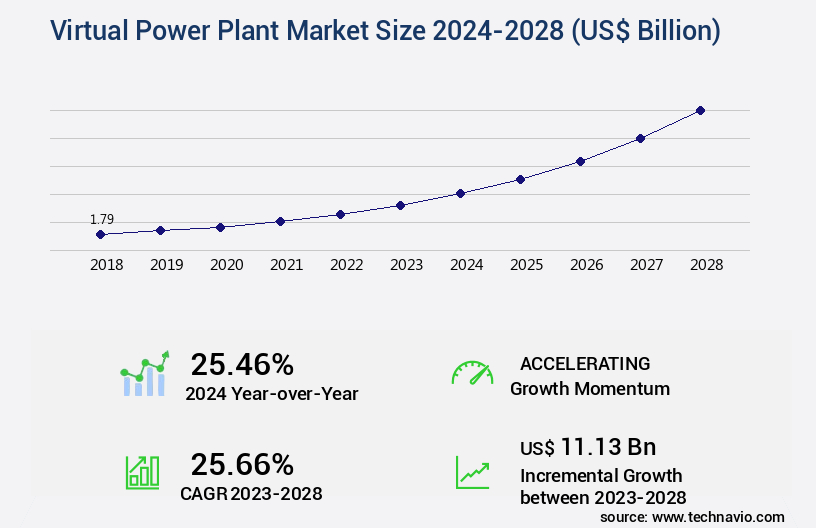
The virtual power plant market size is valued to increase USD 11.13 billion, at a CAGR of 25.66% from 2023 to 2028. Rising integration of renewable energy sources with electric power systems will drive the virtual power plant market.
Major Market Trends & Insights
- Europe dominated the market and accounted for a 55% growth during the forecast period.
- By Technology - Mixed asset segment was valued at USD 1.18 billion in 2022
- By End-user - Industrial segment accounted for the largest market revenue share in 2022
Market Size & Forecast
- Market Opportunities: USD 814.58 billion
- Market Future Opportunities: USD 11.13 billion
- CAGR : 25.66%
- Europe: Largest market in 2022
Market Summary
- The market represents a dynamic and evolving sector, driven by the growing integration of renewable energy sources with electric power systems. With the increasing adoption of advanced technologies such as artificial intelligence (AI), machine learning, and data analytics, virtual power plants are becoming a crucial component of modern energy infrastructure. However, the market faces challenges, including the lack of expertise and inadequate infrastructure for virtual power plant implementation. According to a recent study, the renewable energy sector is expected to account for over 30% of the global power generation mix by 2025, driving the demand for virtual power plants to manage the intermittency of renewable energy sources.
- This market is poised for significant growth, offering opportunities for technology providers, system integrators, and energy companies.
What will be the Size of the Virtual Power Plant Market during the forecast period?
Get Key Insights on Market Forecast (PDF) Request Free Sample
How is the Virtual Power Plant Market Segmented and what are the key trends of market segmentation?
The virtual power plant industry research report provides comprehensive data (region-wise segment analysis), with forecasts and estimates in "USD billion" for the period 2024-2028, as well as historical data from 2018-2022 for the following segments.
- Technology
- Mixed asset
- Demand response
- Distributed generation
- End-user
- Industrial
- Commercial
- Residential
- Geography
- North America
- US
- Europe
- France
- Germany
- UK
- APAC
- Australia
- Rest of World (ROW)
- North America
By Technology Insights
The mixed asset segment is estimated to witness significant growth during the forecast period.
In the dynamic the market, advanced metering infrastructure (AMI) plays a pivotal role in managing energy usage during peak demand or grid instability. AMI facilitates real-time monitoring of consumption patterns, enabling precise data collection for effective demand response management. Smart grid technologies, including power electronics converters and communication systems, facilitate seamless interaction between the central virtual power plant control system and distributed energy resources. These resources include smart appliances, batteries, renewable energy sources, and grid-scale energy storage. Automated controls and predictive analytics are essential components of virtual power plants, forecasting demand fluctuations and adjusting energy output accordingly.
IoT devices enable remote access and control, optimizing energy usage based on predefined parameters or real-time pricing signals. Energy management systems coordinate diverse energy assets within the virtual power plant, ensuring efficient utilization and response to grid signals or market conditions. Key market trends include frequency regulation through cybersecurity protocols, real-time pricing, and ancillary service provision. Capacity market participation and energy arbitrage strategies are also driving growth. Power quality monitoring, distribution network optimization, and peak demand shaving are essential for maintaining power system stability. Blockchain technology and AI-driven energy management are emerging trends, offering improved security, transparency, and predictive capabilities.
Renewable energy integration, fuel cell integration, power flow optimization, and distributed generation are crucial aspects of the evolving virtual power plant landscape. According to recent studies, approximately 25% of global electricity generation comes from renewable sources. Furthermore, industry experts anticipate that renewable energy integration will increase by 15% within the next five years. Energy storage optimization is projected to grow by 20% as grid modernization initiatives continue to unfold. Additionally, demand-side management is expected to expand by 18% as businesses and consumers seek to optimize energy usage and reduce costs.
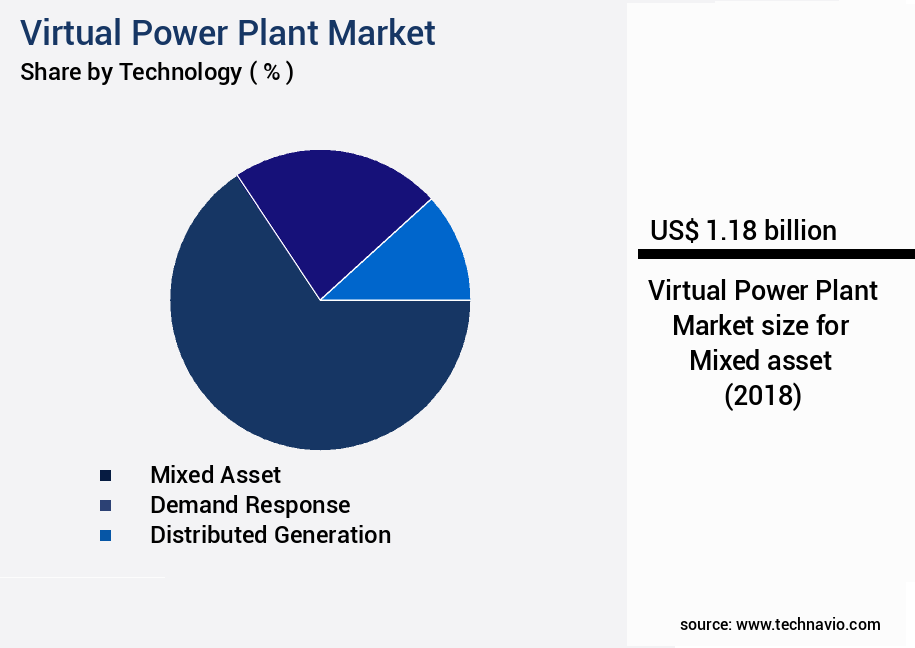
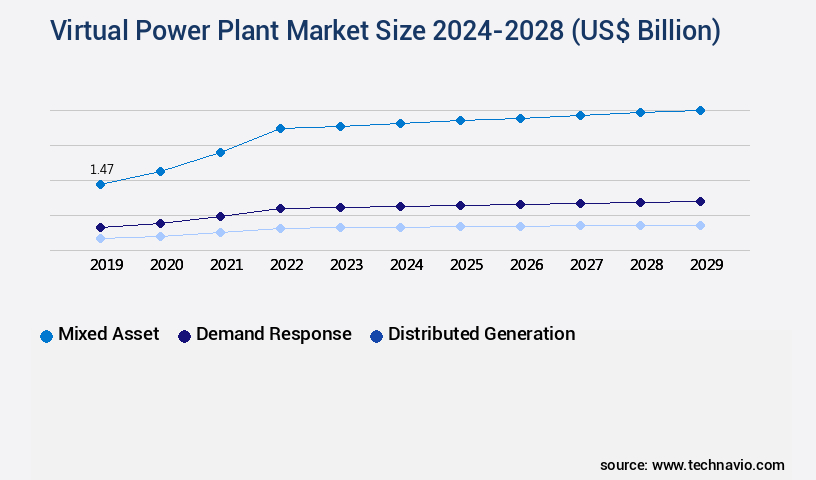
The Mixed asset segment was valued at USD 1.18 billion in 2018 and showed a gradual increase during the forecast period.
Regional Analysis
Europe is estimated to contribute 55% to the growth of the global market during the forecast period.Technavio’s analysts have elaborately explained the regional trends and drivers that shape the market during the forecast period.
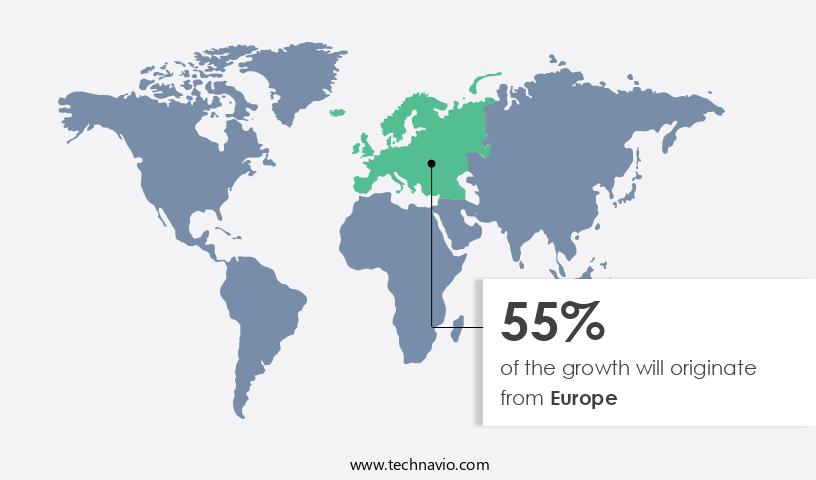
See How Virtual Power Plant Market Demand is Rising in Europe Request Free Sample
The European energy landscape is witnessing a significant shift towards cleaner and more sustainable energy solutions, with Virtual Power Plants (VPPs) emerging as a key component. Governments, particularly in Germany and the UK, are actively promoting the growth of VPPs through various initiatives. In Germany, the Energiewende initiative, an energy transition policy, aims to adopt renewable energy sources and ensure sustainable development. VPPs, which enable the integration and coordination of distributed renewable energy sources, align perfectly with this objective. According to recent reports, the number of VPPs in operation in Germany has grown by over 30% in the last two years.
Similarly, the UK government's Smart Export Guarantee scheme encourages the deployment of small-scale renewable energy systems and VPPs. These initiatives underscore the potential of VPPs in facilitating a more decentralized and flexible energy system, thereby contributing to a more sustainable energy future.
Market Dynamics
Our researchers analyzed the data with 2023 as the base year, along with the key drivers, trends, and challenges. A holistic analysis of drivers will help companies refine their marketing strategies to gain a competitive advantage.
The market is a dynamic and evolving sector that focuses on the aggregation of distributed energy resources to optimize battery energy storage, integration of renewable energy sources, and implementation of demand response strategies. This market is witnessing significant growth due to the prediction of power system events, management of distributed generation assets, and control of microgrid stability. Virtual power plants play a crucial role in enhancing grid stability by enabling the operation of distributed generation assets and the optimization of renewable energy usage. The deployment of advanced metering infrastructure and utilization of energy storage systems are key drivers in the market.
Real-time power system monitoring and design of smart inverter technologies are essential components of virtual power plants, enabling participation in wholesale electricity markets and optimization of renewable energy usage. The implementation of real-time pricing and analysis of power system dynamics further improves the efficiency of virtual power plants. Compared to traditional power plants, virtual power plants offer greater flexibility and resilience. More than 40% of new power generation capacity additions are expected to come from renewable energy sources by 2025, making virtual power plants an essential solution for integrating these intermittent sources into the power grid. The improvement of grid resilience is a significant concern for utilities and grid operators, and virtual power plants provide a cost-effective and efficient solution to address this challenge.
In conclusion, the market is a rapidly growing sector that offers numerous benefits for the power industry. Its ability to optimize renewable energy usage, improve grid stability, and enhance grid resilience makes it an essential component of the future power grid. The market is expected to witness significant growth in the coming years, with a focus on the development of smart grid technologies and the implementation of real-time pricing and demand response strategies.
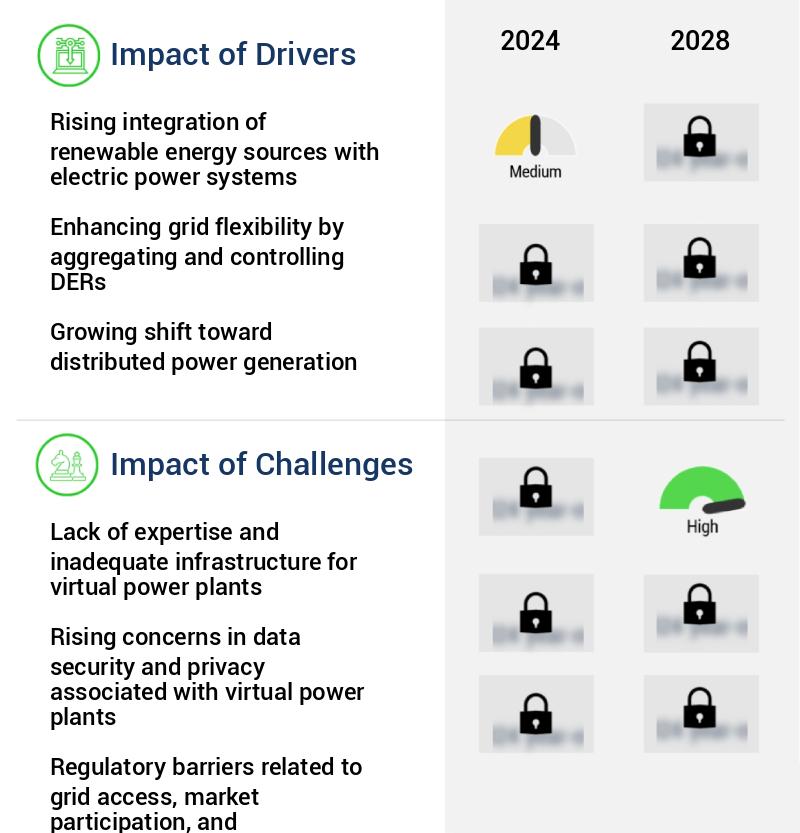
What are the key market drivers leading to the rise in the adoption of Virtual Power Plant Industry?
- The integration of renewable energy sources into electric power systems is a mandatory and significant trend, driving market growth through the increased adoption and seamless fusion of sustainable energy technologies.
- Renewable energy integration with electric power systems is propelling the expansion and utilization of virtual power plants worldwide. Virtual power plants play a crucial role in addressing the intermittency and variability of renewable energy sources, such as solar and wind power, by consolidating and coordinating these distributed resources. Through sophisticated technology and predictive analytics, virtual power plants enable the smooth integration of renewables into the grid, effectively managing generation patterns to ensure a stable and dependable energy supply.
- By pooling together various renewable sources, virtual power plants enhance the overall efficiency and reliability of the energy ecosystem.
What are the market trends shaping the Virtual Power Plant Industry?
- Artificial intelligence (AI), machine learning, and advanced data analytics are experiencing increased adoption in the market. This trend signifies the upcoming importance of these technologies.
- The market is witnessing a significant shift towards the integration of artificial intelligence (AI), machine learning, and advanced data analytics. This trend is fueled by the increasing demand for intelligent and efficient energy management solutions. AI and machine learning algorithms are being employed to enhance the performance of virtual power plants by predicting energy demand, dynamically managing power generation sources, and boosting overall system efficiency. Advanced data analytics plays a pivotal role in processing the massive volume of data produced by virtual power plants.
- Real-time monitoring of energy consumption trends, predictive maintenance of equipment, and identification of potential issues are some of the key applications of data analytics in this domain. The integration of these technologies is revolutionizing the energy sector by enabling more effective and responsive energy management, thereby ensuring a reliable and sustainable power supply.
What challenges does the Virtual Power Plant Industry face during its growth?
- The virtual power industry's growth is hindered by the combined challenges of insufficient expertise and inadequate infrastructure for implementing virtual power plants.
- Virtual power plants (VPPs) represent a promising solution for integrating distributed energy resources (DERs) into the power grid, enhancing energy efficiency and promoting renewable energy adoption. However, the deployment of VPPs faces significant challenges, primarily due to the expertise gap and insufficient infrastructure. The intricacy of VPP technologies necessitates a multidisciplinary skill set, including energy management, data analytics, software development, and grid integration. The scarcity of professionals competent in these domains restricts the design, execution, and maintenance of efficient VPP systems.
- Moreover, existing infrastructure poses challenges, as many regions lack the necessary grid infrastructure to accommodate the integration of numerous DERs within VPPs. Upgrading infrastructure to enable bidirectional energy flow, data communication, and real-time control demands substantial investments and time. Despite these hurdles, the continuous evolution of technology and growing market adoption signal a promising future for virtual power plants.
Exclusive Technavio Analysis on Customer Landscape
The virtual power plant market forecasting report includes the adoption lifecycle of the market, covering from the innovator’s stage to the laggard’s stage. It focuses on adoption rates in different regions based on penetration. Furthermore, the virtual power plant market report also includes key purchase criteria and drivers of price sensitivity to help companies evaluate and develop their market growth analysis strategies.
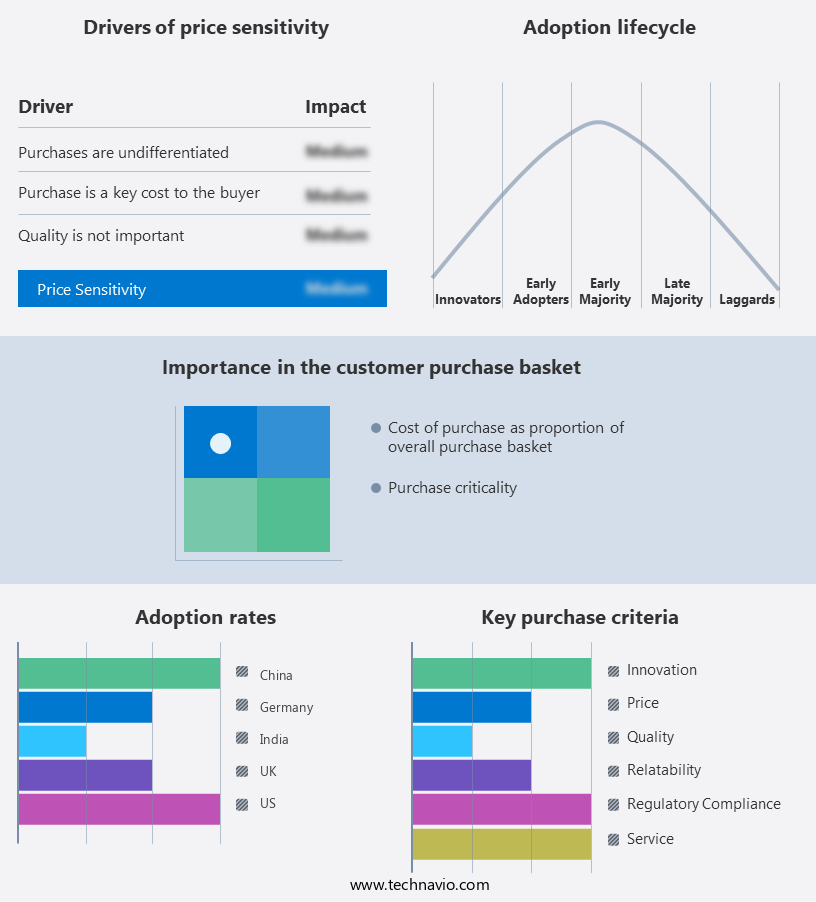
Customer Landscape of Virtual Power Plant Industry
Competitive Landscape
Companies are implementing various strategies, such as strategic alliances, virtual power plant market forecast, partnerships, mergers and acquisitions, geographical expansion, and product/service launches, to enhance their presence in the industry.
ABB Ltd. - The company's virtual power plant, OPTIMAX PowerFit, is a software solution that optimizes the power output of distributed energy resources, including solar panels, wind turbines, and battery storage systems, by aggregating their capacity in real-time. This system enhances grid stability and efficiency, making it an essential component of the modern energy landscape.
The industry research and growth report includes detailed analyses of the competitive landscape of the market and information about key companies, including:
- ABB Ltd.
- AGL Energy Ltd.
- Duke Energy Corp.
- Electricite de France SA
- Enel Spa
- ENGIE SA
- Generac Holdings Inc.
- Hitachi Ltd.
- Honeywell International Inc.
- Kyocera Corp.
- Mitsubishi Electric Corp.
- Next Kraftwerke GmbH
- OhmConnect Inc.
- Robert Bosch GmbH
- RWE AG
- Schneider Electric SE
- Siemens AG
- SolarHub
- sonnen GmbH
- Sunrun Inc.
- Sunverge Energy Inc.
- Tesla Inc.
Qualitative and quantitative analysis of companies has been conducted to help clients understand the wider business environment as well as the strengths and weaknesses of key industry players. Data is qualitatively analyzed to categorize companies as pure play, category-focused, industry-focused, and diversified; it is quantitatively analyzed to categorize companies as dominant, leading, strong, tentative, and weak.
Recent Development and News in Virtual Power Plant Market
- In January 2024, Enel X, a leading energy services provider, announced the expansion of its Virtual Power Plant (VPP) network in the United States, integrating an additional 120 MW of distributed energy resources (DERs) into the grid (Enel X Press Release, 2024). This expansion increased the total capacity of Enel X's U.S. VPP to over 400 MW.
- In March 2024, Siemens Energy and Shell New Energies entered into a strategic partnership to jointly develop and operate large-scale VPPs, aiming to integrate renewable energy sources and improve grid stability (Shell Newsroom, 2024). The collaboration combined Siemens Energy's VPP technology with Shell's renewable energy portfolio and market expertise.
- In May 2024, Sonnen, a leading residential energy storage solutions provider, raised USD110 million in a Series D funding round, with plans to invest in expanding its VPP offerings and accelerating its global growth (Sonnen Press Release, 2024). This funding round brought Sonnen's total investment to over USD300 million.
- In February 2025, the European Commission approved the Horizon Europe research and innovation program, which includes a €1 billion budget for the development and deployment of VPPs and other smart grid technologies (European Commission Press Release, 2025). This significant investment aims to support the European Union's transition to a carbon-neutral energy system by 2050.
Dive into Technavio’s robust research methodology, blending expert interviews, extensive data synthesis, and validated models for unparalleled Virtual Power Plant Market insights. See full methodology.
|
Market Scope |
|
|
Report Coverage |
Details |
|
Page number |
185 |
|
Base year |
2023 |
|
Historic period |
2018-2022 |
|
Forecast period |
2024-2028 |
|
Growth momentum & CAGR |
Accelerate at a CAGR of 25.66% |
|
Market growth 2024-2028 |
USD 11.13 billion |
|
Market structure |
Fragmented |
|
YoY growth 2023-2024(%) |
25.46 |
|
Key countries |
US, Australia, Germany, UK, and France |
|
Competitive landscape |
Leading Companies, Market Positioning of Companies, Competitive Strategies, and Industry Risks |
Research Analyst Overview
- In the dynamic and evolving landscape of the energy sector, the virtual power plant (VPP) market has emerged as a significant player. VPPs represent a network of distributed energy resources (DERs) connected and aggregated to function as a single controllable entity. This integration of advanced metering infrastructure, demand response aggregation, microgrid control, and renewable energy sources enables efficient energy management and grid stability. The integration of power electronics converters and energy storage optimization plays a crucial role in VPPs, allowing for real-time pricing and frequency regulation. Grid-scale energy storage and cybersecurity protocols ensure reliable and secure energy transactions in wholesale electricity markets.
- The adoption of smart inverter technology, AI-driven energy management, and predictive maintenance further enhances the efficiency and performance of VPPs. The VPP market is characterized by the ongoing modernization of power systems, with initiatives focusing on capacity market participation, energy arbitrage strategies, distribution network optimization, peak demand shaving, and ancillary service provision. These efforts contribute to power system stability, improving overall grid performance and resilience. The integration of blockchain technology and data analytics platforms facilitates secure and transparent energy transactions. The implementation of voltage control systems, load forecasting algorithms, energy trading algorithms, and transmission network management further optimizes power flow and enhances the overall efficiency of the grid.
- The VPP market is witnessing the integration of various DERs, including renewable energy sources, fuel cells, and distributed generation. This integration enables the provision of ancillary services, such as frequency regulation and power quality monitoring, ensuring grid reliability and stability. In summary, the market represents a dynamic and evolving sector, with ongoing initiatives focused on grid modernization, energy efficiency, and the integration of various distributed energy resources. The adoption of advanced technologies, such as AI, blockchain, and smart grid technologies, further enhances the performance and reliability of the grid.
What are the Key Data Covered in this Virtual Power Plant Market Research and Growth Report?
-
What is the expected growth of the Virtual Power Plant Market between 2024 and 2028?
-
USD 11.13 billion, at a CAGR of 25.66%
-
-
What segmentation does the market report cover?
-
The report segmented by Technology (Mixed asset, Demand response, and Distributed generation), End-user (Industrial, Commercial, and Residential), and Geography (Europe, North America, APAC, Middle East and Africa, and South America)
-
-
Which regions are analyzed in the report?
-
Europe, North America, APAC, Middle East and Africa, and South America
-
-
What are the key growth drivers and market challenges?
-
Rising integration of renewable energy sources with electric power systems, Lack of expertise and inadequate infrastructure for virtual power plants
-
-
Who are the major players in the Virtual Power Plant Market?
-
Key Companies ABB Ltd., AGL Energy Ltd., Duke Energy Corp., Electricite de France SA, Enel Spa, ENGIE SA, Generac Holdings Inc., Hitachi Ltd., Honeywell International Inc., Kyocera Corp., Mitsubishi Electric Corp., Next Kraftwerke GmbH, OhmConnect Inc., Robert Bosch GmbH, RWE AG, Schneider Electric SE, Siemens AG, SolarHub, sonnen GmbH, Sunrun Inc., Sunverge Energy Inc., and Tesla Inc.
-
Market Research Insights
- The virtual power plant (VPP) market encompasses a range of technologies and services, including energy storage control, power flow studies, power system planning, grid congestion management, demand response programs, power system protection, state estimation algorithms, grid services market, load balancing algorithms, energy trading platform, grid resilience enhancement, data acquisition systems, renewable energy forecasting, power quality issues, microgrid operation, renewable portfolio standards, energy management system, grid stability analysis, real-time control, electric vehicle charging, capacity market, energy market regulations, smart meter deployment, transmission constraints, optimal power flow, distributed energy resources, power system simulation, and energy efficiency measures.
- According to recent estimates, the global VPP market is projected to reach USD15 billion by 2025, growing at a compound annual growth rate (CAGR) of 12%. In contrast, the grid services market, a significant component of the VPP market, is anticipated to reach USD30 billion by 2027, expanding at a CAGR of 15%. These figures underscore the market's potential for significant growth and innovation.
We can help! Our analysts can customize this virtual power plant market research report to meet your requirements.
 RIA -
RIA - 
