
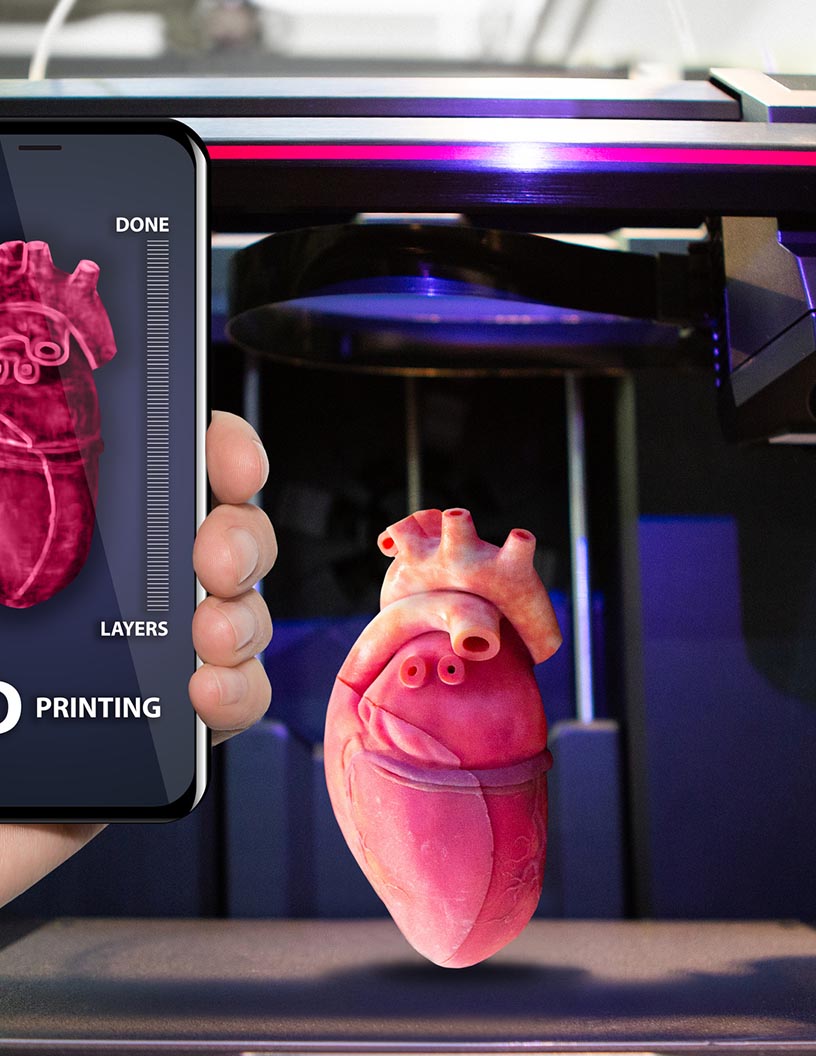

3D Printing Medical Devices Market Analysis North America, Europe, Asia, Rest of World (ROW) - US, Germany, UK, Japan, China - Size and Forecast 2024-2028

3D Printing Medical Devices Market Analysis North America, Europe, Asia, Rest of World (ROW) - US, Germany, UK, Japan, China - Size and Forecast 2024-2028

Published: Jun 2024 181 Pages SKU: IRTNTR43794

Market Overview at a Glance

$7.08 B
Market Opportunity
25.2%
CAGR
19.78
YoY growth 2023-2024(%)

3D Printing Medical Devices Market Size 2024-2028

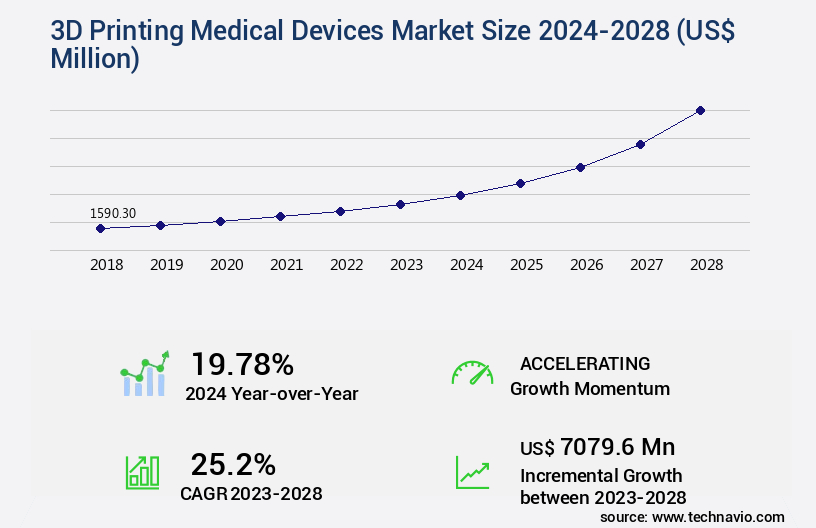
The 3d printing medical devices market size is valued to increase USD 7.08 billion, at a CAGR of 25.2% from 2023 to 2028. Increased demand for personalized or customized medical devices will drive the 3d printing medical devices market.

Major Market Trends & Insights

  • North America dominated the market and accounted for a 40% growth during the forecast period.
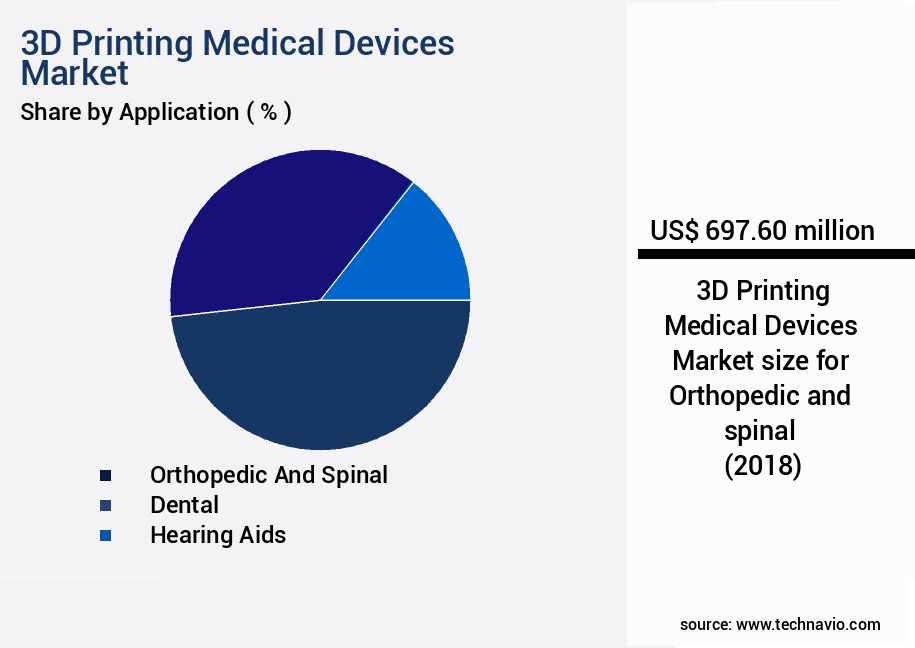
  • By Application - Orthopedic and spinal segment was valued at USD 697.60 billion in 2022
  • By End-user - Hospitals and clinics segment accounted for the largest market revenue share in 2022

Market Size & Forecast

  • Market Opportunities: USD 559.58 million
  • Market Future Opportunities: USD 7079.60 million
  • CAGR from 2023 to 2028 : 25.2%

Market Summary

  • The market represents a dynamic and evolving industry, driven by advancements in core technologies and applications. With the increasing demand for personalized or customized medical devices, the use of 3D printing technology in manufacturing healthcare solutions is gaining significant traction. According to a report by SmarTech Analysis, the global 3D printed medical device market is projected to reach a size of 2.3 billion units by 2027, growing at a steady pace. However, the high initial setup cost of 3D printing facilities remains a significant challenge for market growth. Rising focus on the research for the use of 3D printing process to manufacture living organs and cell structures presents a significant opportunity for market expansion.
  • Regulations and standards set by regulatory bodies such as the FDA and European Commission play a crucial role in shaping the market landscape. Despite the challenges, the future of 3D printing in medical devices holds immense potential, with the technology offering cost-effective, efficient, and customizable solutions for various medical applications.

What will be the Size of the 3D Printing Medical Devices Market during the forecast period?
3D Printing Medical Devices Market Size

Get Key Insights on Market Forecast (PDF) Request Free Sample

How is the 3D Printing Medical Devices Market Segmented ?

The 3d printing medical devices industry research report provides comprehensive data (region-wise segment analysis), with forecasts and estimates in "USD million" for the period 2024-2028, as well as historical data from 2018-2022 for the following segments.

  • Application
    • Orthopedic and spinal
    • Dental
    • Hearing aids
    • Others
  • End-user
    • Hospitals and clinics
    • Academic institutes
    • Pharma and biotech companies
    • Others
  • Geography
    • North America
      • US
    • Europe
      • Germany
      • UK
    • APAC
      • China
      • Japan
    • Rest of World (ROW)

By Application Insights

The orthopedic and spinal segment is estimated to witness significant growth during the forecast period.

In the realm of medical devices, 3D printing technology has emerged as a game-changer, particularly in the production of orthopedic implants and prosthetic devices. The market for these innovations is experiencing significant growth, with an increasing number of hospitals and ambulatory surgery centers adopting the technology. According to recent reports, the global market for 3D printed medical devices is projected to expand by 21% in the upcoming year, while the demand for patient-specific implants is expected to surge by 25%. Bioresorbable polymers and advanced manufacturing techniques, such as selective laser melting and material extrusion, are revolutionizing the industry. These technologies enable the creation of complex structures, including scaffold designs with surface modifications, and the optimization of mechanical properties through finite element analysis.

Moreover, 3D printing facilitates rapid prototyping, which is crucial in the development of craniofacial reconstruction, orthopedic implants, and tissue engineering applications. The integration of 3D printing in medical devices extends beyond implants and prosthetics. It is also employed in the fabrication of surgical guides, drug delivery systems, vascular grafts, and even in image-guided surgery. The technology's potential for personalized medicine and regenerative medicine is immense, with applications in cell culture, cell seeding, and bioprinting. Quality control measures, including biocompatibility testing, bioactivity testing, and regulatory compliance, are essential to ensure the safety and efficacy of these devices. As the market continues to evolve, process optimization and the use of biocompatible materials, such as those derived from computer-aided design, will become increasingly important.

The future of 3D printing in medical devices is promising, with its potential to revolutionize the healthcare industry and improve patient outcomes.
3D Printing Medical Devices Market Size

Request Free Sample

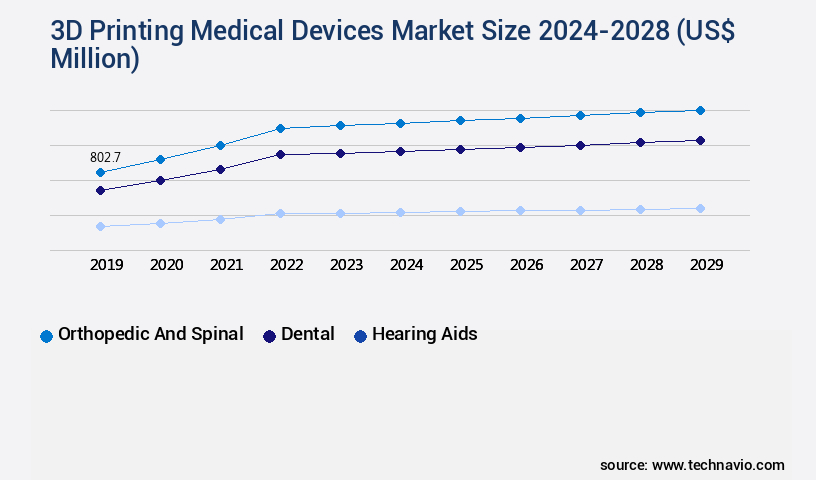
The Orthopedic and spinal segment was valued at USD 697.60 billion in 2018 and showed a gradual increase during the forecast period.
3D Printing Medical Devices Market Size

Request Free Sample

Regional Analysis

North America is estimated to contribute 40% to the growth of the global market during the forecast period.Technavio's analysts have elaborately explained the regional trends and drivers that shape the market during the forecast period.
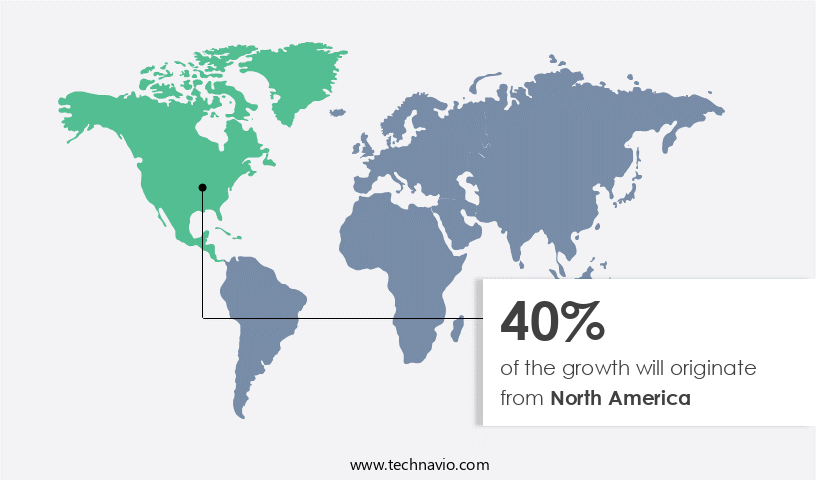
3D Printing Medical Devices Market Share by Geography

See How 3D Printing Medical Devices Market Demand is Rising in North America Request Free Sample

The market in North America is experiencing significant expansion due to enhanced healthcare infrastructure and the widespread adoption of these technologies in medical facilities. In 2022, 3D Systems, a leading player, reported a substantial portion of its revenue from this region. The presence of influential professional societies, such as the Society for Manufacturing Engineers and the Radiological Society of North America, advocating for 3D printing in healthcare further bolsters the market's growth.

These organizations are dedicated to building evidence for the clinical utility of 3D printing, contributing to its increasing acceptance in the medical sector.

Market Dynamics

Our researchers analyzed the data with 2023 as the base year, along with the key drivers, trends, and challenges. A holistic analysis of drivers will help companies refine their marketing strategies to gain a competitive advantage.

The market is experiencing rapid growth as this advanced technology revolutionizes the healthcare industry. Biocompatible polymers, such as those used in selective laser melting for titanium implants, are a key focus in 3d printing medical devices due to their ability to mimic natural tissue structures. Design validation is paramount in medical printing, ensuring the production of accurate, functional devices. One of the most promising applications is in the field of bioprinting, where human tissues and organs are being developed for transplants. Three-dimensional printed drug delivery scaffolds and personalized cranial implants are already in use, demonstrating the potential for patient-specific treatments.

Additive manufacturing is also transforming the dental industry with the production of custom restorations. Quality control and regulatory compliance are essential in medical device printing. Computer-aided design and surgical guides, along with finite element analysis of bioprinted scaffolds, ensure the mechanical properties of 3d printed implants meet the required standards. In vivo testing of biocompatible materials, such as bioresorbable polymers, is crucial for understanding degradation rates and cell seeding efficiency. The market for 3d printed medical devices is diverse, with applications ranging from orthopedic implants to bioprinted scaffolds. More than 70% of new product developments focus on personalized medicine and regenerative medicine strategies.

While the market is competitive, a minority of players dominate the high-end instrument segment, offering advanced features and superior bioactivity. Image-guided surgery planning software is a critical component of the 3d printing medical devices ecosystem, enabling precise and efficient surgical procedures. As the market continues to evolve, it is essential to stay informed about the latest trends and developments to capitalize on the opportunities presented by this transformative technology.
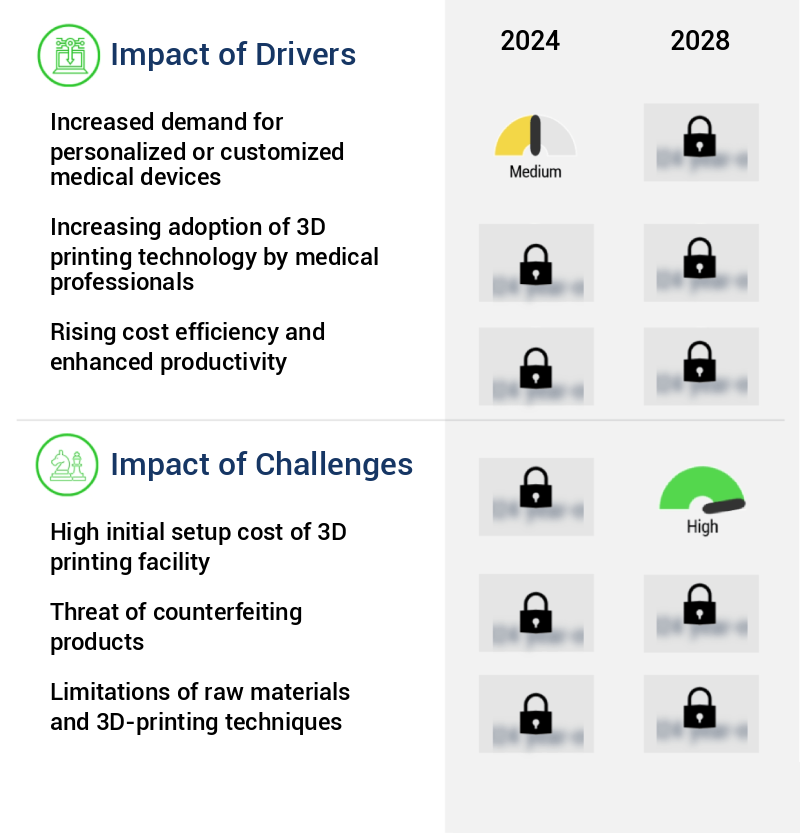
3D Printing Medical Devices Market Size

What are the key market drivers leading to the rise in the adoption of 3D Printing Medical Devices Industry?

  • The surge in demand for personalized and customized medical devices is the primary market driver, as patients increasingly seek solutions tailored to their unique health needs. 
  • 3D printing technology is revolutionizing the healthcare sector by enabling the production of patient-matched devices and surgical equipment. With additive layer manufacturing, physicians can create complex and intricately designed implants, incorporating porosity structures, tortuous internal channels, and internal support structures that are difficult, if not impossible, to achieve through traditional subtractive manufacturing. This customization leads to significant advancements in various applications, particularly in the development of customized prosthetic limbs. Traditional prosthetic manufacturing has relied on a limited number of standard sizes, which reduces costs but compromises patient comfort and hardware longevity.
  • The adoption of 3D printing technology addresses these limitations, allowing for the creation of personalized implants tailored to individual patients' unique anatomies. This innovation is transforming the healthcare industry, offering improved patient outcomes and expanded possibilities for medical applications.

What are the market trends shaping the 3D Printing Medical Devices Industry?

  • The emerging trend in research involves a heightened focus on utilizing the 3D printing process for manufacturing living organs and cell structures. (Alternatively: The 3D printing process is increasingly being researched for its potential in manufacturing living organs and cell structures, representing an upcoming market trend.)
  • 3D bioprinting, an advanced technological development, enables the creation of living tissues through the precise layering of cells, biologic scaffolds, and growth factors. This innovative process, distinct from traditional 3D printers utilizing plastic or metals, employs a computer-guided pipette to deposit bioink, or living cells, to generate artificial living tissues. A notable achievement of 3D bioprinting technology is its application in organ replacement. This groundbreaking advancement offers the potential to produce bioidentical tissues, such as stem cells, skin grafts, and bone and cartilage, providing significant implications for medical research and healthcare.
  • The field of organ replacement, historically limited by donor availability and transplant rejection, stands to benefit immensely from this technological advancement. The ongoing evolution of 3D bioprinting technology continues to unfold, offering promising possibilities across various sectors.

What challenges does the 3D Printing Medical Devices Industry face during its growth?

  • The high initial setup costs associated with establishing a 3D printing facility pose a significant challenge and hinder the industry's growth. 
  • The 3D printing market for medical devices faces significant challenges due to high costs, which hinder its broader adoption. Equipment costs are a significant contributor, with desktop Fused Deposition Modeling (FDM) and Stereolithography Apparatus (SLA) machines costing less than USD5,000, while high-end Selective Laser Sintering (SLS), material jetting, and metal printing machines ranging from USD200,000 to USD850,000. Advanced software for post-processing also adds to the expenses. Additionally, proprietary raw materials sold by manufacturers contribute to high costs. End-users must invest in skilled personnel for training or hiring to ensure the production of high-quality medical devices.
  • Despite these challenges, the 3D printing market for medical devices continues to evolve, offering potential benefits such as customization, reduced lead times, and improved patient outcomes.

Exclusive Technavio Analysis on Customer Landscape

The 3d printing medical devices market forecasting report includes the adoption lifecycle of the market, covering from the innovator's stage to the laggard's stage. It focuses on adoption rates in different regions based on penetration. Furthermore, the 3d printing medical devices market report also includes key purchase criteria and drivers of price sensitivity to help companies evaluate and develop their market growth analysis strategies.
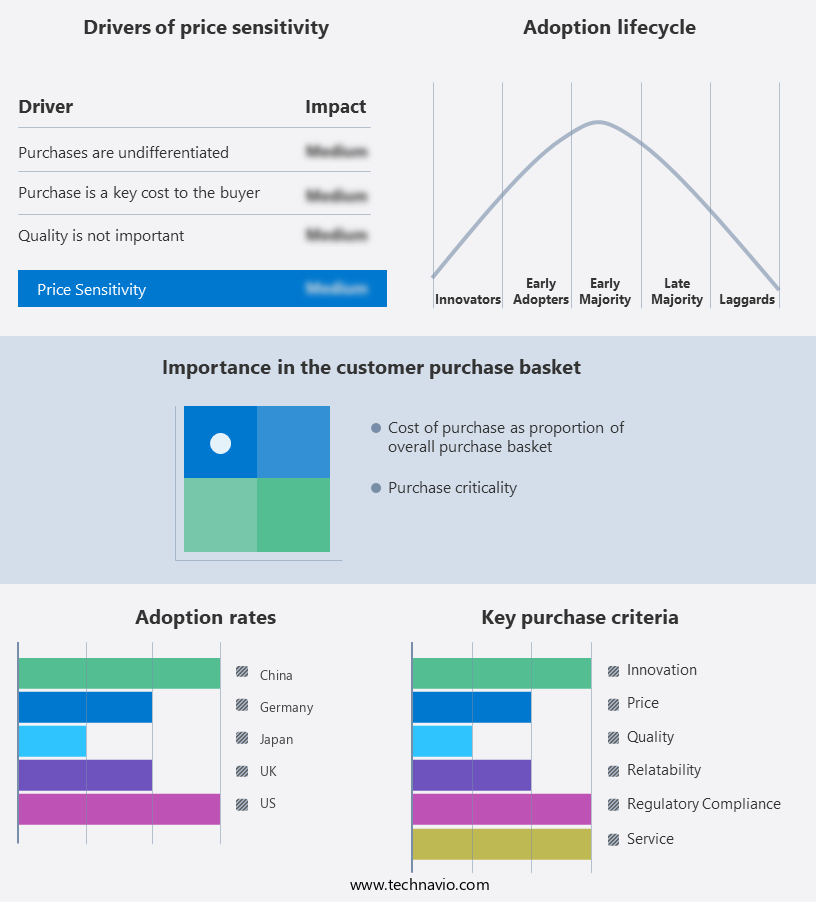
3D Printing Medical Devices Market Share by Geography

 Customer Landscape of 3D Printing Medical Devices Industry

Competitive Landscape

Companies are implementing various strategies, such as strategic alliances, 3d printing medical devices market forecast, partnerships, mergers and acquisitions, geographical expansion, and product/service launches, to enhance their presence in the industry.

3D Systems Corp. - This research focuses on 3D printing technology in the medical device industry. Notable offerings include the ProJet 360, ProJet 460 Plus, ProJet 5500X, and ProJet 3500 HDMax. These advanced printers enable production of customized, high-quality medical devices, contributing significantly to the sector's growth and innovation.

The industry research and growth report includes detailed analyses of the competitive landscape of the market and information about key companies, including:

  • 3D Systems Corp.
  • Anatomics Pty Ltd.
  • Autodesk Inc.
  • Biomerics LLC
  • Boston Scientific Corp.
  • Desktop Metal Inc.
  • EOS GmbH
  • Exail Technologies
  • Formlabs Inc.
  • General Electric Co.
  • INTAMSYS TECHNOLOGY CO. LTD.
  • MATERIALISE NV
  • Mecuris GmbH
  • Medtronic Plc
  • Organovo Holdings Inc.
  • Qualtech Consulting Corp.
  • Renishaw Plc
  • Schultheiss GmbH
  • SLM Solutions Group AG
  • Stratasys Ltd.

Qualitative and quantitative analysis of companies has been conducted to help clients understand the wider business environment as well as the strengths and weaknesses of key industry players. Data is qualitatively analyzed to categorize companies as pure play, category-focused, industry-focused, and diversified; it is quantitatively analyzed to categorize companies as dominant, leading, strong, tentative, and weak.

Recent Development and News in 3D Printing Medical Devices Market

  • In January 2024, Stratasys, a leading 3D printing solutions provider, announced the FDA clearance for its J750 3D Printer, enabling it to produce complex, anatomically accurate medical models and devices (Stratasys Press Release). In March 2024, 3D Systems and United Technologies' Pratt & Whitney signed a collaboration agreement to develop 3D-printed aircraft parts for medical applications using 3D Systems' Figure 4 technology (3D Systems Press Release).
  • In April 2024, GE Healthcare and Formlabs partnered to integrate Formlabs' 3D printers into GE Healthcare's medical facilities for rapid production of custom medical devices and models (Formlabs Press Release). In May 2025, Stryker, a leading medical technology company, completed the acquisition of Additive Manufacturing Partners, a medical device 3D printing services provider, expanding its additive manufacturing capabilities (Stryker Press Release).

Dive into Technavio's robust research methodology, blending expert interviews, extensive data synthesis, and validated models for unparalleled 3D Printing Medical Devices Market insights. See full methodology.

Market Scope

Report Coverage

Details

Page number

181

Base year

2023

Historic period

2018-2022

Forecast period

2024-2028

Growth momentum & CAGR

Accelerate at a CAGR of 25.2%

Market growth 2024-2028

USD 7079.6 million

Market structure

Fragmented

YoY growth 2023-2024(%)

19.78

Key countries

US, Germany, UK, Japan, and China

Competitive landscape

Leading Companies, Market Positioning of Companies, Competitive Strategies, and Industry Risks

Request Free Sample

Research Analyst Overview

  • The market continues to evolve, with innovative technologies and applications shaping its landscape. Bioresorbable polymers, a key material in this sector, is gaining traction due to their ability to mimic natural tissue and dissolve over time. Clinical trials are underway to assess their effectiveness in various applications, including prosthetic devices and tissue engineering. Selective laser melting and material extrusion are two prominent additive manufacturing techniques used in creating these devices. Cytotoxicity testing and in vivo testing are crucial steps in ensuring their biocompatibility and safety. Scaffold design and surface modification play a pivotal role in optimizing the mechanical properties of these devices for specific applications.
  • Finite element analysis and rapid prototyping enable process optimization and quality control. Craniofacial reconstruction and orthopedic implants are among the most common applications of 3D printed medical devices. Cell culture, cell seeding, and personalized medicine are other areas where this technology is making a significant impact. Surgical guides, drug delivery systems, vascular grafts, image-guided surgery, dental applications, and tissue engineering are some of the other domains where 3D printing is revolutionizing medical devices. Quality control measures, such as bioactivity testing and regulatory compliance, are essential to maintaining the integrity and safety of these devices. Biocompatible materials and computer-aided design are critical components in the development of 3D printed medical devices.
  • Bioprinting techniques and regenerative medicine are emerging areas of research, offering promising advancements in the field. The ongoing unfolding of market activities and evolving patterns in the market underscore its dynamic and innovative nature.

What are the Key Data Covered in this 3D Printing Medical Devices Market Research and Growth Report?

  • What is the expected growth of the 3D Printing Medical Devices Market between 2024 and 2028?

    • USD 7.08 billion, at a CAGR of 25.2%

  • What segmentation does the market report cover?

    • The report is segmented by Application (Orthopedic and spinal, Dental, Hearing aids, and Others), End-user (Hospitals and clinics, Academic institutes, Pharma and biotech companies, and Others), and Geography (North America, Europe, Asia, and Rest of World (ROW))

  • Which regions are analyzed in the report?

    • North America, Europe, Asia, and Rest of World (ROW)

  • What are the key growth drivers and market challenges?

    • Increased demand for personalized or customized medical devices, High initial setup cost of 3D printing facility

  • Who are the major players in the 3D Printing Medical Devices Market?

    • 3D Systems Corp., Anatomics Pty Ltd., Autodesk Inc., Biomerics LLC, Boston Scientific Corp., Desktop Metal Inc., EOS GmbH, Exail Technologies, Formlabs Inc., General Electric Co., INTAMSYS TECHNOLOGY CO. LTD., MATERIALISE NV, Mecuris GmbH, Medtronic Plc, Organovo Holdings Inc., Qualtech Consulting Corp., Renishaw Plc, Schultheiss GmbH, SLM Solutions Group AG, and Stratasys Ltd.

Market Research Insights

  • The market encompasses a diverse range of applications, from surgical simulation and patient-specific design to implant manufacturing and biomedical engineering. According to industry estimates, this market is projected to reach USD3.6 billion by 2025, growing at a compound annual growth rate of 17.4% between 2020 and 2025. Selective laser sintering and powder bed fusion are two prominent 3D printing technologies used in the production of medical devices, with the former accounting for 35% of the market share in 2020. In contrast, polyjet printing and inkjet printing hold smaller market shares of 15% and 5%, respectively. Biocompatibility testing, mechanical testing, surface finishing, support structures, image processing, data analysis, and sterilization methods are essential aspects of the 3D printing process for medical devices.
  • Machine learning and artificial intelligence are increasingly being integrated into the design validation and pre-operative planning stages to improve accuracy and efficiency. Implant osseointegration, achieved through techniques such as digital light processing and binder jetting, is a critical factor in the long-term success of 3D-printed medical devices.

We can help! Our analysts can customize this 3d printing medical devices market research report to meet your requirements.

Get in touch

1 Executive Summary

  • 1.1 Market overview
    • Executive Summary - Chart on Market Overview
    • Executive Summary - Data Table on Market Overview
    • Executive Summary - Chart on Global Market Characteristics
    • Executive Summary - Chart on Market by Geography
    • Executive Summary - Chart on Market Segmentation by Application
    • Executive Summary - Chart on Market Segmentation by End-user
    • Executive Summary - Chart on Incremental Growth
    • Executive Summary - Data Table on Incremental Growth
    • Executive Summary - Chart on Company Market Positioning

2 Market Landscape

  • 2.1 Market ecosystem
    • Parent Market
    • Data Table on - Parent Market
  • 2.2 Market characteristics
    • Market characteristics analysis
  • 2.3 Value chain analysis
    • Value Chain Analysis

3 Market Sizing

  • 3.1 Market definition
    • Offerings of companies included in the market definition
  • 3.2 Market segment analysis
    • Market segments
  • 3.3 Market size 2023
    • 3.4 Market outlook: Forecast for 2023-2028
      • Chart on Global - Market size and forecast 2023-2028 ($ million)
      • Data Table on Global - Market size and forecast 2023-2028 ($ million)
      • Chart on Global Market: Year-over-year growth 2023-2028 (%)
      • Data Table on Global Market: Year-over-year growth 2023-2028 (%)

    4 Historic Market Size

    • 4.1 Global 3D Printing Medical Devices Market 2018 - 2022
      • Historic Market Size - Data Table on Global 3D Printing Medical Devices Market 2018 - 2022 ($ million)
    • 4.2 Application segment analysis 2018 - 2022
      • Historic Market Size - Application Segment 2018 - 2022 ($ million)
    • 4.3 End-user segment analysis 2018 - 2022
      • Historic Market Size - End-user Segment 2018 - 2022 ($ million)
    • 4.4 Geography segment analysis 2018 - 2022
      • Historic Market Size - Geography Segment 2018 - 2022 ($ million)
    • 4.5 Country segment analysis 2018 - 2022
      • Historic Market Size - Country Segment 2018 - 2022 ($ million)

    5 Five Forces Analysis

    • 5.1 Five forces summary
      • Five forces analysis - Comparison between 2023 and 2028
    • 5.2 Bargaining power of buyers
      • Bargaining power of buyers - Impact of key factors 2023 and 2028
    • 5.3 Bargaining power of suppliers
      • Bargaining power of suppliers - Impact of key factors in 2023 and 2028
    • 5.4 Threat of new entrants
      • Threat of new entrants - Impact of key factors in 2023 and 2028
    • 5.5 Threat of substitutes
      • Threat of substitutes - Impact of key factors in 2023 and 2028
    • 5.6 Threat of rivalry
      • Threat of rivalry - Impact of key factors in 2023 and 2028
    • 5.7 Market condition
      • Chart on Market condition - Five forces 2023 and 2028

    6 Market Segmentation by Application

    • 6.1 Market segments
      • Chart on Application - Market share 2023-2028 (%)
      • Data Table on Application - Market share 2023-2028 (%)
    • 6.2 Comparison by Application
      • Chart on Comparison by Application
      • Data Table on Comparison by Application
    • 6.3 Orthopedic and spinal - Market size and forecast 2023-2028
      • Chart on Orthopedic and spinal - Market size and forecast 2023-2028 ($ million)
      • Data Table on Orthopedic and spinal - Market size and forecast 2023-2028 ($ million)
      • Chart on Orthopedic and spinal - Year-over-year growth 2023-2028 (%)
      • Data Table on Orthopedic and spinal - Year-over-year growth 2023-2028 (%)
    • 6.4 Dental - Market size and forecast 2023-2028
      • Chart on Dental - Market size and forecast 2023-2028 ($ million)
      • Data Table on Dental - Market size and forecast 2023-2028 ($ million)
      • Chart on Dental - Year-over-year growth 2023-2028 (%)
      • Data Table on Dental - Year-over-year growth 2023-2028 (%)
    • 6.5 Hearing aids - Market size and forecast 2023-2028
      • Chart on Hearing aids - Market size and forecast 2023-2028 ($ million)
      • Data Table on Hearing aids - Market size and forecast 2023-2028 ($ million)
      • Chart on Hearing aids - Year-over-year growth 2023-2028 (%)
      • Data Table on Hearing aids - Year-over-year growth 2023-2028 (%)
    • 6.6 Others - Market size and forecast 2023-2028
      • Chart on Others - Market size and forecast 2023-2028 ($ million)
      • Data Table on Others - Market size and forecast 2023-2028 ($ million)
      • Chart on Others - Year-over-year growth 2023-2028 (%)
      • Data Table on Others - Year-over-year growth 2023-2028 (%)
    • 6.7 Market opportunity by Application
      • Market opportunity by Application ($ million)
      • Data Table on Market opportunity by Application ($ million)

    7 Market Segmentation by End-user

    • 7.1 Market segments
      • Chart on End-user - Market share 2023-2028 (%)
      • Data Table on End-user - Market share 2023-2028 (%)
    • 7.2 Comparison by End-user
      • Chart on Comparison by End-user
      • Data Table on Comparison by End-user
    • 7.3 Hospitals and clinics - Market size and forecast 2023-2028
      • Chart on Hospitals and clinics - Market size and forecast 2023-2028 ($ million)
      • Data Table on Hospitals and clinics - Market size and forecast 2023-2028 ($ million)
      • Chart on Hospitals and clinics - Year-over-year growth 2023-2028 (%)
      • Data Table on Hospitals and clinics - Year-over-year growth 2023-2028 (%)
    • 7.4 Academic institutes - Market size and forecast 2023-2028
      • Chart on Academic institutes - Market size and forecast 2023-2028 ($ million)
      • Data Table on Academic institutes - Market size and forecast 2023-2028 ($ million)
      • Chart on Academic institutes - Year-over-year growth 2023-2028 (%)
      • Data Table on Academic institutes - Year-over-year growth 2023-2028 (%)
    • 7.5 Pharma and biotech companies - Market size and forecast 2023-2028
      • Chart on Pharma and biotech companies - Market size and forecast 2023-2028 ($ million)
      • Data Table on Pharma and biotech companies - Market size and forecast 2023-2028 ($ million)
      • Chart on Pharma and biotech companies - Year-over-year growth 2023-2028 (%)
      • Data Table on Pharma and biotech companies - Year-over-year growth 2023-2028 (%)
    • 7.6 Others - Market size and forecast 2023-2028
      • Chart on Others - Market size and forecast 2023-2028 ($ million)
      • Data Table on Others - Market size and forecast 2023-2028 ($ million)
      • Chart on Others - Year-over-year growth 2023-2028 (%)
      • Data Table on Others - Year-over-year growth 2023-2028 (%)
    • 7.7 Market opportunity by End-user
      • Market opportunity by End-user ($ million)
      • Data Table on Market opportunity by End-user ($ million)

    8 Customer Landscape

    • 8.1 Customer landscape overview
      • Analysis of price sensitivity, lifecycle, customer purchase basket, adoption rates, and purchase criteria

    9 Geographic Landscape

    • 9.1 Geographic segmentation
      • Chart on Market share by geography 2023-2028 (%)
      • Data Table on Market share by geography 2023-2028 (%)
    • 9.2 Geographic comparison
      • Chart on Geographic comparison
      • Data Table on Geographic comparison
    • 9.3 North America - Market size and forecast 2023-2028
      • Chart on North America - Market size and forecast 2023-2028 ($ million)
      • Data Table on North America - Market size and forecast 2023-2028 ($ million)
      • Chart on North America - Year-over-year growth 2023-2028 (%)
      • Data Table on North America - Year-over-year growth 2023-2028 (%)
    • 9.4 Europe - Market size and forecast 2023-2028
      • Chart on Europe - Market size and forecast 2023-2028 ($ million)
      • Data Table on Europe - Market size and forecast 2023-2028 ($ million)
      • Chart on Europe - Year-over-year growth 2023-2028 (%)
      • Data Table on Europe - Year-over-year growth 2023-2028 (%)
    • 9.5 Asia - Market size and forecast 2023-2028
      • Chart on Asia - Market size and forecast 2023-2028 ($ million)
      • Data Table on Asia - Market size and forecast 2023-2028 ($ million)
      • Chart on Asia - Year-over-year growth 2023-2028 (%)
      • Data Table on Asia - Year-over-year growth 2023-2028 (%)
    • 9.6 Rest of World (ROW) - Market size and forecast 2023-2028
      • Chart on Rest of World (ROW) - Market size and forecast 2023-2028 ($ million)
      • Data Table on Rest of World (ROW) - Market size and forecast 2023-2028 ($ million)
      • Chart on Rest of World (ROW) - Year-over-year growth 2023-2028 (%)
      • Data Table on Rest of World (ROW) - Year-over-year growth 2023-2028 (%)
    • 9.7 US - Market size and forecast 2023-2028
      • Chart on US - Market size and forecast 2023-2028 ($ million)
      • Data Table on US - Market size and forecast 2023-2028 ($ million)
      • Chart on US - Year-over-year growth 2023-2028 (%)
      • Data Table on US - Year-over-year growth 2023-2028 (%)
    • 9.8 Germany - Market size and forecast 2023-2028
      • Chart on Germany - Market size and forecast 2023-2028 ($ million)
      • Data Table on Germany - Market size and forecast 2023-2028 ($ million)
      • Chart on Germany - Year-over-year growth 2023-2028 (%)
      • Data Table on Germany - Year-over-year growth 2023-2028 (%)
    • 9.9 UK - Market size and forecast 2023-2028
      • Chart on UK - Market size and forecast 2023-2028 ($ million)
      • Data Table on UK - Market size and forecast 2023-2028 ($ million)
      • Chart on UK - Year-over-year growth 2023-2028 (%)
      • Data Table on UK - Year-over-year growth 2023-2028 (%)
    • 9.10 Japan - Market size and forecast 2023-2028
      • Chart on Japan - Market size and forecast 2023-2028 ($ million)
      • Data Table on Japan - Market size and forecast 2023-2028 ($ million)
      • Chart on Japan - Year-over-year growth 2023-2028 (%)
      • Data Table on Japan - Year-over-year growth 2023-2028 (%)
    • 9.11 China - Market size and forecast 2023-2028
      • Chart on China - Market size and forecast 2023-2028 ($ million)
      • Data Table on China - Market size and forecast 2023-2028 ($ million)
      • Chart on China - Year-over-year growth 2023-2028 (%)
      • Data Table on China - Year-over-year growth 2023-2028 (%)
    • 9.12 Market opportunity by geography
      • Market opportunity by geography ($ million)
      • Data Tables on Market opportunity by geography ($ million)

    10 Drivers, Challenges, and Opportunity/Restraints

    • 10.1 Market drivers
      • 10.2 Market challenges
        • 10.3 Impact of drivers and challenges
          • Impact of drivers and challenges in 2023 and 2028
        • 10.4 Market opportunities/restraints

          11 Competitive Landscape

          • 11.1 Overview
            • 11.2 Competitive Landscape
              • Overview on criticality of inputs and factors of differentiation
            • 11.3 Landscape disruption
              • Overview on factors of disruption
            • 11.4 Industry risks
              • Impact of key risks on business

            12 Competitive Analysis

            • 12.1 Companies profiled
              • Companies covered
            • 12.2 Market positioning of companies
              • Matrix on companies position and classification
            • 3D Systems Corp.
              • 3D Systems Corp. - Overview
              • 3D Systems Corp. - Business segments
              • 3D Systems Corp. - Key news
              • 3D Systems Corp. - Key offerings
              • 3D Systems Corp. - Segment focus
            • 12.4 Anatomics Pty Ltd.
              • Anatomics Pty Ltd. - Overview
              • Anatomics Pty Ltd. - Product / Service
              • Anatomics Pty Ltd. - Key offerings
            • 12.5 Autodesk Inc.
              • Autodesk Inc. - Overview
              • Autodesk Inc. - Product / Service
              • Autodesk Inc. - Key news
              • Autodesk Inc. - Key offerings
            • 12.6 Boston Scientific Corp.
              • Boston Scientific Corp. - Overview
              • Boston Scientific Corp. - Business segments
              • Boston Scientific Corp. - Key news
              • Boston Scientific Corp. - Key offerings
              • Boston Scientific Corp. - Segment focus
            • 12.7 Desktop Metal Inc.
              • Desktop Metal Inc. - Overview
              • Desktop Metal Inc. - Business segments
              • Desktop Metal Inc. - Key news
              • Desktop Metal Inc. - Key offerings
              • Desktop Metal Inc. - Segment focus
            • 12.8 EOS GmbH
              • EOS GmbH - Overview
              • EOS GmbH - Product / Service
              • EOS GmbH - Key news
              • EOS GmbH - Key offerings
            • 12.9 Formlabs Inc.
              • Formlabs Inc. - Overview
              • Formlabs Inc. - Product / Service
              • Formlabs Inc. - Key offerings
            • 12.10 General Electric Co.
              • General Electric Co. - Overview
              • General Electric Co. - Business segments
              • General Electric Co. - Key news
              • General Electric Co. - Key offerings
              • General Electric Co. - Segment focus
            • 12.11 INTAMSYS TECHNOLOGY CO. LTD.
              • INTAMSYS TECHNOLOGY CO. LTD. - Overview
              • INTAMSYS TECHNOLOGY CO. LTD. - Product / Service
              • INTAMSYS TECHNOLOGY CO. LTD. - Key offerings
            • 12.12 MATERIALISE NV
              • MATERIALISE NV - Overview
              • MATERIALISE NV - Business segments
              • MATERIALISE NV - Key news
              • MATERIALISE NV - Key offerings
              • MATERIALISE NV - Segment focus
            • 12.13 Medtronic Plc
              • Medtronic Plc - Overview
              • Medtronic Plc - Business segments
              • Medtronic Plc - Key news
              • Medtronic Plc - Key offerings
              • Medtronic Plc - Segment focus
            • 12.14 Qualtech Consulting Corp.
              • Qualtech Consulting Corp. - Overview
              • Qualtech Consulting Corp. - Product / Service
              • Qualtech Consulting Corp. - Key offerings
            • 12.15 Renishaw Plc
              • Renishaw Plc - Overview
              • Renishaw Plc - Business segments
              • Renishaw Plc - Key offerings
              • Renishaw Plc - Segment focus
            • 12.16 SLM Solutions Group AG
              • SLM Solutions Group AG - Overview
              • SLM Solutions Group AG - Business segments
              • SLM Solutions Group AG - Key offerings
              • SLM Solutions Group AG - Segment focus
            • 12.17 Stratasys Ltd.
              • Stratasys Ltd. - Overview
              • Stratasys Ltd. - Product / Service
              • Stratasys Ltd. - Key news
              • Stratasys Ltd. - Key offerings

            13 Appendix

            • 13.1 Scope of the report
              • 13.2 Inclusions and exclusions checklist
                • Inclusions checklist
                • Exclusions checklist
              • 13.3 Currency conversion rates for US$
                • Currency conversion rates for US$
              • 13.4 Research methodology
                • Research methodology
              • 13.5 Data procurement
                • Information sources
              • 13.6 Data validation
                • Data validation
              • 13.7 Validation techniques employed for market sizing
                • Validation techniques employed for market sizing
              • 13.8 Data synthesis
                • Data synthesis
              • 13.9 360 degree market analysis
                • 360 degree market analysis
              • 13.10 List of abbreviations
                • List of abbreviations

              Research Methodology

              Technavio presents a detailed picture of the market by way of study, synthesis, and summation of data from multiple sources. The analysts have presented the various facets of the market with a particular focus on identifying the key industry influencers. The data thus presented is comprehensive, reliable, and the result of extensive research, both primary and secondary.

              INFORMATION SOURCES

              Primary sources

              • Manufacturers and suppliers
              • Channel partners
              • Industry experts
              • Strategic decision makers

              Secondary sources

              • Industry journals and periodicals
              • Government data
              • Financial reports of key industry players
              • Historical data
              • Press releases

              DATA ANALYSIS

              Data Synthesis

              • Collation of data
              • Estimation of key figures
              • Analysis of derived insights

              Data Validation

              • Triangulation with data models
              • Reference against proprietary databases
              • Corroboration with industry experts

              REPORT WRITING

              Qualitative

              • Market drivers
              • Market challenges
              • Market trends
              • Five forces analysis

              Quantitative

              • Market size and forecast
              • Market segmentation
              • Geographical insights
              • Competitive landscape

              Interested in this report?

              Get your sample now to see our research methodology and insights!

              Download Now

              Frequently Asked Questions

              3D Printing Medical Devices market growth will increase by $ 7079.6 mn during 2024-2028 .

              The 3D Printing Medical Devices market is expected to grow at a CAGR of 25.2% during 2024-2028 .

              3D Printing Medical Devices market is segmented by Application( Orthopedic and spinal, Dental, Hearing aids, Others) End-user( Hospitals and clinics, Academic institutes, Pharma and biotech companies, Others)

              3D Systems Corp., Anatomics Pty Ltd., Autodesk Inc., Biomerics LLC, Boston Scientific Corp., Desktop Metal Inc., EOS GmbH, Exail Technologies, Formlabs Inc., General Electric Co., INTAMSYS TECHNOLOGY CO. LTD., MATERIALISE NV, Mecuris GmbH, Medtronic Plc, Organovo Holdings Inc., Qualtech Consulting Corp., Renishaw Plc, Schultheiss GmbH, SLM Solutions Group AG, Stratasys Ltd. are a few of the key vendors in the 3D Printing Medical Devices market.

              North America will register the highest growth rate of 40% among the other regions. Therefore, the 3D Printing Medical Devices market in North America is expected to garner significant business opportunities for the vendors during the forecast period.

              US, Germany, UK, Japan, China

              • Increased demand for personalized or customized medical devices3D printing technologies are increasingly being utilized to build patient-matched (or patient-specific) devices and surgical gear. Due to the nature of additive layer manufacturing in 3D printing is the driving factor this market.
              • physicians may create personalized implants with any complicated form or geometric characteristic. This enables the development of designed porosity structures is the driving factor this market.
              • tortuous internal channels is the driving factor this market.
              • and internal support structures that would be impossible to create using traditional subtractive manufacturing processes is the driving factor this market.
              • regardless of cost. Therefore is the driving factor this market.
              • 3D printing is increasingly being used to fabricate patient-specific devices for various applications is the driving factor this market.
              • especially in the development of standard and complex customized prosthetic limbs.Traditionally is the driving factor this market.
              • prostheses have been manufactured in a limited number of sizes. This method reduces cost but has some limitations is the driving factor this market.
              • including reduced patient comfort and lifespan of the hardware. Customized prostheses can overcome many of the limitations of conventionally manufactured prostheses. 3D printing significantly speeds up the manufacturing process and involves low costs but is as effective as the prosthetics manufactured using traditional manufacturing processes.The FDA has already approved many 3D printed prostheses is the driving factor this market.
              • including maxillofacial prostheses is the driving factor this market.
              • joint prostheses is the driving factor this market.
              • hearing aids is the driving factor this market.
              • and Invisalign braces. The use of custom implants for dental and maxillofacial reconstructions is already widely accepted. Customized 3D printed implants are used in the reconstruction of the temporal bone (including middle ear ossicles) is the driving factor this market.
              • zygomatic bones is the driving factor this market.
              • calvarial bones is the driving factor this market.
              • and mandibles.The use of 3D implants can significantly reduce the cosmetic deformities associated with such surgeries. 3D printing is increasingly being used in the construction of custom joint prostheses. In addition to enhanced patient comfort is the driving factor this market.
              • 3D printing can be used to develop customized prosthetics that suit and fit the wearer. The low cost of these products makes them particularly suitable for children is the driving factor this market.
              • who quickly outgrow their prosthetic limbs. Nearly 99% of the hearing aids that fits into the ear are custom-made using 3D printing. The technology allows customization of the hearing aids as per the unique anatomy of the patient's ear canal while being cost-effective and efficient. Furthermore is the driving factor this market.
              • 3.5 million customized Invisalign braces are being manufactured every week using 3D printing.3D printing is also finding increasing applications for the development of customized surgical implants. The ability to quickly produce customized surgical implants solves an important problem in orthopedics is the driving factor this market.
              • wherein traditional implants are often not sufficient for a significant number of patients is the driving factor this market.
              • especially in complex cases. Traditionally is the driving factor this market.
              • surgeons had to perform bone graft surgeries or use scalpels and drills to modify the surgical implant by shaving pieces of metal and plastic to the required shape is the driving factor this market.
              • size is the driving factor this market.
              • and fit. For instance is the driving factor this market.
              • due to the irregularity of the shape and size of skulls is the driving factor this market.
              • it is difficult to standardize a cranial implant. As a result is the driving factor this market.
              • 3D printing is an effective solution for patients is the driving factor this market.
              • as customized implants can be designed to fit precisely in anatomical defects. Besides being anatomically correct is the driving factor this market.
              • customized medical devices can be fabricated with high-quality and biocompatible materials. For instance is the driving factor this market.
              • 3D printed implants can be fabricated with complex free-form surfaces such as lattices that can help in accelerating post-operative healing is the driving factor this market.
              • facilitating osteointegration is the driving factor this market.
              • and reducing implant stiffness. Thus is the driving factor this market.
              • such factors are expected to increase the adoption of 3D printing medical devices is the driving factor this market.
              • which will fuel the growth of the global 3D printing medical devices market during the forecast period. is the driving factor this market.

              The 3D Printing Medical Devices market vendors should focus on grabbing business opportunities from the Orthopedic and spinal segment as it accounted for the largest market share in the base year.
