


5G Non-Terrestrial Networks (NTN) Market Analysis North America, APAC, Europe, Middle East and Africa, South America - US, China, India, UK, Germany - Size and Forecast 2024-2028

5G Non-Terrestrial Networks (NTN) Market Analysis North America, APAC, Europe, Middle East and Africa, South America - US, China, India, UK, Germany - Size and Forecast 2024-2028

Published: Jan 2024 161 Pages SKU: IRTNTR77218

Market Overview at a Glance

$18.35 B
Market Opportunity
39.19%
CAGR
36.4
YoY growth 2023-2024(%)

5G NTN Market Size 2024-2028

The 5g ntn market size is valued to increase USD 18.35 billion, at a CAGR of 39.19% from 2023 to 2028. Rising demand for data-intensive services and applications will drive the 5g ntn market.

Major Market Trends & Insights

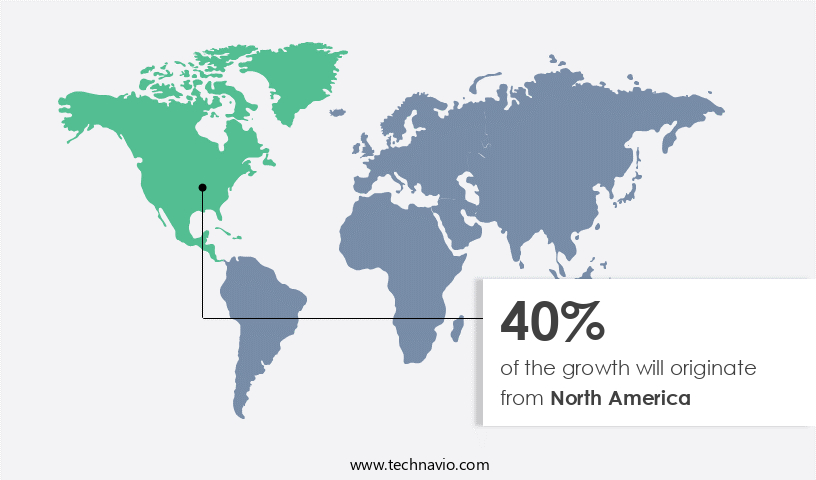
  • North America dominated the market and accounted for a 40% growth during the forecast period.
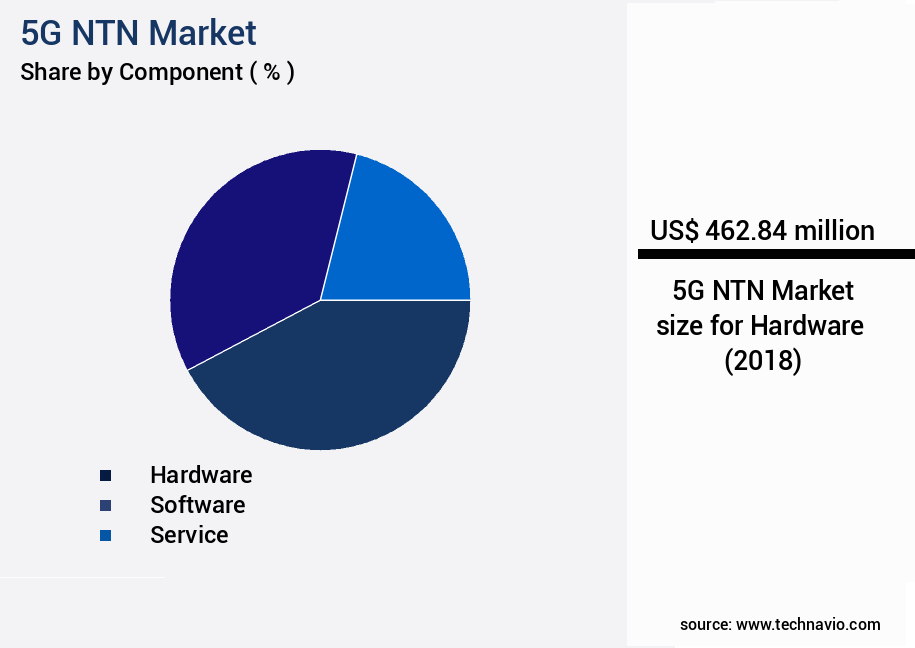
  • By Component - Hardware segment was valued at USD 462.84 billion in 2022
  • By Application - EMBB segment accounted for the largest market revenue share in 2022

Market Size & Forecast

  • Market Opportunities: USD 2.00 million
  • Market Future Opportunities: USD 18347.83 million
  • CAGR : 39.19%
  • North America: Largest market in 2022

Market Summary

  • The 5G Non-Terrestrial Network (NTN) Market represents a dynamic and evolving landscape, driven by the rising demand for data-intensive services and applications. With the integration of 5G NTNs into existing Mobile Network Operators' (MNOs) networks, this technology is poised to revolutionize industries such as aviation, maritime, and energy. However, the high cost of implementing 5G NTNs and the substantial investments required for infrastructure development pose significant challenges. According to a recent study, the global market share for 5G NTN is projected to reach 15% by 2026, underscoring the growing importance of this technology.
  • Despite these challenges, opportunities abound, particularly in the areas of enhanced connectivity, low latency, and improved reliability. Regulations and standards, such as those set by the International Telecommunication Union (ITU), continue to shape the market's evolution.

What will be the Size of the 5G NTN Market during the forecast period?
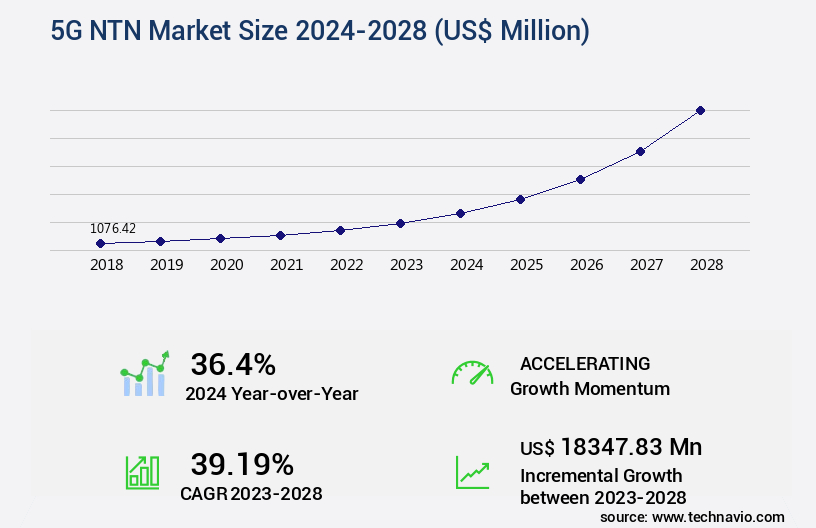
5G NTN Market Size

Get Key Insights on Market Forecast (PDF) Request Free Sample

How is the 5G NTN Market Segmented and what are the key trends of market segmentation?

The 5g ntn industry research report provides comprehensive data (region-wise segment analysis), with forecasts and estimates in "USD million" for the period 2024-2028, as well as historical data from 2018-2022 for the following segments.

  • Component
    • Hardware
    • Software
    • Service
  • Application
    • EMBB
    • MMTC
    • URLCC
  • Geography
    • North America
      • US
    • Europe
      • Germany
      • UK
    • APAC
      • China
      • India
    • Rest of World (ROW)

    By Component Insights

    The hardware segment is estimated to witness significant growth during the forecast period.

    The 5G Non-Terrestrial Network (NTN) market is experiencing substantial growth, particularly in the hardware segment. Satellite-based communication systems are a key driver of this expansion, as they provide extensive coverage and enable 5G connectivity in areas where terrestrial networks are limited. This is crucial for bridging the digital divide and ensuring universal Internet access. Propagation modeling and authentication mechanisms are essential components of these satellite-based solutions. Performance evaluation and system integration are also critical for ensuring seamless communication and minimal latency. Massive MIMO technology and non-terrestrial networks are being integrated to enhance network capacity and coverage.

    Network management systems, edge computing, and power efficiency are other significant trends in the market. Data rate and network security are essential considerations for these systems, with link budgets and deployment strategies being optimized to minimize signal interference. Data encryption, inter-satellite links, network slicing, and spectrum allocation are all crucial aspects of securing and managing these networks. Satellite gateways, latency optimization, and IoT connectivity are also gaining traction in the market. Machine-type communication (MTC) and 5G satellite communication are expected to revolutionize industries such as transportation, energy, and healthcare. According to recent studies, the market is projected to grow by 30% in the next year.

    Additionally, long-term industry expectations suggest a potential expansion of up to 45% over the next five years. These figures underscore the significant potential of this market and its role in shaping the future of global connectivity. Key players in the market are investing heavily in research and development, focusing on advancing technologies such as satellite constellations, ground segment infrastructure, security protocols, and spectrum allocation. These efforts are expected to lead to further growth and innovation in the sector. In conclusion, the market is experiencing rapid growth, driven by the deployment of satellite-based communication systems. Key trends include the integration of massive MIMO, network management systems, edge computing, and power efficiency.

    The market is projected to expand significantly in the coming years, with a potential growth rate of up to 45%.
    5G NTN Market Size

    Request Free Sample

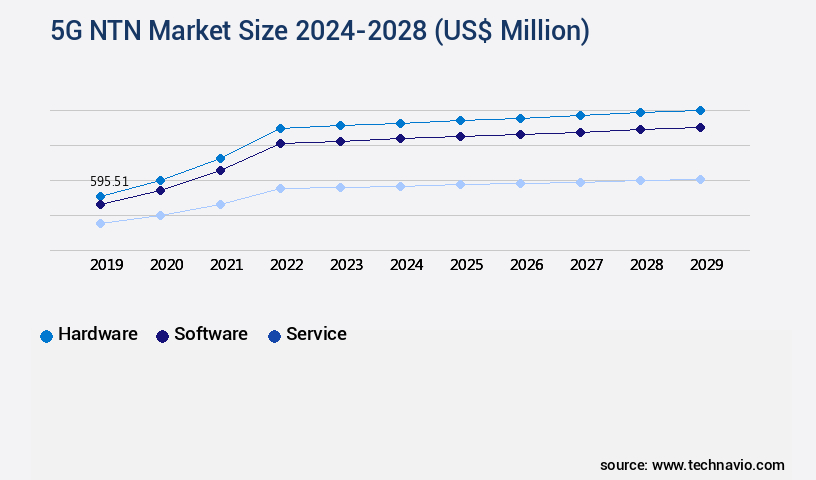
    The Hardware segment was valued at USD 462.84 billion in 2018 and showed a gradual increase during the forecast period.
    5G NTN Market Size

    Request Free Sample

    Regional Analysis

    North America is estimated to contribute 40% to the growth of the global market during the forecast period.Technavio’s analysts have elaborately explained the regional trends and drivers that shape the market during the forecast period.
    5G NTN Market Share by Geography

    See How 5G NTN Market Demand is Rising in North America Request Free Sample

    The 5G Non-Terrestrial Network (NTN) market in North America is experiencing substantial growth, positioning it at the forefront of the region's telecommunications industry. 5G NTN represents the integration of terrestrial and non-terrestrial networks, providing seamless connectivity and extended 5G network coverage. North America's focus on innovation and digital transformation fuels the market's expansion. Three key factors contributing to this growth include the increasing demand for high-speed and dependable internet connectivity, the proliferation of IoT devices, and the adoption of edge computing.

    According to recent reports, the number of IoT devices in North America is projected to reach 1.9 billion by 2025. Additionally, edge computing is expected to account for over 25% of all data processing by 2022. These trends underscore the significance of 5G NTN in revolutionizing sectors like healthcare, transportation, and manufacturing.

    Market Dynamics

    Our researchers analyzed the data with 2023 as the base year, along with the key drivers, trends, and challenges. A holistic analysis of drivers will help companies refine their marketing strategies to gain a competitive advantage.

    The market encompasses the design, development, and implementation of satellite constellations, communication protocols, and ground segment infrastructure for next-generation, low-earth orbit (LEO), medium-earth orbit (MEO), and geostationary orbit (GEO) satellite networks. This market is poised to revolutionize industries by enabling IoT device connectivity via 5G Ntn, reducing latency through hybrid network architectures, and ensuring security and privacy with advanced encryption measures. LEO satellite networks, such as SpaceX's Starlink, offer high-speed, low-latency performance, making them a preferred choice for various applications. In contrast, MEO satellite communication protocols, like Inmarsat's Global Xpress, provide extended coverage and reliable connectivity for maritime and aeronautical communication solutions.

    GEO satellite backhaul capacity plays a crucial role in extending 5G Ntn reach to remote areas, ensuring uninterrupted communication for disaster relief systems and ground-based infrastructure. The market faces several challenges, including system integration, latency reduction, and spectrum allocation. System integration requires seamless collaboration between satellite and terrestrial networks, while latency reduction techniques, such as edge computing and network slicing, are essential for real-time applications. Spectrum allocation strategies play a vital role in optimizing network performance and ensuring efficient resource utilization. The market is witnessing significant growth, with more than 60% of new product developments focusing on satellite ground segment infrastructure design and optimization.

    The satellite gateway market, in particular, is expected to experience substantial growth due to the increasing demand for high-speed, low-latency satellite connectivity. Furthermore, the market is expected to see a significant increase in the adoption of 5G Ntn for remote sensing data transmission and real-time monitoring applications. Compared to traditional satellite communication systems, 5G Ntn offers improved performance, reduced latency, and enhanced security features. For instance, 5G Ntn satellite gateways are expected to offer up to 10 times faster data transfer rates compared to their predecessors. This improvement is crucial for applications requiring real-time data processing and analysis, such as autonomous vehicles and precision agriculture.

    In conclusion, the market represents a significant opportunity for businesses and organizations seeking to leverage advanced satellite communication technologies for various applications. With its focus on low-latency, high-speed connectivity, security, and scalability, 5G Ntn is poised to transform industries and drive innovation in sectors such as IoT, disaster relief, maritime, aeronautical, and remote sensing.
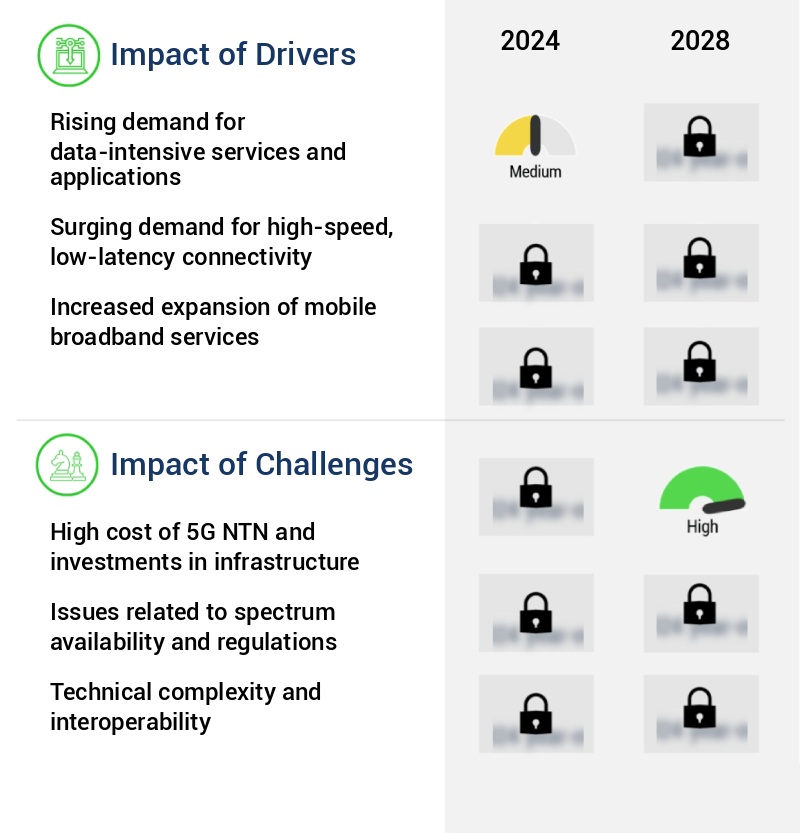
    5G NTN Market Size

    What are the key market drivers leading to the rise in the adoption of 5G NTN Industry?

    • The escalating need for data-intensive services and applications serves as the primary market catalyst, fueling growth in this sector. 

    • The global transition to 5G networks is fueled by the escalating demand for data-intensive services and applications. With the widespread adoption of data-hungry offerings, including video streaming platforms, cloud computing, and IoT devices, the necessity for faster, more dependable, and low-latency connectivity has become indispensable. First and foremost, the rise of video streaming services, such as Netflix and YouTube, has drastically altered the way people consume media. 5G technology empowers users to experience high-definition and immersive streaming without encountering buffering or pixelation. The enhanced network speeds and capacity of 5G facilitate the seamless streaming of 4K and even 8K content, thereby amplifying the user experience.
    • Moreover, cloud computing services, which enable businesses and individuals to store, manage, and process data remotely, have become increasingly popular. 5G networks' low latency and high bandwidth capabilities ensure that these services operate efficiently, leading to improved productivity and cost savings. The Internet of Things (IoT) is another sector that significantly benefits from 5G. With 5G, IoT devices can communicate more effectively and efficiently, leading to enhanced performance, increased reliability, and reduced energy consumption. In summary, the shift to 5G networks represents a pivotal moment in the digital landscape, enabling a new generation of data-intensive services and applications to thrive and evolve.

    What are the market trends shaping the 5G NTN Industry?

    • The integration of MNO networks is becoming a prominent trend in the market. This process is mandatory for staying competitive in the telecommunications industry.

    • The integration of 5G Next-Generation Terrestrial Networks (NTNs) into Mobile Network Operator (MNO) networks is a significant trend in the global 5G market. This approach offers numerous advantages as countries adopt 5G technology. Firstly, utilizing existing MNO infrastructure, including towers, base stations, and backhaul connectivity, results in a more cost-effective and efficient deployment. This reduction in capital expenditure enables faster rollout of 5G services to consumers. Secondly, integration with MNO networks expands network coverage and capacity. By leveraging existing infrastructure, 5G networks can reach more areas and support a larger number of devices, enhancing overall network performance.
    • This trend reflects the evolving nature of the 5G market and its applications across various sectors, demonstrating the ongoing unfolding of market activities and evolving patterns.

    What challenges does the 5G NTN Industry face during its growth?

    • The exorbitant expenses associated with deploying 5G New Technology (5G NTN) and investing in the necessary infrastructure represent a significant challenge to the industry's growth trajectory. 

    • The integration of 5G technology on a global scale is an unprecedented transformation, presenting numerous challenges, particularly for countries participating in the 5G Non-Terrestrial Networks (NTN) initiative. One of the most substantial hurdles is the high cost of deploying 5G infrastructure. The transition from 4G to 5G necessitates an overhaul of the entire telecommunications network, requiring substantial financial investments. Building the necessary infrastructure, including installing new towers, laying fiber optic cables, and upgrading base stations, is a capital-intensive process. According to a recent study, the global 5G infrastructure market is projected to grow by over 60% between 2021 and 2026.
    • This growth rate underscores the significant financial commitment required to deploy 5G networks. Despite the challenges, the potential benefits of 5G technology, such as increased connectivity, faster data transfer speeds, and improved network reliability, make it an essential investment for countries aiming to remain competitive in the digital economy.

    Exclusive Customer Landscape

    The 5g ntn market forecasting report includes the adoption lifecycle of the market, covering from the innovator’s stage to the laggard’s stage. It focuses on adoption rates in different regions based on penetration. Furthermore, the 5g ntn market report also includes key purchase criteria and drivers of price sensitivity to help companies evaluate and develop their market growth analysis strategies.
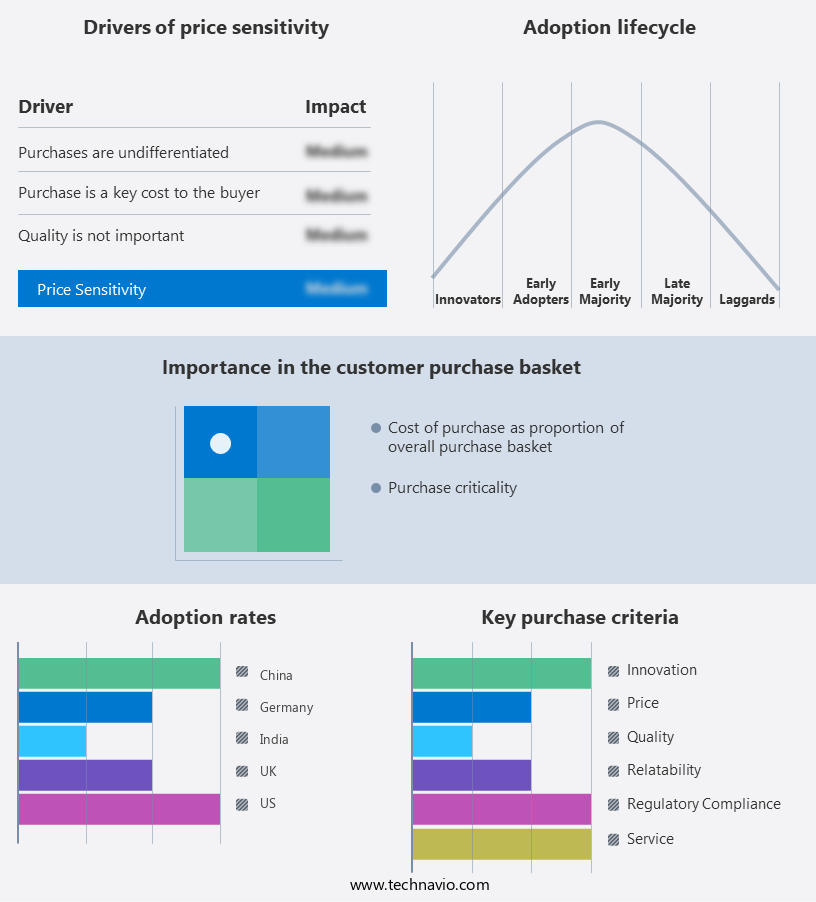
    5G NTN Market Share by Geography

     Customer Landscape of 5G NTN Industry

    Competitive Landscape & Market Insights

    Companies are implementing various strategies, such as strategic alliances, 5g ntn market forecast, partnerships, mergers and acquisitions, geographical expansion, and product/service launches, to enhance their presence in the industry.

    Amazon.com Inc. - A leading technology firm introduces 5G Neutrally-Neutral Third Party (NTN) solutions via its subsidiary, Kuiper Systems LLC. This strategic move underscores the company's commitment to advanced connectivity services, enabling seamless network integration for diverse communication needs.

    The industry research and growth report includes detailed analyses of the competitive landscape of the market and information about key companies, including:

    • Amazon.com Inc.
    • Anritsu Corp.
    • Avanti Hylas 2 Ltd.
    • EchoStar Corp.
    • Eutelsat Communications S.A.
    • GateHouse Holding AS
    • Inmarsat Global Ltd.
    • Intelsat US LLC
    • Iridium Communications Inc.
    • Keysight Technologies Inc.
    • NELCO Ltd.
    • Nokia Corp.
    • Rohde and Schwarz GmbH and Co. KG
    • SES SA
    • Space Exploration Technologies Corp.
    • Spirent Communications plc
    • Telesat Corp.
    • Thales Group
    • ZTE Corp.
    • Qualcomm Inc.

    Qualitative and quantitative analysis of companies has been conducted to help clients understand the wider business environment as well as the strengths and weaknesses of key industry players. Data is qualitatively analyzed to categorize companies as pure play, category-focused, industry-focused, and diversified; it is quantitatively analyzed to categorize companies as dominant, leading, strong, tentative, and weak.

    Recent Development and News in 5G NTN Market

    • In January 2024, Qualcomm announced the successful demonstration of 5G Non-Terrestrial Network (NTN) technology using high-altitude balloons, marking a significant step towards enabling 5G connectivity in remote and hard-to-reach areas (Qualcomm Press Release).
    • In March 2024, SpaceX and Nokia signed a strategic partnership to develop and deploy 5G NTN solutions using SpaceX's Starlink satellite constellation, aiming to provide global 5G coverage (SpaceX Press Release).
    • In May 2024, Intel invested USD100 million in HAPSMobile, a subsidiary of SoftBank, to accelerate the development and deployment of high-altitude platforms for 5G NTN services (Intel Newsroom).
    • In April 2025, the Federal Communications Commission (FCC) granted Airbus permission to operate 5G NTN trials using stratospheric balloons in the United States, paving the way for commercial deployments of 5G in rural and remote areas (FCC Press Release).

    Dive into Technavio’s robust research methodology, blending expert interviews, extensive data synthesis, and validated models for unparalleled 5G NTN Market insights. See full methodology.

    Market Scope

    Report Coverage

    Details

    Page number

    161

    Base year

    2023

    Historic period

    2018-2022

    Forecast period

    2024-2028

    Growth momentum & CAGR

    Accelerate at a CAGR of 39.19%

    Market growth 2024-2028

    USD 18347.83 million

    Market structure

    Fragmented

    YoY growth 2023-2024(%)

    36.4

    Key countries

    US, China, India, UK, and Germany

    Competitive landscape

    Leading Companies, Market Positioning of Companies, Competitive Strategies, and Industry Risks

    Request Free Sample

    Research Analyst Overview

    • In the ever-evolving 5G NTT market, several key areas continue to shape the landscape. Propagation modeling plays a crucial role in optimizing network performance, ensuring reliable connectivity. Authentication mechanisms are being fortified to enhance security, while performance evaluation metrics are under constant scrutiny to meet user expectations. System integration challenges persist as massive MIMO and non-terrestrial networks (NTNs) converge, requiring intricate coordination. Edge computing, with its power efficiency benefits, is increasingly adopted to minimize latency and improve data rate. Network management systems are evolving to accommodate these advancements, with a focus on link budget optimization and latency reduction. Signal interference remains a significant concern, necessitating advanced techniques for mitigation.
    • Network security is a top priority, with data encryption and inter-satellite links becoming essential components. Deployment strategies are being refined, with satellite gateways and spectrum allocation strategies shaping the industry. Satellite constellations are expanding, driving ground segment infrastructure development. Security protocols are being updated to address evolving threats, and IoT connectivity and machine-type communication (MTC) are gaining traction. Latency optimization and spectrum allocation are critical as the market moves towards network slicing and spectrum sharing. Performance evaluation and system integration continue to be major challenges, with the industry focusing on improving power efficiency and data rate. Network security remains a priority, with data encryption and inter-satellite links playing essential roles.
    • The 5G NTT market is dynamic, with ongoing advancements in propagation modeling, authentication mechanisms, and network management systems shaping its future.

    What are the Key Data Covered in this 5G NTN Market Research and Growth Report?

    • What is the expected growth of the 5G NTN Market between 2024 and 2028?

      • USD 18.35 billion, at a CAGR of 39.19%

    • What segmentation does the market report cover?

      • The report segmented by Component (Hardware, Software, and Service), Application (EMBB, MMTC, and URLCC), and Geography (North America, APAC, Europe, Middle East and Africa, and South America)

    • Which regions are analyzed in the report?

      • North America, APAC, Europe, Middle East and Africa, and South America

    • What are the key growth drivers and market challenges?

      • Rising demand for data-intensive services and applications, High cost of 5G NTN and investments in infrastructure

    • Who are the major players in the 5G NTN Market?

      • Key Companies Amazon.com Inc., Anritsu Corp., Avanti Hylas 2 Ltd., EchoStar Corp., Eutelsat Communications S.A., GateHouse Holding AS, Inmarsat Global Ltd., Intelsat US LLC, Iridium Communications Inc., Keysight Technologies Inc., NELCO Ltd., Nokia Corp., Rohde and Schwarz GmbH and Co. KG, SES SA, Space Exploration Technologies Corp., Spirent Communications plc, Telesat Corp., Thales Group, ZTE Corp., and Qualcomm Inc.

    Market Research Insights

    • The market encompasses a diverse range of applications, including disaster relief communication, aeronautical communication, and remote sensing. According to industry estimates, the market is projected to reach USD120 billion by 2026, growing at a compound annual growth rate of 35%. Antenna technology and modulation schemes are critical components of 5G Ntn networks, enabling high-speed data transmission and improved receiver sensitivity. Satellite access networks and network virtualization are key infrastructure elements, ensuring QoS management and dynamic spectrum access. Error correction and resource allocation are essential for maintaining reliable communication in various applications, such as maritime communication and air-to-ground communication.
    • Power amplifiers and signal processing are crucial for optimizing network performance, while backhaul solutions and spread spectrum technology facilitate seamless integration with terrestrial networks. Cognitive radio and frequency hopping are advanced technologies enhancing spectrum sharing and resource allocation efficiency. Ntn standardization and cybersecurity threats are ongoing concerns, requiring continuous efforts in error correction, channel coding, and Iot device management. The hybrid terrestrial-satellite network represents a promising development, offering enhanced coverage and improved reliability. Despite these advancements, challenges persist, including the need for QoS management, cybersecurity, and resource allocation in a dynamic and evolving market.

    We can help! Our analysts can customize this 5g ntn market research report to meet your requirements.

    Get in touch

    1 Executive Summary

    • 1.1 Market overview
      • Exhibit 01: Executive Summary – Chart on Market Overview
      • Exhibit 02: Executive Summary – Data Table on Market Overview
      • Exhibit 03: Executive Summary – Chart on Global Market Characteristics
      • Exhibit 04: Executive Summary – Chart on Market by Geography
      • Exhibit 05: Executive Summary – Chart on Market Segmentation by Component
      • Exhibit 06: Executive Summary – Chart on Market Segmentation by Application
      • Exhibit 07: Executive Summary – Chart on Incremental Growth
      • Exhibit 08: Executive Summary – Data Table on Incremental Growth
      • Exhibit 09: Executive Summary – Chart on Vendor Market Positioning

    2 Market Landscape

    • 2.1 Market ecosystem
      • Exhibit 10: Parent market
      • Exhibit 11: Market Characteristics

    3 Market Sizing

    • 3.1 Market definition
      • Exhibit 12: Offerings of vendors included in the market definition
    • 3.2 Market segment analysis
      • Exhibit 13: Market segments
    • 3.3 Market size 2023
      • 3.4 Market outlook: Forecast for 2023-2028
        • Exhibit 14: Chart on Global - Market size and forecast 2023-2028 ($ million)
        • Exhibit 15: Data Table on Global - Market size and forecast 2023-2028 ($ million)
        • Exhibit 16: Chart on Global Market: Year-over-year growth 2023-2028 (%)
        • Exhibit 17: Data Table on Global Market: Year-over-year growth 2023-2028 (%)

      4 Historic Market Size

      • 4.1 Global 5G NTN market 2018 - 2022
        • Exhibit 18: Historic Market Size – Data Table on global 5g ntn market 2018 - 2022 ($ million)
      • 4.2 Component Segment Analysis 2018 - 2022
        • Exhibit 19: Historic Market Size – Component Segment 2018 - 2022 ($ million)
      • 4.3 Application Segment Analysis 2018 - 2022
        • Exhibit 20: Historic Market Size – Application Segment 2018 - 2022 ($ million)
      • 4.4 Geography Segment Analysis 2018 - 2022
        • Exhibit 21: Historic Market Size – Geography Segment 2018 - 2022 ($ million)
      • 4.5 Country Segment Analysis 2018 - 2022
        • Exhibit 22: Historic Market Size – Country Segment 2018 - 2022 ($ million)

      5 Five Forces Analysis

      • 5.1 Five forces summary
        • Exhibit 23: Five forces analysis - Comparison between 2023 and 2028
      • 5.2 Bargaining power of buyers
        • Exhibit 24: Chart on Bargaining power of buyers – Impact of key factors 2023 and 2028
      • 5.3 Bargaining power of suppliers
        • Exhibit 25: Bargaining power of suppliers – Impact of key factors in 2023 and 2028
      • 5.4 Threat of new entrants
        • Exhibit 26: Threat of new entrants – Impact of key factors in 2023 and 2028
      • 5.5 Threat of substitutes
        • Exhibit 27: Threat of substitutes – Impact of key factors in 2023 and 2028
      • 5.6 Threat of rivalry
        • Exhibit 28: Threat of rivalry – Impact of key factors in 2023 and 2028
      • 5.7 Market condition
        • Exhibit 29: Chart on Market condition - Five forces 2023 and 2028

      6 Market Segmentation by Component

      • 6.1 Market segments
        • Exhibit 30: Chart on Component - Market share 2023-2028 (%)
        • Exhibit 31: Data Table on Component - Market share 2023-2028 (%)
      • 6.2 Comparison by Component
        • Exhibit 32: Chart on Comparison by Component
        • Exhibit 33: Data Table on Comparison by Component
      • 6.3 Hardware - Market size and forecast 2023-2028
        • Exhibit 34: Chart on Hardware - Market size and forecast 2023-2028 ($ million)
        • Exhibit 35: Data Table on Hardware - Market size and forecast 2023-2028 ($ million)
        • Exhibit 36: Chart on Hardware - Year-over-year growth 2023-2028 (%)
        • Exhibit 37: Data Table on Hardware - Year-over-year growth 2023-2028 (%)
      • 6.4 Software - Market size and forecast 2023-2028
        • Exhibit 38: Chart on Software - Market size and forecast 2023-2028 ($ million)
        • Exhibit 39: Data Table on Software - Market size and forecast 2023-2028 ($ million)
        • Exhibit 40: Chart on Software - Year-over-year growth 2023-2028 (%)
        • Exhibit 41: Data Table on Software - Year-over-year growth 2023-2028 (%)
      • 6.5 Service - Market size and forecast 2023-2028
        • Exhibit 42: Chart on Service - Market size and forecast 2023-2028 ($ million)
        • Exhibit 43: Data Table on Service - Market size and forecast 2023-2028 ($ million)
        • Exhibit 44: Chart on Service - Year-over-year growth 2023-2028 (%)
        • Exhibit 45: Data Table on Service - Year-over-year growth 2023-2028 (%)
      • 6.6 Market opportunity by Component
        • Exhibit 46: Market opportunity by Component ($ million)
        • Exhibit 47: Data Table on Market opportunity by Component ($ million)

      7 Market Segmentation by Application

      • 7.1 Market segments
        • Exhibit 48: Chart on Application - Market share 2023-2028 (%)
        • Exhibit 49: Data Table on Application - Market share 2023-2028 (%)
      • 7.2 Comparison by Application
        • Exhibit 50: Chart on Comparison by Application
        • Exhibit 51: Data Table on Comparison by Application
      • 7.3 EMBB - Market size and forecast 2023-2028
        • Exhibit 52: Chart on EMBB - Market size and forecast 2023-2028 ($ million)
        • Exhibit 53: Data Table on EMBB - Market size and forecast 2023-2028 ($ million)
        • Exhibit 54: Chart on EMBB - Year-over-year growth 2023-2028 (%)
        • Exhibit 55: Data Table on EMBB - Year-over-year growth 2023-2028 (%)
      • 7.4 MMTC - Market size and forecast 2023-2028
        • Exhibit 56: Chart on MMTC - Market size and forecast 2023-2028 ($ million)
        • Exhibit 57: Data Table on MMTC - Market size and forecast 2023-2028 ($ million)
        • Exhibit 58: Chart on MMTC - Year-over-year growth 2023-2028 (%)
        • Exhibit 59: Data Table on MMTC - Year-over-year growth 2023-2028 (%)
      • 7.5 URLCC - Market size and forecast 2023-2028
        • Exhibit 60: Chart on URLCC - Market size and forecast 2023-2028 ($ million)
        • Exhibit 61: Data Table on URLCC - Market size and forecast 2023-2028 ($ million)
        • Exhibit 62: Chart on URLCC - Year-over-year growth 2023-2028 (%)
        • Exhibit 63: Data Table on URLCC - Year-over-year growth 2023-2028 (%)
      • 7.6 Market opportunity by Application
        • Exhibit 64: Market opportunity by Application ($ million)
        • Exhibit 65: Data Table on Market opportunity by Application ($ million)

      8 Customer Landscape

      • 8.1 Customer landscape overview
        • Exhibit 66: Analysis of price sensitivity, lifecycle, customer purchase basket, adoption rates, and purchase criteria

      9 Geographic Landscape

      • 9.1 Geographic segmentation
        • Exhibit 67: Chart on Market share by geography 2023-2028 (%)
        • Exhibit 68: Data Table on Market share by geography 2023-2028 (%)
      • 9.2 Geographic comparison
        • Exhibit 69: Chart on Geographic comparison
        • Exhibit 70: Data Table on Geographic comparison
      • 9.3 North America - Market size and forecast 2023-2028
        • Exhibit 71: Chart on North America - Market size and forecast 2023-2028 ($ million)
        • Exhibit 72: Data Table on North America - Market size and forecast 2023-2028 ($ million)
        • Exhibit 73: Chart on North America - Year-over-year growth 2023-2028 (%)
        • Exhibit 74: Data Table on North America - Year-over-year growth 2023-2028 (%)
      • 9.4 APAC - Market size and forecast 2023-2028
        • Exhibit 75: Chart on APAC - Market size and forecast 2023-2028 ($ million)
        • Exhibit 76: Data Table on APAC - Market size and forecast 2023-2028 ($ million)
        • Exhibit 77: Chart on APAC - Year-over-year growth 2023-2028 (%)
        • Exhibit 78: Data Table on APAC - Year-over-year growth 2023-2028 (%)
      • 9.5 Europe - Market size and forecast 2023-2028
        • Exhibit 79: Chart on Europe - Market size and forecast 2023-2028 ($ million)
        • Exhibit 80: Data Table on Europe - Market size and forecast 2023-2028 ($ million)
        • Exhibit 81: Chart on Europe - Year-over-year growth 2023-2028 (%)
        • Exhibit 82: Data Table on Europe - Year-over-year growth 2023-2028 (%)
      • 9.6 Middle East and Africa - Market size and forecast 2023-2028
        • Exhibit 83: Chart on Middle East and Africa - Market size and forecast 2023-2028 ($ million)
        • Exhibit 84: Data Table on Middle East and Africa - Market size and forecast 2023-2028 ($ million)
        • Exhibit 85: Chart on Middle East and Africa - Year-over-year growth 2023-2028 (%)
        • Exhibit 86: Data Table on Middle East and Africa - Year-over-year growth 2023-2028 (%)
      • 9.7 South America - Market size and forecast 2023-2028
        • Exhibit 87: Chart on South America - Market size and forecast 2023-2028 ($ million)
        • Exhibit 88: Data Table on South America - Market size and forecast 2023-2028 ($ million)
        • Exhibit 89: Chart on South America - Year-over-year growth 2023-2028 (%)
        • Exhibit 90: Data Table on South America - Year-over-year growth 2023-2028 (%)
      • 9.8 US - Market size and forecast 2023-2028
        • Exhibit 91: Chart on US - Market size and forecast 2023-2028 ($ million)
        • Exhibit 92: Data Table on US - Market size and forecast 2023-2028 ($ million)
        • Exhibit 93: Chart on US - Year-over-year growth 2023-2028 (%)
        • Exhibit 94: Data Table on US - Year-over-year growth 2023-2028 (%)
      • 9.9 China - Market size and forecast 2023-2028
        • Exhibit 95: Chart on China - Market size and forecast 2023-2028 ($ million)
        • Exhibit 96: Data Table on China - Market size and forecast 2023-2028 ($ million)
        • Exhibit 97: Chart on China - Year-over-year growth 2023-2028 (%)
        • Exhibit 98: Data Table on China - Year-over-year growth 2023-2028 (%)
      • 9.10 India - Market size and forecast 2023-2028
        • Exhibit 99: Chart on India - Market size and forecast 2023-2028 ($ million)
        • Exhibit 100: Data Table on India - Market size and forecast 2023-2028 ($ million)
        • Exhibit 101: Chart on India - Year-over-year growth 2023-2028 (%)
        • Exhibit 102: Data Table on India - Year-over-year growth 2023-2028 (%)
      • 9.11 UK - Market size and forecast 2023-2028
        • Exhibit 103: Chart on UK - Market size and forecast 2023-2028 ($ million)
        • Exhibit 104: Data Table on UK - Market size and forecast 2023-2028 ($ million)
        • Exhibit 105: Chart on UK - Year-over-year growth 2023-2028 (%)
        • Exhibit 106: Data Table on UK - Year-over-year growth 2023-2028 (%)
      • 9.12 Germany - Market size and forecast 2023-2028
        • Exhibit 107: Chart on Germany - Market size and forecast 2023-2028 ($ million)
        • Exhibit 108: Data Table on Germany - Market size and forecast 2023-2028 ($ million)
        • Exhibit 109: Chart on Germany - Year-over-year growth 2023-2028 (%)
        • Exhibit 110: Data Table on Germany - Year-over-year growth 2023-2028 (%)
      • 9.13 Market opportunity by geography
        • Exhibit 111: Market opportunity by geography ($ million)
        • Exhibit 112: Data Tables on Market opportunity by geography ($ million)

      10 Drivers, Challenges, and Trends

      • 10.1 Market drivers
        • 10.2 Market challenges
          • 10.3 Impact of drivers and challenges
            • Exhibit 113: Impact of drivers and challenges in 2023 and 2028
          • 10.4 Market trends

            11 Vendor Landscape

            • 11.1 Overview
              • 11.2 Vendor landscape
                • Exhibit 114: Overview on Criticality of inputs and Factors of differentiation
              • 11.3 Landscape disruption
                • Exhibit 115: Overview on factors of disruption
              • 11.4 Industry risks
                • Exhibit 116: Impact of key risks on business

              12 Vendor Analysis

              • 12.1 Vendors covered
                • Exhibit 117: Vendors covered
              • 12.2 Market positioning of vendors
                • Exhibit 118: Matrix on vendor position and classification
              • 12.3 Amazon.com Inc.
                • Exhibit 119: Amazon.com Inc. - Overview
                • Exhibit 120: Amazon.com Inc. - Business segments
                • Exhibit 121: Amazon.com Inc. - Key news
                • Exhibit 122: Amazon.com Inc. - Key offerings
                • Exhibit 123: Amazon.com Inc. - Segment focus
              • 12.4 Avanti Hylas 2 Ltd.
                • Exhibit 124: Avanti Hylas 2 Ltd. - Overview
                • Exhibit 125: Avanti Hylas 2 Ltd. - Product / Service
                • Exhibit 126: Avanti Hylas 2 Ltd. - Key offerings
              • 12.5 EchoStar Corp.
                • Exhibit 127: EchoStar Corp. - Overview
                • Exhibit 128: EchoStar Corp. - Business segments
                • Exhibit 129: EchoStar Corp. - Key news
                • Exhibit 130: EchoStar Corp. - Key offerings
                • Exhibit 131: EchoStar Corp. - Segment focus
              • 12.6 Eutelsat Communications S.A.
                • Exhibit 132: Eutelsat Communications S.A. - Overview
                • Exhibit 133: Eutelsat Communications S.A. - Product / Service
                • Exhibit 134: Eutelsat Communications S.A. - Key news
                • Exhibit 135: Eutelsat Communications S.A. - Key offerings
              • 12.7 Inmarsat Global Ltd.
                • Exhibit 136: Inmarsat Global Ltd. - Overview
                • Exhibit 137: Inmarsat Global Ltd. - Business segments
                • Exhibit 138: Inmarsat Global Ltd. - Key offerings
                • Exhibit 139: Inmarsat Global Ltd. - Segment focus
              • 12.8 Keysight Technologies Inc.
                • Exhibit 140: Keysight Technologies Inc. - Overview
                • Exhibit 141: Keysight Technologies Inc. - Business segments
                • Exhibit 142: Keysight Technologies Inc. - Key news
                • Exhibit 143: Keysight Technologies Inc. - Key offerings
                • Exhibit 144: Keysight Technologies Inc. - Segment focus
              • 12.9 NELCO Ltd.
                • Exhibit 145: NELCO Ltd. - Overview
                • Exhibit 146: NELCO Ltd. - Product / Service
                • Exhibit 147: NELCO Ltd. - Key offerings
              • 12.10 Nokia Corp.
                • Exhibit 148: Nokia Corp. - Overview
                • Exhibit 149: Nokia Corp. - Business segments
                • Exhibit 150: Nokia Corp. - Key offerings
                • Exhibit 151: Nokia Corp. - Segment focus
              • 12.11 Qualcomm Inc.
                • Exhibit 152: Qualcomm Inc. - Overview
                • Exhibit 153: Qualcomm Inc. - Business segments
                • Exhibit 154: Qualcomm Inc. - Key news
                • Exhibit 155: Qualcomm Inc. - Key offerings
                • Exhibit 156: Qualcomm Inc. - Segment focus
              • 12.12 Rohde and Schwarz GmbH and Co. KG
                • Exhibit 157: Rohde and Schwarz GmbH and Co. KG - Overview
                • Exhibit 158: Rohde and Schwarz GmbH and Co. KG - Product / Service
                • Exhibit 159: Rohde and Schwarz GmbH and Co. KG - Key offerings
              • 12.13 SES SA
                • Exhibit 160: SES SA - Overview
                • Exhibit 161: SES SA - Product / Service
                • Exhibit 162: SES SA - Key offerings
              • 12.14 Space Exploration Technologies Corp.
                • Exhibit 163: Space Exploration Technologies Corp. - Overview
                • Exhibit 164: Space Exploration Technologies Corp. - Product / Service
                • Exhibit 165: Space Exploration Technologies Corp. - Key offerings
              • 12.15 Telesat Corp.
                • Exhibit 166: Telesat Corp. - Overview
                • Exhibit 167: Telesat Corp. - Product / Service
                • Exhibit 168: Telesat Corp. - Key offerings
              • 12.16 Thales Group
                • Exhibit 169: Thales Group - Overview
                • Exhibit 170: Thales Group - Business segments
                • Exhibit 171: Thales Group - Key news
                • Exhibit 172: Thales Group - Key offerings
                • Exhibit 173: Thales Group - Segment focus
              • 12.17 ZTE Corp.
                • Exhibit 174: ZTE Corp. - Overview
                • Exhibit 175: ZTE Corp. - Business segments
                • Exhibit 176: ZTE Corp. - Key news
                • Exhibit 177: ZTE Corp. - Key offerings
                • Exhibit 178: ZTE Corp. - Segment focus

              13 Appendix

              • 13.1 Scope of the report
                • 13.2 Inclusions and exclusions checklist
                  • Exhibit 179: Inclusions checklist
                  • Exhibit 180: Exclusions checklist
                • 13.3 Currency conversion rates for US$
                  • Exhibit 181: Currency conversion rates for US$
                • 13.4 Research methodology
                  • Exhibit 182: Research methodology
                  • Exhibit 183: Validation techniques employed for market sizing
                  • Exhibit 184: Information sources
                • 13.5 List of abbreviations
                  • Exhibit 185: List of abbreviations

                Research Methodology

                Technavio presents a detailed picture of the market by way of study, synthesis, and summation of data from multiple sources. The analysts have presented the various facets of the market with a particular focus on identifying the key industry influencers. The data thus presented is comprehensive, reliable, and the result of extensive research, both primary and secondary.

                INFORMATION SOURCES

                Primary sources

                • Manufacturers and suppliers
                • Channel partners
                • Industry experts
                • Strategic decision makers

                Secondary sources

                • Industry journals and periodicals
                • Government data
                • Financial reports of key industry players
                • Historical data
                • Press releases

                DATA ANALYSIS

                Data Synthesis

                • Collation of data
                • Estimation of key figures
                • Analysis of derived insights

                Data Validation

                • Triangulation with data models
                • Reference against proprietary databases
                • Corroboration with industry experts

                REPORT WRITING

                Qualitative

                • Market drivers
                • Market challenges
                • Market trends
                • Five forces analysis

                Quantitative

                • Market size and forecast
                • Market segmentation
                • Geographical insights
                • Competitive landscape

                Interested in this report?

                Get your sample now to see our research methodology and insights!

                Download Now

                Frequently Asked Questions

                5G NTN market growth will increase by $ 18347.83 mn during 2024-2028.

                The 5G NTN market is expected to grow at a CAGR of 39.19% during 2024-2028.

                5G NTN market is segmented by Component( Hardware, Software, Service) Application( EMBB, MMTC, URLCC)

                Amazon.com Inc., Anritsu Corp., Avanti Hylas 2 Ltd., EchoStar Corp., Eutelsat Communications S.A., GateHouse Holding AS, Inmarsat Global Ltd., Intelsat US LLC, Iridium Communications Inc., Keysight Technologies Inc., NELCO Ltd., Nokia Corp., Rohde and Schwarz GmbH and Co. KG, SES SA, Space Exploration Technologies Corp., Spirent Communications plc, Telesat Corp., Thales Group, ZTE Corp., Qualcomm Inc. are a few of the key vendors in the 5G NTN market.

                North America will register the highest growth rate of 40% among the other regions. Therefore, the 5G NTN market in North America is expected to garner significant business opportunities for the vendors during the forecast period.

                US, China, India, UK, Germany

                • Rising demand for data-intensive services and applicationsRising demand for data-intensive services and applications has emerged as a significant driver for the global shift to 5G networks. As consumers increasingly rely on data-hungry services is the driving factor this market.
                • such as video streaming is the driving factor this market.
                • cloud computing is the driving factor this market.
                • and Internet of Things (IoT) devices is the driving factor this market.
                • the need for faster is the driving factor this market.
                • more reliable is the driving factor this market.
                • and low-latency connectivity has become paramount. Firstly is the driving factor this market.
                • the proliferation of video streaming platforms is the driving factor this market.
                • such as Netflix and YouTube is the driving factor this market.
                • has revolutionized the way people consume media. With 5G technology is the driving factor this market.
                • users can enjoy high-definition and immersive streaming experiences without facing buffering or pixelation issues. Improved network speeds and the capacity of 5G enable seamless streaming of 4K and even 8K content is the driving factor this market.
                • thereby enhancing the user experience. Secondly is the driving factor this market.
                • the advent of cloud computing has fueled the demand for data-intensive applications. From large-scale data analytics to artificial intelligence and machine learning algorithms is the driving factor this market.
                • these applications rely heavily on rapid data processing and transfer. 5G networks provide the necessary infrastructure to handle the enormous volumes of data generated and consumed by such applications is the driving factor this market.
                • thereby enabling real-time data analysis and decision-making. Moreover is the driving factor this market.
                • the growth of the Internet of Things (IoT) has increased the need for a robust and reliable network infrastructure exponentially. IoT devices is the driving factor this market.
                • such as smart homes is the driving factor this market.
                • wearables is the driving factor this market.
                • and industrial sensors is the driving factor this market.
                • generate massive amounts of data that require low-latency connectivity. The ultra-low latency capabilities of 5G ensure seamless communication between numerous IoT devices is the driving factor this market.
                • enabling real-time monitoring is the driving factor this market.
                • control is the driving factor this market.
                • and automation across various application sectors. The COVID-19 pandemic further highlighted the importance of data-intensive services. With the surge in the adoption of remote work is the driving factor this market.
                • telemedicine is the driving factor this market.
                • and online learning is the driving factor this market.
                • the reliance on high-speed connectivity became even more critical. 5G networks provided the necessary bandwidth and reliability to support these services is the driving factor this market.
                • ensuring uninterrupted access to critical applications and services. The need for faster speeds is the driving factor this market.
                • increased capacity is the driving factor this market.
                • and low-latency connectivity has propelled the development and deployment of 5G networks. As the world becomes more digitized and data-driven is the driving factor this market.
                • 5G will continue to play a vital role in enabling the seamless and efficient delivery of data-intensive services to meet the evolving needs of consumers and businesses is the driving factor this market.
                • which is the driving factor this market.
                • in turn is the driving factor this market.
                • will drive the growth of the global 5G NTN market during the forecast period. is the driving factor this market.

                The 5G NTN market vendors should focus on grabbing business opportunities from the Hardware segment as it accounted for the largest market share in the base year.
                RIA - Research AI Assistant
                Ask RIA
