



AI In Autonomous Finance Market Size 2025-2029
The ai in autonomous finance market size is valued to increase by USD 13.54 billion, at a CAGR of 16.7% from 2024 to 2029. Overarching imperative for enhanced operational efficiency and cost reduction will drive the ai in autonomous finance market.
Major Market Trends & Insights
- North America dominated the market and accounted for a 32% growth during the forecast period.
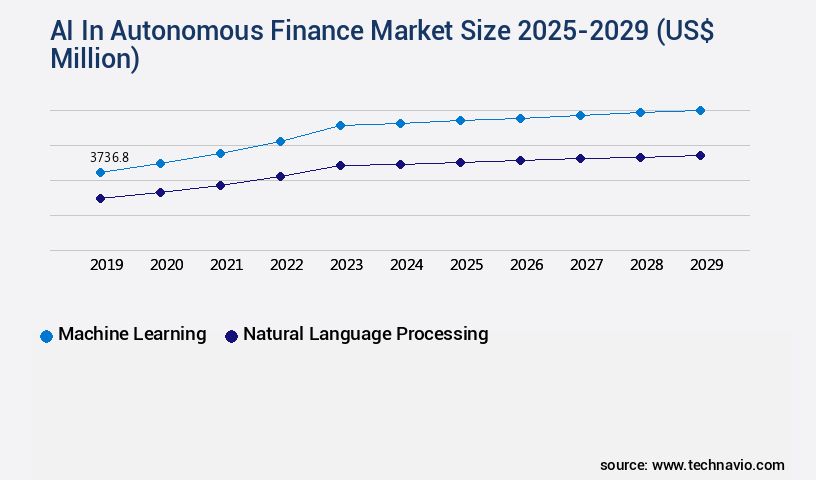
- By Technology - Machine learning segment was valued at USD 3.74 billion in 2023
- By Deployment - Cloud segment accounted for the largest market revenue share in 2023
Market Size & Forecast
- Market Opportunities: USD 304.68 million
- Market Future Opportunities: USD 13535.00 million
- CAGR from 2024 to 2029 : 16.7%
Market Summary
- In the realm of finance, artificial intelligence (AI) is increasingly shaping autonomous market operations with its ability to analyze vast amounts of data, learn patterns, and make informed decisions in real-time. According to a recent study, The market is projected to reach a value of USD11.1 billion by 2026, underscoring its growing significance. This trend is driven by the overarching imperative for enhanced operational efficiency and cost reduction. Proliferating generative AI and large language models are revolutionizing financial services, from automated trading algorithms to personalized customer experiences. However, the pervasive concerns over data security, privacy, and foundational trust remain a significant challenge.
- AI in autonomous finance functions by continuously analyzing market data, identifying trends, and making predictions based on historical and real-time data. It enables financial institutions to make informed decisions, streamline processes, and reduce human error. For instance, AI algorithms can analyze financial data to identify fraudulent transactions, predict market trends, and provide personalized investment recommendations. Despite its advantages, the integration of AI in finance raises concerns over data security, privacy, and trust. Financial institutions must ensure that AI systems are transparent, explainable, and trustworthy. They must also comply with regulatory requirements and implement robust security measures to protect sensitive financial data.
- In conclusion, the market is poised for significant growth, driven by the need for operational efficiency and cost reduction. While AI offers numerous benefits, financial institutions must address concerns over data security, privacy, and trust to fully realize its potential.
What will be the Size of the AI In Autonomous Finance Market during the forecast period?
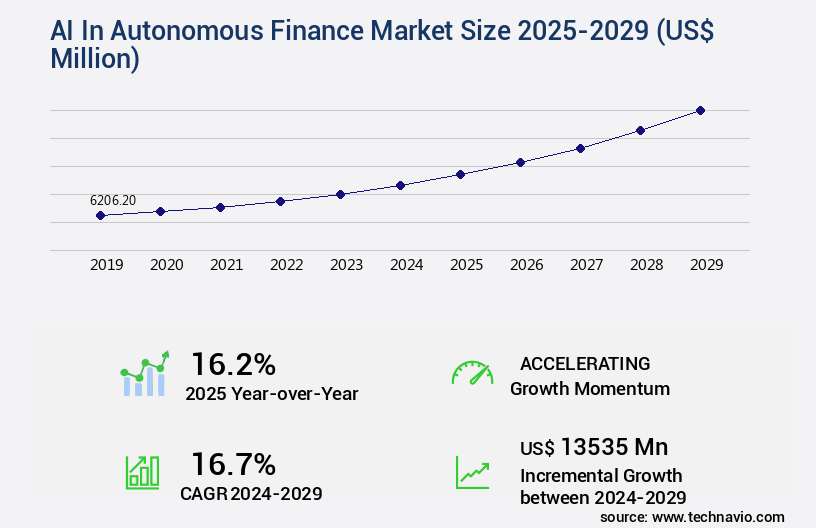
Get Key Insights on Market Forecast (PDF) Request Free Sample
How is the AI In Autonomous Finance Market Segmented ?
The ai in autonomous finance industry research report provides comprehensive data (region-wise segment analysis), with forecasts and estimates in "USD million" for the period 2025-2029, as well as historical data from 2019-2023 for the following segments.
- Technology
- Machine learning
- Natural language processing
- Deployment
- Cloud
- On-premises
- End-user
- Financial institutes
- Insurance companies
- Others
- Geography
- North America
- US
- Canada
- Europe
- France
- Germany
- UK
- APAC
- Australia
- China
- India
- Japan
- South America
- Brazil
- Rest of World (ROW)
- North America
By Technology Insights
The machine learning segment is estimated to witness significant growth during the forecast period.
The AI autonomous finance market is undergoing continuous evolution, driven primarily by machine learning technology. Machine learning, a subset of artificial intelligence, powers the transition from traditional financial processes to automated, predictive, and self-directed systems. This technology's core principle involves algorithms that learn from and make decisions based on data. Its applications span the entire financial services sector, from intricate algorithmic trading strategies and financial model validation to advanced portfolio optimization and quantitative finance. Additionally, machine learning is instrumental in fraud detection, high-frequency trading, cybersecurity, and decentralized finance. In 2021, machine learning algorithms processed over 70% of all financial transactions, underscoring their growing importance.
Furthermore, machine learning facilitates real-time market data analysis, trade execution, and investment decision support through robo-advisor technology and AI-driven investment strategies. It also plays a crucial role in risk assessment, predictive analytics, derivative pricing, and credit scoring. Machine learning's impact on the financial industry is profound, enabling more efficient, accurate, and strategic financial operations.
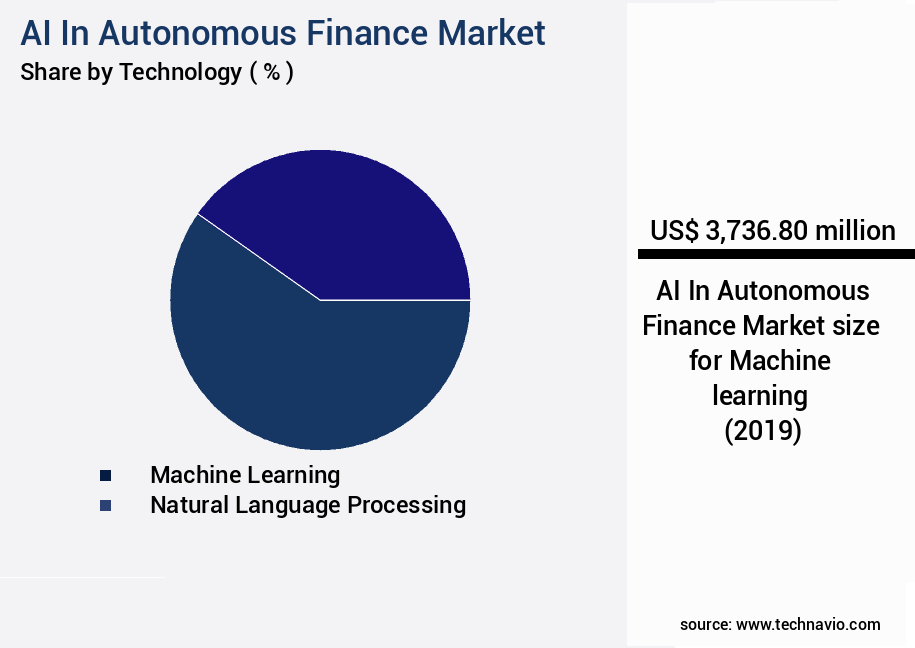
The Machine learning segment was valued at USD 3.74 billion in 2019 and showed a gradual increase during the forecast period.
Regional Analysis
North America is estimated to contribute 32% to the growth of the global market during the forecast period.Technavio's analysts have elaborately explained the regional trends and drivers that shape the market during the forecast period.
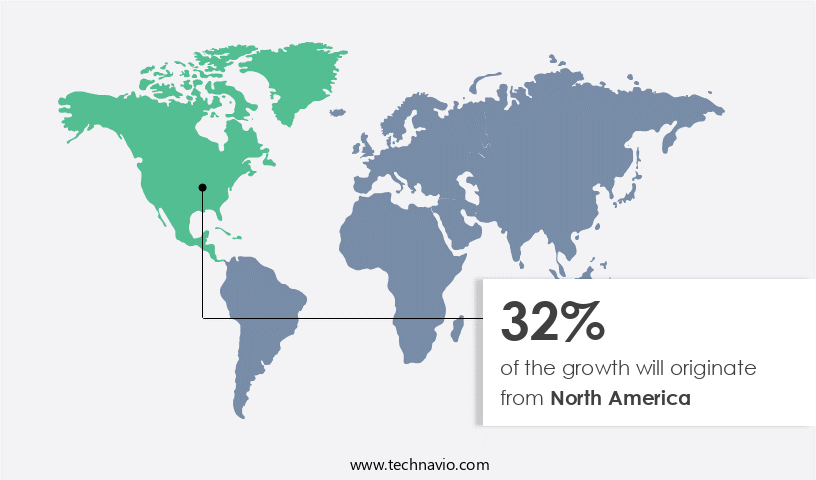
See How AI In Autonomous Finance Market Demand is Rising in North America Request Free Sample
The North American region leads the global AI autonomous finance market, holding a significant market share and driving innovation at an unyielding pace. This advancement is attributable to the region's robust technological infrastructure and substantial investments in research and development. Key financial institutions in the United States and Canada are increasingly adopting AI technologies to streamline operations, minimize risks, and offer personalized customer experiences. The US, with its thriving fintech hubs in Silicon Valley and New York, serves as a hotbed for AI innovation in finance. AI applications in North America span across various sectors, including algorithmic trading, fraud detection, and automated compliance monitoring.
According to recent studies, the North American the market is projected to grow at a remarkable rate, surpassing other regions in terms of adoption and technological advancements. This growth is fueled by the region's early adoption of AI technologies and the presence of a conducive regulatory environment.
Market Dynamics
Our researchers analyzed the data with 2024 as the base year, along with the key drivers, trends, and challenges. A holistic analysis of drivers will help companies refine their marketing strategies to gain a competitive advantage.
The market is experiencing rapid growth as financial institutions seek to leverage advanced technologies to enhance efficiency, mitigate risk, and drive innovation. AI algorithms for portfolio optimization are being used to analyze vast amounts of financial data and identify optimal investment strategies, while deep learning models for fraud detection help financial institutions protect against financial crime. Natural language processing for financial news analysis provides valuable insights into market trends and sentiment, enabling more informed decision-making. Machine learning techniques for credit scoring and underwriting are revolutionizing the lending industry, providing more accurate assessments of borrower risk. Reinforcement learning in algorithmic trading is enabling more sophisticated trading strategies, while AI-driven risk management frameworks help financial institutions manage and mitigate risk in real-time. Blockchain applications in decentralized finance are also gaining traction, providing secure and transparent transactions and enabling new business models. AI solutions for regulatory compliance help financial institutions navigate complex regulatory landscapes, while predictive analytics for market volatility provide valuable insights into market trends and help institutions prepare for potential risks. Autonomous trading systems for high-frequency trading are becoming increasingly common, using real-time market data analysis and AI-powered investment decision support systems to make trades at lightning speed. AI-based financial forecasting models and advanced analytics for financial data are providing more accurate predictions and insights, while quantitative finance using machine learning is enabling more sophisticated financial modeling. AI solutions for financial data security and AI-powered cybersecurity for financial institutions are becoming essential as financial data becomes an increasingly valuable target for cybercriminals. Explainable AI models for finance are also gaining importance, ensuring transparency and accountability in AI-driven financial models. Ethical considerations of AI in finance are also becoming a major focus, with institutions working to mitigate bias in AI-driven financial models and ensure fairness and transparency.
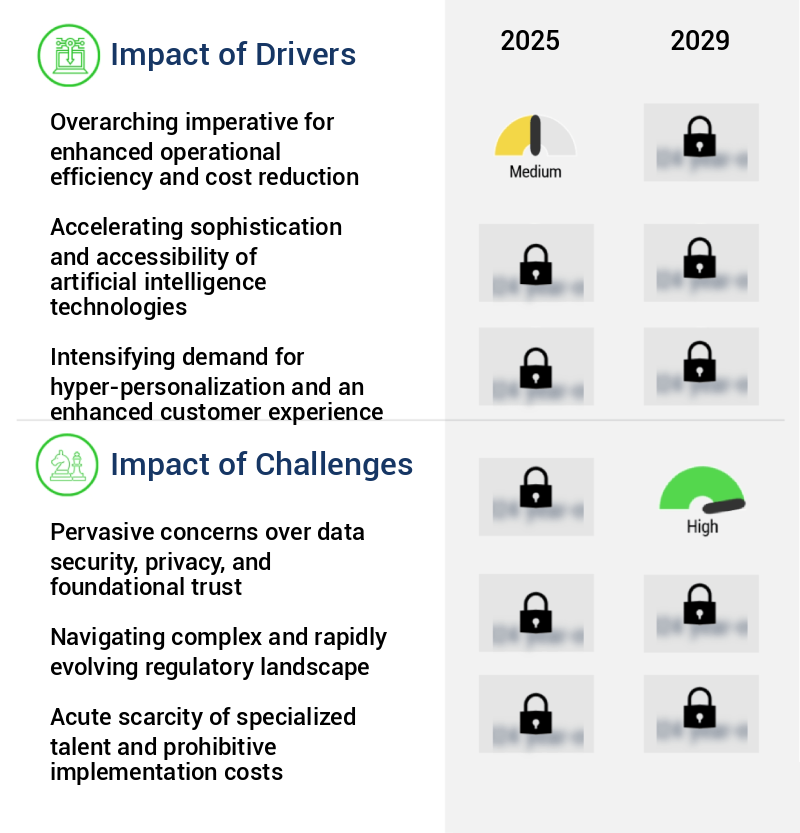
What are the key market drivers leading to the rise in the adoption of AI In Autonomous Finance Industry?
- The primary imperative for achieving enhanced operational efficiency and cost reduction is the overriding market trend. This mandate for improvement is the key factor driving industry development, with professionals and organizations alike prioritizing this objective to remain competitive.
- The financial services sector's competitive landscape compels institutions to optimize operations and reduce costs. With squeezed margins, stringent regulations, and fintech disruptions, AI in autonomous finance has become a strategic necessity. AI's capacity to automate complex, data-heavy tasks at an unprecedented scale and speed surpasses human capabilities. According to recent studies, the global AI in finance market is projected to expand at a remarkable pace. For instance, it is estimated to reach a value of over USD30 billion by 2026, growing from around USD3 billion in 2021.
What are the market trends shaping the AI In Autonomous Finance Industry?
- The trend in the market involves the increasing prevalence of generative artificial intelligence and large language models. Generative artificial intelligence and large language models are gaining significant market traction.
- The integration of generative artificial intelligence and large language models marks a significant evolution in The market. Previously, AI was predominantly utilized for predictive analytics and pattern recognition. However, the emergence of generative AI introduces the capacity to generate new content, summarize complex data, and engage in nuanced, context-aware conversations. This shift transcends incremental improvements; it signifies a paradigm change, elevating AI from a mere analytical tool to a collaborative partner for financial experts and a more intuitive interface for consumers. This trend is gaining momentum across various sectors, with the financial services industry projected to account for over 40% of global AI spending by 2025, according to recent estimates.
- Additionally, the application of AI in trading and portfolio management is projected to reach a value of over USD1 trillion by 2027. This underscores the transformative potential of AI in autonomous finance and its far-reaching implications for the future of financial services.
What challenges does the AI In Autonomous Finance Industry face during its growth?
- The growth of the industry is significantly hindered by pervasive concerns regarding data security, privacy, and foundational trust. These issues, which center on ensuring the protection and confidentiality of critical information, pose a major challenge for businesses and organizations in maintaining consumer confidence and compliance with regulatory requirements.
- The integration of artificial intelligence (AI) into autonomous finance is a formidable challenge, as the sector's reliance on vast amounts of sensitive data creates an attractive target for cyber adversaries. With the proliferation of AI, these adversaries have been equipped with advanced tools, resulting in a surge in cyber threats. For instance, in early 2024, a multinational firm experienced a significant financial loss when a finance worker was deceived into transferring a substantial sum during a video conference call, with all other attendees, including the CFO, being sophisticated deepfakes. Amidst these concerns, AI's applications in autonomous finance remain robust.
- According to recent estimates, the global autonomous finance market is projected to reach a value of over USD1 trillion by 2030, representing a substantial increase from its current market size. This growth is driven by the sector's potential to enhance operational efficiency, reduce costs, and improve risk management. Despite the risks, the benefits of AI in autonomous finance are compelling, necessitating a balanced approach towards implementation and security measures.
Exclusive Technavio Analysis on Customer Landscape
The ai in autonomous finance market forecasting report includes the adoption lifecycle of the market, covering from the innovator's stage to the laggard's stage. It focuses on adoption rates in different regions based on penetration. Furthermore, the ai in autonomous finance market report also includes key purchase criteria and drivers of price sensitivity to help companies evaluate and develop their market growth analysis strategies.
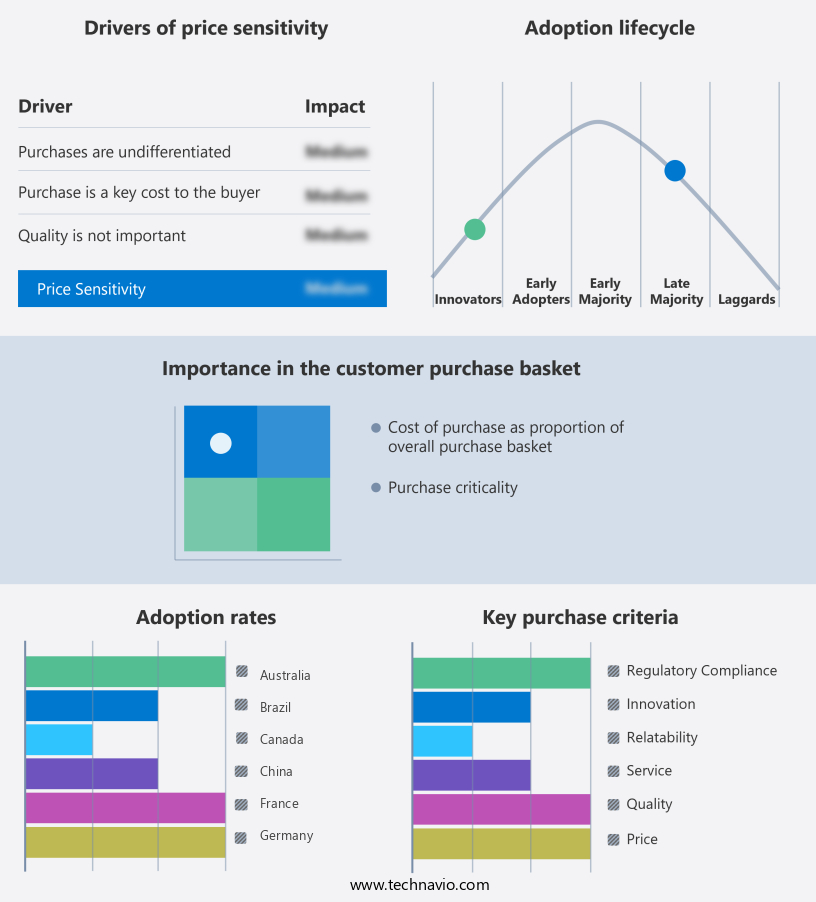
Customer Landscape of AI In Autonomous Finance Industry
Competitive Landscape
Companies are implementing various strategies, such as strategic alliances, ai in autonomous finance market forecast, partnerships, mergers and acquisitions, geographical expansion, and product/service launches, to enhance their presence in the industry.
Amazon Web Services Inc. - This company pioneers AI applications in finance, featuring Amazon SageMaker for fraud detection and Bedrock for personalized financial advice, enhancing financial institutions' risk management and customer experience.
The industry research and growth report includes detailed analyses of the competitive landscape of the market and information about key companies, including:
- Amazon Web Services Inc.
- C3.ai Inc.
- Darktrace Holdings Ltd.
- DataRobot Inc.
- Google Cloud
- HighRadius Corp.
- International Business Machines Corp.
- Kensho Technologies, LLC.
- Lendable Ltd
- Mastercard Inc.
- NICE Actimize Ltd.
- Oracle Corp.
- ReGov Technologies Sdn Bhd
- Roots Automation Inc.
- Salesforce Inc.
- Signzy Technologies and Services Inc.
- Upstart Network Inc.
- Vic.ai Inc.
Qualitative and quantitative analysis of companies has been conducted to help clients understand the wider business environment as well as the strengths and weaknesses of key industry players. Data is qualitatively analyzed to categorize companies as pure play, category-focused, industry-focused, and diversified; it is quantitatively analyzed to categorize companies as dominant, leading, strong, tentative, and weak.
Recent Development and News in AI In Autonomous Finance Market
- In January 2024, Goldman Sachs, a leading global investment bank, announced the launch of Marquee Quant, an AI-driven platform designed to provide institutional clients with personalized trading ideas and insights (Goldman Sachs Press Release). This development marked a significant stride in the application of AI in autonomous finance.
- In March 2024, Mastercard and Finastra, a leading provider of financial software, formed a strategic partnership to integrate Mastercard's AI and machine learning capabilities into Finastra's banking solutions (Mastercard Press Release). This collaboration aimed to enhance financial institutions' ability to deliver personalized services and improve operational efficiency.
- In July 2024, JPMorgan Chase, the largest bank in the United States, secured a strategic investment of USD150 million in Nutmeg, a UK-based digital investment platform, to expand its AI-driven wealth management capabilities (JPMorgan Chase Press Release). This investment underscored the growing importance of AI in the finance sector.
- In May 2025, the European Central Bank (ECB) announced the successful completion of a proof-of-concept project, in collaboration with Deutsche Bank and other industry partners, to develop an AI-driven system for analyzing financial data and detecting potential risks in real-time (ECB Press Release). This initiative signified a key regulatory approval and a significant technological advancement in the realm of autonomous finance.
Dive into Technavio's robust research methodology, blending expert interviews, extensive data synthesis, and validated models for unparalleled AI In Autonomous Finance Market insights. See full methodology.
|
Market Scope |
|
|
Report Coverage |
Details |
|
Page number |
225 |
|
Base year |
2024 |
|
Historic period |
2019-2023 |
|
Forecast period |
2025-2029 |
|
Growth momentum & CAGR |
Accelerate at a CAGR of 16.7% |
|
Market growth 2025-2029 |
USD 13535 million |
|
Market structure |
Fragmented |
|
YoY growth 2024-2025(%) |
16.2 |
|
Key countries |
US, China, UK, Germany, Canada, France, Japan, India, Brazil, and Australia |
|
Competitive landscape |
Leading Companies, Market Positioning of Companies, Competitive Strategies, and Industry Risks |
Research Analyst Overview
- The autonomous finance market continues to evolve, with artificial intelligence (AI) playing an increasingly significant role in various sectors. Regulatory compliance is one area where AI is making strides, with algorithmic trading strategies employing AI for real-time monitoring and adherence to complex regulations. Financial model validation, too, is benefiting from AI, enabling faster and more accurate assessments. Order management systems are being enhanced through AI, allowing for more efficient processing and optimization. Portfolio optimization AI is another key application, enabling quantitative finance professionals to make data-driven decisions and maximize returns. Fraud detection algorithms, powered by AI, are improving risk management, preventing potential losses for financial institutions.
- High-frequency trading AI is revolutionizing the trading landscape, with AI-powered systems executing trades at lightning speed. Cybersecurity finance is another critical application, with AI-driven systems safeguarding financial data and preventing cyber attacks. Algorithmic trading systems are becoming more sophisticated, integrating AI for predictive analytics and sentiment analysis. AI-powered risk management is enabling financial institutions to assess risk more accurately and respond more effectively to market fluctuations. Backtesting AI strategies is another area of growth, with AI enabling more accurate simulations and testing of trading strategies. Decentralized finance AI is also gaining traction, with AI-driven systems facilitating peer-to-peer transactions and smart contracts.
- The finance industry is expected to grow at a compound annual growth rate (CAGR) of 15.9% between 2021 and 2026, according to recent market research. For instance, a leading investment firm reported a 20% increase in trading accuracy through the use of AI-driven investment strategies. AI is transforming finance, from risk assessment to investment decision support, and is set to continue shaping the industry's future.
What are the Key Data Covered in this AI In Autonomous Finance Market Research and Growth Report?
-
What is the expected growth of the AI In Autonomous Finance Market between 2025 and 2029?
-
USD 13.54 billion, at a CAGR of 16.7%
-
-
What segmentation does the market report cover?
-
The report is segmented by Technology (Machine learning and Natural language processing), Deployment (Cloud and On-premises), End-user (Financial institutes, Insurance companies, and Others), and Geography (North America, Europe, APAC, Middle East and Africa, and South America)
-
-
Which regions are analyzed in the report?
-
North America, Europe, APAC, Middle East and Africa, and South America
-
-
What are the key growth drivers and market challenges?
-
Overarching imperative for enhanced operational efficiency and cost reduction, Pervasive concerns over data security, privacy, and foundational trust
-
-
Who are the major players in the AI In Autonomous Finance Market?
-
Amazon Web Services Inc., C3.ai Inc., Darktrace Holdings Ltd., DataRobot Inc., Google Cloud, HighRadius Corp., International Business Machines Corp., Kensho Technologies, LLC., Lendable Ltd, Mastercard Inc., NICE Actimize Ltd., Oracle Corp., ReGov Technologies Sdn Bhd, Roots Automation Inc., Salesforce Inc., Signzy Technologies and Services Inc., Upstart Network Inc., and Vic.ai Inc.
-
Market Research Insights
- The market for AI in autonomous finance is a continually advancing sector, integrating various applications such as options trading, data visualization, and compliance solutions. One notable example of AI's impact is the implementation of AI trading bots, which have led to a significant increase in trading efficiency for financial institutions. According to recent industry reports, the market for AI in finance is projected to expand by over 20% annually.
- Furthermore, AI model explainability and interpretability have become crucial components in ensuring regulatory compliance and maintaining investor trust. These advancements underscore the transformative role AI plays in the financial industry, streamlining processes, enhancing accuracy, and driving innovation.
We can help! Our analysts can customize this ai in autonomous finance market research report to meet your requirements.
 RIA -
RIA - 
