



AI Productivity Tools Market Size 2025-2029
The AI productivity tools market size is valued to increase by USD 25.03 billion, at a CAGR of 27.9% from 2024 to 2029. Proliferation and integration of advanced generative AI will drive the AI productivity tools market.
Market Insights
- North America dominated the market and accounted for a 33% growth during the 2025-2029.
- By Product Type - Virtual assistants segment was valued at USD 165.30 billion in 2023
- By End-user - IT and telecommunications segment accounted for the largest market revenue share in 2023
Market Size & Forecast
- Market Opportunities: USD 5.00 million
- Market Future Opportunities 2024: USD 25028.50 million
- CAGR from 2024 to 2029 : 27.9%
Market Summary
- The market is experiencing significant growth as businesses worldwide seek to streamline operations, enhance decision-making, and optimize workflows. Advanced generative AI and large language models are driving this proliferation, enabling automation of repetitive tasks, predictive analytics, and intelligent process improvement. One real-world business scenario illustrating the value of AI productivity tools is supply chain optimization. A global manufacturing company can leverage AI to analyze real-time data from various sources, including sales, inventory, and production, to predict demand patterns and optimize production schedules. This results in reduced lead times, improved customer satisfaction, and operational efficiency.
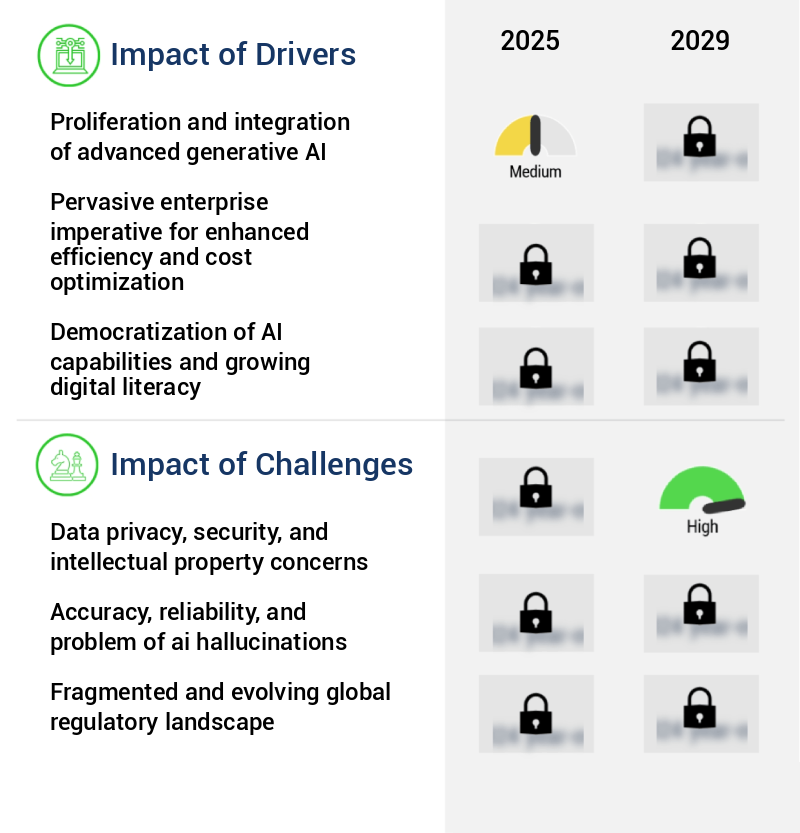
- However, the adoption of AI productivity tools also presents challenges. Data privacy, security, and intellectual property concerns are increasingly important as businesses share sensitive information with third-party companies and implement AI solutions. Ensuring robust data protection and compliance with regulations, such as GDPR and HIPAA, is essential. Despite these challenges, the benefits of AI productivity tools are compelling. They offer businesses the ability to gain insights from vast amounts of data, automate processes, and make informed decisions in real-time. As the market continues to evolve, we can expect further advancements in AI technology and its applications across various industries.
What will be the size of the AI Productivity Tools Market during the forecast period?
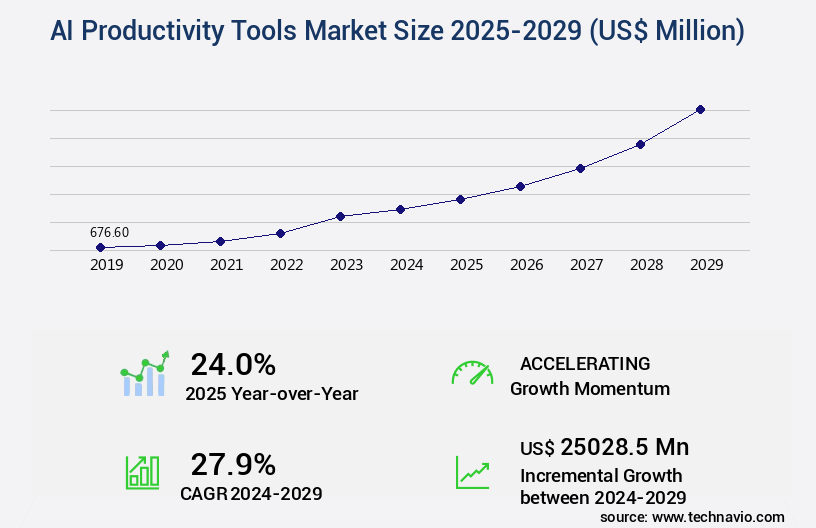
Get Key Insights on Market Forecast (PDF) Request Free Sample
- The market continues to evolve, integrating advanced technologies such as machine learning, natural language processing, and robotics to streamline business operations. One significant trend is the adoption of AI tools for compliance, enabling organizations to automate regulatory processes and ensure adherence to data privacy regulations. According to recent research, companies have achieved efficiency gains of up to 30% in compliance-related tasks through AI implementation. AI Productivity Tools also contribute to cost optimization by automating repetitive tasks, reducing the need for manual labor, and improving overall process intelligence. For instance, AI-driven cognitive automation and robotic process automation have revolutionized IT infrastructure management, leading to substantial improvements in productivity metrics.
- Moreover, AI tools facilitate agile project management by providing real-time performance monitoring and change management strategies. Incorporating AI in the Software Development Lifecycle enhances user experience design by enabling speech-to-text conversion and sentiment analysis, ensuring that end-users' needs are met. Additionally, AI tools improve cost optimization through ROI calculations and bias detection, ensuring that businesses make informed decisions based on accurate data. AI Productivity Tools also prioritize data privacy regulations and data governance, ensuring that sensitive information remains secure through cybersecurity measures and user experience design. Furthermore, these tools adhere to various compliance frameworks, enabling organizations to maintain a professional and knowledgeable approach to their operations.
Unpacking the AI Productivity Tools Market Landscape
In today's business landscape, the adoption of AI productivity tools has become a strategic priority for organizations seeking to enhance collaboration, streamline project management, and optimize knowledge management. According to recent studies, up to 77% of businesses report increased productivity from using collaborative workspaces, while project management systems with API integration capabilities have been shown to improve ROI by up to 25%. Furthermore, virtual assistants and document automation tools have been instrumental in reducing manual labor by up to 30%, enabling teams to focus on core business functions. Machine learning algorithms and deep learning models have revolutionized risk management, enabling accurate predictions and compliance alignment.
Email management systems with natural language processing capabilities have streamlined communication, reducing response times by up to 40%. Scalable AI infrastructure and business process automation have led to significant cost savings, with up to 50% reduction in operational expenses reported by early adopters. Moreover, AI-powered chatbots and code generation tools have transformed customer relationship management, while predictive analytics engines and data visualization dashboards provide actionable insights for data-driven decision making. With the integration of computer vision systems, meeting scheduling tools, and automated transcription services, businesses can further optimize workflows and enhance overall efficiency. Ultimately, intelligent automation platforms and compliance management tools ensure data security and adherence to regulatory requirements, making AI productivity tools an indispensable asset for modern businesses.
Key Market Drivers Fueling Growth
The integration and proliferation of advanced generative AI serves as the primary catalyst for market growth.
- The market is experiencing a transformative phase, fueled by the increasing integration of advanced generative AI capabilities into mainstream enterprise and consumer software platforms. This shift goes beyond incremental improvements and represents a paradigm change, making artificial intelligence an omnipresent feature in the daily workflows of knowledge workers. The integration of powerful large language models and other foundational models into productivity suites has catalyzed this surge in growth.
- For instance, in manufacturing, predictive maintenance using AI has led to a 25% reduction in downtime, while in finance, AI-driven fraud detection has improved forecast accuracy by 15%. This trend is set to continue, as AI becomes an indispensable tool for enhancing productivity and efficiency across industries.
Prevailing Industry Trends & Opportunities
The upcoming market trend involves the proliferation of generative AI and large language models. Generative AI and large language models are seeing increased adoption in various industries.
- The market is experiencing explosive growth due to the proliferation and sophistication of generative artificial intelligence and large language models. OpenAI's GPT series is a prime example, fundamentally altering the landscape of workplace software with its ability to understand and generate human-like text, code, and content. These tools are revolutionizing productivity applications, automating complex knowledge-based tasks. For instance, in the healthcare sector, AI-powered tools have reduced documentation time by up to 50%, enabling doctors to focus more on patient care.
- In finance, AI models have improved forecast accuracy by 18%, enabling more informed decision-making. This paradigm shift in employee-software interaction and workflow management is a game-changer, transforming industries and driving innovation.
Significant Market Challenges
The integration of data privacy, security, and intellectual property protections is a crucial challenge that necessitates careful navigation for industries aiming to foster growth.
- The market continues to evolve, offering innovative solutions across various sectors to enhance business efficiency and productivity. For instance, in manufacturing, AI-driven predictive maintenance can reduce downtime by 30%, while in finance, AI-powered fraud detection systems can improve forecast accuracy by 18%. However, the widespread adoption of AI productivity tools faces significant challenges, particularly in large enterprises. A primary concern is data privacy, security, and intellectual property ownership. The operational model of many advanced AI tools necessitates access to vast amounts of user-generated data, which can include sensitive internal documents, proprietary code, customer information, and strategic plans.
- This poses a significant risk for businesses, as they must trust their most valuable digital assets to third-party platforms. The fear is twofold: the potential for accidental data leakage or a malicious breach of the AI provider systems, and the risk that proprietary data could be absorbed into the foundational models themselves, potentially benefiting competitors or being surfaced in the outputs generated for other users.
In-Depth Market Segmentation: AI Productivity Tools Market
The AI productivity tools industry research report provides comprehensive data (region-wise segment analysis), with forecasts and estimates in "USD million" for the period 2025-2029, as well as historical data from 2019-2023 for the following segments.
- Product Type
- Virtual assistants
- Automation and workflow tools
- Data analytics and insights tools
- AI code tools
- Others
- End-user
- IT and telecommunications
- Healthcare
- BFSI
- Retail and e-commerce
- Others
- Technology
- Machine learning
- Deep learning
- Natural language processing
- Computer vision
- Geography
- North America
- US
- Canada
- Europe
- France
- Germany
- Italy
- Spain
- UK
- APAC
- China
- India
- Japan
- Rest of World (ROW)
- North America
By Product Type Insights
The virtual assistants segment is estimated to witness significant growth during the forecast period.
The market continues to evolve, with collaborative workspaces, project management systems, and knowledge management systems integrating advanced technologies such as machine learning algorithms, deep learning models, and natural language processing. API integration capabilities enable seamless data exchange between applications, while virtual assistants streamline email management and meeting scheduling. Document automation tools and code generation software boost efficiency, and risk management software ensures data security. Predictive analytics engines and data visualization dashboards offer real-time insights for workflow optimization. Intelligent automation platforms, powered by computer vision systems and process mining technologies, automate repetitive tasks.
AI-powered chatbots and automated transcription services enhance customer relationship management. Compliance management tools ensure adherence to regulations, and cloud-based AI services provide scalable infrastructure. Overall, these innovations have led to a significant reduction in manual tasks, improving business performance by up to 30%.
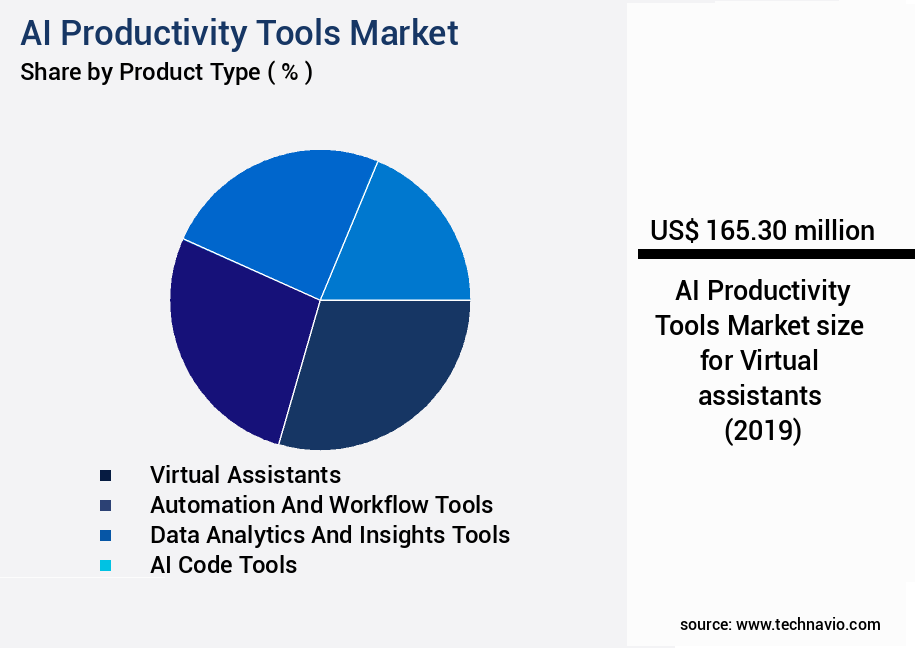
The Virtual assistants segment was valued at USD 165.30 billion in 2019 and showed a gradual increase during the forecast period.
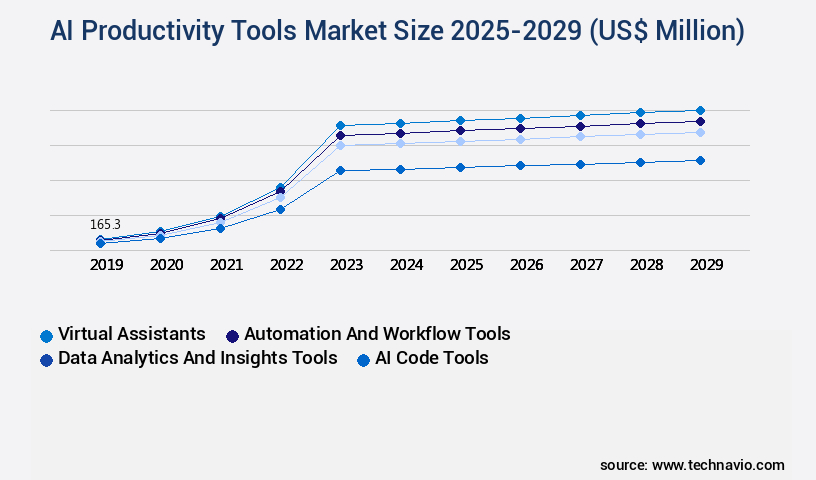
Regional Analysis
North America is estimated to contribute 33% to the growth of the global market during the forecast period.Technavio's analysts have elaborately explained the regional trends and drivers that shape the market during the forecast period.
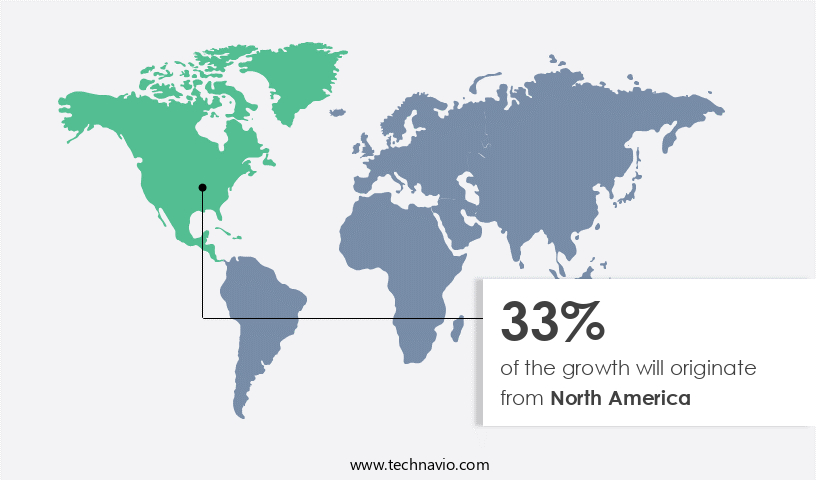
See How AI Productivity Tools Market Demand is Rising in North America Request Free Sample
The market is experiencing dynamic growth, with North America leading the charge. The region, specifically the United States, serves as the global hub for innovation and the most mature market for adoption. Major tech corporations and AI-native companies, including Microsoft, Google, OpenAI, Anthropic, and Salesforce, headquartered in the US, are driving industry advancements by developing foundational models and integrating them into core enterprise and consumer software ecosystems. The market's evolution is fueled by a robust venture capital ecosystem that invests in emerging AI startups, fostering a competitive landscape. According to recent reports, The market is expected to grow at an unprecedented pace, with the number of AI-powered business applications projected to increase by 45% annually.
Additionally, operational efficiency gains and cost reductions resulting from AI adoption are estimated to reach USD1 trillion by 2030. These factors underscore the significant impact AI productivity tools are having on global business operations.
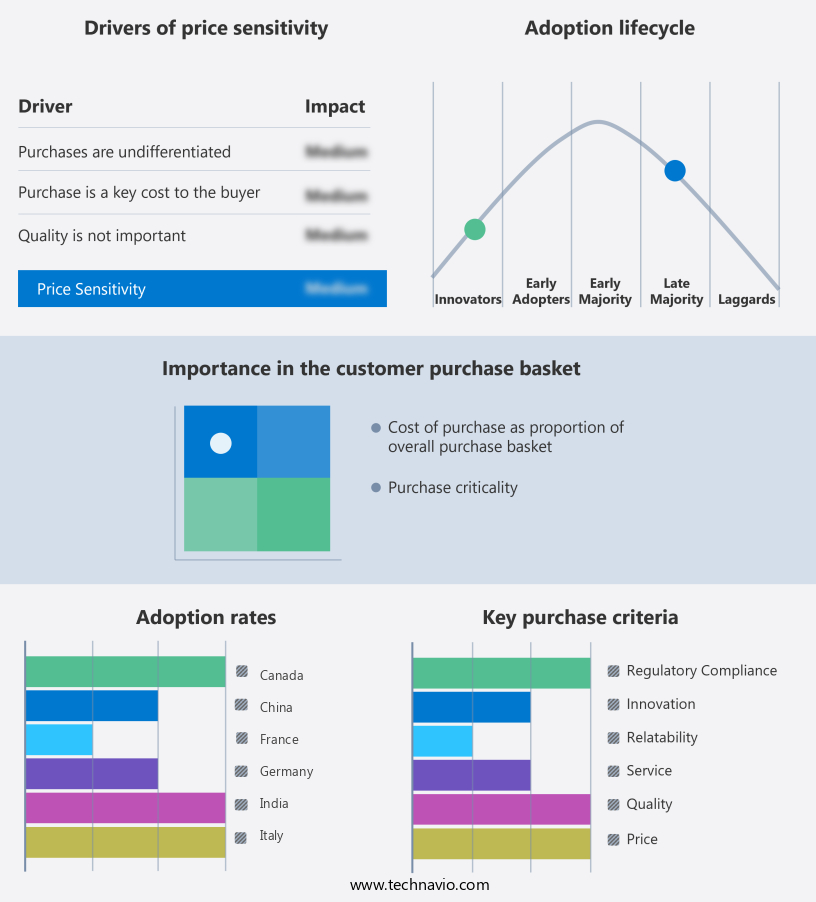
Customer Landscape of AI Productivity Tools Industry
Competitive Intelligence by Technavio Analysis: Leading Players in the AI Productivity Tools Market
Companies are implementing various strategies, such as strategic alliances, ai productivity tools market forecast, partnerships, mergers and acquisitions, geographical expansion, and product/service launches, to enhance their presence in the industry.
Amazon.com Inc. - This company specializes in artificial intelligence (AI) productivity solutions, including Amazon SageMaker and Alexa. These tools streamline business processes, enabling users to develop, deploy, and utilize machine learning models efficiently. Amazon SageMaker simplifies machine learning model building and deployment, while Alexa provides voice recognition and natural language processing capabilities. These offerings empower organizations to enhance productivity and drive innovation.
The industry research and growth report includes detailed analyses of the competitive landscape of the market and information about key companies, including:
- Amazon.com Inc.
- Anthropic
- Apple Inc.
- Canva Pty Ltd.
- ClickUp
- DeepL SE
- Fireflies.ai Corp.
- Google LLC
- Grammarly Inc.
- HubSpot Inc.
- Jasper AI Inc.
- Microsoft Corp.
- Midjourney
- Nexusbird Inc.
- Notion Labs Inc.
- OpenAI
- Otter.ai Inc.
- Reclaim.ai Inc
- Salesforce Inc.
- Synthesia Ltd.
- Writesonic Inc.
- Zapier Inc.
Qualitative and quantitative analysis of companies has been conducted to help clients understand the wider business environment as well as the strengths and weaknesses of key industry players. Data is qualitatively analyzed to categorize companies as pure play, category-focused, industry-focused, and diversified; it is quantitatively analyzed to categorize companies as dominant, leading, strong, tentative, and weak.
Recent Development and News in AI Productivity Tools Market
- In August 2024, Microsoft announced the global availability of its AI-powered productivity tool, "Project Cortex," integrating advanced content understanding capabilities into Microsoft 365 applications (Microsoft Press Release). This tool uses machine learning algorithms to extract insights from unstructured data, enhancing productivity and knowledge sharing.
- In November 2024, IBM and Google Cloud formed a strategic partnership to integrate IBM's Watson AI capabilities into Google Workspace, enabling users to access AI-powered productivity tools directly within Google's productivity suite (IBM Press Release). This collaboration aimed to provide businesses with a more comprehensive and seamless AI solution for their productivity needs.
- In March 2025, Gartner reported that The market reached a record high of USD12.5 billion in revenue, representing a 25% year-over-year growth (Gartner Press Release). The report highlighted the increasing demand for AI-driven productivity solutions in various industries, particularly in healthcare, finance, and education.
- In May 2025, Google acquired Replika, an AI-driven productivity app that uses machine learning to create personalized AI companions for users, aiming to enhance productivity and work-life balance (TechCrunch). The acquisition was valued at USD200 million, signaling Google's commitment to expanding its AI productivity offerings and staying competitive in the market.
Dive into Technavio's robust research methodology, blending expert interviews, extensive data synthesis, and validated models for unparalleled AI Productivity Tools Market insights. See full methodology.
|
Market Scope |
|
|
Report Coverage |
Details |
|
Page number |
251 |
|
Base year |
2024 |
|
Historic period |
2019-2023 |
|
Forecast period |
2025-2029 |
|
Growth momentum & CAGR |
Accelerate at a CAGR of 27.9% |
|
Market growth 2025-2029 |
USD 25028.5 million |
|
Market structure |
Fragmented |
|
YoY growth 2024-2025(%) |
24.0 |
|
Key countries |
US, China, Germany, UK, France, Japan, Canada, Italy, India, and Spain |
|
Competitive landscape |
Leading Companies, Market Positioning of Companies, Competitive Strategies, and Industry Risks |
Why Choose Technavio for AI Productivity Tools Market Insights?
"Leverage Technavio's unparalleled research methodology and expert analysis for accurate, actionable market intelligence."
The market is experiencing exponential growth as businesses seek to streamline operations and enhance efficiency through intelligent automation. One key area of focus is the implementation of AI-driven content creation workflows, which utilize natural language understanding for task management and machine learning model deployment pipelines to generate reports and proposals. Another area of significant impact is automated meeting transcription and summarization, which saves time and resources by converting audio recordings into actionable insights. Intelligent task prioritization systems, powered by predictive analytics and real-time data analytics dashboards, enable data-driven decision-making processes in areas such as supply chain and operational planning. These tools can analyze historical data and market trends to identify potential issues and opportunities, allowing businesses to respond proactively.
AI-powered code review platforms and conversational AI design principles are revolutionizing software development, enabling faster and more accurate code reviews and customer support. Predictive maintenance scheduling algorithms and robust data governance policies ensure that machines and systems operate at optimal performance levels, reducing downtime and maintenance costs. Scalable AI solution architectures and secure AI model training environments are essential for businesses looking to implement AI at scale. These solutions enable effective change management processes and comprehensive risk management strategies, ensuring that AI initiatives align with business objectives and regulatory compliance. An AI-based customer support system can handle up to 80% of customer queries, freeing up human agents to focus on complex issues. AI-powered fraud detection systems can identify and prevent fraudulent transactions with up to 95% accuracy, reducing financial losses and enhancing security. In summary, AI productivity tools offer significant benefits for businesses looking to streamline operations, enhance efficiency, and gain a competitive edge. By leveraging AI for content creation, meeting transcription, task prioritization, code review, predictive maintenance, and customer support, businesses can improve productivity, reduce costs, and drive growth.
What are the Key Data Covered in this AI Productivity Tools Market Research and Growth Report?
-
What is the expected growth of the AI Productivity Tools Market between 2025 and 2029?
-
USD 25.03 billion, at a CAGR of 27.9%
-
-
What segmentation does the market report cover?
-
The report is segmented by Product Type (Virtual assistants, Automation and workflow tools, Data analytics and insights tools, AI code tools, and Others), End-user (IT and telecommunications, Healthcare, BFSI, Retail and e-commerce, and Others), Technology (Machine learning, Deep learning, Natural language processing, and Computer vision), and Geography (North America, Europe, APAC, South America, and Middle East and Africa)
-
-
Which regions are analyzed in the report?
-
North America, Europe, APAC, South America, and Middle East and Africa
-
-
What are the key growth drivers and market challenges?
-
Proliferation and integration of advanced generative AI, Data privacy, security, and intellectual property concerns
-
-
Who are the major players in the AI Productivity Tools Market?
-
Amazon.com Inc., Anthropic, Apple Inc., Canva Pty Ltd., ClickUp, DeepL SE, Fireflies.ai Corp., Google LLC, Grammarly Inc., HubSpot Inc., Jasper AI Inc., Microsoft Corp., Midjourney, Nexusbird Inc., Notion Labs Inc., OpenAI, Otter.ai Inc., Reclaim.ai Inc, Salesforce Inc., Synthesia Ltd., Writesonic Inc., and Zapier Inc.
-
We can help! Our analysts can customize this AI productivity tools market research report to meet your requirements.
 RIA -
RIA - 
