


Amusement Park Market Size 2026-2030
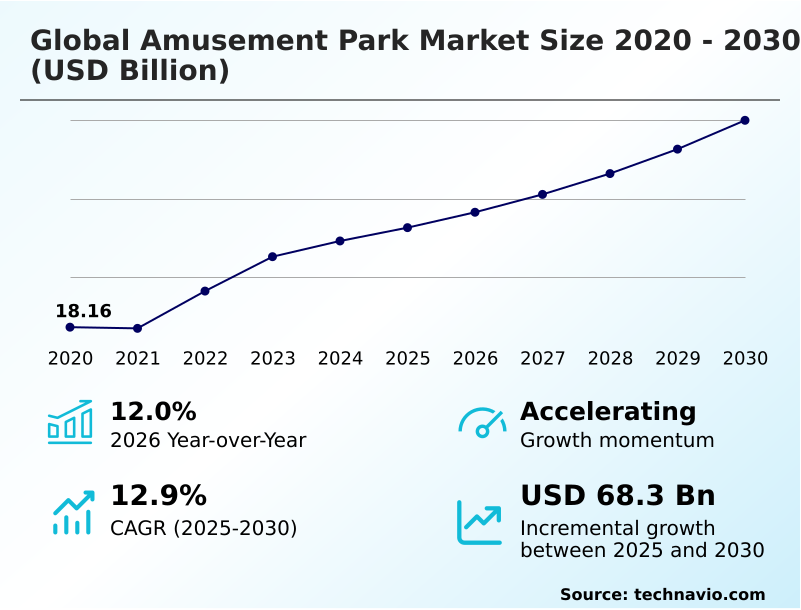
The amusement park market size is valued to increase by USD 68.30 billion, at a CAGR of 12.9% from 2025 to 2030. Mainstreaming of IP-based immersive storytelling and transmedia integration will drive the amusement park market.
Major Market Trends & Insights
- North America dominated the market and accounted for a 35.7% growth during the forecast period.
- By Type - Tickets segment was valued at USD 42.45 billion in 2024
- By Variant - Mechanical rides segment accounted for the largest market revenue share in 2024
Market Size & Forecast
- Market Opportunities: USD 131.64 billion
- Market Future Opportunities: USD 68.30 billion
- CAGR from 2025 to 2030 : 12.9%
Market Summary
- The amusement park market has evolved from offering mechanical attractions to creating comprehensive, destination-based entertainment ecosystems. This strategic pivot is driven by the intensive use of IP-based immersive storytelling, which leverages pre-existing emotional connections with audiences to foster brand loyalty programs and encourage multi-day visitation strategy.
- A key trend is the development of hyper-personalized guest journeys through advanced phygital infrastructure, where generative AI and IoT ecosystems converge to optimize visitor flow. For instance, an operator might deploy predictive maintenance algorithms on high-thrill rides, using real-time data from smart sensor technology to anticipate mechanical issues.
- This approach not only enhances safety but also minimizes costly downtime, improving operational efficiency gains and per-capita spending metrics. However, the industry grapples with challenges such as economic pressures on discretionary spending and the high capital expenditure programs required for mixed-use resort integration and institutionalized sustainability. The market's future hinges on balancing technological innovation with financial and environmental resilience.
What will be the Size of the Amusement Park Market during the forecast period?
Get Key Insights on Market Forecast (PDF) Get Free Sample
How is the Amusement Park Market Segmented?
The amusement park industry research report provides comprehensive data (region-wise segment analysis), with forecasts and estimates in "USD million" for the period 2026-2030, as well as historical data from 2020-2024 for the following segments.
- Type
- Tickets
- Hospitality
- Merchandising
- Others
- Variant
- Mechanical rides
- Water rides
- Others
- Age group
- 19 to 35 years
- Up to 18 years
- 36 to 50 years
- Above 50 years
- Geography
- North America
- US
- Canada
- Mexico
- APAC
- China
- Japan
- India
- Europe
- Germany
- UK
- France
- South America
- Brazil
- Argentina
- Middle East and Africa
- UAE
- Saudi Arabia
- South Africa
- Rest of World (ROW)
- North America
By Type Insights
The tickets segment is estimated to witness significant growth during the forecast period.
The tickets segment is shifting from static admission models to sophisticated, dynamic pricing architectures. Operators now leverage predictive analytics to adjust costs based on real-time park capacity and demand forecasts, maximizing yield during peak periods.
This strategy is part of a move toward creating a seamless phygital experience. The proliferation of digital wallet integration and biometric authentication has streamlined visitor entry, with some parks reporting a reduction in gate friction by over 15%.
Furthermore, the adoption of robotic process automation and flexible micro-experience passes, driven by guest journey optimization, caters to diverse consumer needs.
This focus on operational efficiency gains and customer acquisition cost through smart park technologies underscores the segment's evolution toward hyper-personalized guest journeys and high-margin revenue growth.
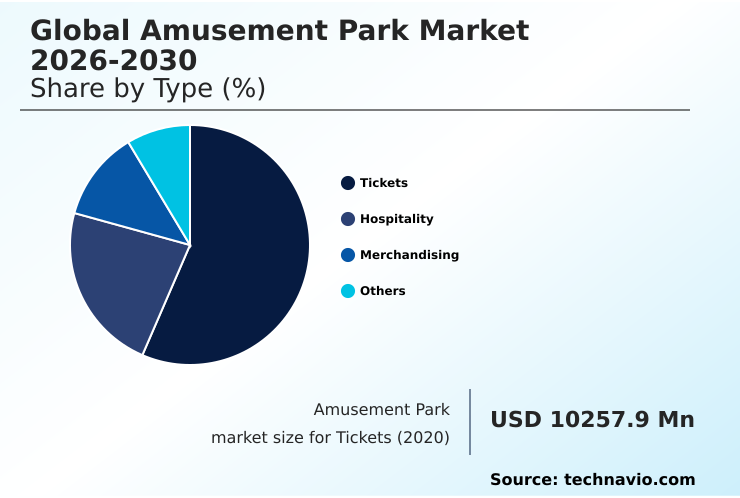
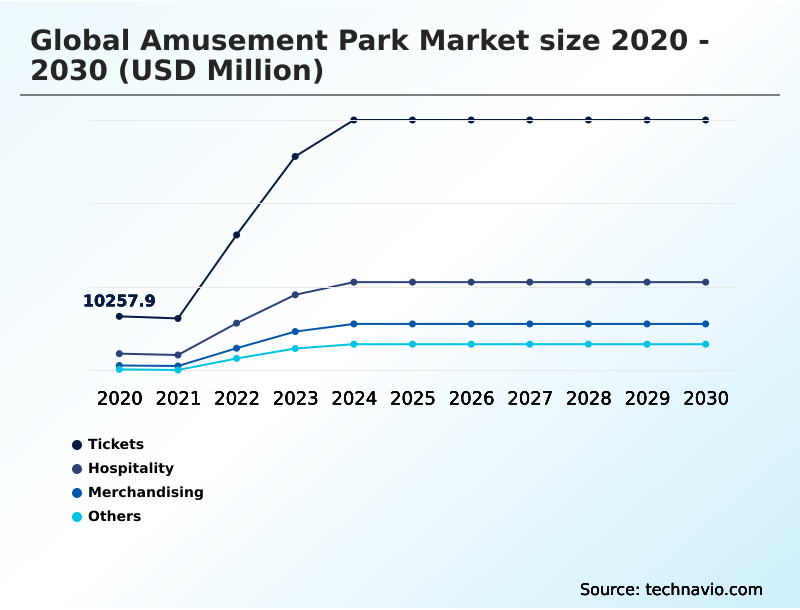
The Tickets segment was valued at USD 42.45 billion in 2024 and showed a gradual increase during the forecast period.
Regional Analysis
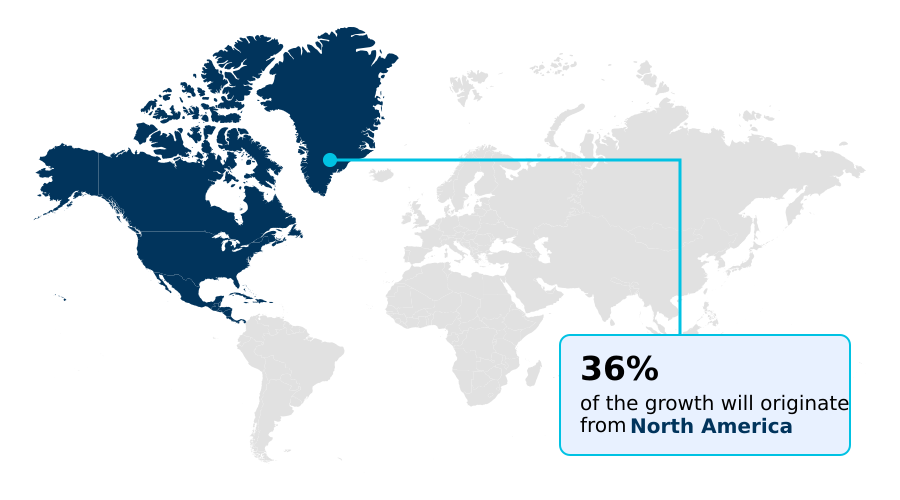
North America is estimated to contribute 35.7% to the growth of the global market during the forecast period.Technavio’s analysts have elaborately explained the regional trends and drivers that shape the market during the forecast period.
See How Amusement Park Market Demand is Rising in North America Get Free Sample
The geographic landscape of the amusement park market is defined by a contrast between mature regions and high-growth corridors. North America, which accounts for 35.7% of incremental growth, focuses on reinvestment in IP-based immersive storytelling and capital expenditure programs.
In contrast, the APAC region, with 34.65% of growth, is characterized by large-scale new builds and the rapid adoption of digital wallet integration.
In these high-density markets, the deployment of AI-driven crowd management systems has improved visitor flow analysis by over 20%.
European parks are prioritizing eco-conscious master planning and sustainable operational protocols, while the Middle East is investing heavily in record-breaking, climate-resilient infrastructure as part of broader economic diversification efforts, including luxury hospitality services.
Market Dynamics
Our researchers analyzed the data with 2025 as the base year, along with the key drivers, trends, and challenges. A holistic analysis of drivers will help companies refine their marketing strategies to gain a competitive advantage.
- The modern amusement park market navigates a complex operational landscape where strategic decisions balance high capital investment with long-term profitability. A central consideration is the ROI of dynamic pricing models in theme parks, which must be weighed against the potential for alienating cost-sensitive consumers.
- Similarly, the choice between integrating IP franchises into new park designs versus developing original concepts involves a trade-off between guaranteed brand recognition and creative freedom. Technologically, operators focus on optimizing guest flow using real-time IoT sensor networks and reducing queue wait times with virtual queuing systems.
- For example, parks implementing predictive maintenance for high-thrill mechanical rides report a reduction in unscheduled downtime that is nearly double that of parks using traditional schedules, directly boosting capacity and revenue. The impact of augmented reality on interactive dark rides is another key area, offering a cost-effective way to refresh attractions.
- Sustainability best practices in modern water park design, such as advanced water recycling, are becoming standard. These factors, from using AI for creating personalized guest itineraries to measuring the impact of themed retail store experiences and using transmedia integration for extending brand narrative, collectively shape the competitive environment.
- Success depends on a holistic strategy that addresses the challenges of recruiting skilled maintenance engineers, leverages IP-based storytelling to drive repeat visitation, and manages operational costs with smart energy grids.
What are the key market drivers leading to the rise in the adoption of Amusement Park Industry?
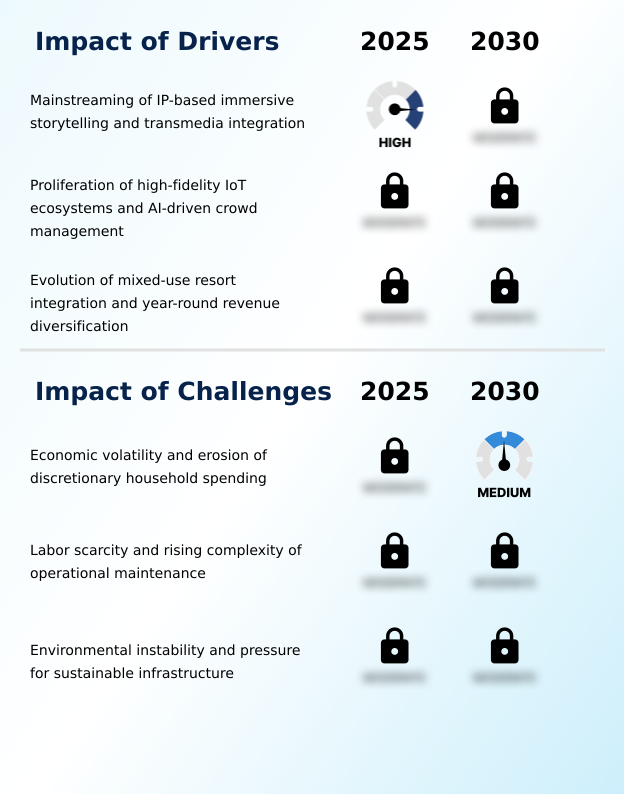
- The mainstreaming of IP-based immersive storytelling and transmedia integration is a key driver propelling market growth.
- Market growth is primarily propelled by the strategic pivot to IP-based immersive storytelling, a premiumization strategy that leverages established franchises to ensure high-margin revenue growth.
- The integration of popular IPs into immersive themed environments has been shown to boost ancillary revenue streams from merchandise by over 40%. A second major driver is the proliferation of IoT ecosystems and AI-driven crowd management.
- This phygital infrastructure, which includes dynamic queue management systems, reduces average wait times by 15 minutes during peak hours, directly enhancing the visitor experience.
- Finally, the evolution toward mixed-use resort integration, featuring family entertainment centers and luxury hospitality services, is creating comprehensive destinations that encourage multi-day visitation and provide year-round revenue diversification.
What are the market trends shaping the Amusement Park Industry?
- The integration of generative AI is emerging as a significant market trend. It enables the delivery of hyper-personalized guest journeys and experiences.
- Key trends are reshaping the market, led by the integration of generative AI to deliver hyper-personalized guest journeys. This technology, part of a broader shift to immersive engineering, enables dynamic itineraries and personalized recommendations, with early adopters reporting a 10% increase in guest satisfaction scores. Another significant trend is institutionalized sustainability, where operators are adopting circular economy principles.
- The implementation of advanced grey-water recycling systems in water parks has already reduced water consumption by up to 30% in some facilities. Concurrently, the use of gamified attractions and cross-platform meta-narratives is extending brand engagement beyond physical park boundaries, supported by digital wallet integration. This focus on guest journey optimization reflects a move toward more interactive and eco-conscious entertainment models.
What challenges does the Amusement Park Industry face during its growth?
- Economic volatility, leading to the erosion of discretionary household spending, poses a key challenge to the industry's growth trajectory.
- The market faces considerable headwinds, primarily from economic volatility that erodes discretionary spending and dampens visitor-flow analysis. A significant operational challenge is the persistent labor scarcity, particularly for technicians skilled in predictive maintenance algorithms and digital twin technology, which has increased maintenance costs by an average of 12%.
- Environmental instability presents another critical issue, as extreme weather events cause unplanned closures, leading to revenue losses of up to 5% annually for some outdoor parks. The associated pressure to invest in sustainable operational protocols and green infrastructure, such as carbon-neutral construction, adds further financial strain, complicating long-term capital expenditure programs for many operators.
Exclusive Technavio Analysis on Customer Landscape
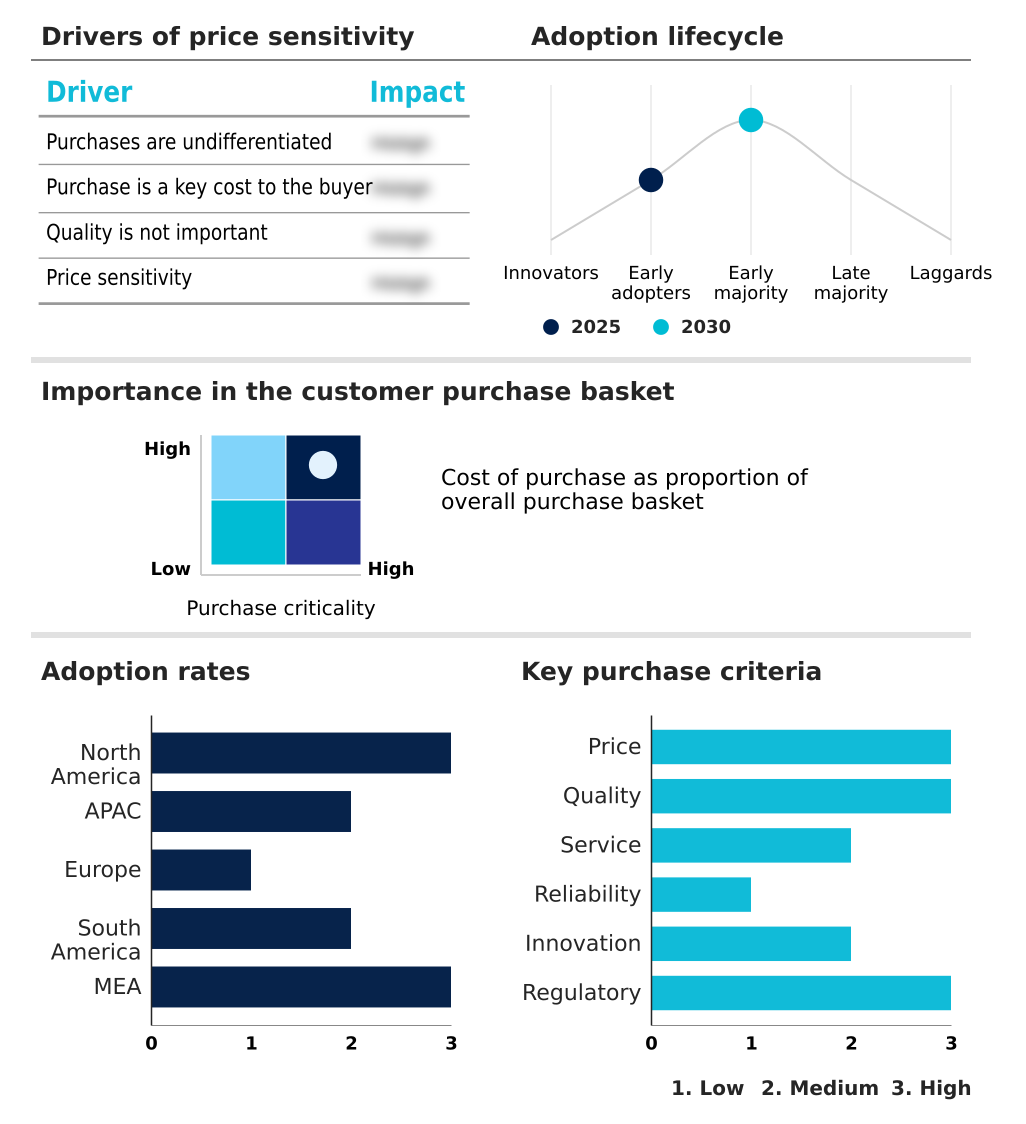
The amusement park market forecasting report includes the adoption lifecycle of the market, covering from the innovator’s stage to the laggard’s stage. It focuses on adoption rates in different regions based on penetration. Furthermore, the amusement park market report also includes key purchase criteria and drivers of price sensitivity to help companies evaluate and develop their market growth analysis strategies.
Customer Landscape of Amusement Park Industry
Competitive Landscape
Companies are implementing various strategies, such as strategic alliances, amusement park market forecast, partnerships, mergers and acquisitions, geographical expansion, and product/service launches, to enhance their presence in the industry.
Beto Carrero World - Operations focus on delivering a diverse portfolio of themed areas, including high-thrill roller coasters and live entertainment, to capture a broad visitor demographic.
The industry research and growth report includes detailed analyses of the competitive landscape of the market and information about key companies, including:
- Beto Carrero World
- Comcast Corp.
- Dubai Parks and Resorts
- Efteling BV
- Europa Park GmbH and Co. KG
- Fantawild Holdings Inc.
- Imagicaaworld Entertainment
- Lotte Corp.
- Merlin Entertainments Ltd.
- Miral Asset Management LLC
- Nicco Parks and Resorts Ltd.
- Parques Reunidos SAU
- Puy du Fou France
- Ride Entertainment Group
- Six Flags Entertainment Corp.
- The Walt Disney Co.
- Tivoli AS
- United Parks and Resorts Inc.
- Wonderla Amusement Park
Qualitative and quantitative analysis of companies has been conducted to help clients understand the wider business environment as well as the strengths and weaknesses of key industry players. Data is qualitatively analyzed to categorize companies as pure play, category-focused, industry-focused, and diversified; it is quantitatively analyzed to categorize companies as dominant, leading, strong, tentative, and weak.
Recent Development and News in Amusement park market
- In May 2025, Universal Destinations and Experiences is scheduled to open the Universal Epic Universe in Orlando, Florida, a massive development featuring five themed lands and advanced interactive ride technology.
- In April 2025, Universal Destinations and Experiences finalized a multi-billion-pound agreement with the United Kingdom government for a new theme park and resort in Bedfordshire, a project expected to significantly contribute to the national economy.
- In February 2025, the Chickasaw Nation opened the OKANA Resort and Indoor Waterpark in Oklahoma City, a $400 million development featuring a 100,000-square-foot indoor waterpark.
- In September 2024, Six Flags Entertainment Corp. launched a large-scale hiring campaign across its North American properties to fill thousands of seasonal and technical roles, addressing industry-wide labor shortages.
Dive into Technavio’s robust research methodology, blending expert interviews, extensive data synthesis, and validated models for unparalleled Amusement Park Market insights. See full methodology.
| Market Scope | |
|---|---|
| Page number | 300 |
| Base year | 2025 |
| Historic period | 2020-2024 |
| Forecast period | 2026-2030 |
| Growth momentum & CAGR | Accelerate at a CAGR of 12.9% |
| Market growth 2026-2030 | USD 68298.7 million |
| Market structure | Fragmented |
| YoY growth 2025-2026(%) | 12.0% |
| Key countries | US, Canada, Mexico, China, Japan, India, South Korea, Australia, Indonesia, Germany, UK, France, Spain, Italy, The Netherlands, Brazil, Argentina, Chile, UAE, Saudi Arabia, South Africa, Egypt and Israel |
| Competitive landscape | Leading Companies, Market Positioning of Companies, Competitive Strategies, and Industry Risks |
Research Analyst Overview
- The amusement park market is transitioning toward sophisticated, multi-faceted resort models centered on destination-based entertainment. The integration of powerful intellectual property is no longer optional but a core strategy, with IP-based immersive storytelling and transmedia integration driving repeat visitation and high-margin revenue growth.
- Technologically, the industry is defined by the proliferation of IoT ecosystems and smart park technologies designed to create a seamless phygital experience. This includes everything from biometric authentication for entry to dynamic queue management powered by predictive analytics.
- The trend toward institutionalized sustainability has become a boardroom-level priority, directly influencing capital allocation for developing carbon-neutral construction and climate-resilient infrastructure to meet regulatory standards. The implementation of this advanced phygital infrastructure has enabled leading operators to achieve a 15% increase in ancillary revenue per visitor by delivering targeted, real-time offers and creating hyper-personalized guest journeys.
- The market's trajectory is shaped by this blend of immersive engineering, gamified attractions, and data-driven operational intelligence.
What are the Key Data Covered in this Amusement Park Market Research and Growth Report?
-
What is the expected growth of the Amusement Park Market between 2026 and 2030?
-
USD 68.30 billion, at a CAGR of 12.9%
-
-
What segmentation does the market report cover?
-
The report is segmented by Type (Tickets, Hospitality, Merchandising, and Others), Variant (Mechanical rides, Water rides, and Others), Age Group (19 to 35 years, Up to 18 years, 36 to 50 years, and Above 50 years) and Geography (North America, APAC, Europe, South America, Middle East and Africa)
-
-
Which regions are analyzed in the report?
-
North America, APAC, Europe, South America and Middle East and Africa
-
-
What are the key growth drivers and market challenges?
-
Mainstreaming of IP-based immersive storytelling and transmedia integration, Economic volatility and erosion of discretionary household spending
-
-
Who are the major players in the Amusement Park Market?
-
Beto Carrero World, Comcast Corp., Dubai Parks and Resorts, Efteling BV, Europa Park GmbH and Co. KG, Fantawild Holdings Inc., Imagicaaworld Entertainment, Lotte Corp., Merlin Entertainments Ltd., Miral Asset Management LLC, Nicco Parks and Resorts Ltd., Parques Reunidos SAU, Puy du Fou France, Ride Entertainment Group, Six Flags Entertainment Corp., The Walt Disney Co., Tivoli AS, United Parks and Resorts Inc. and Wonderla Amusement Park
-
Market Research Insights
- The market is undergoing a significant digital transformation, defined by the shift to smart park technologies and phygital infrastructure. This evolution focuses on guest journey optimization, using real-time data analytics to power dynamic pricing architectures and immersive themed environments.
- The deployment of dynamic queue management systems, for instance, has demonstrated the capacity to reduce average wait times by up to 25%, directly improving guest satisfaction scores. Furthermore, the widespread adoption of contactless payment infrastructure is increasing ancillary revenue streams, with some operators reporting a 10% lift in per-capita spending.
- These advancements, including augmented reality overlays and agentic gaming systems, are central to creating compelling, year-round revenue diversification and maintaining a competitive edge in the experience economy.
We can help! Our analysts can customize this amusement park market research report to meet your requirements.
 RIA -
RIA - 
