


Animal Healthcare Market Size 2025-2029
The animal healthcare market size is forecast to increase by USD 11.14 billion, at a CAGR of 4.6% between 2024 and 2029.
- The market is experiencing significant growth, driven by the increasing trend of pet ownership and the rising awareness regarding disease prevention and pet insurance. This market dynamic is fueled by the growing attachment and affinity towards animals, leading to an increasing demand for high-quality animal healthcare services and products. However, challenges persist in the form of contamination of animal source foods, which can lead to outbreaks of diseases and negatively impact consumer trust. Companies operating in the market must prioritize food safety measures to mitigate these risks and maintain consumer confidence.
- Additionally, innovation in animal healthcare, such as telemedicine and advanced diagnostic tools, presents opportunities for companies to differentiate themselves and cater to the evolving needs of pet owners. Navigating these trends and challenges requires strategic planning and a focus on delivering effective, safe, and innovative solutions to meet the growing demands of the market.
What will be the Size of the Animal Healthcare Market during the forecast period?
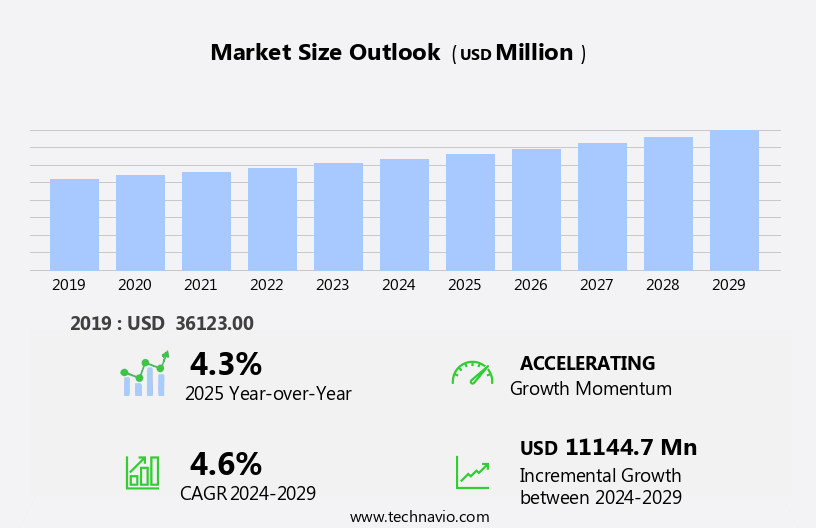
Explore in-depth regional segment analysis with market size data - historical 2019-2023 and forecasts 2025-2029 - in the full report.
Request Free Sample
The market continues to evolve, driven by advancements in technology and a growing focus on preventative care. Injectable medications, a staple in animal healthcare, are being enhanced through precision medicine approaches, allowing for more effective treatments tailored to individual animals. Livestock management integrates diagnostic tools, such as blood tests and fecal exams, to monitor herd health and prevent the spread of zoonotic diseases. Topical medications and oral medications offer alternative treatment options for various conditions, while surgical instruments and anesthesia machines facilitate complex procedures. Remote diagnostics and data management systems enable veterinarians to make informed decisions from a distance, improving access to care for animals in remote locations.
Parasite control, including endoparasite treatments and ectoparasite treatments, remains a significant focus in animal healthcare. Biochemistry panels and disease prevention strategies are essential for maintaining optimal animal health and ensuring regulatory compliance with FDA and EU regulations. Canine healthcare and feline healthcare sectors are growing, driven by increasing pet ownership and the desire for personalized treatment. Veterinary education and continuing education programs play a crucial role in staying informed about the latest advancements in animal healthcare. Pharmaceutical manufacturing and veterinary equipment industries provide the necessary tools and resources for delivering effective treatments. Nutritional supplements and feed additives support overall animal health and well-being.
Animal welfare remains a top priority, with a strong emphasis on disease prevention and early intervention. The one health initiative highlights the interconnectedness of human and animal health, driving collaboration between veterinarians, physicians, and researchers. Drug delivery systems, monitoring devices, and personalized treatment approaches are shaping the future of animal healthcare. Antimicrobial resistance poses a significant challenge, necessitating ongoing research and development of new treatment options. Record keeping and regulatory compliance are essential for maintaining the highest standards of animal care and ensuring the safety and efficacy of treatments. The ongoing dynamism of the market reflects the commitment to improving animal health and well-being.
How is this Animal Healthcare Industry segmented?
The animal healthcare industry research report provides comprehensive data (region-wise segment analysis), with forecasts and estimates in "USD million" for the period 2025-2029, as well as historical data from 2019-2023 for the following segments.
- Product
- Pharmaceutical
- Feed additive
- Biologicals
- Animal Type
- Livestock
- Companion animals
- Distribution Channel
- VHC
- Pharmacies and drug stores
- E-commerce
- Direct sales
- Geography
- North America
- US
- Canada
- Europe
- France
- Germany
- Italy
- UK
- APAC
- China
- India
- Japan
- South America
- Brazil
- Rest of World (ROW)
- North America
By Product Insights
The pharmaceutical segment is estimated to witness significant growth during the forecast period.
The market encompasses various sectors, including bovine healthcare, reptile healthcare, poultry healthcare, and canine and feline healthcare, among others. Topical medications, such as ectoparasiticides and endoparasiticides, play a significant role in treating intestinal worms and controlling parasites in livestock. Precision medicine and diagnostic tools facilitate the early detection and treatment of diseases, ensuring animal welfare and reducing economic losses. Pharmaceutical manufacturing produces essential drugs like injectable medications, oral medications, and anesthesia machines, which contribute to the treatment of zoonotic diseases and various health conditions. Livestock management incorporates the use of feed additives, nutritional supplements, and monitoring devices to optimize animal health and productivity.
Veterinary education, continuing education, and client communication are essential for maintaining regulatory compliance and ensuring the effective use of veterinary equipment and veterinary pharmaceuticals. The one health initiative emphasizes the interconnectedness of animal, human, and environmental health, driving the need for disease prevention and personalized treatment. Antimicrobial resistance and regulatory compliance are ongoing challenges in the market, necessitating the development of drug delivery systems and record keeping solutions. Remote diagnostics and data management systems enable efficient veterinary practice management and contribute to the market's growth.
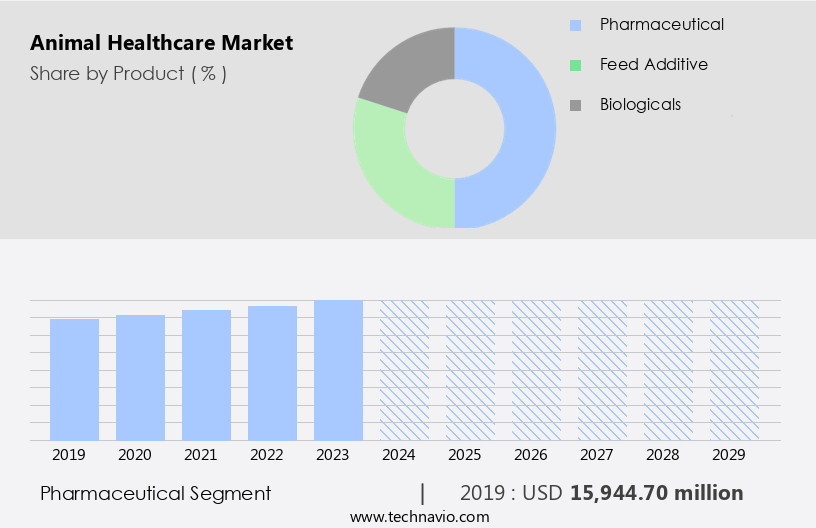
The Pharmaceutical segment was valued at USD 15.94 billion in 2019 and showed a gradual increase during the forecast period.
Regional Analysis
North America is estimated to contribute 40% to the growth of the global market during the forecast period.Technavio’s analysts have elaborately explained the regional trends and drivers that shape the market during the forecast period.

The market in North America, spearheaded by the US, experiences growth due to the rising pet humanization trend. With increasing disposable incomes, cats and dogs have become cherished family members in over 84 million American households. As pets age, they develop various health conditions such as otitis externa, diabetes mellitus, and cardiovascular diseases. To ensure their wellbeing, animal healthcare solutions like topical medications, oral medications, diagnostic tools, and surgical instruments are employed. Precision medicine and personalized treatment approaches, including anesthesia machines, veterinary pharmaceuticals, and animal vaccines, are increasingly utilized. Livestock management incorporates intestinal worm control, feed additives, and disease prevention measures for farm animals.
Reptile healthcare, avian healthcare, and equine healthcare also contribute significantly to the market. The one health initiative emphasizes the interconnectedness between animal, human, and environmental health. Regulatory compliance with EU and FDA regulations and record keeping are crucial aspects of veterinary practice management. Monitoring devices, data management, and continuing education for veterinarians ensure efficient and effective healthcare delivery. Antimicrobial resistance and zoonotic diseases pose challenges, necessitating innovative drug delivery systems and nutritional supplements. The market evolves with advancements in veterinary education, veterinary equipment, and veterinary practice management.
Market Dynamics
Our researchers analyzed the data with 2024 as the base year, along with the key drivers, trends, and challenges. A holistic analysis of drivers will help companies refine their marketing strategies to gain a competitive advantage.
The market encompasses a wide range of products and services designed to promote the well-being of companion animals and livestock. This market includes veterinary clinics, pharmaceutical companies, pet food manufacturers, and suppliers of animal feed additives. Animal healthcare solutions address various health concerns, from preventative care like vaccinations and parasite control, to diagnostic tools and treatments for diseases. Innovative technologies, such as telemedicine and wearable health monitors, are revolutionizing animal healthcare, enabling remote monitoring and early intervention. Sustainable and eco-friendly practices are also gaining traction, with a focus on natural remedies and biodegradable products. The market is driven by growing pet ownership, increasing awareness of animal welfare, and advancements in veterinary medicine. Animal healthcare providers offer personalized care plans, ensuring the best possible health outcomes for animals, while prioritizing their comfort and well-being.
What are the key market drivers leading to the rise in the adoption of Animal Healthcare Industry?
- The significant growth in the number of animal owners is the primary factor fueling market expansion.
- The market has witnessed significant growth due to the increasing trend of pet ownership in recent times. According to the American Pet Products Association, approximately 56.3 million U.S. Households own a pet, with dogs being the most popular choice, accounting for 43.3 million households. Cats follow closely, with around 41.2 million households owning a feline pet. The rise in disposable income and the shift in perception towards pets as family members have fueled this trend. This growing focus on animal welfare has led to an increased demand for better healthcare services, including veterinary pharmaceuticals, anesthesia machines, veterinary equipment, and feed additives.
- Moreover, the need for preventing and controlling zoonotic diseases, which can be transmitted from animals to humans, has further boosted the market's growth. The European Union and the Food and Drug Administration have set stringent regulations to ensure the safety and efficacy of animal healthcare products. Continuing education and client communication are essential aspects of the animal healthcare industry, ensuring that pet owners are well-informed about their pets' health and the available treatment options. In conclusion, the market is expected to continue its growth trajectory, driven by the increasing number of pet owners and their commitment towards providing the best possible healthcare for their beloved companions.
What are the market trends shaping the Animal Healthcare Industry?
- The increasing importance of disease prevention and pet insurance is a notable trend in the market. Two significant areas of focus for pet owners and industry professionals alike.
- Preventive healthcare is a growing trend in animal healthcare, focusing on regular veterinary examinations to ensure vaccinations, nutrition, dental care, and risk factor assessments for companion animals, including canines and felines, as well as equine animals. Boehringer Ingelheim's recent investment in Cowtribe, a Ghanaian last-mile veterinary delivery company, demonstrates this trend. Through this investment and non-financial support, Boehringer Ingelheim aims to address the financing gap for social businesses in underserved communities, enabling the delivery of essential veterinary vaccines and animal health products to rural areas. This initiative underscores the importance of disease prevention through timely access to animal healthcare services.
- Pet owners increasingly prioritize their pets' wellbeing, ensuring they receive recommended vaccinations and treatments, such as endoparasite treatments and biochemistry panels, to maintain their animals' health and prevent the spread of diseases. Data management plays a crucial role in animal healthcare, allowing veterinarians to monitor and analyze health trends, enabling early detection and prevention of diseases. Animal vaccines and other healthcare solutions continue to evolve, with advancements in biochemistry panels and remote diagnostics enhancing the quality of veterinary care.
What challenges does the Animal Healthcare Industry face during its growth?
- The growth of the animal source food industry is significantly impeded by the challenge of contamination in food sources. This issue, which mandates stringent measures to ensure food safety and quality, poses a significant risk to both consumers and businesses alike.
- The market encompasses various sectors, including drug delivery systems, nutritional supplements, avian healthcare, porcine healthcare, monitoring devices, and personalized treatment. The One Health Initiative, emphasizing the interconnection between animal, human, and environmental health, is a significant market driver. Antimicrobial resistance poses a major challenge, necessitating innovative solutions in animal healthcare. Record keeping and regulatory compliance are essential components of the market, ensuring the safety and well-being of animals and humans. Fecal exams are crucial for diagnosing various health issues in animals, contributing to the growth of the market. Veterinary practice management systems facilitate efficient record keeping, streamline operations, and ensure regulatory compliance.
- Monitoring devices, such as wearable sensors and telemedicine systems, enable real-time health monitoring and early intervention, improving animal health and productivity. Nutritional supplements and drug delivery systems cater to the unique needs of different animal species, enhancing their overall health and well-being. Personalized treatment plans, tailored to individual animal requirements, are gaining popularity in the market, ensuring optimal health outcomes. The market's continuous growth is fueled by the increasing demand for advanced healthcare solutions for animals, ensuring a harmonious balance between animal health and human well-being.
Exclusive Customer Landscape
The animal healthcare market forecasting report includes the adoption lifecycle of the market, covering from the innovator’s stage to the laggard’s stage. It focuses on adoption rates in different regions based on penetration. Furthermore, the animal healthcare market report also includes key purchase criteria and drivers of price sensitivity to help companies evaluate and develop their market growth analysis strategies.

Customer Landscape
Key Companies & Market Insights
Companies are implementing various strategies, such as strategic alliances, animal healthcare market forecast, partnerships, mergers and acquisitions, geographical expansion, and product/service launches, to enhance their presence in the industry.
APA United Nano Technology Co. Ltd. - This company specializes in the provision of animal healthcare products, encompassing shampoos, pet gels, daily food, and various other essentials. Through innovative solutions, it caters to the wellbeing of animals, enhancing their overall health and quality of life.
The industry research and growth report includes detailed analyses of the competitive landscape of the market and information about key companies, including:
- APA United Nano Technology Co. Ltd.
- Avante Health Solutions
- Bimeda Holdings Ltd.
- Biogenesis Bago SA
- Boehringer Ingelheim International GmbH
- Cargill Inc.
- Ceva Sante Animale
- Chanelle Pharma Group
- Covetrus Inc.
- Dechra Pharmaceuticals Plc
- Elanco Animal Health Inc.
- Heska Corp.
- Hester Biosciences Ltd.
- Merck KGaA
- Midmark Corp.
- Norbrook Laboratories Ltd.
- Phibro Animal Health Corp.
- SeQuent
- Virbac Group
- Zoetis Inc.
Qualitative and quantitative analysis of companies has been conducted to help clients understand the wider business environment as well as the strengths and weaknesses of key industry players. Data is qualitatively analyzed to categorize companies as pure play, category-focused, industry-focused, and diversified; it is quantitatively analyzed to categorize companies as dominant, leading, strong, tentative, and weak.
Recent Development and News in Animal Healthcare Market
- In January 2024, Merck Animal Health, a leading global healthcare company, announced the launch of its innovative porcine respiratory disease vaccine, Respigen Plus, in the European market (Merck press release, 2024). This vaccine, which combines two antigens, aims to provide enhanced protection against Porcine Respiratory Disease Complex.
- In March 2024, Zoetis, a leading animal health company, entered into a strategic partnership with Bio-Techne Corporation to expand its diagnostic offerings for veterinary customers (Zoetis press release, 2024). This collaboration allows Zoetis to leverage Bio-Techne's expertise in protein and antibody technologies for the development of advanced diagnostic tools.
- In April 2025, Elanco Animal Health, a division of Eli Lilly and Company, completed the acquisition of Aratana Therapeutics, a biopharmaceutical company specializing in the development of novel therapeutics for companion animals (Elanco press release, 2025). This acquisition adds Aratana's portfolio of FDA-approved products and development-stage compounds to Elanco's offerings, strengthening its position in the companion animal health market.
- In May 2025, the European Commission approved the use of Boehringer Ingelheim's Swine Parvovirus Vaccine, CircoFLEX, in the EU (Boehringer Ingelheim press release, 2025). This approval marks the first time a swine parvovirus vaccine has been authorized for use in the EU, providing farmers with a critical tool to protect their herds against this highly contagious disease.
Research Analyst Overview
- The market encompasses various sectors, including animal nutrition, veterinary informatics, residue monitoring, regenerative medicine, oncology treatments, anesthesia techniques, therapeutic antibodies, farm management practices, disease surveillance, precision livestock farming, animal behavior, stem cell therapy, veterinary public health, sustainable agriculture, animal ethics, big data analytics, machine learning, drug residues, veterinary research, food safety, epidemiological studies, gene therapy, artificial intelligence, clinical trials, surgical techniques, pain management, drug development, predictive modeling, and animal welfare standards. Animal nutrition and farm management practices continue to evolve, with a focus on sustainable agriculture and improving animal welfare. Veterinary informatics and big data analytics facilitate more efficient diagnosis and treatment, while residue monitoring ensures food safety.
- Regenerative medicine, oncology treatments, and stem cell therapy offer new possibilities for veterinary care. Veterinary research and clinical trials advance drug development and surgical techniques, addressing pain management and disease surveillance. Animal ethics and welfare standards remain crucial considerations in the industry. Precision livestock farming and disease surveillance utilize technology, such as machine learning and artificial intelligence, to optimize animal health and prevent outbreaks. Anesthesia techniques and pain management improve animal well-being during procedures. Therapeutic antibodies and drug development address various animal health challenges. Veterinary public health and epidemiological studies ensure the health of animal populations and human populations that rely on them for food.
- Regenerative medicine, gene therapy, and stem cell therapy are revolutionizing veterinary care, offering new possibilities for treating complex conditions. Oncology treatments and anesthesia techniques continue to advance, improving animal quality of life. Animal behavior studies help improve animal welfare and productivity. Drug development and clinical trials focus on creating effective treatments for various animal diseases. Surgical techniques and pain management ensure animals receive the best possible care during procedures. Predictive modeling and disease surveillance help prevent and control outbreaks, ensuring animal health and food safety. Animal healthcare is a dynamic and innovative industry, driven by a commitment to improving animal health and welfare.
- From animal nutrition and farm management to veterinary research and technology, the industry continues to evolve, addressing new challenges and advancing veterinary care.
Dive into Technavio’s robust research methodology, blending expert interviews, extensive data synthesis, and validated models for unparalleled Animal Healthcare Market insights. See full methodology.
|
Market Scope |
|
|
Report Coverage |
Details |
|
Page number |
214 |
|
Base year |
2024 |
|
Historic period |
2019-2023 |
|
Forecast period |
2025-2029 |
|
Growth momentum & CAGR |
Accelerate at a CAGR of 4.6% |
|
Market growth 2025-2029 |
USD 11144.7 million |
|
Market structure |
Fragmented |
|
YoY growth 2024-2025(%) |
4.3 |
|
Key countries |
US, UK, Canada, Germany, France, China, Japan, India, Brazil, and Italy |
|
Competitive landscape |
Leading Companies, Market Positioning of Companies, Competitive Strategies, and Industry Risks |
What are the Key Data Covered in this Animal Healthcare Market Research and Growth Report?
- CAGR of the Animal Healthcare industry during the forecast period
- Detailed information on factors that will drive the growth and forecasting between 2025 and 2029
- Precise estimation of the size of the market and its contribution of the industry in focus to the parent market
- Accurate predictions about upcoming growth and trends and changes in consumer behaviour
- Growth of the market across North America, Europe, Asia, and Rest of World (ROW)
- Thorough analysis of the market’s competitive landscape and detailed information about companies
- Comprehensive analysis of factors that will challenge the animal healthcare market growth of industry companies
We can help! Our analysts can customize this animal healthcare market research report to meet your requirements.