
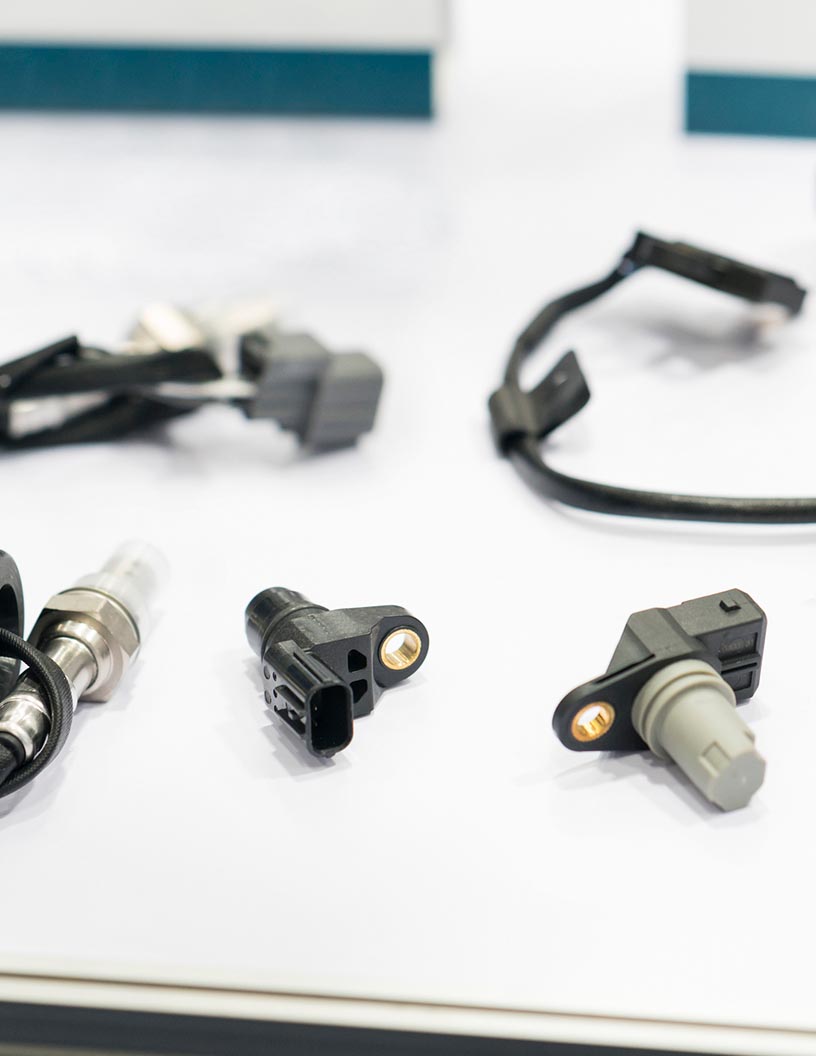


Global Automotive Cabin Air Quality Sensor Market 2024-2028
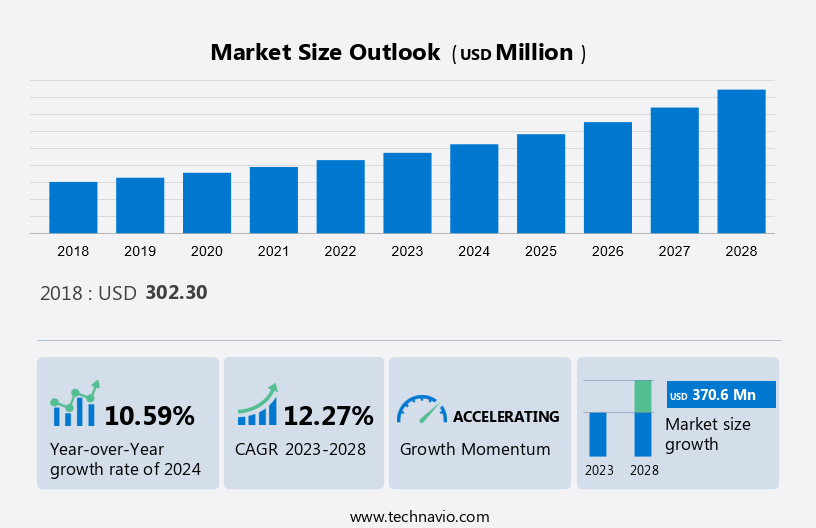
The Global Automotive Cabin Air Quality Sensor Market size is forecast to increase by USD 370.6 million at a CAGR of 12.27% between 2023 and 2028. The Global Automotive Cabin Air Quality Sensor Market is shaped by various factors. Heightened awareness regarding the detrimental impacts of air pollution drives the demand of these sensors in vehicles. Additionally, the integration of advanced air quality systems (AQS) enhances indoor air quality, spurring market growth. Moreover, the shift in production to low-cost countries fuels their adoption in automotive manufacturing, reflecting the market's global reach and adaptability to industry trends. This market research and growth report also includes an in-depth analysis of drivers, trends, and challenges. Furthermore, the report includes historic market data from 2018 to 2022.
What will be the Size of the Automotive Cabin Air Quality Sensor Market During the Forecast Period?
To learn more about this report, View Report Sample
Market Segmentation
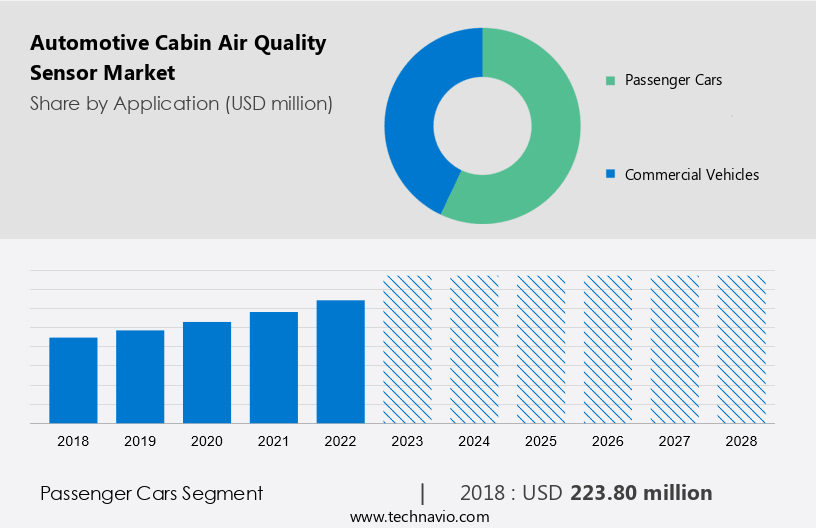
The passenger cars segment is estimated to witness significant growth during the forecast period. There is an increasing focus by passenger car manufacturers on expanding their product portfolios by launching new variants.. For example, in March 2020, Hyundai Motor Co. (Hyundai Motor) launched the new version of its SUV, Creta, in India, which features an in-built smart air purification system. There is an increasing focus by several market players to increase their sales by opening new outlets.
Get a glance at the market contribution of various segments View the PDF Sample
The passenger cars segment was the largest segment and was valued at USD 223.8 million in 2018. There is a rising penetration of EVs in the passenger car segment. Some of the main factors that are driving the penetration of EVs include the benefits provided by the government (in terms of tax exemption and subsidies for OEMs as well as consumers), the initiatives being taken to reduce the emissions of greenhouse gases, stringent carbon emission norms, increased participation of foreign as well as regional players. As a result, it increased the preference for EVs among consumers. As a result, it will significantly contribute to the growth of the market as these vehicles have high electronic content, and cabin AQS will be an integral component to ensure efficient indoor air quality inside the vehicle cabin. Hence, such factors are expected to fuel the growth of this segment which in turn will drive the market growth during the forecast period.
Key Regions

For more insights on the market share of various regions Download PDF Sample now!
APAC is estimated to contribute 45% to the growth of the global market during the forecast period. Technavio's analysts have elaborately explained the regional trends and drivers that shape the market during the forecast period. One of the main countries in APAC that is significantly contributing to the market growth in APAC is China due to the high adoption of luxury cars in the region.
Moreover, the main factors that are fuelling the demand for luxury cars in APAC are the increasing income levels and the expansion of the middle class in emerging economies, such as India and Indonesia. Furthermore, there is significant competition among the automotive OEMs that manufacture passenger cars in the region which is positively impacting the market growth in the region. Hence, such factors are driving the market growth in APAC during the forecast period.
Market Dynamics and Customer Landscape
The market is a significant industry that focuses on providing solutions for ensuring good air quality within the vehicle's cabin. With increasing concerns over air pollution and poor air quality, the demand for effective cabin air quality sensors is on the rise. These sensors help detect and measure pollutants such as carbon monoxide, hydrogen, volatile organic substances, and fine particles, including air particulate matter. Cars, especially those with internal combustion engines, contribute to vehicular emissions, which can negatively impact cabin air quality. Electric vehicles and autonomous vehicles also face challenges related to battery emissions and air filtration system efficiency. The market for automotive cabin air quality sensors is driven by factors like increasing awareness of health risks associated with poor air quality, stringent regulations, and the growing demand for energy efficiency in air conditioning systems. Key players in this market include Tier 1 automotive suppliers, and the market is expected to grow significantly due to the increasing production of automobiles and the need to address pollutant concentrations in the cabin. The market is segmented based on air quality sensors, air filtration systems, air conditioning systems, and vehicle types. Pressure sensors, temperature sensors, and airflow sensors are essential components of cabin air quality sensors, while obstruction and energy efficiency are critical factors influencing the market's growth. Cloud-based solutions are also gaining popularity in the automotive production sector.
Key Market Driver
One of the key factors driving the market growth is the AQS aiding in improving indoor air quality, particularly with AQS systems aiding in enhancing indoor air quality. The primary function of the AQS lies in regulating the quality of internal air within an automotive cabin, contributing significantly to the reduction of in-car emissions. Traffic congestion stands out as one of the major sources of air pollution, alongside emissions from private households and industries. Passenger cars, in particular, are susceptible to varying levels of pollution, underscoring the increasing adoption of indoor air quality solutions (IAQS) aimed at purifying the air within automotive cabins. These advancements in technology cater to addressing health impacts associated with air pollution, such as asthma and cancer, by monitoring and mitigating harmful pollutants like carbon monoxide, unburned hydrocarbons, volatile organic compounds (VOCs), ozone, and particulate emissions.
Integral to the AQS system is its integration with the vehicle air conditioning system, controlling interior temperature and recirculation flap position, and regulating fan speed to optimize air quality. Leveraging MEMS-based sensor solutions and neural network-trained firmware, AQS systems are equipped to detect and analyze pollutant levels, humidity, and temperature in real time. Cloud-based technology further enhances AQS capabilities by providing access to real-time and predicted data, facilitating informed decision-making. This integration of artificial intelligence with AQS systems not only ensures optimal quality but also supports the development of electric vehicles (EVs) and autonomous vehicles (AVs) equipped with advanced HVAC systems. As such, the automotive cabin AQS market is poised for substantial growth during the forecast period, driven by the continuous advancement in technology and the increasing demand for healthier automotive cabin environments.
Significant Market Trends
A key factor shaping the market growth is the growing adoption of multi-functional car air purifiers. There is a growing trend in the market to develop multi-functional, compact, and simple user interface products to enhance the quality and designs of cars. In addition, several market players are providing multi-functional car air purifiers consisting of an air conditioner to cool, a fan to circulate air, a dehumidifier to remove moisture, and purifiers for the removal of contaminants from the cabin air.
Moreover, there is an increasing investment by some of the prominent market players in order to come up with more augmented products that freshen the air with desirable fragrances. In addition, multi-functional car purifiers are also being provided by players. Hence, such factors are expected to positively impact the market. Therefore, it is expected to fuel the market growth during the forecast period.
Major Market Challenge
The high cost of HVAC systems is one of the key challenges hindering the market growth. The high cost of HVAC systems significantly influences the increased cost associated with AQS. The main purpose of the HVAC system is that it helps to reduce humidity and ventilation. In addition, they help to maintain controlled temperatures inside automotive cabins.
However, there is a significant cost associated with the HVAC systems despite the various functionalities. Some of the key costs include installation, product cost as well as the cost associated with HVAC compressor replacements. Hence, such factors are negatively impacting the market. therefore, it is expected to hinder the market growth during the market forecast period.
Customer Landscape
The market research report includes the adoption lifecycle of the market, covering from the innovator's stage to the laggard's stage. It focuses on adoption rates in different regions based on penetration. Furthermore, the report also includes key purchase criteria and drivers of price sensitivity to help companies evaluate and develop their growth strategies.
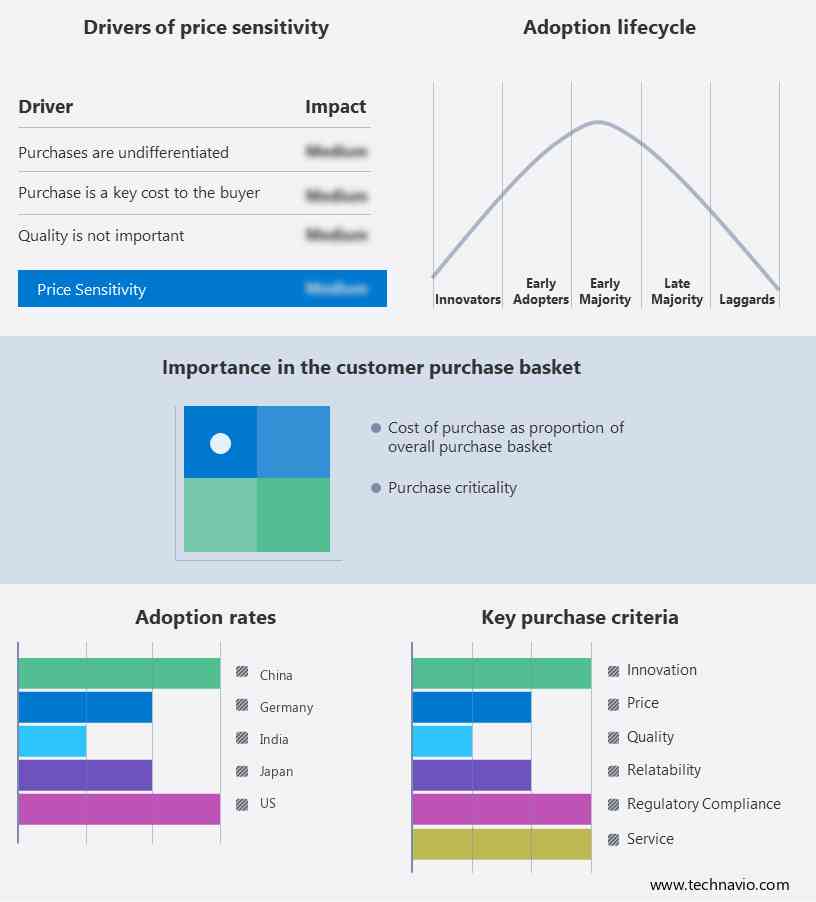
Global Automotive Cabin Air-Quality Sensor Market Customer Landscape
Who are the Major Market Companies?
Companies are implementing various strategies, such as strategic alliances, partnerships, mergers and acquisitions, geographical expansion, and product/service launches, to enhance their presence in the market.
Amphenol Corp: The company offers automotive cabin air-quality sensor products such as air quality sensor solutions which provide a range of of applications, such as offices, classrooms, and residential properties.
The research report also includes detailed analyses of the competitive landscape of the market and information about 20 market companies, including:
- ams OSRAM AG
- Asahi Kasei Corp.
- Axetris AG
- Faurecia SE
- Hanon Systems
- Honeywell International Inc.
- NEW COSMOS ELECTRIC Co. Ltd.
- Nissha Co. Ltd.
- OMRON Corp.
- Origins Technology Ltd.
- Panasonic Holdings Corp.
- paragon GmbH and Co. KGaA
- Prana Air
- Prodrive Technologies BV
- Sensata Technologies Inc.
- Sensirion AG
- Standard Motor Products Inc.
- UST Umweltsensortechnik GmbH
- Valeo SA
Qualitative and quantitative analysis of companies has been conducted to help clients understand the wider business environment as well as the strengths and weaknesses of key market players. Data is qualitatively analyzed to categorize companies as pure play, category-focused, industry-focused, and diversified; it is quantitatively analyzed to categorize companies as dominant, leading, strong, tentative, and weak.
Segment Overview
The market report provides comprehensive data (region wise segment analysis), with forecasts and estimates in "USD Million" for the period 2024 to 2028, as well as historical data from 2018 to 2022 for the following segments
- Application Outlook
- Passenger cars
- Commercial vehicles
- End-user Outlook
- OEM
- Aftermarket
- Geography Outlook
- North America
- The U.S.
- Canada
- Europe
- The U.K.
- Germany
- France
- Rest of Europe
- APAC
- China
- India
- South America
- Chile
- Argentina
- Brazil
- Middle East & Africa
- Saudi Arabia
- South Africa
- Rest of the Middle East & Africa
- North America
Market Analyst Overview
The market is gaining significant attention due to the increasing concern for Air pollution and Poor air quality. Cars are a major contributor to this issue as Vehicle emissions, including Carbon monoxide, Hydrogen, Pollutants, and Ultrafine gases, pose health risks to Vehicle occupants. Electric vehicles (EVs) and Autonomous vehicles (AVs) are the future of transportation, but they too face challenges related to cabin air quality. HVAC systems play a crucial role in maintaining good air quality in vehicles. However, Energy consumption is a concern, leading to the development of Aftermarket sensors and advanced technologies like Artificial intelligence and Machine learning. Passenger well-being is a priority for OEMs, leading to the integration of advanced filter technology, Selective catalytic reduction, Exhaust gas circulation, and other pollution targets. These advancements offer Health benefits, ensuring the safety and comfort of vehicle occupants. The Automotive Cabin Air Quality Sensor market is expected to grow significantly due to the increasing focus on passenger safety and the need to comply with pollution regulations. The Supply chain network, Warranties, and After-sales support are also crucial factors driving market growth.
|
Industry Scope |
|
|
Report Coverage |
Details |
|
Page number |
178 |
|
Base year |
2023 |
|
Historic period |
2018 - 2022 |
|
Forecast period |
2024-2028 |
|
Growth momentum & CAGR |
Accelerate at a CAGR of 12.27% |
|
Market growth 2024-2028 |
USD 370.6 million |
|
Market structure |
Fragmented |
|
YoY growth 2023-2024(%) |
10.59 |
|
Regional analysis |
APAC, Europe, North America, South America, and Middle East and Africa |
|
Performing market contribution |
APAC at 45% |
|
Key countries |
China, US, Japan, India, and Germany |
|
Competitive landscape |
Leading Companies, Market Positioning of Companies, Competitive Strategies, and Industry Risks |
|
Key companies profiled |
Amphenol Corp., ams OSRAM AG, Asahi Kasei Corp., Axetris AG, Faurecia SE, Hanon Systems, Honeywell International Inc., NEW COSMOS ELECTRIC Co. Ltd., Nissha Co. Ltd., OMRON Corp., Origins Technology Ltd., Panasonic Holdings Corp., paragon GmbH and Co. KGaA, Prana Air, Prodrive Technologies BV, Sensata Technologies Inc., Sensirion AG, Standard Motor Products Inc., UST Umweltsensortechnik GmbH, and Valeo SA |
|
Market dynamics |
Parent market analysis, Market growth inducers and obstacles, Fast-growing and slow-growing segment analysis, Market growth and Forecasting, COVID 19 impact and recovery analysis and future consumer dynamics, Market condition analysis for forecast period |
|
Customization purview |
If our report has not included the data that you are looking for, you can reach out to our analysts and get segments customized. |
What are the Key Data Covered in this Market Research Report?
- CAGR of the market during the forecast period
- Detailed information on factors that will drive the market growth and forecasting between 2023 and 2027
- Precise estimation of the market size and its contribution to the market in focus on the parent market
- Accurate predictions about upcoming trends and changes in consumer behavior
- Market growth analysis across APAC, Europe, North America, South America, and the Middle East and Africa
- A thorough analysis of the market's competitive landscape and detailed information about companies
- Market forecasting of factors that will challenge the growth of market companies
We can help! Our analysts can customize this market research report to meet your requirements.
 RIA -
RIA - 
