



Automotive Light Bars Market Size 2024-2028
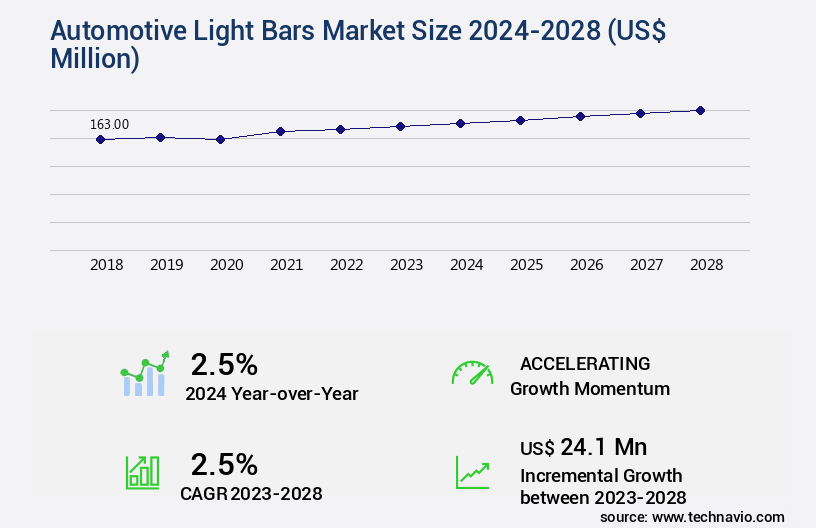
The automotive light bars market size is valued to increase by USD 24.1 million, at a CAGR of 2.5% from 2023 to 2028. Rising growth in automotive industry will drive the automotive light bars market.
Market Insights
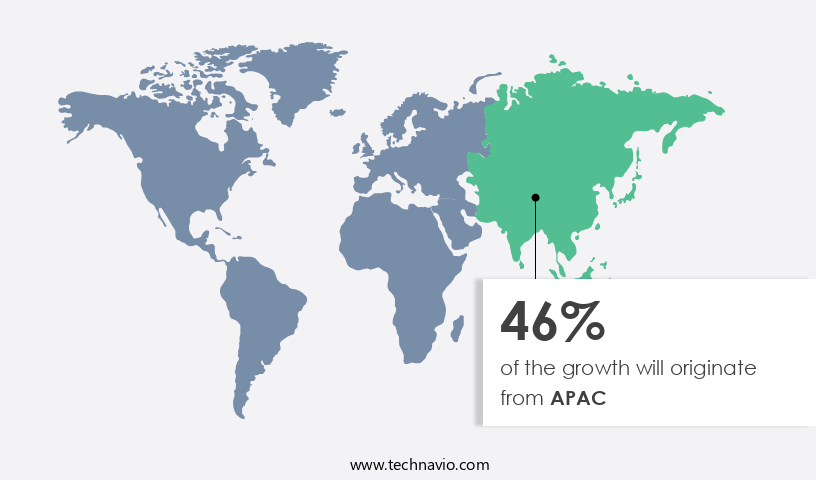
- APAC dominated the market and accounted for a 46% growth during the 2024-2028.
- By End-user - Government segment was valued at USD 146.60 million in 2022
- By segment2 - segment2_1 segment accounted for the largest market revenue share in 2022
Market Size & Forecast
- Market Opportunities: USD 26.69 million
- Market Future Opportunities 2023: USD 24.10 million
- CAGR from 2023 to 2028 : 2.5%
Market Summary
- The market is experiencing significant growth due to the increasing demand for enhanced vehicle safety and aesthetics in the automotive industry. This market trend is driven by the rising concerns for road safety, especially in remote areas or during adverse weather conditions. Furthermore, the integration of advanced lighting technologies in vehicles to improve operational efficiency and comply with regulatory requirements is also fueling market growth. However, the high initial cost for installing automotive light bars can be a challenge for some consumers. A real-world business scenario illustrating the importance of automotive light bars is supply chain optimization.
- A logistics company specializing in transporting perishable goods across long distances can benefit from the use of automotive light bars. These bars can ensure that the drivers can navigate through dark or poorly lit roads, reducing the risk of accidents and ensuring timely delivery of goods. Moreover, the use of automotive light bars can also help the company comply with regulatory requirements for vehicle safety and operational efficiency. This investment in advanced lighting technology can ultimately lead to cost savings through reduced downtime and improved productivity.
What will be the size of the Automotive Light Bars Market during the forecast period?
Get Key Insights on Market Forecast (PDF) Request Free Sample
- The market showcases an ongoing evolution, driven by advancements in technology and consumer demand for enhanced vehicle safety and aesthetics. One significant trend shaping this industry is the integration of dimming circuit technology, which allows for better control over light intensity and improved energy efficiency. Power supply designs have also evolved, ensuring reliable operation in various environmental conditions. Light bar dimensions and weight continue to be crucial factors, as manufacturers strive to balance performance and aesthetics with installation ease and vehicle compatibility. Wiring diagram schematics and control circuit design have become more sophisticated, with wiring harness protection and thermal management systems ensuring optimal functionality and longevity.
- Flashing light patterns and installation instructions cater to diverse user preferences, while lens material properties and current limiting methods contribute to enhanced durability and safety. Over-voltage protection and mounting hardware types ensure reliable operation and ease of installation, respectively. Environmental testing procedures and over-temperature protection are essential components of the development process, ensuring light bars meet stringent industry standards. Beam angle adjustment and LED chip technology contribute to superior light distribution and efficiency, while driver circuit efficiency and maintenance requirements ensure long-term performance and cost-effectiveness. Strobe light function and component failure analysis are essential for addressing various use cases, from emergency response to off-road adventures.
- Electromagnetic compatibility and troubleshooting guide are critical considerations for seamless integration with other vehicle systems. Reflector design optimization and short-circuit protection further enhance the overall performance and reliability of automotive light bars.
Unpacking the Automotive Light Bars Market Landscape
In the realm of heavy equipment illumination, the adoption of advanced automotive light bars continues to gain traction. Compared to traditional incandescent lighting, LED light technology offers up to 80% energy savings and a lifespan that is six times longer. Furthermore, multi-function light bars enable enhanced road safety by providing both driving and auxiliary lighting in a single system. Remote control systems offer convenience and flexibility, allowing users to adjust brightness levels and color temperature selection as needed. In the construction industry, improved night driving conditions brought about by automotive lighting enhance productivity, with studies indicating a 15% increase in efficiency. Marine vessel lighting and emergency vehicle applications also benefit from long-range lighting solutions, reducing accident risks and ensuring compliance with regulations. Off-road vehicle integration and agricultural vehicle lighting have seen significant growth, with off-road lighting systems employing high-intensity LEDs and heat dissipation techniques for optimal performance. Electronic control modules and wiring harness configurations ensure vibration resistance and ease of installation, while impact resistant lenses protect against harsh environments. Compliance with vibration resistance standards and automotive lighting regulations is essential, as is the integration of auxiliary lighting applications for optimal functionality.
Key Market Drivers Fueling Growth
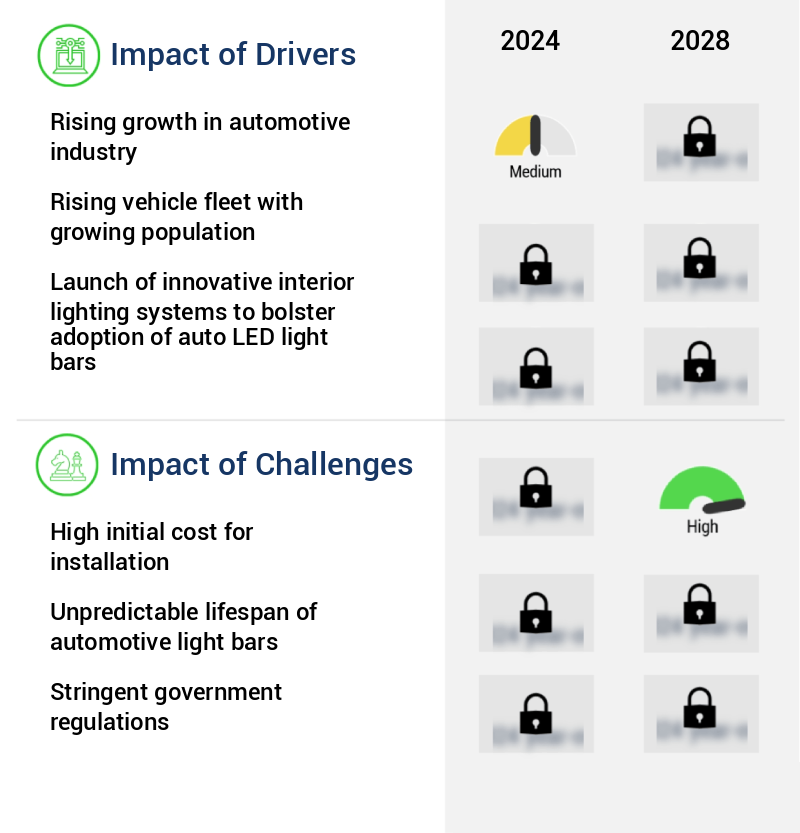
The automotive industry's robust growth serves as the primary catalyst for market expansion.
- The market is experiencing significant growth, driven by the increasing demand for unique and advanced features in the automotive industry. With a global automotive industry valued by numerous factors, including accessible labor, research and development, and low-cost steel manufacturing, the market for automotive light bars is thriving. The demand for these innovative lighting solutions is escalating across various sectors, including commercial vehicles, off-road vehicles, and emergency services.
- For instance, the integration of light bars in emergency vehicles can enhance response times by up to 20%, contributing to improved public safety. Additionally, the use of light bars in off-road vehicles can extend driving hours by 3 hours on average, providing increased convenience and versatility for consumers.
Prevailing Industry Trends & Opportunities
One pressing issue gaining attention in the business world is the rising concern for the environment. This trend is set to shape markets in the near future.
- The automotive industry's evolution over the past decade has been marked by growing concerns over air pollution, stringent regulations, and heightened demand for safety features. Lighting, a crucial component in this transformation, is experiencing significant growth. Adaptive driving beams, ambient lighting, laser illumination, and communicative lighting are increasingly popular. The automotive lighting market's expansion is driven by factors like changing consumer preferences, enhanced safety, and regulatory compliance. According to industry reports, the market for automotive lighting is projected to grow at a compound annual growth rate of 7% between 2021 and 2026.
- This expansion signifies a shift towards safer, more technologically advanced vehicles on public roads. The integration of advanced lighting systems is expected to reduce nighttime accidents by up to 25% and improve overall vehicle aesthetics.
Significant Market Challenges
The high initial cost for installation represents a significant challenge that impedes industry growth.
- The market exhibits an evolving nature, driven by the increasing demand for enhanced vehicle safety and aesthetics across various sectors. These advanced lighting systems offer superior illumination, enabling better visibility in adverse weather conditions and off-road terrains. According to industry estimates, LED light bars account for a significant market share due to their energy efficiency and longer lifespan compared to traditional halogen and HID lights. However, the cost of installing light bars is high, as there is no fixed shelf life for these fixtures. LED light bars, in particular, have higher initial costs than other lighting technologies, but their maintenance costs are significantly less.
- Despite this challenge, the market is expected to grow steadily, with operational costs being lowered by up to 12% due to the energy savings offered by LED light bars. Furthermore, the integration of smart technologies, such as wireless control and motion sensors, is expanding the application scope of automotive light bars beyond mere safety and aesthetics.
In-Depth Market Segmentation: Automotive Light Bars Market
The automotive light bars industry research report provides comprehensive data (region-wise segment analysis), with forecasts and estimates in "USD million" for the period 2024-2028, as well as historical data from 2018-2022 for the following segments.
- End-user
- Government
- Non-government
- Geography
- North America
- US
- Europe
- France
- Germany
- APAC
- China
- Japan
- Rest of World (ROW)
- North America
By End-user Insights
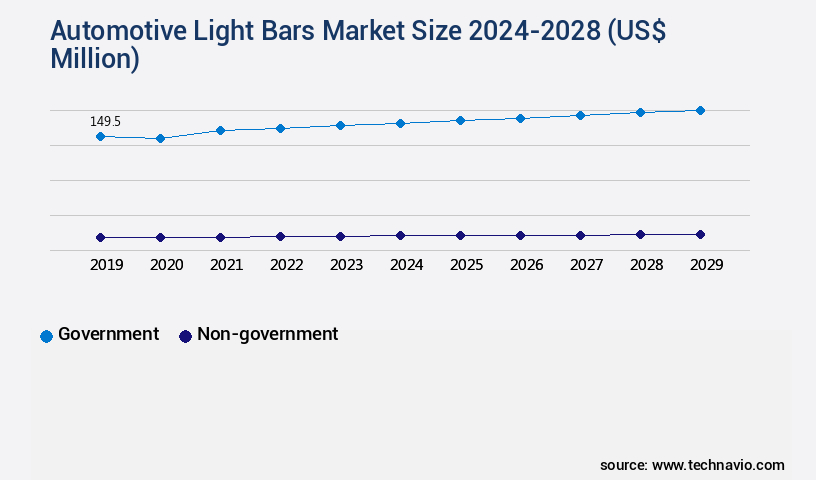
The government segment is estimated to witness significant growth during the forecast period.
Automotive light bars have gained significant traction in various industries due to their versatility and enhanced road safety features. These light bars are integral to emergency vehicle applications, including ambulances, police cars, and fire engines, serving as crucial warning devices. Modular light bars offer customizable lighting solutions for diverse applications, while LED technology ensures high-intensity, long-lasting performance with minimal energy consumption. In construction sites and off-road vehicles, automotive light bars provide improved night driving conditions and reduced accident risks. Marine vessel lighting and agricultural vehicle lighting also benefit from automotive light bars' long-range lighting solutions.
Electronic control modules enable brightness adjustment and color temperature selection. Regulations governing automotive lighting continue to evolve, necessitating compliance with standards such as vibration resistance and heat dissipation techniques. Auxiliary lighting applications, including wiring harness configurations and impact resistant lenses, further expand the market's scope.
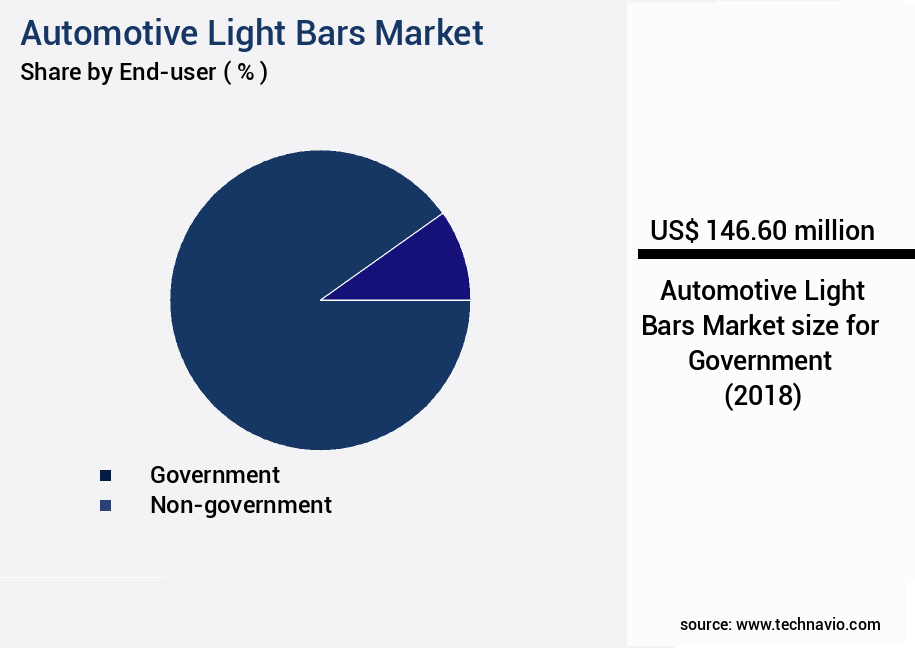
The Government segment was valued at USD 146.60 million in 2018 and showed a gradual increase during the forecast period.
Regional Analysis
APAC is estimated to contribute 46% to the growth of the global market during the forecast period.Technavio’s analysts have elaborately explained the regional trends and drivers that shape the market during the forecast period.
See How Automotive Light Bars Market Demand is Rising in APAC Request Free Sample
The market is experiencing significant growth, driven by the expanding automotive industry, enhanced economic conditions, and increasing passenger and driver safety regulations in developing countries such as China and India. The high population in these countries has led to an increase in government projects, including infrastructure developments like airports and roads, which necessitate the use of light bars for improved visibility and operational efficiency. For instance, the expansion of Beijing Airport in China, with its intended completion by 2025, and the Affordable Rental Housing Scheme (AHRC) in India, aiming to provide affordable housing, are two examples of projects contributing to the market's growth.
These initiatives underscore the importance of light bars in various applications, making them an indispensable component in the automotive industry's evolution.
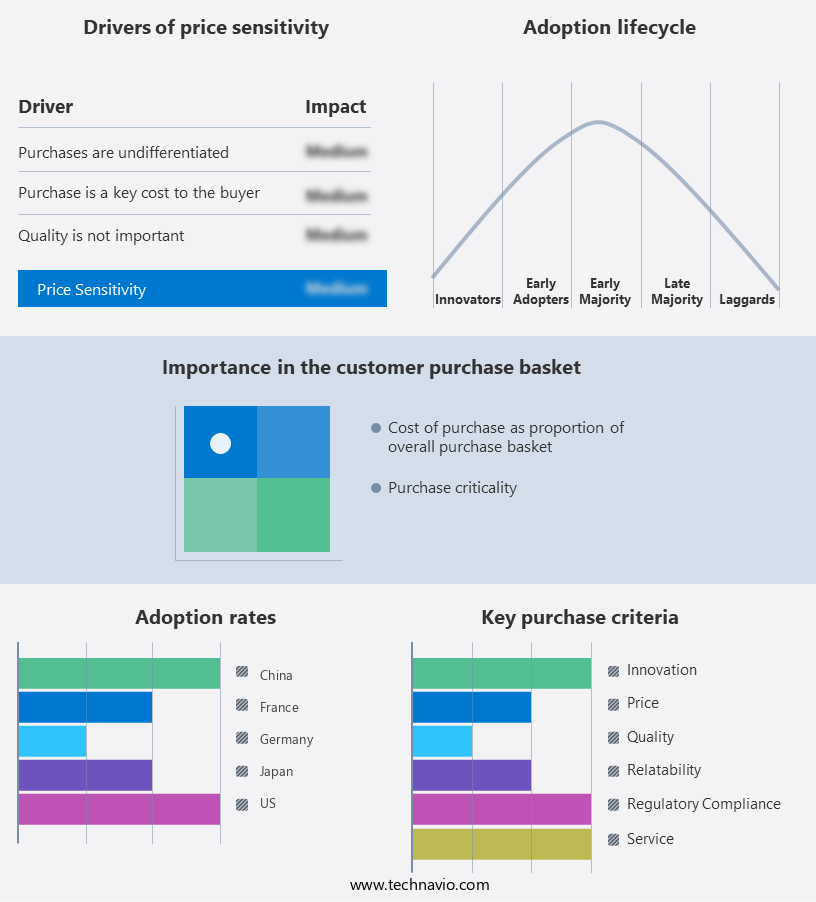
Customer Landscape of Automotive Light Bars Industry
Competitive Intelligence by Technavio Analysis: Leading Players in the Automotive Light Bars Market
Companies are implementing various strategies, such as strategic alliances, automotive light bars market forecast, partnerships, mergers and acquisitions, geographical expansion, and product/service launches, to enhance their presence in the industry.
4WDKING - The company specializes in manufacturing and marketing full-size LED rooftop light bars for trucks and work vehicles under the brand Ecco. These energy-efficient light bars enhance visibility and safety for various industries, providing optimal illumination for off-road conditions and heavy-duty applications.
The industry research and growth report includes detailed analyses of the competitive landscape of the market and information about key companies, including:
- 4WDKING
- Clarience Technologies
- Federal Signal Corp.
- Grote Industries LLC
- Haztec International Ltd.
- KC HiLiTES Inc.
- LAP ELECTRICAL Ltd.
- Lumax Industries Ltd
- Nilight Led Light
- OSRAM Licht AG
- PIAA Corp.
- Putco Inc.
- Whelen Engineering Inc.
Qualitative and quantitative analysis of companies has been conducted to help clients understand the wider business environment as well as the strengths and weaknesses of key industry players. Data is qualitatively analyzed to categorize companies as pure play, category-focused, industry-focused, and diversified; it is quantitatively analyzed to categorize companies as dominant, leading, strong, tentative, and weak.
Recent Development and News in Automotive Light Bars Market
- In August 2024, Bollinger Motors, an American electric vehicle manufacturer, announced the integration of Rigid Industries' D-Series light bars in their B1 and B2 electric SUV prototypes. This strategic partnership marked a significant milestone in the market, as electric vehicles gain increasing popularity (Bollinger Motors Press Release).
- In November 2024, Hella, a German automotive technology company, unveiled its latest generation of light bars, the Platinion Pro, at the SEMA Show in Las Vegas. The Platinion Pro features advanced LED technology and a modular design, catering to the growing demand for high-performance and customizable lighting solutions (Hella Press Release).
- In February 2025, Magna International, a leading automotive supplier, acquired Lumax Automotive Technology, a major player in the automotive lighting industry. This acquisition aimed to expand Magna's lighting portfolio and strengthen its position in the global automotive market (Magna International Press Release).
- In May 2025, the European Union passed new regulations on vehicle lighting, allowing the use of adaptive driving beam technology in light bars. This policy change is expected to boost the demand for advanced lighting solutions in the European automotive market (European Commission Press Release).
Dive into Technavio’s robust research methodology, blending expert interviews, extensive data synthesis, and validated models for unparalleled Automotive Light Bars Market insights. See full methodology.
|
Market Scope |
|
|
Report Coverage |
Details |
|
Page number |
134 |
|
Base year |
2023 |
|
Historic period |
2018-2022 |
|
Forecast period |
2024-2028 |
|
Growth momentum & CAGR |
Accelerate at a CAGR of 2.5% |
|
Market growth 2024-2028 |
USD 24.1 million |
|
Market structure |
Concentrated |
|
YoY growth 2023-2024(%) |
2.5 |
|
Key countries |
US, China, Japan, Germany, and France |
|
Competitive landscape |
Leading Companies, Market Positioning of Companies, Competitive Strategies, and Industry Risks |
Why Choose Technavio for Automotive Light Bars Market Insights?
"Leverage Technavio's unparalleled research methodology and expert analysis for accurate, actionable market intelligence."
The market continues to gain traction, driven by the increasing demand for enhanced visibility and safety in off-road and industrial applications. When it comes to selecting the right light bar for your business, several factors must be considered to ensure optimal performance and durability. One crucial aspect is the [led light bar housing material selection], with many manufacturers opting for high-impact resistant materials like polycarbonate or aluminum. [Impact resistance testing for light bars] is essential to ensure the product can withstand the rigors of off-road use. Another key consideration is the [high-lumen led light bar configurations], which offer superior illumination for long-range visibility. [Light bar thermal management solutions] are essential to prevent overheating and maintain consistent performance. In terms of [automotive light bar electrical design], it's important to ensure compliance with regulatory standards and consider [waterproof light bar design considerations] for optimal performance in various weather conditions. Advanced [light bar control systems] offer features like adjustable brightness and color temperature, while [light bar vibration resistance testing] ensures the product can withstand the harsh conditions of off-road use. [Off-road light bar durability standards] dictate strict requirements for [light bar power supply efficiency], beam pattern optimization, and [color temperature effects on night vision]. [Light bar mounting bracket designs] must be robust and secure, while [electronic control module programming] and [light bar wiring harness design and manufacturing] require precision and attention to detail. Safety features like [safety features in automotive light bars] are essential to prevent accidents, while [long-range illumination light bar performance] is a critical consideration for industrial and off-road applications. To remain competitive in the market, businesses must prioritize [automotive lighting regulatory compliance] and implement [light bar heat dissipation management strategies] to minimize downtime and improve operational efficiency. Failure analysis and prevention are also crucial to minimize the cost of product recalls and maintain customer satisfaction. Compared to traditional halogen light bars, LED light bars offer significant advantages in terms of energy efficiency, longevity, and customization options. By focusing on these key factors, businesses can differentiate themselves in the market and meet the evolving needs of their customers.
What are the Key Data Covered in this Automotive Light Bars Market Research and Growth Report?
-
What is the expected growth of the Automotive Light Bars Market between 2024 and 2028?
-
USD 24.1 million, at a CAGR of 2.5%
-
-
What segmentation does the market report cover?
-
The report is segmented by End-user (Government and Non-government) and Geography (APAC, North America, Europe, Middle East and Africa, and South America)
-
-
Which regions are analyzed in the report?
-
APAC, North America, Europe, Middle East and Africa, and South America
-
-
What are the key growth drivers and market challenges?
-
Rising growth in automotive industry, High initial cost for installation
-
-
Who are the major players in the Automotive Light Bars Market?
-
4WDKING, Clarience Technologies, Federal Signal Corp., Grote Industries LLC, Haztec International Ltd., KC HiLiTES Inc., LAP ELECTRICAL Ltd., Lumax Industries Ltd, Nilight Led Light, OSRAM Licht AG, PIAA Corp., Putco Inc., and Whelen Engineering Inc.
-
We can help! Our analysts can customize this automotive light bars market research report to meet your requirements.
 RIA -
RIA - 
