


Autonomous Maritime Surveillance Systems Market Size and Growth Forecast 2026-2030
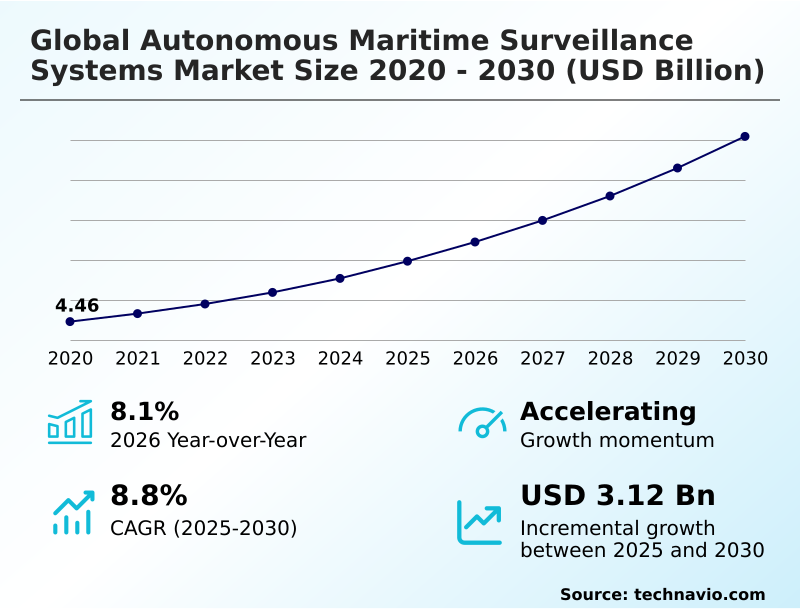
The Autonomous Maritime Surveillance Systems Market size was valued at USD 5.97 billion in 2025 growing at a CAGR of 8.8% during the forecast period 2026-2030.
APAC accounts for 32.2% of incremental growth during the forecast period. The Autonomous vehicles segment by Type was valued at USD 3.62 billion in 2024, while the Hardware segment holds the largest revenue share by Component.
The market is projected to grow by USD 4.63 billion from 2020 to 2030, with USD 3.12 billion of the growth expected during the forecast period of 2025 to 2030.
Get Key Insights on Market Forecast (PDF) Request Free Sample
Autonomous Maritime Surveillance Systems Market Overview
The autonomous maritime surveillance systems market is defined by a strategic shift towards unmanned platforms to achieve comprehensive maritime domain awareness. With the market showing an 8.1% year-over-year growth, this transition is driven by the need for more efficient and persistent surveillance capabilities. Nations in APAC are at the forefront, contributing to 32.2% of the market's incremental growth, deploying unmanned naval fleets for everything from exclusive economic zone (EEZ) patrol to anti-submarine warfare. In a typical port security scenario, a network of unmanned surface vehicles (USVs) equipped with electro-optical/infrared (EO/IR) sensors performs perimeter patrols, while autonomous underwater vehicles (AUVs) conduct subsea infrastructure inspection of shipping berths and critical assets. The integrated systems architecture of these platforms, supported by advanced satellite communication (SATCOM) arrays and edge computing hardware, enables real-time intelligence gathering and autonomous threat detection, significantly enhancing security posture. This move towards distributed maritime operations underscores the technology's role as a critical force multiplier.
Drivers, Trends, and Challenges in the Autonomous Maritime Surveillance Systems Market
A nation's ability to project maritime control is increasingly dependent on the strategic deployment of unmanned systems. A comprehensive security posture now integrates USVs for persistent border monitoring and illegal fishing detection, offering coverage that manned fleets cannot sustain financially. Simultaneously, AUVs for deep-sea intelligence gathering and AUVs for anti-submarine warfare training provide a critical undersea advantage.
The protection of economic assets is addressed by deploying specialized platforms, such as a USV for offshore energy infrastructure protection and an AUV for subsea pipeline inspection. The effectiveness of these assets hinges on AI algorithms for vessel classification, which can autonomously differentiate between threats and legitimate traffic.
For commercial and scientific applications, USVs for hydrographic mapping services and AUVs for oceanographic data collection deliver essential data with unprecedented efficiency. In one operational scenario, a coast guard agency integrating unmanned systems for search and rescue reduced response logistics costs by over 40% compared to using only crewed vessels and aircraft.
However, the integration of these platforms into crowded sea lanes is governed by the International Regulations for Preventing Collisions at Sea (COLREGs), a framework originally written for human mariners, presenting ongoing regulatory challenges.
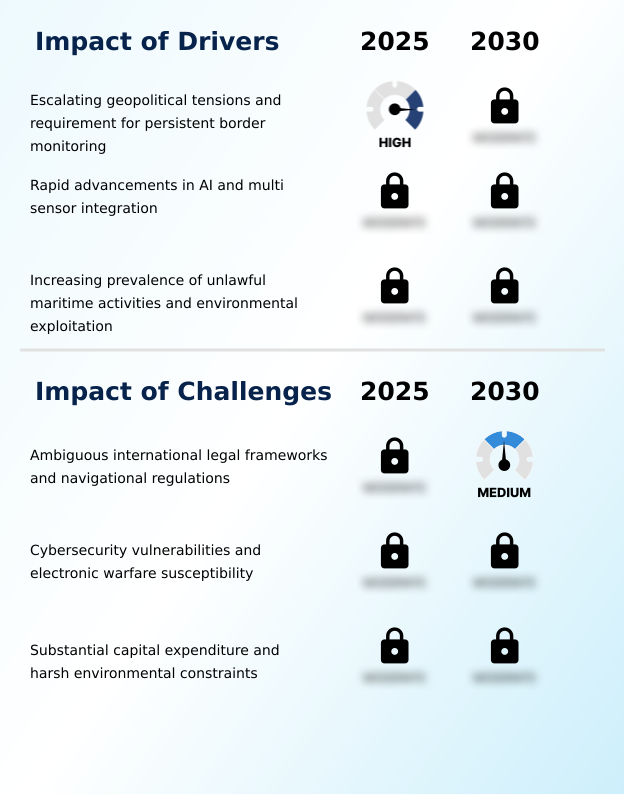
Primary Growth Driver: Escalating geopolitical tensions and the corresponding requirement for persistent border monitoring are key drivers for the market.
Rapid advancements in artificial intelligence are a monumental driver for the market, enabling true autonomy in unmanned maritime platforms.
Modern systems leverage deep learning models and powerful edge computing hardware to process vast amounts of data from sophisticated sensor suites, including high-resolution EO/IR sensors and complex sonar arrays.
This allows for real-time multi-sensor data fusion directly on the vessel, facilitating autonomous navigation algorithms that can identify threats and navigate complex environments without human intervention.
The ability to perform tactical data processing at the edge reduces reliance on high-bandwidth satellite communication (SATCOM) arrays and lowers the cognitive load on human operators, making these systems more scalable and effective for persistent surveillance capabilities.
Emerging Market Trend: A growing emphasis on protecting offshore renewable energy infrastructure is a significant market trend. This requires continuous monitoring to safeguard critical assets like wind farms and subsea cables.
The expansion of offshore renewable energy projects is a primary trend shaping demand for autonomous maritime systems. Protecting these high-value assets, which include sprawling wind farms and subsea power cables, necessitates continuous monitoring solutions that are both cost-effective and resilient.
Deploying an unmanned surface vehicle (USV) for routine patrols and an autonomous underwater vehicle (AUV) for subsea infrastructure inspection has become standard operational practice. These platforms perform critical tasks, such as conducting environmental impact assessments and ensuring the integrity of seabed installations, without exposing human crews to hazardous offshore conditions.
This proactive approach to predictive maintenance scheduling and security minimizes downtime and safeguards energy production, demonstrating the technology's integral role in the sustainable energy transition.
Key Industry Challenge: Ambiguous international legal frameworks and navigational regulations present a key challenge affecting industry growth.
The increasing reliance on digital networks exposes autonomous maritime platforms to significant cybersecurity threats, a primary challenge for the market. These systems depend on continuous data from satellite communication (SATCOM) arrays and GPS for navigation and control, making them targets for electronic warfare (EW) susceptibility, including signal jamming and spoofing.
A breach of the cyber-physical system security could allow malicious actors to seize control of an entire unmanned fleet, turning a surveillance asset into a liability. Mitigating this risk demands robust encryption, secure command and control (C2) systems, and fortified data fusion principles.
However, implementing these measures without introducing operational latency remains a significant engineering hurdle, constraining widespread deployment in high-threat environments.
Explore Full Market Dynamics Analysis Request Free Sample
Autonomous Maritime Surveillance Systems Market Segmentation
The autonomous maritime surveillance systems industry research report provides comprehensive data including region-wise segment analysis, with forecasts and analysis for the period 2026-2030, as well as historical data from 2020-2024 for the following segments.
Type Segment Analysis
The autonomous vehicles segment is estimated to witness significant growth during the forecast period.
The autonomous vehicles segment is reshaping maritime operations, accounting for a substantial portion of the market. This category, encompassing the unmanned surface vehicle and autonomous underwater vehicle, provides persistent surveillance capabilities that are unattainable with crewed vessels.
Advances in autonomous navigation algorithms allow these platforms to execute complex missions, from subsea infrastructure inspection to patroling vast oceanic territories for months.
The adoption is driven by the need for enhanced maritime domain awareness without the high operational costs and human risks of traditional fleets.
The integration of swarm intelligence technology, enabling coordinated actions among multiple vehicles, further amplifies their effectiveness in applications like hydrographic surveys and security patrols, cementing this segment's critical role in the industry's future.
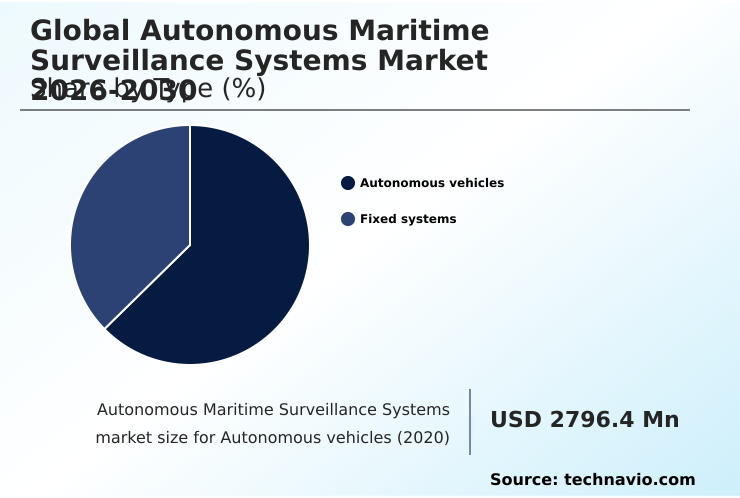
The Autonomous vehicles segment was valued at USD 3.62 billion in 2024 and showed a gradual increase during the forecast period.
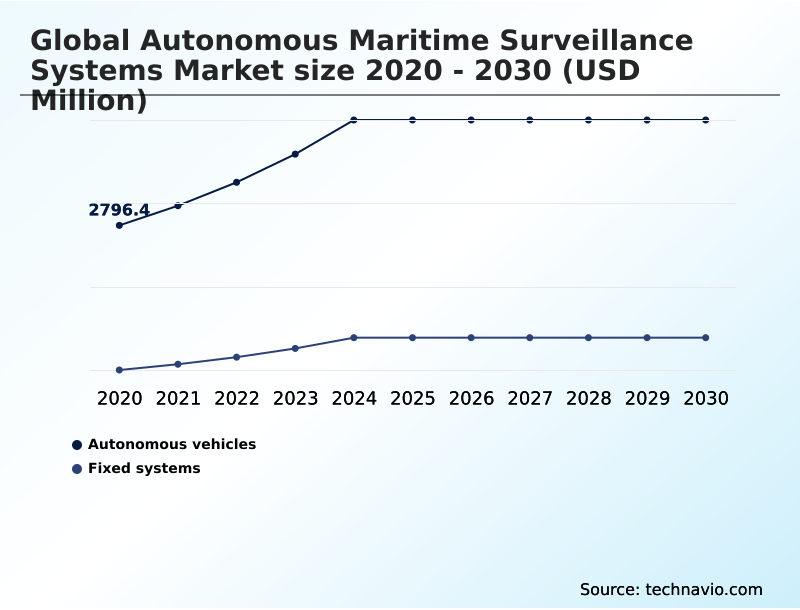
Autonomous Maritime Surveillance Systems Market by Region: APAC Leads with 32.2% Growth Share
APAC is estimated to contribute 32.2% to the growth of the global market during the forecast period.
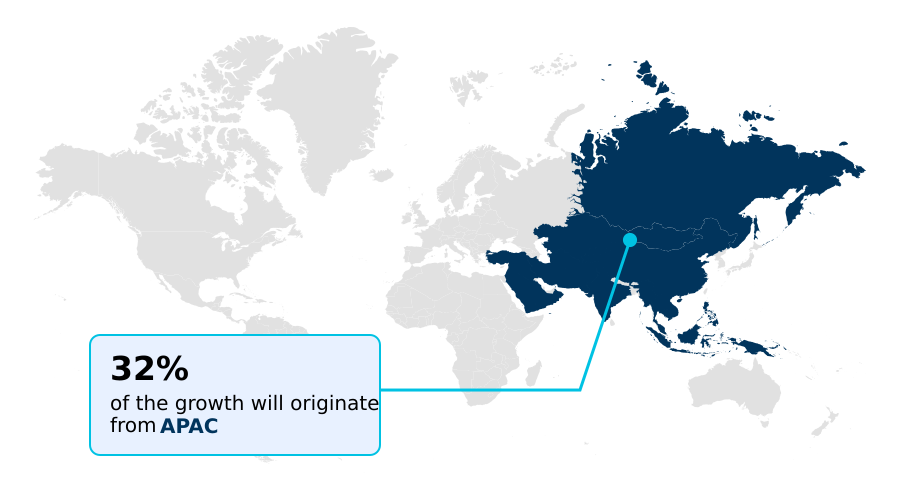
The geographic landscape of this market is increasingly influenced by APAC, which is poised to contribute 32.2% of the total incremental growth.
This expansion is driven by the region's vast maritime trade routes and escalating geopolitical tensions, which necessitate robust maritime domain awareness (MDA) and persistent surveillance capabilities.
Nations across the region are investing heavily in unmanned naval fleets to conduct exclusive economic zone (EEZ) patrol and secure sea lanes.
In practice, this involves deploying autonomous platforms for critical infrastructure protection, such as monitoring subsea telecommunication cables and offshore energy assets.
The focus on developing indigenous integrated systems architecture and autonomous navigation algorithms further solidifies APAC's dominant position, setting the pace for global advancements in uncrewed maritime technology and operations.
Customer Landscape Analysis for the Autonomous Maritime Surveillance Systems Market
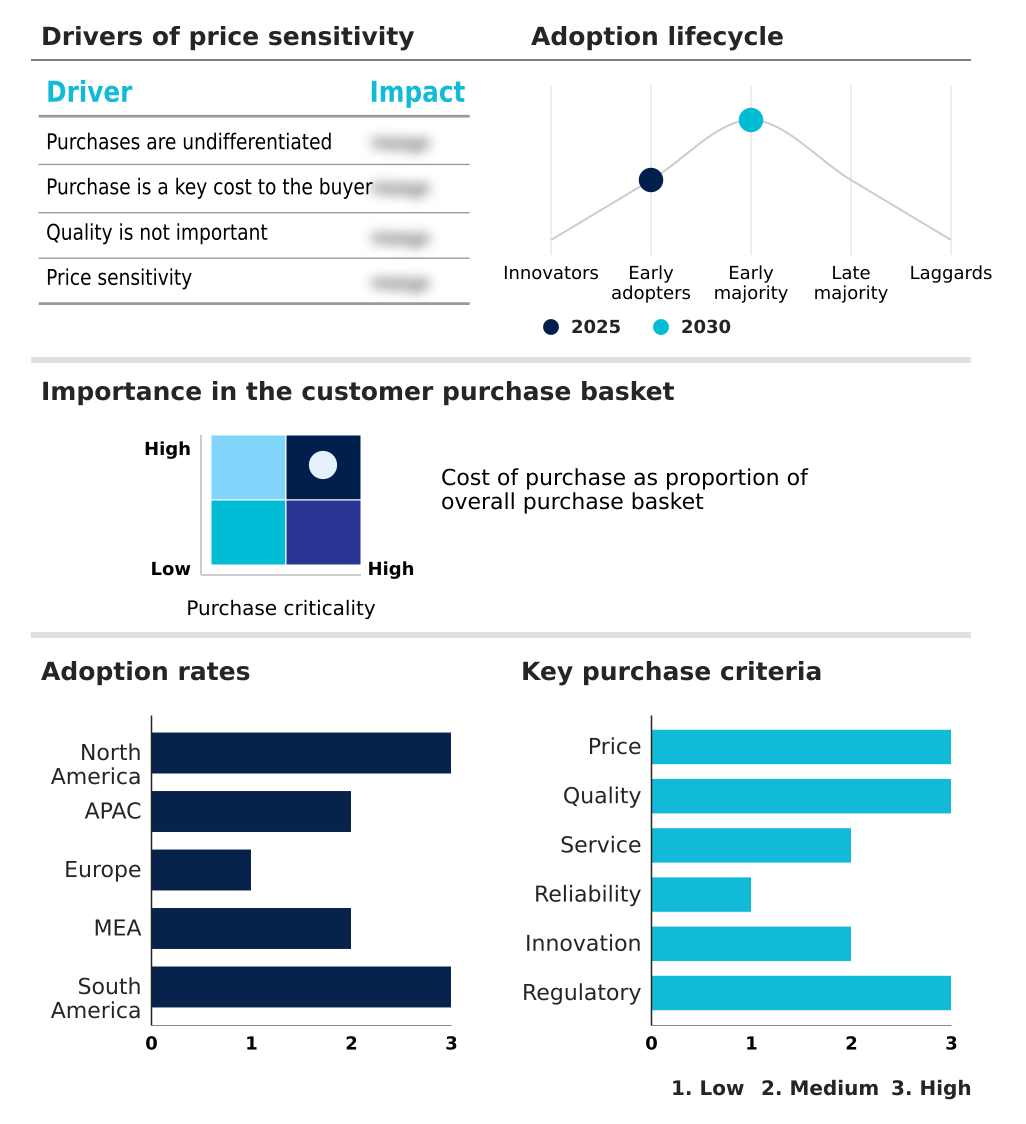
The autonomous maritime surveillance systems market forecasting report includes the adoption lifecycle of the market, covering from the innovator’s stage to the laggard’s stage. It focuses on adoption rates in different regions based on penetration. Furthermore, the autonomous maritime surveillance systems market report also includes key purchase criteria and drivers of price sensitivity to help companies evaluate and develop their market growth analysis strategies.
Competitive Landscape of the Autonomous Maritime Surveillance Systems Market
Companies are implementing various strategies, such as strategic alliances, partnerships, mergers and acquisitions, geographical expansion, and product/service launches, to enhance their presence in the autonomous maritime surveillance systems market industry.
Anduril Industries Inc. - Offerings include advanced uncrewed surface and underwater vehicles engineered for persistent intelligence, surveillance, and reconnaissance missions across diverse and challenging maritime environments.
The industry research and growth report includes detailed analyses of the competitive landscape of the market and information about key companies, including:
- Anduril Industries Inc.
- BAE Systems Plc
- Elbit Systems Ltd.
- General Dynamics Corp.
- Huntington Ingalls Industries
- Kongsberg Gruppen ASA
- L3Harris Technologies Inc.
- Leidos Holdings Inc.
- Leonardo S.p.A.
- Lockheed Martin Corp.
- Maritime Tactical Systems Inc.
- Ocean Aero
- Ocean Infinity
- Rafael Advanced Defense Ltd.
- Saab AB
- Saildrone Inc.
- Teledyne Technologies Inc.
- Textron Systems
- Thales Group
- The Boeing Co.
Qualitative and quantitative analysis of companies has been conducted to help clients understand the wider business environment as well as the strengths and weaknesses of key industry players. Data is qualitatively analyzed to categorize companies as pure play, category-focused, industry-focused, and diversified; it is quantitatively analyzed to categorize companies as dominant, leading, strong, tentative, and weak.
Recent Developments in the Autonomous Maritime Surveillance Systems Market
- In October 2025, Lockheed Martin Corp. finalized a USD 50 million strategic investment in Saildrone Inc. to accelerate the development and enhancement of unmanned surface vehicles (USVs) for the U.S. Navy's advanced surveillance requirements.
- In November 2025, Syrma SGS Technology Ltd. announced its acquisition of a majority stake in Elcome Integrated Systems Pvt. Ltd. for approximately USD 24 million, strengthening its portfolio in defense electronics for India's maritime sector.
- In September 2025, the Australian Government committed USD 1.7 billion for the procurement of a new fleet of indigenously designed and manufactured extra-large autonomous undersea vehicles (XLUUVs) for the Royal Australian Navy.
- In October 2025, Germany-based defense AI company Helsing GmbH acquired Australian underwater drone specialist Blue Ocean Monitoring, expanding its capabilities into AI-driven autonomous maritime systems.
Research Analyst Overview: Autonomous Maritime Surveillance Systems Market
The autonomous maritime surveillance systems market's evolution is marked by a definitive pivot from human-operated to autonomous platforms, a shift fundamentally altering naval operational calculus. This transition compels boardroom-level decisions that weigh the high initial CAPEX of an unmanned surface vehicle (USV) or autonomous underwater vehicle (AUV) against the long-term OPEX reductions and enhanced persistent surveillance capabilities.
The autonomous vehicles segment already dominates the market, reflecting procurement priorities. At a technical level, the integration of synthetic aperture radar (SAR) for all-weather imaging, advanced sonar arrays for anti-submarine warfare (ASW), and multi-sensor data fusion for a coherent operational picture is now standard.
An operator's ability to execute mine countermeasures (MCM) or conduct hydrographic surveys is now dependent on the sophistication of these command and control (C2) systems and their underlying autonomous navigation algorithms.
Compliance with frameworks like the United Nations Convention on the Law of the Sea (UNCLOS) remains a key consideration, especially as swarm intelligence technology enables new forms of distributed operations that test the limits of existing international law.
Dive into Technavio’s robust research methodology, blending expert interviews, extensive data synthesis, and validated models for unparalleled Autonomous Maritime Surveillance Systems Market insights. See full methodology.
| Market Scope | |
|---|---|
| Page number | 310 |
| Base year | 2025 |
| Historic period | 2020-2024 |
| Forecast period | 2026-2030 |
| Growth momentum & CAGR | Accelerate at a CAGR of 8.8% |
| Market growth 2026-2030 | USD 3122.3 million |
| Market structure | Fragmented |
| YoY growth 2025-2026(%) | 8.1% |
| Key countries | US, Canada, Mexico, China, Japan, India, South Korea, Australia, Indonesia, Germany, UK, France, Italy, Spain, The Netherlands, Saudi Arabia, UAE, Turkey, Israel, South Africa, Brazil, Argentina and Colombia |
| Competitive landscape | Leading Companies, Market Positioning of Companies, Competitive Strategies, and Industry Risks |
Autonomous Maritime Surveillance Systems Market: Key Questions Answered in This Report
-
What is the expected growth of the Autonomous Maritime Surveillance Systems Market between 2026 and 2030?
-
The Autonomous Maritime Surveillance Systems Market is expected to grow by USD 3.12 billion during 2026-2030, registering a CAGR of 8.8%. Year-over-year growth in 2026 is estimated at 8.1%%. This acceleration is shaped by escalating geopolitical tensions and requirement for persistent border monitoring, which is intensifying demand across multiple end-use verticals covered in the report.
-
-
What segmentation does the market report cover?
-
The report is segmented by Type (Autonomous vehicles, and Fixed systems), Component (Hardware, Integrated systems, and Software), Application (Surveillance and tracking, Anti-submarine warfare, Port and harbor security, Search and rescue, and Environmental monitoring) and Geography (North America, APAC, Europe, Middle East and Africa, South America). Among these, the Autonomous vehicles segment is estimated to witness significant growth during the forecast period, driven by rising adoption across key application areas. Each segment includes detailed qualitative and quantitative analysis, along with historical data from 2020-2024 and forecasts through 2030 with year-over-year growth rates.
-
-
Which regions are analyzed in the report?
-
The report covers North America, APAC, Europe, Middle East and Africa and South America. APAC is estimated to contribute 32.2% to market growth during the forecast period. Country-level analysis includes US, Canada, Mexico, China, Japan, India, South Korea, Australia, Indonesia, Germany, UK, France, Italy, Spain, The Netherlands, Saudi Arabia, UAE, Turkey, Israel, South Africa, Brazil, Argentina and Colombia, with dedicated market size tables and year-over-year growth for each.
-
-
What are the key growth drivers and market challenges?
-
The primary driver is escalating geopolitical tensions and requirement for persistent border monitoring, which is accelerating investment and industry demand. The main challenge is ambiguous international legal frameworks and navigational regulations, creating operational barriers for key market participants. The report quantifies the impact of each driver and challenge across 2026 and 2030 with comparative analysis.
-
-
Who are the major players in the Autonomous Maritime Surveillance Systems Market?
-
Key vendors include Anduril Industries Inc., BAE Systems Plc, Elbit Systems Ltd., General Dynamics Corp., Huntington Ingalls Industries, Kongsberg Gruppen ASA, L3Harris Technologies Inc., Leidos Holdings Inc., Leonardo S.p.A., Lockheed Martin Corp., Maritime Tactical Systems Inc., Ocean Aero, Ocean Infinity, Rafael Advanced Defense Ltd., Saab AB, Saildrone Inc., Teledyne Technologies Inc., Textron Systems, Thales Group and The Boeing Co.. The report provides qualitative and quantitative analysis categorizing companies as dominant, leading, strong, tentative, and weak based on their market positioning. Company profiles include business segment analysis, SWOT assessment, key offerings, and recent strategic developments.
-
Autonomous Maritime Surveillance Systems Market Research Insights
Market dynamics are shaped by the dual pressures of security imperatives and technological constraints. While the demand for persistent surveillance drives adoption, challenges in cyber-physical system security create significant hurdles for procurement decision-makers.
The operationalization of unmanned systems must comply with existing frameworks like the International Regulations for Preventing Collisions at Sea (COLREGs), where the legal standing of machine vision equivalence is still debated. For instance, deploying uncrewed naval platforms for distributed maritime operations requires robust data fusion principles to counter asymmetric warfare tactics effectively.
This complex interplay of drivers and challenges means that regions like APAC, with a higher growth trajectory than North America, are aggressively investing in autonomous threat detection and long-endurance operational missions to secure critical infrastructure and maritime trade routes.
We can help! Our analysts can customize this autonomous maritime surveillance systems market research report to meet your requirements.
 RIA -
RIA - 
