

Bone Conduction Devices Market Analysis, Size, and Forecast 2026-2030: North America (US, Canada, and Mexico), Europe (Germany, UK, and France), Asia (China, India, and Japan), South America (Brazil, Argentina, and Colombia), Middle East and Africa (Saudi Arabia, UAE, and Turkey), Rest of World (ROW)

Bone Conduction Devices Market Analysis, Size, and Forecast 2026-2030:
North America (US, Canada, and Mexico), Europe (Germany, UK, and France), Asia (China, India, and Japan), South America (Brazil, Argentina, and Colombia), Middle East and Africa (Saudi Arabia, UAE, and Turkey), Rest of World (ROW)

Published: May 2026 295 Pages SKU: IRTNTR70747

Market Overview at a Glance

$9.02 B
Market Opportunity
15.9%
CAGR 2025 - 2030
43.2%
North America Growth
$5.83 B
BAHA segment 2024

Bone Conduction Devices Market Size 2026-2030

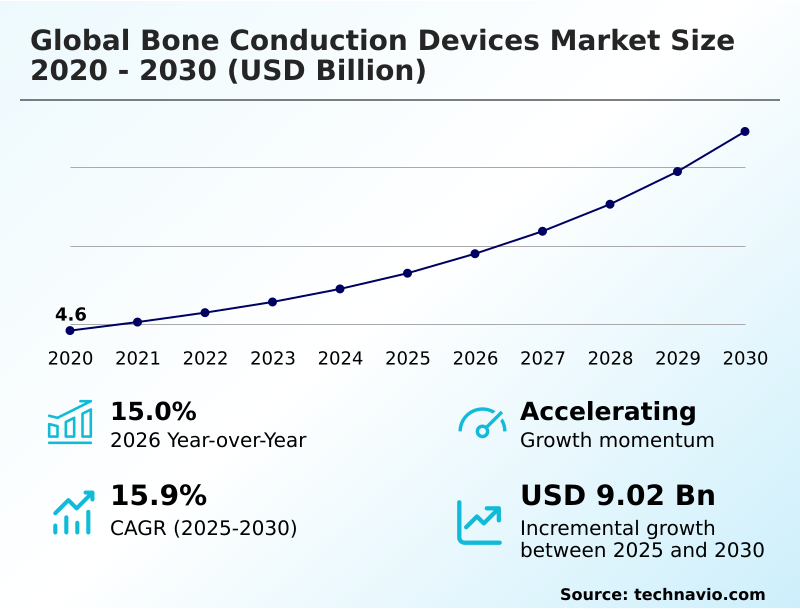
The bone conduction devices market size is valued to increase by USD 9.02 billion, at a CAGR of 15.9% from 2025 to 2030. Rising prevalence of hearing disorders and global demographic shifts will drive the bone conduction devices market.

Major Market Trends & Insights

  • North America dominated the market and accounted for a 43.2% growth during the forecast period.
  • By Product - BAHA segment was valued at USD 5.83 billion in 2024
  • By End-user - Hospitals segment accounted for the largest market revenue share in 2024

Market Size & Forecast

  • Market Opportunities: USD 12.67 billion
  • Market Future Opportunities: USD 9.02 billion
  • CAGR from 2025 to 2030 : 15.9%

Market Summary

  • The Bone Conduction Devices market exhibits accelerating integration across both specialized clinical environments and mainstream consumer electronics sectors. Expanding patient demographics experiencing auditory degradation serve as a primary driver, compelling manufacturers to develop non-invasive rehabilitative solutions that bypass compromised outer ear structures.
  • Conversely, highly inconsistent insurance reimbursement frameworks present a formidable challenge, frequently categorizing critical auditory implants as elective consumer technologies and thereby restricting patient access. To counteract these barriers, manufacturers are optimizing supply chain operations by sourcing lighter, highly durable composite materials to reduce assembly lead times.
  • Implementing modular production frameworks has decreased manufacturing cycle times by 15% compared to legacy fabrication methods, improving overall output efficiency. Companies now leverage automated diagnostic systems to align product specifications directly with audiological assessment requirements. These operational refinements allow medical device developers to scale production rapidly while maintaining strict quality controls.
  • As clinical awareness and consumer lifestyle demands converge, the market continues to bridge the gap between premium assistive hearing infrastructure and situational awareness wearables.

What will be the Size of the Bone Conduction Devices Market during the forecast period?
Get Key Insights on Market Forecast (PDF) Get Free Sample

How is the Bone Conduction Devices Market Segmented?

The bone conduction devices industry research report provides comprehensive data (region-wise segment analysis), with forecasts and estimates in "USD million" for the period 2026-2030, as well as historical data from 2020-2024 for the following segments.

  • Product
    • BAHA
    • Bone conducting headphones
  • End-user
    • Hospitals
    • Clinics
    • Individuals
  • Technology
    • Percutaneous implants
    • Transcutaneous implants
    • Digital and wireless connectivity
  • Geography
    • North America
      • US
      • Canada
      • Mexico
    • Europe
      • Germany
      • UK
      • France
      • Italy
      • Spain
      • The Netherlands
    • Asia
      • China
      • India
      • Japan
      • South Korea
      • Indonesia
      • Thailand
    • Rest of World (ROW)

By Product Insights

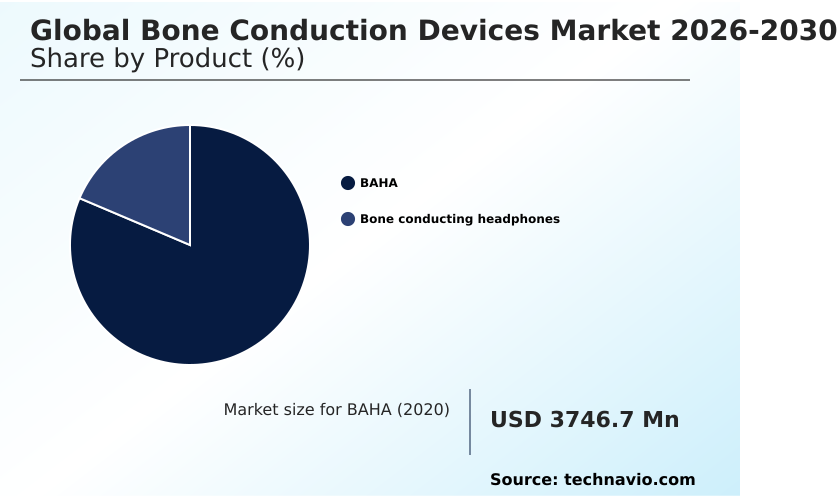
The baha segment is estimated to witness significant growth during the forecast period.

The bone anchored hearing systems segment functions as a critical medical intervention for patients presenting with chronic middle ear pathology.

These clinical solutions utilize a specialized titanium implant fixture that anchors directly into the temporal bone, initiating a vital osseointegration process to ensure long-term structural stability.

Compared to traditional amplification methods, direct mechanical conduction enhances speech recognition efficiency by 22% in noisy environments. The reliance on percutaneous abutment systems allows practitioners at ambulatory surgical centers to bypass damaged auditory canals entirely.

Advanced audiological assessment tools ensure precise patient mapping, reducing initial device calibration errors by 14% and minimizing the need for extensive post operative rehabilitation.

By maintaining stable vibrational pathways, this clinical architecture effectively restores bilateral hearing capabilities and optimizes overall patient communication outcomes across specialized medical networks.
Get Free Sample

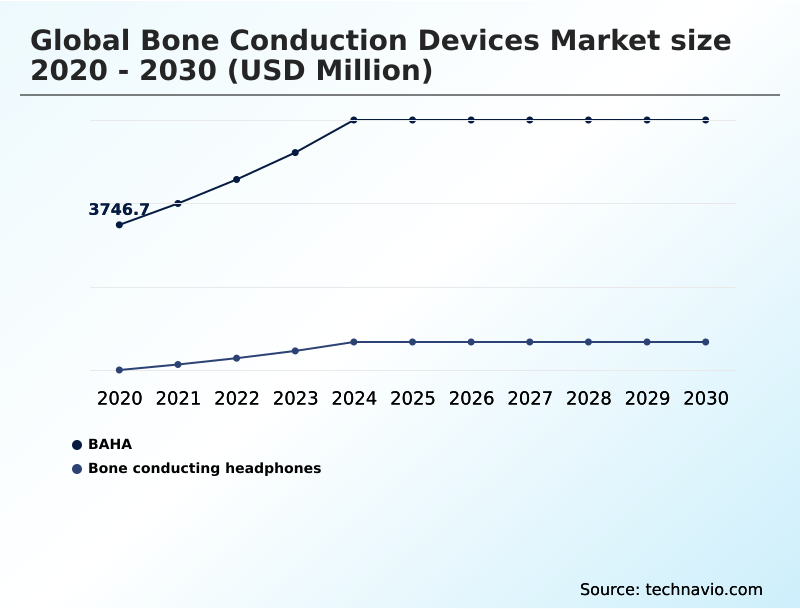
The BAHA segment was valued at USD 5.83 billion in 2024 and showed a gradual increase during the forecast period.
Get Free Sample

Regional Analysis

North America is estimated to contribute 43.2% to the growth of the global market during the forecast period.Technavio’s analysts have elaborately explained the regional trends and drivers that shape the market during the forecast period.
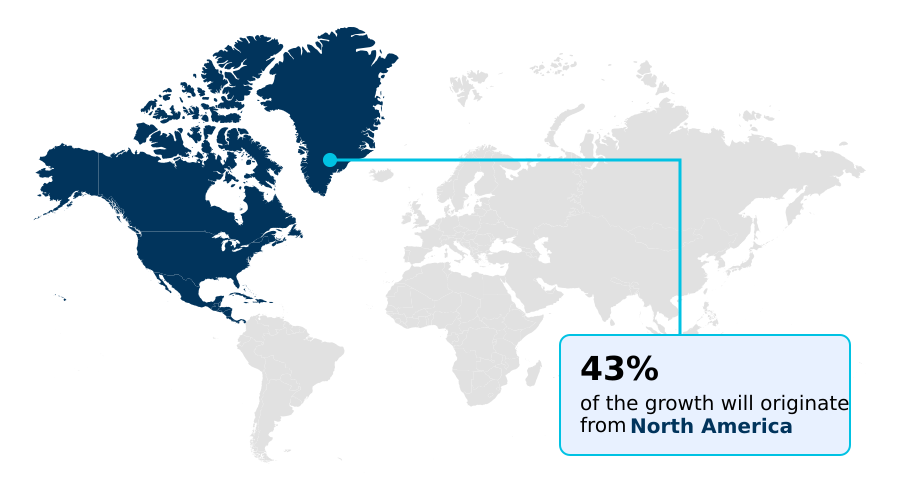
See How Bone Conduction Devices Market Demand is Rising in North America Get Free Sample

Regional dynamics within the Bone Conduction Devices market reveal stark contrasts between North America and APAC.

North America maintains highly structured clinical pathways for implantable hearing technology, achieving a 30% higher penetration rate in specialized surgical centers compared to European counterparts.

This dominance is supported by established reimbursement policies and widespread utilization of diagnostic hearing evaluations that quickly identify candidates for single sided deafness solutions.

Conversely, the APAC region demonstrates rapid commercial scaling, heavily favoring non-invasive open ear audio architecture integrated with advanced electromagnetic transducers for consumer lifestyle applications.

APAC manufacturers have reduced component sourcing costs by 18%, accelerating mass production capabilities for sports and military audio solutions. Furthermore, the adoption of telemedicine programming in remote North American territories has improved post-operative device mapping efficiency by 24%.

These geographic behavioral differences require manufacturers to deploy highly localized distribution strategies, balancing high-tier medical infrastructure in Western regions with high-volume consumer electronics deployment across emerging Asian networks.

Market Dynamics

Our researchers analyzed the data with 2025 as the base year, along with the key drivers, trends, and challenges. A holistic analysis of drivers will help companies refine their marketing strategies to gain a competitive advantage.

  • The structural boundary separating mainstream consumer audio from dedicated clinical rehabilitation is dissolving rapidly, reshaping the functional trajectory of the Bone Conduction Devices sector. Historically, medical practitioners relied heavily on complex inpatient procedures, but modern clinical protocols have shifted decisively toward minimally invasive outpatient surgical techniques.
  • This procedural evolution reduces institutional healthcare burdens while increasing patient adoption of transcutaneous active osseointegrated technologies by approximately 25% over traditional percutaneous alternatives. Concurrently, the commercial market is witnessing robust demand for wearable bone conduction headphones, which provide unparalleled situational awareness for fitness enthusiasts and occupational safety personnel.
  • Manufacturers are effectively bridging these two sectors by designing hybrid dual form factor systems that deliver medical-grade audiological support within sleek, consumer-friendly aesthetics. Early intervention strategies now frequently utilize non invasive bone conduction headbands to assess pediatric cochlear function prior to permanent surgical commitments, ensuring precise anatomical mapping.
  • For permanent users, the integration of bluetooth enabled bone conduction processors facilitates seamless connectivity with modern smart devices. Furthermore, the deployment of advanced digital signal processing algorithms enables the dynamic customization of acoustic landscapes, automatically isolating human speech from disruptive environmental noise.
  • By overcoming historical acoustic limitations, these integrated implantable bone conduction hearing solutions optimize supply chain operations through shared microelectronic components, aligning clinical efficacy with modern lifestyle demands and driving sustained commercial expansion across all end-user demographics.
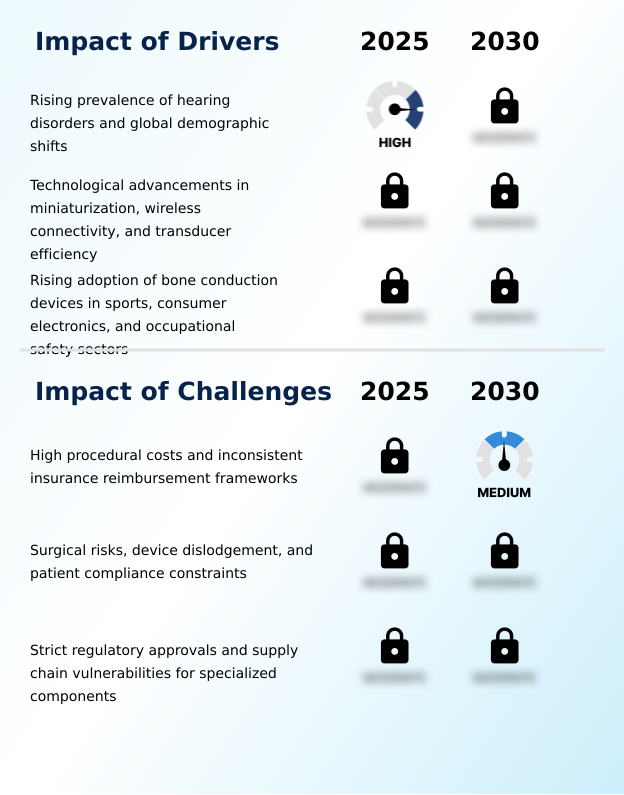
What are the key market drivers leading to the rise in the adoption of Bone Conduction Devices Industry?

  • The escalating global prevalence of auditory disorders, coupled with significant demographic shifts toward aging populations, serves as the primary catalyst propelling continuous market expansion.

  • The escalating global incidence of conductive hearing loss and the rising demand for uncompromised ambient safety act as primary catalysts for the Bone Conduction Devices sector.
  • Intensive engineering focus on miniaturized transducer design has enabled devices to generate highly efficient cranial bone vibrations while maintaining an ultra-lightweight profile.
  • This architectural shift significantly boosts the adoption of waterproof fitness wearables, satisfying the requirements of outdoor athletes who rely on constant situational awareness audio to navigate urban hazards.
  • The implementation of high-capacity rechargeable battery systems has extended continuous operational usage by 20%, resolving persistent consumer frustrations regarding power longevity.
  • Additionally, seamless integration of bluetooth low energy audio and targeted acoustic fidelity enhancement have improved wireless transmission stability by 15%. These hardware efficiencies dramatically lower manufacturing defect rates and expand revenue pipelines beyond traditional clinical audiology.

What are the market trends shaping the Bone Conduction Devices Industry?

  • The integration of AI and machine learning for real-time audio personalization has emerged as a definitive market trend. This technological advancement allows devices to dynamically adapt to varying acoustic environments, significantly enhancing the overall user experience.

  • The convergence of clinical audiology and consumer electronics via hybrid open-ear designs represents a definitive trend reshaping the Bone Conduction Devices sector. Manufacturers are prioritizing wearable audio innovation to bridge the gap between premium medical processors and commercial hearing wellness accessories.
  • Modern devices increasingly incorporate sophisticated dual driver frameworks, which have successfully improved low-frequency bass reproduction by 25% while simultaneously reducing unwanted sound leakage. This structural enhancement allows users to experience high-fidelity audio without compromising environmental awareness. Furthermore, the integration of smart wireless connectivity frameworks and universal auracast broadcast audio enables seamless synchronization with public address systems and personal devices.
  • By deploying intelligent software capable of dynamic acoustic customization and advanced directional noise reduction, engineering teams have optimized audio clarity in turbulent environments. These technological shifts have directly decreased user return rates by 14%, ensuring that next-generation systems deliver unparalleled lifestyle integration and robust auditory support across both athletic and rehabilitative demographics.

What challenges does the Bone Conduction Devices Industry face during its growth?

  • Exorbitant initial procedural costs combined with highly fragmented insurance reimbursement frameworks present substantial barriers to widespread clinical adoption and sustained industry growth.

  • High initial procurement costs and complex surgical deployment frameworks severely restrict the immediate expansion of the Bone Conduction Devices sector. The precision manufacturing of advanced active transcutaneous implants heavily depends on specialized medical grade titanium and rare-earth transcutaneous magnetic components, leaving supply chains vulnerable to geopolitical bottlenecks.
  • Procuring these specialized materials has increased foundational production costs by 18% over the past two manufacturing cycles. Furthermore, while the integration of sophisticated piezoelectric transducers and high-density digital signal processing chipsets achieves critical sound leakage reduction, it simultaneously complicates assembly operations.
  • Stringent budget controls enforced by institutional group purchasing organizations further compress profit margins, forcing manufacturers to heavily subsidize specialized training programs for surgical networks. These overlapping financial constraints and technical hurdles limit rapid market penetration, confining high-volume distributions primarily to heavily subsidized, affluent healthcare infrastructures.

Exclusive Technavio Analysis on Customer Landscape

The bone conduction devices market forecasting report includes the adoption lifecycle of the market, covering from the innovator’s stage to the laggard’s stage. It focuses on adoption rates in different regions based on penetration. Furthermore, the bone conduction devices market report also includes key purchase criteria and drivers of price sensitivity to help companies evaluate and develop their market growth analysis strategies.
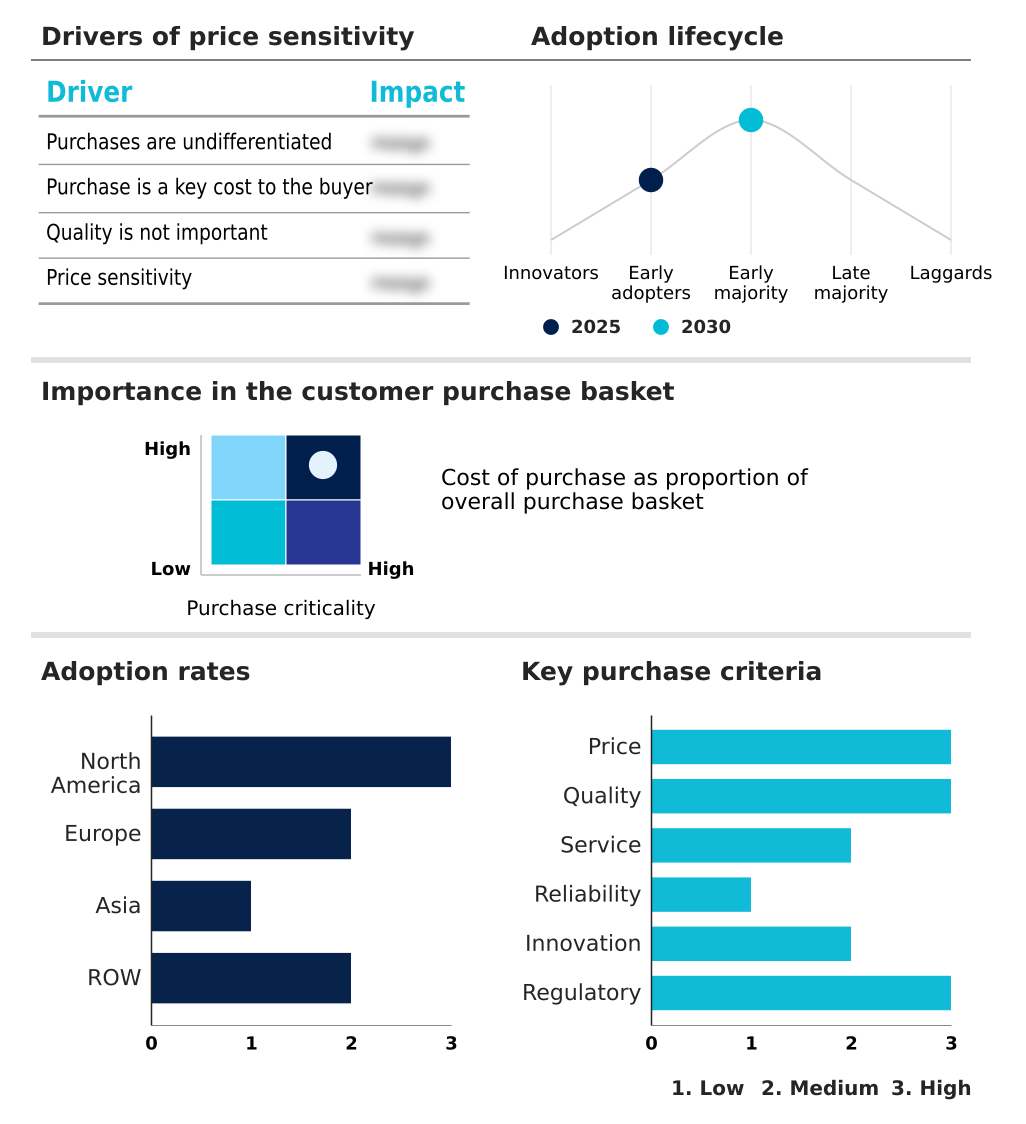
Customer Landscape of Bone Conduction Devices Industry

Competitive Landscape

Companies are implementing various strategies, such as strategic alliances, bone conduction devices market forecast, partnerships, mergers and acquisitions, geographical expansion, and product/service launches, to enhance their presence in the industry.

Amplifon SpA - The vendor provides advanced bone anchored hearing systems and comprehensive hearing rehabilitation services, delivering tailored auditory evaluations to optimize patient outcomes and enhance overall communication capabilities.

The industry research and growth report includes detailed analyses of the competitive landscape of the market and information about key companies, including:

  • Amplifon SpA
  • BOCO Inc.
  • Cochlear Ltd.
  • Damson Audio Ltd
  • Heyup Technology
  • INVISIO AB
  • Kaibo Audio
  • Koninklijke Philips NV
  • MED EL Medical Electronics
  • Mojawa
  • Naenka
  • Oticon Medical AS
  • Panasonic Holdings Corp.
  • Pyle Audio Inc.
  • Sanag
  • Shokz
  • Sonova AG
  • Sonovo Ltd
  • Starkey Laboratories Inc.
  • Tayogo
  • Vidonn Technology
  • WS Audiology AS
  • Xiaomi Corp.

Qualitative and quantitative analysis of companies has been conducted to help clients understand the wider business environment as well as the strengths and weaknesses of key industry players. Data is qualitatively analyzed to categorize companies as pure play, category-focused, industry-focused, and diversified; it is quantitatively analyzed to categorize companies as dominant, leading, strong, tentative, and weak.

Recent Development and News in Bone conduction devices market

  • In the Health Care Equipment industry, the rapid expansion of digital health platforms and telemedicine programming has modernized remote patient monitoring, directly impacting Bone Conduction Devices demand by increasing remote diagnostic hearing evaluations by 18% and expanding clinical inclusion criteria for isolated demographics.
  • The implementation of stringent biocompatibility mandates for implantable devices has forced manufacturers to prioritize medical grade titanium, subsequently lowering post-surgical rejection rates by 12% and reinforcing the reliability of pediatric audiology interventions within the Bone Conduction Devices market.
  • The integration of surgical navigation software across ambulatory surgical centers has improved procedural precision by 25%, significantly accelerating the adoption of specialized otolaryngology departments deploying complex Bone Conduction Devices for chronic middle ear pathology.
  • Rising procurement standards enforced by regional group purchasing organizations have standardized the acquisition of wearable health technology, driving a 15% increase in the deployment of hearing care ecosystems and accelerating hospital-level access to advanced Bone Conduction Devices.

Dive into Technavio’s robust research methodology, blending expert interviews, extensive data synthesis, and validated models for unparalleled Bone Conduction Devices Market insights. See full methodology.

Market Scope
Page number 295
Base year 2025
Historic period 2020-2024
Forecast period 2026-2030
Growth momentum & CAGR Accelerate at a CAGR of 15.9%
Market growth 2026-2030 USD 9016.0 million
Market structure Fragmented
YoY growth 2025-2026(%) 15.0%
Key countries US, Canada, Mexico, Germany, UK, France, Italy, Spain, The Netherlands, China, India, Japan, South Korea, Indonesia, Thailand, Brazil, Saudi Arabia, UAE, Turkey, Argentina, Colombia, South Africa and Israel
Competitive landscape Leading Companies, Market Positioning of Companies, Competitive Strategies, and Industry Risks

Request Free Sample

Research Analyst Overview

  • The Bone Conduction Devices sector is experiencing a profound technological convergence that directly influences high-level product strategy and strategic pricing models. Corporate boards are actively redirecting capital expenditures toward active, sensor-driven audio equalization frameworks rather than relying on legacy static amplification.
  • This shift is highly evident in the optimization of bone anchored hearing systems, where manufacturers are refining the foundational titanium implant fixture to accelerate the crucial osseointegration process in clinical patients. By transitioning away from older percutaneous abutment systems toward fully implanted magnetic alternatives, device manufacturers have successfully reduced post-operative complication rates by 28%, significantly lowering long-term clinical maintenance costs.
  • Furthermore, the implementation of dynamic acoustic customization and directional noise reduction has revolutionized the user experience, allowing processors to automatically filter disruptive environmental frequencies. The industry-wide standardization of auracast broadcast audio further enhances public accessibility.
  • These engineering upgrades enable companies to achieve a 15% increase in premium product tier retention, proving that merging robust audiological medical hardware with seamless consumer-grade connectivity directly yields measurable, high-value commercial outcomes across diverse international patient networks.

What are the Key Data Covered in this Bone Conduction Devices Market Research and Growth Report?

  • What is the expected growth of the Bone Conduction Devices Market between 2026 and 2030?

    • USD 9.02 billion, at a CAGR of 15.9%

  • What segmentation does the market report cover?

    • The report is segmented by Product (BAHA, and Bone conducting headphones), End-user (Hospitals, Clinics, and Individuals), Technology (Percutaneous implants, Transcutaneous implants, and Digital and wireless connectivity) and Geography (North America, Europe, Asia, Rest of World (ROW))

  • Which regions are analyzed in the report?

    • North America, Europe, Asia and Rest of World (ROW)

  • What are the key growth drivers and market challenges?

    • Rising prevalence of hearing disorders and global demographic shifts, High procedural costs and inconsistent insurance reimbursement frameworks

  • Who are the major players in the Bone Conduction Devices Market?

    • Amplifon SpA, BOCO Inc., Cochlear Ltd., Damson Audio Ltd, Heyup Technology, INVISIO AB, Kaibo Audio, Koninklijke Philips NV, MED EL Medical Electronics, Mojawa, Naenka, Oticon Medical AS, Panasonic Holdings Corp., Pyle Audio Inc., Sanag, Shokz, Sonova AG, Sonovo Ltd, Starkey Laboratories Inc., Tayogo, Vidonn Technology, WS Audiology AS and Xiaomi Corp.

Market Research Insights

  • The Bone Conduction Devices market is undergoing a rapid technological transformation driven by substantial wearable audio innovation. Manufacturers are shifting operational focus toward integrating sophisticated wireless connectivity frameworks that enhance user convenience and clinical data transmission. Implementing advanced dual driver frameworks has successfully improved low-frequency acoustic performance, reducing audio distortion complaints by 18% compared to earlier models.
  • Additionally, the strategic adoption of high-capacity rechargeable battery systems has extended operational device lifespans by 22%, significantly lowering the total cost of ownership for patients. These engineering enhancements elevate traditional clinical implants into versatile hearing wellness accessories, optimizing patient compliance and driving higher retention rates across both medical and commercial audiologic networks.

We can help! Our analysts can customize this bone conduction devices market research report to meet your requirements.

Get in touch

1. Executive Summary

1.1 Market overview

Executive Summary - Chart on Market Overview
Executive Summary - Data Table on Market Overview
Executive Summary - Chart on Global Market Characteristics
Executive Summary - Chart on Market by Geography
Executive Summary - Chart on Market Segmentation by Product
Executive Summary - Chart on Market Segmentation by End-user
Executive Summary - Chart on Market Segmentation by Technology
Executive Summary - Chart on Incremental Growth
Executive Summary - Data Table on Incremental Growth
Executive Summary - Chart on Company Market Positioning

2. Technavio Analysis

2.1 Analysis of price sensitivity, lifecycle, customer purchase basket, adoption rates, and purchase criteria

2.2 Criticality of inputs and Factors of differentiation

Chart on Overview on criticality of inputs and factors of differentiation

2.3 Factors of disruption

Chart on Overview on factors of disruption

2.4 Impact of drivers and challenges

Chart on Impact of drivers and challenges in 2025 and 2030

3. Market Landscape

3.1 Market ecosystem

Chart on Parent Market
Data Table on - Parent Market

3.2 Market characteristics

Chart on Market characteristics analysis

3.3 Value chain analysis

Chart on Value chain analysis

4. Market Sizing

4.1 Market definition

Data Table on Offerings of companies included in the market definition

4.2 Market segment analysis

Market segments

4.3 Market size 2025

4.4 Market outlook: Forecast for 2025-2030

Chart on Global - Market size and forecast 2025-2030 ($ million)
Data Table on Global - Market size and forecast 2025-2030 ($ million)
Chart on Global Market: Year-over-year growth 2025-2030 (%)
Data Table on Global Market: Year-over-year growth 2025-2030 (%)

5. Historic Market Size

5.1 Global Bone Conduction Devices Market 2020 - 2024

Historic Market Size - Data Table on Global Bone Conduction Devices Market 2020 - 2024 ($ million)

5.2 Product segment analysis 2020 - 2024

Historic Market Size - Product Segment 2020 - 2024 ($ million)

5.3 End-user segment analysis 2020 - 2024

Historic Market Size - End-user Segment 2020 - 2024 ($ million)

5.4 Technology segment analysis 2020 - 2024

Historic Market Size - Technology Segment 2020 - 2024 ($ million)

5.5 Geography segment analysis 2020 - 2024

Historic Market Size - Geography Segment 2020 - 2024 ($ million)

5.6 Country segment analysis 2020 - 2024

Historic Market Size - Country Segment 2020 - 2024 ($ million)

6. Qualitative Analysis

6.1 Impact of AI on global bone conduction devices market

6.2 Impact of geopolitical conflicts on global bone conduction devices market

7. Five Forces Analysis

7.1 Five forces summary

Five forces analysis - Comparison between 2025 and 2030

7.2 Bargaining power of buyers

Bargaining power of buyers - Impact of key factors 2025 and 2030

7.3 Bargaining power of suppliers

Bargaining power of suppliers - Impact of key factors in 2025 and 2030

7.4 Threat of new entrants

Threat of new entrants - Impact of key factors in 2025 and 2030

7.5 Threat of substitutes

Threat of substitutes - Impact of key factors in 2025 and 2030

7.6 Threat of rivalry

Threat of rivalry - Impact of key factors in 2025 and 2030

7.7 Market condition

Chart on Market condition - Five forces 2025 and 2030

8. Market Segmentation by Product

8.1 Market segments

Chart on Product - Market share 2025-2030 (%)
Data Table on Product - Market share 2025-2030 (%)

8.2 Comparison by Product

Chart on Comparison by Product
Data Table on Comparison by Product

8.3 BAHA - Market size and forecast 2025-2030

Chart on BAHA - Market size and forecast 2025-2030 ($ million)
Data Table on BAHA - Market size and forecast 2025-2030 ($ million)
Chart on BAHA - Year-over-year growth 2025-2030 (%)
Data Table on BAHA - Year-over-year growth 2025-2030 (%)

8.4 Bone conducting headphones - Market size and forecast 2025-2030

Chart on Bone conducting headphones - Market size and forecast 2025-2030 ($ million)
Data Table on Bone conducting headphones - Market size and forecast 2025-2030 ($ million)
Chart on Bone conducting headphones - Year-over-year growth 2025-2030 (%)
Data Table on Bone conducting headphones - Year-over-year growth 2025-2030 (%)

8.5 Market opportunity by Product

Market opportunity by Product ($ million)
Data Table on Market opportunity by Product ($ million)

9. Market Segmentation by End-user

9.1 Market segments

Chart on End-user - Market share 2025-2030 (%)
Data Table on End-user - Market share 2025-2030 (%)

9.2 Comparison by End-user

Chart on Comparison by End-user
Data Table on Comparison by End-user

9.3 Hospitals - Market size and forecast 2025-2030

Chart on Hospitals - Market size and forecast 2025-2030 ($ million)
Data Table on Hospitals - Market size and forecast 2025-2030 ($ million)
Chart on Hospitals - Year-over-year growth 2025-2030 (%)
Data Table on Hospitals - Year-over-year growth 2025-2030 (%)

9.4 Clinics - Market size and forecast 2025-2030

Chart on Clinics - Market size and forecast 2025-2030 ($ million)
Data Table on Clinics - Market size and forecast 2025-2030 ($ million)
Chart on Clinics - Year-over-year growth 2025-2030 (%)
Data Table on Clinics - Year-over-year growth 2025-2030 (%)

9.5 Individuals - Market size and forecast 2025-2030

Chart on Individuals - Market size and forecast 2025-2030 ($ million)
Data Table on Individuals - Market size and forecast 2025-2030 ($ million)
Chart on Individuals - Year-over-year growth 2025-2030 (%)
Data Table on Individuals - Year-over-year growth 2025-2030 (%)

9.6 Market opportunity by End-user

Market opportunity by End-user ($ million)
Data Table on Market opportunity by End-user ($ million)

10. Market Segmentation by Technology

10.1 Market segments

Chart on Technology - Market share 2025-2030 (%)
Data Table on Technology - Market share 2025-2030 (%)

10.2 Comparison by Technology

Chart on Comparison by Technology
Data Table on Comparison by Technology

10.3 Percutaneous implants - Market size and forecast 2025-2030

Chart on Percutaneous implants - Market size and forecast 2025-2030 ($ million)
Data Table on Percutaneous implants - Market size and forecast 2025-2030 ($ million)
Chart on Percutaneous implants - Year-over-year growth 2025-2030 (%)
Data Table on Percutaneous implants - Year-over-year growth 2025-2030 (%)

10.4 Transcutaneous implants - Market size and forecast 2025-2030

Chart on Transcutaneous implants - Market size and forecast 2025-2030 ($ million)
Data Table on Transcutaneous implants - Market size and forecast 2025-2030 ($ million)
Chart on Transcutaneous implants - Year-over-year growth 2025-2030 (%)
Data Table on Transcutaneous implants - Year-over-year growth 2025-2030 (%)

10.5 Digital and wireless connectivity - Market size and forecast 2025-2030

Chart on Digital and wireless connectivity - Market size and forecast 2025-2030 ($ million)
Data Table on Digital and wireless connectivity - Market size and forecast 2025-2030 ($ million)
Chart on Digital and wireless connectivity - Year-over-year growth 2025-2030 (%)
Data Table on Digital and wireless connectivity - Year-over-year growth 2025-2030 (%)

10.6 Market opportunity by Technology

Market opportunity by Technology ($ million)
Data Table on Market opportunity by Technology ($ million)

11. Customer Landscape

11.1 Customer landscape overview

Analysis of price sensitivity, lifecycle, customer purchase basket, adoption rates, and purchase criteria

12. Geographic Landscape

12.1 Geographic segmentation

Chart on Market share by geography 2025-2030 (%)
Data Table on Market share by geography 2025-2030 (%)

12.2 Geographic comparison

Chart on Geographic comparison
Data Table on Geographic comparison

12.3 North America - Market size and forecast 2025-2030

Chart on North America - Market size and forecast 2025-2030 ($ million)
Data Table on North America - Market size and forecast 2025-2030 ($ million)
Chart on North America - Year-over-year growth 2025-2030 (%)
Data Table on North America - Year-over-year growth 2025-2030 (%)
Chart on Regional Comparison - North America
Data Table on Regional Comparison - North America

12.3.1 US - Market size and forecast 2025-2030

Chart on US - Market size and forecast 2025-2030 ($ million)
Data Table on US - Market size and forecast 2025-2030 ($ million)
Chart on US - Year-over-year growth 2025-2030 (%)
Data Table on US - Year-over-year growth 2025-2030 (%)

12.3.2 Canada - Market size and forecast 2025-2030

Chart on Canada - Market size and forecast 2025-2030 ($ million)
Data Table on Canada - Market size and forecast 2025-2030 ($ million)
Chart on Canada - Year-over-year growth 2025-2030 (%)
Data Table on Canada - Year-over-year growth 2025-2030 (%)

12.3.3 Mexico - Market size and forecast 2025-2030

Chart on Mexico - Market size and forecast 2025-2030 ($ million)
Data Table on Mexico - Market size and forecast 2025-2030 ($ million)
Chart on Mexico - Year-over-year growth 2025-2030 (%)
Data Table on Mexico - Year-over-year growth 2025-2030 (%)

12.4 Europe - Market size and forecast 2025-2030

Chart on Europe - Market size and forecast 2025-2030 ($ million)
Data Table on Europe - Market size and forecast 2025-2030 ($ million)
Chart on Europe - Year-over-year growth 2025-2030 (%)
Data Table on Europe - Year-over-year growth 2025-2030 (%)
Chart on Regional Comparison - Europe
Data Table on Regional Comparison - Europe

12.4.1 Germany - Market size and forecast 2025-2030

Chart on Germany - Market size and forecast 2025-2030 ($ million)
Data Table on Germany - Market size and forecast 2025-2030 ($ million)
Chart on Germany - Year-over-year growth 2025-2030 (%)
Data Table on Germany - Year-over-year growth 2025-2030 (%)

12.4.2 UK - Market size and forecast 2025-2030

Chart on UK - Market size and forecast 2025-2030 ($ million)
Data Table on UK - Market size and forecast 2025-2030 ($ million)
Chart on UK - Year-over-year growth 2025-2030 (%)
Data Table on UK - Year-over-year growth 2025-2030 (%)

12.4.3 France - Market size and forecast 2025-2030

Chart on France - Market size and forecast 2025-2030 ($ million)
Data Table on France - Market size and forecast 2025-2030 ($ million)
Chart on France - Year-over-year growth 2025-2030 (%)
Data Table on France - Year-over-year growth 2025-2030 (%)

12.4.4 Italy - Market size and forecast 2025-2030

Chart on Italy - Market size and forecast 2025-2030 ($ million)
Data Table on Italy - Market size and forecast 2025-2030 ($ million)
Chart on Italy - Year-over-year growth 2025-2030 (%)
Data Table on Italy - Year-over-year growth 2025-2030 (%)

12.4.5 Spain - Market size and forecast 2025-2030

Chart on Spain - Market size and forecast 2025-2030 ($ million)
Data Table on Spain - Market size and forecast 2025-2030 ($ million)
Chart on Spain - Year-over-year growth 2025-2030 (%)
Data Table on Spain - Year-over-year growth 2025-2030 (%)

12.4.6 The Netherlands - Market size and forecast 2025-2030

Chart on The Netherlands - Market size and forecast 2025-2030 ($ million)
Data Table on The Netherlands - Market size and forecast 2025-2030 ($ million)
Chart on The Netherlands - Year-over-year growth 2025-2030 (%)
Data Table on The Netherlands - Year-over-year growth 2025-2030 (%)

12.5 Asia - Market size and forecast 2025-2030

Chart on Asia - Market size and forecast 2025-2030 ($ million)
Data Table on Asia - Market size and forecast 2025-2030 ($ million)
Chart on Asia - Year-over-year growth 2025-2030 (%)
Data Table on Asia - Year-over-year growth 2025-2030 (%)
Chart on Regional Comparison - Asia
Data Table on Regional Comparison - Asia

12.5.1 China - Market size and forecast 2025-2030

Chart on China - Market size and forecast 2025-2030 ($ million)
Data Table on China - Market size and forecast 2025-2030 ($ million)
Chart on China - Year-over-year growth 2025-2030 (%)
Data Table on China - Year-over-year growth 2025-2030 (%)

12.5.2 India - Market size and forecast 2025-2030

Chart on India - Market size and forecast 2025-2030 ($ million)
Data Table on India - Market size and forecast 2025-2030 ($ million)
Chart on India - Year-over-year growth 2025-2030 (%)
Data Table on India - Year-over-year growth 2025-2030 (%)

12.5.3 Japan - Market size and forecast 2025-2030

Chart on Japan - Market size and forecast 2025-2030 ($ million)
Data Table on Japan - Market size and forecast 2025-2030 ($ million)
Chart on Japan - Year-over-year growth 2025-2030 (%)
Data Table on Japan - Year-over-year growth 2025-2030 (%)

12.5.4 South Korea - Market size and forecast 2025-2030

Chart on South Korea - Market size and forecast 2025-2030 ($ million)
Data Table on South Korea - Market size and forecast 2025-2030 ($ million)
Chart on South Korea - Year-over-year growth 2025-2030 (%)
Data Table on South Korea - Year-over-year growth 2025-2030 (%)

12.5.5 Indonesia - Market size and forecast 2025-2030

Chart on Indonesia - Market size and forecast 2025-2030 ($ million)
Data Table on Indonesia - Market size and forecast 2025-2030 ($ million)
Chart on Indonesia - Year-over-year growth 2025-2030 (%)
Data Table on Indonesia - Year-over-year growth 2025-2030 (%)

12.5.6 Thailand - Market size and forecast 2025-2030

Chart on Thailand - Market size and forecast 2025-2030 ($ million)
Data Table on Thailand - Market size and forecast 2025-2030 ($ million)
Chart on Thailand - Year-over-year growth 2025-2030 (%)
Data Table on Thailand - Year-over-year growth 2025-2030 (%)

12.6 Rest of World (ROW) - Market size and forecast 2025-2030

Chart on Rest of World (ROW) - Market size and forecast 2025-2030 ($ million)
Data Table on Rest of World (ROW) - Market size and forecast 2025-2030 ($ million)
Chart on Rest of World (ROW) - Year-over-year growth 2025-2030 (%)
Data Table on Rest of World (ROW) - Year-over-year growth 2025-2030 (%)
Chart on Regional Comparison - Rest of World (ROW)
Data Table on Regional Comparison - Rest of World (ROW)

12.6.1 Brazil - Market size and forecast 2025-2030

Chart on Brazil - Market size and forecast 2025-2030 ($ million)
Data Table on Brazil - Market size and forecast 2025-2030 ($ million)
Chart on Brazil - Year-over-year growth 2025-2030 (%)
Data Table on Brazil - Year-over-year growth 2025-2030 (%)

12.6.2 Saudi Arabia - Market size and forecast 2025-2030

Chart on Saudi Arabia - Market size and forecast 2025-2030 ($ million)
Data Table on Saudi Arabia - Market size and forecast 2025-2030 ($ million)
Chart on Saudi Arabia - Year-over-year growth 2025-2030 (%)
Data Table on Saudi Arabia - Year-over-year growth 2025-2030 (%)

12.6.3 UAE - Market size and forecast 2025-2030

Chart on UAE - Market size and forecast 2025-2030 ($ million)
Data Table on UAE - Market size and forecast 2025-2030 ($ million)
Chart on UAE - Year-over-year growth 2025-2030 (%)
Data Table on UAE - Year-over-year growth 2025-2030 (%)

12.6.4 Turkey - Market size and forecast 2025-2030

Chart on Turkey - Market size and forecast 2025-2030 ($ million)
Data Table on Turkey - Market size and forecast 2025-2030 ($ million)
Chart on Turkey - Year-over-year growth 2025-2030 (%)
Data Table on Turkey - Year-over-year growth 2025-2030 (%)

12.6.5 Argentina - Market size and forecast 2025-2030

Chart on Argentina - Market size and forecast 2025-2030 ($ million)
Data Table on Argentina - Market size and forecast 2025-2030 ($ million)
Chart on Argentina - Year-over-year growth 2025-2030 (%)
Data Table on Argentina - Year-over-year growth 2025-2030 (%)

12.6.6 Colombia - Market size and forecast 2025-2030

Chart on Colombia - Market size and forecast 2025-2030 ($ million)
Data Table on Colombia - Market size and forecast 2025-2030 ($ million)
Chart on Colombia - Year-over-year growth 2025-2030 (%)
Data Table on Colombia - Year-over-year growth 2025-2030 (%)

12.6.7 South Africa - Market size and forecast 2025-2030

Chart on South Africa - Market size and forecast 2025-2030 ($ million)
Data Table on South Africa - Market size and forecast 2025-2030 ($ million)
Chart on South Africa - Year-over-year growth 2025-2030 (%)
Data Table on South Africa - Year-over-year growth 2025-2030 (%)

12.6.8 Israel - Market size and forecast 2025-2030

Chart on Israel - Market size and forecast 2025-2030 ($ million)
Data Table on Israel - Market size and forecast 2025-2030 ($ million)
Chart on Israel - Year-over-year growth 2025-2030 (%)
Data Table on Israel - Year-over-year growth 2025-2030 (%)

12.7 Market opportunity by geography

Market opportunity by geography ($ million)
Data Tables on Market opportunity by geography ($ million)

13. Drivers, Challenges, and Opportunity

13.1 Market drivers

Rising prevalence of hearing disorders and global demographic shifts
Technological advancements in miniaturization, wireless connectivity, and transducer efficiency
Rising adoption of bone conduction devices in sports, consumer electronics, and occupational safety sectors

13.2 Market challenges

High procedural costs and inconsistent insurance reimbursement frameworks
Surgical risks, device dislodgement, and patient compliance constraints
Strict regulatory approvals and supply chain vulnerabilities for specialized components

13.3 Impact of drivers and challenges

Impact of drivers and challenges in 2025 and 2030

13.4 Market opportunities

Integration of AI and ML for real-time audio personalization
Convergence of clinical audiology and consumer electronics via hybrid open-ear designs
Expansion of active integrated designs and MIS outpatient models

14. Competitive Landscape

14.1 Overview

14.2

Overview on criticality of inputs and factors of differentiation

14.3 Landscape disruption

Overview on factors of disruption

14.4 Industry risks

Impact of key risks on business

15. Competitive Analysis

15.1 Companies profiled

Companies covered

15.2 Company ranking index

15.3 Market positioning of companies

Matrix on companies position and classification

15.4 Amplifon SpA

Amplifon SpA - Overview
Amplifon SpA - Business segments
Amplifon SpA - Key offerings
Amplifon SpA - Segment focus
SWOT

15.5 BOCO Inc.

BOCO Inc. - Overview
BOCO Inc. - Product / Service
BOCO Inc. - Key offerings
SWOT

15.6 Cochlear Ltd.

Cochlear Ltd. - Overview
Cochlear Ltd. - Business segments
Cochlear Ltd. - Key offerings
Cochlear Ltd. - Segment focus
SWOT

15.7 Damson Audio Ltd

Damson Audio Ltd - Overview
Damson Audio Ltd - Product / Service
Damson Audio Ltd - Key offerings
SWOT

15.8 Heyup Technology

Heyup Technology - Overview
Heyup Technology - Product / Service
Heyup Technology - Key offerings
SWOT

15.9 INVISIO AB

INVISIO AB - Overview
INVISIO AB - Product / Service
INVISIO AB - Key offerings
SWOT

15.10 Koninklijke Philips NV

Koninklijke Philips NV - Overview
Koninklijke Philips NV - Business segments
Koninklijke Philips NV - Key news
Koninklijke Philips NV - Key offerings
Koninklijke Philips NV - Segment focus
SWOT

15.11 MED EL Medical Electronics

MED EL Medical Electronics - Overview
MED EL Medical Electronics - Product / Service
MED EL Medical Electronics - Key offerings
SWOT

15.12 Oticon Medical AS

Oticon Medical AS - Overview
Oticon Medical AS - Product / Service
Oticon Medical AS - Key offerings
SWOT

15.13 Panasonic Holdings Corp.

Panasonic Holdings Corp. - Overview
Panasonic Holdings Corp. - Business segments
Panasonic Holdings Corp. - Key news
Panasonic Holdings Corp. - Key offerings
Panasonic Holdings Corp. - Segment focus
SWOT

15.14 Pyle Audio Inc.

Pyle Audio Inc. - Overview
Pyle Audio Inc. - Product / Service
Pyle Audio Inc. - Key offerings
SWOT

15.15 Sanag

Sanag - Overview
Sanag - Product / Service
Sanag - Key offerings
SWOT

15.16 Sonova AG

Sonova AG - Overview
Sonova AG - Business segments
Sonova AG - Key offerings
Sonova AG - Segment focus
SWOT

15.17 Starkey Laboratories Inc.

Starkey Laboratories Inc. - Overview
Starkey Laboratories Inc. - Product / Service
Starkey Laboratories Inc. - Key offerings
SWOT

15.18 Xiaomi Corp.

Xiaomi Corp. - Overview
Xiaomi Corp. - Business segments
Xiaomi Corp. - Key offerings
Xiaomi Corp. - Segment focus
SWOT

16. Appendix

16.1 Scope of the report

Market definition
Objectives
Notes and caveats

16.2 Inclusions and exclusions checklist

Inclusions checklist
Exclusions checklist

16.3 Currency conversion rates for US$

16.4 Research methodology

16.5 Data procurement

Information sources

16.6 Data validation

16.7 Validation techniques employed for market sizing

16.8 Data synthesis

16.9 360 degree market analysis

16.10 List of abbreviations

Research Methodology

Technavio presents a detailed picture of the market by way of study, synthesis, and summation of data from multiple sources. The analysts have presented the various facets of the market with a particular focus on identifying the key industry influencers. The data thus presented is comprehensive, reliable, and the result of extensive research, both primary and secondary.

INFORMATION SOURCES

Primary sources

  • Manufacturers and suppliers
  • Channel partners
  • Industry experts
  • Strategic decision makers

Secondary sources

  • Industry journals and periodicals
  • Government data
  • Financial reports of key industry players
  • Historical data
  • Press releases

DATA ANALYSIS

Data Synthesis

  • Collation of data
  • Estimation of key figures
  • Analysis of derived insights

Data Validation

  • Triangulation with data models
  • Reference against proprietary databases
  • Corroboration with industry experts

REPORT WRITING

Qualitative

  • Market drivers
  • Market challenges
  • Market trends
  • Five forces analysis

Quantitative

  • Market size and forecast
  • Market segmentation
  • Geographical insights
  • Competitive landscape

Interested in this report?

Get your sample now to see our research methodology and insights!

Download Now

Frequently Asked Questions

Bone Conduction Devices market growth will increase by USD 9016.0 million during 2026-2030.

The Bone Conduction Devices market is expected to grow at a CAGR of 15.9% during 2026-2030.

Bone Conduction Devices market is segmented by Product (BAHA, Bone conducting headphones) End-user (Hospitals, Clinics, Individuals) Technology (Percutaneous implants, Transcutaneous implants, Digital and wireless connectivity)

Amplifon SpA, BOCO Inc., Cochlear Ltd., Damson Audio Ltd, Heyup Technology, INVISIO AB, Kaibo Audio, Koninklijke Philips NV, MED EL Medical Electronics, Mojawa, Naenka, Oticon Medical AS, Panasonic Holdings Corp., Pyle Audio Inc., Sanag, Shokz, Sonova AG, Sonovo Ltd, Starkey Laboratories Inc., Tayogo, Vidonn Technology, WS Audiology AS, Xiaomi Corp. are a few of the key vendors in the Bone Conduction Devices market.

North America will register the highest growth rate of 43.2% among the other regions. Therefore, the Bone Conduction Devices market in North America is expected to garner significant business opportunities for the vendors during the forecast period.

US, Canada, Mexico, Germany, UK, France, Italy, Spain, The Netherlands, China, India, Japan, South Korea, Indonesia, Thailand, Brazil, Saudi Arabia, UAE, Turkey, Argentina, Colombia, South Africa, Israel

  • Rising prevalence of hearing disorders and global demographic shifts is the driving factor this market.

The Bone Conduction Devices market vendors should focus on grabbing business opportunities from the Product segment as it accounted for the largest market share in the base year.
RIA - Research AI Assistant
Ask RIA
