


Burglar Alarm Systems Market Size 2024-2028
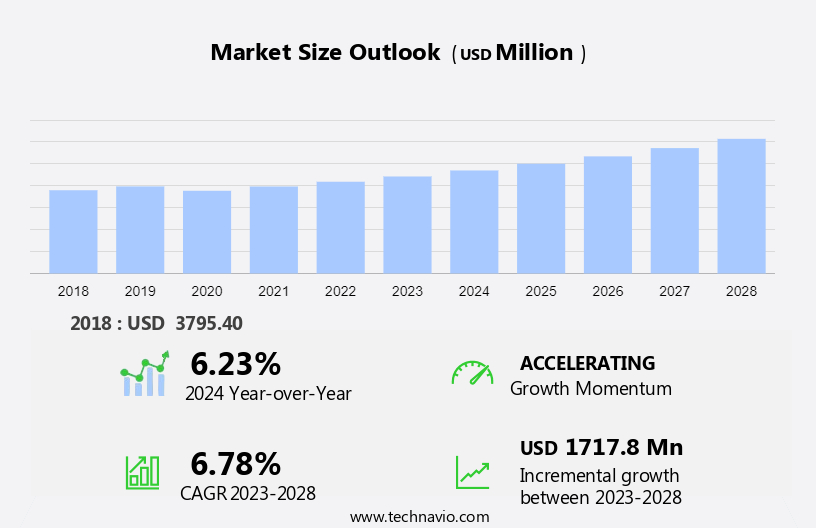
The burglar alarm systems market size is forecast to increase by USD 1.72 billion at a CAGR of 6.78% between 2023 and 2028. In the market, the growing adoption of smart homes and increasing advances in sensor technologies are key growth factors. The integration of alarm sensors into home automation systems allows for remote monitoring and control, enhancing security and convenience. Sensor technology innovations, such as pet immune sensors and glass break detectors, reduce false alarms, ensuring accurate system activation. However, challenges persist, including the increasing number of false alarms and the impact of plant closures and economic downturns, such as those caused by the novel coronavirus, on the automotive industry. This sector's technology companies must continue to innovate to address these challenges and meet evolving consumer demands.
The market is witnessing significant shifts as a result of the novel coronavirus pandemic and societal changes. This transformation is driven by various factors, including the need for advanced security solutions in both residential and commercial sectors. The demand for sound detection technologies and microphones in burglar alarm systems is increasing due to their ability to detect intrusions silently. These systems can identify unusual sounds, such as breaking glass or footsteps, and alert security personnel or law enforcement agencies. Contactless Biometric Systems: With the pandemic leading to increased concerns around social interaction and touchpoints, contactless biometric systems are gaining popularity in the market.
In addition, these systems use technologies like facial recognition and fingerprint scanning to grant access, ensuring security while maintaining social distancing. The pandemic has forced many businesses to close temporarily or shift to remote work, leading to a decrease in manufacturing output and workplace attendance. This, in turn, has affected the production of surveillance systems in regions like Hubei province. However, the need for advanced security solutions remains high, especially in sectors like banking and healthcare, which are experiencing increased demand due to the pandemic. Impact on Residential Segment: The residential segment of the market is also witnessing changes.
Moreover, with the rise in remote work and travel restrictions, there is an increased focus on home security. Radar-based systems are gaining popularity due to their ability to detect intrusions from a distance, providing an added layer of security. The pandemic has led to significant changes in society and the economy, with many people working from home and businesses adapting to new norms. The market is responding to these changes by offering solutions that cater to the new reality. For instance, video surveillance solutions are being integrated with AI and machine learning to provide real-time alerts and insights.
Furthermore, the automotive industry is also being affected by the pandemic, with plant closures leading to a decrease in production. However, the demand for advanced security features in vehicles remains high. Burglar alarm systems with microphones and sound detection technologies are being integrated into cars to provide an added layer of security. In conclusion, the market is undergoing significant changes due to the pandemic and societal shifts. The need for advanced security solutions, contactless biometric systems, and radar-based technologies are some of the key trends driving the market. The market is expected to continue evolving as businesses and individuals adapt to the new normal.
Market Segmentation
The market research report provides comprehensive data (region-wise segment analysis), with forecasts and estimates in "USD million" for the period 2024-2028, as well as historical data from 2018-2022 for the following segments.
- Type
- Wireless alarm system
- Wired alarm system
- End-user
- Residential
- Commercial and industrial
- Geography
- North America
- Canada
- US
- Europe
- UK
- APAC
- China
- Japan
- South America
- Middle East and Africa
- North America
By Type Insights
The wireless alarm system segment is estimated to witness significant growth during the forecast period. The wireless segment in the market is a significant and expanding sector, fueled by the rising demand for intelligent home security solutions and the need for more efficient and cost-effective security systems. Wireless alarm systems have garnered popularity due to their ease of installation, adaptability, and cost-effectiveness in contrast to wired systems. These systems employ radio frequency (RF) or cellular technology to transmit signals to the control panel, eradicating the requirement for physical wiring. This adaptability enables more creative system designs and placement, making them particularly fitting for residential and commercial applications where aesthetics and ease of installation are crucial factors.
Furthermore, the market is a thriving industry that contributes significantly to the economy and society. The market's growth can be attributed to various factors, including the increasing focus on safety and security, advancements in technology, and changing demographic trends. With the rise of the gig economy and remote work, there is a growing need for reliable security systems that allow for flexible work arrangements and travel. Additionally, the increasing adoption of smart home technology and the integration of security systems with other home automation solutions have further fueled market growth. In the US, the wireless alarm system segment is expected to continue its growth trajectory, driven by the increasing popularity of smart home security solutions and the need for more cost-effective and efficient security systems.
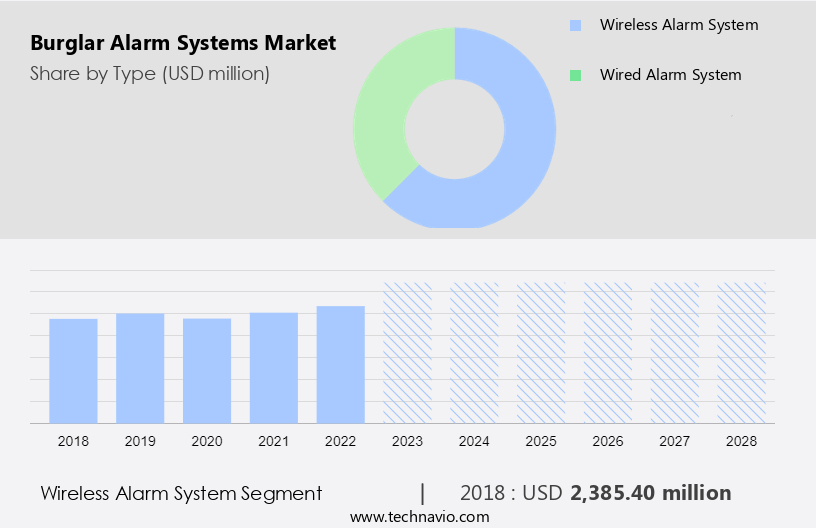
Get a glance at the market share of various segments Request Free Sample
The wireless alarm system segment accounted for USD 2.39 billion in 2018 and showed a gradual increase during the forecast period.
Regional Insights
North America is estimated to contribute 47% to the growth of the global market during the forecast period. Technavio's analysts have elaborately explained the regional trends and drivers that shape the market during the forecast period.
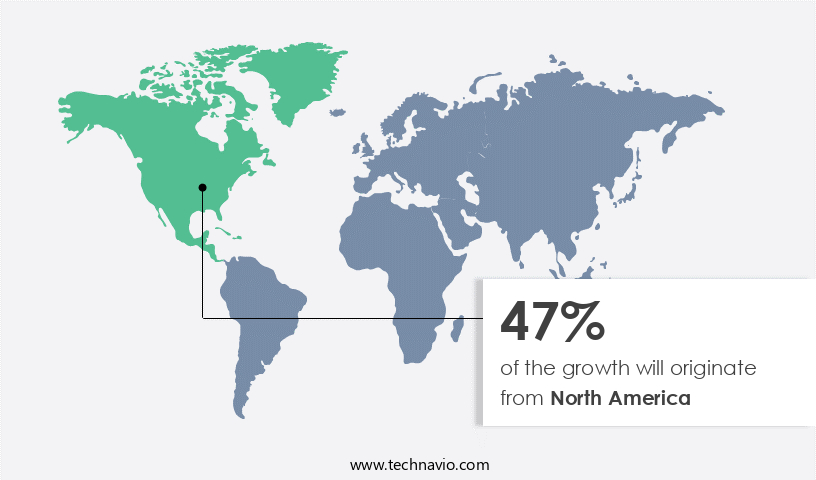
For more insights on the market share of various regions Request Free Sample
In the global market, North America held the largest share in 2023. The US, Canada, and Mexico are the primary contributors to this market's growth in the region. The increasing incidences of burglaries, home invasions, and crimes against vulnerable populations such as women, elderly people, and children have fueled the demand for burglar alarm systems in North America. The region's high product awareness and the subsequent emphasis on home security are expected to boost the market's expansion during the forecast period. Central monitoring receivers, including those from Inovonics, play a crucial role in the effective functioning of burglar alarm systems.
In addition, motion detector sensors and door/window sensors are essential components that contribute to the system's ability to detect intrusions. These sensors, when integrated with central monitoring receivers, enable timely notifications and response to potential threats. The North American market for burglar alarm systems is poised for significant growth due to the region's high crime rates and the resulting need for enhanced home security measures.
In conclusion, the North American market for burglar alarm systems is expected to continue its dominance in the global market due to the region's high crime rates and the resulting need for advanced home security solutions. The integration of sensors, central monitoring receivers, and other advanced technologies will further drive the market's growth during the forecast period.
Our researchers analyzed the data with 2023 as the base year, along with the key drivers, trends, and challenges. A holistic analysis of drivers will help companies refine their marketing strategies to gain a competitive advantage.
Market Driver
Growing adoption of smart homes is the key driver of the market. The market for burglar alarm systems in the United States is witnessing significant growth due to the increasing adoption of smart homes and the need for advanced security features. Technology advancements have expanded the application scope of intruder detection systems beyond residential use to commercial sectors, including surveillance, automotive, testing, gas and fire detection, and commercial vision applications. The proliferation of the Internet and mobile phone technology has fueled the rise of the Internet of Things (IoT) in homes, transforming them into smart homes. Burglar alarm systems are essential components of these secure residences, providing centralized control over door and window security, HVAC settings, and more.
Furthermore, intruder detection technology continues to evolve, incorporating radar, sound detection, microphones, and contactless biometric systems, to enhance security and adapt to the challenges posed by the pandemic. Video surveillance solutions are also becoming increasingly popular as an integral part of burglar alarm systems, offering remote monitoring capabilities and advanced analytics features.
Market Trends
Increasing advances in sensor technologies is the upcoming trend in the market. In the burgeoning market for alarm systems, several factors are driving growth. Innovations in alarm sensor technologies and the integration of wireless video surveillance are key factors fueling demand. Long-range passive infrared (PIR) detectors, for instance, offer increased coverage and improved accuracy, making them a popular choice for intruder alarms. companies are also focusing on developing advanced sensor technologies that cater to various installation complexities, distances, coverage types, and cost considerations. Radar technology is one of the emerging technologies poised to revolutionize alarm systems. This technology utilizes a transmitter and receiver in a single housing, transmitting electromagnetic waves and analyzing target objects based on the reflected waves.
Furthermore, other technologies, such as ultrasonic and microwave, also offer unique advantages, including immunity to environmental factors and the ability to detect intruders through walls. The ongoing pandemic caused by the novel coronavirus has led to plant closures and increased focus on smart homes. Automakers are integrating alarm systems into their vehicles, further expanding the market's reach. As a result, the market for alarm systems is expected to witness significant growth during the forecast period. According to industry experts, the increasing adoption of IoT devices and the integration of AI and machine learning algorithms into alarm systems will further boost market growth.
Market Challenge
Increasing instances of false alarms is a key challenge affecting the market growth. In the security industry, the reliability and accuracy of burglar alarm systems are paramount for both commercial and residential applications. False alarms, which can occur due to minor errors in sensor applications or faulty programming, can lead to customer dissatisfaction and negatively impact companies. For instance, in the commercial segment, which includes banking and healthcare institutions, false alarms can result in wasted resources and potential security breaches. In the residential segment, false alarms may cause unnecessary anxiety and frustration for homeowners. Professional security systems, such as those utilizing camera processors, aim to minimize false alarms and ensure timely responses to genuine intrusion attempts.
In addition, failure to do so may result in misuse of sensitive customer information and fraudulent activities, as well as a loss of trust in the system. It is essential to regularly assess and maintain alarm systems to prevent false alarms and ensure optimal performance.
Exclusive Customer Landscape
The market forecasting report includes the adoption lifecycle of the market, covering from the innovator's stage to the laggard's stage. It focuses on adoption rates in different regions based on penetration. Furthermore, the report also includes key purchase criteria and drivers of price sensitivity to help companies evaluate and develop their market growth analysis strategies.
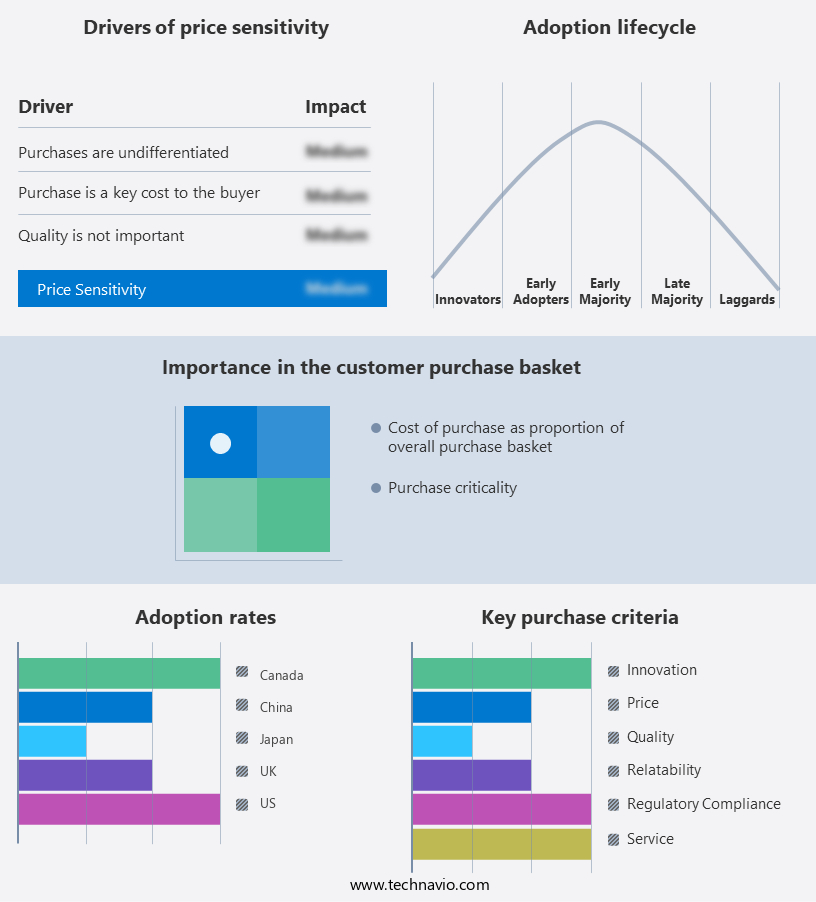
Customer Landscape
Key Companies & Market Insights
Companies are implementing various strategies, such as strategic alliances, partnerships, mergers and acquisitions, geographical expansion, and product/service launches, to enhance their presence in the market.
ADT Inc - The company offers burglar alarm systems such as Nest doorbell, Nest cam, Nest cam with floodlight.
The market research and growth report includes detailed analyses of the competitive landscape of the market and information about key companies, including:
- Ackerman Security
- AJAX SYSTEMS CH
- Alarm.com Holdings Inc.
- Alphabet Inc.
- Bay Alarm Co.
- Comcast Corp.
- Cove Smart LLC
- Frontpoint Security Solutions LLC
- Godrej and Boyce Manufacturing Co. Ltd.
- Guardian Protection Services Inc.
- Hangzhou Hikvision Digital Technology Co. Ltd.
- Honeywell International Inc.
- Link Interactive
- Monitronics International Inc.
- Nice SpA
- NRG Energy Inc.
- Ring LLC
- RISCO Ltd.
- Robert Bosch Stiftung GmbH
- Simplisafe Inc.
- Smith Thompson Home Security
- Vector Security Inc.
Qualitative and quantitative analysis of companies has been conducted to help clients understand the wider business environment as well as the strengths and weaknesses of key market players. Data is qualitatively analyzed to categorize companies as pure play, category-focused, industry-focused, and diversified; it is quantitatively analyzed to categorize companies as dominant, leading, strong, tentative, and weak.
Research Analyst Overview
Burglar alarm systems have gained significant importance in today's world, with the increasing concerns around security and safety. Radar and sound detection technologies are at the forefront of innovation in this industry, providing advanced security solutions for both residential and commercial properties. The pandemic has accelerated the adoption of security systems, particularly in sectors like banking and healthcare, where contactless biometric systems have become essential. The commercial segment, including banking and healthcare, dominates the market for burglar alarm systems. Professional security systems are increasingly being integrated with video surveillance solutions, camera processors, and alarm sensors to provide comprehensive security.
Furthermore, the residential segment also continues to grow, with the proliferation of smart homes and the integration of burglar alarm systems with smartphones and handheld devices via wireless communication. The alarm industry has been impacted by the pandemic, with plant closures and travel restrictions affecting the distribution of components. However, the adoption of burglar alarm systems has remained strong, driven by the need for security in a world where social interaction and workplace attendance are increasingly uncertain. The technology company's manufacturing output in Hubei province, the epicenter of the novel coronavirus outbreak, has recovered significantly, boding well for the future of the industry.
Moreover, innovations in alarm systems include the integration of GSM, LCD screens, and remote terminal units, providing users with real-time monitoring and control. Motion detector sensors and door/window sensors continue to be key components of burglar alarm systems, with Inovonics leading the market in sensor technology. The future of the burglar alarm system market looks bright, with continued innovation and the integration of emerging technologies like AI and machine learning. The market is evolving with the integration of advanced technologies like advanced glass break detector systems and sensor data fusion technology. These innovations enhance the effectiveness of surveillance systems production, providing real-time detection and alerts. DIY home security systems are gaining popularity, allowing homeowners to install and monitor their own alarms through devices like smartphones, handheld devices, and mobile phones. Technology companies are focusing on creating systems with LCD screens for better user interfaces. The integration of household appliances into smart security systems is also on the rise. System and hardware components such as Remote Terminal Units and Central Monitoring Receivers enable centralized control of multiple security devices. With photorealistic phototherapy treatment options now also linked to wellness, the market is seeing a shift toward all-encompassing, tech-driven home security solutions.
|
Market Scope |
|
|
Report Coverage |
Details |
|
Page number |
157 |
|
Base year |
2023 |
|
Historic period |
2018-2022 |
|
Forecast period |
2024-2028 |
|
Growth momentum & CAGR |
Accelerate at a CAGR of 6.78% |
|
Market growth 2024-2028 |
USD 1.72 billion |
|
Market structure |
Fragmented |
|
YoY growth 2023-2024(%) |
6.23 |
|
Regional analysis |
North America, Europe, APAC, South America, and Middle East and Africa |
|
Performing market contribution |
North America at 47% |
|
Key countries |
US, Canada, UK, China, and Japan |
|
Competitive landscape |
Leading Companies, Market Positioning of Companies, Competitive Strategies, and Industry Risks |
|
Key companies profiled |
Ackerman Security, ADT Inc., AJAX SYSTEMS CH, Alarm.com Holdings Inc., Alphabet Inc., Bay Alarm Co., Comcast Corp., Cove Smart LLC, Frontpoint Security Solutions LLC, Godrej and Boyce Manufacturing Co. Ltd., Guardian Protection Services Inc., Hangzhou Hikvision Digital Technology Co. Ltd., Honeywell International Inc., Link Interactive, Monitronics International Inc., Nice SpA, NRG Energy Inc., Ring LLC, RISCO Ltd., Robert Bosch Stiftung GmbH, Simplisafe Inc., Smith Thompson Home Security, and Vector Security Inc. |
|
Market dynamics |
Parent market analysis, market growth inducers and obstacles, market forecast, fast-growing and slow-growing segment analysis, COVID-19 impact and recovery analysis and future consumer dynamics, market condition analysis for the forecast period |
|
Customization purview |
If our market report has not included the data that you are looking for, you can reach out to our analysts and get segments customized. |
What are the Key Data Covered in this Market Research and Growth Report?
- CAGR of the market during the forecast period
- Detailed information on factors that will drive the market growth and forecasting between 2024 and 2028
- Precise estimation of the size of the market and its contribution of the market in focus to the parent market
- Accurate predictions about upcoming market growth and trends and changes in consumer behaviour
- Growth of the market across North America, Europe, APAC, South America, and Middle East and Africa
- Thorough analysis of the market's competitive landscape and detailed information about companies
- Comprehensive analysis of factors that will challenge the growth of market companies
We can help! Our analysts can customize this market research report to meet your requirements. Get in touch
 RIA -
RIA - 
